Custom Jute Bags: How Buyers Can Source the Right Fit
Custom Jute Bags get remembered because they keep working after the handoff. A cheap giveaway disappears into a drawer or bin. A well-made jute bag gets reused for groceries, gift sets, market runs, retail packaging, and event carry. That changes the value calculation fast. Buyers who treat the bag as a functional branded item usually get better results than buyers who treat it like a novelty.
What custom jute bags are and why buyers notice them
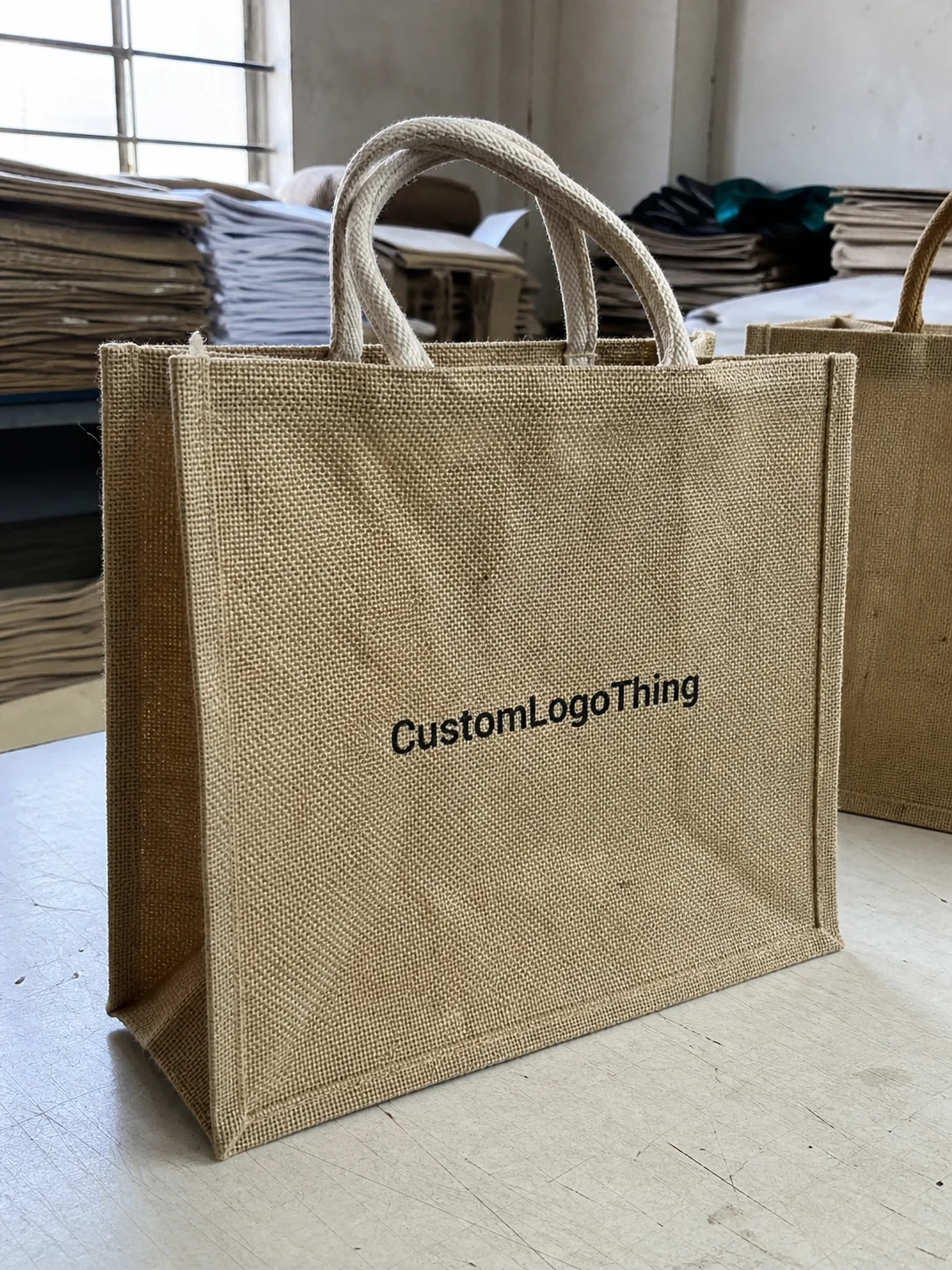
Jute is a plant fiber that is spun into yarn and woven into a cloth with a distinct, structured feel. It does not drape like cotton. That is part of the appeal. The texture reads as natural and substantial, which suits brands that want a grounded, premium, or sustainability-led look without making the design too busy.
People often lump jute and burlap together, but they are not the same product in practice. Burlap usually refers to a rougher, more open weave associated with sacks and agricultural handling. Retail-grade jute bags are typically tighter woven, cleaner finished, and sewn with more attention to shape retention. Laminated jute adds a coating or backing for stiffness and easier wipe-down cleaning. Blended fabrics can lower cost or soften the handfeel, but they also change how the bag prints and wears.
The reason brands choose custom jute bags is not only appearance. A structured bag has better shelf presence than many soft totes, so it works well for product packaging, hospitality welcome kits, farm shop purchases, and promotional gifting. It also feels more deliberate in hand. Customers notice that. They may not be able to explain why the bag feels more premium, but they react to it immediately.
In practical sourcing terms, the best fit is usually one of these:
- Retail packaging for boutiques, specialty food shops, and gift stores
- Hospitality welcome kits for guest gifts, spa kits, and event check-ins
- Farm shop and market bags where moderate load and repeat use matter
- Promotional packaging for launches, trade shows, and membership gifts
- Gift bags that need a more premium feel than paper can provide
From a buyer's standpoint, the decision usually comes down to four things: structure, print method, cost, and timeline. Get those right and the bag does its job. Miss one and the sample can look fine while the bulk order arrives late, costs more than planned, or fails in use. The same logic applies if your launch includes Custom Packaging Products across boxes, inserts, and carry-out items. The bag should fit the same visual system, not fight it.
Most jute bag problems are not design problems. They are specification problems. A clear spec sheet removes more risk than a polished mockup ever will.
Custom jute bag production process and lead time
The production flow is simple on paper. Fiber is prepared, woven into cloth, cut to pattern, sewn into panels, handles are attached, the logo is printed or embroidered, and the bag is finished, inspected, and packed. Each step is standard. The issue is that every step can introduce delay or variation if the spec is vague.
Stock-style orders move fastest. The supplier already has a standard shape, a known material, and a repeatable sewing sequence. That means production can start soon after artwork approval. Fully custom builds take longer because the pattern, dimensions, and sometimes the reinforcing method need to be confirmed before bulk work begins. A small change on paper can behave like a new product on the floor.
Sampling sits in the middle of the schedule. If you want a physical pre-production sample, build that into the timeline before bulk starts. For a straightforward printed jute tote, a sample can take 5 to 12 business days. Bulk production often falls in the 12 to 25 business day range after proof approval. That is only the factory window. Freight booking, customs clearance, and seasonal congestion can add more time. If the order is tied to a launch date or event, leave slack. Tight calendars turn minor corrections into expensive problems.
Several choices slow the job down more than buyers expect:
- Lamination, because it changes material handling and finishing
- Linings, because they add a separate assembly step
- Gussets, especially on larger or boxier bags
- Multi-color print, because registration is harder on textured fabric
- Nonstandard handles, which often need separate sourcing or sewing operations
Lead time is not only about sewing speed. Artwork approval matters too. A two-day delay on proofs can push the whole order if the project is seasonal. That is an operations issue, not a factory issue. Someone has to own the calendar and make the sign-off decisions quickly.
For durability questions, ask the supplier how the bag was checked for load and finish consistency. Independent shipping-test frameworks such as ISTA are more useful than a vague promise that the bag is "strong enough." If a supplier cannot explain how the seams, handles, and fabric weight behave under load, slow down and ask better questions.
If the bags will sit against food, cosmetics, or gift items with scent sensitivity, ask about odor control, inner surface finish, and any lining requirement before you approve the construction. Those details are easy to ignore in a mockup and annoying to discover in bulk.
Custom jute bag pricing, MOQ, and quote drivers
Price varies more than buyers want it to. The main drivers are material weight, dimensions, handle style, lining, lamination, print colors, and quantity. If two quotes do not match on those points, they are not directly comparable. They are different products wearing the same label.
For a simple natural jute tote with one-color screen print, a realistic factory range might sit around $0.85-$1.45 per unit at 5,000 pieces, depending on size and finish. Add lamination, lining, or more elaborate construction, and the range can move to $1.30-$2.40 or higher. A heavier build with zipper closure, inner pocket, or reinforced structure can land around $2.20-$4.50 per unit. Samples often run from $35-$120, and some suppliers credit part of that against bulk if the order goes forward.
MOQ follows the same pattern. Simple stock-style bags with one-color print may start in the low hundreds if the supplier already has the fabric and pattern ready. A fully custom size, special handle, or cleaner finish often pushes MOQ toward 1,000-3,000 units. That is not arbitrary. Setup time, material waste, and printing preparation are real costs, and the supplier has to recover them somewhere.
The cleanest way to judge value is to ask for tiered pricing at several quantities. A quote at 1,000, 3,000, and 5,000 units shows where the breakpoints sit. Sometimes the unit cost barely improves after a certain volume because setup is already spread thin. Other times the discount is sharp enough to justify a bigger run. If the buyer only asks for one quantity, that information stays hidden.
| Bag Type | Typical MOQ | Common Use | Relative Cost | What Drives the Price Up |
|---|---|---|---|---|
| Natural jute tote | 300-1,000 | Retail packaging, events, gift carry | Lower | Print colors, handle upgrades, size changes |
| Laminated or lined jute bag | 500-1,500 | Premium retail, hospitality kits | Medium | Lamination, lining, gussets, finishing labor |
| Heavy custom build with extras | 1,000-3,000 | Gift programs, premium launches | Higher | Zippers, pockets, embroidery, reinforced structure |
Buyers also need to separate sample cost, production cost, and landed cost. The factory price is only one piece. Freight, duties, customs handling, and local delivery can move the real per-unit number enough to change the sourcing decision. That matters even more if the bags are part of a broader branded packaging program where other items, like Custom Packaging Products, are moving in the same shipment.
If a supplier is experienced, ask for the quote in a way that exposes the cost structure: fabric weight, print method, accessory cost, packing format, and lead time. A good buyer request makes sloppy assumptions obvious. That is the point.
Material, size, and print factors that change performance
Fabric weight and weave density control both the feel and the bag's shape. A heavier jute bag stands upright better, holds its form on a shelf, and usually feels more premium. A lighter build can reduce cost, but it may sag or wrinkle in use. Many retail-style jute bags sit roughly in the 250-400 gsm range, while heavier constructions go beyond that. The sample usually reveals the difference faster than the spec sheet does.
Construction details matter more than a quick glance suggests. Side gussets add capacity, reinforced stitching improves seam life, binding cleans up the edge, and the handle attachment method decides whether the bag feels dependable or flimsy. If the bag is meant for repeated carrying, the handle stitch pattern deserves as much attention as the logo placement. That is not decoration. It is load-bearing design.
Print choice changes both appearance and performance. Screen printing is usually the safest route for bold logos, simple type, and clear blocks of color on textured fabric. Embroidery can look premium, especially on smaller brand marks, but it raises cost and can distort fine detail. Heat transfer works for more complex artwork, although the supplier still needs to confirm adhesion on the chosen surface.
Here is a practical way to match features to use case:
- Retail packaging: choose a structured bag with a clean print and a size that fits the product without too much empty space
- Gift bags: prioritize finish, handle comfort, and logo clarity over maximum capacity
- Promotional packaging: keep decoration simple and durable so the bag survives repeated distribution
- Everyday carry: reinforce seams, confirm handle strength, and consider a lining or laminated interior
If sustainability claims matter to the brief, keep them precise. Jute is a plant fiber, but not every "eco" statement holds up if the rest of the packaging is vague. If you need paper inserts, tags, or carton components, certified material can matter there. The Forest Stewardship Council explains paper and wood-based certification clearly at fsc.org. That does not certify the whole bag, but it does keep the broader packaging plan honest.
One useful comparison gets missed often. A bag that looks natural in a rendering may feel too soft to stand beside Custom Printed Boxes on a display table. If the rest of the launch is polished, the bag should not feel like an afterthought. Package branding works best when the whole set looks intentional, not assembled from unrelated parts.
Step-by-step: how to spec the right bag for your order
Start with the use case, not the artwork. What does the bag need to carry, how often will it be reused, and where will it be handed out? A bag for a candle set needs different dimensions than one for a grocery-style promotion. A hotel welcome kit needs different handling than a farmers' market tote. The use case should drive size, strength, and finish before anyone touches the logo file.
Next, define the physical constraints. List the product dimensions, expected weight, and whether the contents are rigid or compressible. Then decide on handle drop, gusset depth, and whether the bag needs a base board or internal support. A few centimeters matter here. A bag that strains at the seams is a packaging failure, even if the art looks right.
After that, match material and print method to the budget and visual target. If the goal is a natural, grounded look, a plain jute finish may be enough. If the program needs a more polished result, laminated or lined construction can improve appearance and handling. Screen print suits bold branding. Embroidery suits smaller premium marks. Heat transfer can cover more detail if the supplier says the substrate will hold it.
I recommend writing a one-page spec sheet before requesting quotes. It should include:
- Exact dimensions, including gusset and handle drop
- Fabric weight or weave reference
- Color references for bag and print
- Artwork files and required print size
- Quantity by tier, not one single number
- Packing format and carton count
- Target delivery window and ship-to location
Then ask for a sample if any risk remains around fit, color, or print clarity. For orders that feed into a larger branded packaging launch, compare the bag against the rest of the system, including labels, inserts, and any Custom Packaging Products used in the same campaign. Consistency matters. A strong packaging program feels like one thought, not several vendors talking at once.
Shipping terms deserve the same attention. Confirm whether the quote is ex-works, FOB, or delivered. Buyers lose time and margin when they assume freight is included and it is not. A realistic buffer for revisions, freight booking, and seasonal congestion belongs in the sourcing plan from the start.
If your supplier offers a pre-production sample, use it to confirm logo position, handle comfort, seam quality, closure function, and whether the bag actually holds the intended contents. The test is not whether it looks good on a table. The test is whether it behaves like a useful product packaging solution in daily use.
Common mistakes that make jute orders more expensive
The most expensive mistake is choosing on appearance alone. A bag can look excellent in a render and still fail in the hand because the seams are too light, the handle is uncomfortable, or the fabric stretches in the wrong places. Jute is honest material. It shows weaknesses quickly.
Another common issue is underestimating setup costs. Sample fees, print plates or screens, packing charges, and special finishing can make a small run feel surprisingly expensive. That does not mean the supplier is overcharging. It usually means the buyer did not request the quote in a way that exposes the full job cost.
Artwork causes avoidable trouble too. Fine lines, low-contrast logos, and too many colors can disappear into the texture. A textured surface is less forgiving than a smooth carton or label. If the same campaign also includes Custom Printed Boxes, the bag art should be simplified enough to match the rest of the set without losing legibility.
Natural fibers also vary more than synthetic materials. Slight shade shifts and texture differences are normal. That is not a defect by default. It becomes a problem only when the buyer expects laboratory uniformity from a plant-based textile. Good suppliers handle this by setting expectations early and sharing reference samples before production.
Late approvals are the last big cost driver. If a seasonal launch is tied to a fixed ship date, every day lost in proofing can force more expensive freight or a compromise on quality control. The schedule should protect the order, not just describe it. That is especially true for retail packaging programs that need to land together on a shelf or in a gift kit.
Useful rule: if the supplier cannot tell you how the order will be packed, shipped, and checked before it leaves the factory, the quote is incomplete.
Expert tips and next steps before you request samples
Ask for a pre-production sample whenever color matching, print placement, or structural strength matters. That is the cheapest way to find out whether the concept holds up. A digital proof can hide a lot. A physical sample cannot.
Compare suppliers with the same spec sheet. Do not let sales language decide the order. Look at dimensions, material weight, finish, lead time, and landed cost side by side. If one quote is much cheaper, figure out why before assuming it is the better buy. Sometimes the lower number just means a feature you expected has been removed.
Build a short approval checklist before sign-off:
- Does the bag fit the intended contents with margin?
- Is the handle comfortable under load?
- Is the logo clear from normal viewing distance?
- Are the seams and corners clean?
- Does the packing format match the campaign?
Also check the things buyers often skip: carton size, fold method, packing density, and whether the bag returns to shape after unpacking. Those details affect freight cost and how the item presents when it reaches the customer. If the bag is meant to sit beside labels, inserts, or cartons, the visual language should stay aligned. The same buyer who notices a good bag will notice a clash.
Before you place the order, confirm the three numbers that matter most: quantity, total landed cost, and delivery window. Everything else supports those. If any of them is vague, keep asking questions. Good sourcing is mostly disciplined clarification.
For buyers who want a bag that looks considered and performs in real use, custom jute bags make sense when size, weight, print, pricing, and timeline are defined before production starts. That is the difference between a useful branded item and an expensive surprise.
Are custom jute bags stronger than cotton tote bags?
Jute usually feels stiffer and holds its shape better, which helps in structured retail or gift use. Cotton can be softer and easier to wash, but the stronger choice depends on seam reinforcement, handle stitching, and what the bag will carry. Material alone does not decide strength.
What MOQ should I expect for custom jute bags?
MOQ depends on size, print complexity, and whether the bag is a stock shape or a fully custom build. Simple orders may start in the low hundreds, while custom sizes and special finishes often push the minimum into the 1,000-3,000 range. Ask for tiered pricing so the true breakpoints are visible.
How long does production take for printed jute bags?
Simple orders move faster, but sampling, artwork approval, lamination, and special finishes can add time. A straightforward order may move through bulk production in about 12 to 25 business days after proof approval, but freight and customs can extend the total schedule. Build in buffer if the date is fixed.
Which print method works best on jute bags?
Screen printing is usually the safest choice for bold logos and simple color blocks on textured fabric. Embroidery can look premium, while heat transfer may suit more detailed graphics if the material and use case allow it. The best method depends on artwork complexity and how the bag will be used.
How do I choose the right size for custom jute bags?
Base the size on what the bag must carry, not on a familiar tote measurement. Check gusset depth, handle drop, and internal clearance so the finished bag works in real use, not just on paper. A bag that fits the product cleanly is easier to carry and better for presentation.

