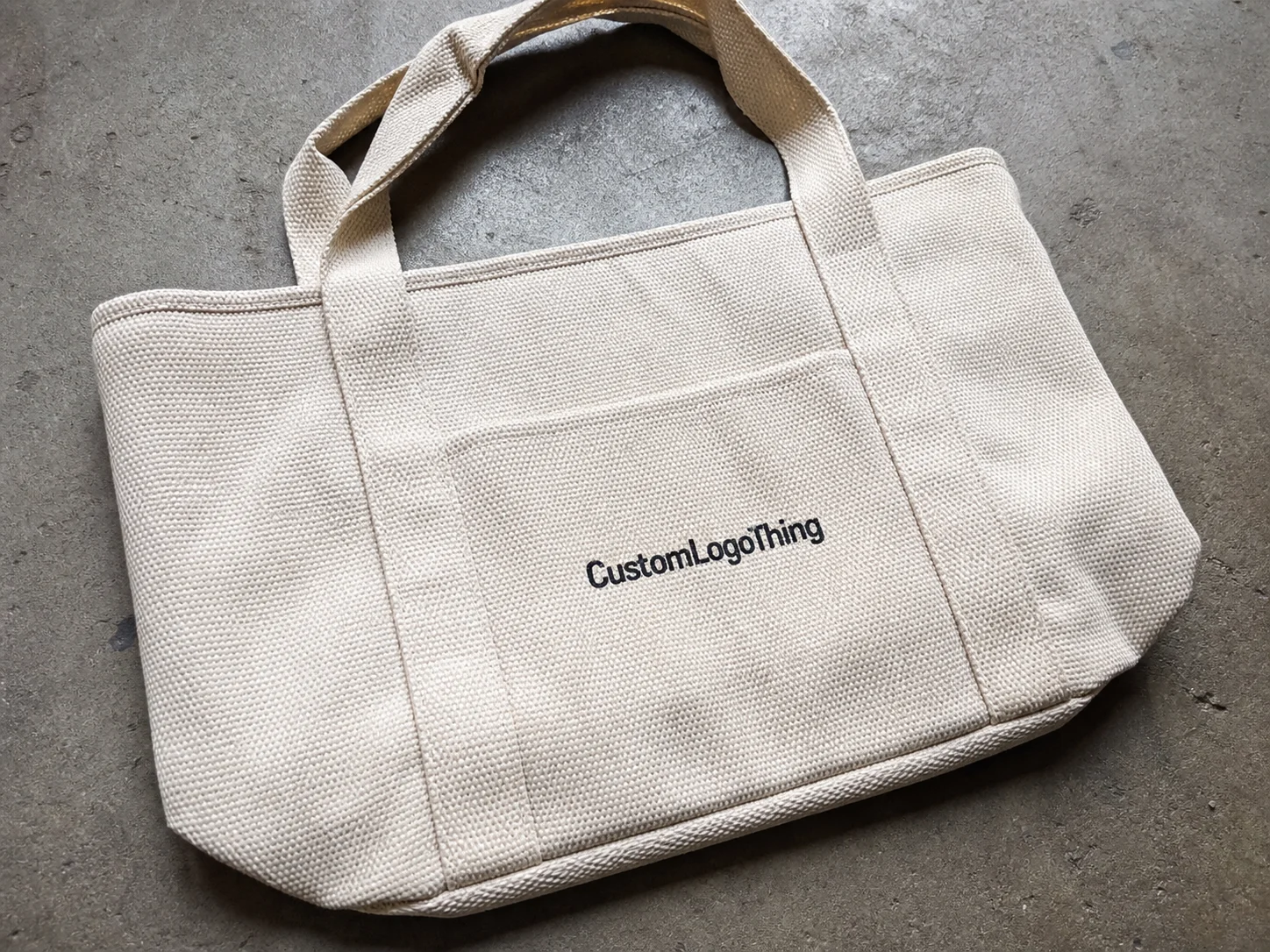
Custom Canvas Bags work because they do more than carry items. They support the purchase, stay in use after the sale, and keep a brand visible longer than most disposable packaging. A bag that is sturdy enough to reuse can keep generating impressions for months, which is why it often makes sense for retail, events, employee kits, and gift-with-purchase programs.
The choice is rarely about appearance alone. Buyers need to balance fabric weight, handle construction, print method, unit cost, minimum order quantity, and lead time. A tote that looks fine in a mockup can still fail if the canvas is too light, the decoration method is wrong for the design, or the schedule is too tight for proofing and shipping. The right spec is the one that fits the job.
Canvas also sits in a practical middle ground. Paper carriers are neat but short-lived. Plastic is cheap but often the wrong signal for a brand trying to look considered. A well-built canvas bag feels more like merchandise than packaging, which is useful when the bag itself is part of the customer experience.
Why custom canvas bags punch above their weight
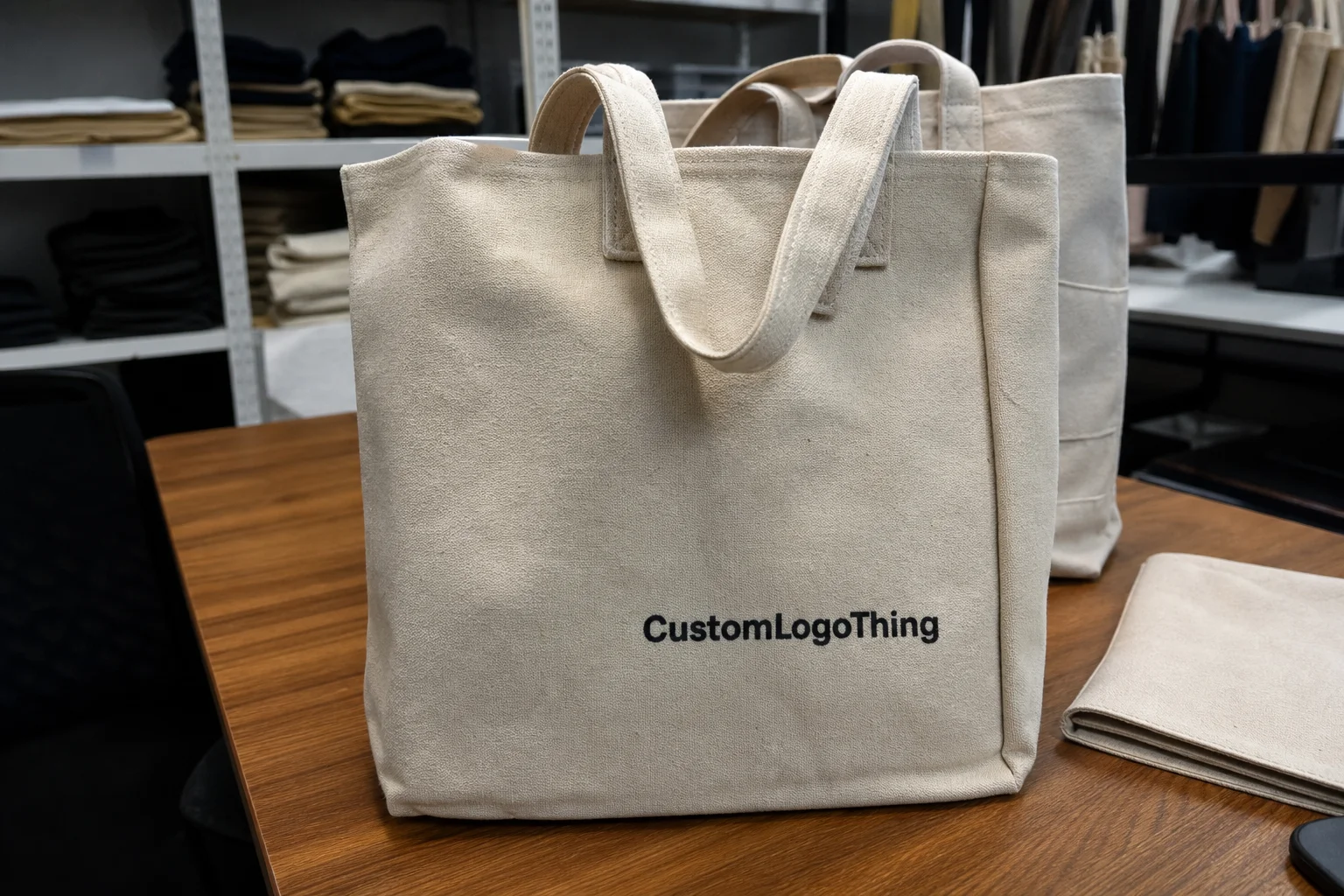
A tote has a much longer service life than most packaging formats. A carton gets opened and discarded. A canvas bag is more likely to be reused for shopping, commuting, storage, or travel. That makes it efficient when the goal is repeat exposure rather than one-time presentation.
The physical feel matters. Canvas usually has more structure than thin promotional carriers, so it holds shape better and reads as more substantial before anyone inspects the print. That perceived quality is part of the value. If the bag feels durable, the brand tends to benefit from that association.
Common use cases include:
- Retail gift-with-purchase programs where the bag is part of the product experience.
- Event handouts that need to hold catalogs, samples, or collateral.
- Subscription inserts that continue carrying the brand after delivery.
- Employee onboarding kits and internal launches.
- Boutique merchandise where the bag itself is sold or collected.
If a buyer is comparing this option with paper carriers or Custom Packaging Products, the key question is not just initial cost. It is whether the bag will deliver enough useful impressions to justify the spend. For some programs, a reusable tote is simply a better marketing asset than a disposable package.
There is also a sustainability angle, but it should be treated carefully. Reuse only matters if the bag is actually reused. Helpful background on materials and responsible sourcing can be found at EPA recycling guidance and FSC.
How the bag is built and printed
The first spec to check is fabric weight. It is usually given in ounces per square yard or grams per square meter. Lightweight promotional bags often sit around 6 to 8 oz. Midweight retail bags are commonly 10 to 12 oz. Heavier versions can reach 14 oz or more. As weight increases, so do structure, durability, material cost, and sewing time.
Weave quality matters as much as weight. A tighter weave generally prints more cleanly and resists distortion better than a looser one. Handles are another point that affects both comfort and failure rate. Flat cotton web handles are common because they are cost-efficient. Reinforced self-fabric handles feel more integrated, while longer shoulder-drop handles are better for daily carry. If the bag will carry heavier contents, the handle anchor points need close attention.
Decoration method changes both appearance and cost. Screen printing is the standard choice for bold logos and solid colors because it is efficient at scale and works well on natural canvas. Heat transfer can suit smaller runs or more detailed artwork. Embroidery gives a premium finish, but it can be too dense for light canvas and it limits fine detail. Sewn patches and woven labels are useful when the goal is subtle branding rather than a loud promotional look.
Artwork prep often decides whether the result looks professional. Logos may need to be vectorized. Thin strokes may need to be thickened. Small type can become unreadable on coarse fabric. Pantone matching can help keep brand color consistent, but the final appearance still depends on the fabric color, ink, and print method. A good proof should show placement, scale, and clear space around seams or gussets. When the order is important, a physical sample is often worth the time because the fabric texture changes the result more than a digital preview suggests.
“The cheapest tote on paper is not always the cheapest tote in use. If the bag stretches, the print cracks, or the handle fails early, the real cost is the lost impression.”
That is why buyers should treat the bag as a product, not just a carrier. If the build is weak, the brand absorbs that weakness too.
Cost, pricing, MOQ, and unit cost
Pricing comes down to a small number of variables: bag size, fabric weight, print coverage, number of colors, handle style, lining, closures, and packaging extras. A one-color screen print on a standard tote is a very different job from a zip-top bag with contrast handles, custom labels, and full-coverage decoration.
At a practical level, unit cost usually drops as quantity rises because setup and labor are spread over more pieces. A simple promotional tote might land around $1.10 to $2.25 per unit at moderate quantities. Heavier canvas, embroidery, more finishing, or a more structured style can push the price higher. Larger runs improve unit economics, but they also increase the upfront spend and storage requirement.
MOQ often surprises first-time buyers. It is not only about material availability. It also reflects screen setup, cutting efficiency, sewing labor, and print registration. A one-color tote can have a lower minimum than an embroidered or highly customized version. Small orders carry higher unit costs because setup charges are divided across fewer pieces.
| Option | Typical Use | Relative Cost | Notes |
|---|---|---|---|
| 6 to 8 oz canvas, one-color screen print | Giveaways, events, inserts | Lowest | Good for volume, lighter hand feel |
| 10 to 12 oz canvas, screen print or transfer | Retail, gift with purchase | Moderate | Balanced durability and presentation |
| 14 oz+ canvas, embroidery or mixed decoration | Premium resale, executive kits | Highest | More structure, stronger perceived value |
Quotes should always be compared on the same basis: dimensions, fabric weight, decoration method, quantity, freight destination, and delivery date. Ask whether setup, sampling, packaging, and shipping are included or billed separately. A low quote can become expensive once screen charges, sample fees, and rush freight are added.
It also helps to think beyond unit price. A bag that lasts longer may be a better value because it keeps carrying the brand in public. That is one reason Custom Canvas Bags can outperform cheaper promotional carriers in budget reviews.
Production steps and turnaround timeline
The process starts with a clear brief: dimensions, canvas weight, handle style, closure, decoration method, quantity, destination, and deadline. From there comes quoting, artwork review, and a feasibility check. If needed, the supplier prepares a proof or sample. Production follows, then inspection, packing, and shipment.
Lead time depends on complexity and capacity. A straightforward run with approved artwork may move in roughly 12 to 20 business days after proof approval. Custom sizing, embroidery, special fabric sourcing, or seasonal demand can extend that window. Late artwork changes are one of the fastest ways to delay an order.
There are a few practical ways to protect the schedule. Decide on bag size before requesting price. Choose the decoration method early. Confirm whether artwork is already vector-ready. If several people need to approve the proof, build that time into the calendar before the order starts. Production teams can manage sewing and print sequencing, but they cannot compress a slow internal approval chain.
Shipping should be treated as part of the lead time, not as an afterthought. A five-day freight delay can wipe out the buffer that took weeks to create. If the bags are tied to a launch, retail reset, trade show, or seasonal campaign, the quoted production window should be followed by transport time and contingency margin.
For heavier loads or premium programs, transport stress can be worth thinking about in practical terms. Standards groups such as ISTA provide a useful framework for handling and transit conditions: ISTA. Not every tote order needs formal testing, but the same logic applies if the bag has to survive stacking, handling, or rough delivery conditions.
How to choose the right specs for your use case
The best spec choice starts with the job, not the logo. Lightweight canvas works for conference giveaways and insert packs because it keeps cost controlled and ships efficiently. Midweight canvas is usually the best general-purpose option for retail packaging because it feels durable without turning into an expensive accessory. Heavier construction makes sense when the tote is meant for resale, daily use, or a premium program that needs to withstand rough handling.
Dimensions should follow the contents. A bag for books, bottles, or folded apparel needs enough opening and gusset depth to avoid awkward bulging. Handle drop matters as much as handle length. A short drop is fine for hand carry, but it becomes annoying on the shoulder. If the order includes rigid inserts or boxed products, internal clearance should be checked carefully.
Different style categories serve different purposes:
- Flat tote: simple, low cost, easy to stack and distribute.
- Gusseted tote: better for boxes, apparel, and mixed contents.
- Zip-top tote: useful where spill protection or transport security matters.
- Drawstring bag: more casual, lighter, and often used for kits or accessories.
- Reinforced utility bag: suited to frequent reuse and heavier loads.
The style should follow the brand outcome. If the goal is lower giveaway cost, keep the construction simple. If the goal is shelf appeal, raise the finish level and use a cleaner decoration method. If the goal is a longer useful life, invest in fabric weight, seam strength, and a print process that holds up after repeated use.
Buyers who order custom canvas bags for premium programs often ask for two or three spec options instead of locking into one version immediately. That usually makes the tradeoff between cost, finish, and lead time easier to judge.
Common mistakes buyers make before ordering
The first mistake is choosing the cheapest fabric without checking how it behaves. Thin canvas can distort under load, wrinkle badly, and make a print look uneven. If the bag is too light for the contents, the handles can feel unstable and the print can wear faster. A low unit price does not help much if the bag feels weak in the customer’s hand.
Artwork problems are just as common. Low-resolution logos, tiny text, and crowded graphics do not translate well onto woven fabric. Seams and gussets interrupt the print field. A design that looks refined on a screen can look cramped once it is scaled to the tote. Buyers should ask where the printable area begins and ends, then keep critical elements away from stitch lines and folds.
Skipping proof checks is another expensive habit. Color on fabric is never identical to color on a monitor. Natural canvas, white canvas, and dyed canvas all change how ink reads. If the bag is meant for retail use or premium packaging, a pre-production sample is often worth the time.
Fulfillment mistakes can also create problems. Ordering too few bags leads to panic reprints or awkward allocation. Forgetting extras for damage, events, or future replenishment is common. Approving a schedule without transport buffer time can derail a launch. If the order is tied to a deadline, the deadline needs margin, not just a date.
The larger point is simple. Buyers are not only ordering a bag. They are ordering consistency, print fidelity, and on-time delivery.
Next steps to brief a supplier and get a usable quote
The fastest way to get a useful quote is to send a complete brief. Include the bag dimensions, target canvas weight, handle style, closure type if there is one, print method, number of print colors, quantity, shipping destination, and required delivery date. If the use case is already known, state it. A tote for a trade show has different priorities from one meant for retail resale or a staff welcome kit.
Ask for two or three spec options if the budget is not fixed. That makes it possible to compare cost against finish instead of getting locked into a single configuration. A good supplier should be able to show what changes when moving from 8 oz to 12 oz canvas, or from screen print to embroidery.
If the bag will represent a premium brand, ask for a sample photo, a pre-production proof, or a physical sample. That matters when color accuracy, handle feel, or shelf presentation is part of the decision. A product can look acceptable in a spec sheet and still miss the mark once it is stitched and printed.
The simplest path to a solid order is to lock the specs, artwork, quantity, and timeline before asking for price. Do that, and custom canvas bags become easier to compare, easier to approve, and less likely to create surprises after the order is placed.
What makes custom canvas bags different from other reusable tote options?
Canvas is usually thicker and more structured than basic nonwoven or thin cotton alternatives. That gives it better print clarity, a stronger perceived value, and longer useful life in retail and event settings. Buyers often choose canvas when the bag itself needs to feel premium enough to keep using after the first purchase.
How do I compare pricing for custom canvas bags accurately?
Compare the same bag size, fabric weight, decoration method, quantity, and shipping destination across every quote. Check whether setup, sample, and freight charges are included or billed separately. Use unit cost as one metric, but weigh it against durability and print quality so the lowest quote does not become the most expensive failure.
What is a typical MOQ for custom canvas tote orders?
MOQ varies by supplier and decoration method, but the minimum is often driven by setup efficiency rather than material scarcity. Simple one-color prints may allow lower quantities than embroidery or full-color decoration. If the volume is small, ask whether there is a stock bag program or a digital print path that lowers the entry threshold.
How long does production usually take for custom canvas bags?
Standard orders typically move through proofing, production, and packing in a sequence that depends on artwork approval and order size. Complex decoration, custom sizing, and peak demand can extend the schedule. The safest approach is to confirm lead time at the quoting stage and build in buffer time before the event, launch, or store drop.
What artwork works best on custom canvas bags?
Simple logos, strong contrast, and clean typography usually print more consistently than highly detailed illustrations. Designs should account for the printable area, seam placement, and the limitations of the chosen decoration method. If the bag needs to read from a distance, one clear focal point is usually stronger than crowding the surface with too many elements.