Custom Label Stickers Bulk Order: Quote to Delivery
Why Bulk Label Orders Change Unit Economics
A food brand preparing 8,000 jars can spend weeks debating glass weight, lid color, carton flute, freight class, and pallet pattern, then discover the smallest visible component is the one customers see every time they open the pantry. The label carries more than a logo. It carries the UPC, nutrition panel, ingredient list, warning copy, flavor cue, batch identifier, QR code, and shelf signal.
A custom label stickers bulk order is not merely a larger sticker purchase. It changes setup cost, waste planning, inventory timing, application speed, and per-unit packaging math.
The manufacturing logic is simple. File review, proofing, press setup, die or plate setup where applicable, material loading, finishing, inspection, packing, and shipping administration all happen before the first sellable label is useful. On a 250-label test run, those fixed activities weigh heavily. On a 10,000-label run, the burden spreads out.
If setup and handling represent $95 to $180 before material, ink, finishing, and freight are fully counted, the difference between 500 and 5,000 labels becomes visible fast. Labels are not priced as clean multiplication. They are priced as production events.
Packaging buyer reality: the label is cheap until it is wrong. A barcode that will not scan, a gloss finish that scuffs in transit, or a roll wound the wrong direction can hold thousands of finished units in limbo.
Consistency has operational value too. Clear label specs reduce SKU mix-ups, speed relabeling, keep fulfillment teams from guessing, and make reorders cleaner. For brands already buying Custom Labels & Tags, bulk ordering can turn package branding from a recurring scramble into a controlled production input.
The catch is that bulk magnifies both good decisions and bad ones. A strong spec produces repeatability. A vague spec produces thousands of identical problems.
Materials, Adhesives, and Finishes That Match the Use Case
Material selection should start with the surface and storage condition, not the lowest line item on a quote. White paper labels work well for dry indoor packaging: boxes, bags, sleeves, jars that stay on retail shelves, and standard cartons. Clear BOPP is common for bottles and jars where a no-label look matters. White BOPP gives stronger opacity and better moisture resistance. Metallic film creates shine for beauty, beverage, and promotional packaging. Kraft paper fits natural product lines, although it can absorb oil and moisture faster than film.
Adhesive is the second decision, and it is not decorative. Permanent adhesive suits most retail packs. Removable adhesive fits temporary promotions, closure seals, and items that should not leave residue. High-tack adhesive helps on textured corrugated mailers, rough paperboard, and some molded plastics. Cold-temperature adhesive matters for refrigerated, frozen, or condensation-heavy goods where standard adhesive may lift at the edge.
Glass, PET, HDPE, coated paperboard, folding cartons, tins, pouches, jars, and corrugated mailers all behave differently. A label that sits flat on a coated carton may wrinkle on a tight-radius bottle. A film label that looks clean on glass may show trapped air on a curved shoulder. Testing on the actual container is not extra caution for curved bottles, oily products, textured cartons, or chilled supply chains. It is the cheapest risk check available.
Finishes change both appearance and durability. Matte finish gives softer premium positioning. Gloss increases color pop and contrast. Soft-touch lamination creates an upscale hand feel, often used in cosmetics, candles, supplements, and premium retail packaging. UV coating adds scuff resistance. Lamination gives stronger abrasion protection, which can matter if labels rub against dividers, cartons, mailers, or other products during shipping.
The cheapest stock can become expensive quickly. If 3 percent of a 20,000-label run bubbles, peels, or scuffs before sale, that is 600 compromised units or a repacking job. For brands selling through ecommerce, retail shelves, or subscription shipments, label failure reads as product failure. Customers do not separate adhesive performance from brand quality.
For a custom label stickers bulk order, the right substrate is the one that survives the product's actual route: filling line, curing time, warehouse, truck, shelf, bathroom counter, refrigerator, freezer, or mailbox. Pressure-sensitive labels do not live in quote sheets. They live on surfaces under stress.
Artwork, Sizing, Rolls, Sheets, and Application Specs
A clean quote needs concrete inputs. Width and height. Shape. Material. Finish. Adhesive. Print colors. Quantity. Roll or sheet format. Core size. Unwind direction. Delivery destination. Each missing detail forces an assumption, and packaging assumptions have a habit of charging interest.
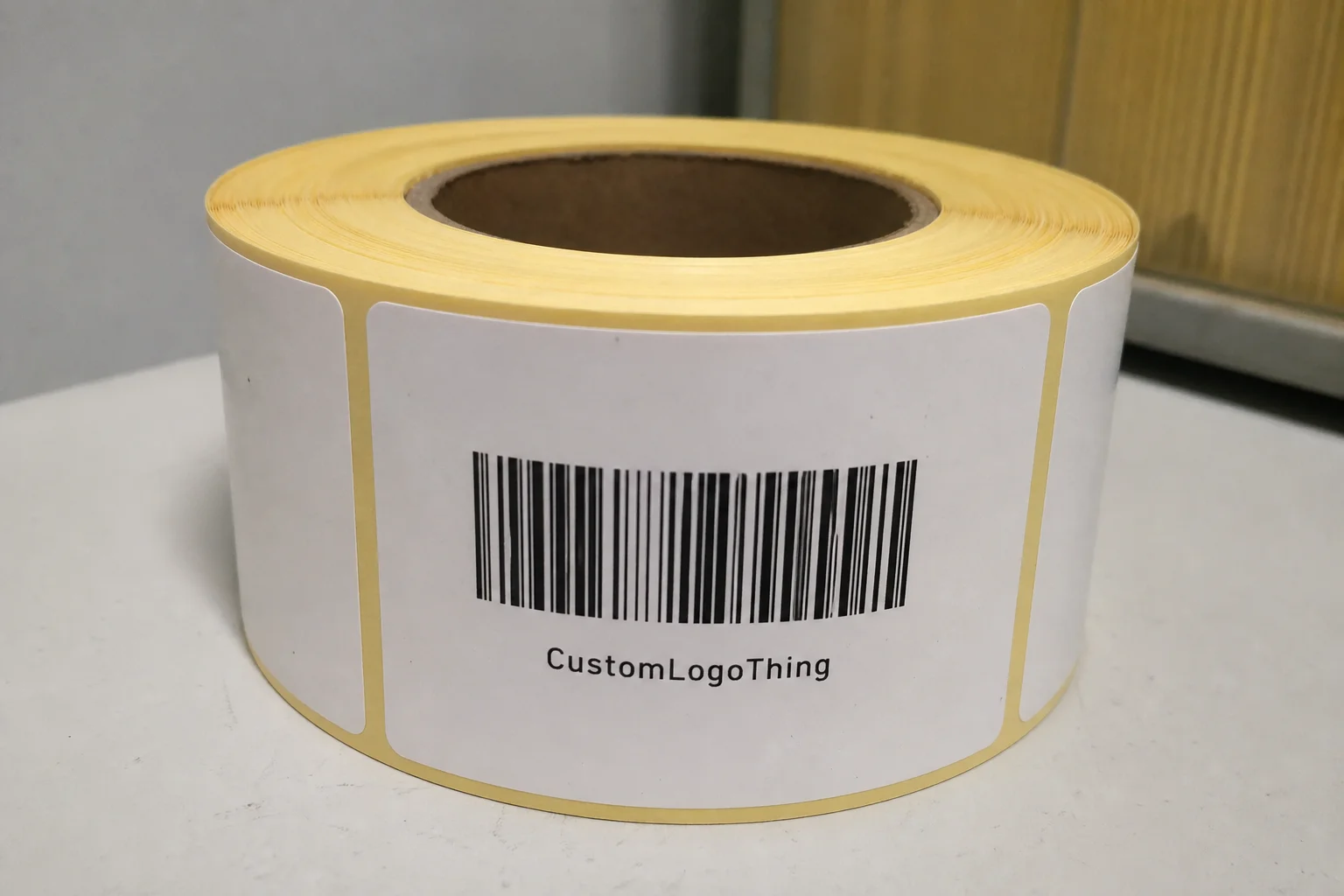
Roll labels usually make more sense at scale. They support faster hand application, semi-automatic labeling machines, and production-line workflows. Typical roll cores include 1-inch and 3-inch cores, although equipment requirements vary. Sheet labels suit smaller batches, sample kits, prototypes, event packs, or manual packing stations where speed is secondary.
Application method deserves early attention. A hand-applied label may tolerate a different roll orientation than a machine-applied label. An automatic labeler may require a specific outside unwind direction, gap spacing, roll diameter, and label orientation. If those details arrive after printing, the correction can mean rewinding, relabeling, or reprinting.
Compliance copy can change the label size. UPC readability, nutrition facts, ingredient lists, warning statements, batch codes, QR codes, recycling marks, and regulatory spacing all compete for real estate. For UPCs, many retailers expect scannable symbols that follow GS1 sizing and quiet-zone guidance. For distribution-heavy products, transit testing under standards such as ISTA can also matter, because abrasion and compression affect label legibility after the pack leaves the warehouse.
Artwork should be supplied as vector files where possible, with linked or embedded fonts, correct dielines, 0.0625-inch to 0.125-inch bleed depending on the production method, safe zones for text, 300 dpi raster images, and CMYK color setup. Pantone references help when brand color control matters. Screen color is not contract color. A label that looks warm and creamy on a laptop can print beige, gray, or yellow depending on substrate, ink build, and viewing light.
Shape affects cost and speed. Rectangles are efficient because they use material well and cut cleanly. Circles work for lids, seals, and small badges. Ovals soften premium goods. Custom Die Cuts can make branded packaging stand out, but they may add die cost, waste, and lead time. Shape is one of the more underpriced strategic decisions in label buying. It can improve recognition, but only if the pack surface and application process can support it.
Pricing, MOQ, and Unit Cost Drivers
Pricing for a custom label stickers bulk order is driven by quantity, material, size, shape, finish, SKU count, artwork complexity, adhesive type, die requirements, and shipping location. Labels are small; label production is still manufacturing.
MOQ exists because setup, proofing, material loading, calibration, waste allowance, finishing, and quality checks do not disappear on smaller runs. A 250-label run might be perfect for a pilot launch, but it will rarely produce the best unit price. A 5,000-label or 25,000-label order spreads fixed labor and setup across more finished pieces.
| Order Scenario | Typical Use | Common Unit Cost Range | Buyer Watchout |
|---|---|---|---|
| 250 to 500 labels | Samples, market tests, small batches | $0.22 to $0.70 per label | Setup cost is a large share of the price |
| 2,000 to 5,000 labels | Small retail run or ecommerce batch | $0.08 to $0.28 per label | SKU splits can reduce the price advantage |
| 10,000 to 25,000 labels | Established product packaging program | $0.03 to $0.14 per label | Storage, reorder timing, and artwork control matter |
| Specialty film, metallic, or laminated labels | Premium retail packaging or moisture exposure | Often 20% to 60% higher than basic paper | Performance may justify the added cost |
These ranges are directional, not guaranteed. Size, ink coverage, freight, finish, and adhesive can move the number materially. A 2-inch circle on white paper is not priced like a 5-by-7-inch laminated film label with heavy coverage and Custom Die Cutting.
SKU batching is another cost driver buyers underestimate. Five designs at 2,000 pieces each may price differently than one design at 10,000 pieces because each SKU can require its own proof, setup, file check, roll identification, and inspection record. Total piece count matters. The number of unique labels matters almost as much.
A bulk label quote should be built from enough information to avoid vague allowances: dimensions, total quantity, quantity per design, stock, finish, adhesive requirement, application method, deadline, shipping ZIP or destination, and artwork files. For broader purchasing programs, the Wholesale Programs page is a better fit than a one-off quote request because inventory planning and reorder cadence can be discussed earlier.
Ask for price breaks at two or three quantities. If 5,000 labels cost $0.12 each and 10,000 cost $0.075 each, procurement can decide whether inventory risk is worth the savings. Sometimes it is. Sometimes a formula change, seasonal scent, retail buyer review, or compliance update makes the smaller run smarter.
Proofing, Production Steps, and Lead Time
The order flow is straightforward when the information is complete: quote request, file review, material confirmation, digital proof, buyer approval, production scheduling, printing, finishing, inspection, packing, and shipping. The weak link is usually approval speed or unclear specs, not the press itself.
Proofing is where buyers should slow down. Check spelling. Check dimensions. Check barcode placement. Check SKU naming. Check material, finish, adhesive, roll format, and unwind direction. Compare the proof against the latest artwork file, not an old desktop version labeled "final-final." That file name has caused more packaging delays than most teams admit.
Production begins after proof approval, not after the first inquiry. That distinction matters. If a buyer requests a quote on Monday, sends artwork on Wednesday, revises barcode placement on Friday, and approves the proof the following Tuesday, the production clock starts after approval.
Lead time depends on order quantity, material availability, custom die requirements, finish complexity, number of SKUs, approval speed, and freight method. Standard bulk label orders with print-ready artwork and common materials may move in roughly 7 to 15 business days after proof approval. Specialty materials, laminated finishes, custom dies, or large multi-SKU programs can take longer. Rush freight may shorten transit; it will not repair a late approval.
Compliance-heavy categories need more review time. Food, supplements, cosmetics, chemicals, vape-adjacent products, cannabis-adjacent packaging where permitted, and regulated health products often require legal, regulatory, or retail compliance checks before print. One missing allergen statement or wrong net weight format can turn a finished roll into scrap.
From a packaging buyer's point of view, proofing is a gate, not a courtesy step. The approved proof becomes the production instruction. It should be boringly correct.
Quality Checks That Prevent Label Failure
Label defects show up after delivery in predictable ways: edge lift, adhesive failure, scuffed ink, misaligned cuts, poor barcode scans, color drift, curling, roll telescoping, and application jams. A single bad roll is irritating. A 20,000-piece run with the same defect can stop packing, delay a launch, or force temporary relabeling.
Incoming inspection does not need to be elaborate, but it should be consistent. Compare delivered labels against the approved proof. Measure width and height with a ruler or caliper. Check roll direction. Scan barcodes with the same type of scanner used by retail or warehouse teams. Count cartons and rolls against the packing list. Apply samples to the real container.
Then wait. Leave applied samples overnight. Put them in the expected environment. Refrigerate if the product will be chilled. Expose them to normal handling, light moisture, friction, or carton contact. For shipping-heavy programs, review the broader packaging system too: mailer, carton, void fill, and exterior labels. The Custom Packaging Products range can help align labels with custom printed boxes, mailers, sleeves, and other packaging components.
Color expectations require honesty. A digital proof, a backlit screen, and a printed label are different viewing conditions. CMYK builds can shift across substrates. Metallic film changes the perceived tone. Kraft stock mutes color. For critical brand colors, use Pantone references or request physical samples where possible. ASTM standards for adhesives and label testing are often used across the pressure-sensitive label sector, but the practical question is simpler: will this label stay readable and attached through the product's normal life?
Quality control matters more in bulk because multiplication is ruthless. A 1 percent defect rate on 300 labels is three labels. On 30,000 labels, it is 300 labels, and that can mean a visible packing delay. Prevention is cheaper than rework, which is why a custom label stickers bulk order should start with the right details before print: surface, storage condition, application method, finish, and delivery timing.
How to Plan a Custom Label Stickers Bulk Order
Plan the order by locking the use case first, then the artwork, then the production format. The short version: know where the label goes, how it will be applied, what it must survive, how many SKUs are included, and when the finished labels must arrive.
That sequence prevents a common purchasing trap. Buyers sometimes start with quantity because quantity drives price. But quantity without application context is incomplete. Ten thousand labels for flat folding cartons are a different job than ten thousand labels for curved glass jars filled cold, wiped down, packed in dividers, and shipped through parcel networks.
Forecasting matters too. A custom label stickers bulk order can lower unit cost, but excess labels become liability if ingredients, compliance copy, QR destinations, barcode assignments, or brand claims change. The right quantity is not always the biggest quantity. It is the quantity that matches sales velocity, revision risk, storage space, and cash flow.
For wholesale label printing, many brands keep a master spec record: size, dieline, material, adhesive, finish, core size, unwind direction, SKU names, approved proof date, and reorder quantity. That record turns the second order into a repeatable process instead of a detective job. Small administrative discipline. Large operational payoff.
Storage should be part of the plan. Pressure-sensitive labels generally prefer controlled indoor conditions, away from high heat, direct sunlight, heavy humidity, and dust. Rolls should stay protected until application. If labels sit near a filling line, solvent, fragrance oil, food residue, or moisture can affect performance before the product ever reaches a customer.
What to Prepare Before Requesting a Quote
Before requesting pricing, build a short spec sheet. Include label size, shape, quantity, material preference, finish, adhesive need, number of designs, quantity per design, application method, container type, deadline, shipping destination, and artwork status. It does not need to be pretty. It needs to be complete.
- Size and shape: exact width, height, and whether the label is rectangle, circle, oval, square, or custom die cut.
- Material and finish: paper, BOPP, clear film, metallic film, kraft, matte, gloss, UV coating, soft-touch, or lamination.
- Adhesive: permanent, removable, high-tack, cold-temperature, freezer-grade, or moisture-resistant.
- Format: rolls, sheets, or individually cut labels, plus core size and unwind direction if rolls are used.
- Artwork: vector file, bleed, safe zone, CMYK setup, Pantone references, barcode files, and final SKU names.
- Logistics: in-hands deadline, delivery destination, and any split shipments.
Gather photos or samples if the label must fit a jar, bottle, pouch, mailer, folding carton, tin, tube, or irregular surface. A flat artwork file does not reveal shoulder curves, recessed panels, varnished cartons, or textured plastic. Those details change material and adhesive recommendations.
Decide early whether you need rolls, sheets, or individually cut labels. Rolls usually support faster application at scale. Sheets can be practical for kits, low-volume packing benches, or prototype work. Individually cut labels can suit events or special inserts, but they are usually slower for production teams handling thousands of units.
Ask for price breaks. If inventory forecasts sit near the next production tier, the unit-cost drop may justify ordering more. Store final dielines, proof approvals, SKU names, material specs, and reorder quantities in one place. Reorders move faster when the previous production record is clear.
For broader questions about files, ordering, or production expectations, the FAQ page can help before a quote request. For a custom label stickers bulk order, the fastest path to an accurate quote is a complete spec sheet, print-ready artwork, and a clear delivery deadline.
FAQ
What information do I need for a custom label stickers bulk order quote?
Provide label dimensions, shape, quantity, material, finish, adhesive type, number of designs, roll or sheet preference, artwork files, deadline, and shipping destination. If labels are going on bottles, jars, pouches, cartons, tins, or tubes, include photos or samples of the packaging surface so the quote can reflect real application conditions.
What is the MOQ for custom label stickers in bulk?
MOQ depends on material, size, finish, adhesive, and production method. Minimums exist because file review, proofing, setup, calibration, and finishing time are still required on smaller runs. Bulk orders usually improve unit cost when those fixed costs are spread across higher quantities, so ask for price breaks at multiple levels.
How long does a custom label stickers bulk order take?
Lead time depends on proof approval speed, material availability, order volume, finish requirements, number of SKUs, and shipping method. Standard jobs with print-ready artwork and common materials may take roughly 7 to 15 business days after proof approval, while specialty materials, custom dies, and large multi-SKU orders can take longer.
Can I order multiple label designs in one bulk order?
Yes. Each design or SKU may require separate proofing, setup, file checks, roll identification, and quality review. Group SKUs clearly by size, material, finish, quantity, and application method to keep quoting and production efficient.
Which material is best for custom product labels in bulk?
Paper labels work well for dry indoor packaging, while BOPP and film labels are stronger for moisture, oils, refrigeration, and heavy handling. The best material depends on the container surface, storage conditions, application method, durability needs, and brand finish requirements.