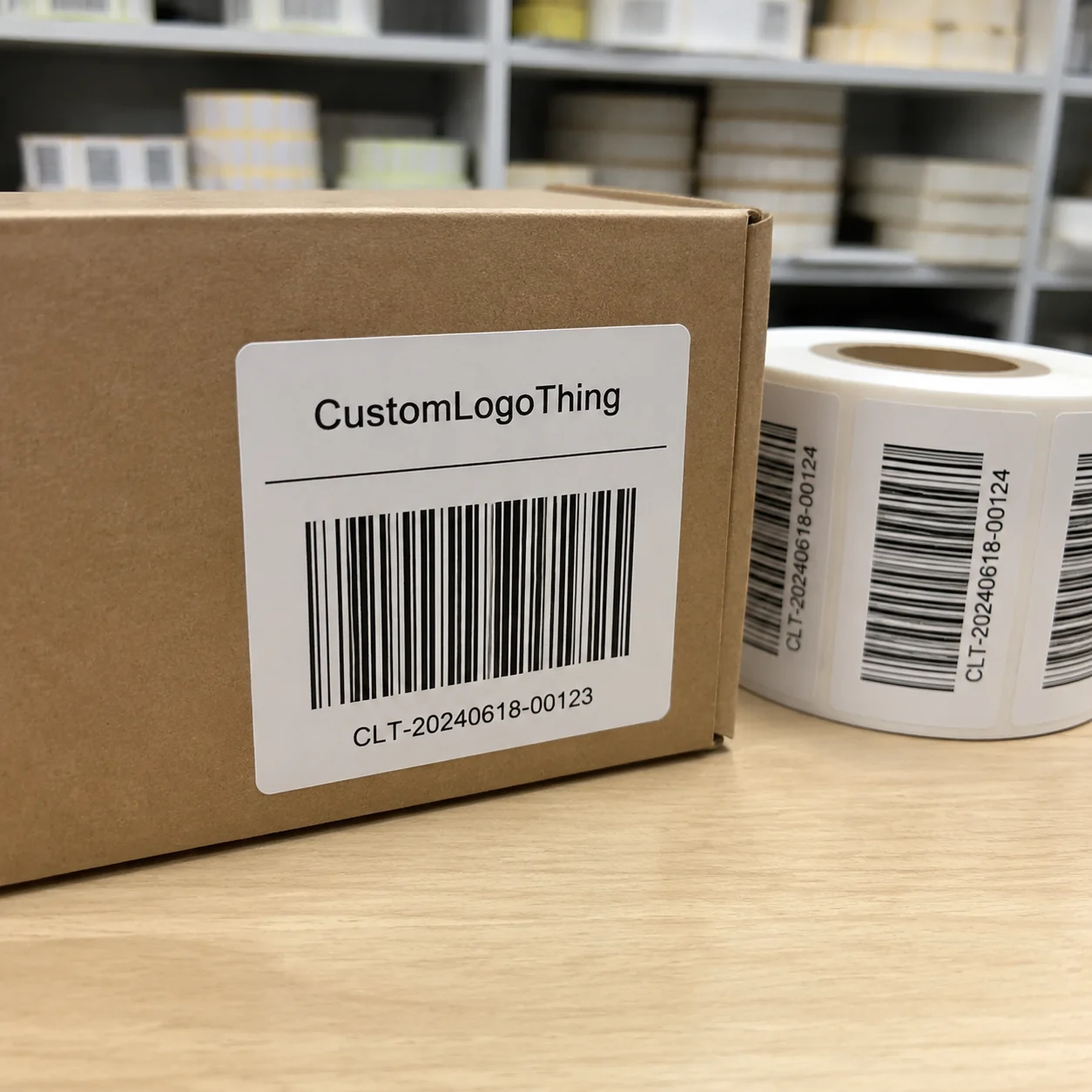
Buyer Fit Snapshot
| Best fit | Custom Labels for Small Business projects where brand print, material claims, artwork control, MOQ, and repeat-order consistency need to be specified before quoting. |
|---|---|
| Quote inputs | Share finished size, material target, print colors, finish, packing count, annual reorder estimate, ship-to region, and any compliance wording. |
| Proofing check | Approve dieline scale, logo placement, barcode or warning zones, color tolerance, closure strength, and carton packing before bulk production. |
| Main risk | Vague material claims, crowded artwork, missing packing details, or unclear freight terms can make a low unit price expensive after revisions. |
Fast answer: Custom Labels for Small Business: Material, Adhesive, Artwork, and MOQ should be specified like a repeatable production item. The safest quote records material, print method, finish, artwork proof, packing count, and reorder notes in one written spec.
Production checks before approval
Compare the actual filled-product size with the drawing, then confirm tolerance on folds, seals, hang holes, label areas, and retail display edges. Reserve space for logos, QR codes, warning copy, and material claims before decorative graphics fill the panel.
Quote comparison points
Review material grade, print process, finish, sampling route, tooling charges, carton quantity, and freight assumptions side by side. A quote is only useful when the supplier can repeat the same color, closure quality, and packing count on the next order.
Custom labels for small business can change how a product feels in a customer’s hand faster than almost anything else I’ve seen on a packing line. I still remember a honey producer in a modest fill room outside Lancaster who swapped a plain white stock label for a textured kraft look with a clean two-color print; the jars did not change, the recipe did not change, but the product suddenly looked like it belonged next to Premium Retail Packaging instead of a farmstand bargain bin.
That is the quiet power of custom labels for small business. They do more than identify a product. They carry brand name, ingredients, barcode, legal copy, and that split-second visual impression that tells a buyer whether your product feels handmade, trustworthy, polished, or forgettable. I’ve spent enough time around label rewinders, applicators, and finishing tables to know that a label is often the first piece of package branding a customer actually touches. And once it is on the shelf, there is no hiding behind it; the label either does the job or it doesn’t.
Why Custom Labels for Small Business Matter More Than You Think
Most people treat custom labels for small business like decoration instead of a working part of the package. In practice, a label has to do several jobs at once. It should carry branding, stand up to the product environment, stay readable on shelf, and survive the way a real customer handles it, whether that means a greasy hand in a deli, condensation in a fridge, or abrasion inside a shipping carton.
On a fill line I visited in Wisconsin, a salsa maker had been using generic stickers with a handwritten batch number. The product tasted great, but the shelf read was weak, and stores kept placing it behind more polished jars with better branded packaging. They moved to custom labels for small business with a bright matte face stock, a waterproof adhesive, and a simple die-cut shape that matched the jar shoulder. Their retailer came back two weeks later and asked for a second SKU because the label finally looked like a real brand.
Custom labels differ from generic stickers, packaging inserts, and direct print in a few important ways. A sticker might identify something, but custom labels for small business are usually designed around the exact container, the product conditions, and the sales channel. A printed insert sits inside the box and may never face the customer until after purchase. Direct print can be excellent on rigid containers, but it is a different production route than a label that can be stocked, overprinted, or applied across multiple pack formats. For many small brands, labels are the most flexible bridge between product packaging and professional presentation.
They also help with compliance and trust. If you sell in retail, online, or at local markets, clear ingredients, net weight, batch code, and barcode placement matter. I’ve seen buyers reject a beautiful jar because the barcode was too close to the seam, and I’ve seen an otherwise strong cream bottle get flagged because the label material could not handle moisture in cold storage. That is why custom labels for small business need to be treated as a design-and-performance decision, not a last-minute print job. Honestly, that’s where a lot of brands get tripped up.
Common use cases show up everywhere: jars for jam and salsa, bottles for sauces and oils, pouches for snacks, boxes for soap and candles, shipping Packaging for Direct-to-consumer orders, and bundle packs where one master label has to identify several components. In small factories, the label often becomes the handshake between the product and the customer.
How the Custom Label Process Works from Artwork to Application
When I walk a customer through custom labels for small business, I start with the same sequence: discovery, material selection, artwork setup, proofing, production, finishing, and application. Skip one of those steps and you usually pay for it later in waste, delays, or labels that look beautiful on a screen and disappointing on a bottle.
Discovery means understanding the product environment. Is it frozen, refrigerated, oily, damp, or handled constantly? A label for a dry candle box behaves very differently from a label for a chilled yogurt cup or a hand-poured soap bottle. Material choice comes next. Digital printing is often ideal for smaller runs and multiple SKUs because setup is lighter and changeovers are faster. Flexographic printing makes sense when quantities climb and repeatability matters, especially on larger label programs. Thermal transfer is common for variable data, batch coding, and some shipping applications, where durability and speed Matter More Than decorative finish.
Then come the finishing details. Die-cutting defines the shape, and that shape matters more than people expect. A rounded corner can reduce edge lift; a custom contour can help a jar label follow the container wall; a longer panel can improve readability on pouches. Laminating or varnishing adds scuff resistance, improves moisture behavior, and can change the feel from utilitarian to premium. Adhesive selection matters just as much. A permanent adhesive is not the same as a removable one, and freezer-grade adhesives are built for cold surfaces where ordinary glue gets brittle or fails.
In one meeting with a candle brand in Ohio, the owner wanted a soft-touch label with a gold foil accent on a black jar. The design was lovely, but the product was sold at winter markets where hands were cold, surfaces were dusty, and the jars rubbed against each other in shipping. We changed the top coat to a more durable varnish and moved the foil away from the seam edge, and the real-world performance improved immediately. That is the kind of practical adjustment custom labels for small business need if you want the result to survive production and retail handling.
Typical turnaround depends on the print method, complexity, and proof cycle. A straightforward digital job can often be produced in about 7-10 business days from final proof approval, while a more complex specialty order with foil, embossing, or custom die tooling may take 12-18 business days. Delays usually come from artwork revisions, missing dielines, poor image resolution, or waiting on final ingredient copy. Application can be by hand, with a dispenser, or on semi-automatic equipment, and consistency matters. I’ve watched a team lose half a shift because labels were being applied slightly off-square on a rounded bottle; the machine was not the problem, the setup was.
“The label is the first quality check your customer does with their eyes and fingers.” That is something a senior buyer told me during a private label review, and it has stayed with me because it is exactly how retail packaging gets judged on the shelf.
If you are also building the rest of the pack, it can help to coordinate labels with Custom Packaging Products so your box, insert, and outer mailer feel like one system rather than four unrelated items. For container-specific work, Custom Labels & Tags are often the most efficient place to start.
Custom Labels for Small Business: Materials, Adhesives, and Finishes
Custom labels for small business are often judged first by how they look, but the real performance story starts with the material. A label that seems perfect in a proof can fail quickly if the stock, adhesive, and finish do not match the way the product is stored, shipped, and handled. That is why I always start by matching the label spec to the container and the environment rather than chasing the lowest unit price.
Paper labels are cost-effective and work nicely for dry products, stationery, short-life promotions, and many boxes. BOPP, which many converters use for moisture resistance, is a strong option for bottles, jars, and pouches that may encounter condensation or oil. Vinyl can be useful where durability matters, especially on products that may be flexed, handled often, or exposed to rough shipping. Textured stocks can create a more artisanal look for premium food, beauty, and candle products. Clear films work well when you want the packaging surface itself to show through and keep the visual field clean.
Adhesive choice is just as critical as face stock. Permanent adhesives are usually the default for long-term retail use, but removable adhesives make sense for seasonal items, temporary promotions, and reusable containers. Freezer-grade adhesives are designed for chilled or frozen products where standard adhesives can fail when exposed to low temperature and condensation. Waterproof adhesives are often the safer bet for beverages, bath products, and refrigerated foods. I always tell clients to think about the actual life of the package, not the ideal version of it sitting under studio lights.
Finish changes the perception of the brand and the price. Matte suggests understated and organic. Gloss reads bright and more commercial. Soft-touch can add a premium tactile feel, though it should be used carefully because not every finish survives heavy scuffing equally well. Foil, embossing, and spot UV can elevate a label quickly, but they also add tooling and print complexity. If a brand is selling $8 candles, a little foil might make sense; if the product margin is tight, the same effect may be better reserved for a hero SKU. Too many small brands overspend on effects before they’ve nailed legibility and adhesion.
Cost is driven by quantity, size, shape, material, color count, and finishing. As a practical example, a 5,000-piece run of a 3" x 2" BOPP label with four-color process and a standard die-cut shape may land around $0.18 to $0.26 per label, while a 1,000-piece specialty order with foil and a unique contour can easily run much higher per unit. That is not a fixed quote, of course; every plant and setup is different, but it gives you a realistic bracket. The more custom the shape and finish, the more the setup cost spreads across fewer pieces.
Size and legibility matter more than many owners expect. If you need a barcode, make sure the quiet zone is respected. If you have ingredient statements, don’t force them into tiny type just to preserve a decorative border. Regulatory copy, nutrition panels, and internal lot codes all affect layout. If the label becomes crowded, the brand looks less confident, not more creative. That is especially true in retail packaging, where buyers scan dozens of products in seconds.
For material performance standards, I often point people to authoritative references like ISTA for transit testing guidance and EPA information when sustainability claims or material disposal questions come up. If your business is looking at paper sourcing, FSC can help define responsible forestry standards.
Key Factors to Choose the Right Labels for Your Business
Material choice is where custom labels for small business either become reliable or become a headache. Paper labels are cost-effective and work nicely for dry products, stationery, short-life promotions, and many boxes. BOPP, which many converters use for moisture resistance, is a strong option for bottles, jars, and pouches that may encounter condensation or oil. Vinyl can be useful where durability matters, especially on products that may be flexed, handled often, or exposed to rough shipping. Textured stocks can create a more artisanal look for premium food, beauty, and candle products. Clear films work well when you want the packaging surface itself to show through and keep the visual field clean.
Adhesive choice is just as critical as face stock. Permanent adhesives are usually the default for long-term retail use, but removable adhesives make sense for seasonal items, temporary promotions, and reusable containers. Freezer-grade adhesives are designed for chilled or frozen products where standard adhesives can fail when exposed to low temperature and condensation. Waterproof adhesives are often the safer bet for beverages, bath products, and refrigerated foods. I always tell clients to think about the actual life of the package, not the ideal version of it sitting under studio lights.
Finish changes the perception of the brand and the price. Matte suggests understated and organic. Gloss reads bright and more commercial. Soft-touch can add a premium tactile feel, though it should be used carefully because not every finish survives heavy scuffing equally well. Foil, embossing, and spot UV can elevate a label quickly, but they also add tooling and print complexity. If a brand is selling $8 candles, a little foil might make sense; if the product margin is tight, the same effect may be better reserved for a hero SKU. Too many small brands overspend on effects before they’ve nailed legibility and adhesion.
Cost is driven by quantity, size, shape, material, color count, and finishing. As a practical example, a 5,000-piece run of a 3" x 2" BOPP label with four-color process and a standard die-cut shape may land around $0.18 to $0.26 per label, while a 1,000-piece specialty order with foil and a unique contour can easily run much higher per unit. That is not a fixed quote, of course; every plant and setup is different, but it gives you a realistic bracket. The more custom the shape and finish, the more the setup cost spreads across fewer pieces.
Size and legibility matter more than many owners expect. If you need a barcode, make sure the quiet zone is respected. If you have ingredient statements, don’t force them into tiny type just to preserve a decorative border. Regulatory copy, nutrition panels, and internal lot codes all affect layout. If the label becomes crowded, the brand looks less confident, not more creative. That is especially true in retail packaging, where buyers scan dozens of products in seconds.
For material performance standards, I often point people to authoritative references like ISTA for transit testing guidance and EPA information when sustainability claims or material disposal questions come up. If your business is looking at paper sourcing, FSC can help define responsible forestry standards.
What are the best custom labels for small business products that get refrigerated?
Choose moisture-resistant materials like BOPP or vinyl with a freezer- or cold-rated adhesive. A laminated or varnished finish helps when the label faces condensation, frequent handling, or wipe-downs. I always recommend testing on an actual chilled sample before you place a full order, because a label that looks fine on a dry table can behave very differently on a cold jar or bottle.
For refrigerated products, I’d also watch the label edges and the curvature of the package. Even a good adhesive can struggle if the label is oversized, wraps too far around a seam, or gets applied to a surface that still has a bit of condensation on it. That’s the kinda thing that doesn’t show up in a mockup but absolutely shows up in the cooler.
Step-by-Step Guide to Ordering Custom Labels for Small Business
- Define the goal. Decide what the label must do: sell the product, meet compliance needs, withstand moisture, or support a new line launch. Custom labels for small business work best when the purpose is clear before the first design draft exists.
- Measure the package carefully. Measure flat panels, curved surfaces, seams, and closure areas with a steel ruler or caliper, not guesswork. A jar that looks like 3 inches across may not have enough flat area for the label you imagined.
- Prepare artwork correctly. Use vector files like AI, EPS, or a high-resolution PDF when possible. Include bleed, safe zones, and outlined fonts. Keep image resolution at 300 DPI for print clarity. If your file is built in CMYK, that usually helps avoid color surprises.
- Review proofs like a production manager. Check spelling, ingredient lines, barcode placement, expiration space, and logo alignment. If needed, ask for material samples or a press simulation before approving the run. That small pause can save a batch of 10,000 labels from becoming scrap.
- Approve production and plan inventory. Confirm the timeline, pack-out method, and delivery date so your labels arrive before the packaging line runs dry. I’ve seen brands pay rush freight on labels because they ordered too late and lost two days waiting for approval. That hurts more than most owners expect.
One practical trick I use with custom labels for small business clients is to build a simple internal signoff sheet with three columns: design, compliance, and operations. Design checks the look. Compliance checks legal text. Operations checks whether the label actually applies cleanly to the container and survives the product environment. That three-step review prevents a surprising amount of rework.
It also helps to order samples before committing to a large run. A label that looks perfect on coated paper may fail on textured kraft, and a layout that feels balanced on a computer screen can look crowded once wrapped around a bottle neck. A sample run gives you a real-world view of how your branded packaging behaves under light, touch, and motion.
When possible, ask your supplier about label application methods as well. Hand-applied labels, dispenser-fed rolls, and semi-automatic applicators each create different tolerances, and custom labels for small business should be designed with the real application method in mind. That practical step reduces crooked placement, edge lift, and wasted labels during startup.
Common Mistakes Small Businesses Make with Custom Labels
The biggest mistake I see is choosing the cheapest label material without considering the environment. Moisture, refrigeration, oil, abrasion, and handwashing all matter. A low-cost paper label can work beautifully on a dry gift box, then fail immediately on a cold sauce jar. Custom labels for small business need to be selected for conditions, not just price.
Another common issue is poor sizing. A label that is too large will wrinkle over seams or curl at the edges. A label that is too small can look lost on shelf and leave too much unbranded space. I once worked with a tea brand that had beautiful typography, but the first label was so narrow that the logo and flavor name fought for space. We widened the panel by 12 mm, and the whole package felt calmer and more expensive.
Skipping proof review is a fast way to create expensive mistakes. One digit off in a barcode, one misspelled ingredient, or one incorrect net weight can stop a shipment. If custom labels for small business include legal copy, take the proof seriously and have at least two people review it. If your packaging includes batch codes or variable data, test that process before you run the full job.
Color consistency is another quiet problem. If you print labels in multiple runs and do not control color targets, your brand can drift from one batch to the next. That drift is obvious on shelf. Buyers notice it even if they cannot explain it. Keep a target file, use the same substrate when possible, and work with a supplier who understands press calibration and ink limits.
Application errors can be just as costly. Dirty surfaces, cold rooms, or rushed hand-labeling on high-volume runs can cause lifting edges and crooked placement. I’ve stood beside a bottling line where the labels were being applied ten degrees off because the operator was chasing speed. The fix was not harder pressing; it was a better setup, a cleaner bottle surface, and a slower first case. Custom labels for small business only look professional if the application step is treated with the same care as print quality.
Another pitfall is ignoring reorder planning. Small brands often assume a label order will last longer than it does, then discover that a promotion, a new batch size, or a surprise sales spike has burned through inventory. Keeping reorder points and print records organized makes custom labels for small business far easier to manage, especially once you move from one product to a family of SKUs.
Expert Tips for Better Branding, Lower Waste, and Smarter Reorders
Design your labels with future line extensions in mind. If you launch with lavender, there is a good chance you will later add mint, citrus, or unscented. A flexible label system lets you swap flavor names, colors, or icons without rebuilding the whole brand. That is one of the smartest ways to keep custom labels for small business efficient as the catalog grows.
Test adhesion and durability on actual product samples before full production. Do not trust a table-top test alone. Put the finished label on a real jar, chill it, wipe it, ship it, and let someone with normal hands use it. Real-world testing exposes issues fast, especially for cold-chain goods and oily products. I still recommend checking against the basic principles of package testing used across the industry, because a good label should perform in motion, not just in a brochure.
Order a buffer quantity. In my experience, a 3% to 5% cushion can absorb setup waste, application errors, and demand growth without forcing you into an emergency reorder. That buffer can be the difference between calm production and a weekend rush. If the label is a core brand element, the extra cost is usually cheaper than downtime.
Standardize label sizes where possible. A small business with six SKUs can often save money by using two or three label dimensions instead of six unique ones. That simplifies storage, printing, and reordering. It also makes your warehouse a lot easier to manage. I’ve seen operators spend 20 minutes hunting for the right roll because a brand over-customized every product instead of building a sensible family of sizes.
Work with a partner who understands converting, press setup, and application realities, not just artwork. A supplier who knows custom labels for small business should ask about temperature, surface texture, shipping method, and container geometry before they talk about foil or finish. That conversation tells you whether they understand how packaging actually behaves.
Keep an eye on print specs for repeat runs. If you change substrates, adhesives, or finish from one reorder to the next, make sure the revision is documented. A good spec sheet protects custom labels for small business from drift over time and makes future reprints easier to quote, approve, and schedule.
What to Do Next: A Simple Plan for Your First Label Order
If you are ready to move forward with custom labels for small business, start with a packaging audit. List every product container, the environment it lives in, and the information the label must carry. Gather artwork files, logo versions, ingredient statements, barcode numbers, and any compliance text that needs to appear on the final label.
Next, shortlist materials and adhesive types based on use. Paper may be fine for dry goods. BOPP or vinyl may be better for moisture exposure. Matte may fit a handcrafted brand. Gloss may be right for brighter retail packaging. Keep the decision tied to the product and the customer, not just personal taste.
Then request quotes and samples from a few suppliers. Compare more than price. Look at service, proofing support, turnaround, print quality, and how they handle questions about curved containers or special finishes. The cheapest quote is not always the best value if it comes with delays or unclear setup guidance. For custom labels for small business, the right partner can Save You Money in the long run by preventing waste.
Before production starts, create an approval checklist. Make sure design, operations, and compliance all sign off on the proof. Confirm quantity, delivery date, and application method. If you are launching a new product, choose one SKU first, test it in the market, and watch how customers respond to the label before you scale to the rest of the line. That measured approach has saved more than one of my clients from expensive reprints.
Custom labels for small business are one of those packaging decisions that seem small on paper and huge in practice. A smart label can lift perceived value, support retail packaging goals, reduce waste, and make your product feel more established on day one. If you build the system carefully, custom labels for small business become more than identification; they become a dependable part of your brand story.
Custom Labels for Small Business: decision table
| Decision area | Best fit | What to verify | Risk if skipped |
|---|---|---|---|
| Substrate | Labels, stickers, ribbons, inserts, tags, and tissue paper | Paper/film type, adhesive, GSM, roll direction, and finish | The print looks right but fails during application or handling |
| Artwork control | Brand color, barcode, QR code, and small text clarity | Vector file, Pantone target, safe area, and proof route | Small details blur or shift across a full production run |
| Use environment | Retail display, shipping, food-safe handling, or gift presentation | Moisture, rubbing, heat, and surface compatibility | A pretty sample fails in the real use case |
FAQ
How much do custom labels for small business usually cost?
Pricing depends on quantity, size, shape, material, ink coverage, and finishing details. Smaller runs usually cost more per label, while larger quantities lower the unit price. Special effects like foil, embossing, and custom die-cuts increase the total cost, especially if the job needs extra setup or tooling.
How long does it take to produce custom labels for a small business order?
Timeline varies by print method, proof approvals, and design complexity. Digital label jobs are often faster for smaller runs, while specialty finishes can take longer. Delays usually come from artwork changes, file issues, or waiting on final approvals, so it helps to have your content ready before the quote stage.
What file format should I use for custom labels for small business packaging?
Vector files such as AI, EPS, or high-resolution PDF are typically best for print clarity. Include bleed, safe zones, and outlined fonts so the printer can reproduce the design accurately. If you only have a low-resolution file, ask the printer before sending it to production, because a file that looks fine on-screen may not hold up in print.
Do custom labels for small business need special adhesive for curved containers?
Yes, curved containers often need a more flexible face stock and an adhesive designed to stay down on rounded surfaces. Testing matters because a label that works on flat packaging may lift on bottles or jars. A packaging supplier can help match the adhesive to the container shape and the product conditions so the finished label stays put in real use.
What are the best custom labels for small business products that get refrigerated?
Choose moisture-resistant materials like BOPP or vinyl with a freezer- or cold-rated adhesive. A laminated or varnished finish helps when the label faces condensation, frequent handling, or wipe-downs. I always recommend testing on an actual chilled sample before you place a full order, because a label that looks fine on a dry table can behave very differently on a cold jar or bottle.