A hotel gift shop dad hats quote should not feel like guesswork. The cap itself is usually a straightforward item, but the details that shape price and retail performance are easy to miss: fabric, decoration method, stitch count, quantity by color, packaging, and shipping destination. Leave those undefined and the first number you get is often only a rough placeholder.
Dad hats fit hotel retail better than many buyers expect. Guests understand the style immediately. The crown is relaxed, the visor is already curved, and the back adjusts to most adult heads without extra sizing. That makes the product easy to display in a lobby shop, resort market, golf pro shop, spa boutique, or front-desk merchandise nook. It also helps that the cap packs well and survives travel without much fuss.
Hotel Gift Shop Dad Hats Quote: What Buyers Need
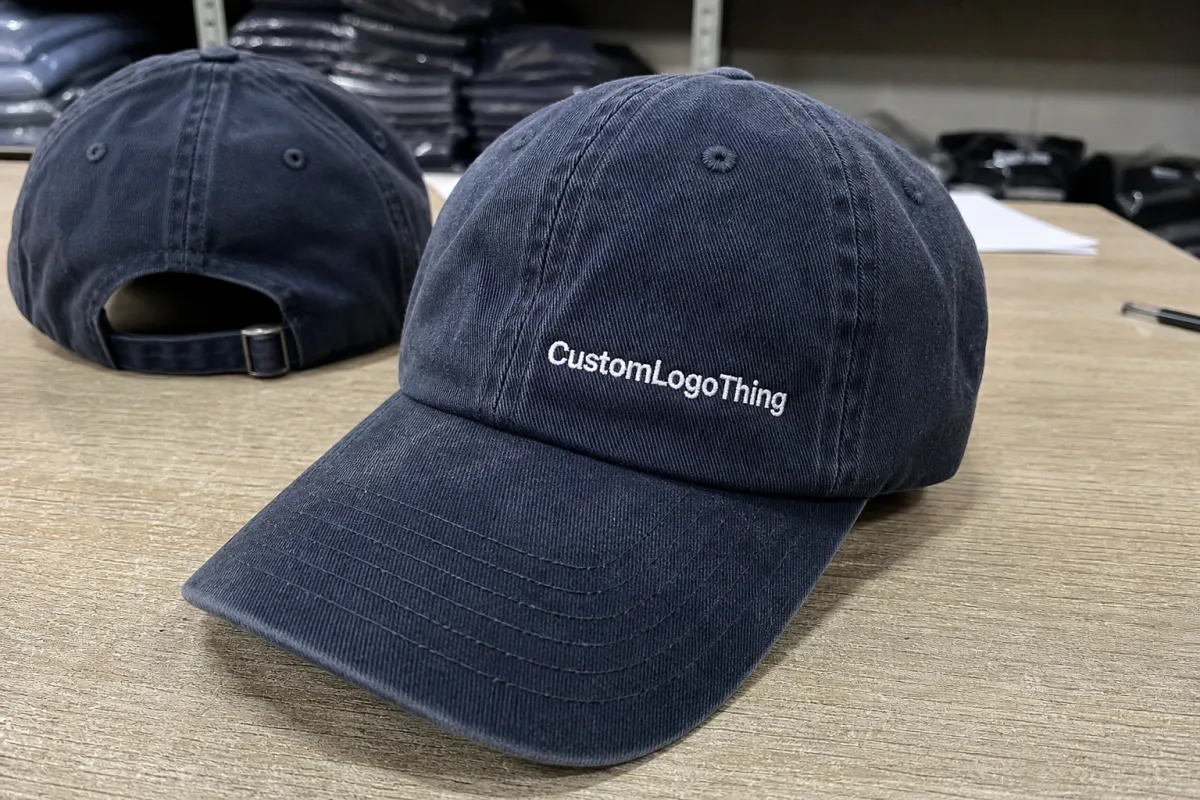
A cap sold in a hotel shop has a different job than a cap handed out at an event. It needs to earn shelf space, hold up under close inspection, and feel like something a guest would willingly buy with a room charge. A price that looks good on paper does not matter much if the hat feels stiff, shiny, or too promotional to belong in retail.
That is why a hotel gift shop dad hats quote should reflect the finished product, not just the blank cap. Buyers are usually comparing a handful of items that customers notice right away: soft handfeel, balanced logo placement, clean thread trimming, wearable colors, and a finish that looks consistent from carton to carton. A lower-cost cap that misses those basics can sit untouched while a better-made washed cotton version moves steadily off the wall.
Most hotel programs need the quote to cover a few specific points clearly:
- Cap body: stocked blank, semi-custom cap, or fully custom construction.
- Fabric: washed cotton twill, brushed cotton, pigment-dyed cotton, canvas, or performance blend.
- Decoration: direct embroidery, woven patch, embroidered patch, leatherette patch, or printed patch.
- Logo complexity: stitch count, number of thread colors, fine text, line weight, and placement.
- Retail finishing: hangtags, folded packing, stickers, individual bags, carton labels, and destination.
Repeat orders matter more than many buyers expect. If a stone cap with navy embroidery becomes the best seller, the next run needs to match closely enough that staff and guests do not notice a change in crown depth, thread tone, or closure hardware. That kind of consistency takes planning at the quoting stage, not after the order is already moving.
Buyer tip: Quote the cap the way it will be sold. Retail merch needs a different quality standard than giveaway merchandise, even when the base item looks similar.
Cap Construction Details That Affect Retail Quality
A standard dad hat is usually low-profile, unstructured, and built with six panels, a pre-curved visor, stitched eyelets, and an adjustable back closure. The unstructured crown is the part that gives the style its soft, easygoing look. It does not stand upright the way a structured trucker or athletic cap does, so it reads more like weekend wear, vacation wear, or a souvenir than a sports uniform.
Fabric choice changes the whole impression. Washed cotton twill is popular because it feels broken in from day one. Weight varies by supplier, but many retail caps land somewhere around 180-260gsm. Brushed cotton feels smoother and a little cleaner, which can suit boutique hotels or urban properties. Pigment-dyed cotton brings a softer, lived-in look with subtle variation in color, which works well for coastal, mountain, vineyard, and heritage-style merchandise.
Crown depth deserves more attention than it usually gets. If the cap is too shallow, it can feel skimpy. Too deep, and it sits low over the ears and looks awkward in a mirror. For hotel retail, a moderate low profile usually gives the best balance: comfortable on the head, visually easy to display, and broad enough to appeal to different guests without feeling oversized.
Closure Options and What They Signal
The back closure looks minor, but shoppers notice it. An antique brass buckle with a fabric strap usually feels more retail-ready than a basic plastic snap on a soft Cotton Dad Hat. A metal slider is practical and tidy. Hook-and-loop can work for active or outdoor programs, though it often feels less premium in a boutique setting. Plastic snaps are familiar, but they push the cap toward a different style category.
Decoration placement also affects the final read. Front-center embroidery is the classic option. Side embroidery can add a property name, a course name, coordinates, or a short location detail. Back-strap text is subtle but memorable. Woven patches and leatherette patches create more room for detail and often look more deliberate in a retail environment. Internal labels, custom sweatband printing, and woven side tags can support private-label presentation, although they usually add setup time and minimums.
Logo Artwork, Embroidery, and Patch Options
The right decoration method depends on the artwork. Fine serif letters, thin line art, tiny coordinates, crest marks, and detailed architectural icons all behave differently once they move onto a curved cotton crown. For that reason, a solid hotel gift shop dad hats quote should include an artwork review, not just a cap price.
Direct embroidery remains the most common choice. It is durable, clean, and familiar to retail buyers. For a short property name or a small icon, flat embroidery usually gives the best mix of cost and appearance. Puff embroidery can add height and visibility, but it is not a good match for tiny text or delicate marks. Stitch count matters a great deal: a compact 4,000-stitch logo and a dense 12,000-stitch crest do not take the same machine time, even if both fit on the front panel.
Thread color matching is usually handled through embroidery thread charts rather than exact ink formulas. Pantone references still help, but thread reflects light differently from print. It has texture, sheen, and a little variation from batch to batch. A proper production file also accounts for pull compensation, which means the digitized stitch file is adjusted so the finished design does not distort as the needle and thread tension work through the fabric.
Patch Choices for Different Hotel Styles
Woven patches are a strong choice for detailed crests, fine borders, and small lettering because the threads are woven into a flatter, label-like surface. Embroidered patches feel more traditional and dimensional, though they still have limits on tiny detail. Leatherette patches fit lodge, golf, outdoor, and heritage branding especially well; they are often laser-etched and then stitched to the cap. Printed patches are useful when gradients or artwork detail cannot be represented well in thread, although the finish feels more graphic than stitched.
| Decoration Option | Best Use | Cost Impact | Retail Feel |
|---|---|---|---|
| Direct flat embroidery | Simple hotel names, icons, short text | Moderate; driven by stitch count and colors | Classic, clean, familiar |
| Woven patch | Crests, coordinates, fine line detail | Moderate to higher; patch setup applies | Sharp, premium, label-like |
| Leatherette patch | Lodges, golf, outdoor, rustic resort branding | Moderate to higher; patch size and stitching matter | Warm, textured, giftable |
| Side embroidery | Location text, small secondary mark | Adds cost as a second decoration location | Subtle, custom, retail-minded |
Digitizing is a real production step, not a formality. It converts artwork into stitch instructions, including sew direction, density, underlay, trim points, and thread order. Vector artwork is the safest starting point, especially AI, EPS, or a clean PDF. If vector art is not available, a high-resolution PNG may work for review, but a redraw is often needed before production. Brand rules should also be shared if there are required clear spaces, alternate marks, or strict size limits.
Specifications to Confirm Before We Price the Order
A precise hotel gift shop dad hats quote begins with a clean spec sheet. The more complete the information, the fewer assumptions are buried in the price. Assumptions are usually where surprise charges appear later.
Before requesting pricing, gather these details:
- Estimated order quantity and quantity by colorway.
- Preferred cap color, fabric type, and closure style.
- Decoration method, logo location, and approximate logo size.
- Number of thread colors or patch colors.
- Packaging needs such as hangtags, stickers, folded packing, or individual polybags.
- Delivery address, in-hands date, and any receiving requirements.
Quantity should always be separated by color. One hundred forty-four hats in one color is a very different production task from 144 split across four colors at 36 pieces each. Smaller color runs can affect blank availability, picking, packing, and setup efficiency. If the goal is a focused opening order, two or three colors usually make more sense than six tiny runs that are hard to replenish later.
Color planning benefits from a practical eye. Stone, khaki, navy, black, olive, faded blue, and warm gray tend to work well because guests can wear them after the trip. Seasonal colors can succeed too, especially when they match the property: sand and washed aqua for coastal shops, moss and charcoal for mountain properties, burgundy or natural canvas for vineyard retail, and soft white or sage for spa merchandise. The strongest option is not always the most brand-faithful option.
Fit still matters, even though dad hats are adjustable. Adult caps are the default for most hotel shops. Youth sizes can be useful for family resorts, but mixing adult and youth inventory makes the assortment harder to manage. Crown depth, strap range, and the general feel of the cap should also be discussed. A cap can read relaxed, boutique, outdoorsy, or luxury casual, and those cues influence the fabric and finish that make sense.
Pricing, MOQ, and Unit Cost Factors for Gift Shop Caps
Pricing for Custom Dad Hats is shaped by order quantity, stock versus custom construction, embroidery complexity, patch type, number of decoration locations, packaging, freight, and whether a sample is needed before bulk production. A basic embroidered cotton cap and a pigment-dyed patch cap with a custom hangtag are not supposed to land at the same unit cost.
MOQ depends on the program. Stocked cap styles with direct embroidery are usually more flexible because the blank cap already exists and decoration becomes the main step. Fully custom colors, custom labels, specialty trims, private-label sweatbands, and unique patch programs usually require higher minimums because materials have to be sourced, sewn, labeled, and controlled across the whole run.
Some of the most common cost drivers are high stitch counts, multi-location embroidery, specialty patches, individual polybags, retail hangtags, barcode stickers, rushed scheduling, and split shipments. Freight matters too. Caps are light, but cartons take up space, and dimensional weight can change the final shipping cost. If the goods are going to a hotel dock, third-party warehouse, or retail office, that destination should be included in the quote request from the start.
For gift shops, the best way to think about unit cost is to work backward from the planned shelf price. If the hat is meant to retail around $28 to $38, the landed cost still has to leave room for freight, payment fees, markdown risk, and staff handling. A cheaper cap that looks weak on the rack often costs more in the long run because it moves slowly or needs to be marked down.
A good request for a hotel gift shop dad hats quote can ask for good-better-best options:
- Good: stocked cotton dad hat with front embroidery and standard packing.
- Better: washed cotton cap with front embroidery, side detail, and hangtag.
- Best: pigment-dyed or upgraded cotton cap with woven or leatherette patch, custom tag, and retail-ready packing.
Packaging and sourcing claims should be handled carefully. If FSC-related paper tags or cartons are requested, certification should be verified through the supply chain rather than assumed. For shipping performance and packaged-product testing, ISTA is a useful reference point when cartons, handling, and distribution conditions matter.
Process and Timeline From Artwork Review to Delivery
A normal cap order moves through a predictable chain: quote review, specification confirmation, artwork cleanup, embroidery digitizing or patch proofing, pre-production approval, bulk decoration, quality control, packing, and shipment. The actual timing depends on how ready the artwork is, whether samples are needed, cap availability, decoration complexity, quantity, and freight method.
Some stocked embroidered runs can move quickly after proof approval, while patch programs, samples, custom trims, or larger quantities usually take longer. A realistic production window might be 12 to 15 business days from proof approval for certain stock-based orders, but that is not a promise that applies to every job. The required in-hands date should be shared before pricing is finalized so the schedule can be judged against actual production capacity.
Proofing deserves attention. A digital proof confirms placement, approximate size, thread or patch colors, and the basic layout. It is useful for catching obvious mistakes before production starts. A physical sample is more reliable when the brand standard is strict, the hat will carry a premium price, or the design uses small text, unusual thread colors, patch textures, or a new cap body. Samples add time and cost, but they can prevent much larger problems once bulk work begins.
Quality control on caps is hands-on work. The checks should include centered embroidery, clean trimming, consistent placement, a proper visor curve, a functional buckle or slider, balanced panel shape, correct color counts, and carton labels that make sense to the receiving team. If an order has multiple colors, each carton needs to be organized clearly so the hotel staff is not sorting mixed inventory in the back office during a busy arrival window.
Internal approval time should be built into the schedule. Ownership, brand management, purchasing, retail managers, and marketing may all need to review the same item. A quote can be turned around quickly, but production cannot start cleanly if the logo file, cap color, or delivery date keeps changing after approval.
Common Ordering Mistakes That Reduce Sell-Through
The first mistake is oversizing the front logo. A mark that looks bold on a flat screen can feel crowded once stitched into a soft, curved crown. On many dad hats, a front embroidery width around 2.25 to 3.25 inches works better than a broad apparel mindset, though the right size still depends on the artwork.
The second mistake is choosing colors only from brand guidelines. A perfect brand color may not be a color guests want to wear on the flight home. Retail caps need to live past the property stay. Neutrals, faded tones, and location-friendly shades often outperform bright corporate colors, even when the brighter option is technically on-brand.
Thin text and detailed crests cause another common problem. Thread has physical thickness. If the letters are too small, counters close up, lines merge, and the cap starts looking messy. A simplified mark, woven patch, or alternate logo can make the finished product look more expensive, not less branded.
Packaging and display are easy to overlook. Caps may need hangtags, price stickers, barcode labels, size or fit stickers, or folding guidance for consistent shelf presentation. If they arrive in mixed cartons without clear labels, receiving takes longer and the wall can look uneven. A simple carton map and good color separation save staff time.
Under-ordering proven neutrals can also hurt sales. If the hotel sees steady foot traffic and stone, navy, or black caps are likely to move, a small opening run may create a stock gap during peak occupancy. Reorders are possible, but embroidery queues, blank availability, and freight transit still take time. A sensible opening plan usually includes at least one safe color that can be replenished without much debate.
Next Steps to Get a Precise Custom Dad Hat Quote
The clearest quote usually comes from the cleanest input. Logo file, estimated quantity, preferred cap color or color family, decoration method, delivery address, in-hands date, and packaging needs are the core details. If there is already a merchandise wall in place, a photo helps because display format affects practical decisions such as folding, hangtag direction, and whether two or three colors will look better on the fixture.
If the material choice is still open, that is normal. The right cap body depends on the property type, the expected retail price, and the feel the product should carry. Coastal, urban, heritage, outdoor, golf, spa, and luxury casual programs do not all need the same finish. A washed cotton cap with tonal embroidery says something different from a leatherette patch on olive cotton, and both can be correct in the right setting.
Budget comparisons are easiest when they are organized into options rather than debates over one number. One version might be a budget-conscious embroidered dad hat. Another might be a mid-tier washed cotton cap with a side detail. A premium version might use a woven patch, custom hangtag, and private-label touch. That kind of comparison gives purchasing and retail teams a clear sense of what the added cost actually changes.
For a hotel gift shop program, the strongest results usually come from a balanced mix of product feel, logo restraint, and careful finishing. The hat should look like something a guest would keep wearing after checkout. If it does, the retail price has a much better chance of making sense.
FAQ
What information do I need for a hotel gift shop dad hat quote?
Send the logo file, estimated quantity, preferred cap color, decoration method, delivery location, target in-hands date, and packaging needs such as hangtags, stickers, barcode labels, or individual bags. If the cap style is not decided yet, include the hotel type, expected retail price, and current merchandise mix so the pricing can be grounded in the actual shop environment.
What is the typical MOQ for custom dad hats for hotel retail?
MOQ depends on whether the order uses stocked cap styles, custom colors, specialty patches, or private-label trims. Stock-based embroidered programs are usually more flexible, while fully custom construction, unique materials, custom labels, or special trims generally require higher minimums to keep production efficient.
Are embroidered dad hats better than patch dad hats for a gift shop?
Direct embroidery is clean, classic, and cost-efficient for simplified logos, short property names, and small side details. Patches are often better for detailed crests, outdoor-style branding, vintage looks, or designs that need sharper edges than thread can create directly on the crown.
How long does production take for hotel gift shop caps?
Lead time depends on artwork readiness, sample approval, cap availability, decoration complexity, order size, and shipping method. The safest approach is to share the required delivery date before quoting so production and freight can be planned around the actual launch schedule.
Can I order several dad hat colors in one quote?
Yes, but the quote should show how the total quantity is split by color because pricing and production planning can change when an order is divided into multiple small runs. For hotel shops, a focused assortment of two or three wearable colors often performs better than a wide spread of low-quantity colorways.


