If you’re buying custom labels for you, you are deciding how a customer reads, touches, and remembers the garment. Labels carry brand identity, size, care information, and often compliance text. They also affect comfort, which is why the wrong material or finish can weaken an otherwise good product.
For buyers, the main job is to balance appearance, readability, durability, and cost. A label that looks sharp in a proof can still fail if the text is too small, the fabric feels rough, or the ink does not hold up in washing. The best choice depends on garment type, placement, and how much information must fit.
That is why label selection should be treated like a product-spec decision, not a decoration decision. The best result usually comes from picking the simplest format that meets the functional requirement.
Custom labels for you: what they are and why clothes need them
Clothing labels are functional first. A garment may need a brand name, size, fiber content, care instructions, origin information, and sometimes market-specific wording. That makes custom labels for you a production requirement, not just a branding add-on.
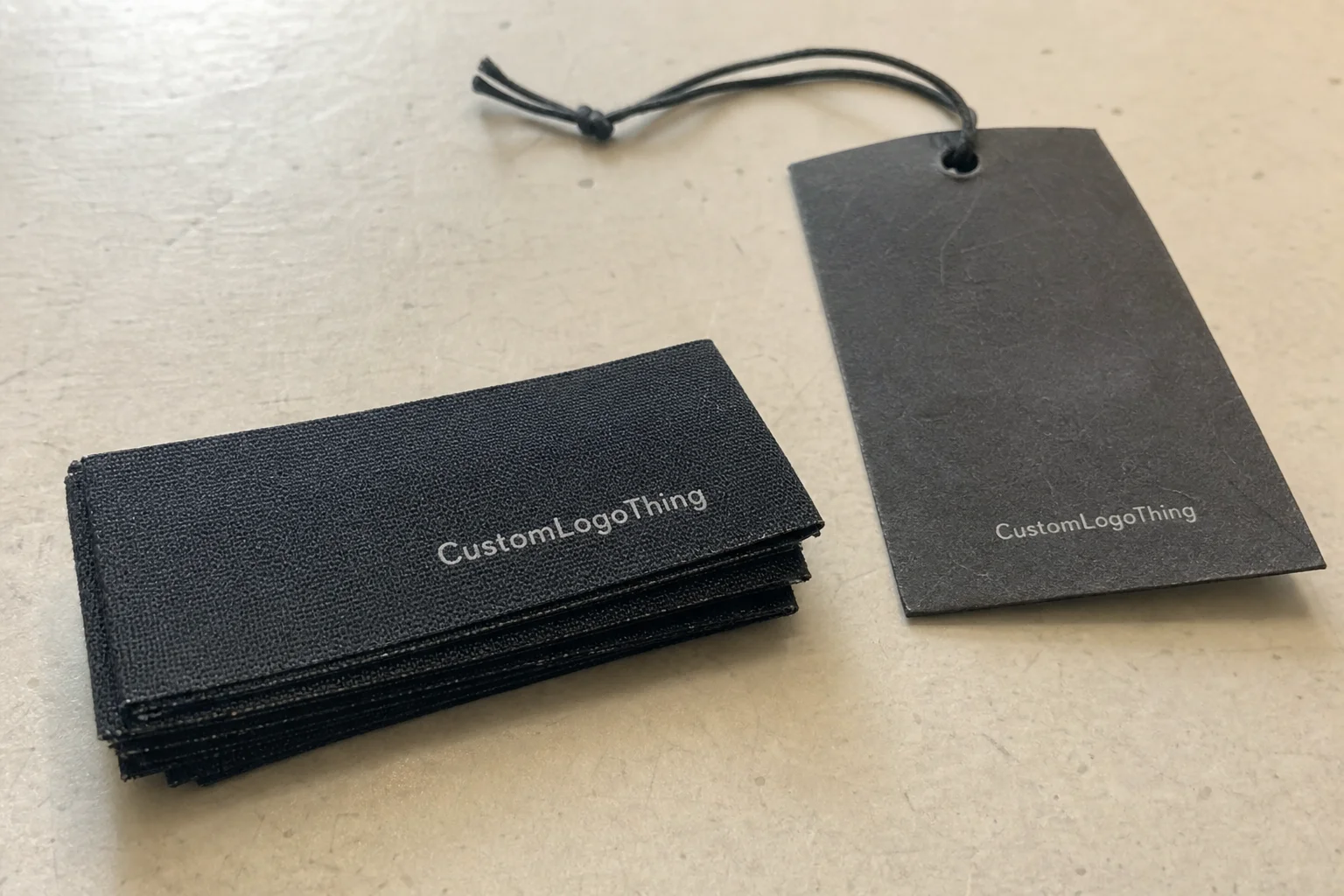
Common label types include woven labels, printed labels, Heat Transfer Labels, hang tags, and care labels. Woven labels are made by weaving thread into the design, which gives strong durability and a refined look. Printed labels place artwork on satin, cotton, or similar materials, which can be softer and better for fine text. Heat transfer labels are applied directly to fabric and can feel nearly weightless, making them useful for activewear and other soft garments.
The right format depends on the product. A thick woven label can irritate the neck on a lightweight tee. A printed label with too much legal text may become unreadable if the label is too small. A heat transfer label can solve comfort issues, but it is not always the best choice for long care copy or highly detailed branding.
“A label can make a small brand look organized. Or it can make the whole product look like somebody rushed the last step.”
Labels also need to work with the rest of the packaging system. If you already use coordinated retail packaging, the label should feel like part of the same brand language. Customers do not separate these pieces in practice; they notice whether the product feels consistent.
How clothing label production works from file to finished roll
The production flow is usually straightforward: send the specs, check the artwork, approve the proof, approve a sample if needed, then move to bulk production and shipping. The process only stays efficient when the buyer sends complete and final information.
A supplier typically needs the logo file, exact text, dimensions, fold style, material choice, color references, and quantity. If the label includes fiber content, care symbols, or compliance wording, that copy should already be final before proof approval. Changes after approval can add time and cost, especially once production starts.
Proofing is where most errors should be caught. A proper proof should show layout, spelling, line breaks, fold direction, and how the smallest text will fit on the finished label. Text that looks fine on a screen can become hard to read once it is woven or printed at actual size.
Samples are worth the delay when comfort, color accuracy, or wash performance matters. They let you check texture, edge finish, and how the label reads under real lighting. If the product is premium or close to the skin, sampling is usually cheaper than fixing a problem after bulk production.
Clear files shorten lead time more than urgency does. Clean vector artwork, final copy, and a simple spec sheet make the order easier to quote, proof, and inspect.
Material, size, and finish choices that affect comfort and durability
Material is usually the biggest comfort and durability decision. The best option depends on garment category, wash frequency, and whether the label touches skin directly.
- Woven labels: Durable and polished. Damask is common because it balances detail and wear performance. Good for premium apparel and branding that needs a structured look.
- Printed satin labels: Softer and often better for fine text. Common for neck labels and care labels on lightweight garments.
- Cotton labels: Natural feel and a good fit for heritage or organic positioning, though very small text may not stay as crisp.
- Polyester labels: Cost-conscious and durable through repeated washing. Often used for uniforms and everyday apparel.
- Tyvek labels: More suited to temporary or utility use than to fashion branding.
- Heat transfer labels: Very low-profile because there is no sewn edge. Popular for activewear, kidswear, and soft basics.
Size matters because the label has to hold the right amount of information without losing readability. Neck labels usually need enough room for brand name and size. Care labels often need a longer layout because they may include multiple lines, symbols, and legal text. Many woven brand labels sit around 1" x 2" to 1.5" x 3", while care labels often need more length to stay legible.
Fold style changes how the label sits on the garment. End fold and center fold are standard for sewn-in branding. Loop fold creates a cleaner hanging profile when the label is meant to sit outside the garment. Side seam labels usually carry care or compliance details, while neck and hem labels serve branding in different ways.
Color and finish affect readability more than many first-time buyers expect. High contrast is easier to read. Heavy sheen can look premium, but it can also make text harder to see under retail lighting. Dense weaving gives sharper edges; printed satin feels softer. The right finish depends on whether the label should stand out or stay quiet.
Comfort should not be treated as optional if the label touches skin. A simple label that feels better often performs better in the market than a more elaborate label that irritates the wearer.
| Label type | Comfort | Durability | Typical use | Relative cost |
|---|---|---|---|---|
| Woven damask | Medium | High | Brand labels, premium apparel | Medium |
| Printed satin | High | Medium | Neck labels, care labels | Low to medium |
| Heat transfer | Very high | High | Activewear, kidswear, soft basics | Medium |
| Cotton | High | Medium | Natural or eco-focused apparel | Medium |
Custom labels for you pricing: MOQ, unit cost, and what drives the quote
Price is driven by quantity, material, size, print method, number of colors, finish, and packaging requirements. Setup time matters too, which is why smaller orders usually cost more per piece.
MOQ, or minimum order quantity, exists because a production line needs to be set up before the first label is made. A 500-piece woven label run does not cost the same per unit as a 10,000-piece run because setup, calibration, cutting, folding, and inspection are spread across fewer pieces.
Planning ranges vary by label type, but these are common ballparks:
- Simple printed satin labels: about $0.04 to $0.12 per piece at higher quantities
- Woven labels: often $0.08 to $0.25 per piece depending on detail and fold
- Heat transfer labels: often $0.12 to $0.35 per piece depending on size and complexity
- Specialty finishes or premium presentation: can run higher, especially with custom folding or bundled packaging
Those numbers are for planning, not exact quotes. A two-color woven label and a six-color detailed logo are not comparable jobs. Neither are a plain label and a label bundled into a broader packaging program.
The most common pricing mistake is comparing unit prices without checking the full order. A lower per-piece number can still be more expensive if setup, proofing, or freight is higher. Another mistake is comparing quotes with different specs. If the material, fold, or size is not the same, the quote is not truly comparable.
To get useful pricing, keep the variables fixed: size, fold, quantity, text, and finish. Then the quote tells you something real.
Process and turnaround: how long custom clothing labels actually take
Lead time usually includes proofing, sampling if required, production, and shipping. For straightforward orders, production may take 10 to 15 business days after proof approval. If a sample is needed, add a few more days. International transit can add another 5 to 15 business days depending on shipping method and customs handling.
Most delays come from missing files, unfinished copy, or late approvals. A buyer sends a low-resolution logo, the supplier requests a vector version, and the schedule slips while the correct file is found. The problem is usually the handoff, not the label itself.
Rush orders can help when a launch date is fixed, but they do not fix bad input. Faster production still needs clear artwork and final copy.
For seasonal drops, trade shows, or coordinated retail packaging launches, build in buffer time. A practical planning window is often 3 to 4 weeks from first contact to delivery for simple runs, and longer when you are ordering multiple SKUs or requesting samples. If the order also includes Custom Packaging Products, plan around the slowest component.
For standards-sensitive products, keep the wider packaging and shipping context in view. ASTM and ISTA guidance matter more for shipping performance and package handling, while FSC can matter for paper-based packaging components. For general reference, see ISTA and FSC.
Step-by-step guide to ordering labels without screwing up the details
- Define the garment and its use. Soft loungewear, workwear, kidswear, and retail fashion need different label specs.
- Prepare artwork and text. Gather the logo file, copy, size information, care instructions, fiber content, and legal language before requesting a quote.
- Choose the format. Decide on material, fold style, dimensions, and placement. If needed, ask which spec is most common for that garment category.
- Review the proof slowly. Check spelling, contrast, measurements, line breaks, and the readability of the smallest text before approval.
- Approve the sample or mockup, then confirm shipping details. Verify quantity, delivery address, and any special packing or bundling requirements.
- Inspect the first batch. Compare the delivered labels against the approved proof and record any issues for the next reorder.
Keep one spec sheet for every order. It should show the exact material, dimensions, fold, color, quantity, and approved artwork version. That record makes reorders faster and reduces errors when more than one person touches the process.
Brands that stay organized usually keep labels, care information, and retail packaging aligned. When the spec language is consistent, the product looks more deliberate and easier to trust.
Common mistakes buyers make with custom labels and how to avoid them
The first mistake is trying to fit too much text into too little space. It looks fine on a screen and becomes unreadable once the label is produced. If the copy is long, increase the label size or choose a format that handles small text better.
The second mistake is choosing a material that feels rough at the neck. If the label touches skin, comfort is part of the product, not an upgrade.
The third mistake is using the wrong fold or size for the placement. A side seam care label and a center-fold neck label serve different purposes, so they should not be treated as interchangeable.
Wash performance is another issue that gets ignored too often, especially for activewear, kidswear, and uniforms. If the product will be washed repeatedly, check color retention and edge durability.
Compliance text also causes avoidable problems. If a garment needs fiber content, care symbols, or origin information, confirm the wording before proof approval. Regulations vary by market, so the final copy should always be checked against the destination country or channel.
If you make environmental claims, keep the language accurate and supportable. Do not use eco-friendly wording unless the material and sourcing claims can be backed up. For general reference, see EPA guidance.
Expert tips for better label results and smarter next steps
Start with one primary label type and test a second option only if the first one misses comfort, durability, or appearance. Too many buyers try to perfect everything on the first run, which usually wastes time and budget.
If the line is new or the design is detailed, order a small sample quantity before scaling up. That applies whether you are buying custom labels for you for the first time or refreshing an existing product line. Fixing a small test order is much easier than fixing a bulk run.
Keep records. A simple file with approved specs, dimensions, fold style, and production notes makes reorders faster and more consistent. It also helps different team members stay aligned.
Label style should follow the product category:
- Luxury basics: woven damask or soft printed satin
- Streetwear: bold woven branding or clean heat transfer
- Uniforms: durable polyester or printed care labels
- Kidswear: soft, low-profile, skin-friendly options
- Wholesale basics: practical labels that balance cost and durability
If you are also developing custom printed boxes, hang tags, or a larger retail packaging system, keep the label inside the same visual language. The choices do not need to match exactly, but they should feel intentional and connected.
The most reliable next step is simple: collect the artwork, write down the required text, compare quotes with identical specs, and place a small test order before committing to a bulk run.
What are the best custom labels for clothing if comfort matters most?
Printed satin and heat transfer labels are usually softer against the skin than thick woven options. For neck labels, low-profile materials with smooth edges tend to perform best. If the garment gets heavy washing, balance comfort with durability rather than choosing softness alone.
How much do custom clothing labels usually cost per piece?
Unit cost depends heavily on quantity, material, size, and finishing. Smaller orders cost more per label because the setup is spread across fewer pieces. The cleanest way to compare quotes is to keep all specs identical.
How long does it take to get custom labels made and shipped?
Timeline usually includes artwork proofing, sampling if needed, production, and shipping. Rush orders can shorten lead time, but they still need clear artwork approvals. International shipping and customs can add time beyond production.
What information do I need before ordering custom labels?
Have your logo or text, label size, placement, material preference, fold style, and quantity ready. If the label includes care information, confirm the wording before proof approval. Clear specs reduce revisions and speed up quoting.
Can custom labels be used on all clothing types?
Yes, but the best label type changes by garment category. Soft apparel needs comfort-first materials, while workwear and kidswear need durability and wash resistance. The label should match how often the item is worn, washed, and touched.
If you want the label to work as part of the product, start with the garment, then choose the format, material, and copy that fit it best.