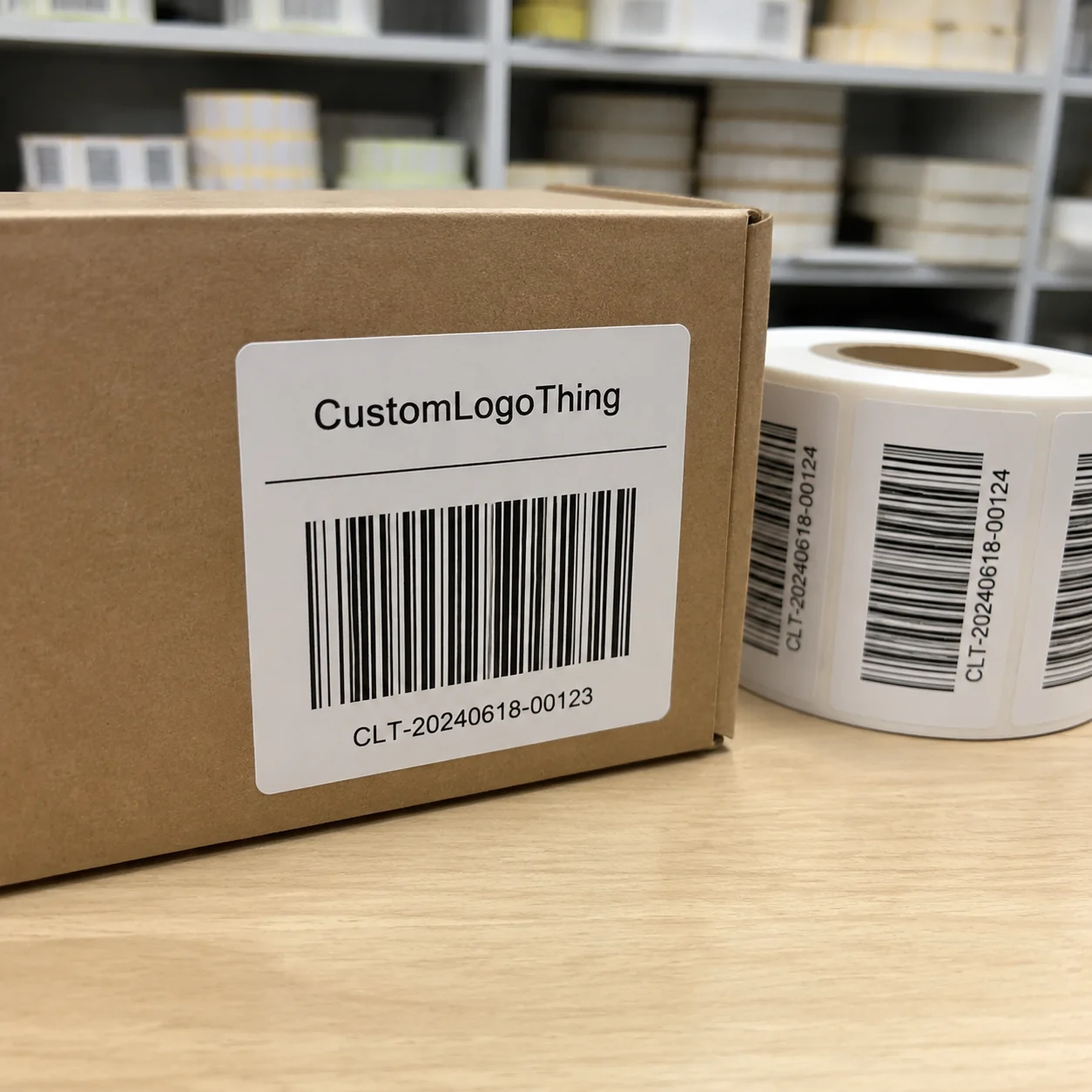
Buyer Fit Snapshot
| Best fit | Custom Labels Supplier for Better Branding projects where brand print, material claims, artwork control, MOQ, and repeat-order consistency need to be specified before quoting. |
|---|---|
| Quote inputs | Share finished size, material target, print colors, finish, packing count, annual reorder estimate, ship-to region, and any compliance wording. |
| Proofing check | Approve dieline scale, logo placement, barcode or warning zones, color tolerance, closure strength, and carton packing before bulk production. |
| Main risk | Vague material claims, crowded artwork, missing packing details, or unclear freight terms can make a low unit price expensive after revisions. |
Fast answer: Custom Labels Supplier for Better Branding: Material, Adhesive, Artwork, and MOQ should be specified like a repeatable production item. The safest quote records material, print method, finish, artwork proof, packing count, and reorder notes in one written spec.
Production checks before approval
Compare the actual filled-product size with the drawing, then confirm tolerance on folds, seals, hang holes, label areas, and retail display edges. Reserve space for logos, QR codes, warning copy, and material claims before decorative graphics fill the panel.
Quote comparison points
Review material grade, print process, finish, sampling route, tooling charges, carton quantity, and freight assumptions side by side. A quote is only useful when the supplier can repeat the same color, closure quality, and packing count on the next order.
Finding the right partner for a Custom Labels Supplier guide takes more than chasing the lowest quote, and frankly, I wish more people learned that before they had three pallets of labels they could not use. I’ve stood on bottling floors in Chicago, Milwaukee, and Allentown where two labels that looked identical on a proof sheet behaved completely differently once they hit a chilled glass bottle at 38°F, a curved HDPE jug with a 3-inch shoulder, or a corrugate shipper that spent 48 hours in a humid dock. That gap between “looks fine on screen” and “works on the line” is exactly why this custom labels supplier guide matters, because real production has a way of humbling pretty PDFs.
At Custom Logo Things, I’ve seen brands pour money into packaging design, custom printed boxes, and retail packaging, then lose the whole effect because the label peeled, smeared, or looked dull under 4,000K store lighting. A supplier is not just printing a sticker. A good custom labels supplier guide should help you think through material sourcing, adhesive selection, print method, finishing, die-cutting, inspection, and the actual environment your product will face after it leaves the warehouse. I remember one client in New Jersey who said, with a straight face, “It’s just a label,” and then called back 11 days later because the wrap labels on their 16 oz bottles were lifting at the seam after a refrigerated truck run.
That kind of surprise is common, honestly, because labels live a rough life. They get chilled, warmed, rubbed, stacked, and stared at under store lights that seem designed to expose every flaw. If your buying process does not account for that, it is gonna cost you later.
Why Choosing the Right Custom Labels Supplier Changes Everything
I’ve watched a premium beverage brand spend $18,000 on a beautiful launch, only to discover that their paper labels curled on cold bottles within 40 minutes of leaving the cooler at 34°F. Same artwork. Same brand colors. Very different result. That’s the sort of reality this custom labels supplier guide is built around, because the supplier you choose affects far more than print quality. It affects line speed, shelf appeal, customer trust, and how much rework you deal with later. And rework, for the record, is a terrible hobby.
So what does a custom labels supplier actually do? In practical terms, a supplier helps source the right stock, chooses a pressure-sensitive adhesive, prints the artwork, applies finishing like matte or gloss varnish, die-cuts the shape, inspects the rolls, and ships labels in the format your team can apply. A solid custom labels supplier guide should treat that as a packaging service, not a transaction. The best partners think like packaging engineers and production schedulers, not just sales reps quoting by square inch, and that distinction saves a lot of late-night “why is this not sticking?” emails.
Labels also carry a huge share of brand perception. In one cosmetics meeting I had with a client in New Jersey, we compared three label samples under the same fluorescent light, and the one with a soft-touch laminate instantly made the bottle feel more expensive, even though the ink coverage was nearly identical. That kind of tactile difference matters in branded packaging and package branding, because a customer often touches the label before they ever read the ingredient panel. This custom labels supplier guide is really about protecting that first impression, which is both visual and strangely emotional (people absolutely judge bottles with their hands).
Honestly, most brands underestimate how fast a label communicates reliability. A crisp edge, consistent color, and clean finish signal care. A wrinkled label or mismatched white point can make a product feel rushed, even if the formula inside is excellent. That’s why the best supplier is not just a printer, but a packaging partner who can match label construction to the container, the fill environment, and the application method. That principle sits at the heart of any useful custom labels supplier guide.
Factory-floor truth: the label that survives a hand-applied run on room-temperature jars may fail completely on a high-speed line, especially if the adhesive grab, liner release, and roll winding are not matched to the applicator.
I’ve seen that mismatch firsthand on a contract packer’s floor in Ohio, where a line operator could apply 220 jars per minute with one adhesive and barely 140 with another because the roll tension and release characteristics fought the machine. That’s the kind of detail a strong custom labels supplier guide should make normal, not obscure. Nobody wants to be the person standing beside a jammed applicator pretending the issue is “minor.”
How Custom Label Production Works From File to Finished Roll
The best way to judge a supplier is to understand the path from artwork to finished roll. A proper custom labels supplier guide should walk you through the production sequence, because every step creates a place where quality can improve or fall apart. It usually starts with artwork review, where the supplier checks size, bleed, die line placement, resolution, and whether the file has enough contrast for a barcode or fine type. I’ve had more than one proof come back with a barcode that looked beautiful and scanned like a stubborn mule, so I have a healthy respect for this step.
Next comes material recommendation. Here, a supplier should tell you whether paper, polypropylene, vinyl, polyester, or a specialty film fits your container and environment. For example, 70 lb facestock paper with a 54 lb glassine liner can work beautifully on dry cartons and some jars, but it is usually a poor choice for condensation-heavy bottles stored at 36°F. Polypropylene, often in a 2 mil white BOPP construction, tends to hold up better on many plastic containers, while 2 mil polyester is often chosen for higher durability or harsher handling. A practical custom labels supplier guide always ties substrate choice to the actual use case, not just to price, because “cheap and wrong” is still wrong.
Printing method matters too. Digital printing is often a strong choice for shorter runs, variable data, or fast artwork changes, and I’ve seen it save a craft beverage brand when they needed three seasonal SKUs with different copy in a 10-day window. Flexographic printing usually shines on longer runs where consistent output and lower unit cost become more attractive, especially once plate setup is spread across volume. Screen printing can deliver thick ink laydown and strong tactile effects, which is why it still shows up on premium bottles and specialty labels. If your custom labels supplier guide does not separate these methods clearly, it is missing a major decision point.
After printing, the supplier may add finishing such as gloss, matte, soft-touch, foil, or spot varnish. Then the labels are die-cut, slit, rewound, inspected, and packed for shipment. A roll label spec is not a small detail either; core size, winding direction, label spacing, and outside diameter all matter if your line uses a semi-automatic applicator or a pressure-sensitive machine. For example, a 3-inch core with 8-inch maximum outside diameter and outside rewind may be ideal for one applicator in Atlanta, while another line in Phoenix may require 1-inch cores and inside rewind. This is one place where a custom labels supplier guide can save a lot of frustration, because what looks like a tiny technical note can stop an entire shift and make everyone stare at the machine like it has betrayed them personally.
Lead time depends on the complexity of the project. A simple repeat order with approved art might move in 7 to 10 business days after proof approval, while a new custom label with specialty film, white ink, and foil stamping can easily take 12 to 20 business days depending on material availability and proof rounds. If revisions are needed, the clock moves. That is normal, and a reliable custom labels supplier guide should set that expectation early. Anything else is wishful thinking dressed up as scheduling.
When I visited a converter in Illinois, the production manager pointed to a rack of partially finished rolls and said, “The biggest delay is almost never the press; it’s the second and third approval nobody budgeted for.” He was right. A good custom labels supplier guide reminds you that prepress decisions can be the difference between a smooth launch and a week of avoidable emails, plus one very tired project manager.
Key Factors to Compare When Vetting a Supplier
If you are comparing suppliers, start with material compatibility. A strong custom labels supplier guide should push you to ask specific questions: Will this label sit on glass, PET, HDPE, corrugate, or a coated carton? Will it face moisture, oil, abrasion, or freezer storage? Will the package be hand-applied or machine-applied? Those answers determine whether you need a removable adhesive, a permanent adhesive, or something more specialized for low surface energy plastics or cold-fill conditions, such as a high-tack acrylic designed for 40°F surfaces.
Print quality is the next filter. Look for consistent color density across the run, sharp edges on small text, solid opacity if the container is dark, and a finish that matches the brand position. A soft-touch laminate can elevate premium skincare, while a clean gloss finish may be better for retail packaging that needs strong shelf pop. I’ve seen a label supplier lose a medical device project because the black type looked rich on the proof but drifted slightly gray across the second production roll. Color consistency matters more than people think, and a seasoned custom labels supplier guide should say so plainly.
Cost deserves a careful breakdown. I always tell clients to compare total cost, not just unit price, because the cheapest label can become the most expensive if it peels, misfeeds, or requires rework. A proper quote may include setup costs, plate charges for flexo, digital press minimums, proofing fees, shipping, and any special finishing. For example, a 5,000-piece run of 2 x 4 inch white BOPP labels might come in around $0.15 to $0.22 per unit with a matte varnish, while the same run with foil stamping and spot gloss could move closer to $0.35 to $0.55 per unit. Those numbers are not universal, but they show why a custom labels supplier guide must talk about real pricing structure, not vague affordability.
Here is the part many brands miss: a low quote can hide weak quality control. Ask whether the supplier checks for barcode readability, roll consistency, adhesive performance, and color tolerance. Ask what happens if the first batch fails inspection. Ask whether they can provide a spec sheet, material data, and sample history. A reliable custom labels supplier guide should treat communication and technical support as a core buying criterion, not a nice-to-have.
In my experience, the best suppliers also help with file prep. They will flag a 0.5 pt line that may vanish, warn you if a label is too close to the shoulder of a bottle, and suggest a change in substrate if the artwork needs a stronger white underlay. That kind of support saves time and money. It is also one of the clearest signs that the supplier understands real production, which is exactly what you want from a custom labels supplier guide.
If your product sits in a regulated or performance-sensitive category, check whether the supplier understands relevant standards and testing language. For shipping and distribution stress, industry references such as ISTA can help frame transit testing, while sustainability questions often lead to materials and certifications discussed by FSC. For broader packaging and environmental context, EPA resources are also useful. A serious custom labels supplier guide does not replace standards, but it should know where those standards fit.
Step-by-Step Guide to Sourcing the Right Labels Partner
Step 1 is defining your application requirements. Write down the container type, fill temperature, storage condition, moisture exposure, oil contact, abrasion risk, and whether the label must survive a refrigeration cycle or shipping in corrugate. I once worked with a sauce brand that kept losing labels because their product was warm-filling into glass jars at 120°F, then cooled rapidly in a warehouse with a lot of condensation. Once we matched the adhesive to that cooling pattern, the failure stopped. A practical custom labels supplier guide starts with the environment, not the artwork.
Step 2 is collecting supplier options and asking for like-for-like quotes. Send the same spec sheet to each supplier and request samples if they have similar past jobs. Ask for material details, adhesive details, print method, finish, core size, lead time, and shipping format. If one quote is much lower, find out why. Maybe it excludes setup. Maybe it uses a thinner film. Maybe the finish is different. This is where a custom labels supplier guide becomes a negotiation tool, because it helps you compare apples to apples instead of chasing a headline number.
Step 3 is proofing artwork. Review every digit, barcode, bleed line, and color callout. If the label wraps around a curved jar, ask the supplier to mock it up on the actual package. I’ve seen a barcode placed beautifully in Illustrator and then hidden by a bottle shoulder once the label hit the line. A good custom labels supplier guide should make you suspicious of perfect-looking digital proofs unless you have checked them against a real container.
Step 4 is approving samples and confirming production details. Make sure everyone agrees on label dimensions, roll direction, roll quantity, core size, perforation if needed, and delivery date. If your applicator requires a 3-inch core and outside rewind, say that clearly. If you need labels packed 500 per roll with a 1/8-inch gap for sensor reading, say that too. Those details are not extras; they are production controls. A clear custom labels supplier guide protects you from the “we assumed” problem, which is one of the most expensive phrases in packaging.
Step 5 is inspecting the first shipment carefully. Pull labels from the top roll, middle roll, and bottom roll. Check color, adhesive tack, print clarity, and slitting quality. Compare them against the approved sample and keep photos of the final approved spec. If something drifts, document it immediately. I’ve been in client meetings where a 2 mm shift in die cut caused the label to look off-center on every bottle, and because nobody kept a signed approval sample, the argument dragged on for days. A smart custom labels supplier guide tells you to close the loop early.
Here is a simple rule I use: if a supplier cannot explain their process in plain language, they probably do not understand it deeply enough. That has held up in screen rooms, press rooms, and shipping docks alike. The best custom labels supplier guide is not full of jargon; it is full of decisions you can actually act on.
Common Mistakes Brands Make When Choosing a Label Supplier
The biggest mistake I see is choosing only by lowest quote. It happens all the time, especially with startups trying to stretch launch budgets. Then the labels arrive, the adhesive fails on a cold bottle, or the rolls do not run correctly on the applicator, and the brand spends more replacing stock than it saved upfront. A serious custom labels supplier guide should warn you that the cheapest line item can hide the most expensive outcome.
Another common error is matching the wrong material to the package environment. Paper on condensation-prone bottles is a classic miss. So is choosing a general-purpose adhesive for freezer storage, oil-rich products, or high-curvature containers. I once saw a small bath-and-body brand use a beautiful matte paper label on a clear plastic bottle, only to discover that slight lotion residue from filling caused edge lift within a week. That was not a design problem; it was a material decision. Any useful custom labels supplier guide should treat that as a preventable error.
People also overlook production details like roll orientation, label spacing, and dispensing requirements. If your machine expects labels wound in a certain direction, the wrong rewind can stop production. If the gap between labels is too short for the sensor, the line may misread. If the liner is too thin or too slick, handling becomes a headache. These are small details on paper, but they matter a lot on the floor. A grounded custom labels supplier guide never calls them minor.
Skipping physical samples is another trap. Screens lie, at least a little. Monitor brightness, color profile, and room light all affect how artwork looks. Real labels have texture, reflectivity, and ink build that cannot be judged from a PDF alone. I always recommend a physical sample on the actual bottle, jar, or carton if the launch matters. That one extra check can prevent a costly reprint, and it is one of the most practical lessons in any custom labels supplier guide.
Expert Tips for Getting Better Results and Lower Long-Term Costs
If you want better results over time, build your supplier relationship around repeatability. Once you approve a material, adhesive, finish, and print method, keep those specs documented and reuse them when appropriate. That consistency reduces waste, color drift, and re-approval cycles. A mature custom labels supplier guide should encourage spec discipline because that is how brands scale without reinventing the wheel on every reorder.
Ask for alternatives, too. Sometimes a slight design change can lower cost without harming the brand. A 1-color reduction, a smaller foil area, or a switch from full soft-touch to a targeted spot varnish can keep the premium feel while improving economics. I’ve had clients save enough by reducing unused label space to justify a better adhesive, which is a much smarter use of money than spending on decoration nobody notices. That kind of tradeoff belongs in any honest custom labels supplier guide.
Plan your timeline early. If your packaging launch depends on custom printed boxes, labels, and inserts arriving together, start the label approval process first or at least in parallel. Waiting until the bottle is printed and the cartons are on the water creates a tightening schedule that usually ends with rushed proofs and avoidable mistakes. A practical custom labels supplier guide should make timeline coordination part of brand planning, not an afterthought.
Request testing when the application is demanding. If labels must survive refrigeration, moisture, sanitizer wipes, chemical exposure, or high-speed application, ask the supplier what performance checks they can run. Maybe they can test adhesion after 24 hours in cold storage. Maybe they can provide a material built for exposure to oils or a topcoat that resists scuffing. Don’t wait for a launch failure to discover the limits. A good custom labels supplier guide pushes you toward evidence, not assumptions.
One more thing: keep your packaging ecosystem in view. Labels should match the tone of the bottle, the carton, and the overall product packaging. If your custom labels look premium but your outer shipper feels generic, the brand message gets split. I’ve seen better shelf performance when the label, carton, and insert all work together as one package branding system. That is why I also encourage clients to review Custom Labels & Tags alongside other Custom Packaging Products so the full presentation stays aligned.
What to Do Next Before You Place Your First Order
Before you place an order, define the application, collect 2 to 3 quotes, and request physical samples. Then compare them under real conditions: a chilled bottle, a corrugated shipper, a glass jar with residue, or whatever environment the product will actually see. That is the simplest and most reliable next step in any custom labels supplier guide, and it prevents a lot of expensive surprises.
I also recommend creating a one-page label spec sheet. Include size, substrate, adhesive, finish, print method, roll format, core size, label orientation, application method, quantity, and required delivery date. A precise spec sheet makes supplier conversations faster and clearer, and it reduces the chance of a quote based on guesswork. If you have multiple SKUs, note the differences line by line. A good custom labels supplier guide should make this feel routine, because it is one of the easiest ways to improve buying accuracy.
Document the approved sample. Keep a physical copy and a digital record of the final color target, material name, and artwork version. If you run seasonal packaging or limited editions, this matters even more, because small shifts can create visible inconsistency across product families. I’ve sat in supplier reviews where a brand spent an entire afternoon trying to identify which of three “almost identical” whites had been used on the first release. That hassle disappears when the records are clean. It is a simple habit, but an essential one in a custom labels supplier guide.
My advice is straightforward: test, compare, approve, then scale. Do not buy a huge volume before you know the label works on your actual container in your actual environment. That one discipline protects your budget, your schedule, and your shelf presence. If you remember nothing else from this custom labels supplier guide, remember that the best label is the one that performs after it leaves the proof table and enters real production.
And if you want the shortest version of my field advice, it is this: choose a supplier who asks good questions, gives specific answers, and treats your label like part of the whole packaging system, not a throwaway printed piece. That mindset is what turns a basic vendor into a true partner, and it is exactly why a custom labels supplier guide can save more money than it costs to read.
Custom Labels Supplier for Better Branding: decision table
| Decision area | Best fit | What to verify | Risk if skipped |
|---|---|---|---|
| Substrate | Labels, stickers, ribbons, inserts, tags, and tissue paper | Paper/film type, adhesive, GSM, roll direction, and finish | The print looks right but fails during application or handling |
| Artwork control | Brand color, barcode, QR code, and small text clarity | Vector file, Pantone target, safe area, and proof route | Small details blur or shift across a full production run |
| Use environment | Retail display, shipping, food-safe handling, or gift presentation | Moisture, rubbing, heat, and surface compatibility | A pretty sample fails in the real use case |
FAQs
What should I ask a custom labels supplier before ordering?
Ask about material options, adhesive performance, print method, lead time, minimum order quantity, and whether they can recommend a label for your specific container and environment. Request samples and a written quote that breaks out setup costs, production costs, and shipping so you can compare suppliers accurately. A strong custom labels supplier guide should always start with those basics.
How do I know which label material is best for my product?
Match the material to the conditions the label will face, such as moisture, refrigeration, abrasion, oils, or outdoor exposure. A supplier should help you compare paper, polypropylene, vinyl, polyester, and other film options based on performance, appearance, and budget. That is one of the most practical lessons in any custom labels supplier guide.
Why do custom label prices vary so much between suppliers?
Price changes based on material grade, print method, finish, quantity, setup requirements, and whether the supplier includes proofing or testing. A lower quote may leave out quality control, sample approval, or the right adhesive, which can raise your real cost later. That is why a real custom labels supplier guide focuses on total value, not just the sticker price.
How long does the custom label process usually take?
Timeline depends on artwork readiness, proof approval, material availability, and the complexity of printing and finishing. A simple reorder may move in 7 to 10 business days after proof approval, while a new custom label project with sampling and revisions can take 12 to 15 business days or longer because every approval step adds time. A practical custom labels supplier guide should help you plan for that reality early.
What is the biggest mistake brands make with a custom labels supplier?
The most common mistake is choosing a supplier based only on price instead of checking material compatibility, application needs, and print quality. Skipping real-world testing on bottles, jars, pouches, or cartons often leads to peeling, smudging, or color mismatches after launch. That is exactly the kind of mistake a solid custom labels supplier guide is meant to prevent.
If you want help connecting labels with the rest of your branded packaging, Custom Logo Things can help you think through the full system, from labels to cartons to presentation pieces. A good custom labels supplier guide should leave you with one clear takeaway: define the real use conditions first, then choose the supplier whose process proves the label will hold up there.