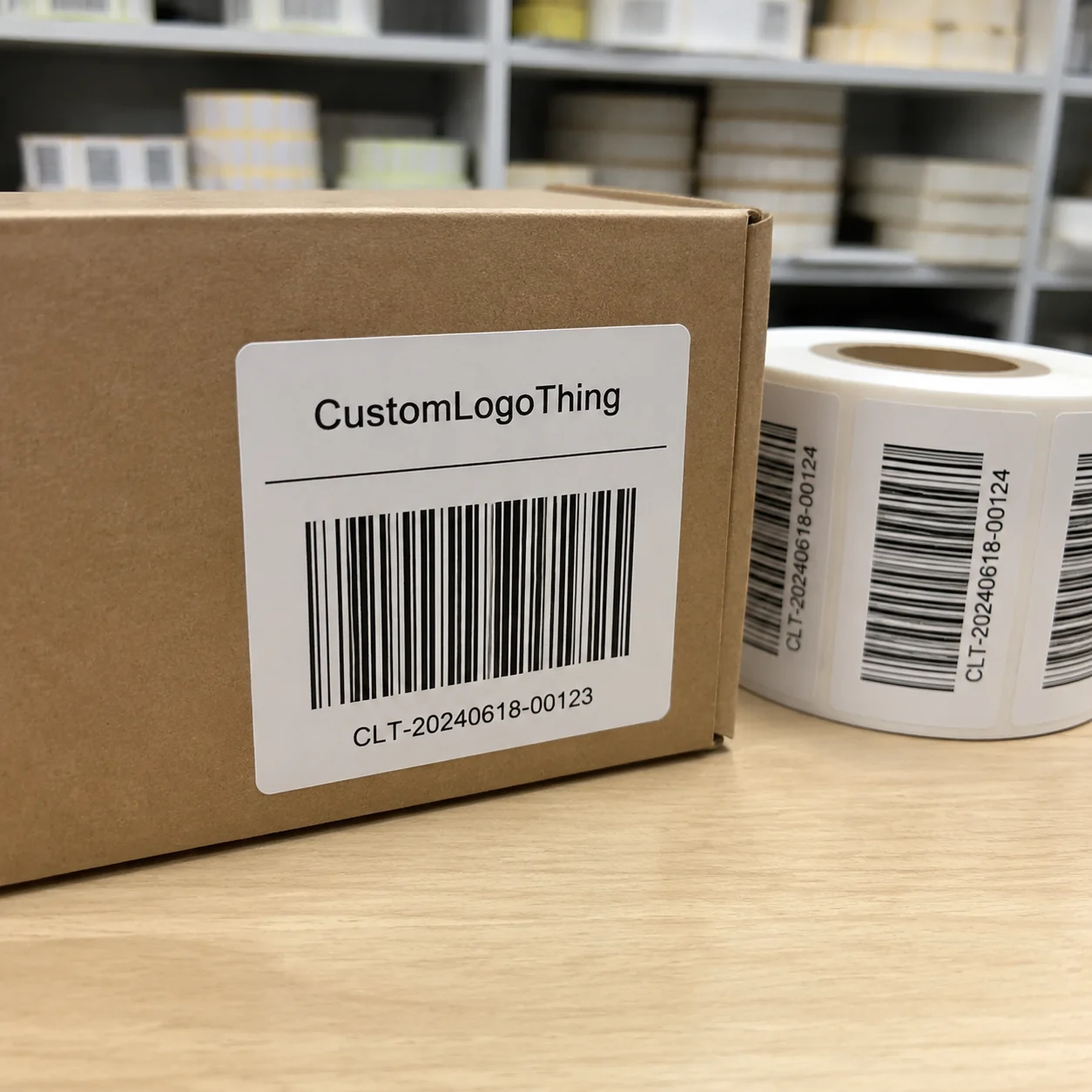
Buyer Fit Snapshot
| Best fit | Custom Labels Wholesale projects where brand print, material claims, artwork control, MOQ, and repeat-order consistency need to be specified before quoting. |
|---|---|
| Quote inputs | Share finished size, material target, print colors, finish, packing count, annual reorder estimate, ship-to region, and any compliance wording. |
| Proofing check | Approve dieline scale, logo placement, barcode or warning zones, color tolerance, closure strength, and carton packing before bulk production. |
| Main risk | Vague material claims, crowded artwork, missing packing details, or unclear freight terms can make a low unit price expensive after revisions. |
Fast answer: Custom Labels Wholesale: Material, Adhesive, Artwork, and MOQ should be specified like a repeatable production item. The safest quote records material, print method, finish, artwork proof, packing count, and reorder notes in one written spec.
Production checks before approval
Compare the actual filled-product size with the drawing, then confirm tolerance on folds, seals, hang holes, label areas, and retail display edges. Reserve space for logos, QR codes, warning copy, and material claims before decorative graphics fill the panel.
Quote comparison points
Review material grade, print process, finish, sampling route, tooling charges, carton quantity, and freight assumptions side by side. A quote is only useful when the supplier can repeat the same color, closure quality, and packing count on the next order.
If you are comparing custom labels wholesale options, the first thing I tell buyers is simple: the cheapest-looking quote is rarely the least expensive order once setup, proofing, spoilage, and reprints enter the picture. I have stood on label presses where a 1,000-piece run cost more per label than a 10,000-piece order because the press still needed calibration, the die still needed checking, and the finishing crew still had to lock in the same labor hours. I remember one Friday afternoon in a plant outside Chicago, Illinois, when a buyer stared at the board and said, “Wait, how is the bigger order cheaper?” The answer was in the setup math, and it usually is. That is the whole story behind custom labels wholesale, and it is why smart brands use it for branded packaging, retail packaging, and high-volume product packaging programs.
I have seen plenty of buyers treat labels like a small-ticket line item, but a label touches the shelf, the shipping carton, the consumer’s hand, and sometimes the freezer door, the condensation line, or a warehouse floor that swings from 58°F to 92°F in one day. If your label fails, your whole package branding story takes a hit, whether you are printing on bottles, jars, mailers, or Custom Packaging Products that need a polished retail presentation. I once watched a glossy jar label curl at the corner after 18 hours in a 38°F walk-in cooler in Atlanta, Georgia, and that single edge lift was enough to make the product look older than it was. Labels are not a side note; they are part of the product’s first impression and its day-to-day durability.
“The label is the first piece of packaging most customers touch, and if it wrinkles, lifts, or prints off-color, they remember that longer than the copy on the box.”
That line came from a buyer I worked with during a seasonal rollout for a beverage client in Grand Rapids, Michigan, and it stuck with me because it was true on the line and true in the market. The right custom labels wholesale program does more than lower unit cost. It gives you repeatable specs, stable color, and a supplier who knows your container, your ink requirements, and your reorder pattern. On a 25,000-piece repeat, the difference between a well-archived spec and a vague memory can be a full day of production saved. If you want a broader view of how labels fit into a packaging system, our Custom Labels & Tags page is a useful starting point, especially if your brand is balancing labels with cartons, inserts, and other printed components.
Why Custom Labels Wholesale Beats Piecemeal Ordering
The smallest label order often costs the most per unit, and I have seen that truth hold steady in flexographic plants from New Jersey to Shenzhen. The reason is straightforward: the press still needs setup, plates or digital calibration still need to be dialed in, and the finishing team still needs to check the die-cut, the slit width, and the rewind tension. Those fixed costs do not shrink just because the order is small, which is why custom labels wholesale usually wins on price once the brand has a real forecast and a real reorder cadence, often at 5,000 pieces or more.
When you buy custom labels wholesale, you spread die-cutting, press setup, proofing, adhesive testing, and finishing labor across a larger run. That can move a label from a high-cost one-off project into a much better unit-cost structure. For example, I recently reviewed a quote for a 2" x 3" BOPP bottle label that came in around $0.21 per unit at 2,000 pieces, then dropped to roughly $0.08 per unit at 12,000 pieces with the same artwork and the same matte varnish. On a larger 20,000-piece run, the price fell to about $0.06 per unit once the same plates and setup were reused. The buyer did not just save money; they also gained breathing room on reorders. That breathing room matters more than people admit, especially when a distributor suddenly decides they need product “by Thursday,” which is apparently a hobby in some offices.
There is also a branding advantage that people underestimate. If you are using one dependable label spec across several SKUs, you get consistent ink density, consistent adhesive performance, and a cleaner shelf story. I have seen brands try to save a few cents by mixing three different label vendors, then spend more money fixing shade variation across jars, cartons, and mailers. That is a bad trade. A strong custom labels wholesale program keeps your packaging design aligned and reduces line interruptions, which matters a lot when you are shipping subscription kits or running a retail reset in a 40,000-square-foot fulfillment center in Dallas, Texas.
Wholesale ordering is also smarter for brands with seasonal launches, multiple product lines, or distributor commitments. If you know you will need 18,000 labels over the next four months, it is usually cleaner to print once, store them properly at 65°F to 75°F away from direct sunlight, and pull inventory as needed than to place three separate rush orders. I learned that lesson while visiting a candle plant in Columbus, Ohio, where the production manager kept stopping the line because labels were arriving in small batches. They eventually moved to custom labels wholesale, archived the artwork, and cut their label-related stoppages almost in half over a six-month period.
There is a difference between buying labels as a one-time project and building a supplier relationship. With the second model, the vendor saves your specs, your dieline, your approved color targets, and your reorder history. That means faster repeat production, fewer artwork surprises, and less time explaining the same container dimensions for the fifth time. If you are serious about growth, that supplier memory matters. It is one of the quiet advantages of custom labels wholesale, especially when your order history spans 10,000-piece launches and 50,000-piece replenishment runs.
Custom Label Product Types, Materials, and Finishes
Not all labels behave the same way, and that is where buyers can make expensive mistakes. The right custom labels wholesale order starts with the substrate. Paper labels are still a solid choice for dry indoor products, shipping envelopes, jars stored on retail shelves, and short-duration applications where moisture exposure is low. A 60# gloss paper or a 70# uncoated sheet can print crisply, and with a matte aqueous varnish they can feel premium without pushing the budget too far. I still like a good paper label on the right jar; it has a certain straightforward honesty to it.
BOPP labels, which many people call polypropylene film labels, are a workhorse in our industry. They handle moisture better than paper, hold color well, and work especially well on bottles, cosmetics, food containers, and refrigerated products. In a manufacturing plant in Monterrey, Mexico, I have watched 2-mil white BOPP labels outlast paper labels by a wide margin when condensation was present on chilled beverage bottles. If your product spends time in coolers, warehouses, or bathrooms, custom labels wholesale in BOPP is often the safer call, particularly when the label needs to survive a 40°F cooler and a 72-hour cold-chain hold.
Clear film labels are useful when the brand wants a “no-label” look on glass or clear plastic, especially for premium skincare, candles, and beverage bottles. A 2-mil clear BOPP or PET film can create that floating effect on amber glass or PET jars, and a white underlay can be added for contrast if the artwork needs it. Vinyl labels have more specialty appeal, but they can be useful for harsh handling, certain outdoor applications, or equipment-style branding where a 3- to 5-year life is expected. I have also seen specialty stocks used on high-end retail packaging in Los Angeles, California, where tactile feel mattered as much as print quality. That is where packaging becomes more than a cost line; it becomes part of the customer experience.
Adhesive choice matters just as much as the face stock. Permanent adhesive is the standard for most custom labels wholesale projects because it is meant to stay put once applied, and a typical permanent acrylic adhesive will bond well to glass, coated paperboard, and many plastics within 24 hours of application. Removable adhesive is useful when the label needs to come off cleanly, such as on temporary promotions or certain reusable containers. Freezer-grade adhesive is built for cold-chain conditions down to approximately -20°F, and high-tack adhesive is helpful for rough surfaces, recycled corrugate, or containers with lower surface energy such as HDPE. The wrong adhesive on the wrong substrate will betray you fast, and the failure usually starts at the edge, which is always the first place you notice it right when you are already behind schedule.
Finishes change both appearance and durability. Matte gives a softer, more understated look. Gloss makes color pop and can improve shelf presence in bright retail environments. Soft-touch lamination adds a velvety feel that works well for premium package branding, though it raises cost. Foil stamping and spot UV can create strong visual contrast, and embossing can add dimension if your artwork supports it. A soft-touch laminated label with foil accents might add $0.04 to $0.12 per unit depending on the run size, while a basic matte varnish could add only a few tenths of a cent on a 10,000-piece order. These are the kinds of choices that separate average custom labels wholesale orders from polished, retail-ready work.
Print method is another fork in the road. Digital printing makes sense for shorter runs, fast turnarounds, variable data, and multiple artwork versions. Flexographic printing is the better fit when you need larger quantities and extremely consistent color over repeated production. I have seen brands try to force digital into a high-volume program just to save time, then regret it when the per-unit cost stayed too high. For larger custom labels wholesale orders, flexo still earns its place, especially for 15,000 pieces and up when the same plate set can be used again on reorders.
If you want a supplier who can support labels alongside other branded materials, Wholesale Programs can help you compare label runs with cartons, inserts, and related packaging components without losing sight of the full program cost.
Label Specifications That Affect Performance and Fit
Label specs are where good intentions either become a clean production run or turn into wasted material. The first measurements to confirm are width, height, corner radius, and whether the label needs to be supplied on rolls, sheets, or individually cut pieces. Core size matters too. A 3-inch core versus a 1-inch core can change how the label feeds on your applicator, and that becomes a real issue on high-speed lines running 80 to 120 containers per minute. In custom labels wholesale, these details are not small details.
Roll direction matters as well. I have watched an operator in a packaging plant in Charlotte, North Carolina, spend twenty minutes trying to reconcile a label roll that had been wound opposite the applicator’s feed direction. That kind of mistake is avoidable. Accurate dielines protect you from overhang on curved bottles, registration problems on multi-panel labels, and trimming issues when the artwork runs close to the edge. If the dieline is wrong by even a few millimeters, the label can misbehave on the container. I still remember the groan from the line lead when a batch arrived upside down on the unwind. Nobody likes that sound, especially on a 6,000-piece afternoon shift.
Artwork setup is just as critical. Print-ready files should be vector where possible, logos should be cleanly outlined, and images should be high resolution, usually 300 dpi at final size. Use CMYK for process color unless a Pantone match is required, and always include bleed and safe zones. When I review custom labels wholesale files, I check for text that sits too close to the trim, barcode quiet zones that are too narrow, and tiny type that looks fine on screen but falls apart on press. A barcode that scans at 100% on proof but fails at 83% on the line is not a victory; it is a reprint.
That leads into compliance. Food, cosmetic, and personal care brands often need ingredient panels, barcode placement, net weight, warning language, or manufacturing details positioned carefully. The label is not only a branding device; it is often part of the product’s regulatory presentation. For some categories, you may need to align with standards or guidance from organizations such as the Institute of Packaging Professionals and testing bodies like ISTA. Those references are especially useful when labels need to survive distribution testing or shipping vibration, such as a 14-pound drop test in a regional parcel network.
Testing on the actual packaging surface is one of the smartest steps a buyer can take. Apply a sample label to the real jar, bottle, mailer, or carton, then watch what happens after 24 hours, 72 hours, and again after refrigeration or handling. Look for bubbling, edge lift, smudging, curl, and moisture resistance. I have seen a label pass every desktop review and still fail on a curved glass bottle because the adhesive and the surface texture did not play well together. That is not rare. It is why samples are valuable in custom labels wholesale buying, especially before a 20,000-piece run leaves the press room in Nashville, Tennessee.
And yes, if your packaging program includes recycled materials or sustainability goals, it is worth checking whether the label stock supports your environmental position. Organizations like FSC can be relevant when paper sourcing matters for brand claims or procurement requirements. Just make sure the claim matches the actual substrate and supply chain. Buyers remember these details later, especially when the packaging sits beside custom printed boxes and other branded assets. A recycled-content claim that cannot be documented by the mill is the sort of thing procurement teams in Toronto, Ontario, will ask about very quickly.
Custom Labels Wholesale Pricing, MOQ, and Cost Drivers
The biggest pricing levers in custom labels wholesale are material type, print method, size, finish complexity, quantity, and any special die cuts or variable data. A simple white paper label in a standard rectangle is one thing. A clear BOPP label with foil accents, spot UV, rounded corners, and two versions of barcoded artwork is a different production job entirely. That difference shows up in both setup and per-unit cost, and I have watched more than one buyer do a double take when the line item changed by a factor they did not expect. On one project in Austin, Texas, the basic version came in at $0.15 per unit for 5,000 pieces, while the premium version with soft-touch lamination and foil rose to $0.29 per unit.
Minimum order quantity is not a universal number because it depends on press setup and material availability. Digital label runs can often start at lower quantities, which makes them useful for launches, pilot products, and small SKU tests. Flexographic wholesale pricing usually makes the most sense at larger volumes because the setup cost is amortized across more units. I have seen digital quotes come in at 500 pieces for a niche product, and I have seen flexo shine at 10,000 or 25,000 pieces where the unit economics finally made sense for the buyer. In practical terms, a 500-piece digital order might be $0.62 per label, while a 25,000-piece flexo order on the same size could land closer to $0.05 to $0.07 per label depending on finish and adhesive.
If you are comparing custom labels wholesale quotes, check whether shipping, proofing, plates, setup fees, and finishing are included. Two quotes can look similar on the page and still differ by hundreds of dollars once you account for those items. I once reviewed three bids for a cosmetics client in Orlando, Florida, where one supplier quoted a low unit price but excluded plates and freight, another included freight but not proofing, and the third bundled everything. Only one quote told the full story. That is why apples-to-apples comparison matters, especially when a freight charge from a plant in Phoenix, Arizona, can add $85 to $180 depending on carton count and destination.
Artwork versions also affect price. A single SKU is simpler than six SKUs with slightly different ingredient panels. If your brand needs multilingual text, seasonal promotions, or several barcode versions, the press room has to handle more file management and more proof checks. Finishing choices add cost too. Matte varnish is usually less expensive than soft-touch lamination, and foil accents often increase both material and labor. In custom labels wholesale, these add-ons can be worth it, but they should be chosen intentionally, not by habit. A variable-data run with eight unique QR codes can also add 10% to 20% in production time because of extra verification steps.
Printing labels in rolls versus sheets also changes how they are processed and how they ship. Rolls are ideal for automated application lines and often better for high-volume product packaging. Sheets can work well for hand application, smaller assembly teams, or sample kits. Each format has handling implications, and that affects cost. If your label applicator needs a specific unwind direction or core diameter, say so up front. If not, you may pay to correct the order later. A 3-inch core on a semi-automatic applicator in Newark, New Jersey, can save a line operator several minutes per changeover compared with a mismatched core size.
Budgeting for reorder savings is a smart move. In practical terms, wholesale buying can lower per-label cost enough to justify holding some inventory, especially if your production cadence is steady. The tradeoff is storage space and the risk of carrying outdated artwork if the regulatory copy changes. That is why many brands with stable SKUs prefer custom labels wholesale in controlled batches, with a reorder trigger tied to actual consumption, not guesswork. If you run 8,000 labels a month, for example, a three-month buffer of 24,000 labels can keep the line moving without overcommitting capital.
There is also the cost of failure. If labels fail adhesion, rub off in transit, or print in the wrong shade, rework can erase the savings you thought you earned. I have seen a cosmetics line lose two weeks because a soft-touch finish did not cure well enough before cartons were packed for shipment in a facility near Detroit, Michigan. The replacement label order cost less than the delay, which is why I always tell buyers to factor in production risk, not just the quote. A $900 reprint is small compared with a delayed launch that misses a 2,500-unit retail window.
Ordering Process and Production Timeline
The cleanest custom labels wholesale workflow starts with a quote request, moves to artwork submission, then proof approval, then production, finishing, and shipment. That sounds simple, but the details inside each step matter. If you send a complete dieline, accurate quantity, material preference, adhesive need, and target application date, the process moves faster and with fewer surprises. I wish every order arrived that way; some do, and some arrive like a mystery box with a postal code. A complete order form sent on Monday can save two days of back-and-forth by Wednesday.
Digital jobs typically move faster than large flexographic runs, especially when artwork is already print-ready. If there is no special lamination or foil stamping, some label orders can move from proof approval into production in a relatively short window. Larger wholesale runs take longer because press setup, color matching, curing, slitting, and QC all add time. In a real factory in Suzhou, China, the line does not care how urgent your launch feels; it cares whether the material is ready, the file is correct, and the machine schedule has space. For standard digital jobs, a typical timeline is 7-10 business days from proof approval; for larger flexo orders, it is typically 12-15 business days from proof approval, and complex foil or lamination projects may run 15-20 business days.
What slows projects down most often? Missing dielines, low-resolution logos, vague dimensions, Pantone mismatches, and late proof approvals. I have seen a 3-business-day label order turn into a 2-week delay because the buyer could not confirm whether the jar shoulder left enough room for a 2.5-inch panel. That is avoidable. A good custom labels wholesale partner should ask hard questions early, not after the press is already loaded. If the file is approved on Tuesday and the artwork is complete, a simple 10,000-piece digital reorder can often ship the following week from a plant in Richmond, Virginia.
Quality control in a professional label shop includes color checks, cut accuracy, roll winding verification, and adhesive inspection before shipment. On a flexo line, crews may verify registration and ink density at regular intervals. On a digital line, the operator may check repeat consistency, trim precision, and barcode legibility. These checks sound routine, but they save money. If a label batch has a bad rewind or a skewed die-cut, it can create problems on the customer’s application line or during pack-out. A 0.5 mm cut variance might sound tiny, but on a high-speed applicator it can be enough to trigger a shutdown.
Buyers can keep the project moving by preparing a handful of specifics before they request custom labels wholesale pricing: final artwork files, container specifications, quantity forecast, target application date, shipping address, and any compliance requirements. If you also know whether the labels need to run on a machine or by hand, say so. That one detail can change the material, the core, the unwind direction, and the quote. A hand-applied label for a 1,200-piece run in Portland, Oregon, does not need the same construction as a machine-applied label on a 40,000-bottle beverage line in Tampa, Florida.
From a production standpoint, I like when clients send product photos, especially shots of the actual container with a ruler or caliper in the frame. It is a small thing, but it prevents a surprising number of errors. A well-run label order feels less like a scramble and more like a controlled handoff. That is what custom labels wholesale should be, and when the process is clear, a 5,000-piece reorder can move from proof to dock in roughly two weeks instead of nearly a month.
Why Choose Our Wholesale Label Manufacturing Approach
At Custom Logo Things, the goal is not to drown buyers in options. The goal is to match the right label construction to the way your packaging actually behaves on the line, in the warehouse, and in the customer’s hand. I have spent enough time around roll-fed applicators, pressure-sensitive labelers, and finishing tables to know that a label that looks good in a mockup can still fail in production if the adhesive, face stock, and finish are mismatched. That is why our approach to custom labels wholesale starts with practical use, not just appearance, and why we ask about the exact container finish, such as PET, glass, HDPE, or coated SBS board, before we recommend a spec.
We work with the realities that matter to production teams: curl on tight-radius bottles, smudge resistance on handled cartons, legibility on small barcodes, and the way labels hold up under vibration and temperature swings. I have seen labels with beautiful artwork fail because the liner was too stiff for the applicator, and I have seen a simpler construction outperform a premium-looking one simply because it matched the surface better. Those are factory-floor lessons, not marketing lines. On a 2-inch core roll coming off a line in Scranton, Pennsylvania, a half-turn of rewind tension can decide whether the next shift runs cleanly or spends 45 minutes clearing jams.
Our wholesale label programs are built to support repeat orders with saved specifications, clear material recommendations, and artwork checks that catch the common problems before they hit the press. That matters when brands are growing and moving from one SKU to six or from one region to multiple distributors. The best custom labels wholesale partner should make reordering easier, not harder. If your second run is 20,000 pieces in the same material and finish, it should feel like a repeatable production event, not a new design project.
We also know labels live inside a larger packaging system. A label that complements a carton, mailer, or insert can strengthen overall package branding in a way that feels intentional rather than patched together. That is where our work connects naturally with Custom Packaging Products and the broader visual language of your brand. The label should support the box, the bottle, and the selling story, not fight them, whether your primary pack is a 4 oz jar, a folding carton, or a kraft mailer moving through a warehouse in Memphis, Tennessee.
One thing I appreciate about disciplined wholesale production is accountability. When the quote is clear, the proof is approved, and the specs are archived, everyone knows what was ordered and what should arrive. That helps operations, purchasing, and marketing stay aligned. It is the practical side of custom labels wholesale, and honestly, that is the side that keeps businesses growing without chaos. A clean paper trail also makes a 3-month reorder in January just as straightforward as the initial order in October.
How to Place a Wholesale Label Order with Confidence
Start with the basics: label dimensions, container material, finish preference, quantity forecast, and whether the labels will be applied by hand or with equipment. If you know the bottle is glass, the jar is plastic, the carton is coated, or the product is stored cold, say that upfront. Those details influence material choice more than most people realize. A good custom labels wholesale quote is built on accurate inputs, not assumptions, and that usually means specifying the container size in inches or millimeters, not just “standard jar” or “medium bottle.”
Then decide whether you need a sample or test run. I always recommend it for glass, plastic, coated cartons, cold-storage packaging, or any product that will face moisture, oil, or friction. Even if the label spec looks correct on paper, real-world testing can reveal edge lift, adhesive issues, or color shifts under store lighting. One afternoon on a cream jar test line in Newark, New Jersey, taught me more than a stack of emails ever could. The label passed in dry conditions, then lifted on the seam after refrigeration. That was a $300 lesson, not a $3,000 one, because they tested before placing the full custom labels wholesale order.
Compare at least two or three supplier quotes using the same exact specs. If one supplier quotes BOPP with gloss laminate and another quotes paper with varnish, the numbers are not comparable. Ask for the same size, same quantity, same core, same finish, same adhesive, and the same shipping assumption. You will get a cleaner answer, and you will make a better buying decision. If possible, ask for a quote on 5,000 pieces and 10,000 pieces side by side; the spread often reveals where the real savings begin.
Plan your reorder schedule before you run low. That sounds basic, but I have watched plenty of brands order too late, then pay rush fees or accept a compromise on finish. For a launch, I like to see reorders triggered when stock drops to roughly 25% of expected use, especially if the label is tied to a retail shipment or seasonal promotion. With custom labels wholesale, inventory planning is part of the savings story. A brand using 3,000 labels per month may want to reorder when 2,000 remain, not when the last carton is already on the packing table.
The next step is straightforward. Send product photos, container measurements, artwork files, and your estimated quantity so the quote can be accurate on the first pass. If you are still deciding between material options, ask for guidance and a sample recommendation. We can usually narrow it down quickly based on the end use, the surface, and the finish you want. That is the practical side of custom labels wholesale, and it is the part that helps a brand move from guesswork to a controlled production plan.
For brands that are building out coordinated branded packaging, the label is often the fastest way to improve presentation without redesigning every carton or shipper. Used well, custom labels wholesale becomes a tool for consistency, speed, and margin control. Used badly, it becomes a stack of misfit rolls in storage. I know which outcome most buyers want, and the difference usually comes down to clear specs, realistic timelines, and a supplier who can keep the job moving from proof approval to shipment.
Custom Labels Wholesale: decision table
| Decision area | Best fit | What to verify | Risk if skipped |
|---|---|---|---|
| Substrate | Labels, stickers, ribbons, inserts, tags, and tissue paper | Paper/film type, adhesive, GSM, roll direction, and finish | The print looks right but fails during application or handling |
| Artwork control | Brand color, barcode, QR code, and small text clarity | Vector file, Pantone target, safe area, and proof route | Small details blur or shift across a full production run |
| Use environment | Retail display, shipping, food-safe handling, or gift presentation | Moisture, rubbing, heat, and surface compatibility | A pretty sample fails in the real use case |
Frequently Asked Questions
What is the typical MOQ for custom labels wholesale?
MOQ usually depends on print method, material, and finishing complexity rather than one universal number. Digital label runs can often start lower, sometimes at 500 or 1,000 pieces, while flexographic wholesale pricing usually makes sense at 5,000 pieces and above. The best quote is based on your exact size, substrate, and quantity rather than a generic minimum, and a 10,000-piece run will often price much better per unit than a 2,000-piece order.
How do I choose the best material for custom labels wholesale?
Match the material to the packaging surface and environment: paper for dry indoor use, film for moisture resistance, and specialty stocks for premium branding. Consider whether the product will face refrigeration, handling, condensation, oil, or abrasion. If unsure, request samples and test them on the actual container before ordering in bulk, ideally for 24 to 72 hours on the exact bottle, jar, or carton you will ship.
How long does a wholesale custom label order take?
Timeline depends on proof approval, print method, finishing, and production schedule. Simple digital jobs often take 7-10 business days from proof approval, while larger wholesale runs with foil or lamination typically take 12-15 business days from proof approval. Fast approvals and complete artwork files are the quickest way to avoid delays, and complex variable-data or specialty finish jobs may take 15-20 business days.
Can I get custom labels wholesale with my own artwork and barcode?
Yes, most wholesale label orders are produced from customer-supplied artwork files. Barcodes, ingredient panels, and variable data can often be included if the file is set up correctly. A print-ready dieline and high-resolution artwork help avoid layout and scanning issues, and a barcode should always be checked at final size before a 5,000-piece or larger run goes to press.
What should I ask for when comparing custom labels wholesale quotes?
Compare material, adhesive, size, print method, finish, quantity, proofing, setup fees, shipping, and turnaround time. Make sure each quote uses the same specs so the pricing is truly comparable. Ask whether sample approval and reorder support are included for future runs, and confirm whether the price is based on 1,000, 5,000, or 10,000 pieces so you can judge the real unit cost.
If your brand is ready to reduce unit cost, tighten color consistency, and get better control over production timing, custom labels wholesale is usually the smartest way to buy. The right material, finish, and supplier relationship can save more than money; they can save time on the line, reduce rework, and make your packaging look like it came from a brand that knows exactly what it is doing. That is the real value of custom labels wholesale, and it is the reason I recommend it to brands that want dependable growth, not just a short-term price break. In many cases, the difference between a $0.18 label and a $0.07 label is not a design miracle; it is a well-planned order, a clean proof, and a production run that was sized correctly from the start.