Buyer Fit Snapshot
| Best fit | Custom Laminated Boxes for Products projects where brand print, material claims, artwork control, MOQ, and repeat-order consistency need to be specified before quoting. |
|---|---|
| Quote inputs | Share finished size, material target, print colors, finish, packing count, annual reorder estimate, ship-to region, and any compliance wording. |
| Proofing check | Approve dieline scale, logo placement, barcode or warning zones, color tolerance, closure strength, and carton packing before bulk production. |
| Main risk | Vague material claims, crowded artwork, missing packing details, or unclear freight terms can make a low unit price expensive after revisions. |
Fast answer: Custom Laminated Boxes for Products: Board, Finish, Dieline, and Unit Cost should be specified like a repeatable production item. The safest quote records material, print method, finish, artwork proof, packing count, and reorder notes in one written spec.
Production checks before approval
Compare the actual filled-product size with the drawing, then confirm tolerance on folds, seals, hang holes, label areas, and retail display edges. Reserve space for logos, QR codes, warning copy, and material claims before decorative graphics fill the panel.
Quote comparison points
Review material grade, print process, finish, sampling route, tooling charges, carton quantity, and freight assumptions side by side. A quote is only useful when the supplier can repeat the same color, closure quality, and packing count on the next order.
Custom laminated boxes for products tend to be the place where ordinary packaging starts looking deliberate, finished, and far more expensive than the board grade underneath would suggest. The structure may still be paperboard, but the surface treatment changes the entire read of the box. That is why custom laminated boxes for products show up so often in cosmetics, supplements, candles, tech accessories, and giftable retail items: they create a polished first impression without forcing a brand into a luxury-budget trap.
For anyone buying packaging, that distinction matters. Product packaging has to earn its keep before a customer ever lifts the lid or tears a seal. It has to present the brand clearly, protect the printed surface, and hold up while it moves through a warehouse, a store shelf, or a parcel network. In practical terms, custom laminated boxes for products can deepen color, reduce scuffs, keep fingerprints from showing up so easily, and make custom printed boxes feel steadier in the hand. The tradeoff is straightforward: better presentation usually brings more decisions around finish, timing, and price. No mystery there. Just a set of choices that need to fit the product.
What Custom Laminated Boxes for Products Are and Why They Stand Out
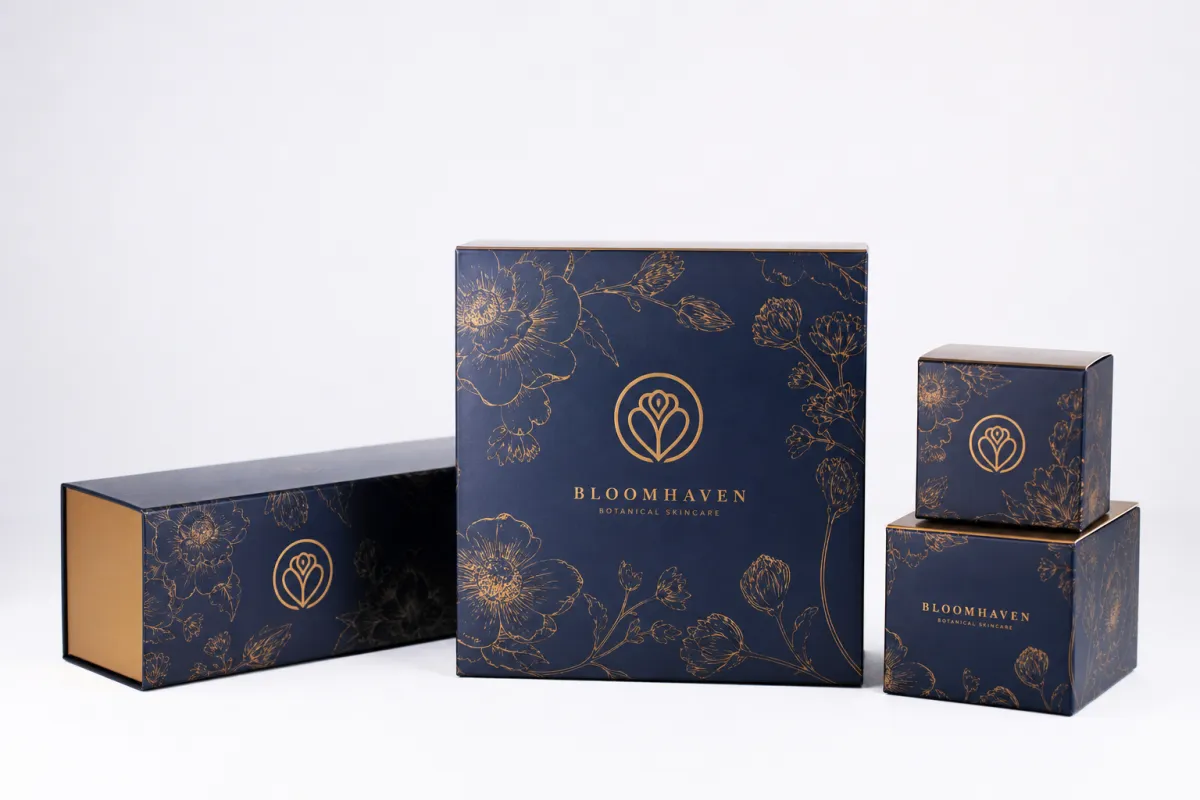
Most premium-looking packaging is not especially exotic. It is usually a printed carton or folding box with a laminate or coating layered onto the surface. That is the simplest way to describe custom laminated boxes for products. The box body gives the shape and structure. The laminate adds protection and changes the feel. Put them together and the result looks more refined than the board alone would ever look on its own.
Lamination usually means a thin film, often BOPP, applied over a printed sheet. Gloss, matte, soft-touch, and anti-scratch are the finishes people ask for most often. Coatings can also be used, including aqueous and UV-based options, depending on the print build and the production method. Those choices affect how the sheet handles ink, how well it resists rubbing, how it folds, and how it catches the light. A matte surface can soften glare and give a skincare carton a calm, controlled feel. A gloss surface can push saturated color and make retail packaging stand out under bright store lighting. Same basic box. Very different presence.
That is part of the reason custom laminated boxes for products appear so often in categories that need quick shelf impact. Cosmetics need trust at first glance. Supplements need crisp labeling and a clean presentation. Candles benefit from a gift-ready finish. Tech accessories need branded packaging that feels organized rather than improvised. Buyers are not just purchasing a carton. They are buying a first impression that still needs to look good after shipping and handling.
The practical benefits matter just as much as the visual ones. Lamination improves abrasion resistance. It helps protect printed ink from finger oils and light surface wear. It cuts down on the scuff marks that can make a fresh box look tired before it ever reaches the shelf. If the box will be stacked, displayed, shipped, or handled by retail staff, those small surface gains can affect how the whole package is perceived.
A pretty box that scratches right away does not feel premium. It feels like a good idea that did not survive contact with reality.
That is the real value of custom laminated boxes for products. They are not about excess. They are about control. Better color, stronger surfaces, cleaner unboxing, and a finish that keeps the brand story intact long enough to matter. If you want to compare box styles before locking in a structure, you can start with Custom Packaging Products and narrow the options from there.
One detail deserves a plain answer. Lamination is not the same as waterproofing. It improves moisture resistance, but paperboard still behaves like paperboard. If a product ships through wet conditions or sits in humid retail storage, the board choice, edge treatment, and even secondary packaging still matter. That is the part many buyers only learn after a bad run. Far better to account for it before the order is printed.
Custom Laminated Boxes for Products: Process and Timeline
The production flow for custom laminated boxes for products is fairly standard, although the sequence matters more than people often realize. Artwork review and dieline confirmation come first. Printing comes next. After the sheet is printed, the laminate or coating is applied. Only after that does the job move into die-cutting, folding, gluing, packing, and shipping. Special finishing or structural inserts can add more steps, and those need to be folded into the schedule from the beginning.
Most folding carton workflows apply lamination after printing and before die-cutting. That order is not arbitrary. The sheet needs enough cure time to accept the finish cleanly, and the finish needs to bond well before the cut-and-glue stages begin. If that part gets rushed, the result can be edge cracking, poor adhesion, or a surface that rubs off too easily during packing. Nobody wants to discover that after several thousand units have already moved through production.
Lead time usually comes down to a predictable list: artwork readiness, proof approval, material availability, finish complexity, and order volume. A straightforward run of custom laminated boxes for products might move in 12-15 business days after proof approval. More involved jobs, especially those using soft-touch film, spot UV, foil, or custom inserts, often take 18-25 business days. A buyer asking for a firm launch date needs more than a guess. The files and the full scope have to be in hand first.
Late file changes are the most common bottleneck. Structural edits after proofing are another one. A brand may decide the box should be slightly taller, or the logo needs to be larger, or the barcode should move. Each of those changes can reset part of the workflow. On laminated jobs, finish-related revisions are especially costly because the surface spec is already tied into the print plan. Custom laminated boxes for products reward clear planning and punish last-minute improvisation.
Simpler jobs tend to move faster because there are fewer moving parts to coordinate. A straight tuck-end carton with a standard gloss laminate is easier to manage than a rigid two-piece box with a soft-touch wrap, foil logo, and molded insert. That does not make the complex option wrong. It just means the quote and the schedule should reflect the actual work instead of an idealized version of it.
If you are ordering custom laminated boxes for products for the first time, give the calendar room to breathe. A practical planning window is often 3-5 business days for artwork review and proofing, then production and shipping after approval. A local stock program or a digital short run can shorten that timeline. A specific board or film that has to be sourced can lengthen it. Packaging teams that claim every job is fast are usually either very lucky or not reading the details closely enough.
Key Factors That Change the Look and Performance
The biggest variable in custom laminated boxes for products is not the artwork file. It is the stack of material and finish decisions beneath the artwork. Start with the substrate. A 14pt board feels different from a 24pt board. A 350gsm SBS carton is not the same thing as a rigid greyboard wrapped in printed paper. Thickness changes the hand feel, the structural strength, and the way the edges hold up after the box has been opened and closed a few times.
Finish choice changes the result just as much. Gloss creates shine and sharper color contrast. Matte reduces reflection and can make typography feel calmer and more intentional. Soft-touch gives the surface a velvety feel that works especially well for skincare and giftable items. Anti-scratch films are worth asking about if the box will be stacked, shipped, or handled repeatedly. Spot UV can add contrast and emphasis, but only when the artwork and print coverage give it enough room to breathe. In a crowded retail environment, these details are not side notes. They are the presentation.
The product environment matters too. A box sitting in a dry retail display does not need the same surface protection as one that will be handled constantly in a subscription setup or moved through ecommerce fulfillment. Moisture, abrasion, and shipment handling all affect which laminate makes sense. For products that see a lot of touch points, custom laminated boxes for products with anti-scratch or tougher film can save a brand from repeated replacement runs. Pretty is useful. Durable is what keeps the budget intact.
Design also affects how the finish reads in person. Heavy ink coverage can make dark boxes feel dramatic, but it can also reveal scuffs more easily depending on the laminate. Fine type on a matte dark background can feel elegant or turn muddy if the contrast is weak. Foil, texture, and image detail all shift the final impression. I have seen a matte black sample look gorgeous on screen and then show every fingerprint under warehouse lights. That is why custom printed boxes should be evaluated from a real sample whenever possible, not from a small image on a monitor.
Sustainability deserves a clear answer rather than a polished one. Not every premium finish is the right fit if the brand wants easier recycling or simpler material recovery. Some films can make paperboard harder to recycle through ordinary municipal systems. That does not make every laminated box a bad environmental choice. It means the buyer should match the finish to the actual need instead of choosing a luxury surface because it looks good in a mockup. If recycled fiber sourcing matters, look for FSC-certified board options and confirm the chain of custody through FSC.
Shipping performance is another place where assumptions can get expensive. If the product will move through distribution or ecommerce, transit testing is the right standard to follow. The International Safe Transit Association publishes widely used test protocols at ISTA. No one needs to become a lab specialist, but it helps to know whether the packaging has been tested against realistic handling conditions.
Finish Comparison
| Finish | Look and Feel | Typical Use | Relative Cost Impact | Best For |
|---|---|---|---|---|
| Gloss lamination | Bright, reflective, high color pop | Retail packaging with bold graphics | Low to moderate | Fast shelf impact, vivid branding |
| Matte lamination | Low sheen, clean, controlled | Minimal or premium-looking product packaging | Low to moderate | Skincare, wellness, modern brands |
| Soft-touch lamination | Velvety, smooth, upscale | Giftable and luxury-leaning boxes | Moderate | Higher-end branded packaging |
| Anti-scratch film | Similar to matte or gloss, but tougher | Shipping-heavy or high-handling boxes | Moderate to higher | Lower scuff risk, better shelf life |
For most brands, the choice comes down to use case. A bold retail launch usually benefits from gloss. A calm, premium line often looks better in matte or soft-touch. A subscription product that gets tossed around by carriers may need anti-scratch more than it needs glamour. That is the kind of packaging design decision that saves money later because it lowers damage, returns, and reprints.
Custom laminated boxes for products are not about chasing the shiniest option on the shelf. They are about choosing the finish that supports the product and the channel. If the box is a gift, a retail display, or a direct-to-consumer unboxing moment, the surface finish becomes part of the product experience. If it is only a shipping shell, the money may be better spent elsewhere.
Custom Laminated Boxes for Products: Cost, Pricing, MOQ, and Quote Basics
Pricing for custom laminated boxes for products depends on more variables than most buyers expect, and that is exactly why weak quotes happen. Box size, board thickness, print coverage, laminate type, finishing, and assembly method all affect the total. A small cosmetic carton with simple one-color print prices very differently from a rigid product box with soft-touch film, foil, and a fitted insert. That is not vendor theatrics. That is material math.
As quantity increases, unit cost usually drops. That part is predictable. The press setup, die tooling, and finishing prep get spread across more pieces, which lowers the per-unit number. Low-MOQ orders can make custom laminated boxes for products feel expensive quickly because the fixed setup cost does not disappear just because the run is small. A 500-piece order may be sensible for a launch test, while a 5,000-piece order often looks far better from a unit economics standpoint. Same box. Different business result.
For rough planning, a simple folding carton with lamination might land around $0.60-$1.50 per unit at 1,000 pieces, and around $0.25-$0.75 per unit at 5,000 pieces, depending on size and print coverage. A rigid laminated box can sit much higher, often in the $2.50-$6.00 range or more, especially if it includes custom inserts, foil, or a premium wrap. Those are not promises. They are directional ranges that keep buyers from pretending a luxury build should cost pocket change.
A useful quote should break out more than one line. You want the unit price, the setup or tooling charge, sample cost, freight, and any special finishing costs listed separately. If the quote only gives a single number, start asking questions. Does it include the die? Are plate charges included? Is the sample digital or production-grade? Is shipping extra? Is the packaging assembled or flat-packed? Each of those answers changes the real total quickly.
Here is the simplest way to think about custom laminated boxes for products: the lowest headline price is not always the best value. A cheaper quote may use thinner board, a less durable laminate, or a slower production slot. It may exclude freight. It may not include revisions after the first proof. That is how “cheap” becomes expensive once the launch date starts moving closer.
If you are comparing vendors, ask the same five questions every time:
- What board thickness and material are included?
- Is the laminate gloss, matte, soft-touch, or anti-scratch?
- What is the MOQ, and can it be split across versions?
- What is included in setup, sample, and freight?
- How long does a reorder take if the art stays the same?
That last question matters more than it first appears. Reorders are where package branding can either become boringly reliable or quietly expensive. If your first batch of custom laminated boxes for products performs well, the second run should be easy to repeat without rebuilding the spec from scratch. That is one reason many brands keep a short internal spec sheet after the first approval.
If you are still deciding on packaging style, a good next step is to review Custom Packaging Products so you can compare structure, finish, and print options in one place. Pricing custom laminated boxes for products gets much easier once the box format is settled.
Step-by-Step Guide to Ordering Custom Laminated Boxes for Products
The smartest way to order custom laminated boxes for products is to begin with the product, not with the finish. Write down the dimensions, weight, fragility, sales channel, and storage conditions. A retail shelf box needs a different build than a mailer that has to survive parcel handling. A candle box with a glass jar needs a different approach than a small supplement carton. If the product shifts, cracks, dents, or leaks, the packaging spec needs to account for that before the artwork gets too polished to change.
After that, choose the structure. Folding cartons, tuck-end cartons, rigid two-piece boxes, sleeve-and-tray builds, and drawer styles all behave differently. Once the box structure is set, the laminate and finish can support it instead of working against it. That order matters. Too many teams pick a soft-touch look first and only later realize the box still has to survive warehouse handling. Custom laminated boxes for products do not forgive that kind of reversed thinking.
Artwork setup should be handled like production artwork, not like a marketing graphic. Use the correct dieline. Add bleed, usually 0.125 inch or 3 mm unless the printer specifies something different. Keep important copy inside the safe zone. Place barcodes away from seams and away from high-gloss hotspots if possible. Check legal copy, ingredients, warning labels, and regulatory markings before the proof is approved. File mistakes do not just look sloppy. They slow everything down.
Mockups and proofs are worth the time. A digital proof can catch layout and text issues, but a physical sample tells you how the lamination feels, how the ink sits on the board, and whether the box closes the way it should. For custom laminated boxes for products, a prototype often separates a smooth launch from a week of “why does this corner look off?” conversations. If the finish is premium, test it in your hand. Screens do not show fingerprints.
It also helps to assign one person to own approvals. Packaging projects stall in inboxes because six people think someone else is reviewing the box. If the schedule matters, map the approval path early. Who signs off on dimensions? Who checks the artwork? Who confirms the finish? Who gives the final yes? The chain should be boring. Boring ships boxes.
Here is a clean ordering sequence that works for many custom laminated boxes for products projects:
- Confirm dimensions, weight, and product type.
- Choose box structure and finish.
- Request a quote with quantity tiers.
- Review dieline and build the artwork file.
- Approve a sample or proof.
- Lock production dates and freight terms.
- Schedule reorders before inventory gets too thin.
That process keeps the project from wandering. It also gives you a realistic timeline. If the launch date is fixed, work backward from delivery instead of forward from the day packaging suddenly becomes urgent. That sounds obvious, and yet it is where a lot of orders get into trouble.
For buyers comparing vendors, the useful question is not “Can you make it?” It is “Can you make custom laminated boxes for products at the quality level, quantity, and date I actually need?” Those are two very different questions. The first gets you a sales pitch. The second gets you an answer you can use.
Common Mistakes When Buying Laminated Product Boxes
The first mistake is choosing the finish before the function. People see a soft-touch sample and fall for it immediately. Then the box gets handled a lot, stacked in a warehouse, or shipped through a rough parcel network, and the elegant surface starts showing wear. Custom laminated boxes for products should be selected for the life they are going to live, not only for the photo shoot.
The second mistake is ignoring fit. A box that is too loose lets the product move, which can crush corners, scuff printed surfaces, or make the unboxing feel cheap. A box that is too tight can damage the contents or make assembly miserable. Good product packaging protects the product and keeps the presentation clean. If the item needs restraint, add an insert, a divider, or a sleeve instead of letting it rattle around like loose hardware.
File quality is another classic issue. Low-resolution art, missing bleed, bad dieline alignment, or unreadable barcodes all slow production. On custom laminated boxes for products, print problems can become finish problems because the laminate often makes surface defects easier to notice. The fix is simple: supply production-ready files and let the printer flag anything that needs adjustment before the job starts moving.
MOQ and reorder planning get ignored until they become urgent. Then the buyer discovers the minimum order is higher than expected or the reprint timing is too long for the launch calendar. That is not a packaging problem. That is a planning problem wearing a cardboard hat. If the box is likely to reorder, estimate the next run early and keep the spec stable.
Comparing quotes without checking the details is another trap. One vendor’s quote may include a better board, a stronger laminate, and assembly. Another may leave out samples or freight. On paper, the lower number looks smart. In practice, it may be the quote that leads to a reprint. Custom laminated boxes for products are not a commodity purchase unless every variable truly matches, and that rarely happens.
There is also a sustainability mistake worth naming directly. Not every premium-looking finish fits a brand’s recycling goals. If sustainability is part of the story, choose board, inks, and finishes that support that message instead of weakening it. Use FSC-certified paper where possible, ask about recyclable coatings, and make sure the packaging design does not add waste just because it looks fancy. A brand does not earn extra credibility by choosing the least practical option.
If you want a simple rule, use this: custom laminated boxes for products should be judged on three things at once — appearance, durability, and cost. If one of those three is ignored, the project usually pays for it later.
Expert Tips and Next Steps for Better Packaging Decisions
Match the finish to the product category. Matte or soft-touch often suits skincare, wellness, and premium gift items because it signals restraint and quality. Gloss works better for bold graphics, bright retail color, and shelves where contrast matters. Anti-scratch is worth extra attention for mail-order or high-handling products. Custom laminated boxes for products should not all look the same just because one surface treatment is fashionable.
Order a prototype or short run before committing to a large production volume. That is especially useful if the box uses a special window, a foil logo, an unusual insert, or a tight fit around the product. A sample can reveal problems that a proof will never show. This is where packaging design gets real. A box that looks excellent on a screen can still feel awkward in the hand, and that is the kind of mistake you want to catch early.
Build a short internal checklist before you request pricing. Include product dimensions, unit weight, board preference, finish, quantity tiers, shipping method, and launch date. If you already know the product will be stacked, bundled, or sold in a retail display, say so. That context helps the supplier recommend the right custom laminated boxes for products instead of handing you a generic quote with a nice font.
Reorder planning gets easier when you keep a clean spec after the first run. Save the dieline, the approved artwork, the finish description, the board type, and the final quantity. Then the second order becomes a controlled repeat instead of a scavenger hunt through old emails. Brands that move quickly usually have this part in order. Brands that do not spend half a week rediscovering a file they already approved.
If you want a practical next move, compare a few structure options, lock the box size, and ask for pricing by quantity. Then review finish options side by side instead of treating them like an afterthought. If you already know your product and sales channel, that is enough to start a useful quote conversation for custom laminated boxes for products. After that, the details usually get sharper quickly.
Explore Custom Packaging Products if you want to compare formats, or use your product dimensions to request pricing on custom laminated boxes for products that fit your launch plan instead of fighting it. That is usually the cleanest path from research to an actual order.
The strongest packaging decisions are often the least dramatic ones. A solid board, the right laminate, a clean dieline, and a realistic timeline usually beat flashy guesswork every time. For custom laminated boxes for products, the best move is to lock the functional spec first, then let the finish do its job instead of trying to carry the whole project alone.
FAQ
What are custom laminated boxes for products used for?
They are used when a product needs stronger shelf appeal, better surface protection, or a more premium first impression. Custom laminated boxes for products work especially well for cosmetics, supplements, candles, electronics, and giftable retail items. The laminate helps resist scuffs, fingerprints, and light moisture better than an uncoated carton.
How much do custom laminated boxes for products cost?
Cost depends on size, board thickness, finish, print coverage, and quantity. Higher volumes usually lower the unit price, but specialty finishes and low MOQs push pricing up quickly. A useful quote should separate box cost, setup or tooling, samples, and freight so the real total is easy to see. That matters more than the headline number.
What is the usual lead time for laminated product boxes?
Lead time depends on proof approval, material availability, finish complexity, and order size. Simple custom laminated boxes for products can move faster, while custom finishes, tight color matching, or structural changes usually add time. If the launch date is fixed, get files ready early and confirm the production slot before approving the design.
Which finish is best for custom laminated boxes for products?
Gloss works well when you want high color pop and a bright retail look. Matte or soft-touch is better when the goal is a calmer, more premium feel. If the box will be handled a lot, ask about anti-scratch lamination instead of assuming a standard finish will hold up. The finish should match the product and channel, not just the mood board.
Do custom laminated boxes for products need inserts or special protection?
Not always, but inserts help when the product can move, break, or dent inside the carton. Use inserts, dividers, or tighter sizing when shipping vibration or retail handling could damage the item. Protection should match the product, not the box trend, because pretty packaging that fails in transit is still a failure.

