Custom Large Plastic bags usually enter a buying process as a size problem. That is the wrong starting point. A bag can fit the product and still fail on puncture resistance, seal integrity, stack behavior, or print durability once it moves through a warehouse, a trailer, or a receiving dock. The difference between a workable spec and a wasteful one is often a few details that are easy to miss on a quote sheet.
The strongest programs treat the bag as part of the packaging system, not as a loose accessory. The load profile matters. So does the film structure, the closure method, the way the bag is packed for shipment, and whether the supplier is printing a logo, handling instructions, or nothing at all. That is true whether the bag is supporting industrial parts, bundled retail goods, or a broader packaging line that also uses Custom Packaging Products.
Buyers who have bought stock bags before tend to underestimate how much control matters here. A stock bag has its own built-in compromises. A custom bag exposes every decision. That sounds like more work because it is more work. The benefit is precision, and precision usually pays back in fewer damages, fewer reorders, and fewer emergency substitutions.
Custom Large Plastic Bags: what buyers overlook first
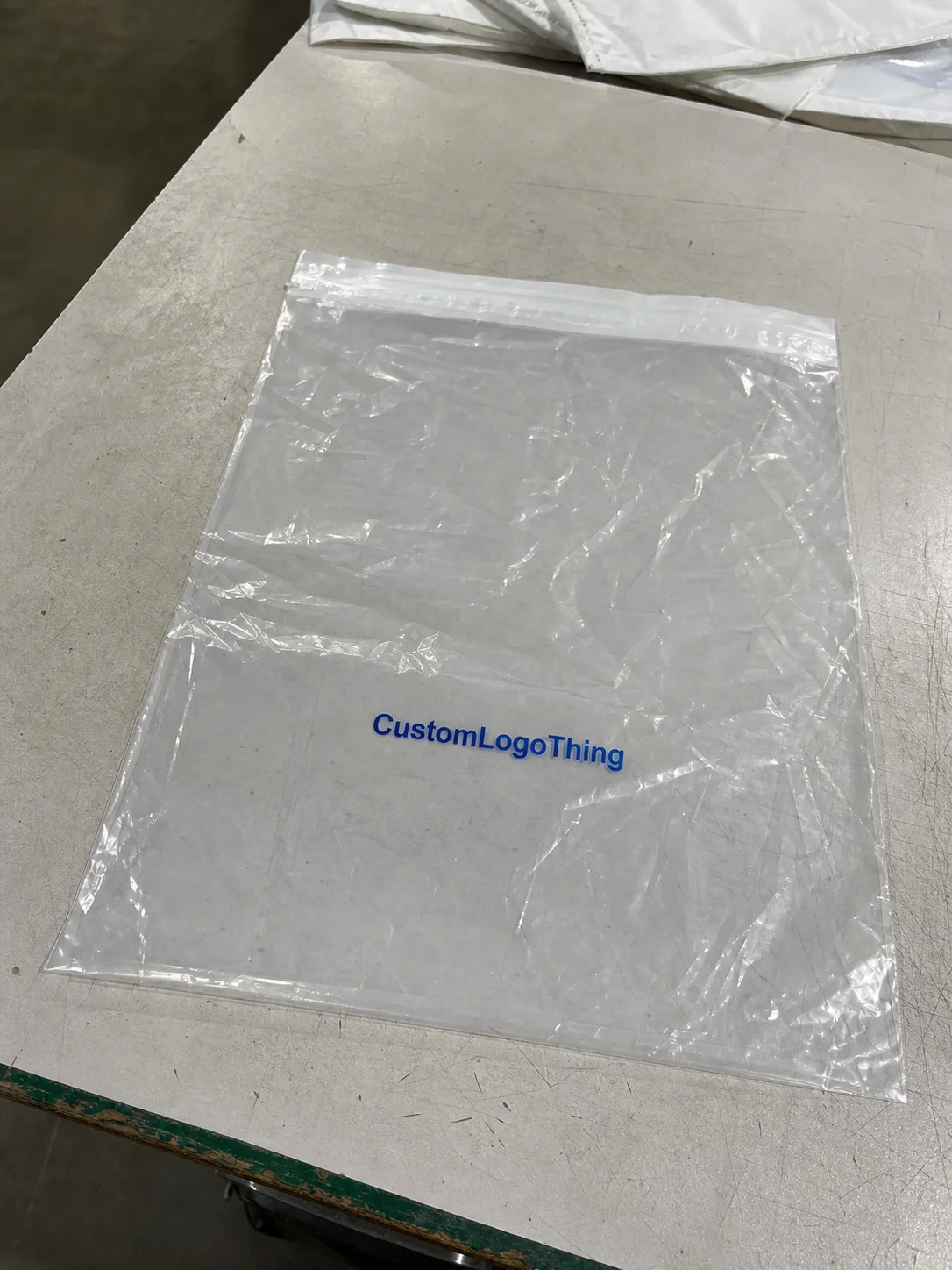
The first blind spot is assuming that width is the main variable. Wider bags can create slack, trap air, make loading awkward, and increase seal stress without giving much real-world benefit. Sometimes a slightly tighter fit performs better because the contents are held in place and do not shift around as much during transit.
The second blind spot is sizing to the product itself instead of the packaged unit. That distinction sounds small and causes real trouble. A part, bundle, or stack may gain several inches once it is wrapped, taped, nested, or banded. If the bag is sized only to the raw item, it may be impossible to close cleanly or may tear at the corners the first time it is handled roughly.
There is also a habit, especially in larger purchasing teams, of asking for a quote before defining the failure condition. That reverses the logic. The supplier needs to know whether the bag must resist abrasion, sharp edges, temperature swings, static buildup, repeated opening, or all of the above. A bag for dry storage has a different life than a bag for a product that gets dragged, dropped, and re-stacked.
For buyers, the most useful brief is rarely “need a big bag.” It is more like “need a 40-pound bundled load to survive hot-cold cycling without seal creep or punctures.” That kind of statement gives the converter something real to engineer against. It also reduces the chance that two vendors quote two different products under the same name.
A bag spec should protect the load first. Print is valuable, but it does not matter if the film fails during handling.
That single rule keeps the buying process honest. Custom large plastic bags are performance packaging with branding attached, not branding with packaging attached. The distinction matters more than it seems, because the lowest quote is often the one that ignores the hidden cost of damage.
How the bag is made: film gauge, seals, and printing
Most large custom bags are built from polyethylene, usually LDPE or LLDPE blends, with HDPE or recycled-content options used in some programs. Resin selection changes the bag’s behavior. LLDPE generally brings better tear resistance and elongation. LDPE tends to feel softer and seal more predictably in some structures. HDPE can be stiffer, which helps certain applications and hurts others. None of these is universally “best.” They just solve different problems.
Film gauge is the other major variable. A thinner film lowers cost and may be fine for light, uniform contents. Once the load gets heavier, sharper, or more irregular, the film has to absorb more stress. That is where buyers get punished for trying to save a fraction of a cent. The real metric is not the nominal thickness alone, but whether the film holds under puncture, tear, and seal load in the way the product is actually handled.
Most buyers will hear gauge expressed in mils, and a common range for custom large plastic bags sits somewhere around 2 to 10 mil depending on the use case. That range is broad because the application is broad. A 3 mil bag may be fine for a soft, low-friction bundle and completely wrong for a dense part with corners. Asking for a gauge without describing the contents is how mismatched specs get approved.
Seals deserve more attention than they usually get. Side seals, bottom seals, gusseted constructions, and open-top formats all fail in different ways. A bag can look clean on a sample and still be weak at the seal if the load shifts during transport. If the bag is filled and sealed on a line, the seal window, dwell time, and film compatibility need to be clear before production starts. A neat seam is not the same thing as a durable one.
Print adds another layer of complexity. Some buyers only need a logo. Others need handling marks, recycling language, lot codes, or compliance text. A full-coverage print job is not automatically better. In many programs, a restrained layout with one strong logo, one instruction panel, and the right contrast is enough. That approach usually costs less and reads better. Thin type and crowded layouts are risky on film because the substrate moves and stretches more than paperboard does.
Quality control is also different in flexible packaging. Artwork proofing, color placement, and register alignment matter, but so do basic physical checks: film thickness consistency, seal width, cut accuracy, and whether the finished bag opens and closes as intended. On a box, the structure itself hides some sins. On film, every defect shows up fast.
Pricing, MOQ, and what drives the unit cost
Price is usually driven by five things: dimensions, gauge, resin grade, print coverage, and quantity. Bigger bags consume more material. Thicker film uses more resin. More colors increase setup and press time. Special additives, recycled content, and performance features such as antistatic treatment can raise the cost again. None of that is mysterious, but buyers still compare quotes as if all bags were built from the same inputs.
For a plain, unprinted polyethylene bag in a common large format, a rough bulk range may land around $0.18 to $0.45 per unit at 5,000 pieces, depending on size and thickness. Add a simple one-color print and the range can move to roughly $0.28 to $0.60. Multi-color work, thicker film, or specialty performance features can push the number above that. Small orders usually price much higher per unit because the setup cost is spread over fewer bags.
MOQ is not arbitrary. It is tied to changeover time, film width, printing method, and how efficiently the line can run. A supplier that needs custom tooling, a nonstandard width, and multiple proof cycles has real fixed costs. If the requested order is low volume and highly customized, the economics change fast. That is not a sales tactic; it is how flexible packaging manufacturing works.
Comparing quotes only works if the spec is normalized. One supplier may include freight, carton counts, palletization, and proofing. Another may quote bag price only. The cheaper number is not always the cheaper landed cost. In practice, freight and warehouse requirements can move the total more than a small difference in resin cost.
| Option | Typical use | Indicative unit cost | MOQ tendency | Lead time tendency |
|---|---|---|---|---|
| Plain unprinted bag | Utility packaging, storage, internal handling | $0.18-$0.45 | Lower than printed runs, still tied to width and gauge | Fastest of the custom options |
| Single-color printed bag | Branding, handling instructions, basic retail support | $0.28-$0.60 | Moderate; depends on setup method | Longer due to proof and press setup |
| Multi-color or high-coverage print | Visible branding, display packaging, compliance copy | $0.45-$0.90+ | Usually higher because changeover and QC increase | Longest among common configurations |
| Special film or upgraded performance film | Sharp, heavy, or temperature-sensitive loads | Varies widely | Often higher due to sourcing constraints | Can stretch if material availability is tight |
A practical quoting exercise asks for three versions side by side: standard build, upgraded durability, and printed version. That comparison shows the real cost of extra gauge, higher clarity, a different resin blend, or a larger print area. It is a better buying tool than a single quote with the words “best price” attached to it.
For teams comparing bags with other packaging formats, a price gap should be read alongside handling risk. A bag that saves $0.08 per unit but creates one percent damage can be far more expensive than the heavier spec. On large volumes, small failure rates become real money quickly.
Specifying size, thickness, closure, and strength
Start with the finished load, not the raw product. Measure the outer dimensions after bundling, wrapping, or stacking. Width should reflect the widest point. Height should allow for closure or sealing without compressing the load too aggressively. If the shape is irregular, use the finished profile rather than the flat component. That one choice prevents a surprising number of errors.
Flat bags make sense for simpler loads and low-profile contents. Gusseted bags are better when the item has depth or needs a little more volume control. Open-top bags work when the bag is sealed later in the process. Drawstring or reclosable formats help if the bag must be reopened, though those designs add cost and usually change the bag construction.
Thickness is a tradeoff, not a status symbol. More gauge means more puncture resistance and more confidence under load, but it also increases cost and can make sealing less forgiving. A lighter film can be perfectly adequate for smooth, uniform contents. It is a poor choice for sharp edges, heavy assemblies, or anything that rubs against itself during movement. Buyers often ask for thicker film because it feels safer. The better question is whether the film matches the abuse profile.
Other properties can matter just as much. Slip additives affect how the bag moves against cartons or against itself. Clarity matters if the contents must be visible for inspection or retail presentation. Antistatic properties matter for electronics and some dry environments. Recycled content may be part of a procurement policy or sustainability target. If those requirements exist, they should be stated early. Retrofits create cost and confusion.
There is also a packaging-system issue that gets ignored. The bag should be specified alongside labels, inserts, and outer cartons if the program uses them. If one component looks clean but the full packout feels inconsistent, the customer notices. The bag is not a separate experience. It is part of the shipment.
In some programs, the bag also needs to satisfy a secondary function, such as grouping parts for warehouse picking or protecting printed inserts from abrasion. That changes the spec more than people expect. A bag used only for storage can tolerate different weaknesses than a bag that will be reopened, resealed, and handled by multiple people.
Production timeline, proofing, and quality control
The smoothest production path is usually straightforward: submit the brief, confirm dimensions and art, approve the proof, run production, inspect, and ship. The failure point is often not the factory itself. It is the handoff between the buyer’s assumptions and the supplier’s actual print and conversion process. Film is less forgiving than paperboard, so vague files and casual approvals cause real delays.
Proofing matters more than many buyers expect. Small text, thin lines, crowded artwork, and low-contrast marks can disappear on film or shift in registration. If the order includes brand marks, handling symbols, or legal copy, the proof should show exact placement and the usable print area. That is not a luxury. It is the cheapest way to avoid an expensive run of bags that technically match the file but fail the visual standard.
Turnaround depends on complexity and material availability. A simple unprinted order can move faster than a fully printed custom run. Standard dimensions and in-stock film shorten the cycle. Once the order needs a special gauge, a nonstandard width, or multiple print colors, the calendar stretches. For many bulk programs, 12 to 20 business days after proof approval is a reasonable planning window, but the supplier’s queue and resin supply can change that quickly.
Packaging teams should also confirm carton counts, pallet height, warehouse delivery rules, and any label requirements for receiving. Those details are small until they are not. A shipment can be on time and still cause delays if the pallet build does not fit the dock process or if the receiving team expects a different carton count.
If the schedule is tight, freeze dimensions first, then artwork, then freight terms. Changing all three at once is a fast way to miss the ship date.
Quality control should include more than a glance at the finished roll or carton. Ask how the supplier checks gauge consistency, seal integrity, print registration, and overall bag dimensions. A bag order does not need lab theater, but it does need repeatable checks. If the supplier cannot explain the inspection points in plain language, that is a warning sign.
For freight-heavy or distribution-heavy programs, transit testing standards can be useful. The International Safe Transit Association publishes test protocols many packaging teams reference when judging handling claims: ISTA testing resources. Not every bag needs formal transit testing. The standard becomes useful when the packaging is expected to survive vibration, stacking, and repeated handling across multiple legs.
Mistakes that lead to tears, delays, and reorders
The most common mistake is measuring the product instead of the packaged unit. If the contents are bundled, taped, stacked, or nested, the bag has to fit the final shape. A bag that fits the bare component can be too small once real-world packing methods are applied.
Another common failure is underestimating puncture risk. Sharp corners, metal edges, dense parts, and rough surfaces can damage film that looked perfectly fine in a sample. Sometimes the failure shows up only after stacking or vibration, which makes the problem harder to trace. The buyer sees a tear. The root cause is usually a spec that did not account for abrasion or corner load.
Print errors cause their own version of waste. Missing dielines, unconfirmed colors, tiny legal copy, and vague artwork files slow production and create rework. If multiple colors are involved, ask for a proof that shows registration clearly and does not bury critical text under decorative elements. A bag can be printable and still miss the brand standard by a wide margin.
Compliance requirements are easy to forget until the order is nearly locked. Food-contact use, recycling instructions, static sensitivity, and market-specific copy all need to be stated explicitly. If the bag is part of a larger program that includes other materials, align those requirements early rather than sorting them out after the bag spec is already approved.
One more problem appears in mixed-format packaging programs. Buyers compare a bag quote with a carton quote as if they solve the same issue. They do not. A bag can be cheaper on a line-item basis and still be worse in the field if it increases damage, slows packing, or creates handling confusion. The cost of a packaging choice is larger than its invoice.
For teams that want a cleaner spec before issuing a purchase order, a sample photo or an existing bag reference is often more useful than a long description. The reference gives the supplier a concrete target. It also reduces the odds of quote drift, because the discussion moves from abstractions to visible details.
There is a quiet pattern here. The best custom bag programs are rarely the most ambitious. They are the ones where the buyer gives the supplier enough structure to make the right tradeoffs. Less guesswork usually means fewer surprises.
Done well, custom large plastic bags solve a very specific business problem: they protect a load, keep the line moving, and carry just enough branding or instruction to do their job without adding unnecessary cost. The bags that perform best are not the biggest or the flashiest. They are the ones built with the real handling conditions in mind.
FAQ
How do I choose the right thickness for custom large plastic bags?
Start with the product weight, shape, and any sharp edges or rough surfaces. Thicker film is usually safer for heavy, dense, or puncture-prone loads. Lighter, smoother contents can often use a thinner gauge without losing performance.
Can custom large plastic bags be printed on both sides?
Yes. Double-sided printing is possible if the print setup supports it and the artwork is prepared accordingly. It usually adds setup time and cost, so confirm whether both sides need full graphics or only selected marks and instructions.
What drives MOQ for custom large plastic bags?
MOQ is mostly shaped by film setup, printing method, resin sourcing, and changeover time. Nonstandard widths, multiple colors, and special performance films usually raise MOQ because the fixed setup cost is harder to spread across a small run.
How long does production usually take?
Standard unprinted orders can move faster than printed custom runs. After proof approval, many bulk orders fall into a 12 to 20 business day planning window, though the final schedule depends on queue length and material availability.
What should I send for an accurate quote?
Send finished dimensions, estimated load weight, closure type, print needs, quantity, and any performance requirements such as puncture resistance, antistatic treatment, or food-contact use. A sample photo or reference bag helps reduce spec errors.


