Custom LL Bean Tote Bags: How to Order the Right Run sounds straightforward until the quote lands on your desk. In practice, custom ll bean tote bags are a useful test case for any buyer who needs a simple-looking item to perform like a reliable branded package. A canvas body, a logo, and a few spec changes can move the Price, Lead Time, and perceived quality more than the artwork itself.
That is why tote orders deserve the same discipline people usually reserve for cartons, inserts, or mailers. A tote can function as retail packaging, an event carryall, an onboarding kit, or a long-use brand piece that stays in circulation after the first handoff. If you want a broader view of how totes fit alongside other branded formats, the comparisons on our Custom Packaging Products page help make those tradeoffs easier to sort.
Why custom ll bean tote bags are a better test case than they look
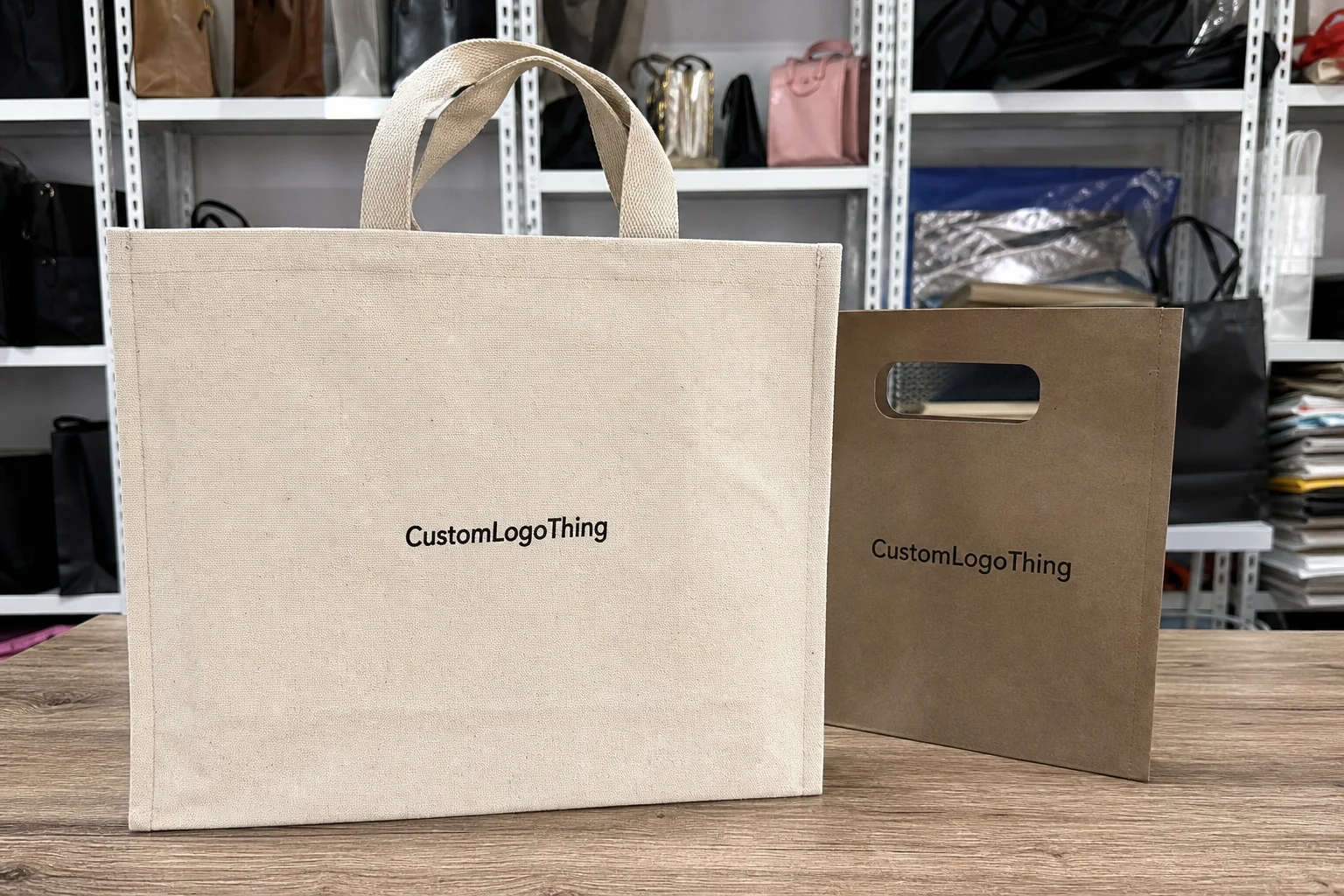
A lot of buyers treat canvas totes as an easy order because the shape is familiar. That assumption usually lasts until the first proof. The build may be simple, but the buying decision is not. You are balancing utility, shelf appeal, durability, and decoration quality in one object that may be carried for months or years.
From a packaging buyer’s perspective, the right tote is the one that survives repeated use without looking tired after a few trips. The real question is not whether a logo can be printed on canvas. It is whether the bag will hold its shape, stay readable at a distance, and fit the way the end user actually carries things.
Three things usually decide whether the order runs smoothly: what the bag actually is, what changes the price, and what creates delay. Get those answers early and the rest of the process is much easier to manage. Miss them, and even a small run can turn into revisions, reproofing, and freight surprises.
There is a useful rule of thumb here. If you would not approve a carton without checking board weight and print coverage, you should not approve a tote without checking canvas weight, handle reinforcement, and imprint area.
How the build works: fabric, decoration, and finishing choices
The build starts with the blank tote. Most stock styles use cotton canvas, duck cloth, or a cotton-poly blend, and the difference is obvious in hand. Heavier fabric reads more substantial and usually holds its shape better. Lighter fabric can still work, especially for event use, but it tends to drape more and may not feel as durable once loaded.
Construction details matter too. Open-top versus zip-top changes how the bag is used. Gusset depth affects capacity. Handle length determines whether the tote is comfortable for hand carry only or usable on the shoulder. Reinforced stress points matter more than most buyers expect, especially if the bag is meant to carry books, samples, laptops, or stacked purchases.
Decoration is the next decision. Screen printing is usually the workhorse for bold logos, flat color fields, and larger quantities. It gives clean edges and strong contrast on canvas, which is why it is common for company merchandise and event runs. Embroidery adds texture and a more premium feel, but it has limits. Small type, thin lines, and complex gradients often lose clarity when stitched. Woven labels, patches, and appliqué can work well if the goal is a retail-forward finish with more surface detail.
Placement matters more than many buyers expect. A logo can look balanced on screen and still sit awkwardly once it is printed on a real bag. Totes have seams, folded edges, and attachment points near the handles. Those constraints change where the art should live. A centered logo that looks elegant on a mockup can feel undersized in the hand if the tote is large, and a large graphic can crowd the body if the blank is compact.
Think of the tote the way you would think of packaging hierarchy. The body is the structure, the decoration is the message, and the finishing details tell the buyer whether the piece belongs in a giveaway pile or in a retail environment.
What changes the result: size, material weight, handles, and print area
Four specs drive most of the outcome: size, fabric weight, handles, and print area. Two bags can look almost identical from across a room and still behave very differently in use. A 10 oz canvas tote is often fine for light event handouts. A 12 oz or 14 oz duck canvas bag feels more substantial, keeps its shape better, and usually handles heavier loads without looking slack or overworked.
Handle length is not a minor choice. Short handles suit hand carry. Longer handles make the bag more useful for commuters, retail shoppers, and trade show traffic. Reinforcement matters as well. If the tote is expected to carry books, laptops, or stacked purchases, ask about bar-tack stitching and reinforced stress points. Thin handles on a heavy bag are a mismatch.
Size and imprint area interact in a way that catches people off guard. A large tote can make a small logo feel lost, while a small tote can force a big mark into a space that does not support it. The art needs breathing room, and the bag does too. Good mockups account for seams and edge constraints instead of treating the canvas like a blank rectangle.
- Natural canvas: classic look, easy to print on, and widely recognized by buyers.
- Dyed canvas: stronger visual contrast, but color matching becomes more sensitive.
- Heavier duck cloth: more structure and a cleaner retail feel.
- Large gusset: better capacity for boxes, books, or sample kits.
If the tote is part of merchandising, employee onboarding, or resale, do not overpay for features the end user will not feel. If it is for gifting or retail packaging, spend more attention on fabric weight, finish quality, and logo contrast. That is where the value shows up in the hand and on the shelf.
Custom tote bag pricing: what drives unit cost and quote spread
Pricing for custom ll bean tote bags usually breaks into five pieces: blank bag cost, setup or screen charges, decoration, packaging, freight, and any rush or revision fees. The first number you see is rarely the full picture. A quote that looks inexpensive on paper can climb once a second print location is added, artwork needs cleanup, or shipping shifts from ground to air.
For a stock 12 oz canvas tote with a one-color screen print, many buyers will see pricing around $2.25 to $4.75 per unit at 500 to 1,000 pieces before freight. Heavier canvas, embroidery, specialty patches, or smaller runs can move that into the $5 to $12 range or higher. That spread is normal. It reflects real production differences, not just markup. The key is to compare like with like.
| Option | Typical use | Approximate unit cost impact | Notes |
|---|---|---|---|
| 10 oz canvas, one-color screen print | Events, handouts, basic branded packaging | Lowest | Works well for simple logos and larger quantities; setup still matters. |
| 12-14 oz duck canvas, one- or two-color print | Retail packaging, gifts, staff kits | Moderate | Better body, more structure, higher perceived value. |
| Canvas with embroidery | Premium merch, executive gifts | Higher | Strong texture, but fine detail and small type can lose clarity. |
| Patch, label, or appliqué finish | Retail-forward package branding | Highest | More labor and more steps; useful when the tote needs a finished retail feel. |
That is why the cheapest quote is often the wrong comparison point. A better request is an itemized quote that separates bag, decoration, shipping, and sample costs. If one vendor includes freight and another does not, the spread is not meaningful. The same principle applies to branded packaging options across cartons, mailers, and inserts: unit price only matters when the spec is identical.
"The cheapest tote is not the cheapest run if you have to reprint it."
Minimum order quantity is another pressure point. Stock bags with one-color decoration often allow lower MOQs, while custom colors, multiple print positions, or embroidery can push the minimum upward. If you are ordering for a launch or a seasonal drop, a 250-unit run may feel practical. If the order is larger, setup costs become easier to absorb and the per-unit price usually drops.
Order process and timeline: from brief to production steps
The order flow is simple if the brief is tight. First, send the quantity, tote size, artwork file, delivery ZIP code, imprint location, and target date. Then the vendor confirms bag availability and decoration method and sends a digital proof. If the artwork needs cleanup, that happens before production starts. Once the proof is approved, the order moves into printing, stitching, packing, and shipping.
The timeline risk usually shows up in three places: proof revisions, stock shortages, and shipping congestion. Artwork cleanup can add days if the logo file is low resolution or the type needs to be rebuilt. Stock shortages add more time if the tote color or size is not already in inventory. Freight can slow down around peak seasons, especially if the order crosses multiple checkpoints.
A common lead time for stocked bags with simple decoration is often 12 to 15 business days after proof approval, but that can move faster or slower depending on complexity and inventory. Special finishes, multiple ink colors, embroidery, or sourced blanks can stretch the schedule. If the order supports a launch or event, build in buffer time.
For bulk shipping, ask whether the cartons will survive normal transit without extra repacking. That is a packaging question, not a shipping afterthought. If the goods are traveling a long distance, packing discipline matters. The ISTA testing framework is a useful reference point for that mindset, even if the supplier is not formally certifying the shipment.
The practical rule is simple: approve quickly, but not blindly. The fastest order is the one that starts with clean artwork, a confirmed bag spec, and a shipping window that matches the calendar.
Common mistakes that make tote orders more expensive or less usable
The most expensive mistake is approving artwork without checking scale and placement on the actual tote dimensions. A logo can look correct on a mockup and still feel awkward once it is printed on the bag. The second mistake is choosing artwork that is too detailed for canvas. Thin lines, tiny type, and dense gradients can blur, fill in, or disappear from a distance. Canvas is not coated stock.
- Ignoring function: a beautiful tote that cannot carry the intended load is a poor buy.
- Skipping proof review: small errors become costly once production starts.
- Underestimating lead time: internal sign-off and freight both take longer than buyers expect.
- Chasing a low quote: weak stitching, thin fabric, or poor ink coverage show up fast.
Another mistake is assuming all canvas is the same. It is not. A lighter bag may print well, but if the handles strain under weight, the user experience falls apart. A heavier bag may cost more up front, but it often performs better over repeated use. That matters because a tote gets handled constantly.
Color contrast is easy to overlook too. Dark ink on dark fabric can disappear. Light ink on natural canvas usually reads better, especially for logos meant to be seen across a room. That visual decision affects packaging identity as much as it affects print quality.
If the tote is part of a wider branded packaging program, keep it aligned with the rest of the kit. The bag, outer carton, tissue, and insert should feel like they belong together. Otherwise the experience reads as assembled instead of designed.
Expert tips and next steps for comparing samples, quotes, and specs
The cleanest way to start is with a one-page spec sheet. Include quantity, dimensions, artwork file type, color count, imprint location, target date, shipping ZIP, and intended use. That single page removes most quote confusion. If you want a fair comparison across vendors, ask for the same bag weight, same print method, same number of colors, and the same shipping terms.
If possible, request a physical sample or at least photos of prior work on a similar canvas weight. You are looking for stitch quality, handle reinforcement, ink coverage, and how crisp the logo edge looks after the bag has been folded. A sample is not just a nice extra. It is a way to see whether the supplier’s standard is real or only described well.
For sustainability claims, keep the story specific. If you are adding outer cartons or hang tags, check whether the paper components can be sourced with FSC-certified materials and whether the language on the spec sheet matches the claim. For reference, the FSC guidance is useful when packaging components become part of the order.
I also recommend testing the tote the way end users will actually use it. Fill it with books, samples, notebooks, or retail purchases. Check handle comfort. Check whether the gusset sits flat. Check whether the bag still feels balanced when loaded. That reality check separates a pretty mockup from a useful item.
If you are comparing broader options, our Custom Packaging Products page can help you line up totes against other formats without mixing specs. Then ask for two or three matched quotes and lock the approval window Before You Order custom ll bean tote bags. The best runs match the use case, the budget, and the timeline without making the buyer guess.
How much do custom ll bean tote bags usually cost per unit?
Price depends on bag weight, decoration method, quantity, and whether setup or shipping is included. Higher quantities usually lower the per-unit cost because setup gets spread across more bags. Ask for an itemized quote so you can compare bag quality, print method, freight, and revisions separately.
What is the minimum order quantity for custom ll bean tote bags?
MOQ varies by blank availability, decoration method, and whether you are using a stock color or a custom configuration. Simple one-color decoration on stocked totes usually allows a lower MOQ than specialty finishes or custom materials. Confirm whether the MOQ applies per design, per size, or per color before you approve the quote.
Which print method works best for canvas tote bags?
Screen printing is usually best for bold logos, clean shapes, and larger runs. Embroidery can work well when you want a more premium look and the artwork is simple enough to stitch cleanly. The right method depends on durability, budget, logo detail, and how closely the final item needs to match your brand colors.
How long does a custom tote bag order usually take?
Lead time depends on stock availability, proof approval speed, decoration complexity, and shipping distance. Revisions and artwork cleanup can add days even when the production slot is open. If the order supports an event or launch, build in buffer time for approval and freight delays.
What do I need to send for an accurate quote on tote bags?
Send quantity, tote size, color preferences, artwork file, imprint location, and the delivery ZIP code. Include your deadline and whether you need samples, packaging, or split shipping. The more specific the brief, the less likely the quote will change after proofing.


