A custom telfar bag looks simple on paper. That is the trap. Clean silhouettes expose every weak decision: proportions, handle spacing, base depth, edge finishing, logo placement, and the way the body holds shape under load. If any one of those is off, the whole piece reads cheap no matter how good the mockup looked.
For buyers, the goal is not to make something that photographs well once. The goal is to build a repeatable product that feels intentional in hand, ships without damage, and lands at the right price point. That is where product and packaging thinking overlap. The same discipline that keeps Custom Packaging Products useful instead of decorative applies here: the spec has to match the job, not just the mood board.
If you are commissioning a retail gift, a pop-up piece, or a merch item meant to feel collectible, start with function. Define the use case first, then choose the material and structure that can actually support it. Vague briefs create vague bags. Factories do not magically fix that.
Why this bag is deceptively hard to build
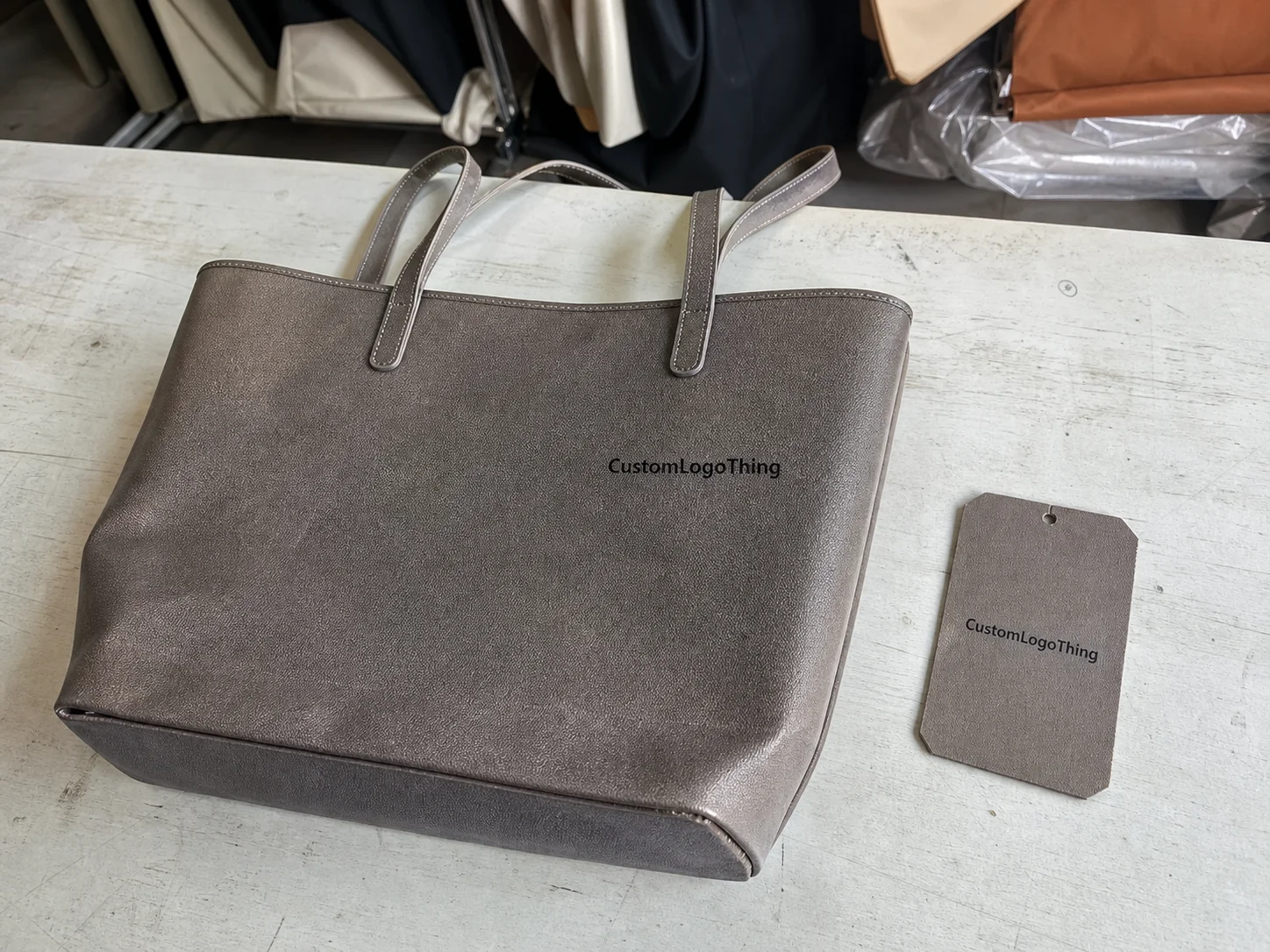
The shape is minimal, not simple. Minimal designs leave less room for error because there is nowhere to hide sloppy work. A seam that would disappear on a busy tote becomes obvious on a cleaner bag. A handle that is slightly too thin feels wrong immediately. A base that is off by a few millimeters changes how the whole piece sits on a table.
That is why a custom telfar bag needs tighter product thinking than a generic promo tote. The body, handles, opening, and reinforcement have to read as one object. If the shell looks premium but the handle attachment is weak, buyers notice. If the structure is too soft, the silhouette collapses. If it is too rigid, the bag can start feeling awkward or overbuilt.
The most common brief I see is some version of this: a brand wants a piece that feels worth keeping, not a disposable event giveaway. It should hold a phone, wallet, keys, maybe a small notebook. It should sit cleanly on a desk or shelf. It should survive being carried through a full day. That sounds basic, but those requirements shape almost every production choice.
“Minimal design punishes imprecision. The cleaner the shape, the more the build quality has to carry the product.”
The fix is straightforward. Treat the bag like a product specification, not a concept. Lock the dimensions, handle drop, gusset depth, closure type, lining, logo method, and packaging before production starts. If a supplier cannot quote those details clearly, they are not ready to build the bag reliably.
If the item is part of a larger drop, include the packaging system early. A strong package branding plan can help the bag feel finished when it arrives, but only if the outer box, insert, and shipping format are specified up front. That is why many brands coordinate the product with retail packaging solutions instead of treating packaging as an afterthought.
Materials, structure, and finish decisions
Material choice controls most of the first impression. It affects hand feel, visual depth, shape retention, weight, and how well the logo treatment holds up. For a custom telfar bag, the common body options are PU, faux leather, coated fabric, and more rigid composite-style builds. Each one pushes the product in a different direction.
PU and faux leather are usually the easiest path to a polished, retail-friendly finish. They support debossing, embossing, screen print, and metal branding reasonably well. They also help the bag feel less like promotional merchandise and more like an actual fashion item. The tradeoff is that low-grade PU can look plasticky fast. If the top layer is thin or the backing is weak, the bag starts aging poorly after only moderate use.
Coated fabric is lighter and often more flexible. It works when the brief leans toward utility, travel, or event carry. It can also reduce cost, but it tends to lose the elevated look unless the coating weight and edge treatment are handled carefully. Rigid or semi-rigid builds hold a sharp outline and photograph well, but they require more precise engineering. They can add shipping risk and raise the chance of cracked edges or awkward corners if the construction is rushed.
| Material | Look and Feel | Durability | Best Use | Cost Level |
|---|---|---|---|---|
| PU / faux leather | Smooth, polished, fashion-led | Good if backing, stitching, and edge work are solid | Retail merch, launch gifts, premium promos | Medium |
| Coated fabric | Light, flexible, slightly sportier | Moderate to good, depending on coating and reinforcement | Event bags, travel carry, utility use | Low to medium |
| Semi-rigid composite build | Sharper silhouette, more structured | High shape retention, less forgiving on impact | Display pieces, higher-end drops | Medium to high |
| Reinforced specialty build | Bold, niche, often more technical | Depends heavily on seam quality and reinforcement | Limited releases, statement items | Variable |
Structure matters just as much as material. Soft-structured bags are easier to store and usually more comfortable to carry, but they can lose the crisp outline that makes this style work. Rigid versions look cleaner on a shelf and feel more premium at first touch, yet they increase tooling complexity and make the design less forgiving if proportions are not exact.
Decoration method should support the silhouette, not fight it. Debossing and embossing are good fits because they add detail without clutter. Screen print is cost-effective and practical for larger runs, but oversized artwork can quickly overpower a restrained shape. Heat transfer can handle small detail, though wear resistance depends on the film and the application quality. Metal branding can elevate the piece, but it only works if attachment points, weight, and placement are engineered properly.
Small details change perception more than most buyers expect. Stitch color affects how loud or restrained the bag feels. Edge paint can either sharpen the outline or make the whole thing look rushed. Lining matters if the bag opens wide or if the brand wants a more premium interior reveal. Hardware quality sends a message immediately. A weak zipper or flimsy magnet tells the buyer the rest of the bag was probably priced down too aggressively.
If you care about shipping performance, do not ignore testing standards. [ISTA](https://ista.org) protocols are useful if you want a realistic read on whether the packed goods survive transit instead of just sitting safely on a studio table. If paperboard components are part of the order, FSC certification is a sensible sourcing request ([FSC](https://fsc.org)).
Pricing, MOQ, and what changes the quote
Pricing gets messy when the quote hides half the work. A useful estimate for a custom telfar bag should separate the body material, lining, hardware, decoration, packaging, tooling, and sample fee. If it arrives as one lump number with no breakdown, you are guessing. And guessing is expensive once revisions start.
For a straightforward build using standard PU, simple branding, and ordinary construction, mid-size runs of roughly 300 to 1,000 pieces often land around $7 to $16 per unit. Add custom hardware, thicker lining, edge paint, more rigid structure, or metal logo parts, and it can move into the $14 to $28 per unit range or higher. Lower quantities push the price up because setup costs have fewer units to absorb them. That is basic manufacturing math, not a factory tactic.
MOQ usually follows the same logic. Simpler builds may be possible at 100 to 300 units, depending on materials and the factory’s existing supply chain. More custom versions often need 500 units or more before the pricing becomes reasonable. If the design needs special hardware, new tooling, or a difficult color match, expect the minimum to rise.
Sampling is where serious buyers save money later. A sample might cost $60 to $250, and more if there are custom molds or metal parts. That number can feel annoying until you compare it with the cost of approving a weak sample and then receiving 500 units that all need rework or rejection. One approved sample is cheaper than one bad production run. Usually by a lot.
Here is the kind of quote breakdown that is actually useful:
- Dimensions and build notes
- Material specification, including thickness or weight where possible
- Decoration method and artwork coverage
- Hardware or closure type
- Lining and interior finish
- Packaging requirements, including any custom printed boxes or inserts
- Sample cost, unit cost, and freight terms
- Lead time for sample and production
If you want comparable quotes, send the same brief to every supplier. Same dimensions. Same artwork files. Same packaging ask. Same deadline. Otherwise you are comparing incomplete assumptions, and the lowest quote is usually missing something you will have to pay for later.
Production timeline and QC checkpoints
A standard workflow starts with the brief, moves through quotation, sampling, revision, production, inspection, and shipping. The delay rarely comes from the sewing line itself. It usually comes from slow approvals, missing artwork, unclear material choices, or packaging decisions that keep changing halfway through the process.
For a custom telfar bag, a realistic sample timeline is often 10 to 20 business days once the spec is locked. Production can then take another 15 to 30 business days after sample approval, depending on order size and material availability. Add transit on top of that. Rush orders can happen, but the cost goes up and the margin for correction gets smaller.
Lead time and turnaround are not the same thing. Lead time includes every step before the factory starts cutting material in volume. Turnaround sounds faster than it usually is because it ignores approval delays. If the buyer side is still changing the logo placement or debating the finish, the line cannot move. The factory is not the bottleneck in that case.
Quality control should happen at more than one point. Ask whether the supplier checks seam consistency, strap reinforcement, hardware alignment, edge finish, and packed-unit count before shipment. If the bag ships in retail packaging, ask how the inner wrap, carton strength, and label placement are controlled. A product that looks fine unboxed but arrives dented or scuffed is not a finished product.
That is especially true if the bag is part of ecommerce or retail distribution. The item needs to survive handling, not just a studio shoot. A supplier that understands product packaging usually does better here because they think about the full set: the shell, the insert, the carton, and the way the item moves through transport.
Packaging should be decided early. If the bag ships in a branded box, the box size changes freight, carton planning, and final presentation. That is why it makes sense to line up branded packaging options before production starts instead of trying to add them at the end.
How to order without wasting rounds
Start with a real buyer brief, not a mood board. State the use case, target audience, quantity, deadline, budget range, and the one or two details that cannot change. If it is for a retail drop, say that. If it is for a giveaway or event, say that too. Different jobs call for different structures and different finish levels.
Next, build a clean spec sheet. Include dimensions, handle drop, gusset depth, closure type, logo placement, artwork size, lining preference, edge finish, and packaging needs. If the bag has to fit a specific item, list that item. If the carry weight matters, say so. Suppliers make better recommendations when the target is visible.
Artwork files need to be clean. Low-resolution logos and vague color references cause preventable mistakes. If you want a crisp metal logo, send vector files. If you want debossing, check that the line weight can survive the process. If the color needs to match a specific tone, define it with a recognized reference instead of calling it “soft black” or “warm cream” and hoping everyone imagines the same thing.
When the first sample arrives, review it physically. Photos are useful, but they are not enough. Check the logo placement in hand. Open and close the bag. Load it with weight. Look at the seam tension, the handle attachment, and the way the base sits under stress. A good sample should hold its shape without feeling stiff for the sake of stiffness. If it collapses, the structure is wrong. If the edges are messy, the finish is wrong. If the color is off, fix it before production.
A clean order flow usually looks like this:
- Send the brief and reference images.
- Confirm dimensions, material, and closure.
- Review a line-item quote.
- Approve the sample plan and pay the deposit.
- Inspect the physical sample, not just a photo set.
- Approve production only after sample sign-off.
- Lock packaging and shipment details before the run begins.
That last step matters more than people think. If the bag ships with a dust bag, insert card, or outer carton, those details need to be fixed before the line runs. Package branding affects freight, presentation, and cost. Changing it late is how projects turn into change-order noise.
Mistakes that make the bag look wrong
The biggest mistake is copying the vibe but not the proportions. A bag can have the right general profile and still look off because the handle spacing is wrong, the opening is too wide, or the base is too shallow. Buyers often blame the material first. In practice, proportion errors are the more common problem.
Weak artwork causes another kind of failure. If the logo file is fuzzy, the supplier is forced to guess. If the color references conflict, the factory will pick the closest workable match and move on. That may be acceptable for a disposable promo item. It is not acceptable for a piece that needs to feel deliberate. Overdesigned bags fail too. Too many stitched lines, hardware pieces, or decorative panels can flatten the silhouette and make the product look crowded.
Use case needs to match construction. A fashion accessory does not need the same wear resistance as a daily commute bag. A promo item does not need luxury-level edge work if the budget cannot support it. If every version is treated the same, the result will be wrong somewhere. Usually in the one place the buyer cares about most: cost, durability, or brand fit.
There is also the packaging mistake. People spend weeks polishing the item and then ship it in a flimsy mailer with no structure. That drops the perceived value before the customer even touches the product. Good retail packaging is not decoration. It protects the product and the brand impression at the same time.
The last mistake is over-specifying every detail. More hardware. More stitching. More effects. More everything. That often pushes the design into an awkward middle ground where none of the parts can breathe. The better version is usually cleaner, with fewer elements executed more carefully.
Practical tips before you request a quote
Keep the first inquiry concise and specific. Include quantity, deadline, material preference, reference images, and the few details that matter most. If the handle drop must hit a certain measurement, say it. If the logo must be debossed rather than printed, say that too. Precision at the start saves time later and keeps the first quote close to reality.
Ask for sample photos, material swatches, and a line-item quote before you commit to production. A supplier that only gives you one total number is asking you to do the hard part blind. You need enough information to compare finish quality, structure, timing, and packaging. Price alone is not a decision.
Compare total value, not only unit cost. One factory may be cheaper by a small amount but require more revisions, weaker packaging, or a slower schedule. Another may cost more and deliver a bag that matches the brand level the first time. Cheap can be expensive later. That lesson is boring because it keeps being true.
If the bag is part of a wider launch, connect it to the full presentation system now. Decide how it fits alongside inserts, wrap, outer cartons, and any custom packaging products that support the drop. Good packaging design keeps the whole release coherent. Random choices make even a decent bag feel underbaked.
Before you request quotes, finalize the dimensions, gather artwork, choose the material tier, and set the budget range. Do that and your custom telfar bag order will move faster, cost less to correct, and look much closer to the product you intended. That is the part that matters.
How much does a custom Telfar bag usually cost?
Cost depends on material, size, hardware, decoration, packaging, and quantity. Smaller runs cost more per unit because setup is spread across fewer pieces. For mid-size orders, simple builds can land in the lower range, while more detailed versions move up quickly.
What MOQ should I expect for a custom Telfar-style bag?
MOQ varies by supplier and construction method. Simpler builds may start around 100 to 300 pieces, while more custom versions often need 500 pieces or more to make pricing workable. Special hardware or tooling can push that higher.
How long does production usually take?
Plan for time spent on quoting, sampling, revisions, production, inspection, and shipping. A sample can take 10 to 20 business days once the spec is locked. Production often takes another 15 to 30 business days, depending on quantity and material availability.
What should I send in a quote request?
Send dimensions, quantity, deadline, material preference, artwork, closure type, and any packaging requirements. Add reference images and the details that cannot change. That keeps the first quote close to the real build instead of a guess.
How do I keep the bag from looking cheap?
Get the proportions right, choose a material that fits the brand position, and keep the design disciplined. Then approve a physical sample before production. That catches weak structure, bad color, sloppy edges, and poor hardware before the run begins.