Custom Logo Canvas Tote Bags: What Buyers Should Check Before They Order
Custom logo canvas tote bags look simple, but the best ones are the result of a lot of small decisions made well. The bag itself has to feel sturdy, the decoration has to suit the material, and the finished piece needs to support the role it plays, whether that is retail checkout, a trade show kit, a campus store item, a nonprofit giveaway, or part of a larger packaging program.
The buying question is not whether a canvas tote can carry a logo. It can. The real question is whether the tote is built, printed, priced, and scheduled in a way that matches your audience and the rest of your branded materials. A tote that sits alongside custom packaging products, packaging product options, or branded packaging supplies should feel like it belongs in the same system, not like an afterthought.
That sounds like a small distinction until the order lands. A tote with weak handles, loose printing, or a fabric weight that feels flimsy can dilute the rest of the presentation. A cleaner bag with a simpler imprint often reads as more premium because the materials do some of the work before the artwork even gets noticed.
Why custom logo canvas tote bags get noticed fast
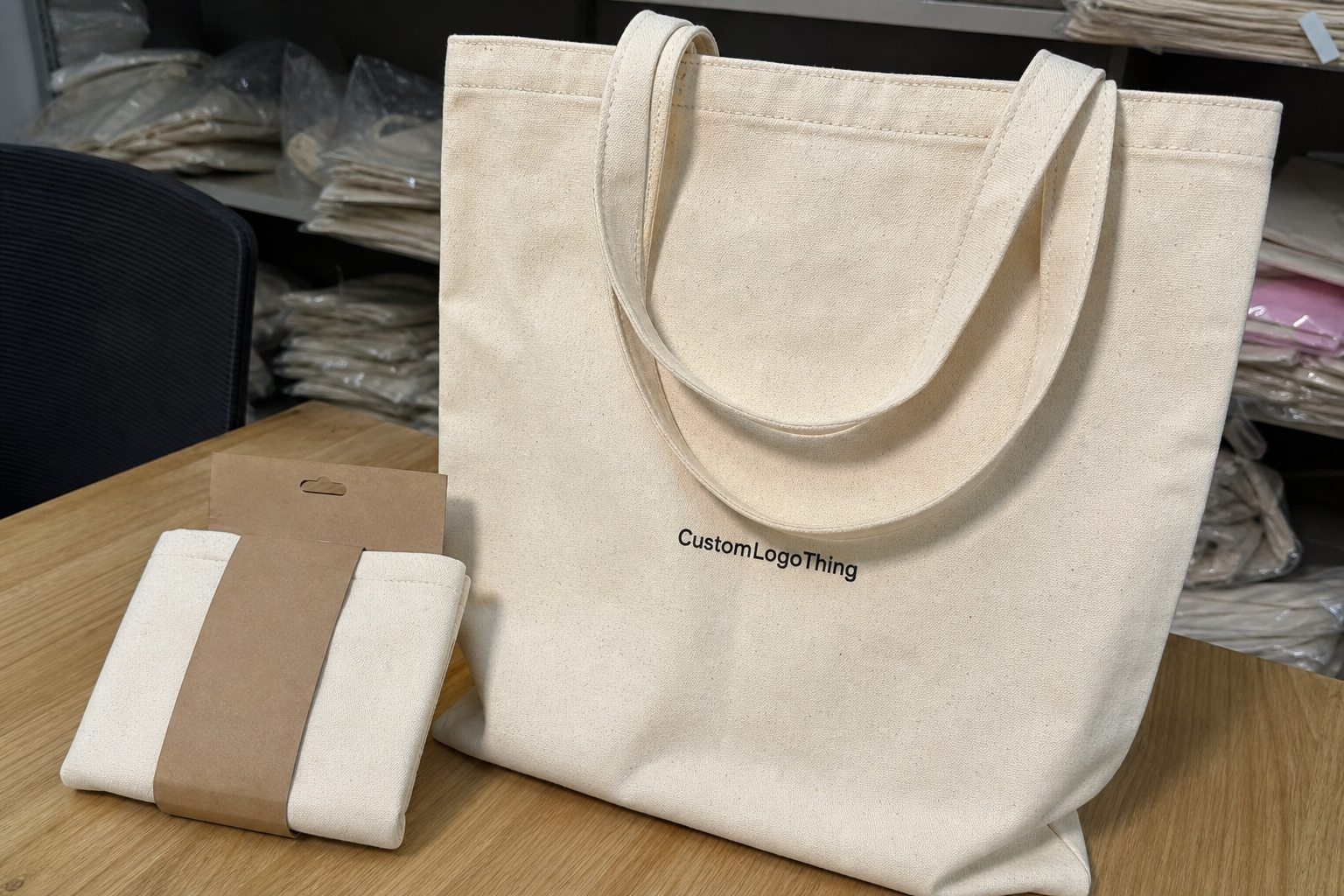
People keep canvas totes because they are useful. That is the main reason they outperform one-time handouts. Once a tote leaves the event table, it tends to keep moving through daily life, which means the logo keeps circulating in public without another media buy. A shopper uses it for groceries, a laptop, gym clothes, or a quick weekend run, and the bag becomes a rolling brand surface.
That makes them unusually efficient for retail and promotional work. Trade shows need instant visibility from across an aisle. Campus bookstores want an item students will actually carry off campus. Nonprofits want something practical enough to feel valuable without pushing the budget too far. Employee kits need to look organized and presentable. In each case, the tote is not just packaging. It is part of the brand experience.
The mistake many buyers make is overpricing the logo and underpricing the substrate. A detailed mark on a light, floppy bag can still look cheap in use. A simpler imprint on a heavier bag often looks better because the tote holds its shape, carries weight more naturally, and survives more trips. The material is not background. It changes perception.
A tote that looks inexpensive at checkout can cost more in brand damage than a slightly better bag with a cleaner print and stronger handles.
If you are choosing between a tote, a mailer, or custom printed boxes for a campaign, the tote usually wins when public reuse matters. A box gets opened and discarded. A canvas tote can keep generating impressions long after the first handoff. That repeated use is where the value lives.
How the branding process works on canvas totes
The production flow is usually straightforward. Artwork comes in first, then the supplier prepares a proof showing placement, print size, color count, and any special notes. After approval, the job moves into printing or embroidery, then curing or finishing, quality checks, packing, and shipment. If the order is large or the design is more involved, a preproduction sample or ink drawdown may be part of the process before full production begins.
Screen printing is still the default for simple logos, bold type, and one- or two-color art. It gives a strong visual result and is usually the most economical choice at higher quantities. Heat transfer can handle more detail or smaller runs, though buyers should ask how the finish feels on the bag and how well it holds up to repeated use. Embroidery gives a more textured, premium look, but it works best on thicker canvas and on logos that are not too intricate. Woven labels or tag branding can be useful when the logo needs to stay subtle or when the tote is part of a broader retail package.
Canvas quality affects print quality more than first-time buyers usually expect. A tighter weave generally produces cleaner edges and more stable line work. A heavier, more textured canvas may feel richer in hand, but it can soften fine details and change how ink sits on the surface. That is not a defect. It is the material doing what material does. A good spec matches the decoration method to the fabric instead of assuming every combination will behave the same way.
Proof approval is where small mistakes are caught or missed. Placement by an inch can change the balance of the design. A logo that looks fine on a screen can become too small on fabric. A color that seems bright in a file can look dull on natural canvas. Ask for the print dimensions in inches, not just a general description, and confirm whether seams, gussets, or top stitching affect the available space. If the tote is part of a larger set that includes inserts or custom packaging products, keep the visual language aligned across the whole order.
In practical production terms, the best suppliers tend to ask sharper questions early. They want to know whether the tote will be packed flat or nested, whether cartons must meet a specific count, and whether the final delivery site can receive freight during a narrow window. Those details do not sound glamorous, but they are what keep the order moving without surprises.
Key factors that change quality and usability
Canvas weight is the first spec worth comparing. Light canvas lowers unit cost and shipping weight, but heavier fabric usually improves structure and increases the odds that the bag will be reused often. In practical terms, 6 oz canvas can work for lightweight giveaways or event handouts. A 10 oz bag is a common middle ground for retail and general-purpose programs. Heavier options feel more substantial, though they add cost and can change the way the tote folds and packs.
Weave is the next variable. A tight weave tends to reproduce sharper graphics and smaller text more cleanly. A looser weave can feel casual and approachable, which may suit some brands but not others. Natural canvas shows fiber texture clearly and gives a straightforward, understated look. Dyed canvas creates a stronger color block and can push the piece toward fashion, campus, or premium retail. If the tote needs to sit next to hang tags, inserts, or custom printed boxes, the finish should work with the whole system rather than compete with it.
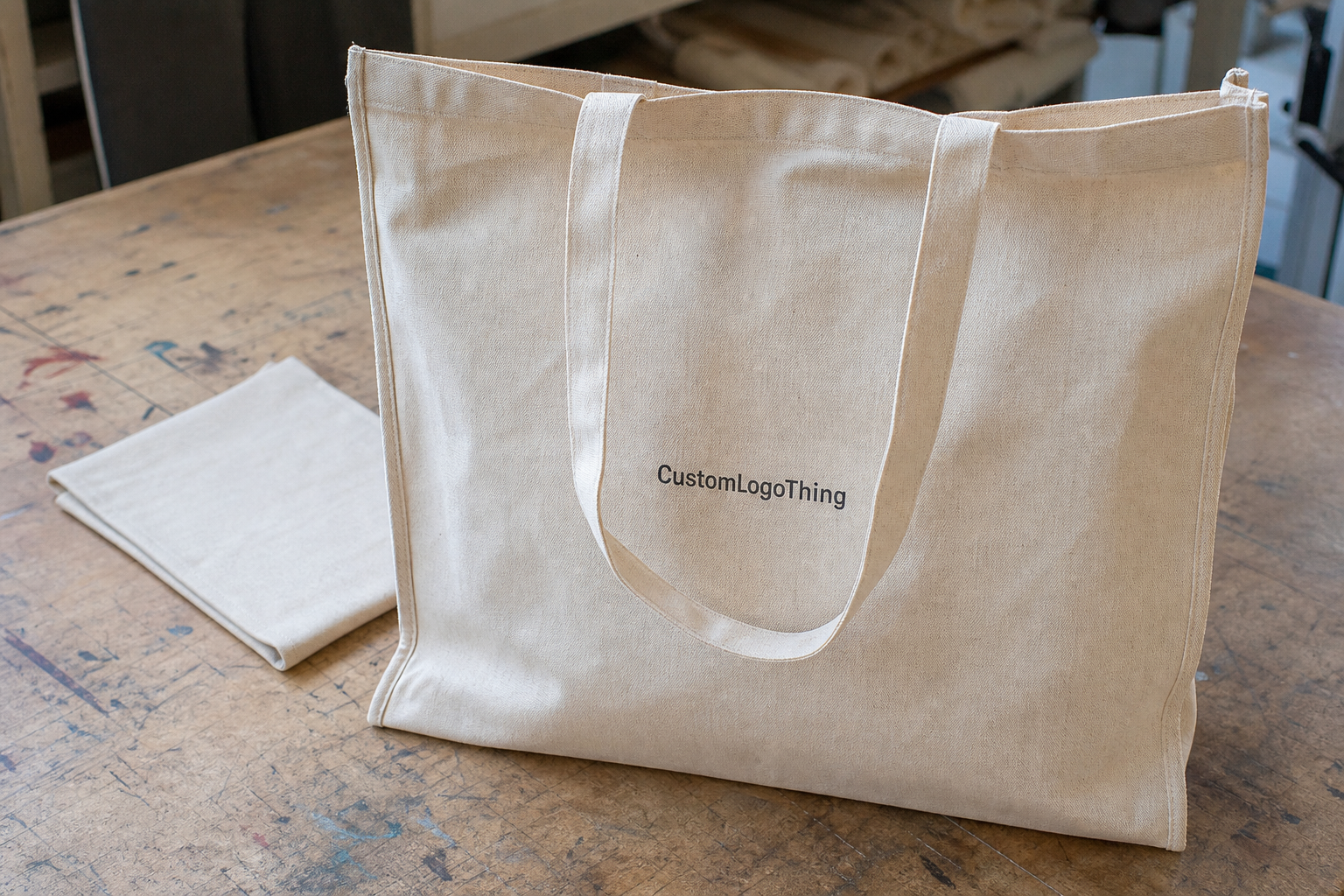
Tote construction matters just as much. Flat totes are simpler and usually less expensive. Gusseted bottoms add usable volume and help the bag stand up more easily. Long handles are more comfortable on the shoulder and tend to feel more contemporary. Short handles can work well for quick retail handoff, but they are less forgiving if the bag gets heavy. Reinforced handle attachment points are worth paying for if the tote will see repeated use. Zippers, snaps, and pockets can improve function, but they also raise the price quickly and should only be added if they solve a real need.
Brand tone is part of the specification too. Natural canvas suggests a more casual, eco-aware, or artisan feel. Dyed canvas can look more polished or more fashion-driven. A simple, color-matched print often feels more premium than a crowded layout with too many effects. None of those choices is universally right. A nonprofit campaign should not use the same visual language as a boutique retail launch just because both need a tote.
- Better value: a cleaner print, stronger handles, and a size people will actually keep using.
- Better look: a finish that matches the rest of the branded packaging program.
- Better fit: a tote size that carries the right items without unnecessary bulk.
For buyers who like a quality reference point, transit testing standards such as ISTA can be a useful way to think about durability even when a tote is not formally certified. If your order includes fiber-based tags or carton components, FSC certification may matter more on those paper parts than on the canvas itself, but it is still worth checking if sustainability claims are part of the brief.
Process and lead time: from proof to delivery
Orders move more smoothly when the sequence is clear. The buyer requests a quote, confirms the tote spec, submits artwork, reviews a digital proof, approves a sample if needed, and then releases the job into production. After that comes printing, finishing, packing, and freight. Skipping one of those steps usually shows up later as a delay or a rework charge.
Artwork causes most scheduling problems. Low-resolution files, missing fonts, tiny line work, and unclear placement instructions slow proofing immediately. Late changes are even more expensive because the factory may already have set screens, sourced blanks, or reserved a production slot. On larger runs, a small art revision can push the job back several days because setup work has to be repeated. Buyers often treat the proof as a formality. It is not.
Lead time depends on quantity, print complexity, stock availability, and shipping distance. A simple one-color screen print on in-stock totes can often move from proof approval to shipment in about 12 to 15 business days. Larger orders, multiple print locations, special finishes, or sourced materials can stretch that to three to six weeks. Rush service is possible in some cases, but it usually adds cost and leaves less room for error. Shipping is separate from production, and that distinction matters more than people think.
Use the deadline to work backward. If the tote has to arrive for a trade show or launch date, build in time for proof revisions and transit delays. The most reliable schedule is the one that assumes at least one round of questions before approval.
- Lock the event date first, then work backward from it.
- Leave time for artwork changes, not just production.
- Confirm whether freight is included in the quote or billed separately.
- Check the delivery address, receiving hours, and any site restrictions before release.
For shipping-heavy programs, it also helps to think about the packaging discipline around the tote. A bag packed too loosely in a master carton may look fine on arrival after a short route and still come in with creases, scuffs, or uneven stack pressure after a longer trip. That is why carton counts, pack method, and freight assumptions should be part of the order from the beginning rather than after the production run is complete.
Cost, pricing, MOQ, and quote math
Price comes from a short list of variables: bag size, canvas weight, decoration method, color count, quantity, packaging, and freight. That sounds basic, but buyers still get tripped up because the cheapest-looking quote often leaves out setup charges, samples, packing, or shipping. A quote is only useful if the assumptions are visible and consistent across suppliers.
MOQ, or minimum order quantity, has a direct effect on unit price. A 100-piece order has to absorb setup work across very few bags, so the per-unit cost is naturally higher. At 1,000 pieces, the same setup gets spread more efficiently. At 5,000 pieces, the price can drop sharply, especially if the print is simple and the blanks are already in stock. The same tote can look expensive at a small quantity and highly competitive at scale.
For planning purposes, a natural canvas tote with one-color screen printing might land around $2.20 to $4.20 per unit at 250 pieces, then move closer to $0.95 to $1.80 per unit at 5,000 pieces, depending on canvas weight, print coverage, and packing requirements. Add another color and the cost usually rises. Add embroidery and the math changes again because digitizing and stitch count matter. These are planning ranges, not universal quotes.
One-time charges can shift the final total more than buyers expect. Screen setup may run from about $35 to $80 per color, though some suppliers bundle it. Samples often cost $25 to $100, especially if they need to be shipped quickly. Rush production and expedited freight can add more than expected too. A lower unit price can still be the worse deal if the tote is too light for the use case or if freight absorbs the savings.
| Order Profile | Typical Spec | Planning Range Per Unit | Best Fit |
|---|---|---|---|
| Small run | 6-10 oz canvas, one-color screen print | $2.20-$4.80 | Internal events, pilot programs, limited retail drops |
| Mid-size run | 10 oz canvas, one- or two-color print | $1.40-$2.90 | Trade shows, campus stores, nonprofit campaigns |
| Large run | 10-12 oz canvas, bulk packed | $0.95-$1.80 | Retail rollout, broad promotion, recurring replenishment |
The tradeoff is straightforward. A slightly higher unit price can be the better buy if the tote lasts longer, prints cleaner, or feels consistent with the rest of the brand system. In branded packaging, the cheapest piece is not always the strongest signal. If the tote will be used alongside custom printed boxes or other product packaging components, consistency often matters more than shaving off a few cents.
Common mistakes that create rework or disappointment
The most common art problem is also the most preventable: logos that are too detailed, too small, or too low-contrast for canvas. Fine lines can break up, small text can disappear, and soft color palettes can turn muddy on textured material. Buyers sometimes approve artwork on a bright screen and then feel surprised when the print looks flatter on fabric. That is not unusual. It is simply the medium doing what it does.
Dimensions create the second wave of trouble. A tote may be listed with generous outside measurements, but the usable interior size is what actually determines how the bag performs. Gussets, seams, and handle placement can reduce the real carry space. If the tote is meant for folders, brochures, or retail purchases, ask for the internal dimensions and request a marked imprint area so everyone is looking at the same geometry.
Finishing details can be another source of mismatch. Color standards vary slightly from supplier to supplier, and not every factory prints with the same ink density or press setup. A Pantone reference helps, but it does not guarantee a perfect visual match on textured canvas. If the order is high-visibility, ask for a sample or at least a proof that shows the imprint against the exact tote color.
Logistics is where budgets often slip. Freight gets underestimated. Packaging requirements get ignored. Delivery windows get approved before the final production calendar is confirmed. That happens most often when the tote is treated as a standalone item instead of one piece in a broader retail packaging or event program. The order works better if it is managed as a system.
- Do not approve art without checking print size and placement.
- Do not assume every supplier measures tote dimensions the same way.
- Do not forget that shipping can be a major line item.
- Do not finalize the order until the deadline matches the production calendar.
Expert tips and next steps for a cleaner quote
The cleanest quote starts with a tighter brief. Include tote size, canvas weight, handle length, print location, color count, quantity range, deadline, destination ZIP code, and whether the bags are going to one location or multiple sites. A supplier can only quote accurately if the variables are visible. Vague requests usually produce vague pricing.
Ask for apples-to-apples comparisons. Unit price, setup fees, sample charges, freight, and carton counts should all be shown on the same basis. If one quote includes packing and another does not, they are not truly comparable. Buyers often focus on the headline price and miss the spread in extras. That is one of the easiest ways to lose margin without realizing it.
Keep the artwork simple unless there is a strong reason not to. Fewer ink colors generally print more consistently, and cleaner shapes survive the texture of canvas better. If the logo can be simplified into a bold one-color or two-color version for the tote, the result is often stronger than forcing a complex file onto a material that does not need it. That applies whether the tote supports retail packaging, an internal launch, or a customer gift program.
There is also a consistency issue. If the tote is part of a larger set that includes inserts, mailers, or custom packaging products, the visual system should feel intentional. Match logo placement, type weight, and color logic across the whole package family. That difference is what separates a random giveaway from a coordinated brand asset.
My practical advice is simple: send a complete spec sheet, request a proof, confirm the production calendar, and compare the final quote against the tote's actual use case rather than only the lowest number. Custom logo canvas tote bags tend to perform best when they are planned as part of the wider packaging story, not added at the last minute to fill a gap.
FAQs
What sizes work best for custom logo canvas tote bags?
Choose the size based on what the bag has to carry. Retail purchases, conference materials, groceries, and employee kits all need different footprints. Ask for the usable interior size, not just the outer dimensions, because gussets and seam placement can change capacity. For event use, a medium size often gives the best balance of print area, comfort, and shipping efficiency.
How durable are custom logo canvas tote bags for everyday use?
Durability depends more on canvas weight, stitching, and handle reinforcement than on the logo itself. Heavier canvas and reinforced stress points usually hold up better for repeated shopping, commuting, or giveaway use. If the tote is meant for daily use, check seam strength, handle feel, and how well the print handles washing or abrasion.
Which decoration method is best for custom logo tote bags?
Simple logos usually work well with screen printing because it is cost-effective and visually strong. Detailed artwork may call for another method, but buyers should compare how each option affects texture, durability, and color accuracy. The right method is the one that fits the artwork, quantity, and target price point, not the one that sounds most premium.
What affects the price of branded canvas totes the most?
Quantity, canvas weight, logo complexity, and print color count usually move price more than small cosmetic choices. One-time setup, sample charges, rush production, and freight can change the total far more than buyers expect. A quote is most useful when it separates unit price, setup fees, and shipping so you can compare suppliers on the same basis.
How far in advance should I order custom canvas tote bags?
Order earlier than you think if the bags are tied to a launch, trade show, or seasonal event. Build time for artwork revisions, proof approval, production, and transit so a delay in one step does not threaten the whole order. A buffer is especially useful for large quantities, special finishes, or shipping constraints.