Custom Reusable Bags with Logo: A Buyer’s Checklist
Custom reusable Bags with Logo can keep a brand visible long after a flyer, mailer, or insert has been discarded. If the bag is built well, it becomes a piece of branded packaging people actually carry, which is far more useful than a handout that disappears before the next shift change.
The real buying question is simple: what task will the bag perform, how often should it be reused, and what impression should it leave each time it shows up at a grocery checkout, a trade show table, or a retail counter? From a packaging buyer’s point of view, utility matters more than novelty. A bag that handles groceries, apparel, or event giveaways without stretching, tearing, or distorting the artwork earns repeat use. A bag that feels flimsy gets tossed quickly, even if the proof looked polished.
That is why bag selection should start with the use case, not the artwork or the color. A bag meant for folded T-shirts is a different spec from one that needs to hold boxed cosmetics or a heavier promo kit. The bag has to fit the product, the budget, and the expected level of reuse. Otherwise the logo gets attention for the wrong reason.
Why a reusable bag can outlast the campaign that launched it
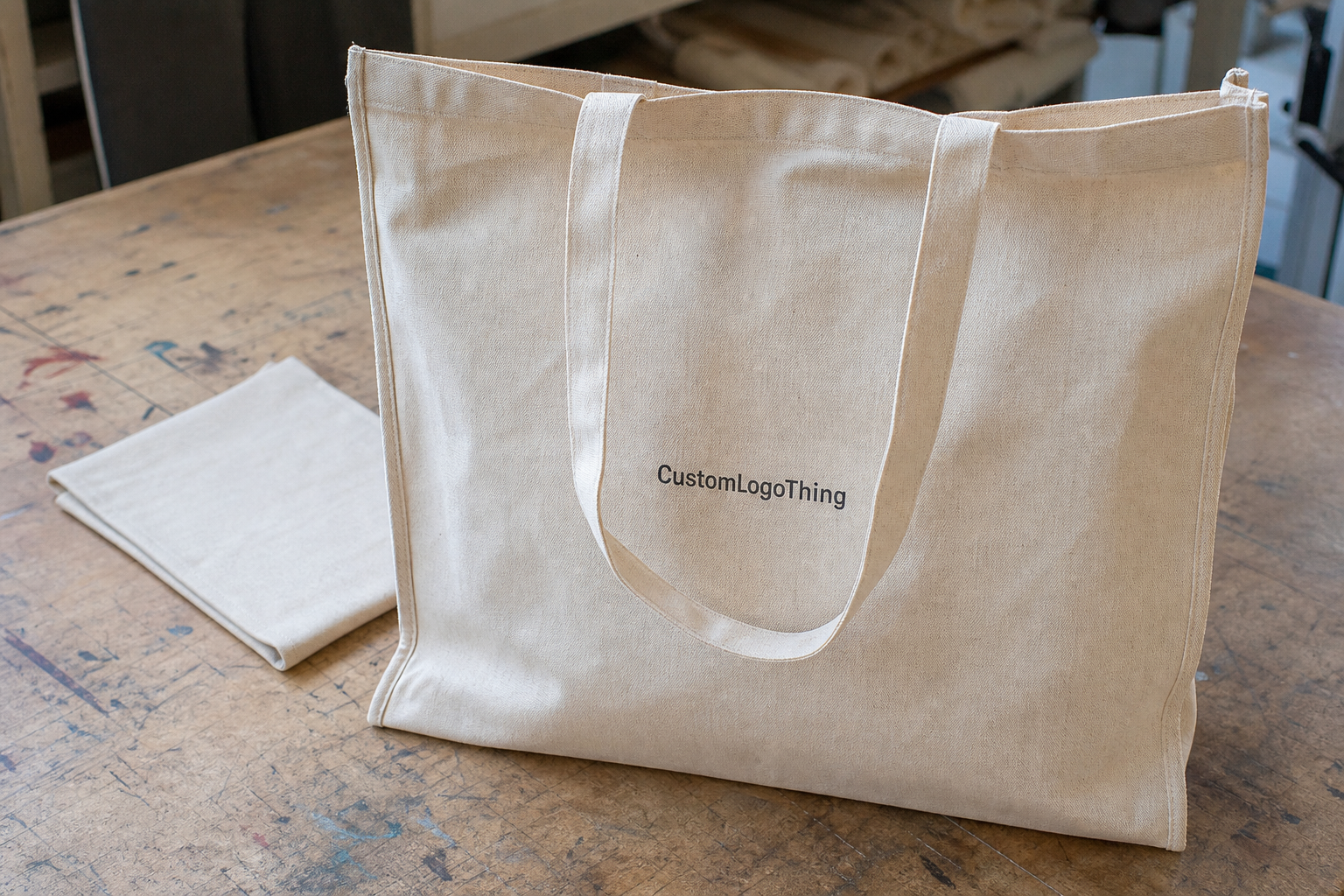
A reusable bag earns its keep by being useful every day. That sounds straightforward, but in practice it is the difference between packaging that travels and packaging that stays on a shelf. If the bag is sturdy enough for groceries one week, an apparel return the next, and a giveaway on Friday, it will keep circulating. Each reuse is another brand impression without another print run.
That is why I treat custom reusable bags with logo as a tool, not a novelty item. The better ones sit between retail packaging and utility gear: light enough to carry comfortably, strong enough to survive repeated loading, and clean enough visually that the logo still reads from a distance. A bag can be one part of a larger branded packaging program alongside custom printed boxes, inserts, and carrier cartons, but its role is different. It is the piece people see in public.
The practical choice is not “bag or no bag.” It is what load it must carry, how the end user will handle it, and how many times you want the printed mark to show up after the initial handoff. That is the reason a buyer should begin with use case and end with decoration, not the other way around.
Reusable bags also live in a space where small improvements in construction make a measurable difference. A stronger seam, a better gusset, or a more comfortable handle can change how long the bag stays in circulation. In buying terms, that means a slightly higher material spec is often cheaper than replacing a weak design with a second order. The cheapest bag is rarely the one that performs best.
Material, gauge, and handle choices that change performance
Most custom reusable bags with logo fall into a few material families, and the differences matter more than many buyers expect. Nonwoven polypropylene is often the entry-level choice because it is light, flexible, and relatively budget-friendly. Woven polypropylene gives more tensile strength and usually a firmer feel. Laminated woven polypropylene adds a smoother face for print and can carry larger graphics cleanly, but it usually costs more and adds a little weight.
Material weight, denier, seam construction, and reinforcement points all affect how the bag performs under load. A bag may look similar at first glance, yet a thicker wall, a better gusset, or a reinforced handle attachment can change the lifespan dramatically. For heavier use, I look closely at stress points near the handles and along the bottom seams, because that is where failures usually start. If the bag is meant to be reused often, better structure is usually the smarter spend.
Handle style changes both comfort and durability. Loop handles are common and comfortable for everyday carry. Die-cut handles can be economical and tidy, but they are not the best choice for heavier loads unless the opening and reinforcement are designed carefully. Heat-sealed edges keep the look neat, while stitched reinforcements improve confidence when the bag will carry more weight. Comfort matters too. If the handle digs into the hand, the bag gets left behind.
Print method should match the surface. A simple one- or two-color logo often looks clean on textured nonwoven material. Fuller graphics can work well on laminated surfaces because the finish holds sharper contrast. On rougher materials, tiny text and fine lines can lose clarity quickly. That is why package branding for a reusable bag needs to be built around the material, not added after the fact.
| Bag type | Typical use | Common print style | Typical 5,000-unit production range |
|---|---|---|---|
| Nonwoven polypropylene | Lighter promos, event handouts, apparel | 1-2 color spot print | $0.35-$0.75 per unit |
| Woven polypropylene | Heavier carry, repeat retail use | Spot print or simple multicolor | $0.60-$1.25 per unit |
| Laminated woven polypropylene | Premium retail presentation, larger graphics | Higher-impact graphics, larger coverage | $0.90-$1.80 per unit |
Those ranges are production-side estimates only. Size, handle style, gusset depth, print coverage, color count, packing format, and freight can move landed cost up or down quickly. If you want a cleaner comparison, ask every supplier to quote the same bag dimensions, the same material weight, the same number of print colors, and the same packing format.
A few material choices deserve a careful look. If the bag is meant for groceries or boxed goods, a narrow handle or low-gauge body may save a few cents but create problems fast. If the bag is going to be folded and carried daily, finish quality and fold memory matter more than an oversized logo. Buyers sometimes focus on the front face and forget the sides, bottom seam, and handles are where real use happens. Those are the areas that reveal whether the bag is decorative or functional.
For buyers comparing materials and construction options, the Institute of Packaging Professionals is a useful reference for packaging education and material thinking. If the finished bags will ship with cartons or other product packaging, ISTA test standards are the right language for transit risk and drop performance.
Pricing, MOQ, and unit cost for custom reusable bags with logo
Pricing is driven by the same things that drive performance: size, material thickness, handle construction, color count, and how much of the bag face gets printed. Custom reusable bags with logo can look inexpensive on a quote sheet until setup, freight, carton packing, or a premium finish gets added. That is why buyers should focus on landed cost, not only the unit price.
MOQ matters because the smaller the run, the more setup cost gets absorbed into each bag. Larger orders usually spread those fixed costs better. That does not mean you should always buy more than you need; it means you should compare the savings against storage and demand. If you only need 1,000 bags for a store opening, forcing a 10,000-piece order can create warehouse waste instead of value on the floor.
Freight is another place where quotes can diverge. Domestic production is usually easier to plan and faster to receive, while overseas production may offer lower base pricing but longer transit and more moving parts. Carton count, palletization, and whether the bags ship flat or folded also affect the final number. If the order supports a fixed event, build in enough time for carton delays and shipping variance.
Here is the simplest rule I give buyers: do not compare a lighter bag against a heavier one and call the cheaper quote a win. Compare the same spec sheet. Then compare the landed cost. Only then does the quote mean anything.
What usually moves the quote
- Bag size and gusset depth
- Material weight or thickness
- Handle style and reinforcement
- Number of print colors
- Front-and-back coverage versus a single logo panel
- Packing format and freight method
There is also a practical pricing trap that shows up often: adding print coverage before the bag structure has been finalized. A larger graphic can be attractive, but if it forces more setup, more ink, or a more complex print method, the bag price climbs fast. In some cases, a cleaner one-color mark on a better-built bag does more for repeat use than a crowded full-coverage design on a weak one. The bag should fit the campaign, not the other way around.
If you are building out a broader branded packaging program, it can help to compare the bag against other items in the same budget, such as retail packaging sleeves, inserts, or even Custom Packaging Products that support the same campaign. The strongest package branding plans usually keep the visual system consistent across formats, even when the materials differ.
Process and timeline: from artwork approval to delivery
The production path is straightforward, but there are enough handoffs that timeline discipline matters. It usually starts with the use case and bag spec, then moves to artwork, proofing, production, quality control, packing, and transit. Custom reusable bags with logo move faster when the design is already clean and the buyer knows the exact dimensions needed for the product.
Artwork readiness has more influence than many buyers realize. Clean vector files, correct font outlines, and a clear color reference reduce back-and-forth. If the artwork still needs sizing decisions or logo cleanup, the schedule stretches. I recommend treating the proof stage as a real approval gate, not a casual review. Every extra round of revisions can push delivery, especially on busy production runs.
Typical planning windows vary, but a simple run often needs about 10 to 15 business days after proof approval, while more complex orders can push into the 15 to 25 business day range. Add freight time on top of that. If the bags are shipping with other product packaging, or if they must align with a store launch, backward planning is the only sensible way to schedule the order.
If the bag cannot survive the product it carries, the logo is doing too much work for a weak structure.
That is also where testing language matters. If the order will be packed with heavier goods, ask whether the supplier has drop or transit assumptions that resemble ISTA methods. Not every reusable bag needs full test protocol documentation, but the conversation should still be grounded in how the bags will actually travel and be used. A bag that looks fine in a proof can still fail if the handle attachment or bottom seam is underbuilt.
Quality control for this category is usually practical rather than flashy. Buyers should ask how the supplier checks print registration, seam alignment, color consistency, and handle attachment strength. If a sample or pre-production proof is available, inspect it under normal lighting and check the bag loaded with a real product. A flat empty sample can hide problems that only show up under weight. Small flaws in registration or finishing are easier to fix before production than after a full run has been packed.
Common mistakes that make bags look cheap or fail early
The most common mistake is buying a bag that is too thin or too small for the real load. Overfilled bags distort the logo, stress the seams, and make the whole piece feel less trustworthy. A bag sized for folded apparel may fail quickly if it gets used for boxed goods or grocery items with hard corners. Always size to the product, not to a guess.
Another frequent problem is design clutter. Too many colors, too much copy, and tiny legal text all fight for attention on a relatively small surface. Good packaging design uses white space on purpose. The logo should be readable from a short distance and still look clean up close. If the print is too busy, the bag stops feeling like branded packaging and starts looking like a crowded flyer.
Handle comfort gets ignored more often than it should. If the handle digs into the hand or flexes awkwardly, the bag will not stay in circulation. That is true even when the print looks perfect. I would rather see a simpler graphic on a comfortable, durable bag than a high-coverage design on something people avoid carrying.
Low unit price can be misleading too. A cheaper quote may hide reduced material weight, weaker seams, less ink coverage, or larger freight exposure. A buyer who only compares price per bag often ends up paying more because the first run does not last. The right question is not “What is the cheapest bag?” It is “What bag will keep the logo visible for the longest useful life?”
There is also the mistake of approving artwork before the bag construction is settled. A design that looks balanced on screen may shift once it is wrapped around a gusset, placed near a seam, or scaled to fit a smaller print area. That is especially true with fine type, reversed-out text, and logos with thin strokes. The proof should reflect the final structure, not an idealized flat canvas.
Expert tips for better branding and repeat use
For stronger results, keep the message simple. One logo, one clear brand line, and enough breathing room around the artwork usually outperform a crowded composition. In package branding, clarity beats decoration more often than people expect. A bag is not a poster; it is a moving surface that gets folded, carried, and stored.
Color choice should be deliberate too. Darker materials can hide scuffs better, while bright tones can improve visibility on the floor or in a crowd. If the bag is meant to reinforce a retail brand, align the color with the rest of the retail packaging system so it feels like part of the same family. That is especially useful if the campaign also includes custom printed boxes or shelf-ready inserts.
Design for repeat use, not just initial giveaway value. A foldable format, a gusset that sits flat, and a handle shape that feels natural in the hand can extend the life of the bag. If the bag stores easily in a car door pocket or kitchen drawer, it is more likely to be used again.
Print placement also affects how premium the bag feels. Centered art is predictable, but off-center logos, side-panel branding, or a small front mark with a cleaner back panel can make the piece feel more intentional. That said, unusual placement only works if the supplier can hold registration consistently. Decorative choices should never come at the expense of legibility.
Before placing a larger order, request a sample or a digital mockup and test it with real products. Put an actual item inside, carry it a few times, check the print balance, and look at the bag from a few feet away. That small test often catches problems that no spec sheet will reveal. It is also where custom reusable bags with logo prove whether the design and the construction are truly aligned.
Browse Custom Packaging Products if you want to compare bag formats against other branded packaging options and keep the same visual language across the full product line.
Next steps: build a spec before you request quotes
The cleanest quote requests are the ones that do the supplier’s job for them. Before you ask for pricing on custom reusable bags with logo, gather the use case, target quantity, delivery date, shipping destination, artwork files, preferred colors, and approximate product weight. If the supplier has to guess the load, the handle strength, or the right size, you will get a quote that is less reliable.
A useful spec sheet usually includes:
- Bag dimensions and gusset depth
- Material preference and finish
- Handle type and reinforcement need
- Print colors and artwork placement
- Quantity target and acceptable MOQ range
- Ship-to location and needed delivery date
- Any carton labeling or retail packaging requirements
Ask each vendor to confirm the same assumptions: setup fees, proof timing, print method, freight basis, and whether the quote includes folding or bulk packing. Then compare sample images or physical samples before production begins. That keeps the decision grounded in construction, not just on a line item price.
For better comparisons, request one more detail that is often skipped: the exact material weight or thickness, plus the handle reinforcement method. Two bags with the same dimensions can perform very differently if one uses lighter stock or a weaker attachment. If the order is for an event, store opening, or seasonal promotion, confirm whether the quoted production window includes artwork approval and final packing, not just the press time. Those extra days matter more than most buyers expect.
From a buyer’s point of view, the best orders are usually the ones planned with the same care you would give any other product packaging decision. If the spec is tight, the artwork is ready, and the use case is clear, custom reusable bags with logo can be one of the most efficient pieces in the branded packaging mix.
FAQ
What material works best for custom reusable logo bags?
Nonwoven polypropylene is usually the budget-friendly choice for lighter promotional use, while woven polypropylene handles heavier loads and more repeat use. The right material depends on what the bag will carry, how often it will be reused, and whether print appearance or maximum durability matters more.
How do I estimate pricing for custom reusable bags with logo?
Start with size, material, quantity, print colors, and handle style, since those are the biggest drivers of unit cost. Then add freight, packaging, and any setup charges so you can compare the real landed cost instead of only the base bag price.
What is a normal lead time for custom reusable logo bags?
Lead time depends on proof approval, production scheduling, and shipping method, so it is best to treat the full calendar as more than just factory time. Build extra buffer if artwork is not final, if the order is large, or if the bags are needed for a fixed event or store launch.
Can I print full-color artwork on custom reusable bags with logo?
Yes, but the method and bag surface matter. Full-color graphics usually need more careful file prep and can raise cost compared with simple spot-color branding. Keep the logo readable at a distance and avoid relying on fine detail that may not reproduce cleanly on textured plastic materials.
What should I have ready before asking for a quote?
Have the bag size, material preference, quantity, logo file, color targets, destination, and target delivery date ready before contacting suppliers. If possible, include photos of the products the bag needs to hold so the supplier can confirm the right construction and handle strength.