Buyer Fit Snapshot
| Best fit | Custom Logo Mailing Bags for Apparel projects where brand print, material claims, artwork control, MOQ, and repeat-order consistency need to be specified before quoting. |
|---|---|
| Quote inputs | Share finished size, material target, print colors, finish, packing count, annual reorder estimate, ship-to region, and any compliance wording. |
| Proofing check | Approve dieline scale, logo placement, barcode or warning zones, color tolerance, closure strength, and carton packing before bulk production. |
| Main risk | Vague material claims, crowded artwork, missing packing details, or unclear freight terms can make a low unit price expensive after revisions. |
Fast answer: Custom Logo Mailing Bags for Apparel: Material, Print, Proofing, and Reorder Risk should be specified like a repeatable production item. The safest quote records material, print method, finish, artwork proof, packing count, and reorder notes in one written spec.
Production checks before approval
Compare the actual filled-product size with the drawing, then confirm tolerance on folds, seals, hang holes, label areas, and retail display edges. Reserve space for logos, QR codes, warning copy, and material claims before decorative graphics fill the panel.
Quote comparison points
Review material grade, print process, finish, sampling route, tooling charges, carton quantity, and freight assumptions side by side. A quote is only useful when the supplier can repeat the same color, closure quality, and packing count on the next order.
What Are Custom Logo Mailing Bags for Apparel (and Why Brands Obsess Over Them)
I watched a mid-size women’s activewear brand cut monthly “my order arrived damaged” tickets from 73 to 19 in six weeks after replacing generic 2.0 mil white envelopes with custom logo mailing bags for apparel made in 2.5 mil co-ex film and stronger side seals. Same carrier network. Same routes. New bag specs. Packaging failures show up fast once order volume climbs, and yes, that team was kinda shocked by how quickly the support queue calmed down.
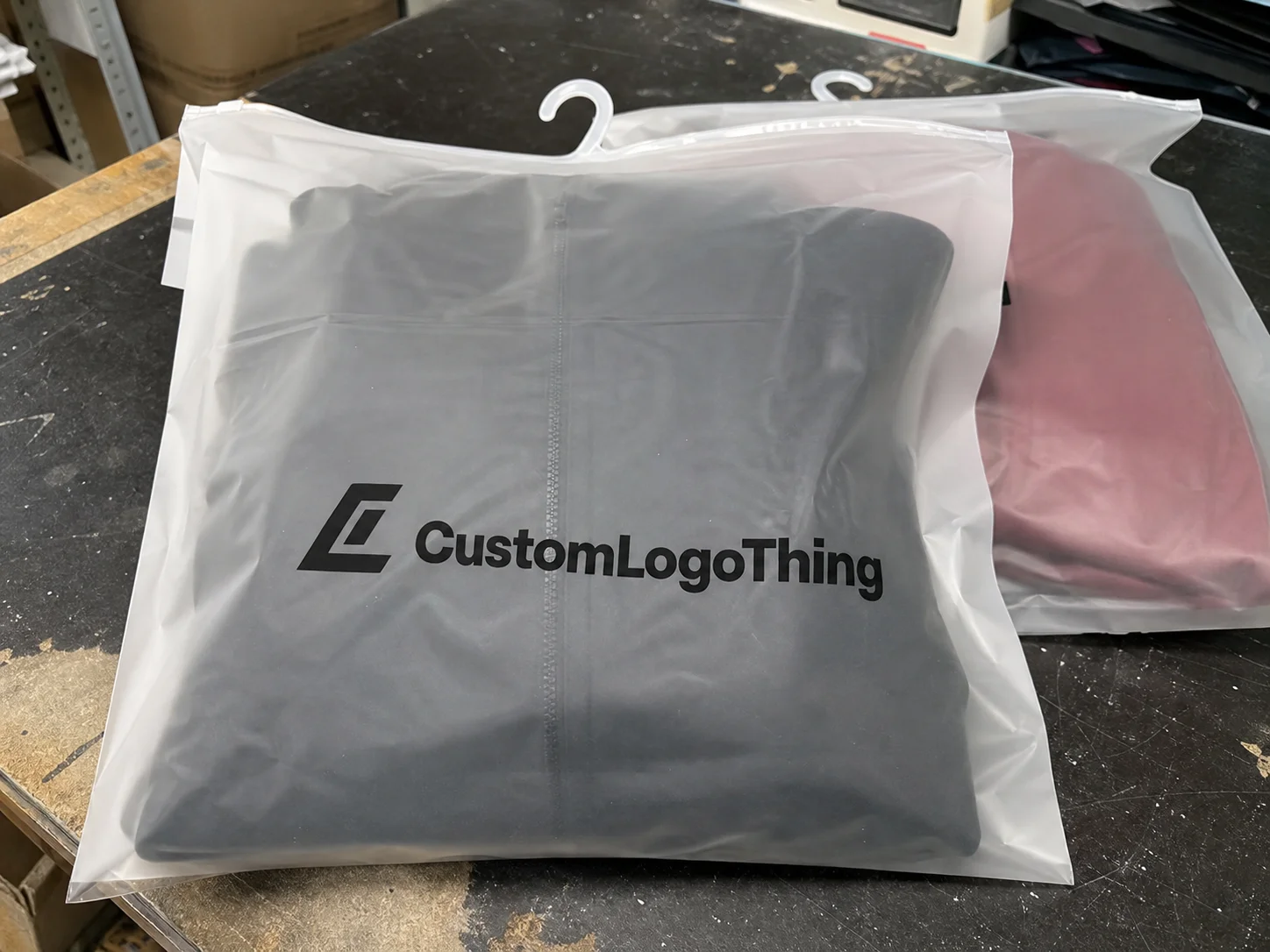
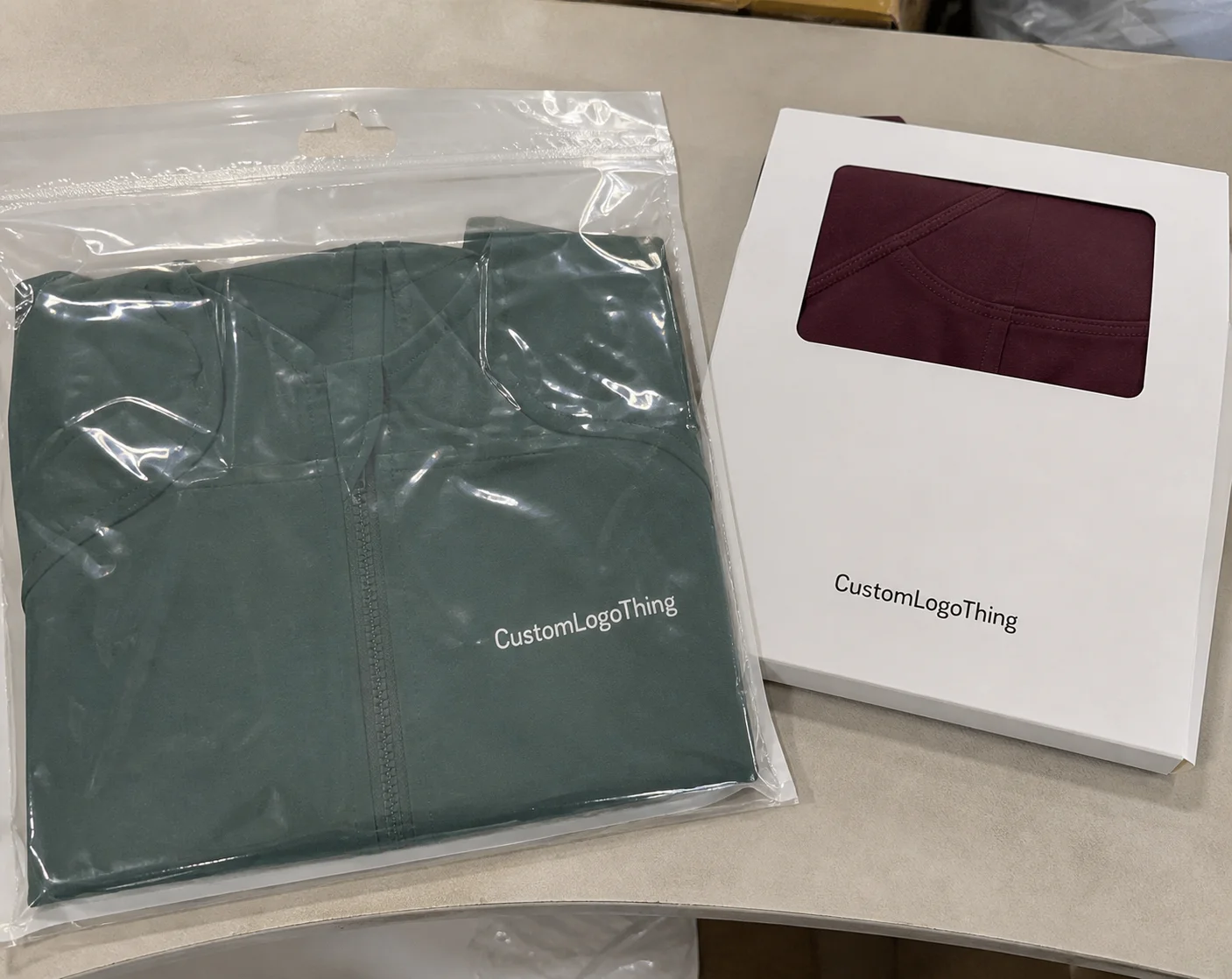
At a practical level, custom logo mailing bags for apparel are lightweight poly mailers—usually LDPE or co-ex polyethylene blends—printed with brand assets and sized for soft goods: tees, hoodies, joggers, leggings, bralettes, caps, and light accessories. They are the external shipping layer, not the full packaging system.
You can still include tissue, insert cards, return paperwork, or an inner recycled sleeve. The mailer handles freight efficiency and first doorstep impression. It’s the gap between showing up in a tailored jacket and showing up in a gas-station poncho (I’ve used that line in client calls for years, and nobody argues with it).
Performance gains from custom logo mailing bags for apparel usually come down to straightforward math:
- Lower dimensional weight compared with many corrugated cartons
- Better weather resistance than thin kraft mailers on wet delivery lanes
- Tamper-evident flap closure using pressure-sensitive hot-melt adhesive
- Immediate package branding at delivery
Shipping data tells a pretty consistent story: poly mailers outperform cartons for most one- or two-item soft-goods orders under 2.5 lb. Cartons still win for rigid protection, premium fold presentation, and gift-style unboxing. Brands that force one format across every SKU usually manufacture avoidable cost and damage.
I’ve seen companies spend $18,000 on packaging design and then ship in weak, unbranded outers that split on sorter belts in New Jersey and Ontario. That budget order is backward. For DTC apparel, the outer layer is strategy, not an afterthought. Honestly, this is one of the most expensive “small mistakes” in ecommerce ops.
I remember one founder saying, “Customers only care about the clothes.” Two months later, their inbox was full of photo-heavy complaint emails about ripped bags and wet hems after rain deliveries. Customers care about the clothes and how they arrive. Always.
This guide breaks down specs, supplier questions, pricing ranges, lead-time traps, and the mistakes that quietly drain margin month after month. Teams sourcing custom logo mailing bags for apparel for the first time—or untangling a messy vendor stack—can save serious time and a lot of support tickets.
How Custom Logo Mailing Bags for Apparel Work in Real Shipping Conditions
A mailer looks simple until it fails. High-performing custom logo mailing bags for apparel depend on four things working together: film structure, seal strength, print durability, and pack-out method. Miss one, and the returns queue gets loud. Miss two, and your CX team starts politely asking if operations has “a plan.”
Bag anatomy that actually matters
Most custom logo mailing bags for apparel use 2-3 layer co-ex film with a white print-facing exterior and a gray or black interior for privacy. Construction usually includes side welds, bottom fold, and a top flap with pressure-sensitive hot-melt adhesive. Return-ready versions add a tear line and second adhesive strip. For heavier loads like fleece sets, I typically spec flap adhesive width at 10-12 mm for better tamper performance.
Print method choices and tradeoffs
Production for custom logo mailing bags for apparel generally runs through flexo, gravure, or digital printing:
- Flexo: Lower setup cost than gravure, strong fit for 1-3 colors, MOQs often 3,000-10,000 pcs.
- Gravure: Higher detail consistency and long-run color stability, but higher cylinder cost; often worthwhile above 30,000 pcs.
- Digital: Fast for short runs and frequent art swaps, with higher per-unit pricing at scale.
A Los Angeles client once pushed for six spot colors on a 5,000-piece opening run. I told them they were paying for visual ego, not return. We shifted to two colors and cut $2,340 in plate and print expense. They still got compliments on unboxing photos (funny how that works).
Real packing workflow
Fulfillment performance depends on repeatable motion. Standard flow for custom logo mailing bags for apparel: optional inner sleeve, garment into mailer, air pushed out, flap sealed with firm pressure, shipping label placed in a defined clear zone, then sorted by carrier cage. On a tuned line, stations usually hit 160-220 units per hour depending on SKU complexity and how many inserts marketing added that week.
Durability under ugly shipping realities
Carrier networks are rough. In sorting hubs, bins compress under 30-40 lb mixed loads, zipper pulls puncture weak film, and corner bursts happen when teams overstuff undersized bags with bulky hoodies. Rain exposure on porch delivery still happens every single day. Reliable custom logo mailing bags for apparel need puncture resistance, stable seals, and decent impact behavior after 48-hour transit swings.
Ask suppliers for these QC checks before you commit:
- Seal peel test with target ranges by size and film structure
- Drop test on packed product (commonly 1.2 m)
- Ink rub/scuff test after 24-hour cure
- Adhesive bond check after heat/humidity conditioning
No QC protocol, no deal. I’m blunt about this because I’ve been burned before, and that invoice still lives in my memory rent-free.
Key Factors to Choose the Right Custom Logo Mailing Bags for Apparel
Selecting custom logo mailing bags for apparel is less about logo placement and more about shipping data wrapped in brand decisions.
Sizing strategy by SKU mix
Use your top 20 SKUs by order volume as the starting point. Measure folded dimensions and packed thickness. Most brands shipping under 500 orders per day run efficiently with three core sizes. Typical setup:
- 10" x 13" for tees and tanks
- 12" x 16" for hoodies and joggers
- 14" x 19" for multi-item bundles
Extra dead space increases internal movement and makes branded packaging look sloppy on arrival. Shipping air feels cheap and costs money.
Material decisions: LDPE, recycled blends, compostables
For custom logo mailing bags for apparel, virgin LDPE gives consistent seals and sharp print. Recycled-content poly (30%-80% PCR) can perform well, though color and tactile feel may shift by lot. Compostable films are available, but seal consistency and puncture resistance vary a lot by supplier and climate lane. Eco claims should never skip route-specific testing.
Brands with public sustainability commitments should verify claims using accepted standards. Helpful references include EPA recycling guidance and FSC for paper components in broader product packaging systems. Also, quick disclaimer from experience: “recyclable where facilities exist” language is common for a reason—local infrastructure is uneven.
Thickness selection in mil
Practical rule set for custom logo mailing bags for apparel:
- 2.0 mil: lightweight tees, underwear, small accessories under ~0.7 lb
- 2.5 mil: safer default for hoodies, denim shirts, and mixed orders up to ~2 lb
- 3.0 mil: heavy fleece sets, apparel with hardware, rough handling lanes
Saving $0.012 per bag by dropping film thickness sounds smart until reships climb. Finance teams learn that lesson the expensive way (usually one QBR later, with very tense faces).
Finish, print coverage, and brand voice
Matte usually reads premium for minimalist labels. Gloss can hit harder for youth streetwear drops. Front-only one-color print on custom logo mailing bags for apparel often looks clean and controls cost. Full-bleed multi-color graphics look incredible, but they also increase registration sensitivity and scrap risk.
Packaging style should match customer psychology. High-energy retail packaging cues fit hype collections; cleaner systems support premium essentials.
Compliance details most teams forget
Place warning text correctly, include recycling marks where required, and reserve quiet zones for carrier labels. Keep at least a 4" x 6" clear label area. If your returns QR sits under a shipping label, support workload spikes immediately. I wish this were rare. It is not.
Return-friendly construction
Dual-seal custom logo mailing bags for apparel reduce friction in returns: customers reuse the same bag with the second adhesive strip. Added cost usually lands around $0.01-$0.03 per unit based on size and MOQ. For fashion categories running 18%-30% return rates, this feature often pays for itself.
Option comparisons work better across the full line, not mailers in isolation. Teams often combine mailers with Custom Packaging Products such as inserts, labels, and sleeves to keep unboxing consistent without inflating cost.
Cost Breakdown: Pricing Custom Logo Mailing Bags for Apparel Without Getting Burned
Budget decisions around custom logo mailing bags for apparel come from five variables: size, film thickness, print process/colors, order volume, and resin market movement. Leave one out and quote comparisons become fiction.
Realistic unit cost bands
| Spec Example | MOQ | Estimated Unit Cost (EXW) | Notes |
|---|---|---|---|
| 10" x 13", 2.0 mil, 1-color flexo | 5,000 | $0.14 - $0.21 | Short run premium, good for pilot |
| 12" x 16", 2.5 mil, 2-color flexo | 20,000 | $0.11 - $0.16 | Common DTC sweet spot |
| 14" x 19", 2.5 mil, 3-color gravure | 50,000 | $0.10 - $0.14 | Cylinder cost extra, stable long-run output |
| Compostable, similar size, 1-2 colors | 10,000 | $0.18 - $0.31 | Material premium and variable lead time |
Setup costs catch first-time buyers all the time. Flexo plates for custom logo mailing bags for apparel often run $45-$120 per color per size. Gravure cylinders can reach $180-$400 each depending on width and vendor. Spread those costs across projected reorders, not only the first PO.
Freight can erase your “cheap” quote
I’ve negotiated with factories in Shenzhen, Dongguan, and Ho Chi Minh City where the unit quote looked excellent at first glance. Freight rewrote the outcome. One client chose a supplier that was $0.009 cheaper per bag on paper; late-launch air shipping added $4,860 on a single move. Savings disappeared instantly.
For custom logo mailing bags for apparel, compare landed cost line by line:
- Unit price
- Tooling/setup
- Ocean or air freight
- Duty and broker fees
- Domestic drayage and warehouse receiving
- Possible expedite fees
Hidden costs nobody mentions in kickoff calls
Post-proof color corrections, repeated artwork revisions, rejected lots from weak adhesive, and rush scheduling fees are all common. I usually add a 3%-7% contingency for first-run custom logo mailing bags for apparel, especially with new manufacturing partners.
Negotiation tactics that work
My sourcing structure for custom logo mailing bags for apparel:
- Lock critical specs first: size, mil, seal type, print coverage.
- Request tiered pricing at 5k/10k/20k/50k/100k.
- Confirm overrun/underrun tolerance in writing (example: ±10%).
- Ask for retained production samples by lot.
- Define QA acceptance criteria before deposit.
Every commitment belongs in writing. Verbal comfort breaks under production pressure. I’ve sat in enough “but we thought…” calls to know exactly how that movie ends.
Model cost per shipped order, not per bag
If AOV sits at $68 and reship rate drops from 2.4% to 1.1% after upgrading custom logo mailing bags for apparel, margin impact beats tiny unit-price savings from thinner film. Build a model around damage claims, reships, support contacts, and return friction. Packaging is operations math wearing brand design.
Teams needing a fast baseline can review Custom Poly Mailers and benchmark against current specs before issuing RFQs.
Step-by-Step Process and Timeline: From Artwork to Delivered Bags
Strong operators treat custom logo mailing bags for apparel as a production launch, not a last-minute design add-on.
Step 1: Define requirements
Document SKU dimensions, monthly volume, expected promo spikes, return policy, and target film thickness. A brand shipping 12,000 orders per month with hoodie share moving above 35% in winter needs a different size mix before artwork even starts.
Step 2: Build artwork correctly
Use supplier dielines and lock Pantone references, bleed, trapping, and quiet zones. For custom logo mailing bags for apparel, I require a fixed label-safe area and no critical text near side seals. Logos still need to read clearly when a tired warehouse associate places a 4" x 6" label off-center at 7:10 p.m.
Step 3: Quote and sampling phase
Gather at least three supplier quotes. Test blank samples first for pack-out fit, then review printed pre-production samples for color and rub resistance. Typical timing: 5-10 business days domestic, 7-14 business days offshore.
Step 4: Production milestones
Manufacturing flow for custom logo mailing bags for apparel usually follows:
- Resin blending and film extrusion
- Corona treatment for print adhesion
- Printing and drying/curing
- Bag conversion and side sealing
- Adhesive strip application
- Final QC and carton packing
Standard flexo jobs often need 12-15 business days after proof signoff. High-volume gravure runs or constrained materials can extend that window.
Step 5: Transit and receiving
Transit ranges from 3-7 business days for domestic truck, 25-40 days ocean-inclusive, or 5-9 days by air depending on route and customs conditions. High-risk launches often benefit from split logistics: partial air shipment for buffer, remaining volume by ocean for cost control.
Working timeline example
First-run planning for custom logo mailing bags for apparel often looks like this:
- Week 1: requirements and RFQ
- Week 2: artwork prep and quote alignment
- Week 3: sampling and approval
- Week 4-6: production
- Week 7-10: transit and warehouse intake
Schedule a buffer every time. For launch-critical orders, I usually add 10-14 calendar days.
How to avoid launch delays
Back-plan from campaign date and set hard deadlines for art lock and PO release. If influencer content is booked and drop date is fixed, proof approvals cannot drift. I once paid $7,200 in emergency freight because a founder changed slogan kerning two days before plate making. Great typography choice. Brutal logistics outcome. I laughed about it later; I did not laugh while approving that invoice.
Common Mistakes Brands Make with Poly Mailers (and the Fixes)
The same problems keep showing up with custom logo mailing bags for apparel: different brands, identical pain points.
1) Guessing size instead of mapping SKUs
Fix: build a SKU-to-mailer matrix and test 20 real outgoing orders. Oversized bags increase movement and wrinkle presentation.
2) Going too thin to save cents
Fix: match mil thickness to actual shipped weights. If denim and fleece appear frequently, 2.5 mil is usually safer than 2.0 mil.
3) Ignoring label and QR placement
Fix: define print-safe quiet zones across all custom logo mailing bags for apparel. Keep core graphics away from standard carrier label zones.
4) Skipping transit simulation
Fix: run drop and compression tests using fully packed orders. Use distribution-testing frameworks from ISTA as a reference.
5) Overdesigning first run
Fix: validate baseline performance with 1-2 print colors first. Expand graphics once conversion and repeat behavior support the added cost.
6) No reorder plan
Fix: set trigger points early. Example: reorder at six weeks of stock on hand, not two. Promotions burn inventory quickly.
“Our branded bags looked amazing on launch week, then we stocked out and shipped in plain mailers for 19 days. Engagement dropped immediately.” — DTC apparel founder, ~38k monthly orders
A repeatable framework works: disciplined spec sheets, clear QA protocol, predictable reorder cadence, and quarterly review. Custom logo mailing bags for apparel must protect operations first and aesthetics second—while still doing both well.
Are Custom Logo Mailing Bags for Apparel Worth It for Growing Clothing Brands?
Usually, yes—if the specs are tied to shipping reality, not just mood boards. Short answer: custom logo mailing bags for apparel are worth it when they reduce damage claims, lower reships, support smoother returns, and maintain consistent package branding across DTC orders.
The trap is ordering pretty bags with weak seals or the wrong size mix. The upside is measurable: fewer support tickets, lower fulfillment friction, and stronger repeat-purchase confidence. For most apparel teams shipping soft goods under 2.5 lb, well-specified Branded Poly Mailers deliver better total economics than one-size-fits-all cartons.
Expert Playbook and Next Steps for Better Custom Logo Mailing Bags for Apparel
After 12 years of factory visits, late-night freight calls, and emergency reprints, this is the playbook I trust for custom logo mailing bags for apparel.
Start tight: two core sizes plus one backup
Most growth-stage brands perform best with two high-velocity sizes and one overflow option for bundles. Track pack-out data for 60-90 days before adding more SKUs.
Run a branded vs plain A/B test
Use matched order cohorts for 30 days and measure repeat purchase rate, UGC mentions, and support complaint volume. Good branded packaging can lift perceived value, but data should make the final call.
Protect your branding with quiet zones
Reserve clear label real estate and place logo lockups outside typical carrier coverage zones on all custom logo mailing bags for apparel. Basic move, major payoff.
Ask for retained production samples
Request lot-retained samples from the supplier and archive receiving photos at your warehouse. If disputes pop up, evidence beats opinions every time.
What your team can do tomorrow
- Audit last 90 days: damage claims, returns, reships, packaging complaints
- Define target specs (size set, mil, seal type, print coverage)
- Collect 3 quotes and compare landed cost, not just unit
- Request blank and printed test samples
- Run a 30-day pilot with documented QA checks
- Set reorder calendar and safety stock rules
Align mailers with the rest of your product packaging stack. Brands using Custom Printed Boxes for premium capsules and poly mailers for core DTC volume should still maintain one visual language customers recognize immediately.
Final takeaway: treat custom logo mailing bags for apparel as an operations asset with a brand upside, not a design accessory. Audit your last 90 days, run one controlled pilot, and only scale specs that lower total cost per delivered order. If the bag photographs beautifully but fails in rain, conveyors, and return loops, it’s not a win. Build better specs, test aggressively, and buy on landed economics. And if you’re gonna approve the cheapest option five minutes before launch, step away from the keyboard and drink water first.
FAQs
How much do custom logo mailing bags for apparel usually cost per unit?
For custom logo mailing bags for apparel, common DTC pricing often lands around $0.11 to $0.21 per piece, while short runs and eco-focused materials usually price higher. Size, film thickness, print method, and volume drive the number. Always calculate landed cost with setup and freight included.
What size custom logo poly mailer is best for apparel orders?
Use folded dimensions from top-selling garments and add a small pack-out buffer. Most teams get better results with 2-4 standardized sizes rather than one oversized mailer. Validate with live packed orders before locking specs for custom logo mailing bags for apparel.
Are custom logo mailing bags for apparel waterproof and durable enough for carriers?
They are water-resistant and typically dependable for soft goods when film thickness and seal specs match order weight. Heavier items or apparel with hard trims need stronger film and adhesive systems. Run drop and seal tests before full production.
How long does production take for custom logo mailing bags for apparel?
Timeline includes quoting, artwork proofing, sampling, production, and transit. Production itself is often 12-15 business days after proof approval for standard jobs. Rush schedules are possible, but they cost more and carry higher error risk.
Can I get eco-friendly custom logo mailing bags for apparel without sacrificing print quality?
Yes, with testing and supplier discipline. Recycled-content and compostable options can perform well, but print vibrancy, seal behavior, and puncture resistance vary by factory and shipping climate. Request printed samples and test in real fulfillment conditions before scaling.