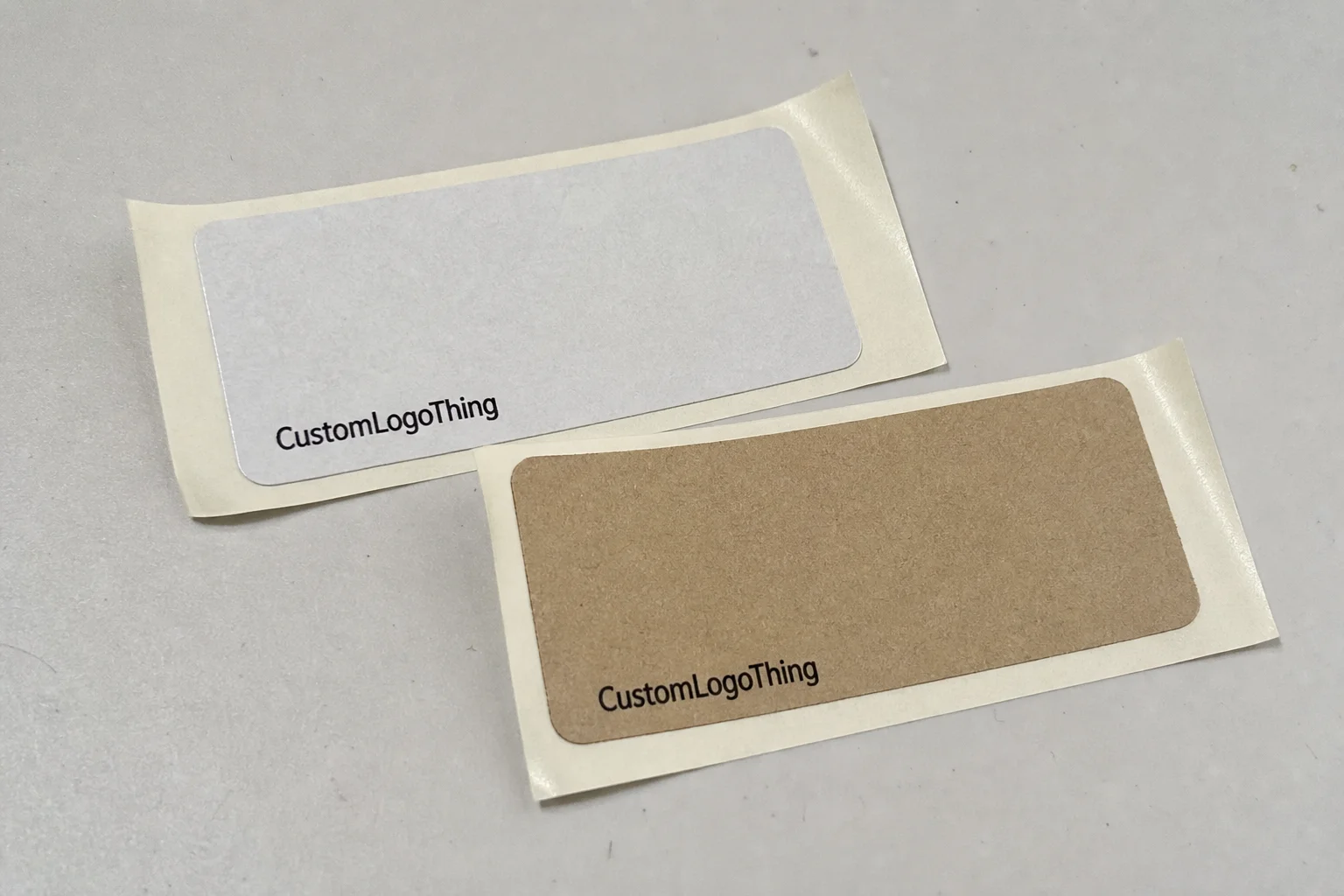
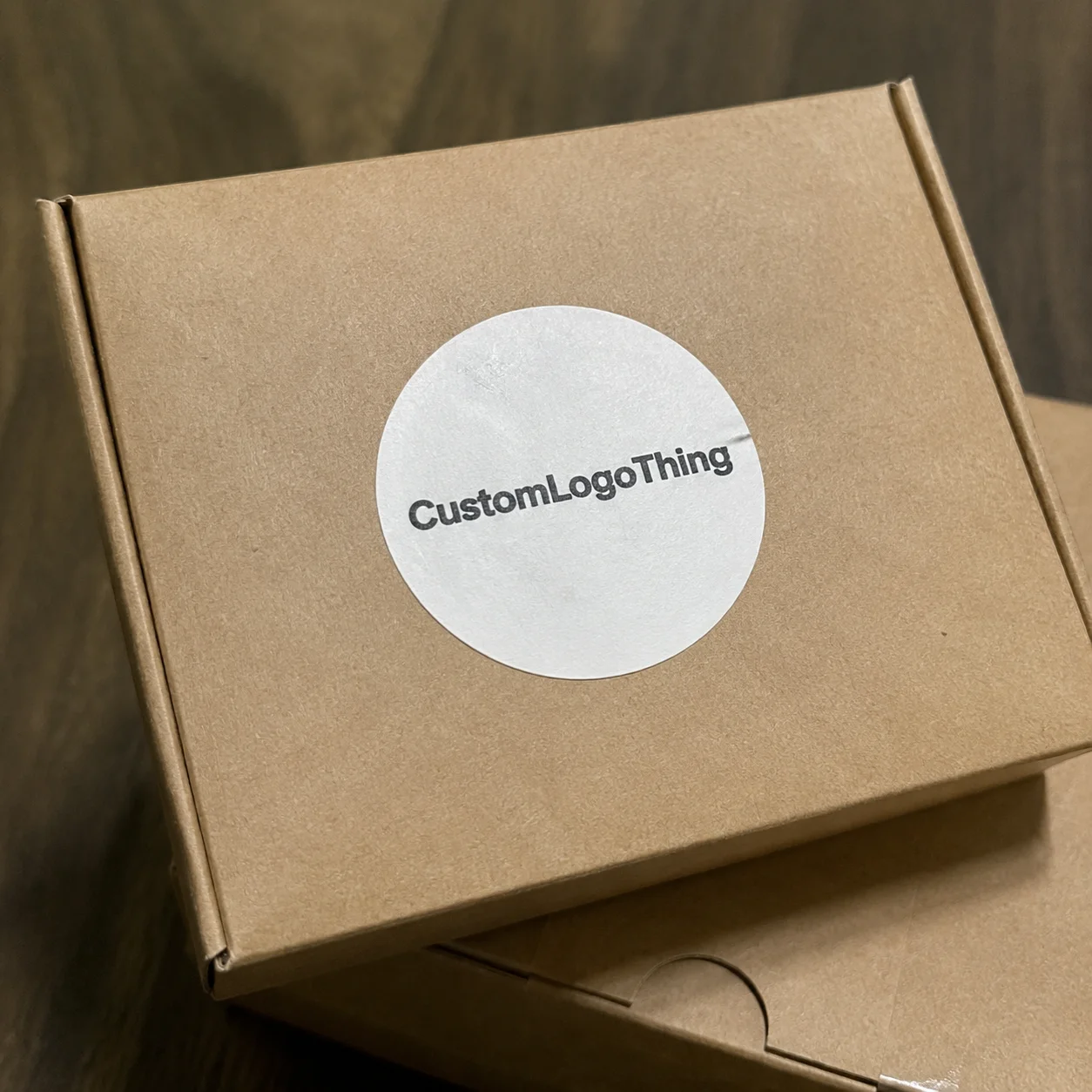
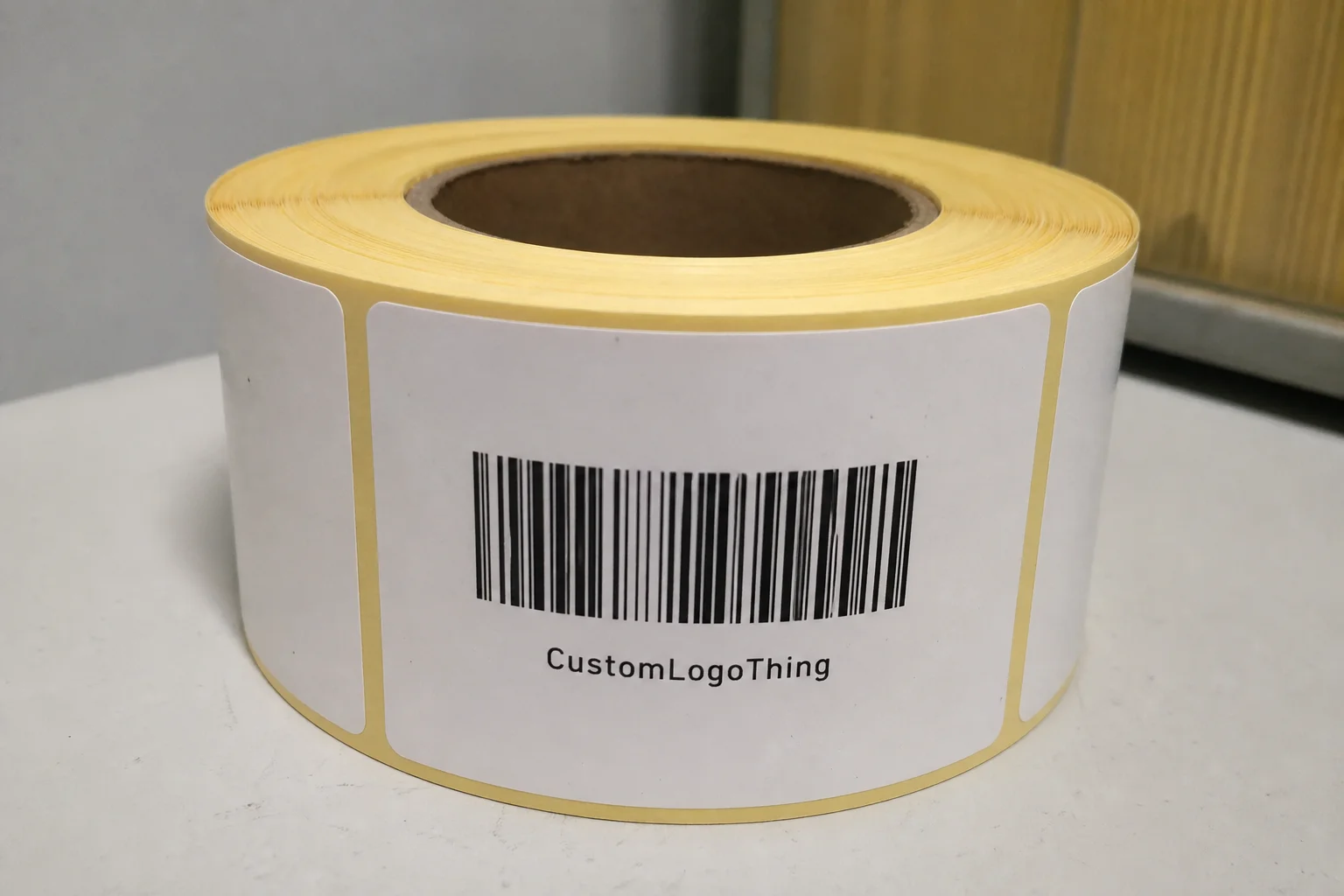
A brand may only need 100 to 500 stickers for a product launch, event kit, subscription box insert, seasonal label, or retail test. A custom logo Stickers Low MOQ Custom Order keeps that first move practical. Ordering 5,000 or 10,000 pieces too early can trap cash in packaging that may need a size adjustment, ingredient update, QR code correction, compliance edit, or design change after the first selling cycle.
Stickers sit in a useful middle ground. They can be produced in modest quantities and still look professionally made. With clean artwork, the right stock, and an adhesive matched to the surface, short-run logo stickers can look sharp on mailers, pouches, jars, boxes, tissue wrap, paper bags, inserts, launch samples, and retail packaging.
The catch is that small quantity does not mean casual specification. A 2-inch matte paper seal on sheets and a 3-inch clear BOPP label with white ink on rolls may both be “logo stickers,” but they are different production jobs. They differ in material cost, proofing needs, finishing, handling, and lead time.
Custom Logo Stickers Low MOQ Custom Order Value
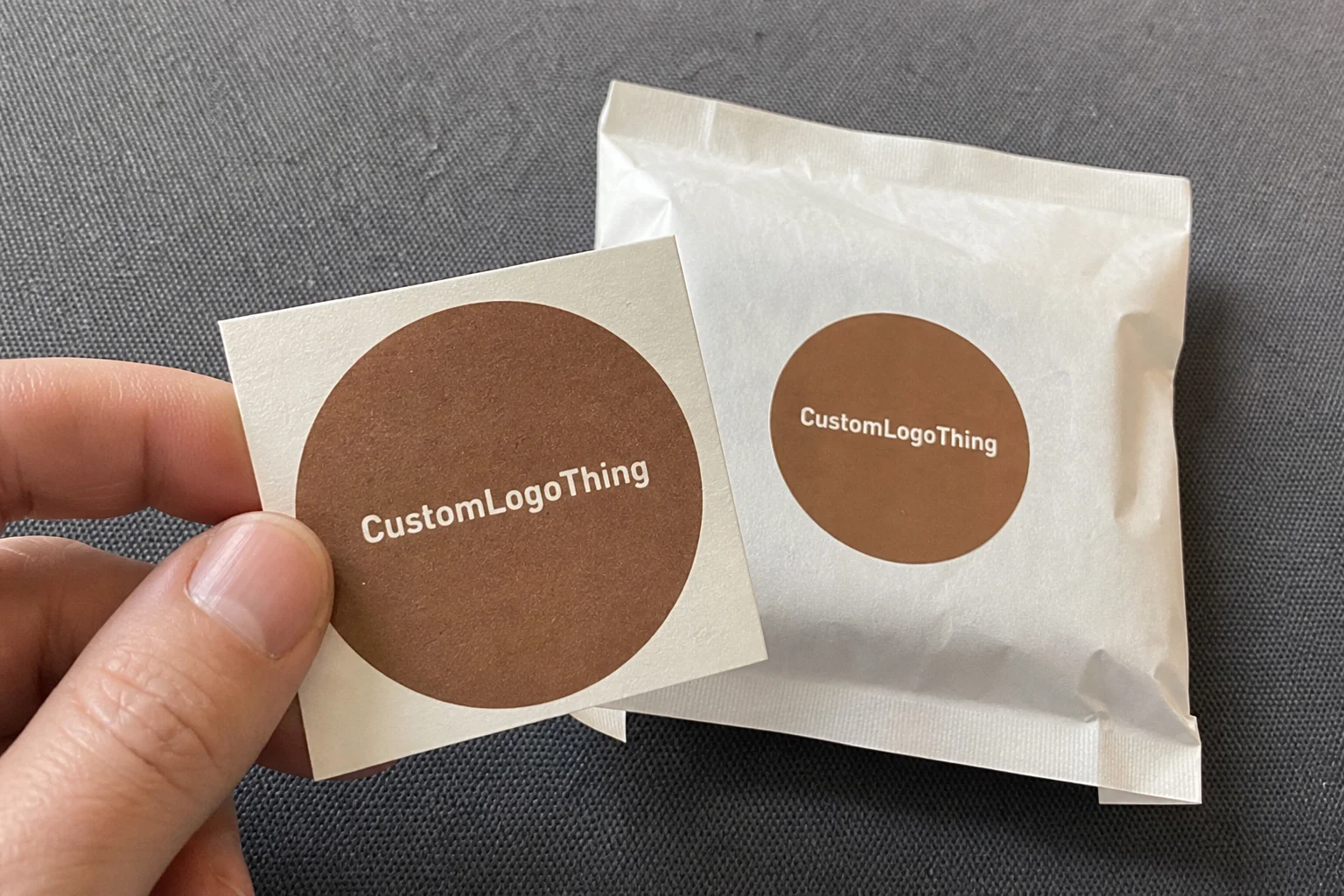
From a packaging buyer's point of view, the value is control. You can test one SKU, one seasonal offer, one influencer mailer, or one limited retail batch without building a large sticker inventory that may sit untouched. That matters for small businesses. It also matters for established teams testing a product presentation before moving into larger custom printed boxes, full label systems, or coordinated packaging programs.
Low minimum stickers are often misunderstood. Buyers focus on the minimum order quantity first, then discover that the material or format does not match the packing job. The better sequence is more practical: surface, exposure, size, format, material, finish, quantity. MOQ still matters, but it should not outrank whether the sticker will stay flat, scan cleanly, peel easily, and survive handling.
Practical callout: A low minimum works best when the first order stays focused: one logo, one size, one material, and one finish. After the product presentation is proven, scaling into flavors, colors, QR versions, or seasonal designs is usually easier to price and manage.
Custom Logo Things works best as a direct custom packaging partner when the quote is built around production details rather than broad sticker language. Size, stock, adhesive, finish, die cut shape, artwork count, packing method, and shipping needs all affect the outcome. A sticker is simple to look at. The quote behind it should not be vague.
The goal is fast, confident decision-making. Not rushed guessing. The details that matter most are format, print method, durability, proofing, turnaround, and the small quality checks that prevent rework before the order goes to press.
What Makes a Low-Minimum Sticker Order Worth It?
A low-minimum sticker order is worth it when it answers a real packaging question before the brand commits to volume. Will the logo read clearly on a 2-ounce jar? Does the QR code scan after the label curves around a bottle? Does matte paper feel right on a premium candle box, or does gloss better match the retail shelf?
Those are small questions with expensive consequences if they are answered only after a pallet of labels arrives.
The best low MOQ custom stickers reduce uncertainty. They let a brand test the physical relationship between surface, adhesive, print color, and handling. That is different from approving a mockup on a bright screen. Packaging lives under warehouse lighting, bathroom lighting, retail lighting, and the blunt compression of a shipping carton.
There is also a cash-flow argument. Small orders keep inventory flexible while demand is still being measured. For a launch, the cost of unused branded materials can be more damaging than a slightly higher unit price. If the first batch proves the design, the next order can be larger, cleaner, and easier to standardize.
Quality control should start at this stage, not after delivery. Check whether the sticker releases cleanly from the liner. Rub the print surface lightly to see how the finish handles contact. Apply samples to the actual packaging surface, then leave them for at least 24 hours before judging adhesion. Curves, textured paper, recycled board, oils, and cold storage can all change the result.
A Custom Logo Stickers low moq custom order is not only a smaller purchase. Used well, it is a low-risk production test.
Sticker Formats That Fit Real Packaging Jobs
Sticker format affects labor as much as appearance. Roll labels are efficient for bottles, jars, pouches, mailers, bakery boxes, coffee bags, candle packaging, and box sealing because they feed cleanly from a roll. They can be applied by hand, with a dispenser, or with basic label application equipment.
Sheet stickers are useful for small teams because they are easy to store, count, and distribute across multiple packing stations. They suit event prep, low-volume assembly, test batches, and mixed-use branding where speed matters less than flexibility.
Individually cut stickers work well for giveaways, sample kits, subscription box inserts, and promotional decals. Kiss cut stickers, where the face stock is cut but the backing stays larger, peel more easily and feel friendlier for customer use. Die cut logo stickers follow the shape of the artwork and feel more premium, especially when the sticker is meant to be saved, shared, or placed on a laptop, water bottle, notebook, or sample card.
Common business uses include ecommerce mailer seals, candle and cosmetic labels, bakery packaging, coffee bag labels, QR code stickers, promotional decals, product warning labels, and sample kit branding. If the sticker supports a broader packaging system, it may need to coordinate with Custom Labels & Tags, inserts, sleeves, hang tags, or shipper graphics.
| Sticker Format | Best Use | Typical Low MOQ Fit | Buyer Notes |
|---|---|---|---|
| Roll labels | Jars, bottles, pouches, mailers, box seals | Often practical from a few hundred pieces, depending on stock and finish | Confirm roll direction if using a dispenser or label applicator |
| Sheet stickers | Small teams, mixed packing stations, event prep | Good for short runs and simple shapes | Easy to count, store, and distribute across teams |
| Kiss cut stickers | Giveaways, inserts, customer-facing brand decals | Works well for small batches with clean dielines | Larger backing makes peeling easier |
| Die cut singles | Premium logo stickers, launch kits, retail counter giveaways | Possible at low MOQ, though complex cuts can raise cost | Best for simple silhouettes and bold artwork |
Choose based on handling, not only the look on screen. A flat carton gives you an easier application surface than a curved cosmetic bottle. A flexible pouch moves and wrinkles more than a rigid candle tin. A refrigerated product creates moisture and temperature questions that a dry retail box does not.
For the cleanest first run, keep the production target narrow: one format, one application surface, and one tested size. That keeps proofing direct and helps the quote reflect the actual packaging job instead of a stack of assumptions.
Materials, Adhesives, and Finishes Buyers Should Compare
Paper stickers are the practical choice for dry indoor packaging. They fit retail boxes, tissue wraps, paper bags, bakery boxes, promotional seals, and budget-conscious orders where water resistance is not needed. A standard white paper face stock with permanent adhesive can look clean and professional, especially with a matte or gloss coating matched to the rest of the packaging.
Kraft paper stickers create a warmer, natural look, but kraft stock can mute ink color. If your logo depends on bright red, clean white, or a specific brand blue, ask about color expectations before approving the proof. FSC-certified paper may also be requested for some packaging programs; the Forest Stewardship Council is a useful authority for understanding responsible fiber sourcing.
Vinyl, BOPP, and other film-based stocks are stronger choices for moisture exposure, oils, curved containers, refrigerated products, outdoor handling, or wipeable surfaces. BOPP is common for product labels because it resists tearing better than paper and sits nicely on many bottles, jars, and flexible pouches. Vinyl is often selected for decals and applications where durability matters more than the lowest unit cost.
Adhesive choice deserves attention. Permanent adhesive is used for long-term bonding on most packaging surfaces. Removable adhesive supports temporary promotions, price labels, or short-life campaigns where residue matters. Freezer-grade or specialty adhesive may be needed for cold storage, while stronger tack can help on textured recycled board, uncoated paper bags, or slightly irregular corrugated surfaces.
Finishes change both appearance and performance. Gloss coating gives color more shine and punch. Matte finish softens the retail look and reduces glare. Soft-touch lamination adds a tactile feel, although it raises cost and may be unnecessary for a small test run. Clear film can create a no-label look, but white ink may be required behind artwork so the design does not disappear on transparent, dark, or strongly colored surfaces.
The main rule is simple: match the material to the product environment, not only the design preference. A beautiful print on the wrong stock can lift, wrinkle, scuff, or fail during shipping and handling. That failure is usually more expensive than choosing the right construction at the quoting stage.
Artwork Specs, Size Choices, and Print Details
Good artwork keeps a low MOQ order moving. Vector files such as AI, EPS, SVG, or editable PDF are preferred for logos, fine rules, and sharp typography. High-resolution raster files should be at least 300 DPI at final print size, not enlarged from a small web graphic. Fonts should be embedded or outlined, edges should be clean, and shaped stickers need a clearly defined cut path.
Bleed and safe area are not decorative prepress terms. Bleed means the artwork extends past the trim edge, often around 0.0625 to 0.125 inch depending on the production setup, so tiny cutting movement does not leave an unwanted white edge. Safe area means important text, borders, QR codes, barcodes, and logo details sit inside the cut line far enough to account for normal cutting tolerance.
Size should follow the job. Small seals often work around 1 to 2 inches, especially on tissue wrap, mailers, bakery bags, and box flaps. Product labels may need more space for brand name, flavor, ingredients, net weight, compliance text, QR codes, batch codes, or usage notes. Promotional logo stickers should be large enough to feel useful, often 2.5 to 4 inches, without wasting material or making the sticker awkward for customers to place.
Digital printing fits short-run custom stickers because it supports smaller quantities, fast proofing, and variable artwork more easily than many traditional setups. Higher-volume orders may be reviewed for other production methods depending on quantity, stock, finish, color requirements, and repeat order plans. The reason is not always lower print cost. Sometimes the better answer is consistency, speed, or finishing efficiency on a larger batch.
Before approval, confirm color expectations, proof layout, QR code readability, barcode grade needs, white ink placement on clear stock, matte or gloss coating, corner radius, die line accuracy, and supply format. If a QR code is part of the design, test it at the printed size from the proof whenever possible. For shipping and handling expectations, brands can also review test concepts from ISTA, especially if stickers are part of packaging that must survive parcel movement.
A custom logo stickers low moq custom order runs smoother when artwork, size, and print details are locked before the file reaches production. Revisions are normal. Late changes after proof approval can affect timeline, cost, and press scheduling.
MOQ, Pricing, and Unit Cost Drivers
Low MOQ sticker pricing is shaped by more than quantity. A quote usually depends on size, material, adhesive type, number of designs, print coverage, finish, die cut complexity, roll or sheet format, packing requirements, and shipping destination. Two 500-piece orders can price very differently if one is a simple 2-inch paper circle and the other is a clear film die cut with white ink and individual packing.
Unit cost is higher at low quantities because setup, proofing, material preparation, dieline review, press time, finishing, and packing are spread across fewer pieces. The first few hundred stickers carry more production overhead than a larger reorder. That does not make a low-minimum order a poor value. It means the buyer is paying for flexibility, testing, and lower inventory risk.
Practical cost-control levers are straightforward. Choose a standard shape when possible. Keep the first run to one material and one finish. Avoid unnecessary size variations. Group similar designs only if the production method allows it without creating extra setup. Provide print-ready artwork so prepress time stays focused on confirmation rather than file repair.
MOQ may vary by material and construction. Simple paper or white film stickers are often easier to produce in smaller quantities than metallic stocks, specialty laminates, complex die cuts, clear film with white ink, or multiple SKU assortments. If a buyer asks for 12 designs at 100 pieces each, the quote may need to account for 12 proofs, 12 file checks, and more sorting, even though the total quantity sounds like 1,200 stickers.
| Cost Driver | Lower-Cost Direction | Higher-Cost Direction | Practical Range or Impact |
|---|---|---|---|
| Size | 1 to 2 inch seals | Large decals over 4 inches | More square inches usually means more material and press time |
| Material | Standard paper or white BOPP | Clear, metallic, textured, or specialty film | Special stocks can raise both MOQ and lead time |
| Finish | Standard matte or gloss | Soft-touch, metallic effects, specialty coatings | Added finishing increases handling and setup |
| Artwork count | One design | Many designs or SKU versions | More proofs and sorting can affect unit cost |
| Cut shape | Circle, square, rectangle, oval | Intricate die cut shapes | Complex cuts need cleaner paths and slower finishing |
A good quote is a technical confirmation, not just a price check. It should identify sticker size, material, adhesive, finish, quantity, artwork count, proofing steps, production time, freight assumptions, and optional upgrades. Buyers comparing a launch quantity against a larger reorder price can also review broader options through Wholesale Programs if the sticker will become part of ongoing package branding.
Production Steps, Proofing, and Turnaround Timeline
The order flow is direct: request a quote, confirm size and application, submit artwork, receive a digital proof, approve or revise the proof, move into printing, complete finishing such as cutting or slitting, then pack and ship. Each step is simple. Missing details early can still create delays later.
The fastest timelines usually happen when the buyer provides final artwork, confirms the exact quantity, chooses a readily available material, and approves the proof quickly. Custom shapes, specialty stocks, several designs, unclear dielines, and proof revisions can add time. A simple custom logo stickers low moq custom order may move in a matter of business days after proof approval, while more involved constructions can require additional scheduling and material confirmation.
Proofing is a valuable checkpoint. The proof should show layout, trim line, bleed, finished size, color notes, roll direction where relevant, and any special print layers such as white ink under clear labels. If the sticker wraps around a curved bottle or jar, check the size against the actual container before approval. A ruler and a physical mockup can prevent a surprising amount of waste.
Turnaround depends on order complexity, current production schedule, material availability, proof approval speed, finishing requirements, and shipping method. Share the in-hands date early. Waiting until after artwork is approved to mention an event date, launch window, or retail delivery deadline makes planning harder than it needs to be.
Here is the practical sales note I would give any buyer: if stickers are needed for an event, product launch, influencer mailing, or retail delivery window, build in time for proof review and freight movement. The cheapest shipping option is rarely the best choice when packaging has a firm deadline, especially if the stickers are holding up finished kits, cartons, or launch inventory.
Speed depends on clean inputs. The more precise the quote request, the easier it is to recommend a production path that fits both the deadline and the actual packaging application.
Details to Prepare Before Requesting a Sticker Quote
Prepare the basics before asking for pricing. A clear request saves back-and-forth and helps Custom Logo Things return a more useful quote. If you are still comparing sticker options against cartons, pouches, bags, or other components, the broader Custom Packaging Products page can help you think through how the sticker fits the full packaging set.
- Intended use: product label, box seal, mailer seal, insert, giveaway, warning label, QR code sticker, or promotional decal
- Application surface: corrugated shipper, glass jar, plastic pouch, paper bag, candle tin, cosmetic bottle, bakery box, mailer, or retail carton
- Exposure: dry indoor use, refrigeration, moisture, oils, outdoor handling, or frequent customer handling
- Size and shape: finished width and height, standard shape, rounded corners, kiss cut, or die cut logo shape
- Quantity and artwork count: one design or several versions, with target MOQ and possible reorder quantity
- Material and finish preference: paper, kraft, BOPP, vinyl, clear film, matte, gloss, or soft-touch
- Deadline and shipping location: in-hands date, delivery address, and any event or retail delivery window
Describe the application clearly. Instead of saying the sticker is “for packaging,” specify whether it goes on a corrugated shipper, glass jar, plastic pouch, paper bag, candle tin, cosmetic bottle, bakery box, or mailer. Surface energy, texture, curve, moisture, and handling all affect adhesive and material recommendations.
Send the best artwork available. AI, EPS, SVG, or editable PDF files are preferred for logos, and placed images should be high resolution at final size. Add notes for Pantone targets, white ink areas, transparent backgrounds, metallic effects, or exact dielines from an existing label. If you have questions about file readiness, the FAQ can help clarify common production terms before you request pricing.
Ask for practical options. A low MOQ price and a larger reorder price can show the cost difference between launch quantity and scaled purchasing before the brand commits to inventory. That comparison is especially useful for product packaging that may expand into more SKUs, retail packaging, or coordinated custom printed boxes later.
A quote is easiest to price accurately when the buyer provides the surface, size, material preference, artwork, quantity, and deadline up front. With those details, Custom Logo Things can recommend a production path that fits the actual packaging job rather than forcing the sticker into a generic specification.
FAQ
What is a low MOQ custom logo sticker order?
A low MOQ custom logo sticker order is a smaller production run designed for launches, tests, events, seasonal packaging, or limited SKU needs. The exact minimum depends on sticker format, material, finish, size, number of designs, and production setup requirements. Low MOQ is useful when a brand needs professional printed stickers without committing to a large inventory before the design or product demand is proven.
How do I get pricing for custom logo stickers with a low minimum?
Provide the quantity, size, shape, material preference, finish, number of artwork versions, application surface, and shipping destination. Share your deadline and whether the stickers should be supplied on rolls, sheets, or as individual pieces. For the most accurate quote, send print-ready artwork or a logo file so prepress can confirm cut lines, resolution, and any special print needs.
Can I order several sticker designs in one low MOQ custom order?
Multiple designs may be possible, but they can affect setup, proofing time, material planning, and unit cost. If all designs share the same size, shape, material, and finish, the order is usually easier to quote efficiently. For the first run, keeping the specifications consistent is often the best way to control cost while still testing several branded designs.
What sticker material is best for product packaging?
Paper works well for dry indoor packaging, boxes, bags, wraps, and short-term retail presentation. Vinyl, BOPP, or other film stocks are better for moisture, oils, refrigeration, flexible pouches, curved bottles, or heavier handling. The best material depends on the surface, storage conditions, expected lifespan, and whether the sticker needs to resist water, scuffing, or temperature changes.
How fast can a custom logo stickers low moq custom order ship?
Timing depends on artwork readiness, proof approval, material availability, order complexity, finishing requirements, and shipping method. Simple low MOQ sticker orders with approved artwork and standard materials usually move faster than specialty finishes, complex die cuts, or multi-design assortments. Share your in-hands date before proofing starts so production and shipping options can be reviewed against the actual deadline.