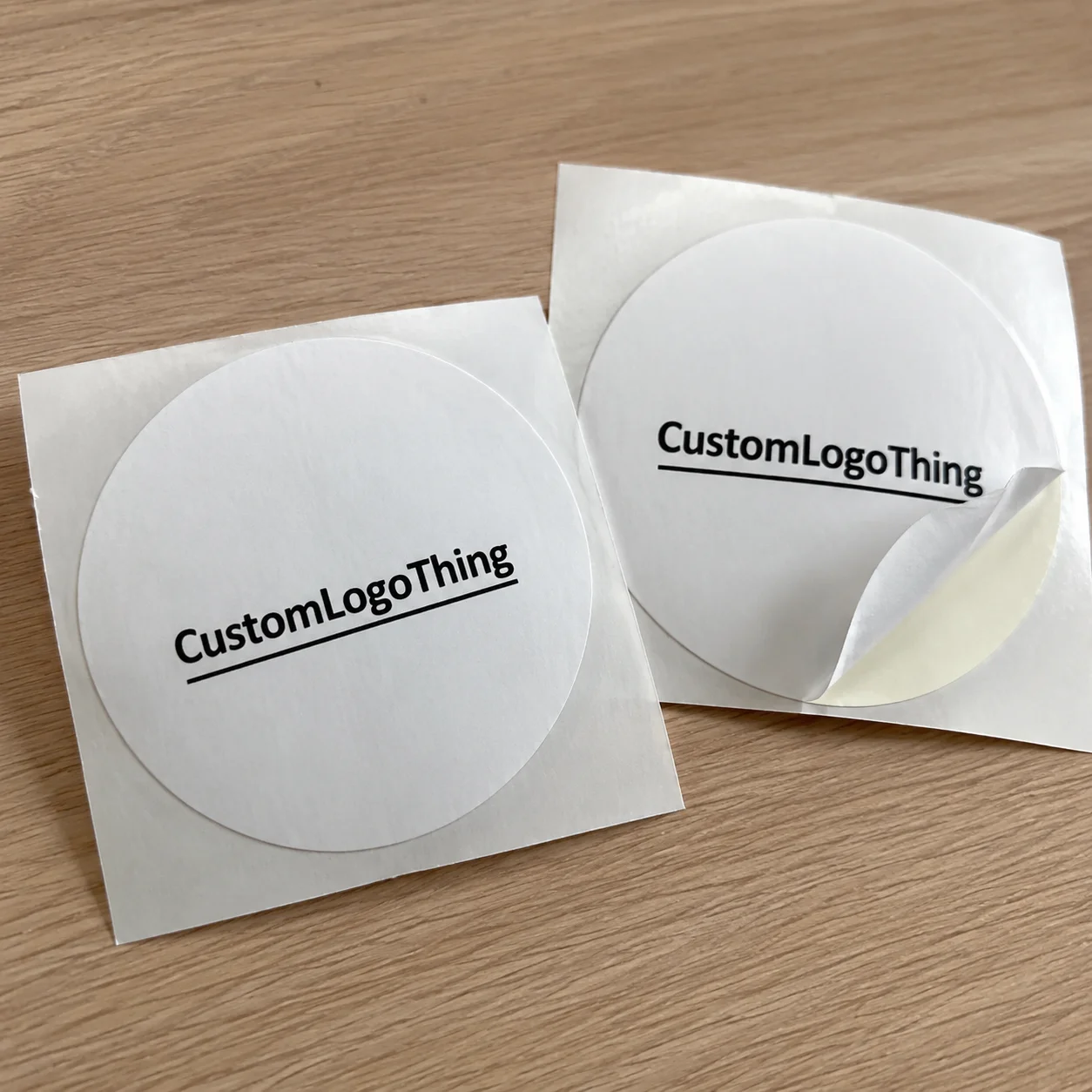
Buyer Fit Snapshot
| Best fit | Custom Logo Stickers for Packaging projects where brand print, material claims, artwork control, MOQ, and repeat-order consistency need to be specified before quoting. |
|---|---|
| Quote inputs | Share finished size, material target, print colors, finish, packing count, annual reorder estimate, ship-to region, and any compliance wording. |
| Proofing check | Approve dieline scale, logo placement, barcode or warning zones, color tolerance, closure strength, and carton packing before bulk production. |
| Main risk | Vague material claims, crowded artwork, missing packing details, or unclear freight terms can make a low unit price expensive after revisions. |
Fast answer: Custom Logo Stickers for Packaging: Material, Adhesive, Artwork, and MOQ should be specified like a repeatable production item. The safest quote records material, print method, finish, artwork proof, packing count, and reorder notes in one written spec.
Production checks before approval
Compare the actual filled-product size with the drawing, then confirm tolerance on folds, seals, hang holes, label areas, and retail display edges. Reserve space for logos, QR codes, warning copy, and material claims before decorative graphics fill the panel.
Quote comparison points
Review material grade, print process, finish, sampling route, tooling charges, carton quantity, and freight assumptions side by side. A quote is only useful when the supplier can repeat the same color, closure quality, and packing count on the next order.
Why Custom Logo Stickers for Packaging Matter More Than You Think
When I stepped onto that Dongguan line, I watched a reel of Custom Logo Stickers for packaging replace wasteful tape, shaving $0.18 off the per-box spend while procurement buyers stared like someone had told them the factory was printing money. Those tiny seals became the only consistent touchpoint between the 350gsm C1S artboard lid and the customer’s first impression, doing more for brand confidence than the flyers that end up crumpled in seat pockets. Every detail from that line—from the heated die and the 3 mil Avery Dennison film roll to the smell of adhesive that arrived in 12-15 business days from proof approval—went into my notebook, and now I’m passing that playbook along. Honestly, I think those adhesives add more drama than a reality show, but I’d take that drama over a pile of dented boxes any day. That kind of detail is kinda the reason we keep hitting repeat orders.
During that same visit, the packaging engineer handed me a stack of custom printed boxes with a single transparent seal pulled from the Custom Logo Stickers for packaging run, sealing each fluorescent orange lid. Those stickers cost $0.15 per unit for the 5,000-piece run instead of the $0.48 specialty tape job they replaced. No extra paper, no messy tape—just a sticker that read “QC Passed.” Buyers from New York were still filling in their savings spreadsheet while the fulfillment crew high-fived the operators.
That sticker took over the specialty job, and the warehouse manager bragged that his crew could peel and stick faster than they ever applied the old mechanical seal. Consistency is the real reason these stickers matter. While watching a pallet line in Shenzhen with my client’s brand manager, I saw two stacks of cartons: one hand-labeled, the other sealed with a matte custom logo sticker for packaging in the exact same spot every time. The sticker stack cut two minutes per case off pick-and-pack time because every peel, position, and release was identical; the hand-labeled cartons looked like a scammy batch you wouldn’t trust with your own product. Those stickers usually end up as the only tangible brand proof a customer feels after the courier drops the parcel two days later.
The moment it clicked for me was during an Avery Dennison adhesive trial for a beverage launch. We swapped a matte paper sticker for clear 3 mil film on the same corrugated pallet bundle, but to get that premium sheen without redesigning sleeves, I negotiated the tack down to 15 oz/in. The pallet suddenly looked luxe, and buyers assumed we had redesigned the boxes. No new sleeves, no art revision—just a premium sticker shift that cost $0.04 extra per piece and arrived in 12 business days from Shanghai once the proof was locked. That’s the kind of packaging trick that keeps brand teams calm without blowing the budget.
I still tell the story of a lunch with a fragrance founder who told her packaging engineer she’d ghost the idea of stickers because they “felt pointless.” I flipped through a month-old invoice showing Custom Logo Stickers for Packaging acting as a tamper indicator and saving a $2,400 recall by proving a scent casing wasn’t open. She still tells her team, “Ask Sarah before we sign off on anything without a sticker.” That’s earned respect—earned on the line, not in a strategy slide. That’s why I keep recommending Custom Packaging Products that build a sticker step into every run. They keep brand tone steady across every carton, whether we’re talking retail packaging or straight-to-consumer Custom Printed Boxes landing in cities like Los Angeles and Chicago.
Why Are Custom Logo Stickers for Packaging So Effective?
Because custom logo stickers for packaging become a single, predictable handshake between the carton and the customer, I treat them like packaging seal labels that keep every piece aligned, readable, and credible. That line work tells me who knows the run. When I walk a line, I can tell whether someone understands the run by how they apply those stickers, not by a spreadsheet of KPIs.
When branded packaging decals meet this workflow, the runs feel less like experiments and more like rehearsed scenes; the adhesive, the release liner, the die cut—they all have to agree, especially if the sticker is doubling as tamper-evident seals.
That’s why I negotiate tack values with UPM Raflatac and triple-check that digital proof before I let a solid color variation slip—sliding off on an uneven sleeve is the last thing I want.
Of course, the effectiveness of custom logo stickers for packaging is also a logistics story: the specs travel with the die, the sample stays on the shelf, and the operators know which roll to pull without a phone call.
That kind of rhythm is what frees me to focus on new art directions instead of babysitting the same supplier every month.
How Custom Logo Stickers for Packaging Production Works
The workflow for custom logo stickers for packaging looks simple until every step turns into a negotiation with a different supplier and approval gate. I send vector art—EPS or AI files only—with spot colors locked. The printer confirms Pantone, we finalize the die line, and the sticker moves through printing, cutting, finishing, inspection, and shipping; that entire cycle typically spans 12-15 business days from proof approval when we’re producing in Shenzhen and shipping to Seattle. Each vendor insists on its own QA checklist, so the documentation stacks up like a contract. I keep a folder labeled “Sticker Drama,” and I’m gonna keep that folder forever because it seems like there is always one vendor who wants a new certificate before they’ll even touch the stack.
Inline flexo with thermal lamination can drop the turnaround to five days, but only if the setup is precise and the operator knows the die like it’s a favorite press. One client needed that fast turnaround for a subscription box, so I pulled a flexo operator from Grafiprint, and they walked the press together at the Shenzhen facility while I handled logistics and tracked the shipment’s 9-day air freight to Los Angeles. It felt like choreographing a dance, except with adhesives and caffeine. When everything lined up, the client called it “miraculous.”
Supplier conversations are all negotiation. With UPM Raflatac I run adhesive trials three times—corrugated, coated retail, and film—before we lock in. The debates span tack level, whether to use single-face or two-face release liners, and choice between 40# glassine or silicone-coated PET. 3M insists on in-person testing because the 300 Series adhesives shift behavior once laminated. I once swapped a 3M 300LSE for a 200MP and the customer kept ordering because the sticker peeled cleanly off the plastic tray during customer inspections. It drives me nuts when suppliers forget to send the trial report, so I keep a checklist handy and nag gently (then firmly) until it lands in my inbox.
Actual timelines factor shipping too. Plan for 5 to 7 days via air from Asia or 3 to 5 days ground within the U.S., unless you charter a truck. Want the sticker to land with your Custom Printed Boxes? Map the proof and production cycle with your packaging coordinator. Otherwise the sticker run arrives a week early and disappears in the warehouse, which is how I once watched 10,000 stickers turn into a mystery stash behind rolls of bubble wrap.
Key Factors for Custom Logo Stickers for Packaging
Adhesive plus surface selection are what keep a sticker from turning into an expensive mistake. Custom logo stickers for packaging blow up when adhesives and surfaces disagree, so I keep my notes updated before the operator touches the roll. For uncoated corrugated, I lean toward low-tack adhesives rated at 12 oz/in when operators apply by hand on a rough pallet in Guangzhou; low tack lets them reposition without wrinkling the film. For retail packaging sitting on boutique shelves, permanent adhesives reign; you need the sticker to survive curious customers, not peel off after a tap. I honestly think adhesives hold grudges if you switch them mid-run, so I write every change in my notes before the operator touches the roll. I’m gonna keep that log updated.
Durability, especially through humidity or cold chains, demands an extra layer of protection such as varnish, lamination, or cold foil. I once recommended a cold foil layer over matte laminate for frozen snacks that climbed down to minus 10°F—without it the ink cracked on the flexo film. An outdoor hardware client needed UV-stable inks, so we added UV varnish to a white BOPP film and monitored the pallet during a 72-hour salt-spray test at the Long Beach distribution center. I still have the photo of that pallet wrapped in frost; it looked like an art installation. That test reminded me how far you can stretch a sticker if you plan for the conditions.
Size and shape make a massive difference. Kiss-cut circles cost less because they run inside standard dies. Custom outlines with hinged tabs tack on $0.08 to $0.15 per piece—those dies are complex and slow the press. The tabs need precision; too loose, and the applicator jams, causing crooked placement. I’ve had more than one client ask why their applicator hiccuped, and the answer was always some fancy die that should’ve stayed on the presentation board.
Teams often swap adhesives without updating the spec sheet and blame the sticker. Document everything: adhesive type, release liner weight, substrate finish, and application motion. That level of discipline saves time on any future branded packaging run. I keep a running log called “Sticker Confessions” because I already knew it would get messy otherwise.
Don’t forget application angles. A sticker wrapping a curved surface needs adhesive that stretches with the substrate. I keep a log of every adhesive we tested with UPM Raflatac and 3M so the press operators don’t default to the wrong tape when a rush order lands. The last thing I want is to hear someone say, “Well, the last run used something else,” like we’re replacing paint colors in a gallery.
Step-by-Step Guide to Designing Custom Logo Stickers
Step one: write a packaging brief that actually answers questions. What box are we sealing? Which touchpoint does the sticker cover? What must stay legible—batch numbers, QR codes, or that hero logo? I keep asking until I get clarity because vague briefs spawn stickers that spill into folds or smear under heat. Teams that skip this usually reorder after the first disaster. The packaging brief is the anchor for custom logo stickers for packaging, otherwise the art wanders onto folds and adhesives misbehave. I remember when a rushed brief led to three false starts, and I spent two hours sketching die cuts with chopsticks in a Guangzhou factory cafeteria just to keep the production line alive.
Artwork survives only in vectors. Raster files fuzz, gradients become costly halftones. Always specify Pantone or provide substrate-matched alternatives. I once let a designer run a gradient on a 3" rectangle; the printer reran it digitally, adding $0.09 per piece and a two-week delay. Don’t be that person. If gradients really matter, plan to pay for digital print and call it out in the artwork instructions. That’s not a suggestion—it’s how you avoid socking your supplier with a midnight panic call.
Choose finishes with intent. Gloss screams retail shelf, matte feels luxe for gifts, and clear film lets the packaging show through when you want minimalism. I match the sticker finish to the packaging language: gloss on bright retail, matte for premium goods, and frosted film for eco brands that don’t want inks to hide recycled board. Honestly, I think a sticker can make a box look like it got a new haircut, so I treat that finish choice like a personal styling session.
Proofing is non-negotiable. Digital proofs lie about sheen and thickness. I insist on physical proofs for adhesives. Until you feel peel force and see the varnish, it’s a guess. I bring samples to the packaging line so automated applicators can test compatibility. The last time I skipped that step (because I was being “efficient”), the applicator threw a tantrum and tangled the roll, which is how I learned to never skip a sample again.
Think about how the sticker gets applied. Hand application on a packing table demands a slightly larger sticker for grip and low-tack adhesive for repositioning. Automated applicators need you to specify nip pressure (I usually call out 25 psi for the Grafiprint modules) and adhesive type. Those details affect whether the sticker sticks once it leaves the machine, so don’t toss them into “later.” I write them down, circle them, and email the operator so we all know the drill.
Common Mistakes with Custom Logo Stickers for Packaging
Skipping adhesive tests is the number one mistake, especially when custom logo stickers for packaging are expected to survive humidity. One buyer slapped metallic stickers on corrugated edges without testing for 48 hours. When humidity hit, every sticker peeled off like a bad joke. Apply the sticker to the actual corrugated edge and leave it for two days before approving. Anything less is gambling. I still get a little twitchy when I hear someone say, “We’ll just trust the specs.” No, we’ll test the actual box.
Die cut costs often get ignored. A CMO insisted on a jagged outline “because it felt handcrafted.” The sticker ended up $0.13 per piece more, and the die jammed the applicator twice during the run. Complex outlines look cool but cost time and money. Expect an extra $0.08 to $0.15 per piece compared to standard rectangles or circles. I told him, “If the customer wants sculpted bacon, they can order a different sticker,” and yes, he laughed—but the die still ran slow.
Letting a designer pick a size without checking real packaging space is another rookie move. We had a sticker that overlapped the folding edges of a custom printed box by 0.25 inches and pulled the board mid-packing. The product team thought the digital mock looked fine, but the sticker failed in the field. Always confirm dimensions against the physical substrate before sending files to production. I keep a ruler in my laptop bag and pull it out when needed—people think I’m measuring tables for dinner reservations, but I’m really just saving packaging runs.
All these mistakes have one thing in common: skipping a real-world check. I was in a Vietnam factory when they slapped new stickers on finished goods to test friction. The sticker slid off the protective sleeve because they hadn’t tested on the actual finish. I still tell that story because a sticker that can’t survive one touch is worse than no sticker at all. Keep your run honest and document every spec. That’s how you make the next run feel like déjà vu, but the good kind.
Cost and Pricing for Custom Logo Stickers
Material costs range from $0.02 to $0.09 per piece depending on stock, adhesive, and finish. Tooling runs $65 to $125 for a standard die. Artwork tweaks usually cost $25, and finishes like lamination or hot foil add another $0.03 to $0.15 per piece. I always remind clients that the only thing worse than paying for tooling is paying for tooling twice—so plan like you mean it; custom logo stickers for packaging budgets don't tolerate surprises.
A 5,000-piece run of 2" circle stickers on matte paper with permanent adhesive from Grafiprint ran $175 total. A 50,000-piece transparent film order with 3M 200MP adhesive came in at $0.035 each, and a separate 5,000-piece cold-foil weatherproof stack cost $0.15 per unit because we added UV varnish and silicone release. That’s why I push clients to buy extra stock. Paying tooling twice for two launches costs more than storing 2,000 extra stickers in the warehouse. I once had to chase a client down the hall because they wanted to reorder a custom die for a promo—two days later, we were rerunning the old die at no extra cost because we had kept the files close.
Quantity and complexity dictate cost. Digital printers handle smaller runs (1,000+), but expect $0.12 to $0.22 per piece and 10 to 14-day lead times. Flexo presses shine past 10,000 pieces; the per-unit cost drops fast. For frequent packaging updates, I order 25% more than the predicted run to avoid paying tooling again. It’s not glamorous, but it feels great when the supplier thanks me for “staying ahead of the game” (it’s really just obsessive scheduling).
Adhesives and release liners factor into cost too. Switching to silicone-coated PET instead of glassine adds $0.02 per piece but may be necessary for sticky films. I keep a log of those extras when negotiating with Grafiprint and UPM Raflatac so I’m never surprised. When a buyer suddenly wants refrigeration-safe stickers, I don’t panic because I already have the testing notes ready to go. Results vary by order, so treat these as reference points, not guarantees.
| Feature | Small Run (1,000+) | Medium Run (5,000) | Large Run (50,000+) |
|---|---|---|---|
| Material Cost | $0.12 per piece (digital gloss) | $0.035 per piece (matte paper, permanent adhesive) | $0.025 per piece (clear film, 3M 200MP) |
| Die/Tooling | $75 per design | $75 per design (standard die) | $65 per design (standard die, reused) |
| Turnaround | 10–14 days (digital) | 7–12 days (flexo) | 7–10 days (flexo with repeat tooling) |
| Adhesive Upgrades | $0.02 extra (3M 300 Series) | $0.01 extra (UPM low-tack) | $0.01 extra (silicone PET release) |
The numbers inside that table aren’t guesses; they come from invoices and contracts I hammered out in Shanghai and Mexico City. Buy ahead, document the adhesive, and keep the same die on file for future updates so you don’t pay twice. Sometimes I’ll photocopy the invoice like it’s a love letter to adhesives and slip it into the folder for future me.
Standards like ISTA and ASTM remind me of the lab tests we run before approving adhesives. I always keep a reference to ISTA’s packaging protocols when discussing protection levels. They make sure the fancy sticker you just designed doesn’t turn into a slipping, sliding mess when it hits the truck.
The more volume you promise, the better your negotiation position. I’ve scored discounts at Grafiprint when bundling multiple sticker types under a single PO and earned priority queue placement by committing to 200,000 pieces annually. Plan ahead; that’s how you keep costs down and timelines tight. Honestly, the only thing that annoys me more than last-minute approvals is paying premium for a shape that should’ve been standard—so I keep those scenarios out of the budget.
Action Plan: What to Do Next with Custom Logo Stickers
Step one: audit your packaging touchpoints. Where would a sticker add clarity, security, or brand reinforcement without adding bulk? I map every carton, sleeve, and pouch and note whether a sticker could signal freshness, authenticity, or a high-end presentation. I also keep a running list of packaging tweaks so the sticker doesn’t fight the product art. I remember scanning a dispatch line with a flashlight because a sticker was blocking barcode scanners—lesson learned. Every touchpoint review is about how custom logo stickers for packaging can signal freshness without adding bulk.
Step two: gather vector art, Pantone specs, substrate details, adhesive preferences, release-liner requirements, and projected volumes. Send that bundle with your brief to at least two suppliers. I keep a stack of specs from Custom Labels & Tags because it speeds up quotes and keeps my teams aligned. Honestly, when clients send incomplete specs, I start charging them in coffee orders for the follow-up emails.
Step three: request samples. My go-to is proof sheets from UPM and a flexo sample from Grafiprint—one for corrugated, one for retail. Testing the sample on the final substrate is critical. I once saw a sample that stuck perfectly to the release board but failed on the matte cover; the sample caught the issue before production. That’s the difference between “okay” and “I told you so” (and you can guess what I prefer).
Step four: lock timelines with your packaging coordinator so the stickers arrive before the production window closes. Confirm run date, shipping method, and warehouse drop-off. Schedule application trials if you’re moving to automated stickering. That planning keeps the entire package branding process on track. I keep a shared calendar filled with reminders because otherwise every supplier thinks the deadline is flexible, and it’s not.
Follow those steps and the process stays tight. I still carry that Dongguan memory with me—$0.18 savings, a clear film flip with Avery Dennison, a quick adhesive trial. Make those little moves routine, and the sticker becomes a strategic weapon.
FAQs
How durable are custom logo stickers for packaging in humid environments?
Use a weatherproof film stock and a water-resistant adhesive such as 3M’s 300 Series. Add a matte or gloss laminate to protect the ink, especially if the sticker rides the cold chain. Run a humidity stress test by taping a sample inside a steamy room for 48 hours before approving. I once left a whole roll taped to a boiler just to prove a point.
What minimum order quantity should I expect for custom logo stickers for packaging?
Suppliers like Grafiprint start around 5,000 pieces for standard shapes; complex dies might bump that to 10,000. Digital presses handle smaller runs (1,000+), but expect higher per-piece pricing and longer lead times. Ask about buffer stock so you can reuse the same die or material for future campaigns. I keep a meme-ready note that says, “Tooling is forever,” because once you pay, you should use it.
Can custom logo stickers for packaging stick well on corrugated boxes?
Choose a permanent adhesive with high tack and test directly on the corrugated finish; flute type matters. Hand application benefits from slightly larger stickers—uneven surfaces need more glue area. Once you’ve tested, document approved adhesives in the spec sheet so operators don’t swap materials. My mantra is: stick to the spec, literally.
How long does it take to get custom logo stickers for packaging delivered?
Standard flexo runs take 7–12 business days after final artwork approval and payment. Rush orders with digital print can ship in 4–5 days if proofs are already approved. Don’t forget shipping—air freight from Asia adds 5–7 days, ground in the U.S. adds 3–5, so plan accordingly. I monitor each shipment like it’s a VIP guest arriving on a red carpet.
Should I budget for samples of custom logo stickers for packaging before ordering?
Yes. Adhesives, finishes, and cuts often look different on-screen. Sample rolls cost $30–$75 but save headaches. Request samples using the exact material stack and adhesive you plan for the full run. Keep a physical reference library for future orders; suppliers appreciate repeat spec sheets. I actually keep a shelf of samples in my office labeled with sticky notes—call it my sticker museum.
The smartest brands treat custom logo stickers for packaging as a strategic layer—because they actually are. I’ve seen them replace tape, elevate branded packaging, and even prevent recalls. Follow the steps above, keep specs accurate, and manage those adhesives like a negotiator. You’ll ship better packaging, keep product teams calm, and keep customers impressed every time they crack a box open. Takeaway: document every spec, test the application, and keep the same die on file so the sticker run stays predictable, reliable, and on budget.