A custom lotion box does three jobs at once. It protects the bottle, supports the shelf presentation, and gives the brand a controlled surface for claims, colors, and compliance text. If any one of those jobs is underbuilt, the packaging starts to show it quickly.
Lotion is a crowded category. Customers compare products in seconds, not minutes, and the carton has to communicate enough to earn a second look. That means size, structure, print restraint, and finish all matter. A carton that is too loose feels cheap. A carton that is overdesigned can hide the product rather than frame it.
The practical way to approach this is to treat the box as a technical component, not just a graphic exercise. The dimensions need to match the finished bottle, the board needs to fit the channel, and the print spec needs to survive the reality of handling. If the box is being developed alongside other SKUs, reviewing Custom Packaging Products alongside bottle specs can help keep the structure, finish, and artwork choices consistent across the line.
Why a custom lotion box can make or break shelf appeal
On shelf, a lotion carton competes with dozens of nearly identical claims. Hydrating. Nourishing. Scented. Dermatologist tested. The box has to organize all of that into a clear visual hierarchy. Product name first, variant second, proof points third. If everything is emphasized equally, nothing stands out.
The box also changes how the bottle is perceived. A pump bottle with a narrow shoulder can look elegant on its own, but if it sits inside a carton with too much dead space, the whole package reads as unrefined. A short, wide bottle can feel stable and premium, but if the carton leaves the base loose, the customer notices the shift immediately when lifting it.
That is why small dimensional errors matter. A few millimeters of extra height can make the top tuck feel sloppy. A carton that is too tight may scuff a printed label, compress a shoulder, or make assembly unpleasant for the packing line. On a production floor, those are not abstract issues. They affect speed, scrap, and whether the run can be packed without rework.
The retail side and the shipping side also pull in different directions. A shelf carton wants crisp graphics, clean edges, and a box face that stays upright. E-commerce asks for compression resistance, insertion control, and enough clearance that the cap does not punch through after vibration or a minor drop. If a single carton has to serve both roles, the structure should be tested in both situations before the order is locked.
The strongest packages usually feel uneventful in the hand. The bottle slides in cleanly, the top closes without forcing, and the carton stands square without visible warping. That kind of restraint is not accidental. It usually comes from a structure that was measured, prototyped, and corrected before production started.
There is also a brand-system benefit. A fixed carton spec makes it easier to launch related variants later. New scents, seasonal editions, and bundle programs can reuse the same dieline while changing color, copy, or finish accents. That saves time and keeps the line visually coherent instead of turning every SKU into a new packaging problem.
How the carton is built around bottle size and fit
The first mistake many buyers make is quoting the fill volume as if it were the box dimension. A 250 ml lotion might come in a tall slim bottle, a shorter squared bottle, or a curved profile with a pump. Those versions do not behave the same inside a carton. The carton must be built around the finished object, not the marketing number on the front label.
Measure the bottle with the closure attached. Include overall height, width, depth, and any parts that protrude beyond the main body. If the pump can rotate or extend, measure the assembled state that will actually ship. For glass, weight and wall thickness matter too, because a heavier bottle often needs more board stiffness or an insert to keep the carton from flexing.
A useful fit sample leaves controlled clearance. Too little, and insertion becomes a production issue. Too much, and the bottle rattles or shifts in transit. The right amount depends on the bottle shape and the packing method, but the goal is always the same: stable enough to protect the product, loose enough to allow efficient assembly.
Common carton structures for lotion include:
- Reverse tuck cartons for standard retail SKUs that need simple folding and a clean front face.
- Straight tuck cartons when a more polished opening orientation is preferred.
- Auto-lock bottom cartons for heavier bottles that need a stronger base.
- Sleeves or tray-and-sleeve formats for premium presentation or gift sets.
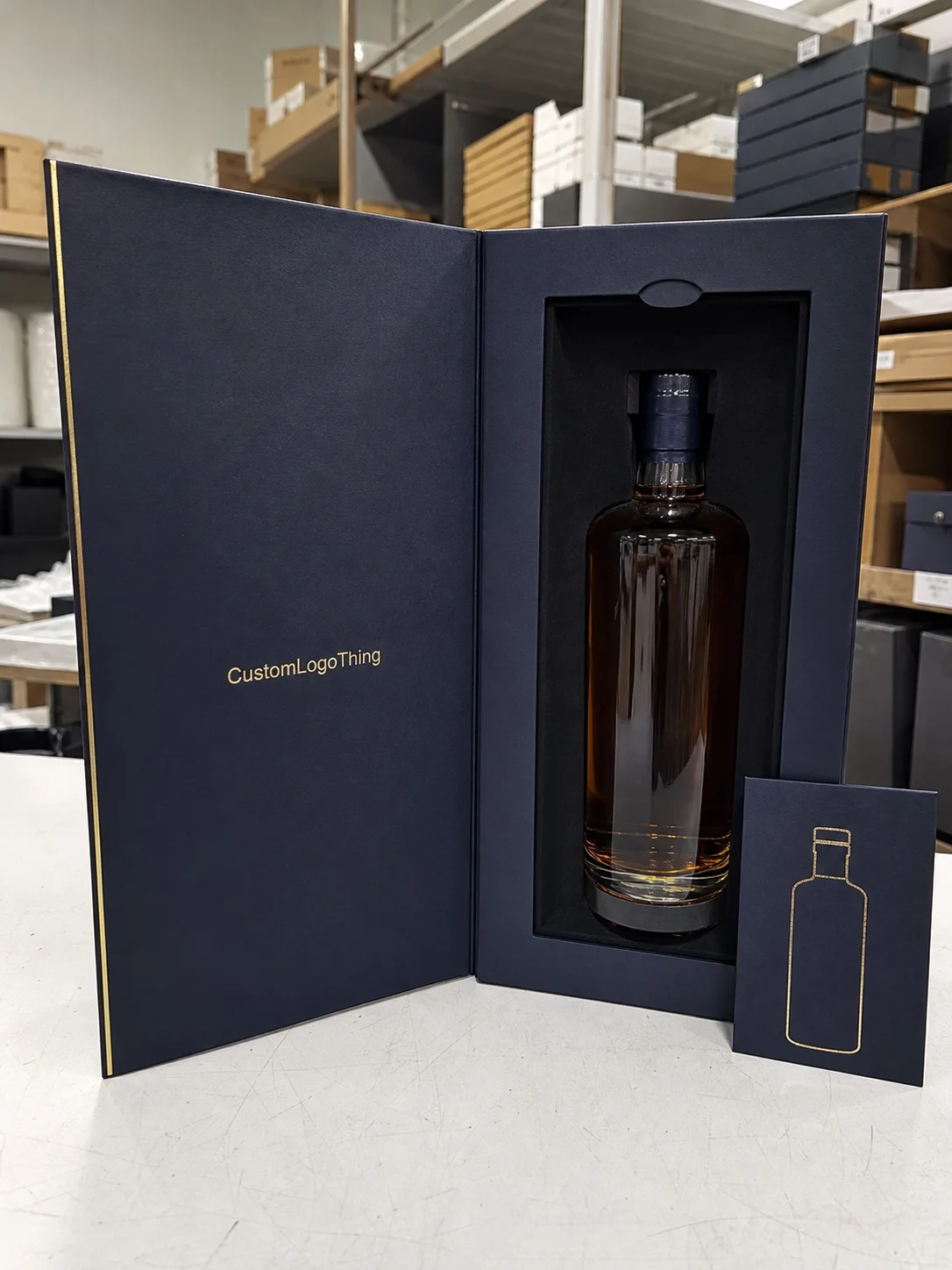
- Rigid presentation boxes for high-end glass bottles, kits, or limited editions.
Most everyday lotion products are fine in a folding carton. If the bottle is fragile, unusually tall, or meant to ship through a rougher distribution chain, an insert becomes more valuable. That insert can be paperboard, molded pulp, or a die-cut support that stops the bottle from leaning. The right choice depends on how much movement needs to be controlled and how much the brand wants to spend on structure.
There is also a difference between a sample that looks good on a desk and a package that survives the actual route to market. Fulfillment centers compress cartons. Parcel networks drop them. Store teams stack them. A carton intended for retail and direct-to-consumer use should be tested against the tougher of those conditions. For brands that ship through multiple nodes, it is smart to reference the test family used by the ISTA methods so the sample review reflects real handling rather than ideal handling.
One practical detail gets overlooked often: top-heavy designs need extra control near the shoulder and closure. A tall pump bottle can tip visually even when it fits physically. A short, broad bottle needs base stability and a clean shelf footprint. The carton should mirror the bottle’s proportions instead of fighting them.
Board, coatings, and print choices that change performance
The board stock is not a background choice. It changes how the carton prints, folds, holds its corners, and survives shipping. For skincare cartons, the usual options are SBS, C1S, kraft, and recycled board. Each carries a different visual signal and a different performance profile.
SBS is the most common choice when the brand wants a bright, clean print face with consistent color. It handles fine detail well and tends to look precise on shelf. C1S is useful when the print is mainly on one side and the inside can remain plain or lightly printed. Kraft supports a natural, low-gloss look, but it is less forgiving with color matching. Recycled board can support sustainability goals, though it may have more surface variation and a slightly less polished appearance.
Board caliper matters just as much as board type. A thin carton may look fine in a mockup and still crush easily in a shipment. A heavier board can feel more substantial, but if it is oversized for the bottle, the cost rises without much benefit. Common folding carton ranges for lotion often sit around 12 pt to 18 pt, but the right spec depends on product weight, carton size, and whether the box is being used as a sales surface, a shipping buffer, or both.
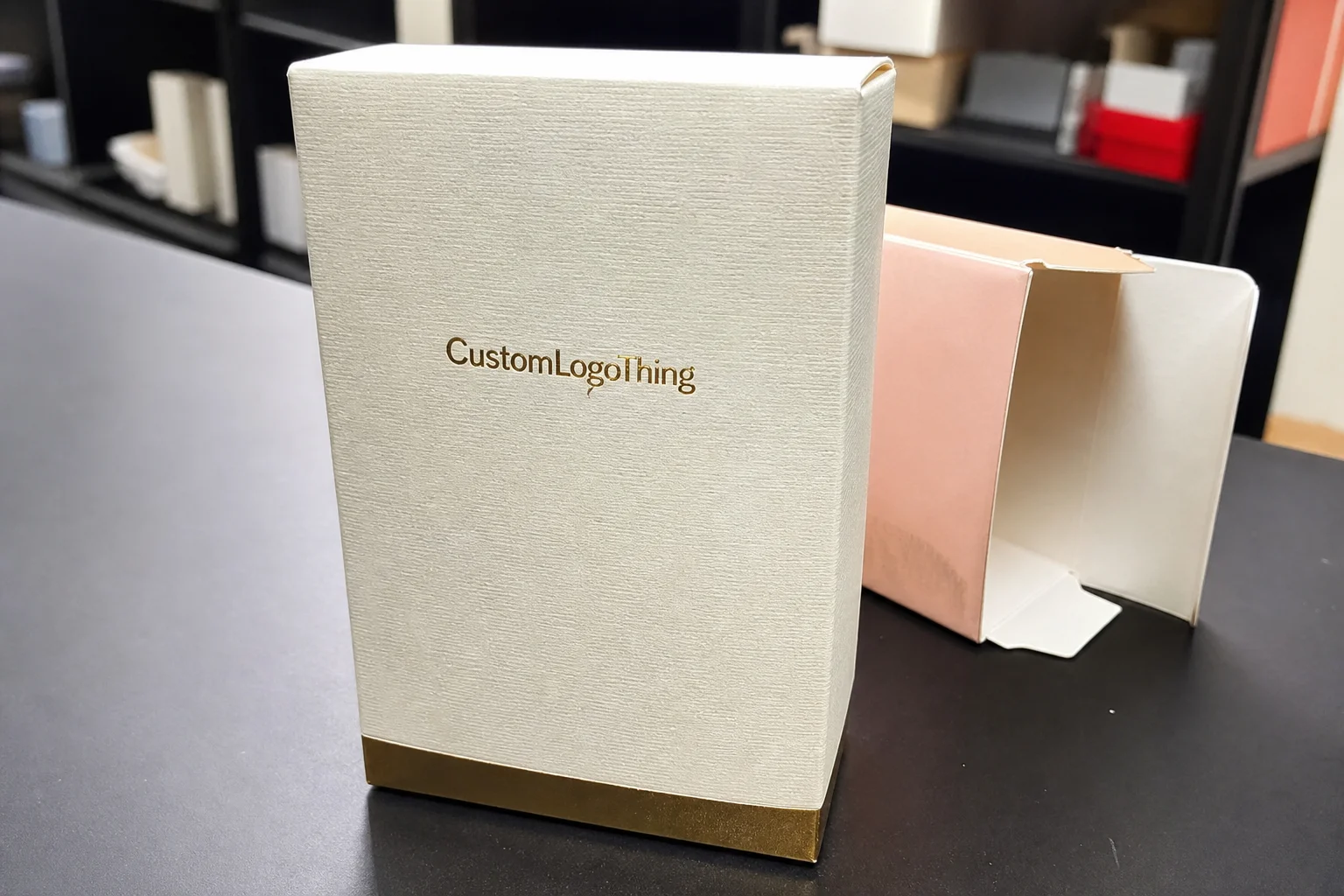
Coatings change the way the box is read in the hand and under light. Matte lamination gives a controlled, quieter look. Gloss increases contrast and makes color blocks feel sharper. Soft-touch adds a tactile finish, though it can show scuffs if the package is handled heavily. Spot UV is best used with restraint, usually to highlight a logo, a pattern, or a focal area rather than cover the whole surface. Foil and embossing can push the box into a premium lane, but each one increases setup complexity and cost.
That cost matters. A finish can look excellent in a proof and still be the wrong choice for the actual margin. The question is not whether the effect is attractive. The question is whether it supports the product price, the volume forecast, and the expected handling conditions. A finish that chips, marks, or adds unnecessary setup time is often a poor trade.
Sustainability also sits in this decision set. Paper-based cartons are usually easier to recover than mixed-material structures with plastic windows, heavy lamination, or decorative layers that cannot be separated cleanly. The U.S. EPA provides useful guidance on packaging and material recovery at EPA recycling resources. For sourcing standards, chain-of-custody verification through FSC is a cleaner baseline than vague claims printed on the carton.
| Option | Typical feel | Performance notes | Cost impact |
|---|---|---|---|
| SBS with matte lamination | Clean, controlled, premium without glare | Good color consistency and strong print clarity | Moderate |
| Kraft with one- or two-color print | Natural, restrained, earthy | Best with simple layouts and limited color expectations | Often lower to moderate |
| C1S with spot UV | Bright, retail-forward, sharp at a distance | Useful for a strong front-panel focal point | Moderate to higher |
| Rigid box with specialty wrap | Giftable, substantial, high-end | Better for sets, glass bottles, or premium editions | Higher |
Finish choice also affects quality control. Gloss and foil make scuffs easier to spot. Soft-touch may hide some handling marks at first, but it can reveal burnishing after the carton has been packed and moved. A buyer who approves a finish should ask for a rub check, fold test, and print registration review, not just a color sign-off.
Production process and lead time
The production sequence for a custom lotion box is predictable, but the schedule is only reliable when the handoffs are clean. The process usually starts with a dieline, followed by artwork placement, proofing, sampling, printing, finishing, die cutting, folding, gluing, and final packing. If one step is unresolved, the entire timeline tends to slip.
Design time is often mistaken for production time. Those are different things. A vendor may quote a short press window, but that number does not include artwork corrections, structural samples, proof approvals, or shipping. A buyer who assumes a printed box will arrive in the number of days shown on the quote is usually underestimating the full lead time.
The points that cause delays are consistent. Missing final dimensions are common. Late artwork revisions are common. Specialty finishes create extra setup and can add days. Slow internal approvals are the quietest delay because the factory cannot continue until someone signs off. The schedule rarely fails because one stage is slow. It usually fails because several small delays pile up.
For a straightforward folding carton with standard print and no special structural changes, production often falls in the 12 to 15 business day range after final proof approval. More complex cartons, especially those with inserts, heavy coating, foil, embossing, or rigid construction, can extend beyond that. Freight is separate. If the shipment crosses a long distance or uses a slower method, the transit time can matter as much as the manufacturing time.
There are a few quality checks worth building into the process. The dieline should match the real bottle, not a placeholder. The print proof should confirm text size, barcode quiet zones, and claim placement. The fit sample should show whether the bottle shifts, the closure rubs, or the top panel bows. A carton that passes all three checks is far less likely to create problems later.
For brands launching more than one SKU at once, keeping the carton spec aligned with other custom packaging products can simplify procurement and reduce rework. That matters when lotion launches are tied to body wash, cream jars, or travel sizes that need to ship on a similar schedule.
Cost, pricing, and MOQ factors
Price follows a small set of variables: board grade, dimensions, print coverage, number of colors, finish complexity, insert requirements, and total quantity. Once those inputs are clear, the quote becomes useful. Without them, the number can be misleading even if it looks attractive.
Quantity is the biggest cost lever. As volume rises, the setup cost gets spread across more units and the per-box price usually falls. Small runs carry more burden because the same setup work is divided over fewer pieces. That becomes even more noticeable when the artwork includes multiple inks, specialty finishes, or tight registration tolerances.
For planning purposes, simple folding cartons in moderate quantities might land around $0.18 to $0.28 per unit at 5,000 pieces, depending on size, board choice, and finish. Add foil, embossing, a custom insert, or a more complex structure, and the price moves up quickly. Very short runs can cost meaningfully more per unit because the fixed setup costs do not shrink with the order.
Buyers should also ask about extra charges that do not always appear in the headline number. Common additions include plate or die charges, sample fees, freight, and premium pricing for difficult finishing work. If an insert is needed, that should be quoted separately or clearly embedded in the spec. Bundling it vaguely into the carton cost makes comparison harder later.
A good quote request includes finished bottle dimensions, target quantity, preferred board, finish preference, and any barcode or regulatory copy requirements. If the design is still changing, say which parts are fixed and which parts are open. That kind of brief helps the supplier price the actual project rather than a guessed version of it.
For brands that expect repeat production, it often makes sense to lock the dieline and structural spec first, then vary artwork by scent or formula. That cuts rework, keeps inventory planning cleaner, and avoids paying repeatedly for changes that do not affect the carton’s function. The structure should stay stable unless the bottle changes enough to justify a new build.
| Cost Driver | How it affects price | Buyer question to ask |
|---|---|---|
| Board grade | Heavier or cleaner board usually costs more and prints better | Which board fits the product weight and channel? |
| Quantity | Higher volume usually reduces unit price | What MOQ creates a meaningful price break? |
| Finish complexity | Foil, spot UV, embossing, and soft-touch increase setup and run cost | Which effect supports the brand without weakening margin? |
| Structural extras | Inserts and custom closures add material and labor | Is the extra structure needed for protection or only for presentation? |
MOQ policies vary by supplier, but the real issue is not the number itself. It is whether the minimum quantity matches launch risk, forecast confidence, and storage capacity. A low MOQ can be useful for testing a new scent. A larger run can make sense once the bottle and artwork are stable and the brand has a clearer reorder pattern.
Common mistakes that lead to weak packaging or rework
The most expensive mistake is measuring the fill volume instead of the finished bottle. A 250 ml lotion may arrive in several shapes, and the carton should be built around the external dimensions with the closure attached. If that step is missed, the box can be too tall, too tight, or too loose before production even starts.
Another common problem is designing the carton before the bottle is final. A slight change in shoulder slope, cap height, or label wrap can force the dieline to change. If the bottle is still under development, packaging should stay adaptable until the final sample is approved. Locking the carton too early often creates avoidable redesign work.
Artwork can create its own trouble. Too many claims on the front panel reduce readability. Tiny text becomes illegible. Barcode placement gets squeezed into a fold or a low-contrast area. A crowded carton often looks busy rather than premium, and it can create printing issues if the layout pushes critical content too close to a cut line.
Transit testing is easy to skip and costly to ignore. A carton that looks perfect on a render may fail once it has been dropped, compressed, or moved through a parcel network. Real testing should use the actual bottle, actual closure, and actual shipping method. If the box is for retail only, still test the handling chain that will be used to get it there.
The opening feel matters too. If the top tuck is too stiff, customers fight the box. If it is too loose, the carton can open early in handling. That detail affects perceived quality. A good opening sequence should feel deliberate, not awkward. Packaging buyers often underweight this until they compare a sample that opens cleanly with one that has to be forced.
A strong carton does not just hold the bottle. It reduces the chances of scuffed labels, crushed corners, shelf clutter, and production rework that shows up after the launch window is already underway.
Most of these problems can be prevented with a better sample routine. Ask for the dieline, a printed proof, and a physical fit sample before approving the full run. If the sample reveals movement, rubbing, or poor panel balance, correct it early. That is cheaper than fixing a bad production lot after it has already been packed.
Next steps before you request a quote
Start with the real bottle in hand. Measure the finished height, width, depth, and closure protrusion. If the bottle is irregular, note where the widest point occurs and whether the base sits flat. A photo helps, but the measurements control the carton.
Then decide what the box has to do. A shelf carton can prioritize graphic clarity and structural neatness. A shipping carton may need a stronger board, an insert, or extra clearance control. If the same pack has to serve both roles, say so early. That changes the spec in ways that are easy to miss later.
Prepare a brief with quantity, target budget, artwork files, material preference, finish preference, and any compliance copy or barcode requirements. If some details are still open, separate the fixed points from the flexible ones. That gives the supplier something concrete to quote against instead of forcing assumptions into the pricing.
Ask for three things before production approval: a dieline, a structural recommendation, and a sample review. Those three checkpoints catch most of the problems that show up later. If the bottle shifts, the front panel is crowded, or the closure rubs the board, fix the structure before the run starts.
For many brands, the first carton becomes the template for every future version. That is why early decisions matter so much. Once a custom lotion box is working, new scents and seasonal variants can inherit the same structure with less friction and lower risk.
The cleanest path is still the most practical one: exact measurements, realistic lead times, the right board for the channel, and a layout that supports the product instead of competing with it. That is how a carton becomes useful packaging rather than decorative paper around a bottle.
FAQ
What size should a custom lotion box be for my bottle?
Measure the finished bottle with the cap or pump attached, then allow enough internal clearance for easy insertion without rattling. If the bottle is unusually shaped, a custom dieline is better than forcing it into a stock size. Small dimensional errors create the most common fit problems.
Do I need inserts for glass lotion bottles?
Often yes, especially if the bottle is heavy, tall, or fragile. Inserts help control movement, reduce neck and cap stress, and improve the unboxing experience. The right insert depends on the bottle shape, shipping method, and whether the carton is mainly for retail display or protection in transit.
How much does a custom lotion box usually cost per unit?
Cost depends on size, board grade, quantity, print coverage, and finish choices. A simple folding carton in moderate quantities might fall around $0.18 to $0.28 per unit at 5,000 pieces, while specialty finishes or inserts increase the price. Short runs usually cost more per box because setup costs are spread across fewer units.
How long does production take for lotion packaging boxes?
After final proof approval, a straightforward folding carton often takes 12 to 15 business days to produce. More complex cartons, special finishes, and inserts can extend that timeline. Shipping time is separate, so the total schedule should include freight as well as manufacturing.
What should I send when requesting a quote for a lotion box?
Send the finished bottle dimensions, including cap or pump height, plus quantity, material preference, finish preference, and any barcode or regulatory copy requirements. A photo of the bottle is useful, but the real dimensions matter more. If the bottle is still changing, say which dimensions are final and which are provisional.