Buyer Fit Snapshot
| Best fit | Custom Luxury Rigid Cartons projects where brand print, material claims, artwork control, MOQ, and repeat-order consistency need to be specified before quoting. |
|---|---|
| Quote inputs | Share finished size, material target, print colors, finish, packing count, annual reorder estimate, ship-to region, and any compliance wording. |
| Proofing check | Approve dieline scale, logo placement, barcode or warning zones, color tolerance, closure strength, and carton packing before bulk production. |
| Main risk | Vague material claims, crowded artwork, missing packing details, or unclear freight terms can make a low unit price expensive after revisions. |
Fast answer: Custom Luxury Rigid Cartons: Materials, Cost, and Process should be specified like a repeatable production item. The safest quote records material, print method, finish, artwork proof, packing count, and reorder notes in one written spec.
Production checks before approval
Compare the actual filled-product size with the drawing, then confirm tolerance on folds, seals, hang holes, label areas, and retail display edges. Reserve space for logos, QR codes, warning copy, and material claims before decorative graphics fill the panel.
Quote comparison points
Review material grade, print process, finish, sampling route, tooling charges, carton quantity, and freight assumptions side by side. A quote is only useful when the supplier can repeat the same color, closure quality, and packing count on the next order.
Custom luxury rigid cartons do something folding cartons usually cannot: they create a strong first impression before anyone touches the product, and they keep doing the job while the box is opened, handled, displayed, and tucked back on a shelf. That matters more than people want to admit. Premium packaging lives or dies in that moment. The carton is not just a container. It is part of the product story, the retail experience, and the brand value, whether the brand wants that responsibility or not.
From a packaging buyer’s point of view, the appeal is easy to see. A well-built rigid carton has weight, structure, and a clean finish. It feels deliberate. It holds its shape. It can protect a fragrance bottle, a skincare set, a watch, a gift set, or a limited-edition electronics item without pretending to be a shipping box in a nicer jacket. That difference is exactly why custom luxury rigid cartons keep showing up in premium categories where branded packaging has to do more than arrive intact.
There is a practical side too, and it gets ignored far too often. Good custom luxury rigid cartons control product movement, support precise inserts, and improve shelf presence. That means the carton is doing work in transit, in retail, and during unboxing. If the sizing is off, the finish feels flimsy, or the insert lets the product rattle around, the whole packaging effort starts to fall apart. Fast. I have seen a fragrance launch go sideways because the lid magnet was changed after sampling. The box looked expensive on screen. In hand, it felt a little off. That kind of miss costs real money.
If the carton feels loose or awkward in hand, the premium signal starts slipping right away. In luxury packaging, structure and presentation are tied together.
What Custom Luxury Rigid Cartons Are and Why They Matter
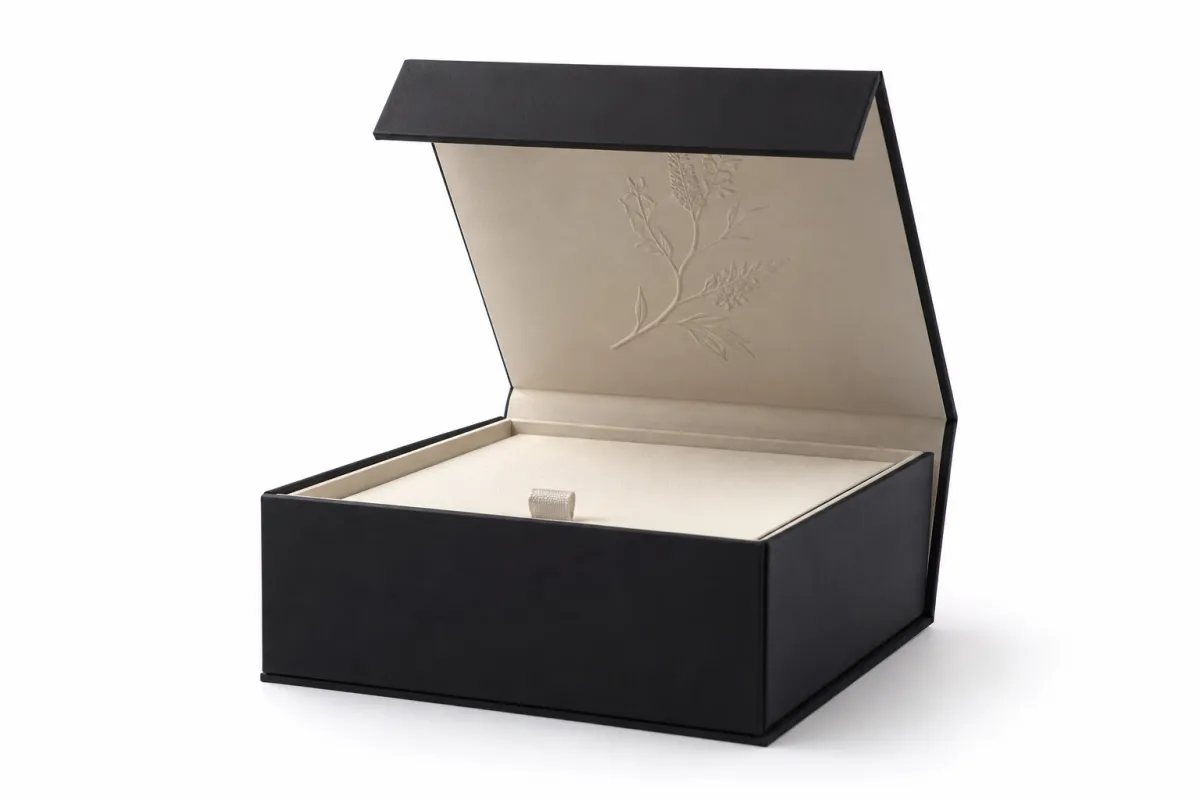
Custom luxury rigid cartons are set-up boxes made from thick paperboard cores and wrapped with printed or specialty paper. Unlike a folding carton, which ships flat and gets creased into shape at the point of use, a rigid carton is built as a more permanent structure. That stiffness gives it a substantial feel, stronger edge definition, and a better surface for premium finishes. It is one reason custom printed boxes in high-end categories often move toward rigid construction instead of standard paperboard.
The difference is not just tactile. Folding cartons are excellent for efficiency, shelf packing, and lower-cost product packaging, but rigid cartons offer better perceived value and better dimensional stability. They work especially well for cosmetics, spirits, electronics, jewelry, subscription kits, gifts, and premium retail programs where the unboxing moment matters. For brands that want the package to communicate quality before the product is revealed, custom luxury rigid cartons are often the right choice.
They also matter because of how they affect buying behavior. In a store, the carton may be the first thing a shopper notices. Online, the box may be the first physical brand experience the customer gets after checkout. Either way, custom luxury rigid cartons carry a visual and emotional load that plain product packaging cannot always support. The box can tell buyers the brand is careful, precise, and willing to spend money where it counts.
That does not mean every project needs a heavily decorated build. Honestly, some of the best custom luxury rigid cartons rely on restraint: a clean board wrap, a strong structural fit, one elegant finish, and a disciplined color palette. White space, matte surfaces, and crisp edges can feel more refined than a carton stuffed with effects. The goal is not to show every feature available. The goal is to make the right feature visible.
Common uses include:
- Cosmetics and skincare where premium presentation supports higher shelf value.
- Spirits and beverages where the carton adds protection and display strength.
- Electronics and accessories where fit, protection, and clean unboxing matter.
- Gift sets and seasonal retail packaging where appearance drives impulse appeal.
- Subscription and launch kits where package branding needs a polished, repeatable look.
For brands comparing broader packaging options, it helps to look at rigid cartons alongside other structures in the Custom Packaging Products lineup so the box choice matches the product and the budget. A luxury carton is not automatically the best carton. It is the best carton when the brand story, handling needs, and unboxing goals all line up.
How Custom Luxury Rigid Cartons Are Built
The build starts with the core. Most custom luxury rigid cartons use chipboard or grayboard in a thickness range that usually lands between 1.5 mm and 3.0 mm, depending on product weight and the stiffness needed. That board is cut, scored, and formed into the box shell. A separate wrap stock is then printed, coated, or selected from specialty papers and applied over the board to create the final surface.
That wrap may be a coated art paper, textured stock, uncoated paper for a softer feel, or a specialty sheet with metallic fibers or subtle embossing. The outer wrap is where brand graphics live, so it carries the color, typography, and finish choices that make custom luxury rigid cartons feel high-end. Underneath, the board provides the actual structure. That two-layer relationship is what gives rigid cartons their character.
The production flow usually looks like this:
- Dieline creation based on the product dimensions, insert plan, and opening style.
- Board cutting and scoring to create the rigid shell panels.
- Wrap printing or paper selection depending on the visual direction.
- Finishing application such as foil stamping, embossing, debossing, spot UV, or soft-touch lamination.
- Assembly and wrapping where adhesive bonds the paper to the board.
- Insert fabrication if foam, paperboard, molded pulp, EVA, or folded compartments are needed.
- Fit testing and QC to confirm closure, alignment, and product protection.
That process sounds straightforward on paper, but the order matters. If the dieline is off by even a few millimeters, the insert may pinch the product or let it shift. If the wrap stock stretches too much, corners can wrinkle. If adhesive is applied unevenly, edges may lift after packing. Good custom luxury rigid cartons depend on disciplined production, not just attractive artwork.
Finishes are where many brands get excited, and fair enough. Foil can sharpen a logo. Embossing can add depth. Debossing can create a quiet, architectural look. Soft-touch coating can make the surface feel almost suede-like. Spot UV can highlight a symbol or pattern without bulldozing the whole design. The strongest custom luxury rigid cartons usually use one or two of these, not five. Too many effects turn the carton into a mess with a price tag.
Structural features deserve the same attention as decoration. Magnets, ribbon pulls, window cutouts, hidden compartments, and multi-panel closures all change how the carton opens and how much labor it takes to assemble. In practice, inserts and closures should be treated as part of package engineering, not decorative extras. A ribbon that looks elegant but tears too easily is a liability. A magnet that is too weak makes the box feel cheap. A compartment that looks clever but slows packing can hurt production efficiency.
One detail people miss is how much the wrap grain and corner turns affect the final result. A carton can have the right dimensions and still look off because the board was wrapped against the grain, or because the corner fold left a tiny ridge in the wrong place. Those are the kinds of issues that separate decent packaging from polished luxury packaging. They sound minor. They are not.
If your team is comparing build types, the safest route is to request samples from the Custom Packaging Products catalog and inspect the corners, the wrap alignment, and the closure feel in hand. A render can hide a lot. A physical sample tells the truth.
Key Factors That Shape Appearance, Strength, and Feel
Custom luxury rigid cartons succeed or fail on a handful of variables that are easy to underestimate from a distance. The first is product size and weight. A small fragrance vial and a heavy glass bottle need very different packaging design choices, even if both live in the same premium category. The carton has to control movement during handling, but it also has to leave enough room for clean removal and a pleasant unboxing moment.
Board thickness is the second major factor. Thicker board adds crush resistance and a denser hand feel, which many buyers read as quality. Thinner board can still work, especially for lighter items or smaller runs, but it should be chosen carefully. If a carton is too light, the whole package can feel hollow. If it is too thick, edges may become bulky, corners may resist wrapping, and production cost climbs. The right choice depends on the product and the presentation goal, not a blanket rule someone made up in a meeting.
Paper stock changes the tone of the project just as much. A matte wrap with a soft-touch finish feels restrained and modern. A gloss-coated sheet looks sharper and more commercial. A textured paper can suggest craft, warmth, or heritage. Metallic accents pull attention quickly, while deep blacks and controlled white space feel more editorial. For custom luxury rigid cartons, these choices shape brand perception before any copy gets read.
There is also a performance side. Structural decisions affect shipping performance, stacking behavior, and retail display life. If the carton is going through distribution centers, it should survive compression, rubbing, and repeated handling. If it will sit on a retail shelf, the surface needs to resist scuffing. If the carton will be opened and closed many times, the hinge line and closure style matter more than a flashy finish. That balance between appearance and durability is where packaging buyer decisions show up in the real world.
Brand priorities help decide what to emphasize:
- Luxury signal through tactile papers, precise corner builds, and restrained finishes.
- Sustainability through FSC-certified board, paper-based inserts, and fewer mixed materials.
- Speed through simpler structures, standard insert layouts, and fewer specialty coatings.
- Unboxing theater through layered reveals, ribbon pulls, or multi-compartment layouts.
- Tighter cost control through fewer finishes, flatter artwork, and efficient assembly steps.
For brands making sustainability claims, keep them grounded in actual material choices. Paper-based cartons are often easier to recycle than mixed-material builds, but local recycling rules vary. Coatings, laminations, magnets, and plastic components can change that picture quickly. If a carton is being positioned as eco-conscious, the spec should support the claim instead of hoping nobody looks too closely. For broader guidance, the EPA recycling resources are useful, and FSC certification standards from FSC can support responsible sourcing claims when the chain of custody is in place.
One more practical point: the best custom luxury rigid cartons usually feel intentional from the first touch. That feeling comes from fit, finish, and balance working together. If the lid is too tight, the user fights the box. If the insert is too stiff, the product feels trapped. If the carton is over-decorated, the eye loses focus. Good package branding has a rhythm to it, and every part of the structure should support that rhythm.
Custom Luxury Rigid Cartons Cost: What Drives Pricing
Custom luxury rigid cartons are usually more expensive than folding cartons because they use more material, more labor, and more setup time. The price is shaped by several cost buckets: board, wrap stock, printing, finishing, inserts, labor, and freight. Each one can move the final quote in a meaningful way. If a brand wants cleaner budgeting, it needs a spec-based quote, not a fuzzy estimate pulled from thin air.
Setup cost is the first thing many buyers feel, and it is real. Dieline development, cutting dies, proofing, and machine setup create a front-loaded expense that does not disappear at small volume. Once production scales up, the unit price usually drops because those setup costs are spread over more boxes. That is why a 500-piece run can look expensive per unit, while a 5,000-piece run often lands in a better range.
To make the pricing picture easier to read, here is a practical comparison of common custom luxury rigid cartons options.
| Build Level | Typical Quantity | Approx. Unit Price | Common Features | Best Fit |
|---|---|---|---|---|
| Simple premium rigid carton | 1,000 to 5,000 | $1.40 to $2.20 | Printed wrap, standard board, basic insert | Launch kits, skincare, lighter retail items |
| Mid-tier luxury carton | 2,000 to 10,000 | $2.30 to $4.50 | Soft-touch coating, foil, magnetic closure, custom insert | Fragrance, spirits, premium gift sets |
| Complex premium build | 3,000 and up | $5.00 to $8.00+ | Multiple compartments, specialty papers, layered finishes | High-end electronics, collector editions, display-driven retail |
Those ranges are directional, not fixed. A simple carton with heavy print coverage may cost more than expected. A complex box with limited artwork may still be pricey because of assembly time and material waste. The board spec, wrap stock, and insert design all matter. So does the shipping footprint. Large cartons can add freight cost quickly, especially if they are air-shipped or packed inefficiently.
Finishing choices create some of the sharpest price jumps. Foil stamping, embossing, debossing, and spot UV are beautiful, but they add tooling, machine time, and careful alignment. Magnets raise both material and labor cost. Molded inserts can be cost-effective at volume, but they require their own tooling and lead time. Even something as simple as a ribbon pull can add handling steps during assembly. Packaging buyers sometimes assume the quote is driven by print coverage alone. It usually is not. The hidden cost lives in structure and labor.
That is why one of the best budgeting habits is separating must-have features from nice-to-have features. A logo foil and a magnetic closure might be essential. A window cutout and a second foil color may not be. Once those priorities are clear, it becomes easier to compare quotes on equal specs and avoid the usual quote churn that comes from vague requests.
Prototype costs should also be listed separately. A physical sample might run from $150 to $450 or more, depending on complexity and whether fully finished samples are required. That expense often saves money later because it exposes sizing or closure issues before full production starts. For custom luxury rigid cartons, sampling is usually a smart line item, not an optional extra.
If you are reviewing options across Custom Packaging Products, compare like for like: same board thickness, same print coverage, same insert type, and same finish list. Otherwise, one quote can look artificially low simply because it leaves out the details that matter most. I would rather see a quote that is honest and a little higher than one that looks pretty and falls apart halfway through the project.
Custom Luxury Rigid Cartons Process and Timeline
The process for custom luxury rigid cartons usually moves through a predictable chain, but the pace depends on how quickly decisions are locked. The first step is discovery. That means clarifying the product dimensions, target quantity, shipping method, retail environment, budget range, and the desired unboxing feel. If the brief is fuzzy, every later step slows down. No surprise there.
Next comes sizing and dieline development. This is where the carton structure gets mapped to the product. Insert tolerances matter here. A glass bottle, for example, may need slightly more clearance than a rigid cosmetic jar because the opening and removal motion differ. A good dieline protects the product while still making the carton easy to use. That balance is a core part of custom luxury rigid cartons planning.
After that, the team usually moves to a prototype or sample stage. For many projects, this is the moment that shows whether the box opens cleanly, stacks properly, and feels right in hand. Samples can be plain structure samples or fully finished mockups. If the carton will carry a foil logo, textured wrap, or special insert, I usually prefer a finished sample before approving mass production. A small delay beats a warehouse full of boxes that almost work.
Artwork proofing and material approval follow. This is where print files, color targets, and finish notes are checked. If the brand is using a Pantone target, the team should confirm the exact reference and whether there is a coated or uncoated paper effect to account for. Small color shifts are normal, especially with textured or specialty papers, so expectations need to be set early. That is part of responsible packaging design, not a sign that something went wrong.
A realistic timing framework often looks like this:
- Brief and sizing: 1 to 3 business days if product info is complete.
- Dieline and sample development: 3 to 7 business days, longer for complex inserts.
- Proofing and revisions: 2 to 5 business days, depending on approval speed.
- Production and assembly: 10 to 20 business days for many custom luxury rigid cartons projects.
- Final QC and freight: 2 to 7 business days depending on destination and shipping method.
Simple builds can move faster. Specialty finishes, multi-panel structures, and custom inserts add time. That is normal. Projects slip when artwork arrives late, structural changes show up after the sample stage, or approvals sit idle. The fastest jobs are the ones where the team knows the product, the budget, and the approval chain before production starts.
For brands that need transit validation, testing matters. The ISTA standards are a useful benchmark for shipment simulation and packaging performance, especially if the carton will travel through multiple handling points. A rigid box can feel strong in hand and still fail under compression if the board spec or insert layout is wrong. Testing is not glamorous, but it protects both product and margin.
One practical approach is milestone planning. Lock the product dimensions first. Then lock the opening style. Then lock the finish list. After that, refine artwork and approve samples. That sequence keeps custom luxury rigid cartons aligned with the launch schedule instead of becoming the reason a launch slips. It also keeps everyone honest, which is underrated in packaging work.
Common Mistakes to Avoid with Custom Luxury Rigid Cartons
The most common mistake is designing artwork before the box is fully sized. It sounds harmless, but it often creates avoidable problems. Logos land too close to folds, pattern repeats break at the corner turns, and the insert steals space the artwork team never planned for. Custom luxury rigid cartons work best when structure and graphics are developed together.
Another frequent issue is overdesign. It is tempting to stack on every premium feature at once: foil, embossing, soft-touch coating, magnets, ribbon pulls, window cutouts, specialty paper, and a custom insert. That can look impressive in a mockup, but in production it can become expensive, slow, and more difficult to assemble. One strong finish and one thoughtful structural detail often deliver more value than a crowded feature list. More is not automatically better. Sometimes it is just more.
Ignoring transit testing is another costly habit. Heavy bottles, fragile glass, or sharply edged items can move inside the carton even if the outside shell looks perfect. Compression, drop resistance, and vibration all matter. If the product arrives scuffed or rattling, the perceived quality of the custom luxury rigid cartons collapses right along with the product experience.
Vague specs create their own damage. If the quote request does not say board thickness, paper type, insert style, finish level, quantity, and delivery window, the pricing will bounce around. Then the project team spends days chasing assumptions. That delay is not just annoying; it raises the chance of budget surprises and schedule misses. Clear specs reduce risk.
Skipping samples is risky too. A carton can look great on screen and still fail in the hand. Maybe the lid binds. Maybe the magnet is too weak. Maybe the insert gives the product too much play. Maybe the edge wrap shows a seam that nobody expected. With custom luxury rigid cartons, a sample is the easiest way to catch those issues before mass production.
There is also a subtle mistake I see often: confusing premium with complicated. A carton can feel premium because it is balanced, quiet, and precise. It does not need to shout. Sometimes the best retail packaging solution is the one that removes friction from the customer’s hands and lets the product carry the brand story. That is the part people remember.
To avoid those problems, I recommend checking each project against a short list:
- Final product dimensions are confirmed.
- Insert tolerances are tested with the actual item.
- Artwork is built to the approved dieline.
- Finish choices are limited to what supports the brand story.
- Assembly, freight, and sample costs are included in the budget.
That kind of discipline makes custom luxury rigid cartons easier to approve, easier to produce, and easier to explain internally when the purchase order moves through finance. It also saves the awkward conversation where someone asks why the “luxury” box feels flimsy.
Expert Tips and Next Steps for Custom Luxury Rigid Cartons
If you want a smoother project, start with a one-page brief. Keep it simple but specific. Include product dimensions, product weight, target quantity, budget range, finish priorities, delivery date, and the preferred unboxing style. A strong brief gives the supplier something concrete to quote against, and it reduces the back-and-forth that slows custom luxury rigid cartons work down.
My second recommendation is to choose one hero finish and one structural feature. That might be foil plus a magnetic closure, or soft-touch coating plus a paperboard insert. That combination usually gives enough visual lift without pushing the carton into overcomplicated territory. The point is to make the premium signal feel deliberate, not crowded. That is often the difference between decent and memorable package branding.
Third, ask for a physical prototype or at least a sample board before full production. A sample shows the actual wrap behavior, corner quality, and insert fit. It also tells you whether the box opening feels natural or awkward. For custom luxury rigid cartons, that tactile check is worth the time.
Fourth, compare quotes using identical specifications. If one vendor prices a carton with FSC board, foil stamping, and a custom foam insert, while another quote leaves out the insert and uses a lighter board, the numbers do not mean the same thing. Good buyers compare the structure, the finish, and the labor assumptions before judging price. Otherwise, the cheap quote is just a smaller promise.
Finally, think about what the unboxing should accomplish. Should it feel ceremonial? Fast? Protective? Quiet and refined? That answer shapes everything from lid style to insert depth. The best custom luxury rigid cartons align the physical experience with the brand message, and that alignment is what makes the box feel worth keeping.
For teams building broader packaging programs, it can help to review options in the Custom Packaging Products catalog and decide where rigid cartons fit beside mailers, folding cartons, and other custom printed boxes. Not every product needs the heaviest structure available. The right one is the structure that supports the product, the shelf, the shipment, and the story.
If you are ready to move forward, the next steps are straightforward: confirm measurements, gather artwork, decide the unboxing priority, and lock the brief before sampling begins. That order keeps custom luxury rigid cartons on track and avoids late-stage changes that drain time and budget. Done well, the carton becomes more than packaging. It becomes part of the product’s value, from the first glance to the final reveal.
FAQ
What are custom luxury rigid cartons used for?
They are best for premium products that need both protection and presentation. You will see them used for cosmetics, spirits, electronics, gifts, and limited-edition retail items. They are especially useful when the unboxing experience is part of the brand value, because custom luxury rigid cartons help create that first tactile impression.
How do custom luxury rigid cartons differ from folding cartons?
Rigid cartons use thicker set-up board and arrive as a more structured box. They are usually wrapped in printed or specialty paper, which creates a more premium feel. They are better for heavier, higher-value, or display-driven products than standard folding cartons, especially when the brand wants the package itself to support product positioning.
What affects the price of custom luxury rigid cartons most?
Board thickness, wrap stock, and print coverage are major cost drivers. Foil, embossing, magnets, and custom inserts raise both material and labor cost. Higher volumes usually lower the unit price, while small runs carry more setup cost per box. That is why a spec-based quote is much more useful than a rough estimate.
How long does custom luxury rigid cartons production usually take?
The timeline depends on dieline approval, sample rounds, artwork readiness, and finishing complexity. Simple builds move faster, while specialty papers, inserts, and complex closures add time. The fastest projects are the ones where product dimensions and branding decisions are locked early, because that keeps the production schedule stable.
Can custom luxury rigid cartons be made more sustainably?
Yes, they can use paper-based boards and wraps that are easier to recycle than mixed-material builds. Reducing unnecessary magnets, plastic windows, and overbuilt structures helps lower waste. Right-sizing the carton to the product also reduces shipping volume and excess material use, which supports both sustainability and cost control.

