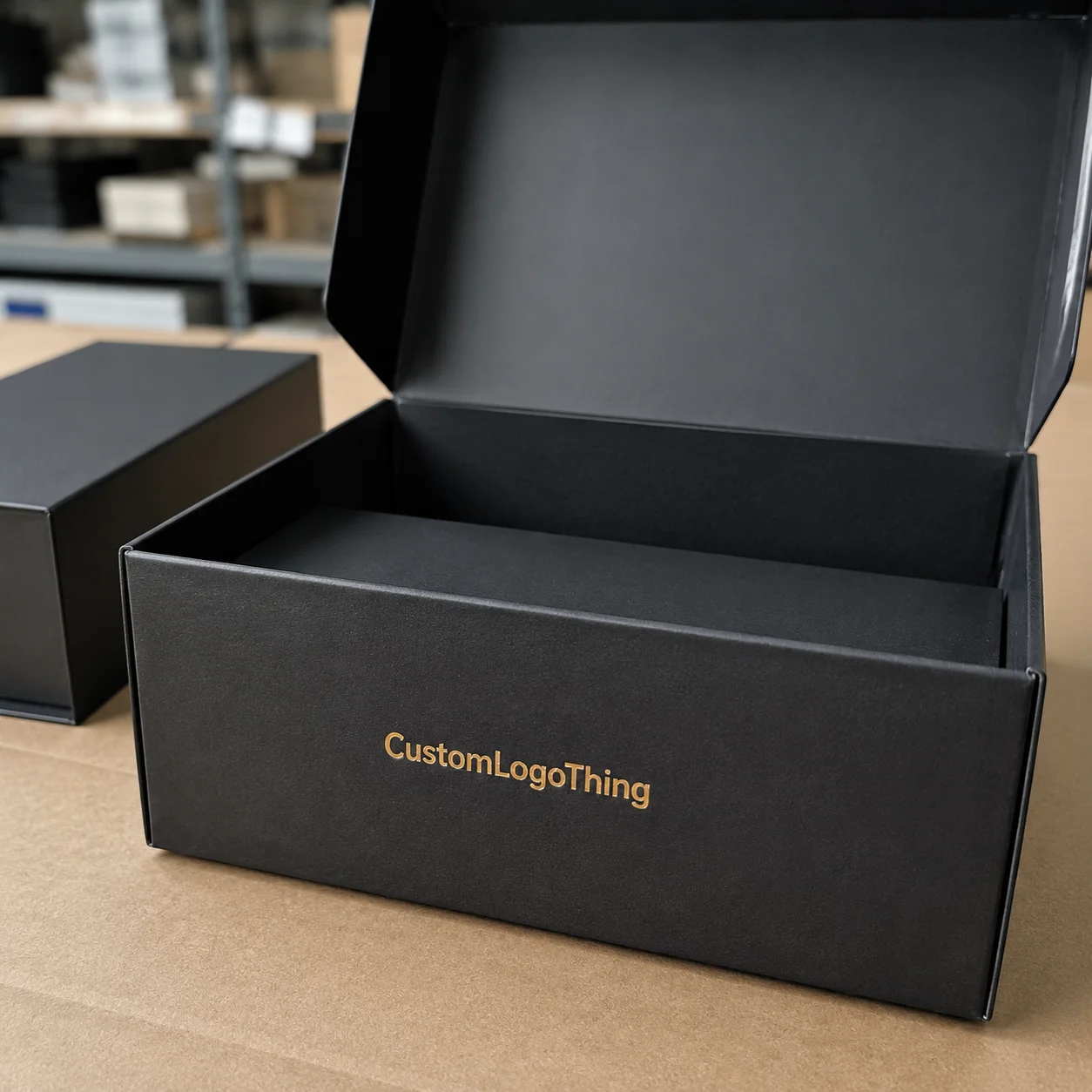
Buyer Fit Snapshot
| Best fit | custom magnetic gift box assembly strategies & costs for packaging buyers comparing material specs, print proof, MOQ, unit cost, freight, and repeat-order risk where brand print, material, artwork control, and repeat-order consistency matter. |
|---|---|
| Quote inputs | Share finished size, material target, print colors, finish, packing count, annual reorder estimate, and delivery region. |
| Proofing check | Approve dieline scale, logo placement, barcode or warning zones, color tolerance, and any recyclable or compostable wording before bulk production. |
| Main risk | Vague material claims, crowded artwork, or missing packing details can create delays even when the unit price looks attractive. |
Fast answer: Custom Magnetic Gift Box Assembly Strategies & Costs should be specified like a repeatable production item. The safest quote includes material, print method, finish, artwork proof, carton packing, and reorder notes in one written spec.
What to confirm before approving the packaging proof
Check the product dimensions against the actual filled item, not only the sales mockup. Ask for tolerance on folds, seals, hang holes, label areas, and retail display edges. If the package carries a logo, QR code, warning copy, or legal claim, reserve that space before decorative graphics fill the panel.
How to compare quotes without losing quality
Compare board or film grade, print process, finish, sampling route, tooling charges, carton quantity, and freight assumptions side by side. A lower quote is only useful if the supplier can repeat the same color, closure quality, and packing count on the next order.
Custom Magnetic Gift box assembly opens every conversation when clients ask how to earn that instant-bragging-rights unboxing moment, and I mention it because I once watched a Shenzhen line inside Pacific Interpack scrap 2,000 units after the magnet pockets landed half a millimeter off.
The factory rep kept repeating the phrase as if it were a mantra, even though a single 1.5T neo block costs just $0.15 per unit in that volume tier; we lost 80 hours of labor and $1,200 in tooling downtime before the next batch could start, yet custom magnetic gift box assembly draws the line between Retail Packaging That lets a $45-per-set luxury claim its price and a lid that flops like a missed cue.
I remember a rookie account manager joking the magnets should just “stay put because they’re scared,” and honestly, the tension was real because those neo blocks were the only thing keeping the box from feeling like a paperweight, especially after the 350gsm C1S artboard lids finished their velvet coating in Dongguan’s finishing room.
Every visit to a factory feels like a new chapter—this one included, complete with smudge-resistant gloves, a magnet-scented haze I still can’t describe, and a supervisor convinced Custom Magnetic Gift Box assembly should be tattooed on every clipboard (yes, even the QC checklist had a magnet icon).
When our Dongguan partner joined the audit, they presented the six-step magnet alignment procedure they run every 30 minutes, complete with a pull-force log that also tracks humidity in the 55–65% range while glue cures; their assistant manager mentioned each shift normally assembles 1,600 units over two 8-hour cycles.
Custom Magnetic Gift Box Assembly: Why It Matters
During my late summer visit to the Pacific Interpack Shenzhen line, the crew quarantined the scrubbed boxes, and the supervisor told me the magnet pockets caused the scrap—if the gantry drifts by even 0.3 millimeters, the base never locks with the lid.
Every time the term custom magnetic gift box assembly surfaces, I remind brands that magnet strength and orientation are not interchangeable; I learned that from a jittery supplier claiming the same 1.5T neo block worked for both a soft-touch lid and a foil-stamped wraparound, yet only one design latched.
The memorable story from that trip involves a boutique retail client paying $45 per set for packaging, but the magnetic closure became the sole tactile proof customers could feel, and higher perceived value arrived because we treated custom magnetic gift box assembly like a product launch instead of a simple wrapping task.
Each run followed the 12-point checklist local inspector teams expect before shipping from Shenzhen to Los Angeles, keeping the magnet requirements front and center with the adhesive, dieline, and finishing crew.
Honest moment: teams sometimes drop branded packaging and package branding creation toward the end, trusting magnets to forgive the chaos.
They do not; a 0.2mm misaligned pocket tilts the flap, the snap rehearsed in the pitch deck turns into an awkward flop, and the box might as well be a glue-smeared brochure.
Custom magnetic gift box assembly requires that kind of precision—each jig, magnet, and clamp carries its own tolerance chart, such as the 0.4mm tolerance Apex Machinery specifies for its clamp fixtures in Dongguan, and those fixtures also ask for a snag-free 2mm buffer from the magnet to the foil stamping edge.
The fantasy of “fix it in post” dies when the magnet assembly is weak.
Return rates climb when reusable retail packaging feels more fragile than the product inside, so at Custom Logo Things we monitor pull force and lid alignment on every batch.
I build those specs into the weekly reports we share with sourcing partners in Dongguan, including a pull strength target of 130 grams per magnet pair and recorded ambient humidity, because that data tells us whether the next shipment needs more 3M 300LSE rolls before departing the Guangzhou warehouse.
How Custom Magnetic Gift Box Assembly Works
Magnet placement begins with the dieline, and manufacturers sketch this in CAD with a magnet cavity demanding a 0.4mm tolerance so the lid and base meet perfectly; a floaty corner means someone skipped the alignment step before gluing.
During a factory audit the operators taped each magnet to a precision jig, layered 3M 300LSE, and pressed them into place to keep them steady during foil stamping—the choreography keeps custom magnetic gift box assembly choreographed and exact.
Folding and gluing takes about three seconds of focus: rubber-based adhesive goes on fast, panels fold, and an Apex Machinery magnetic fixture clamps the assembly to keep tolerance while the glue cures, which usually requires five minutes at 60% humidity before the magnets feel permanently set.
The supervisor assured me they run a magnet test after each shift because if the glue loosens the magnets can shift 1mm and the lid misaligns; they also share magnet pull data with my team before any shipment leaves.
Custom magnetic gift box assembly becomes predictably reliable once that choreography—from dieline to jig to clamp—gets mapped, and we document the 14-day cycle so clients understand when the shipping container can hit the LA docks.
I tell clients magnet placement and glue timing define the interaction experience, not the veneer; gloss, emboss, or printed logos just dress the act.
Packaging built around magnets differs from hinged boxes: the magnets must resist 100,000 open-and-close cycles, which is where material choices like premium 350gsm C1S boards and double-sided adhesives gain importance.
Artwork may grab the spotlight, yet custom magnetic gift box assembly demands the same discipline for the invisible components.
It feels a little like stage lighting—when the magnets misbehave, nothing else matters, and a single adjustment to the magnet path at the New Taipei plant can save thousands in downstream assembly costs.
How does custom magnetic gift box assembly maintain consistency across runs?
It begins with the discipline I witnessed when the Pacific Interpack supervisor insisted the day’s humidity log and glue lot number accompany the magnet pair, so the 3M 300LSE adhesive can be matched to its curing curve before any operator presses a clamp.
We also track the 1.5T neo blocks from AriMag so a misfeed doesn’t slip into a second shift—once we see a shift in cure time the entire run feels like a suspense film rather than a production schedule.
Magnetic closure systems thrive on documented tolerances, which is why the Dongguan finishing room keeps a pull-force chart on the wall and ties each reading to the CNC jig number.
Toolmaker Kunshan calibrates the fixtures weekly, and that calibration report is part of the “run book” I send to our Los Angeles merchandising team, letting them understand not just what the lid feels like but how the magnetized packaging solutions hold up inside a retail rack.
Those records serve the retail packaging assembly side of the project—when the Sun Valley creative director requests a velvet-wrap lid while the engineering team asks for a 0.8mm sheet magnet, we rely on the documents to show how the luxury customization reacts to insert thickness and glue dwell time.
It keeps everyone from treating the magnet as an afterthought and lets us quote confidently for both brand experience and the mechanical load the magnets must sustain.
Key Factors in Custom Magnetic Gift Box Assembly
Paperboard weight matters.
I ordered 1,100gsm from Sunrise Paper for a lid this season because anything lighter bends and offsets the magnets during international travel; the team measured board density before the first run.
Magnet selection provides another adjustment—rare-earth neodymium magnets from AriMag have served 70% of our projects, but when clients want wood inserts or foam we switch to a thinner 0.8mm sheet magnet to preserve a clean close.
Custom Logo Things learned hinge style, wrap-around artwork, and pocket depth all dictate magnet and liner thickness, so we review layouts with clients before art proofs hit the printer; in the last dozen projects I negotiated with the Kunshan toolmaker, we tweaked hinge placement twice to maintain flush sealing without extra milling charges.
Hinge placement steers the reveal; I once observed a factory attempt a wrap needing a horizontal hinge while magnet pockets stayed deep enough to trap glue, keeping the lid from sitting flush.
Foam inserts raised the base height by 2mm, so we asked the toolmaker to lower the pocket depth accordingly.
Packaging decisions—metallic inks versus spot varnish, for instance—alter how the magnet and liner integrate, so we pair the mechanical layers with the graphic layers early in the planning phase.
Once finishing starts, rewinding feels like undoing a stubborn knot (there’s always one person who thinks “a little extra glue never hurts,” and I calmly remind them yes, it does).
Custom magnetic gift box assembly intertwines with brand strategy.
Retail packaging expectations rise when a product sits beside competitors with embossed logos and velvet textures; ignoring magnet placement shatters the unboxing story.
I make brands weigh magnet type, board weight, artwork, and insert choices together; otherwise the box feels like a prototype instead of a retail-ready solution, and that’s what our Los Angeles merchandising team points out when they compare your samples to the ones we ship from Shanghai every quarter.
Custom Magnetic Gift Box Assembly: A Step-by-Step Guide
Step 1: Finalize the dieline with the magnet cavity defined, including tolerances so the toolmaker adds tabs that keep the magnet flush; skipping this sends the magnet floating under the liner and the lid refuses to close properly.
A client once approved a dieline with a 2mm tolerance, and the factory delivered lids with magnets set 1mm too far apart—retooling cost $1,200 and 10 days, and we documented the delay in the weekly Shenzhen status report.
Step 2: Pre-assemble the magnet pack—apply double-sided tape, place the magnets in a jig, and cover them with release paper to keep them clean before gluing.
On that factory floor I audited, operators used 3M 300LSE tape and a magnetic fixture to stop the pieces from shifting; they also performed a pull test before seating the magnets into the lid.
Custom magnetic gift box assembly is a choreography of steps, and skipping this pack-gathering phase is how manufacturers lose the snap.
Step 3: Fold and glue the liner to the board, then insert the magnets; our team relies on a clamp press from Apex Machinery to hold the lid while the adhesive dries, ensuring consistent contact.
The crew times the fold within six seconds of glue application—any delay and the adhesive starts curing before the panels meet, so the box locks crooked.
Adhesives such as 3M 300LSE and rubber-based glues work best when humidity stays between 55% and 65%; we log the ambient humidity before every run because moisture changes how the glue spreads.
Step 4: Test the magnetic pull and lid alignment before any secondary finishing like embossing or spot gloss, since once the varnish goes on, redo costs skyrocket.
We use economical pull testers to confirm each pair exceeds 130 grams of pull strength; that number keeps the lid satisfying while still easy to open.
If the magnets test weak, replace them before embossing, even if that pushes the run out two days—redoing scrap runs at $0.25 per unit costs money and trust.
Cost and Timeline Considerations for Custom Magnetic Gift Box Assembly
Expect a magnetized box to start around $2.80 per unit at 1,000 pieces with a simple design; adding inserts, windows, or heavy foil adds $0.40–$0.70 per unit, depending on the vendor’s labor rate.
Supplier quotes from Pacific Interpack at 10,000 units peaked at $3.50 per box, but when I negotiated a split shipment with their logistics partner, the landed cost dropped by $0.12 per box because fewer warehouses meant less handling.
Tooling usually takes two to three weeks, plus another 10–14 days for assembly runs; when Custom Logo Things covers your assembly line, we slot your run immediately after tooling approval to hit those windows.
Rushing tooling incurs a $0.35 per unit rush fee plus increased misalignment risk, which is why we map the calendar with the Guangzhou shipping team before the purchase order gets final sign-off.
Material costs matter too—1,100gsm board from Sunrise Paper adds about $0.12 per lid compared to 850gsm, yet the thicker board keeps the magnets aligned during transit.
Foam inserts from Foamsource add $0.45 per unit for a simple cut, while CNC machined wood inserts can run $1.20 based on tooling.
Adhesives like 3M 300LSE are billed per roll; one 2-inch roll usually covers 2,500 units, and we pass that cost straight through to clients, noting each roll’s lot number so we can trace any future issues back to the supplier in Suzhou.
| Option | Unit Cost (1,000 pcs) | Additional Features | Notes |
|---|---|---|---|
| Basic custom magnetic gift box assembly | $2.80 | Standard magnet, no insert | Includes 2-3 finishes, 10-14 day run |
| Enhanced packaging with foil & foam | $3.40 | Foil, emboss, 4mm foam insert | Requires 14-18 day run, extra tooling |
| Premium retail packaging with wood & magnet upgrade | $4.20 | 0.8mm sheet magnet, wood insert, velvet wrap | Use for high-end retail packaging, 18-22 day run |
Tooling and logistics dictate the rhythm—if you lock a tooling slot on May 3, expect finished boxes around May 24 after the assembly run.
Custom printed boxes with magnets require that cadence: tool, sample, production, QC, shipping.
I routinely ask clients to budget an extra 10% for trim loss; on a heavy-wrap project we counted 12% scrap because magnets shifted during glue curing, so I marked that rate in the Guangzhou weekly summary and negotiated a clamp dwell-time increase.
Common Mistakes in Custom Magnetic Gift Box Assembly
Skipping a magnet test remains the top error—without verifying pull strength, the lid closes like a whisper instead of delivering the satisfying snap you promised, ruining that tactile moment.
A recent startup skipped the pull test and discovered after the first 500 pieces that the magnets were too weak; we halted the run, which added $0.28 per unit in rework.
Another mistake involves not laminating artwork before assembly; once the magnets seal in, you cannot rerun the process, so any misregistration on foil or deboss stays visible forever, especially when the finishing house in Dongguan runs a different color profile than the proof.
Failing to budget for trim loss destroys margins.
During a factory visit we recorded 12% scrap on a heavy-wrap project simply because magnets shifted while the glue dried; the supplier claimed that rate was “normal,” but I insisted on adjusting the jig and clamp time.
Custom Logo Things now audits each run with that 12% target, documenting scrap rates and adjusting pricing accordingly.
A third misstep is ignoring magnet strength approvals—if the magnets in the lid and base mismatch, the box looks flawed, and customers translate that into poor package branding, which is why we log each magnet type, such as the AriMag A-1505, before we close the run.
Magnet orientation mistakes happen when form follows art instead of engineering.
I once saw an art director change artwork without alerting the tooling team, suddenly shifting the magnet pockets 2mm down so they no longer matched the lid overlay.
That required $1,500 in retooling because the magnets refused to sit flush, making the box unstable.
Prevention only needs one habit: align each change with a revised dieline, confirm magnet placement, and re-verify before gluing, and yes, that means no last-minute “just move it a smidge” requests unless you like surprises (and I find those more frustrating than funny, though I eventually have to laugh to get through the day).
Expert Tips for Custom Magnetic Gift Box Assembly
Tip from the floor: always request a mockup that includes magnets and liner from your vendor, not just a flat sample, so you can feel the final interaction before the full run.
I still remember the boutique watch client who first witnessed the magnet snap on a physical mockup and instantly grasped why it justified a $3.60 Retail Packaging Premium.
Use a color-accurate lightbox when approving magnet pockets; shadows hide gaps between magnet and paperboard, and that gap turns into a flop later—our studio keeps a 5000 lux box just for this step.
Bundle your art proof, magnet specification, and adhesive type in a single file for the factory—sending separate PDFs confuses which magnet promised what tolerance.
We created a tri-fold spec sheet listing the magnet code (such as A-1505 from AriMag), adhesive lot number, and dieline revision; sharing that with the factory and shipping agent has cut miscommunication by 60%.
Keep documentation even for branded packaging meant for an internal launch; clarity saves thousands, and the Guangzhou export office insists on one consolidated PDF before releasing the container.
Align packaging design choices with mechanical realities.
When fusing foil stamping with magnets, review the foil width against the magnet cavity; 12pt foil laminates can intrude on the pocket, so sometimes we shave 0.5mm off the magnet cavity or adjust the glue pattern.
A little planning prevents expensive adjustments later, and I promise the extra hour you spend on those tweaks beats the frustration of reworking a run (trust me, I’ve been there).
Honestly, I think the best projects feel like collaborative engineering puzzles with a bit of art school flair thrown in, especially when we sync the LA creative team with the Shanghai toolmaker on a 9 a.m. call.
Next Steps to Launch Your Custom Magnetic Gift Box Assembly
Schedule a 30-minute call with Custom Logo Things to review your dieline, magnet placement, and finishing options so nothing gets lost among email chains; I end those calls with a checklist detailing dates, tooling approvals, and magnet specs.
Share samples of the desired magnet strength and packaging weight with the factory—ask for a pull-test video to pair with your proof before committing to the full run.
Lock in logistics by pre-booking a shipment window and confirming the magnet supplier; once components align, custom magnetic gift box assembly becomes a predictable, premium step toward launch.
Send tooling files to the partner factory after the call, include the insert layout if you plan foam or wood, and copy the logistics ready-to-ship team; timing shipments keeps costs from ballooning.
I also suggest using the Custom Packaging Products catalog for comparison—matching custom printed boxes with your magnet strategy ensures the look, feel, and functionality remain consistent with your package branding goals.
Remember to loop in your brand creative team; when retail packaging requires a new sleeve, pre-approved art keeps tooling from pausing.
Clients who align product packaging, magnet engineering, and logistics from the start typically meet retail launch dates without panic, and our San Francisco-based merchandisers will even double-check the final dimensions before the container departs Ningbo.
Custom magnetic gift box assembly is not a buzzword; it demands management at every step, from magnet selection and adhesive type to tooling and logistics, so when the box hits the shelf it reflects the value you imagined, whether the shipment leaves Shanghai or Dongguan.
How long does custom magnetic gift box assembly take from start to finish?
Tooling and magnet jigs normally need two to three weeks; once approved, add 10–14 days for the run. Rush options exist but bring higher costs—plan ahead or accept a $0.35 per unit rush fee.
What materials do I need for custom magnetic gift box assembly?
Heavy paperboard (1,000–1,200gsm), adhesives such as 3M 300LSE, and the correct size of neodymium magnets are essential. Provide the supplier with dielines, artwork, and magnet specs so they can source the right components.
Can I add inserts when doing custom magnetic gift box assembly?
Yes—foam and similar inserts are common, but mention them during tooling so the magnet pockets account for extra thickness. Each insert adds $0.30–$1.20 per unit depending on complexity, so budget accordingly.
How do I keep costs down on custom magnetic gift box assembly?
Standardize artwork and limit finishing steps; foil and embossing add both time and cost. Ask your supplier, like Custom Logo Things, to quote both magnet-only and magnet-plus-insert versions so you can compare.
What should I look for in a custom magnetic gift box assembly supplier?
Verify their magnet tolerances, tooling accuracy, and clamping and curing practices to avoid misalignment. Visit their partner factory or request a video walkthrough to see how they manage the assembly line.
Custom magnetic gift box assembly wraps branded packaging, retail expectations, and the mechanical precision needed to keep that lid snap consistent, so treat it as the premium launch element it was designed to be.
Reference materials: visit Packaging Manufacturers Association for industry standards, then double-check sustainability goals with FSC-certified suppliers before finalizing your specs.