Personalized Garment Bags for dancers are useful because they solve a practical problem before they solve a branding one. Costumes have a habit of picking up scuffs, creases, and confusion at the worst possible moment, usually between the rack, the bus, the hotel, and the loading dock. A good bag keeps the garment identifiable, protected, and easy to hand off, which matters whether the order is for a small studio or a team moving through a full competition season.
The best results come from treating the bag as working equipment. It should fit the wardrobe, hold up to repeated handling, and make the dancer's name or routine easy to spot without slowing anyone down. If the piece looks polished as well, that is a bonus, not the only job it performs.
Personalized Garment Bags for Dancers: What They Solve in Transit
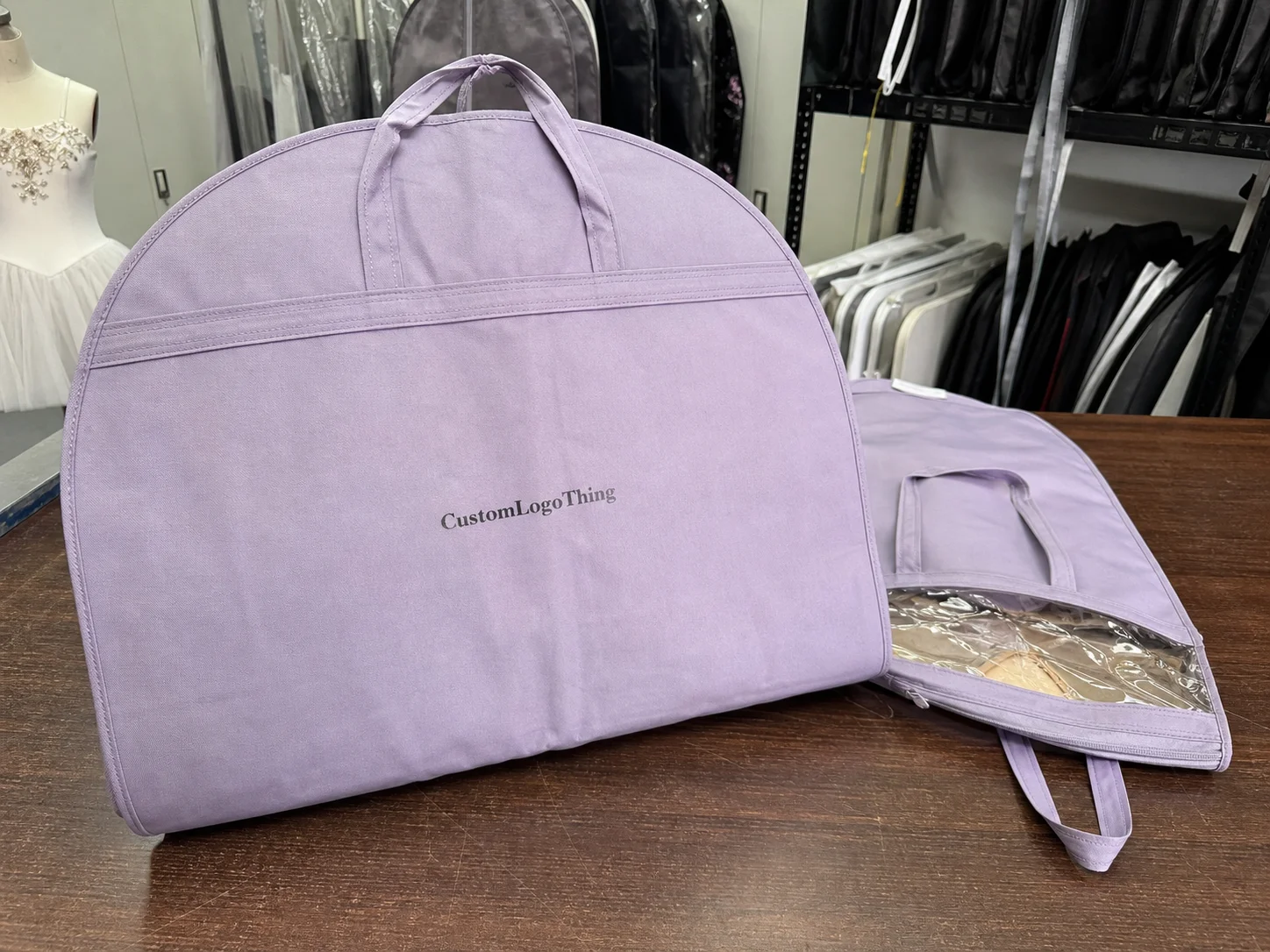
The weak point is usually transit, not the performance itself. A costume can leave the dressing room in perfect shape and still arrive at the venue wrinkled, snagged, or mixed in with someone else's pieces if it is packed loosely or shared across a crowded rack. Personalized Garment Bags for dancers reduce that risk by giving each garment a defined place and a clear identity.
In day-to-day use, the bag has four jobs. It keeps fabric off dirty surfaces, reduces abrasion against zippers and hardware, speeds up sorting, and makes load-in and strike less chaotic. That last part is easy to underestimate. Once several dancers are hanging similar costumes on the same rail, a clear name label or printed role mark prevents a lot of unnecessary searching.
It also helps backstage staff and parents work faster. When bags are labeled consistently, no one has to guess whether the red bag on the end belongs to group A or group B, or whether a particular costume has already been pulled. That kind of clarity matters more when the room is noisy and everyone is moving at once.
Practical buyer takeaway: a garment bag is not just a cover. It is part of the packing system. Visibility, size, and closure style affect daily use as much as the decoration does.
There is a presentation benefit too, but it should be kept in proportion. Personalized garment bags for dancers give a studio a cleaner, more organized look without turning the bag into a pure promotional item. The strongest versions feel intentional because they are easy to read, easy to carry, and durable enough to survive repeated shows.
Production Process and Timeline: From Art File to Delivery
The production flow is simple on paper and still easy to slow down. It starts with quantity, bag style, material choice, decoration details, and deadline. From there, the supplier prepares artwork, sends a proof, waits for approval, produces the bags, packs them, and ships the order. Any missing detail can push the schedule back, especially if the order includes multiple dancer names or different size groups.
Artwork quality is a common source of delay. Low-resolution logos take time to clean up. Lists with inconsistent spelling or formatting cause extra proof rounds. A late change to size or closure can force a new layout, which is costly in both time and labor. Buyers who send a clean file set usually move through proofing faster.
Lead time depends on the construction. A standard bag with a simple name imprint is faster to produce than a multi-color run with windows, pockets, gusseting, or specialty closures. For many custom orders, 12 to 18 business days after proof approval is a realistic planning window, while larger or more complex runs may take longer. If the bags are needed for recital week, a competition weekend, or a tour departure, the safest move is to leave time for proofing before production begins.
There is value in thinking about the order as a small packaging project rather than a loose promo item. Testing methods from groups like the ISTA are useful for understanding how items behave in transit, and packaging education sources such as the Packaging School cover the basics of material choice and fabrication. A garment bag does not need industrial overengineering, but it should be specified with actual handling in mind.
One rule tends to hold: the faster the buyer finalizes the details, the cleaner the proof and production timeline will be. Name lists, dimensions, and decoration method should be settled before the quote request whenever possible. That cuts down on revisions and helps the order move without avoidable friction.
Materials, Closures, and Size Specs That Actually Matter
Material choice changes how the bag performs in the real world. Clear vinyl is useful when quick identification matters and the team needs to see what is inside without opening the bag. Opaque PVC gives a more covered look and can feel more polished, though it adds weight and can trap heat if warm costumes are packed too soon. Nonwoven fabric is lighter and softer in appearance, while heavier synthetic options usually hold up better when the bags are handled every day.
There is no universal best material. The right choice depends on how the bag will be used. A studio that needs fast sorting and visual checks may prefer a clear option. A touring group that wants stronger surface protection and less gloss may do better with a thicker nonwoven or synthetic build. If the bags are stored flat most of the time, structure matters less than if they are loaded, unloaded, and restacked constantly.
Closures matter just as much. Zippers offer the most complete enclosure and protect the garment from dust and stray contact. Snap or hook systems can be quicker to open in a busy backstage setting, though they do not seal quite as fully. If the costumes are bulky, a gusset or expansion panel can keep the bag from compressing the garment against the side seams.
Size is where many first-time buyers miss the mark. Matching hanger length alone is not enough. A long dress may technically fit in a bag that is long enough, but if the width is too narrow, the hem folds too sharply and embellishment gets pressed against the wall of the bag. Shoulder width, skirt volume, sleeve length, and hanger clearance all need to be checked together.
A few add-ons are worth considering because they solve real workflow issues:
- Hanger opening for fast hanging in trailers, dressing rooms, and backstage racks.
- ID window for dancer names, roles, or routine labels that need to stay visible.
- External pocket for hair pieces, tights, garment notes, or accessories.
- Ventilation detail for warm garments that should not be sealed away immediately after use.
| Option | Best Use | Typical Strength | Typical Tradeoff |
|---|---|---|---|
| Clear vinyl | Fast visual identification | Easy sorting, simple inspection | Shows scuffs and can look glossy |
| Opaque PVC | More covered presentation | Stronger surface coverage | Heavier and less breathable |
| Nonwoven fabric | Studio use and lighter travel | Lightweight, softer appearance | Less rigid structure |
| Heavy synthetic | Frequent handling and repeat travel | Durability and shape retention | Higher unit cost in many runs |
Sourcing choices also matter. Even when the bag is not made from paper-based material, buyers who think about responsible material selection tend to make better decisions about durability and replacement frequency. The useful question is not which material sounds premium on paper, but which one fits the actual wear pattern and storage conditions.
Cost, Pricing, MOQ, and What Moves the Unit Price
Pricing is driven by several factors at once, so it helps to read the quote as a set of specifications rather than a single number. Bag size, material thickness, print complexity, decoration placement, hardware, and any extras such as pockets or clear windows all affect the final unit price. A simple one-color name print on a standard bag is much easier to produce than a multi-color design with custom panels and reinforced finishing.
Minimum order quantity changes the math quickly. Smaller runs usually cost more per piece because setup, cutting, and printing labor are spread across fewer units. Larger studio or team orders usually bring the per-unit price down because those fixed costs are absorbed by the whole run. In practical terms, a 25-piece order may fall somewhere around $8.50 to $14.00 per bag, while a 250-piece run with a standard build can land closer to $4.20 to $7.50, depending on the material and decoration details.
There are straightforward ways to control the budget without making the bag feel cheap. Standardize one size where the wardrobe allows it. Keep the number of print colors low. Use a single placement for the logo or name. Skip extra hardware unless it solves a real handling problem. Those decisions lower cost because they remove complexity, not because they strip out function.
It is also smarter to think about landed cost rather than unit price alone. Freight, carton setup, proof changes, and rush handling can move the number in a meaningful way. A low quote that ignores shipping or revision time can end up more expensive than a higher quote that includes the full production path. Buyers should ask for a complete delivered estimate whenever possible.
These are the cost drivers that usually move the price most:
| Cost Driver | Effect on Price | Buyer Control |
|---|---|---|
| Bag size | Larger bags use more material and labor | Choose the smallest size that still fits comfortably |
| Print coverage | More ink and more setup increase cost | Limit colors and keep placement simple |
| Closures and hardware | Zippers, snaps, and hanger components add cost | Add only what improves daily use |
| MOQ | Lower quantities raise unit cost | Group orders across the studio or team |
| Proof changes | Extra revisions can add time and cost | Send clean artwork and a final name list |
For comparisons, the cheapest quote is not automatically the best value. A bag that tears at the seam, fogs up, or arrives with unclear personalization costs more over time because it gets replaced sooner. Personalized garment bags for dancers should last through repeated use, not just look good on the first delivery photo.
Step-by-Step Ordering Plan for Studios and Touring Teams
Start with the wardrobe inventory. Count how many full-length garments there are, how many shorter pieces need storage, and whether the bags are for every dancer or only for specific costumes and travel sets. That first pass keeps the order from drifting into the wrong quantity or the wrong size class.
Then measure the actual garment, not just the hanger. Add room for shoulder width, skirt volume, sleeve length, and embellishment bulk. If the piece has structured trim or layered fabric, it needs more width than a plain garment of the same length. A bag should protect the costume without compressing it.
After that, decide how the bag should read visually. Some teams want a quiet format with the studio name and dancer name in a small, clean placement. Others need high-contrast labeling so assistants can sort quickly in a crowded room. Either approach can work if the names are easy to scan and the design stays consistent across the order.
Gather the artwork and the name list together before sending anything for quote or proof. If there are multiple dancer names, confirm the formatting rules in advance. Uppercase, title case, spacing, and punctuation should be settled early. Those small details often create the most avoidable proof revisions.
- Measure the garments that will actually go in the bags.
- Choose one spec for each wardrobe group.
- Confirm the decoration method and placement.
- Review the proof line by line.
- Approve only after names, size, and colors are checked.
A reusable studio standard saves time later. If the bag size, imprint location, and naming format stay consistent, future reorders become much easier. New dancers can be added without redesigning the whole product, and replacement orders stay aligned with what already exists in the storage rack.
For personalized garment bags for dancers, the proof stage is where control matters most. A careful approval process keeps the order accurate and reduces the chance of missing a recital deadline, a competition load-in, or a tour departure.
Common Mistakes That Lead to Wrinkles, Tears, or Delays
The most common sizing mistake is relying on hanger length alone. That sounds efficient, but it ignores the real dimensions of the costume. Sleeves, skirts, beadwork, and padded hangers can all turn a bag that appears large enough into one that creases the garment at the fold line.
Thin material and weak closures are the next problems to watch. A bag used once for a recital may hold up, but repeated travel exposes weak seams quickly. Zippers split. Film gets cloudy. Stitching pulls when the bag is pulled off a crowded rack. Once that happens, the bag stops protecting the costume and starts getting in the way.
Personalization can also fail if it is too small or too low in contrast. If the name cannot be read in backstage lighting, the bag loses much of its value. The text should be large enough to catch the eye immediately, and the hierarchy should be obvious if the design includes studio name, dancer name, and role information.
Rushed approvals create a different kind of failure. Skipping sample review or approving artwork before the naming list is final almost always leads to preventable corrections. Tight deadlines compress judgment. That usually shows up later as a typo, a placement issue, or a finish that feels less careful than it should.
A basic quality check catches most of the common issues:
- Check garment length and width, not hanger length alone.
- Match the closure style to how the bag will actually be used.
- Review the proof at readable size, not only on a phone screen.
- Confirm name spelling, logo clarity, and placement consistency.
Those steps are simple, but they are where most production problems are prevented. A clear spec sheet and a careful proof review usually matter more than any promotional feature added to the design.
Next Steps for a Fast Quote and Cleaner Packing Workflow
If the goal is an accurate quote on the first pass, gather the facts before requesting pricing. Quantity, bag size, garment type, material preference, decoration details, and delivery deadline should all be ready. If the order includes multiple names, send them in a single clean list so the format stays consistent.
It also helps to establish one standard for the studio or team. A stable spec makes reorders easier, keeps the look consistent across seasons, and cuts down on the back-and-forth that often slows custom work. That matters even more when the bags are being used for mixed groups, replacement pieces, or mid-season additions.
Ask for a proof that shows name placement, logo scale, and any windows or pockets. The proof should answer the real questions before production starts. For personalized garment bags for dancers, this is the point where accuracy is protected, not a formality to rush through.
If you are comparing options, focus on the details that affect daily use: material, closure, size, visibility, and freight. Those are the decisions that shape whether the bag will help or create another handling problem. The best bag fits the costume, fits the schedule, and fits the way the team actually works.
What size personalized garment bags for dancers should I order?
Measure the longest garment first, then add room for the hanger, shoulder width, and any embellishment bulk. If the costume includes sleeves, a full skirt, or layered fabric, choose more width rather than only matching length. A proper fit keeps the garment hanging naturally and reduces hard folds at the zipper or hem.
Which material is best for custom dance garment bags?
Clear vinyl is useful when quick visibility and easy identification matter most. Heavier synthetic or nonwoven options can feel more durable and less glossy for studio use. The right material depends on whether the priority is protection, appearance, weight, or ventilation.
How long does production usually take for personalized dance garment bags?
Production time depends on quantity, decoration complexity, and how quickly the proof is approved. Simple orders usually move faster than multi-color or multi-feature runs. Build in extra time for artwork review, especially if the bags are needed before a recital, competition, or departure date.
What changes the price of personalized garment bags the most?
Size, material thickness, decoration method, and add-ons such as pockets or windows are the biggest cost drivers. Smaller quantities tend to cost more per unit because setup is spread across fewer bags. Simplifying the design and standardizing the spec can reduce unit cost without hurting function.
Can I order one design with different dancer names on each bag?
Yes. Many orders use one base design with variable names or role labels. The important part is to confirm how names will be formatted and proofed so spelling and spacing remain consistent across the full run. That approach works well for studios that want matching bags with individual identification.


