Custom Garment Bags solve a plain but expensive problem: apparel picks up dust, pressure marks, and handling wear quickly, especially during storage, shipping, or retail transfer. A suit that leaves a plant looking sharp can arrive looking like it rode loose in the back of a truck, and that is exactly where the right bag starts paying for itself. For branded packaging and final presentation, the bag is part of the product experience, not an afterthought.
From a buyer’s point of view, the value is practical before it is visual. The right bag helps keep inventory organized, reduces wrinkle damage, and keeps garments in a condition that supports the sale instead of undermining it. In apparel, small details like hanger clearance, closure style, seam strength, and film thickness decide whether the bag helps operations or creates another thing to manage.
The best Custom Garment Bags are matched to the garment length, storage environment, and access frequency. A dry cleaner needs something different from a bridal shop. A uniform program has different requirements than a hotel wardrobe system. That sounds obvious, but people still start with the logo and work backward, then wonder why the bag feels wrong in use.
Below, I’m breaking down the structure, materials, Pricing, Lead Times, and the mistakes that waste money. If you are comparing quotes for bulk orders, this should help you ask better questions and avoid the usual packaging design errors.
Why Custom Garment Bags Matter for Clean, Presentable Product
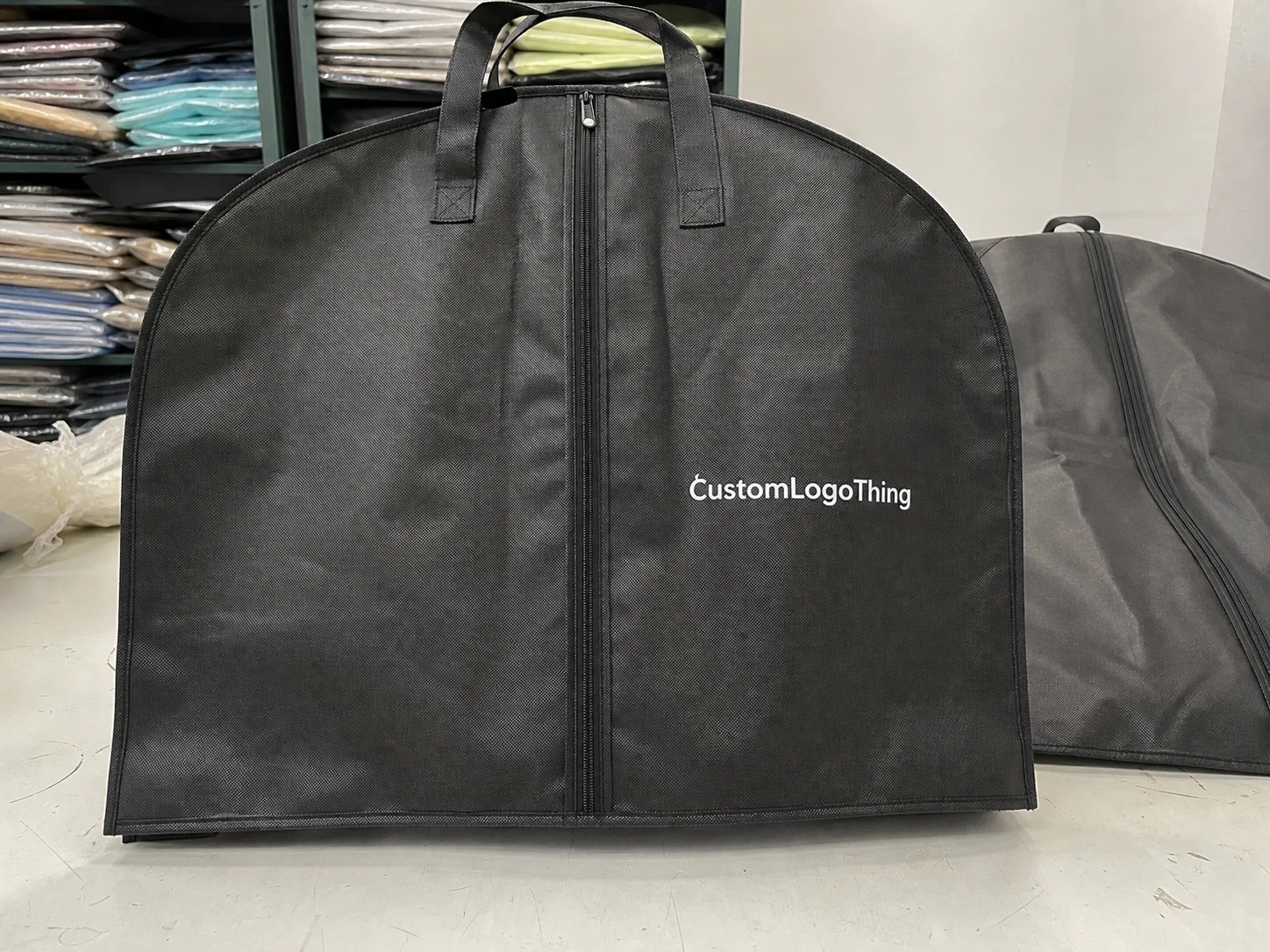
Garments do not need much time to pick up damage. A few minutes of handling can leave dust on dark fabric, and repeated folding creates creases that are hard to remove without steaming or pressing. For premium apparel, eventwear, uniforms, and outerwear, custom garment bags protect the piece between packing, storage, and delivery. That makes them a working part of retail packaging, not just a branding accessory.
In practice, the value shows up in three places. Product condition stays more consistent. Staff can sort and identify inventory faster when bags are printed or color-coded. The buyer gets a cleaner reveal, which matters more than many teams admit. Presentation affects how the garment is perceived before anyone touches the fabric.
Different buyers use them differently:
- Dry cleaners want lightweight protection, simple print, and easy opening.
- Apparel brands care about size consistency, shelf appeal, and brand clarity.
- Bridal shops need longer lengths, wider bodies, and gentler handling for voluminous pieces.
- Hotels and uniform programs usually want reusable construction and easy identification.
- Promotional merch teams often need a clean cover for event delivery and handoff.
The mistake I see most often is treating the bag like a print surface instead of a protective sleeve. A strong graphic does not matter if the garment drags on the bottom seam or if the hanger opening is too tight for the hook. The best result comes from a spec that fits the product, the storage method, and the environment it lives in.
Quick rule: if the bag does not protect the garment, make inventory easier, and improve the handoff, it is not carrying its weight. Nice print is fine. Function comes first.
For buyers building a broader packaging program, it helps to think of these bags the same way you think about other custom packaging products: the item has to store well, ship well, and still look intentional when it reaches the customer.
How Custom Garment Bags Are Built and Printed
Most custom garment bags are simple in concept and annoyingly specific in execution. The structure usually includes a body panel, sealed or sewn edges, a hanger opening, a closure, and sometimes a gusset for extra volume. Each part changes cost, usability, and durability. Skip the details and the quote will look fine right up until production starts.
The body material can be clear, frosted, opaque, or fully printed. Clear bags show the garment and make visual checks easy, which helps in retail or warehouse settings. Frosted versions soften the look while still letting shape and color show through. Opaque bags give more room for branding and hide mixed inventory, which is useful when the bag is part of a larger package branding system.
Printing usually falls into three lanes:
- Flexographic printing for high-volume runs with simple artwork and repeat patterns.
- Screen printing for bold logos, strong ink coverage, and limited-color designs.
- Digital printing for shorter runs, detail-heavy art, or more color variation.
Where the artwork lands matters. A front-panel logo may be visible on a hanger rack, but it can disappear when the bag is folded or packed flat. Back-panel print may help in storage. A header-area logo can work if the bag hangs in a closet, but it may be wasted if the bag spends most of its life in cartons. Good packaging design accounts for how the bag will actually be seen, not how it looks in a mockup.
Before quoting starts, the spec should already be defined. You need finished dimensions, material type, thickness, closure style, print count, print area, and hanger-hole style. If those points are vague, the quote will be vague too. That is not a factory problem. That is a spec problem.
For buyers working with multiple packaging formats, the same discipline applies across product packaging and apparel covers. If the dimensions are sloppy, the whole system gets more expensive.
Materials, Gauge, and Closure Options That Actually Matter
Material choice is where the real tradeoffs live. Polyethylene is the workhorse option for lightweight protection and lower cost. It is common because it does the job without pushing the unit price into awkward territory. PVC and EVA-style materials are used when clarity, structure, or a more premium feel matters. Nonwoven fabric is the softer, reusable option, usually chosen for presentation or repeated handling.
Gauge, or thickness, sounds technical because it is. In buyer terms, though, it is straightforward: thin film costs less and tears more easily, while thicker stock holds up better and feels more substantial. A thin cover may be fine for a one-time transfer. It is a poor choice for repeated access, heavier garments, or storage environments where snagging is likely.
Closures are not a decorative detail. They determine how the garment is accessed and how the bag behaves in use.
- Zipper: Best for reuse and frequent access. More expensive, but practical.
- Snap or button: Useful in softer or reusable styles. Depends on fabric and intended lifespan.
- Hook-and-loop: Easy to open, but not always the best for a premium finish.
- Open-bottom: Low cost and common for short-term protection, but less secure.
Gussets and vents are worth paying attention to. A gusset gives room for bulkier jackets, coats, or gowns, so the bag does not compress the garment into an awkward shape. Venting helps reduce trapped moisture, which matters in humid transit or long-term storage. If you are ordering for a climate-controlled showroom, vents may be less important. If the bags will sit in warehouses or move through multiple distribution points, they matter more.
Here is a practical comparison of common material options for bulk custom garment bags:
| Material | Typical Use | Pros | Typical Bulk Price Range |
|---|---|---|---|
| Polyethylene | Lightweight storage, dry cleaning, short-term protection | Low cost, easy to print, good for high volume | $0.18-$0.45 per unit |
| Clear PVC or EVA-style | Retail display, premium visibility, structured presentation | Clear finish, better shape retention, stronger presentation | $0.70-$1.80 per unit |
| Nonwoven fabric | Reusable garment protection, travel, uniforms, bridal | Softer hand feel, reusable, more premium look | $1.20-$3.50 per unit |
Those numbers move with size, print coverage, and hardware. A longer bag with a zipper, gusset, and two-color logo will not price like a simple clear sleeve. Buyers should expect that. The material spec should match the garment and the operating environment, not the logo concept.
If sustainability is part of the brief, ask about recycled content, packaging waste reduction, and whether any paper components need sourcing support. Standards and certifications matter when you are making claims. For broader reference, see the guidance from ISTA for transit testing considerations and FSC for responsibly sourced paper components. Those are not styling choices. They are procurement guardrails.
Cost, Pricing, and MOQ: What Changes the Quote
Pricing for custom garment bags is usually driven by six variables: size, material thickness, print colors, print sides, closure type, and finishing complexity. If you add custom cutting, vents, gussets, reinforced seams, or special hang-holes, the quote moves up. If you order a simple shape with basic one-color print, the unit cost usually stays lower.
MOQ matters because setup costs need to be spread across the run. That is why a 1,000-piece order can feel expensive per unit while a 10,000-piece order drops sharply in cost. For bulk buyers, the right question is not, “What is the cheapest bag?” It is, “What is the best total landed cost for the quantity I actually need?” Those are not always the same thing.
Here is the quote structure I would expect in a serious proposal:
- Unit price based on the confirmed specification
- Setup or plate charges for print preparation
- Artwork prep if files need correction or separation work
- Sample cost or pre-production sample fee
- Freight and any warehousing or split-shipment charges
- Testing or compliance fees if required by the program
Typical bulk pricing can look like this, assuming standard dimensions and straightforward print:
| Order Size | Simple PE Bag | Structured or Reusable Style | Notes |
|---|---|---|---|
| 1,000-2,500 pcs | $0.25-$0.60 | $1.20-$3.00 | Setup cost has a bigger effect here |
| 5,000 pcs | $0.18-$0.38 | $0.95-$2.20 | Common sweet spot for bulk buyers |
| 10,000+ pcs | $0.14-$0.30 | $0.80-$1.90 | Better pricing if specs stay stable |
Those are not fixed numbers. They shift with market conditions, shipment method, artwork complexity, and whether the bag is truly custom or based on a stock-style format. The point is to help you frame the quote. If a supplier gives you a suspiciously low number without a spec sheet, the quote is probably missing something.
One more thing buyers underestimate: the cheapest unit price can still be the most expensive decision if the bag tears, prints poorly, or arrives in a size that wastes storage space. A slightly higher price is often justified if it reduces damage, labor, and rework. That is how smart product packaging decisions are made.
Process and Timeline: From Artwork to Delivery
A clean production process starts with a complete spec sheet. That means garment type, finished dimensions, target quantity, material preference, closure style, print area, and delivery deadline. If any of those are missing, the project slows down. Nobody can quote or produce accurately from “something like the sample we saw last month.”
The usual sequence is straightforward:
- Spec review and pricing
- Artwork submission and cleanup
- Digital proof approval
- Material confirmation or sample check
- Bulk production
- Inspection, packing, and shipment
Delays usually come from the buyer side. Missing dimensions are common. So are low-resolution logos, vague Pantone targets, and last-minute changes to the closure or print layout. Each change can force a proof revision or tooling adjustment. That is where the schedule slips.
As a planning baseline, simpler stock-style custom runs often move faster than fully custom shapes or reusable constructions with more hardware. Once you add custom tooling, special seams, or multi-color print, lead time expands. A practical rule is to expect production to take roughly 12-15 business days after proof approval for straightforward jobs, then add more time for complex builds. Overseas shipping is separate. Always separate it.
Shipping time is where launch plans go sideways. Transit, customs, and warehouse receiving windows need to be built into the schedule from the start. If a customer expects arrival on a fixed date, the packing program should be planned backward from that date, not forward from the quote.
Ask for a written timeline with milestones. Approval date. Production start. Inspection target. Ship date. That lets procurement, operations, and marketing stay aligned instead of making guesses. It also makes it easier to compare suppliers honestly, which is useful when several quotes look similar but hide different timelines.
If the order is part of a larger branded packaging rollout, coordinate it with any other components early. A garment bag that arrives late is a problem. A garment bag that arrives before the rest of the packaging system is also a problem. Procurement is funny that way.
Common Mistakes That Waste Money or Break the Bag
The first mistake is undersizing. If the garment drags against the bottom seam, folds strangely, or gets compressed into a tight sleeve, the bag is failing its basic job. This is especially painful for long coats, dresses, and uniforms with bulk at the shoulders or hem. You do not need a fancy logo on a bag that crushes the product.
The second mistake is overdesigning the artwork. Too many colors, tiny type, and low-contrast graphics raise cost and reduce readability. A clean logo often performs better than a crowded layout. Simple is not boring here. Simple is cheaper to print and easier to recognize.
The third mistake is choosing a sealed look when the use case needs airflow. Long storage, humid transit, and repeated movement can trap moisture if the bag is too closed up. That does not mean every bag needs heavy venting. It means the airflow decision should match the environment, not the mood board.
The fourth mistake is ignoring hardware and seam quality. A nice front panel does nothing if the zipper binds, the hanger hole stretches, or the side seam splits when the garment is heavier than expected. Weak construction is one of those problems that looks small on paper and irritating in the warehouse.
The fifth mistake is skipping samples. That is where many buyers lose money. One physical sample can expose the wrong length, the wrong hang-hole position, or a print placement issue that never showed up in the PDF proof. For a bulk order, that is cheap insurance.
My bias: sample early, then argue about details. If the sample is wrong, the whole run is wrong. Paper approval is not the same thing as a bag that actually works.
There is also a broader packaging lesson here. The better the fit between the bag and the garment, the less waste you create in labor, storage, and damage control. That is true whether you are ordering retail packaging, warehousing uniforms, or building a presentation kit alongside other Custom Packaging Products.
Next Steps: Spec, Sample, and Order With Fewer Surprises
Start with a one-page spec sheet. Keep it plain. Garment type. Finished size. Quantity. Material. Closure. Print area. Delivery deadline. If you do not know one of those items yet, say so directly. Vague specs waste more time than almost anything else in procurement.
Then compare quotes on the same basis. Same dimensions. Same material. Same print count. Same closure. Same pack-out. That is the only fair comparison. Otherwise, one supplier is quoting a thin open-bottom bag and another is quoting a reusable zippered cover, and the numbers are meaningless.
Ask for at least one sample or a pre-production proof, especially if the program uses a custom size or a reusable structure. If the bag will be packed flat, confirm carton count and folded dimensions too. Warehouse space is not free, and a “good” price can become a messy receiving problem if the cartons are oversized.
It also helps to ask how the bags will be packed for shipment. Inner packs, carton count, pallet count, and storage footprint all matter once the order lands. That is where the quote meets reality. Buyers who handle that early avoid a lot of unnecessary friction later.
For buyers building a wider apparel program, custom garment bags should fit into the same system as the rest of the packaging design. They should protect the product, support the brand, and keep operations simple. If they do those three things, the bag is doing its job.
That is the basic standard I use: do not pay for decorative complexity unless it improves use. For bulk orders, custom garment bags should make the garment easier to ship, easier to store, and better to present. If they can do that without driving up waste or causing handling issues, you have the right spec.
Frequently Asked Questions
What sizes work best for custom garment bags?
Match the finished size to the longest garment plus hanger clearance, not just the folded width. Coats, dresses, and uniforms usually need extra length so the hem does not catch or crease. If the bag will ship flat, account for fold space and carton dimensions too. That prevents a size mismatch that looks small on paper and expensive in the warehouse.
What material is best for custom garment bags?
Polyethylene is the common choice for lightweight, cost-controlled protection. Choose thicker film or reinforced construction if the bag will be reused often. Use a more structured material when presentation matters as much as protection. There is no single best option; the right choice depends on the garment, handling frequency, and storage environment.
How do custom garment bags affect pricing?
Size, thickness, print colors, closure style, and MOQ are the main drivers. Extra setup work and custom cutting can raise the quote faster than buyers expect. Higher volume usually lowers unit cost, but only if the minimum fits your needs. If the spec is not locked, the quote is only a rough guess.
How long does production usually take for custom garment bags?
Simple runs can move faster than fully custom constructions with special features. Artwork approval and sample sign-off often control the schedule more than the factory run itself. Shipping time should be added separately, especially for overseas orders. For bulk programs, custom garment bags usually need enough lead time for proofing, production, and transit.
What should I ask before placing an order for custom garment bags?
Ask for a full spec breakdown with dimensions, material, closure, print details, and MOQ. Confirm sample availability, lead time, and whether setup or plate charges apply. Verify how the bags will be packed and shipped so they fit your receiving workflow. If you get clear answers to those points, the order is much less likely to surprise you later.


