Buyer Fit Snapshot
| Best fit | Custom Mailer Box Inserts projects where brand print, material claims, artwork control, MOQ, and repeat-order consistency need to be specified before quoting. |
|---|---|
| Quote inputs | Share finished size, material target, print colors, finish, packing count, annual reorder estimate, ship-to region, and any compliance wording. |
| Proofing check | Approve dieline scale, logo placement, barcode or warning zones, color tolerance, closure strength, and carton packing before bulk production. |
| Main risk | Vague material claims, crowded artwork, missing packing details, or unclear freight terms can make a low unit price expensive after revisions. |
Fast answer: Custom Mailer Box Inserts: Film, Print, MOQ, and Carton Packing should be specified like a repeatable production item. The safest quote records material, print method, finish, artwork proof, packing count, and reorder notes in one written spec.
Production checks before approval
Compare the actual filled-product size with the drawing, then confirm tolerance on folds, seals, hang holes, label areas, and retail display edges. Reserve space for logos, QR codes, warning copy, and material claims before decorative graphics fill the panel.
Quote comparison points
Review material grade, print process, finish, sampling route, tooling charges, carton quantity, and freight assumptions side by side. A quote is only useful when the supplier can repeat the same color, closure quality, and packing count on the next order.
Custom Mailer Box Inserts: Design, Cost, and Fit Guide
Custom mailer box inserts look tiny on a spec sheet. They are not tiny in practice. I have seen plenty of mailers that looked clean on the outside, then showed up with a scuffed label, a crushed corner, or a product that shifted just enough to ruin the reveal. That is the whole job of custom mailer box inserts: hold the product in place, protect the finish, and make the unboxing feel deliberate instead of improvised.
For a packaging buyer, that matters on two fronts. The insert has to stop movement during transit. It also has to support the brand story the customer sees the second the box opens. Good custom mailer box inserts do both. They turn dead space into structure, which is a lot better than stuffing a box with loose fill that settles, shifts, and looks rushed. In product packaging, that difference can decide whether the customer remembers the package or forgets it five seconds later. For brands comparing Custom Packaging Products, this is usually where the real value starts showing up.
What follows is a practical look at fit, protection, cost, and production. If you are comparing custom mailer box inserts against generic filler, or trying to decide between paperboard, molded pulp, foam, or corrugated, appearance is only part of the answer. The real question is how the pack behaves under pressure, how fast it moves through production, and what it tells the customer before they touch the product.
What Custom Mailer Box Inserts Actually Do
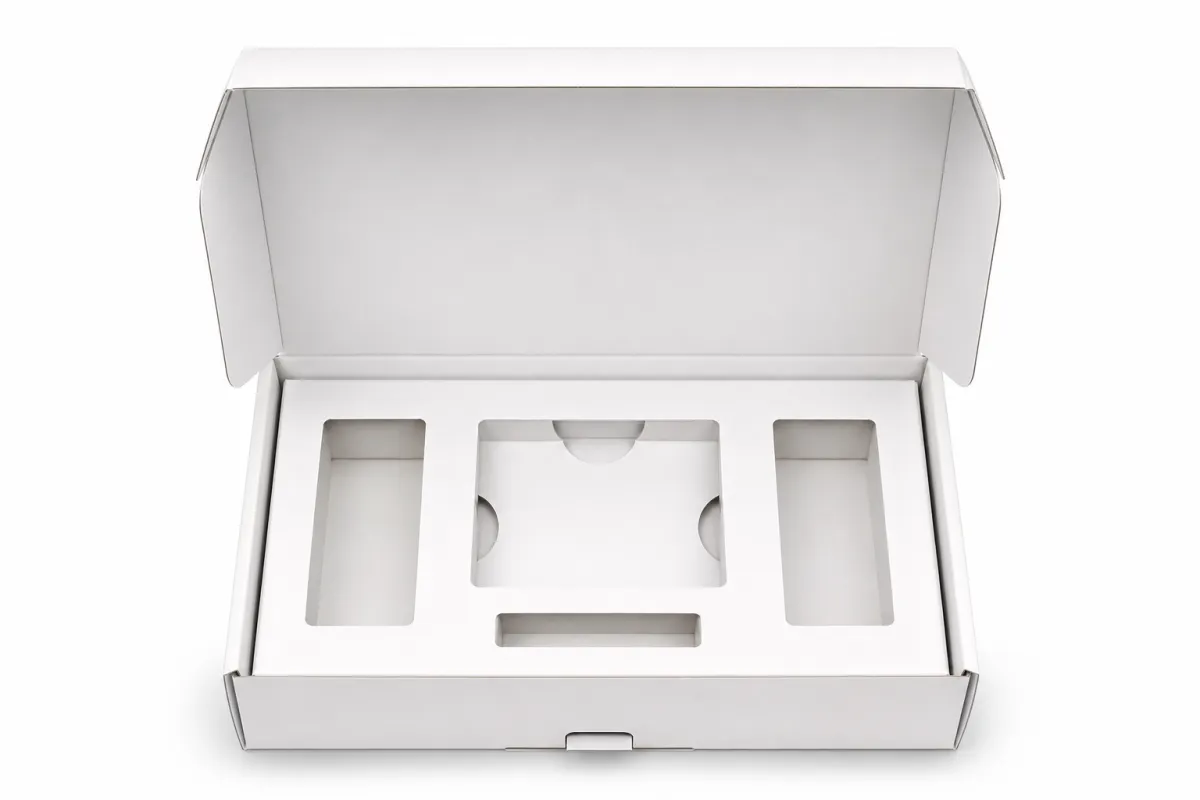
A shipment can look perfect outside and still fail inside the box. That is the part many brands miss. A product only needs to move a little before the damage starts stacking up, especially when a parcel takes a corner drop or gets smashed under another carton. Custom mailer box inserts stop that movement. They stabilize the product, control the reveal, and cut the odds of scratches, dents, chips, or crooked placement.
Void fill can help. It is not the same thing. Paper crinkle, kraft paper, and air pillows take up room, but they do not create a precise cavity or force the product into one fixed position. Purpose-built custom mailer box inserts do. They create a repeatable fit, and repeatability matters when the same SKU ships hundreds or thousands of times. A candle, a skincare duo, and a premium accessory kit may all fit the same mailer footprint, but each one needs a different restraint pattern. One item needs side pressure. Another needs a reveal tray. Another needs two layers of retention so the parts do not knock into each other.
The brand value is real too. In branded packaging, the insert is often the first tactile moment after the outer flap opens. That first touch sets the tone fast. If the product sits centered, level, and protected, the package feels intentional. If it rattles or sinks into loose filler, the box feels cheaper than the item inside. Custom mailer box inserts make the design feel finished, not thrown together.
From a packaging buyer's point of view, the cleanest way to think about custom mailer box inserts is as a control system. They manage movement, spacing, orientation, and presentation at the same time. That is a lot to ask from one component, which is why the best insert usually balances protection with material efficiency instead of just adding thickness.
Custom mailer box inserts also matter in retail packaging programs that use the same pack for e-commerce and shelf display. The insert can keep multiple items facing the right direction, separate glass from metal, and keep accessories from sliding under the main product. When that works, the package looks cleaner, warehouse handling gets easier, and the brand gets more consistency from shipment to shipment.
How Custom Mailer Box Inserts Work in Transit
The physics are not glamorous. They are also the whole story. Custom mailer box inserts work by combining compression, friction, immobilization, and shock absorption. Compression keeps the product seated. Friction keeps it from sliding. Immobilization keeps components from colliding. Shock absorption spreads out energy from a drop or vibration event so the product does not take the full hit at one point. If one of those pieces is weak, the pack starts losing control.
That is why insert geometry matters so much. A cavity that is too loose lets the product rattle. A cavity that is too tight can crush corners, warp closures, or leave rub marks on coated surfaces. Tabs, fold lines, locking arms, and retention points all change how firmly the item sits inside the mailer. In practical terms, custom mailer box inserts should hold the product with enough pressure to stop movement, but not so much that the customer has to fight it out of the box or damage the finish during removal. Nobody wants a premium product that arrives looking like it had a rough commute.
Different insert formats solve different problems:
- Die-cut paperboard works well for lightweight items, cosmetics, and products that need a clean presentation.
- Corrugated partitions help when you need segmented compartments or stronger edges.
- Molded pulp gives a structured, fiber-based look and handles many mid-range protection needs.
- Foam is often chosen for fragile or high-value items that need strong cushioning and exact retention.
- Layered structures mix materials when one product needs a rigid top layer and a softer base or cradle.
Single-item shipments and multi-item kits are different engineering problems. A single candle insert can focus on centering, crush resistance, and top-to-bottom restraint. A two-piece skincare set needs separation, especially if one component has glass and the other has a pump or cap that can loosen in transit. Once a package carries more than one SKU, the insert starts acting like a small interior architecture system. Custom mailer box inserts are often the only thing standing between a neat kit and a carton of loose parts.
Testing should not be optional. A good insert should survive drop, vibration, and compression checks before production starts, even if the run is small. If a brand ships through parcel networks, the pack should be judged against realistic abuse. The ISTA family of transit test methods is useful because it focuses on the events that actually happen in distribution: drops, vibration, and rough handling. That does not mean every brand needs a full lab program. It does mean custom mailer box inserts should be tested against more than a desk-level fit check.
"If the insert cannot survive a realistic transit simulation, it is not a protective design yet. It is only a shape."
Key Factors That Shape Custom Mailer Box Inserts
The first input is usually product dimensions, but the real spec goes beyond length, width, and height. You also need tolerances, weight distribution, closure style, label placement, and any protective wrap that ships with the item. A bottle in a carton sleeve is not the same as the naked bottle. A jar with a tamper band needs more clearance at the top. If the product has one heavy side, the insert may need asymmetric support to stop tilt. In other words, custom mailer box inserts should be designed around the shipped form, not the CAD file alone.
Material choice comes next. Paperboard is clean, printable, and efficient for many light to medium-weight products. Corrugated board offers more structure and can handle a bit more abuse. Molded pulp often appeals to sustainability-minded buyers because it uses fiber-based construction and gives a strong tactile identity. Foam gives the highest cushioning in many use cases, but it raises questions about appearance, recycling, and cost. The best material depends on the product, the brand story, and the distribution channel. For boards and fiber-based materials, FSC-certified options are worth reviewing through the FSC framework if certified sourcing matters to your program.
Fragility and surface sensitivity are the next two filters. Glass, ceramics, and metal finishes can suffer from corner impact or surface scuffing. Cosmetics often need the insert to prevent cap loosening and label abrasion. Electronics need clear retention points and sometimes separation from accessories. Food items may need inserts that support hygiene, reduce crushing, and keep a premium look without trapping debris. Custom mailer box inserts are not one-size-fits-all because the failure modes are not one-size-fits-all either.
Brand goals shape the build too. Some companies want a luxury reveal, where the product sits high in the cavity and comes out in a deliberate sequence. Others care more about compact shipping size and warehouse speed. A sustainability-led brand may prefer a fiber insert that ships flat and folds quickly. A product line with multiple SKUs may need one insert family that can flex across sizes without redesigning every cavity from scratch. That is where packaging design becomes more operational than visual. Custom mailer box inserts need to support branded packaging, but they also have to make packing faster rather than slower.
Operational factors matter more than many teams expect. If the insert takes too long to assemble, labor costs can eat the savings from a cheaper board. If it arrives pre-formed, freight and storage may rise. If it must ship flat, the crease pattern and locking tabs need to be simple enough that assemblers can build the unit correctly at speed. For brands exploring broader Custom Packaging Products, this is usually the point where the best decision becomes a production decision, not just a design decision.
Step-by-Step Process and Timeline for Custom Mailer Box Inserts
Good insert programs start with measurement, not artwork. Gather the product's exact dimensions, the shipped configuration, the loading orientation, and any accessories that travel with it. If the product has a cap, sleeve, pump, cord, or leaflet, include those too. For custom mailer box inserts, a 1-2 mm oversight can change how a cavity grips the item, especially once labels, wraps, or closures are added. That tiny gap is the difference between snug and sloppy.
The usual workflow looks like this:
- Measurement and sample review - Collect product specs, weights, and a real sample if possible.
- Concept development - Choose the insert style, cavity layout, and board grade.
- Dieline creation - Map the flat pattern, folds, cuts, locking points, and tolerances.
- Prototype sampling - Build a physical sample to verify fit and assembly.
- Revision rounds - Adjust cavities, score lines, or retention zones if the sample binds or rattles.
- Proof and approval - Confirm artwork, print placement, and structural details.
- Production setup - Create tooling, conversion settings, and packing specifications.
- Final manufacturing - Run the approved version at scale and inspect output.
That sequence sounds simple, but each step can stretch if the product is unusual. A basic fold-and-lock paperboard insert may move from sample to production fairly quickly, often within 10-14 business days after final approval if tooling is straightforward and materials are on hand. A more complex multi-compartment insert, a printed insert with exact registration, or a build that needs multiple test rounds can take longer. Custom mailer box inserts tend to reveal their true timeline in the prototype stage, not the quote stage.
Approval checkpoints keep the project from drifting. Structural review confirms that the insert actually supports the product. Print proofing makes sure brand colors, copy, and graphics match the rest of the packaging design. If the product is fragile, a transit simulation may be worth doing before mass production. In some cases, a simple drop test and compression check catch issues that would have become costly returns later. From a packaging buyer's point of view, a few extra days in testing is usually cheaper than replacing broken units after launch.
Timeline also depends on whether the insert ships flat or pre-formed. Flat inserts usually take less storage space and can be built on the packing line, but they add assembly time. Pre-formed inserts can be faster at fulfillment, but they may cost more to ship and store. Custom mailer box inserts often sit right on that tradeoff line, which is why the best choice is the one that fits the brand's labor model and warehouse reality.
Custom Mailer Box Inserts: Cost and Pricing Factors
Pricing changes fast once a design moves from generic to custom. The main drivers are material, complexity, print coverage, tooling, and quantity. Custom mailer box inserts that use a simple die-cut layout and standard board will usually price lower than multi-compartment inserts with tight tolerances or special finishes. The reason is simple: every extra cut, fold, locking feature, or print pass adds labor, setup, and waste risk. If you want the short version, complexity costs money. Shocking, I know.
Volume matters a lot. Prototype and setup costs do not disappear on a short run, so small orders often carry a higher unit price. At larger volumes, the cost per insert can drop sharply because tooling, conversion setup, and material purchasing get spread across more units. That is why a quote for 500 pieces can look very different from a quote for 5,000. Brands comparing custom mailer box inserts should always ask for unit pricing at multiple quantity breaks, not just one number.
Here is a practical comparison for common insert types. These are planning ranges, not guarantees, because board grade, cavity count, print coverage, assembly method, and regional labor rates all change the final number.
| Insert Type | Typical Use | Approx. Unit Cost at 5,000 Units | Strengths | Tradeoffs |
|---|---|---|---|---|
| Die-cut paperboard | Lightweight beauty, apparel, accessory, and gift items | $0.18-$0.32 | Clean look, light weight, strong print options | Less cushioning than heavier structures |
| Corrugated insert | Multi-item kits, moderate protection needs | $0.24-$0.42 | Good structure, efficient for compartments | Bulkier than paperboard, more material volume |
| Molded pulp insert | Eco-focused product packaging, structured support | $0.30-$0.55 | Fiber-based, strong positioning, natural tactile feel | Tooling can raise upfront cost, shape limits exist |
| Foam insert | Fragile or premium items that need strong cushioning | $0.45-$1.10 | High protection, precise fit, strong shock absorption | Recycling and presentation concerns for some brands |
Tooling and setup fees deserve attention too. A simple cutting die may be modest, while a complex cavity layout or molded shape can raise upfront costs. For short runs, that overhead can dominate the quote. For larger runs, it fades into the background. Brands often miss this because they focus only on unit price. Custom mailer box inserts should be evaluated as a full program cost, including samples, setup, assembly, and the damage reduction they should deliver.
There are hidden costs as well. If a cheaper insert leads to even a small increase in breakage or returns, the savings can disappear quickly. If the insert slows packing by a few seconds per unit, labor cost rises. If the fit is loose, extra void fill may be needed, which adds material and packing time. For a brand shipping 10,000 orders a month, even a $0.12 difference in unit cost is $1,200 before labor and returns are counted. That is why value beats sticker price. The right custom mailer box inserts can cost a little more and still save money overall because they reduce replacements, complaints, and repacks.
Cheap does not have to mean flimsy, and premium does not have to mean wasteful. The better question is whether the insert solves the real shipping problem with the fewest materials and the least assembly friction. That is the lens I would use for any custom mailer box inserts purchase decision.
Common Mistakes When Specifying Custom Mailer Box Inserts
The first mistake is measuring the product without measuring the ship-ready product. A bottle might be 70 mm wide on the shelf, then 72 mm wide once the label, shrink band, or cap is added. A jar might need extra clearance because the lid flange sticks out farther than the body. If those details are ignored, custom mailer box inserts arrive with cavities that are just a little off, and that little bit becomes a problem at scale.
The second mistake is overengineering. It is easy to design an insert that looks clever and feels expensive, but is too rigid, too complicated, or too slow to assemble. More board, more folds, and more cutouts are not automatically better. Sometimes they create a worse user experience because the customer has to work too hard to remove the item, or the fulfillment team spends too long folding inserts into shape. Custom mailer box inserts should protect the product, not turn into a puzzle.
Under-testing is another common miss. A prototype that looks great on a table can fail once it has gone through a drop, a vibration cycle, or a change in temperature and humidity. Paper-based materials can shift behavior when conditions change. Adhesives can loosen. Foam can compress differently after repeated handling. If a pack only passes a visual inspection, it is not finished. ISTA testing guidance exists for a reason: transit is rougher than most design rooms.
Branding mistakes are less technical, but they still hurt. Some inserts protect the product well and still disappoint because they hide the item too deeply, create a clumsy reveal, or break the visual rhythm of the unboxing. A premium cosmetic set may need the product face visible as soon as the flap opens. A gift kit may need a layered reveal order so the recipient sees one item first and the second item second. Custom mailer box inserts can do that, but only if the structure and the brand story are designed together.
Production blind spots matter too. A design that seems straightforward in sampling can become inconsistent in conversion if the assembly instructions are vague, the die lines are crowded, or the folds are too similar to tell apart on the line. In busy operations, even a few seconds of confusion can lead to errors. If the insert has to be assembled by hand, the fold sequence should be obvious. If different operators can build it differently, your finished packs will drift. That is not an abstract design issue. It is a fulfillment problem created by the insert.
- Measure the shipped form - not just the bare product.
- Check real tolerances - labels, bands, caps, and wraps change the fit.
- Test for transit abuse - drops and vibration reveal weak spots.
- Balance presentation with speed - a beautiful insert that slows packing is still a cost.
- Write assembly instructions - clarity saves labor and keeps output consistent.
Expert Tips and Next Steps for Better Insert Design
Design from the product outward. That sounds obvious. It is where many custom mailer box inserts go wrong. Teams start with the box size, then force the item into the leftover space. The better move is to lock in the product dimensions, the loading direction, the reveal sequence, and the target customer experience before the cavity is drawn. Once that is set, the insert can be built around the shipment instead of making the shipment adapt to the insert.
I also recommend testing three directions early: a cost-focused version, a balanced version, and a premium version. The cost-focused option shows how lean the pack can get without becoming unsafe. The balanced option often becomes the production baseline. The premium option shows how far the unboxing and presentation can be pushed before the economics stop making sense. For custom mailer box inserts, comparing those three side by side usually exposes the smartest compromise faster than debating ideas in the abstract.
Test with real fulfillment conditions, not just desk checks. That means real product samples, real loading speed, and, if possible, the same people or processes that will pack orders at scale. A design that seems easy in a controlled sample room can behave very differently once workers are moving fast, cartons are stacked nearby, and the insert has to be folded hundreds of times a day. Brands often think they are testing the insert. In practice, they are testing the whole shipping system.
A simple insert brief saves time. It does not need to be fancy. It just needs to list the SKU count, product weight, fragility level, surface sensitivity, sustainability goals, target budget, assembly method, and whether the insert must ship flat. If you want to compare options across Custom Packaging Products, that brief becomes the shared language between packaging, operations, and sourcing. If secondary shipments are needed, it may also help to think about how the insert program fits with Custom Poly Mailers or other outer-pack formats in the same brand system.
"The smartest insert is rarely the thickest one. It is the one that protects the product, packs fast, and still makes the unboxing feel intentional."
One more practical point: do not separate the insert conversation from the larger packaging design conversation. Custom mailer box inserts affect shipping cost, labor cost, presentation, and complaint volume. That makes them a product packaging decision, a retail packaging decision, and a branded packaging decision all at once. If the insert is treated as a minor accessory, the final pack often ends up underperforming. If it is treated as part of the core system, the result is usually cleaner, safer, and easier to scale.
Start by auditing your current pack. Look for movement, scuffing, slow assembly, damaged corners, and oversized voids. Then request a prototype, test it with the actual product, and refine the custom mailer box inserts before you commit to scale. That sequence is slower than guessing, but far cheaper than fixing a bad insert after orders are already moving.
FAQ
How do I choose the right size for custom mailer box inserts?
Measure the product in its shipped condition, not just its naked dimensions. That means including closures, wraps, sleeves, labels, tamper bands, and any accessory that travels in the same cavity. Then leave enough clearance for loading while still stopping movement in transit. A prototype built from real samples is the best way to confirm fit because small tolerances can change how custom mailer box inserts perform once the pack is assembled repeatedly.
What materials work best for custom mailer box inserts?
Paperboard and corrugated board are strong choices for lightweight to medium-weight products because they are efficient, printable, and familiar to assemblers. Molded pulp is a strong option for eco-focused programs that want a fiber-based feel and structured support. Foam is useful for high-fragility items, though brands should weigh appearance, recyclability, and cost before choosing it. The best material is the one that fits the product, the brand, and the distribution channel without forcing the rest of the pack to compensate.
How much do custom mailer box inserts usually cost?
Pricing depends on material, cavity count, tooling, print coverage, and order quantity. Simple folded designs are usually more affordable than intricate multi-compartment structures, while premium materials and special finishes raise cost. Short runs usually carry higher unit prices because setup fees are spread across fewer units. The best comparison is not just the per-unit quote; it is the full cost of custom mailer box inserts plus the labor, damage, and return costs they help avoid.
How long does it take to produce custom mailer box inserts?
Simple designs can move quickly if measurements are final and no special tooling is needed. More complex inserts need time for sampling, revisions, approval, and production setup. Build in room for testing because the first prototype is often a draft, not the final version. In practice, the timeline depends on how many times the design has to be corrected before the fit, presentation, and assembly all line up.
Are custom mailer box inserts better than void fill?
For fragile or premium products, inserts usually provide better positioning, better presentation, and more consistent protection than loose fill. Void fill can help occupy space, but it does not control product orientation or reveal order nearly as well. If the goal is to reduce damage and improve the customer experience at the same time, custom mailer box inserts usually do a better job than generic filler because they turn empty space into structure instead of just padding it.
For brands that care about repeatable fit, lower breakage, and a more polished opening moment, custom mailer box inserts are usually the stronger long-term choice.
The practical next step is simple: pull one real product sample, measure the shipped version, and prototype the insert around that sample before you approve production. If the fit, assembly speed, and transit behavior all hold up, you have a package that can scale. If not, fix the cavity now. Not after the returns start.

