For a clothing brand, custom Mailing Address Labels do more than identify where a package is going. They are often the first branded surface a customer sees, sometimes before the box is opened and long before the garment has a chance to carry the experience on its own. That makes them a small component with an outsized role in package branding, delivery accuracy, and the overall finish of a shipment.
Teams sometimes overlook mailing labels because they appear simple, but production has a way of exposing every small assumption. A label stock that performs well on paperboard may lift on a poly mailer. A layout that looks balanced on a proof may crowd once the full address block is inserted. A weak adhesive can turn a clean launch week into a reprint and repack problem. In practice, good custom Mailing Address Labels help apparel brands keep seasonal drops moving, reduce misdelivery risk, and make packaging feel considered from the outside in.
Why custom mailing address labels matter for clothing brands
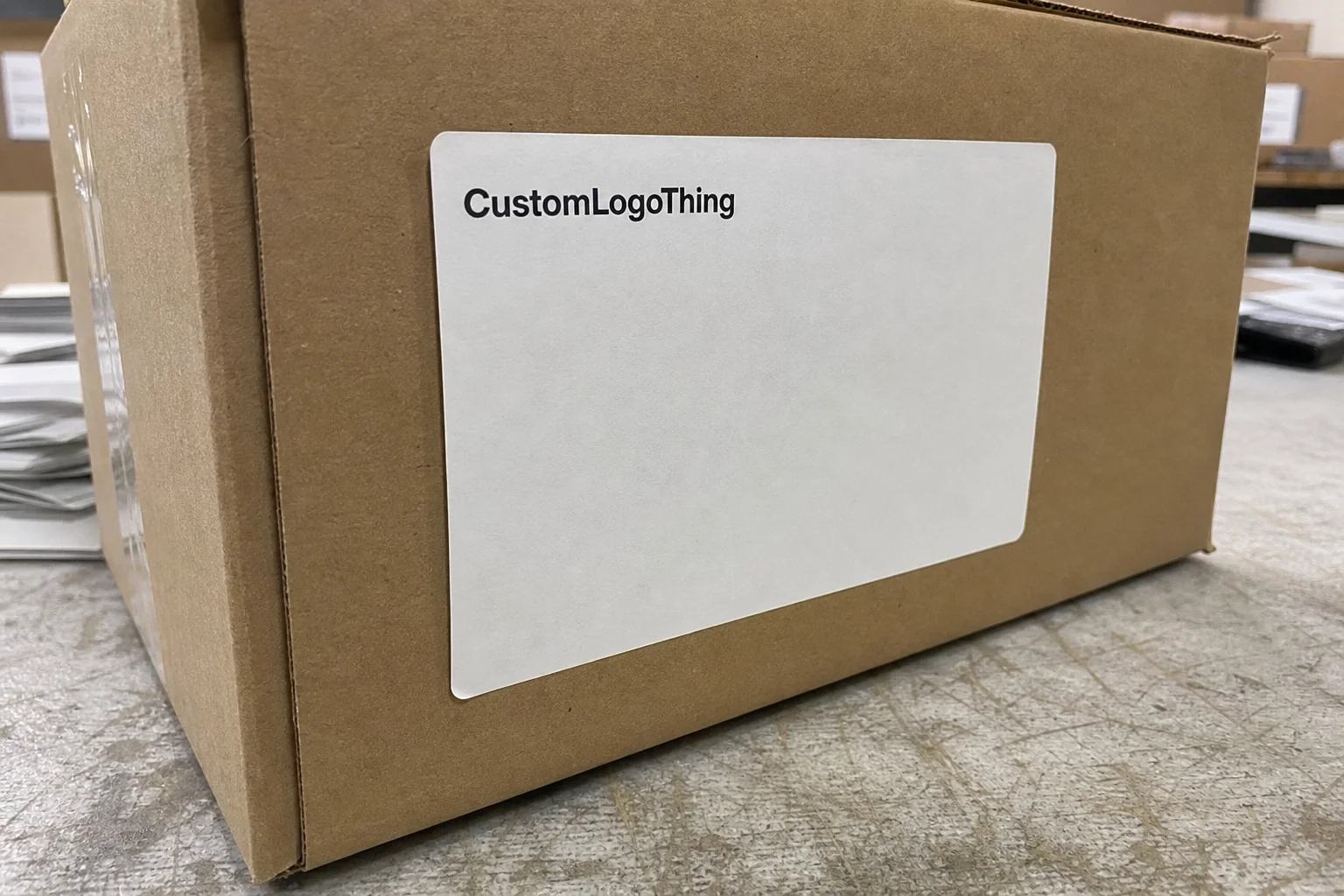
The role of a mailing label is partly functional and partly perceptual. A plain shipping sticker says “package.” A well-made address label says “brand.” That distinction matters in apparel, where presentation competes with utility every time a box or mailer leaves the warehouse. For many direct-to-consumer brands, custom mailing address labels are the only custom print element visible during transit, which gives them more influence than their size suggests.
Clothing brands use these labels on corrugated boxes, poly mailers, return envelopes, and sometimes on inner cartons for wholesale or subscription shipments. The label may carry the sender name, return address, recipient details, internal routing codes, and a logo or color treatment. When the design is disciplined, the package feels aligned with the rest of the packaging system, whether that includes printed cartons, inserts, tissue, or a simple branded mailer.
There is also a very practical side. A clear mailing label reduces misdelivery risk, supports scanability, and lowers the chance that a pack-out team reaches for the wrong parcel during a busy launch. If you are shipping hundreds or thousands of units during a drop, even a small reduction in reprints matters. One mislabeled batch can cost more in labor and freight than the labels themselves.
It helps to separate three label types that are often treated as interchangeable:
- Shipping labels carry carrier data, barcodes, and tracking information.
- Return address labels identify the sender and usually live on the outer package.
- Branded mailing address labels combine address data with custom design elements for a more finished look.
That distinction matters because the right specification depends on the use case. A FedEx or UPS shipping label has different requirements than a branded sender label on a matte mailer, and a retail-looking address label does not need to behave like a logistics label with a scannable barcode. If you are comparing labels alongside Custom Labels & Tags or broader Custom Packaging Products, the mailing label should fit the packaging system rather than compete with it.
“A mailing label is small, but it has to work hard. It needs to look right, stick right, and stay readable after the package gets handled more than once.”
That is especially true for fashion brands that ship across more than one packaging format. A label that performs beautifully on a kraft box may fail on a glossy poly mailer. A format that looks polished on a boutique order may not survive a warehouse rush. The right choice keeps the operation moving and protects the customer experience at the same time.
How the label format and adhesive work
Every label is really a stack of material decisions. The main components are face stock, adhesive, liner, print method, and finish. Each one affects how the label looks, how it applies, and how long it stays attached. For clothing shipments, that can mean the difference between a label that survives distribution and one that curls at the corners after a day in transit.
Paper labels usually cost less and work well in dry, controlled shipping environments. They can be a strong fit for short-run apparel campaigns, branded thank-you packaging, and standard corrugated boxes. Synthetic labels, often polypropylene or polyester-based, cost more but offer better resistance to moisture, scuffing, and handling abrasion. If your brand ships in humid conditions, uses chilled fulfillment, or wants a more durable exterior, synthetic material is often worth the additional cost.
Adhesive choice matters just as much. Permanent adhesive is usually the safer option for shipping boxes and poly mailers because it creates a stronger bond and resists edge lift. Removable adhesive can be useful when the label needs to come off later, but that is less common for outbound apparel parcels. On slick mailers, recycled kraft surfaces, and textured cartons, adhesion should be tested before full production. That test is not glamorous, but it avoids a lot of trouble.
Finish changes both readability and perception. Matte finishes reduce glare and usually make text easier to scan under warehouse lighting. Gloss can sharpen color and make a label feel more premium, though it may show reflections depending on the lighting and the angle. Thermal-compatible formats matter too if the label will be printed in a fulfillment workflow rather than preprinted in one batch.
There is also a design and prepress side that buyers often underestimate. If the file lacks proper bleed, the cut line can drift visually. If the address block sits too close to the edge, trimming tolerance becomes a problem. In production, a few millimeters matter. For that reason, it helps to build label artwork with a clear safe zone, especially if you are ordering multiple sizes for different pack-out stations.
Here is a practical comparison of common options:
| Option | Typical use | Advantages | Tradeoffs | Typical cost impact |
|---|---|---|---|---|
| Paper, matte, permanent adhesive | Standard mailers and boxes | Good readability, lower cost, clean look | Less moisture resistance | Lowest unit cost |
| Synthetic, matte or satin finish | Higher-handling shipments | Durable, scuff-resistant, moisture tolerant | Higher price per unit | Moderate increase |
| Removable adhesive label | Temporary identification | Can be removed with less residue | Less secure for outbound parcels | Usually similar or slightly higher |
| Thermal-compatible label stock | Fulfillment-center workflows | Fast application, efficient variable printing | Requires compatible printer setup | Depends on material and roll format |
From a packaging buyer’s point of view, the best label format is the one that fits the actual surface and handling conditions, not the one that looks best in a mockup. A Label for Retail packaging, subscription boxes, and outer shippers can all behave differently even when the artwork is identical.
For broader packaging standards, it can help to review guidance from groups such as ISTA for transit testing and performance expectations, especially if your labels are part of a larger shipment system that includes inserts, cartons, and secondary packaging.
Key factors that affect cost, pricing, and unit economics
Pricing for custom mailing address labels usually comes down to five variables: size, material, adhesive strength, print coverage, and quantity. Bigger runs almost always reduce the unit cost, but only if the brand can actually use the inventory before a warehouse move, an address change, or a design refresh forces a reprint. That is the hidden trap. Cheap per unit can become expensive in storage and waste.
As a rough working range, simple paper labels for higher quantities may land around $0.03-$0.10 per label, while more specialized synthetic or heavily printed versions can move into the $0.10-$0.30 range or beyond depending on size, finish, and order structure. Setup charges, proofs, freight, and rush fees can matter just as much as the sticker price itself. If you are comparing vendors, ask for an apples-to-apples quote that includes all of those items.
The biggest hidden costs tend to show up after approval:
- Setup and prepress fees for custom sizes or complex artwork
- Proofing charges if physical samples are required
- Shipping costs for heavy cartons of labels or split deliveries
- Rush production fees when launch timing slips
- Waste from incorrect dimensions, weak adhesion, or address layout issues
Unit economics also shift with brand positioning. If you sell luxury knitwear or gift-ready apparel, a better finish can be justified because it supports the rest of the package experience. In that case, the label is part of the perceived value of the shipment, not just an identifier. For a high-volume basics brand, cost control may matter more than tactile finish, especially if the label is tucked on the underside of a poly mailer and never seen up close.
Here is a practical way to think about it: if a label upgrade adds $0.04 per shipment but reduces reprints, improves packaging consistency, and fits a premium product packaging strategy, it can pay for itself faster than the invoice suggests. On the other hand, a decorative label that slows down pack-out by a few seconds on every order can quietly raise labor costs. That tradeoff is real.
In sustainability conversations, many apparel brands also ask whether label material affects broader waste goals. It can. If your packaging program uses FSC-certified paper elsewhere, or if you are trying to align with corporate sustainability commitments, it may make sense to review options and supplier claims carefully. The FSC site is useful for understanding certified fiber sourcing, while the EPA recycling guidance offers context for recyclability and materials handling, though local rules still matter more than a general rule of thumb.
Step-by-step process and timeline for ordering labels
Ordering custom labels is straightforward once you know what information a supplier needs. The cleanest process starts with the packaging surface, not the artwork. Measure the mailer, box, or return envelope first. Then decide where the label will live. Front panel? Top flap? Corner placement? The answer affects size, visibility, and the amount of blank space available around the address block.
Typical turnaround for approved custom orders is often 12-15 business days after proof approval, though simple repeat orders can move faster and custom shapes or special finishes can take longer. Material availability, print queue volume, and revision rounds all affect timing. If you need labels for a launch week, order earlier than you think you need to. Delays tend to compound near deadlines.
Before requesting a quote, prepare these details:
- Label size or the maximum printable area
- Quantity needed for the first run and expected reorder volume
- Packaging surface type: kraft, coated paper, corrugated, poly mailer, or reused carton
- Surface finish: matte, gloss, satin, or thermal-compatible stock
- Address format and whether the layout includes logo or brand color
- Application method: manual, semi-automatic, or machine-applied
That information helps the supplier recommend the right adhesive and stock without guessing. It also reduces revision time. If your apparel operation uses several mailer types, mention that up front. A single label spec may not perform equally on every surface, and a good vendor will usually say so rather than force a one-size-fits-all recommendation.
A practical ordering sequence looks like this:
- Confirm the packaging substrate and label size.
- Choose paper or synthetic face stock.
- Decide on permanent or removable adhesive.
- Upload artwork and address formatting.
- Review the digital proof, then request a physical sample if the surface is difficult.
- Approve production only after the label reads cleanly and fits the package layout.
- Schedule delivery to match pack-out windows and receiving capacity.
That process may feel meticulous, but the alternative is messy. If the receiving team gets a carton of labels two days late, or if the barcode area shifts off-center during print, the cost hits operations immediately. Better to be mildly slow in approval than fast into rework.
Good communication during approval matters too. If the vendor sends a proof, look at the address hierarchy, logo placement, and edge margins under realistic conditions. A screen preview can hide problems that show up on paper. Once the shipment is booked, confirm the carrier, delivery window, and carton count so the warehouse is ready to receive and store the labels properly.
Common mistakes clothing brands make with mailing labels
Most label problems are not design disasters. They are fit problems. The label is too small for the information. The adhesive is wrong for the surface. The contrast is too low. The result is a package that looks rushed, even if the product itself is strong.
One common mistake is choosing a size that feels elegant in a mockup but becomes cramped once the full address, return details, and logo are added. Another is ordering a label meant for paperboard and then applying it to a slick poly mailer, where adhesion can be less forgiving. Recycled and textured packaging can also change how labels sit, especially around seams or curved edges.
Typography is another trap. Thin fonts, low-contrast artwork, and decorative scripts may look stylish in a brand deck but can be hard to scan or read in a sorting environment. If the carrier driver or warehouse team has to interpret the label twice, the design has failed its job. Clear hierarchy beats cleverness every time.
Brands also over-order. That sounds efficient, but it can backfire when a fulfillment center changes, a sender address updates, or a seasonal campaign ends early. Labels with fixed address data are not a place to be speculative. If your shipping origin is changing or you expect a warehouse transition, keep print runs modest.
Skipping a physical proof is another expensive shortcut. A digital file can hide color shifts, overprint issues, and trim drift. With custom mailing address labels, the real-world sample often catches what the screen does not. One test sheet can save hundreds of wasted units.
Expert tips for better mailing label performance
Design for the package first, then the brand. That sounds backward to marketers, but it works better in operations. The address should be legible at a glance, the return information should be easy to find, and the branding should sit in a supporting role unless the label is intentionally acting as a front-facing identity piece.
Testing on the actual surface is non-negotiable if the packaging is unusual. A label that sticks well to standard corrugated board may behave differently on coated paper, textured recycled stock, or a soft-touch sleeve. Apply a sample to the real package, let it sit, and see whether corners lift after handling. A 24-hour check tells you more than a mockup ever will.
Match the finish to the brand experience. Matte usually feels restrained and premium. Gloss can feel sharper and more colorful. Synthetic materials make more sense where durability matters. If the shipment may sit in a damp receiving area or travel through variable conditions, a sturdier label can protect both appearance and readability.
Keep a master artwork file with locked address formatting. That makes reorders cleaner and lowers the chance that a team member accidentally shifts the return address line or changes the font hierarchy. It also helps when multiple people touch the file over time. In a growing apparel business, consistency is not a luxury. It is one of the easiest ways to keep brand presentation predictable.
One more practical point: a small upgrade in print quality can alter the entire perception of a shipment. That matters in direct-to-consumer fashion, where the outer package often sets the mood for the product itself. If the outside looks careful, customers tend to assume the inside will be too. That is not always rational, but it is very real.
If you are building out a broader packaging program, it can help to align labels with Custom Poly Mailers, outer cartons, and inserts so the brand voice stays consistent across every touchpoint. That consistency is where packaging design starts to feel intentional rather than assembled.
Next steps to order the right labels for your apparel workflow
The best ordering decision starts with a simple checklist: define the package surface, choose the adhesive, confirm dimensions, and estimate quantity based on actual shipment volume. If you ship 2,000 orders a month and your address data is stable, a larger run may be economical. If your logistics setup changes often, smaller batches reduce the risk of obsolescence.
Ask for a sample or proof before full production, especially if your brand uses multiple mailer types. A proof is not just about color; it is about fit, readability, and application behavior. If the label needs to be applied fast at pack-out, make sure the backing releases cleanly and the adhesive grabs without repeated smoothing.
Comparing vendors on price alone is risky. Look at material durability, lead time, proof quality, and communication speed as part of the decision. A cheaper quote can disappear quickly if the labels fail in transit or if the artwork needs extra revision cycles.
Warehouse alignment matters too. The more your label spec fits the pack-out workflow, the more likely it is to be applied consistently. If operators need to rotate packages to find the right placement, the label spec may be too awkward. If the label is easy to place in one motion, the entire shipping line becomes cleaner.
Here is the simplest action plan I would recommend for any apparel brand considering custom mailing address labels:
- Measure the mailer or box you actually ship.
- Choose paper or synthetic stock based on handling conditions.
- Confirm permanent or removable adhesive with a sample test.
- Lock the address format and branding layout before reorder.
- Request a production-ready quote with quantity, size, and surface details.
If you treat labels as part of product packaging rather than an afterthought, they start doing real work for the brand. They reduce confusion. They support package branding. They make the shipment feel finished. And for clothing businesses that live and die on presentation, that matters more than most people admit. The right custom mailing address labels are not just a stationery decision; they are a small but strategic piece of the shipping system.
What are custom mailing address labels used for in clothing packaging?
They identify the sender and recipient on mailers, boxes, and returns while adding a branded look. They also help apparel brands streamline shipping and reduce package mix-ups, which is especially useful during launches and restocks. Used well, they support a more polished delivery experience.
Which adhesive is best for custom mailing address labels on apparel mailers?
Permanent adhesive is usually best for shipping boxes and poly mailers because it creates a secure bond. Removable options make sense only when the label needs to be repositioned or removed later. Testing on the exact packaging material is the safest way to confirm performance.
How much do custom mailing address labels typically cost?
Cost depends on size, material, finish, print colors, quantity, and whether setup or proofing fees apply. Larger quantities often lower unit cost, but only if you can use the labels before information changes. The cheapest option is not always the best if it leads to reprints or weak adhesion.
What is the usual turnaround time for custom mailing address labels?
Turnaround varies based on artwork approval, material selection, quantity, and production workload. Simple orders with approved files usually move faster than custom shapes or special finishes. A clear proof process can prevent delays and keep shipping schedules on track.
How should I design mailing address labels for a clothing brand?
Use clear hierarchy so the address is easy to scan and the branding does not overwhelm the data. Choose strong contrast, readable type, and a size that fits the packaging surface cleanly. Keep a master artwork file so future reorders stay consistent and accurate.

