Custom Mug Boxes: What Actually Matters for Protection, Presentation, and Cost
Custom mug boxes do more than hold a cup. They keep the mug still, protect the handle, shape the first impression, and cut down on damage between packing and delivery. If the box is wrong, the failure usually shows up fast: a cracked rim, a loose insert, a dented corner, or a customer who opens the parcel and immediately sees a problem.
That sounds simple. It is not. A mug is small enough to look easy and brittle enough to punish sloppy packaging. The right box depends on the channel, the mug shape, the expected handling, and whether the package is meant to sit on a shelf, move through fulfillment, or do both.
Buyers usually get into trouble when they treat packaging as decoration only. A good design has to earn its place on the line. It needs to fit the product, survive the trip, and still look like it belongs to the brand. That balance is what makes custom mug boxes worth planning carefully instead of ordering on autopilot.
Why custom mug boxes matter before a cup ever hits the shelf
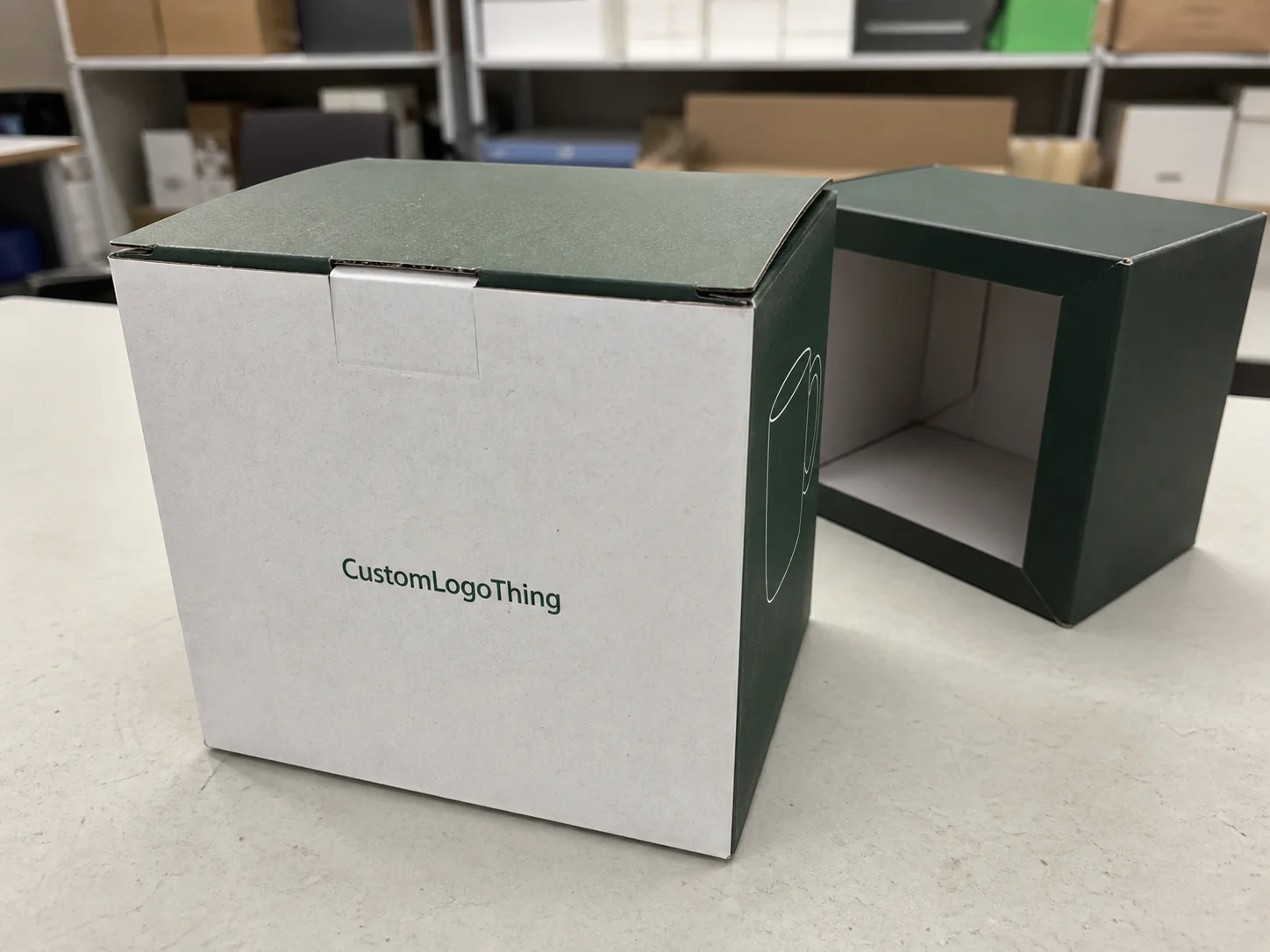
Mugs are deceptive. They seem sturdy in your hand, then they chip the first time the packaging gives them room to move. A box that rattles or opens awkwardly signals low quality before the buyer even touches the product. A box that fits cleanly changes the perception immediately. The mug feels more deliberate, more giftable, and more valuable.
For packaging teams, custom mug boxes usually need to do four jobs at once. They stabilize the product, absorb impact, create brand presence, and make packing manageable at scale. If one of those jobs gets ignored, the rest start to suffer. A box can look premium and still fail in transit. It can ship safely and still feel cheap on a retail shelf. The useful packaging sits somewhere in the middle and does both well enough.
The use case matters more than the artwork. A corporate gift box can prioritize presentation and a neat unboxing sequence. A direct-to-consumer order needs parcel survival first. A retail carton may need to stack cleanly, face forward, and survive repeated handling by staff and shoppers. Those requirements lead to different board grades, inserts, closure styles, and print choices.
There is also a cost angle that gets overlooked. Breakage does not just create one replacement. It creates freight loss, service time, rework, and a possible second chance to lose the customer. A better package is not automatically more expensive in real terms if it lowers those hidden costs. That is why packaging buyers should treat custom mug boxes as a control point, not a cosmetic line item.
A mug box is only cheap if it prevents a loss. If it does not, the first invoice is not the full cost.
How the structure protects mugs from impact
Protection starts with the shell, but the shell alone is rarely enough. During shipping, mugs are usually damaged by a chain of smaller failures: movement inside the box, compression from stacking, drops at the corner, and vibration over distance. Custom mug boxes work when they interrupt that chain early.
Board strength is the first decision. A folding carton can be fine for a retail inner pack or a gift presentation box that sits inside a larger shipper. For ecommerce, corrugated mailer-style boxes or rigid formats usually perform better because they resist crushing and distribute force more evenly. The point is not to overbuild every job. The point is to match the structure to the actual handling.
Movement control is the second decision, and it matters more than people expect. If the mug slides even a few millimeters, the handle becomes a lever and the rim becomes the weak point. That is why snug internal dimensions matter. Too loose is a problem. Too tight is also a problem, especially if the mug has a thick handle or a tapered body that changes how it sits in the insert.
Different box styles solve that in different ways. A tuck-end carton is efficient and familiar, but it usually needs an insert or protective wrap if it is going into a shipping lane. A mailer-style box gives a more secure closure and tends to pack faster in fulfillment. A rigid box supports premium gifting and gives a stronger feel in the hand, though the cost climbs quickly. A sleeve-and-tray format can look polished and improve the unboxing sequence, but it needs precise sizing or the tray starts to wobble.
Insert design is where many projects either get sharper or fall apart. Cardboard inserts are cost-effective and easy to customize, which makes them a common choice for custom mug boxes. Molded pulp can be a strong option if the program wants more fiber-based protection and a less plastic-heavy build. Die-cut corrugate often delivers the best mix of protection and cost for shipping because it locks the mug in place and reduces empty space. The right insert is the one that stops motion without slowing packing to a crawl.
Mug geometry changes the answer every time. A tall latte mug, a wide ceramic mug, and a mug with an oversized handle are not the same packaging problem. Handle clearance is the detail that gets missed most often. Rim diameter matters too, especially when the mug has a tapered profile or a thick lip. A box can pass a visual fit check and still fail once vibration, stacking, and a corner drop show up.
For shipping programs, many teams ask for testing aligned to ISTA distribution test methods, especially drop and vibration scenarios that resemble real parcel handling. That is a better starting point than judging the box by appearance alone. A clean mockup can still fail under load if the insert is soft, the board is thin, or the mug has too much room to move.
Materials, inserts, and finishes that change performance
Material choice sets the ceiling for performance. Paperboard is usually the right fit for lighter retail packaging and presentation-first jobs. Corrugated board is the safer choice for parcel shipping because it adds compression resistance and better shock absorption. Rigid stock sits at the premium end and gives a thicker, more substantial feel, but it also adds weight, tooling complexity, and cost.
One common mistake is choosing the finish before the structure. That usually creates a pretty box that performs poorly. Start with the job the package has to do. If the mug is shipping direct to consumer, the shell and insert need to carry the load. If the box is sitting on a shelf or used as a gift package, visual impact matters more, but the structure still has to hold up under handling and stacking.
Finishes shape both perception and wear resistance. Matte lamination gives a softer look and hides fingerprints and scuffs better than many uncoated stocks. Gloss boosts color contrast, which helps when the box needs shelf pop. Soft-touch can feel premium, but it also shows abrasion if the package gets abused in transit. Foil and spot UV can sharpen logos and create a stronger branded package, but they only work when the art direction is disciplined. Overcrowded graphics usually make the box look cheaper, not better.
Buyers often ask for more decoration than the package needs. That is understandable and sometimes wrong. If the box sits inside a corrugated shipper, expensive surface effects may be wasted. If the box is the retail face of the product, those same effects may help sell through faster. The decision should follow channel economics, not personal taste.
For sustainability-focused programs, paper sourcing matters too. FSC certification is still one of the clearest signals buyers use when they need traceable fiber sourcing. It does not make a package stronger by itself, but it can satisfy procurement policies and support retailer requirements.
Standardizing across product lines can save time and money. If the same insert family can work for mugs, candles, and small gift kits, the procurement side gets simpler and assembly gets faster. That is why some buyers keep mug programs aligned with other formats from Custom Packaging Products, especially when print specs and board grades need to stay consistent across several SKUs.
Process, timeline, and proofing steps from concept to delivery
Good production starts with a clear spec sheet. Before anyone quotes custom mug boxes, the supplier needs the mug dimensions, handle protrusion, target quantity, finish preference, shipping method, and whether an insert is required. If those basics are vague, the first sample usually wastes time.
The typical workflow is straightforward: sizing, structure selection, artwork setup, dieline approval, sample making, revision, production, and packing. The part that usually stretches the schedule is not the press run. It is the back-and-forth before production begins. A small change in handle clearance can force an insert redesign. A color correction can delay proof approval. A finish revision can trigger a new sample cycle.
For a simple run, a rough production window from approved artwork to shipment is often 12 to 15 business days, then add transit time. More complex jobs take longer, especially rigid boxes, special inserts, or jobs with strict color matching. That is normal. If the packaging is tied to a product launch, seasonal campaign, or retail reset, the safe move is to lock the spec before inventory lands.
Testing should happen inside the process, not after cartons are printed. A practical review usually includes a physical sample, a fit check with the actual mug, a shake test, and a drop or compression review. Some teams also request data aligned to ASTM D4169 if the package is going into a harsher distribution chain. That is not overkill when the mug is expensive, fragile, or shipped in volume. It is cheaper to find the weak point on a sample than in a warehouse full of finished stock.
Communication drives quality more than most buyers want to admit. If the box must work for both retail display and shipping, say so early. If the mug ships with a spoon, coaster, wrap, or insert card, say so early. If the artwork wraps around a specific panel or has a full-bleed image that cannot shift, say so early. A few precise instructions at the beginning prevent a lot of rework later.
For multi-SKU programs, compare the structure before you compare artwork. That keeps the production plan honest. If two products can share the same blank size, procurement gets easier and waste drops. If they cannot, forcing one carton format across both usually creates false savings. Packaging works better when it respects the product first and the spreadsheet second.
Pricing, MOQ, and unit cost drivers
Pricing for custom mug boxes comes down to a short list of variables: material grade, print coverage, insert type, box style, finish, and order quantity. Most quotes look similar at first glance, then diverge once the spec gets specific. A buyer who compares only the headline number usually misses the actual cost structure.
MOQ changes the math immediately. Smaller runs cost more per unit because tooling, setup, proofing, and press time are spread across fewer boxes. Larger orders tend to reduce unit cost, but only if the spec stays stable. If the artwork changes every month, the savings shrink fast.
Here is a practical comparison buyers can use as a starting point, not a final quote. Real pricing depends on quantity, exact dimensions, board choice, print method, and whether the insert is simple or custom-shaped.
| Structure | Best use | Typical protection level | Typical cost impact at moderate volume |
|---|---|---|---|
| Tuck-end paperboard carton | Retail display, gift packaging, inner pack | Low to moderate | About $0.18 to $0.35 per unit |
| Mailer-style corrugated box | Ecommerce shipping, direct-to-consumer orders | Moderate to high | About $0.38 to $0.75 per unit |
| Rigid gift box with insert | Premium gifting, corporate sets, retail presentation | Moderate | About $0.70 to $1.40 per unit |
| Sleeve-plus-tray format | Unboxing-focused branded packaging | Moderate | About $0.55 to $1.10 per unit |
Those ranges move with volume. A 500-piece order will almost always cost more per unit than a 5,000-piece order. Full-coverage print costs more than a one-color logo. A molded pulp insert may cost less than a complex die-cut corrugate insert in one run and more in another, depending on tooling and supplier setup. The quote only makes sense if the buyer separates structure, decoration, insert, and freight.
That separation is also where many teams find savings. Ask whether tooling, sample charges, freight, and revision fees are included. Ask what happens if the artwork changes after proof approval. Ask whether the quote bundles the box, the insert, and the packing labor or prices them separately. If you do not split those pieces out, a cheap quote can look better than it really is.
The lowest unit price is not always the lowest total cost. If weak packaging creates breakage, the replacement cost can erase the savings quickly. For lower-priced mugs, that math gets brutal fast. A small increase in damage rate can matter more than a ten-cent difference in the box itself. That is why custom mug boxes should be judged against return rates, service load, and customer perception, not unit price alone.
If you buy across multiple packaging lines, the cleaner move is to standardize the options first and then negotiate volume. That approach usually works better than chasing the lowest quote in isolation. It also makes reorder planning easier, especially if your broader Custom Packaging Products program includes mugs, gift sets, and other branded packaging formats.
Common mistakes that lead to breakage and weak margins
The most common mistake is oversizing the box. Buyers do it to avoid a tight fit, but extra room usually creates motion, and motion creates damage. A mug that can slide is already at risk, especially if the handle sits close to a side wall or the insert is too soft.
Another problem is under-testing. A design can look polished on screen and still fail in real handling conditions. Stack pressure, corner drops, and vibration expose weak points quickly. If the package has never been checked against a basic distribution cycle, visual quality can hide actual fragility.
Sequence matters too. Teams often choose the finish first, then force the structure to work around that decision. The result is a box that photographs well but protects poorly. Start with mug size, shipping method, and insert need. Then choose the finish. That order prevents a lot of expensive rework.
Branding decisions can backfire when they outrun the functional spec. Strong logo placement and good graphics matter, but a package that looks refined and performs badly creates more cost after launch than a simpler box would have. If the product is going direct to consumer, the first job is surviving the trip. If the product is going to shelf, the first job may be selling quickly. Either way, the box has to earn its place.
Assembly time is another detail that gets ignored. A clever insert that takes twice as long to pack can become a labor problem even if the material cost looks fine. In a busy fulfillment line, a few extra seconds per unit adds up. That is why practical buyers keep one eye on board grade and the other on assembly steps. A box that is hard to pack is not efficient, no matter how good the die line looks.
Next steps: spec, sample, and compare before you order
Start with exact mug dimensions. Measure height, body diameter, handle protrusion, and any accessory that ships with it. If the mug includes a coaster, spoon, wrap, or printed card, include that in the spec. A surprising number of fit failures come from forgetting one small add-on.
Then request a sample or prototype and test it with real handling conditions. Shake it. Check the closure. Drop it from a sensible shipping height if your internal policy allows it. Verify shelf fit if retail display matters. A good prototype review is faster than finding a weak panel after the production run is already in the warehouse.
After that, compare two or three quote options side by side. Do not compare only price. Compare protection, print quality, lead time, insert style, and what is actually included in the quote. A supplier that looks more expensive on paper may be cheaper in practice if the specs are tighter and the failure rate is lower.
The practical sequence for custom mug boxes is simple: define the use case, lock the dimensions, pick the structure, approve the prototype, then schedule production with a buffer. That keeps the project grounded and avoids the last-minute compromise that usually shows up as damage or weak shelf appeal later. If the packaging has to support future launches too, a repeatable structure makes the whole program easier to manage.
Custom mug boxes should do three things at once: protect the mug, support the brand, and make financial sense. If one of those pieces is missing, the spec needs work. The best box holds the mug firmly, survives the channel it was built for, and does not create avoidable cost somewhere else in the chain.
What size should custom mug boxes be for a standard 11 oz mug?
Measure the mug with the handle included, not just the cup body, because handle clearance usually determines the final internal dimensions. Leave enough room for an insert or protective wrap without letting the mug rattle inside the box.
Do custom mug boxes need inserts for shipping?
For ecommerce shipping, yes in most cases, because inserts reduce side-to-side movement and lower the chance of breakage from impact or vibration. If the mug is only for shelf display, a simpler structure may work, but it still needs a snug fit.
How much do custom mug boxes usually cost per unit?
Unit cost depends heavily on quantity, board thickness, print coverage, insert type, and finishing choices. Smaller runs cost more per box, while larger orders spread setup and production costs across more units.
What is the typical turnaround time for custom mug boxes?
Most timelines include artwork setup, sampling, approval, production, and shipping, so the fastest orders are usually the simplest ones. Structural changes or finish revisions can extend lead time, so final specs should be approved early.
Can custom mug boxes work for both retail display and ecommerce fulfillment?
Yes, but the box has to balance presentation and protection, which often means choosing a stronger structure and a clean branded exterior. If the same package must do both jobs, the insert and board strength matter more than decorative extras.