What Custom Non Woven Bags Actually Are
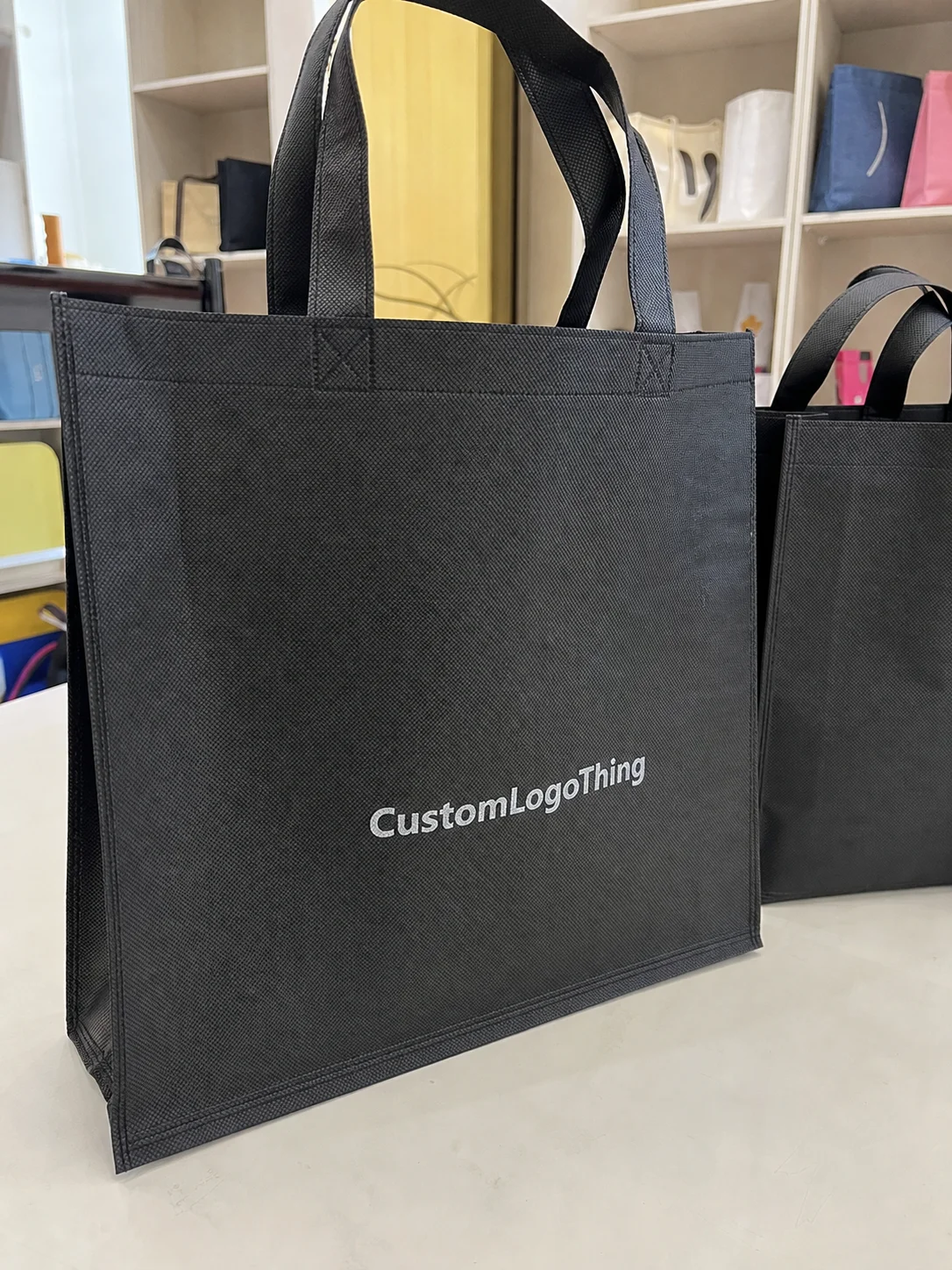
Custom Non Woven bags sit in a useful middle ground. They are not premium retail totes, and they are not flimsy throwaways either. For a brand that needs volume, quick turnaround, and a print surface that can carry a simple identity cleanly, that middle ground is exactly the point.
The material is typically non woven polypropylene. Unlike woven fabric, the fibers are bonded rather than interlaced, which changes the way the bag behaves. It feels lighter, it cuts and seals differently, and it accepts branding in a way that works for large runs. The result is a bag that can be economical without looking improvised.
That matters because buyers rarely order these bags for one reason. Retail handouts, trade-show kits, grocery promotions, onboarding packs, and seasonal campaigns all use the same basic format for different jobs. A bag that only needs to hold a brochure is a different purchase from one that will carry boxed samples or a few pounds of merchandise. The spec should reflect that difference. Too many quotes ignore it.
There is also a branding reason these bags keep coming back. They move. A printed carton is seen once, then disappears. A bag may be reused several times, especially if the material weight is decent and the handles are comfortable. That gives the design more exposure than the unit price suggests, although only if the print, size, and construction are matched properly.
Think less about “bag printing” and more about a small packaging system. The body, handle, seams, and decoration all affect how the item feels in use. A strong logo on the wrong build still reads as cheap. A modest logo on a well-proportioned bag often looks more credible than a louder design on a weak one.
How the Material and Print Build Work Together
Material choice controls more than durability. It affects print clarity, color contrast, hand feel, and even whether the bag keeps its shape after it has been filled a few times. Standard non woven stock often starts around 80 gsm to 100 gsm, but the final feel depends on finishing. Lamination makes the surface smoother and more presentable. Reinforced stitching changes how the handles carry weight. A gusset adds usable space, but also adds cost and alters the profile.
Print method matters just as much. For simple logos and straightforward artwork, screen printing is usually the most practical route. It handles bold shapes well and keeps setup manageable. Heat transfer can be better for more detailed graphics, but only when the artwork and order size justify the extra steps. Full-color printing is possible on some builds, though fine text and delicate line work can lose sharpness on textured material.
That gap between mockup and final bag is where problems start. A design that looks crisp on a white digital proof may not hold up on dark fabric or on a coarse surface. Small text can fill in. Thin lines can break. White ink over dark stock may need extra passes, which changes coverage and can affect consistency from one batch to the next.
Buyers usually run into three practical scenarios:
- One-color print on standard stock for fast, low-cost distribution.
- Two-color or multi-color print on a heavier build for retail or launch kits.
- Decorative or laminated bags where appearance matters as much as carrying function.
The second and third options are not “better” by default. They are only better when the campaign needs them. If the bag is handed out at a crowded event and most recipients will use it once, paying for premium effects may not change the result. If the bag will sit beside product packaging on a counter, the visual standard needs to be higher.
One useful benchmark is to ask for a production sample or a previous job that uses a similar material and print count. That tells you more than a polished render. The real questions are simple: Does the color read cleanly? Are the seams even? Do the handles sit flat? Does the bag collapse in a way that makes the logo hard to see? Those are packaging questions, not design-theory questions.
Cost, MOQ, and Unit Price Drivers
Price is shaped more by the spec sheet than by the logo. Quantity, size, material weight, handle type, print colors, gusset depth, and finish all move the number. For a straightforward 1-color order at volume, a rough range of $0.20 to $0.45 per unit is common. Heavier stock, lamination, or more complex decoration can lift that into the $0.60 to $1.20 range, sometimes higher if the order is small or the schedule is tight.
MOQ works the way production economics usually work. Setup costs are fixed. When the order is small, those costs are spread across fewer bags. That is why a 1,000-unit order can look much more expensive per piece than a 5,000-unit order with the same design. The jump is not arbitrary. It reflects labor, waste, setup, and inspection time.
There is a pattern buyers see over and over: the cheapest quote leaves out one or more of the real costs. Art cleanup. Freight. Carton charges. Extra proof rounds. A rush fee added after the fact. The quote itself may be technically accurate, but incomplete enough to distort the decision.
These are the cost drivers that usually matter first:
- Bag size and gusset depth, which change material usage.
- Material weight, which affects feel and unit cost.
- Number of print colors and registration requirements.
- Lamination, stitching reinforcement, or edge finishing.
- Rush production and shortened proof cycles.
- Freight terms and carton counts.
A buyer who wants a realistic comparison should ask for landed cost, not just factory cost. That approach is standard across packaging categories, whether the order is promotional totes, folding cartons, or Custom Packaging Products that need to sit inside a broader campaign budget. The bag price only matters in context.
If the supplier’s quote looks unusually low, the first question should be simple: what is excluded? Often it is not a trick. More often it is a sign that the quote is not finished.
| Option | Typical Build | Typical Unit Price at Volume | Best Use | Main Tradeoff |
|---|---|---|---|---|
| Value tote | 80 gsm, one-color print, standard handles | $0.20 to $0.45 | Events, handouts, basic giveaways | Limited decoration and lighter structure |
| Mid-tier tote | 90 gsm to 100 gsm, gusset, 2-color print | $0.35 to $0.75 | Retail promotions, brand launches, sample kits | More setup and tighter proof control |
| Premium tote | Laminated finish, reinforced stitching, full coverage art | $0.60 to $1.20+ | Presentation-focused packaging programs | Longer lead time and more production steps |
There is one more factor buyers miss: unit economics improve faster than expected once the order crosses a factory’s efficient run size. In practical terms, a move from 2,000 units to 5,000 units can reduce the price enough to justify a heavier bag or a cleaner print method without changing the budget. That trade is often better than squeezing another cent out of the base spec.
Production Steps and Lead Time
The workflow is usually stable. Inquiry. Spec confirmation. Artwork setup. Proof approval. Production. Finishing. Packing. Shipment. The weak point is almost always the approval stage, not the machine time.
Most delays come from avoidable issues: low-resolution logos, missing measurements, unclear print placement, or a late change in color count. A supplier can move quickly when the file is ready. If the art needs rebuilding, the schedule starts slipping before production has even begun.
Lead time and transit time should never be treated as the same thing. A factory might quote 10 to 15 business days after proof approval. That is not delivery. Shipping can add several more days, and it can add more than that if the route is congested or if the shipment is being consolidated with other freight. If the bags are for a launch, trade show, or retail reset, the calendar needs a buffer.
Packaging buyers should also ask how the cartons are packed and protected. A bag that leaves the line in good shape can still arrive crushed if the carton spec is weak. Standards such as those published by ISTA are relevant here because they focus attention on transit, not just production. A promotional bag that arrives wrinkled or distorted has already lost part of its value.
Another useful observation: custom non woven bags often move faster than multi-part packaging jobs because the bill of materials is simpler. There are fewer components to source, fewer assembly points, and fewer failure modes. That simplicity is one reason buyers like them when the timeline is tight, provided the spec is settled early.
Spec Mistakes That Quietly Raise Your Total Spend
The most common mistake is choosing a size that looks good in a mockup but works poorly in production. Oversizing wastes material and freight. Undersizing crowds the artwork and makes the bag feel less useful. Either choice can cost more than a slightly better-balanced spec.
Overcomplicating the artwork is another recurring issue. Gradients, tiny copy, hairline rules, and highly detailed marks often look fine on screen and weaker on textured fabric. The print method can sometimes handle the art, but the cost rises because registration becomes harder and waste goes up. Simplifying the logo by 10 or 15 percent is often cheaper than pushing a difficult design through a material that was never meant for it.
Color choice has real production consequences. Dark stock can create a stronger visual effect, but it may require more ink and tighter process control. Light stock tends to be more forgiving for print clarity, though it can reveal stitching irregularities or handling marks more easily. There is no universal best choice. The correct one depends on whether the bag is meant to disappear into a giveaway table or hold its own beside retail packaging.
Handle style changes cost and perception at the same time. A die-cut handle is simple and economical. A stitched webbing handle feels stronger. A zipper closure or Velcro flap adds utility, but also adds operations. For a program that only needs distribution, those upgrades can create a better-looking bag without changing the business outcome. That is not always money well spent.
“The cheapest quote is often the one that hides the most assumptions.”
That line stays true across packaging categories, and bags are no exception. A late color change, a revised logo position, or a switch from one-color to two-color print can turn a tidy quote into a more expensive order. Once the line is set up, changes cost more than they did on paper.
Practical Vendor Checks Before You Approve Art
Ask for a production-ready dieline. A mockup tells you what the bag intends to do. A dieline tells you what the factory can actually produce, including safe zones, bleed, seam interference, and handle placement. Without that file, you are approving an idea instead of a build.
Request a sample or a close equivalent before final approval. A photo helps, but a physical sample is better. You are checking stiffness, texture, stitching quality, color density, and handle comfort. One sample can reveal more than several rounds of email comments. If the sample feels thin, it probably will not improve in bulk production.
Ask how the supplier defines size, GSM, and print area. Those terms are not always measured the same way from one vendor to the next. One quote may refer to flat size, another to finished size, and a third may include the gusset in a way that makes comparisons awkward. If the measurement method is not clear, the quotes are not fully comparable.
Before approving art, confirm the quote includes proofing, carton packaging, freight terms, and the policy for rework if the finished bags miss the approved spec. That matters more when the order is tied to a date that cannot move. A lower number is not useful if it leaves out the steps that protect the schedule.
A competent supplier should be able to explain the build, not just the look. They should know where the seams sit, how the print area is constrained, and what happens when a design pushes past the usable panel. If they cannot answer those questions plainly, they may be quoting a render rather than a production plan.
These same checks work across product packaging and promotional items. Once a buying team uses the same spec discipline in both categories, quotes become easier to compare and mistakes become less frequent. That consistency is worth more than a perfect-looking first draft.
Next Steps: Build a Better Quote Request
The cleanest quote request is the one with the fewest assumptions. List the bag size, color, handle style, quantity, target delivery date, and print method. If you already know whether the job needs a one-color logo, a multi-color graphic, or a laminated finish, say so early.
Send vector artwork whenever possible. Include the brand guide if one exists. If the logo has minimum size rules or color restrictions, include those too. A supplier can only price the job cleanly once the file is close to production-ready. Otherwise the quote becomes a chain of revisions.
It is often useful to ask for two versions of the spec: a value build and an upgraded build. That comparison shows the cost of a heavier material, a second print color, or a more polished finish in context. One quote gives you a number. Two quotes give you a decision.
Decide your priority before the bids arrive. Is the goal lowest cost, fastest turnaround, or better presentation? If that decision is left open, the quoting process will make it for you. Usually not in the direction that helps the campaign most.
For teams building a wider branded packaging system, the same discipline applies to Custom Packaging Products. Stable specs shorten the buying cycle and reduce correction rounds. That is the simplest way to get custom non woven bags into production without letting the order drift between approval and delivery.
What are custom non woven bags made from?
Most are made from non woven polypropylene, a bonded material that is lightweight, reusable, and suitable for high-volume branding. The exact feel depends on GSM, lamination, and how the seams and handles are finished.
How do I choose the right print method for custom non woven bags?
Use screen Printing for Bold, simple logos and heat transfer when the artwork needs more detail. The material surface matters. Textured stock can soften fine lines, so the print method should match the artwork, not the other way around.
What affects the price of custom non woven bags the most?
Quantity, bag size, material weight, print colors, and finishing details usually have the biggest effect on unit price. Freight, artwork changes, and rush timing can raise the final cost even when the base quote looks competitive.
How long does production usually take for custom non woven bags?
Lead time depends on order size, proof approval speed, and the factory schedule. Production may take 10 to 15 business days after sign-off, but shipping time is separate and should be added to the total timeline.
Are custom non woven bags reusable enough for retail or events?
Yes, if the material weight and seam construction match the intended load. For heavier items, reinforced handles and a thicker spec are worth the extra cost. The bag works best when the build matches the use, not just the artwork.