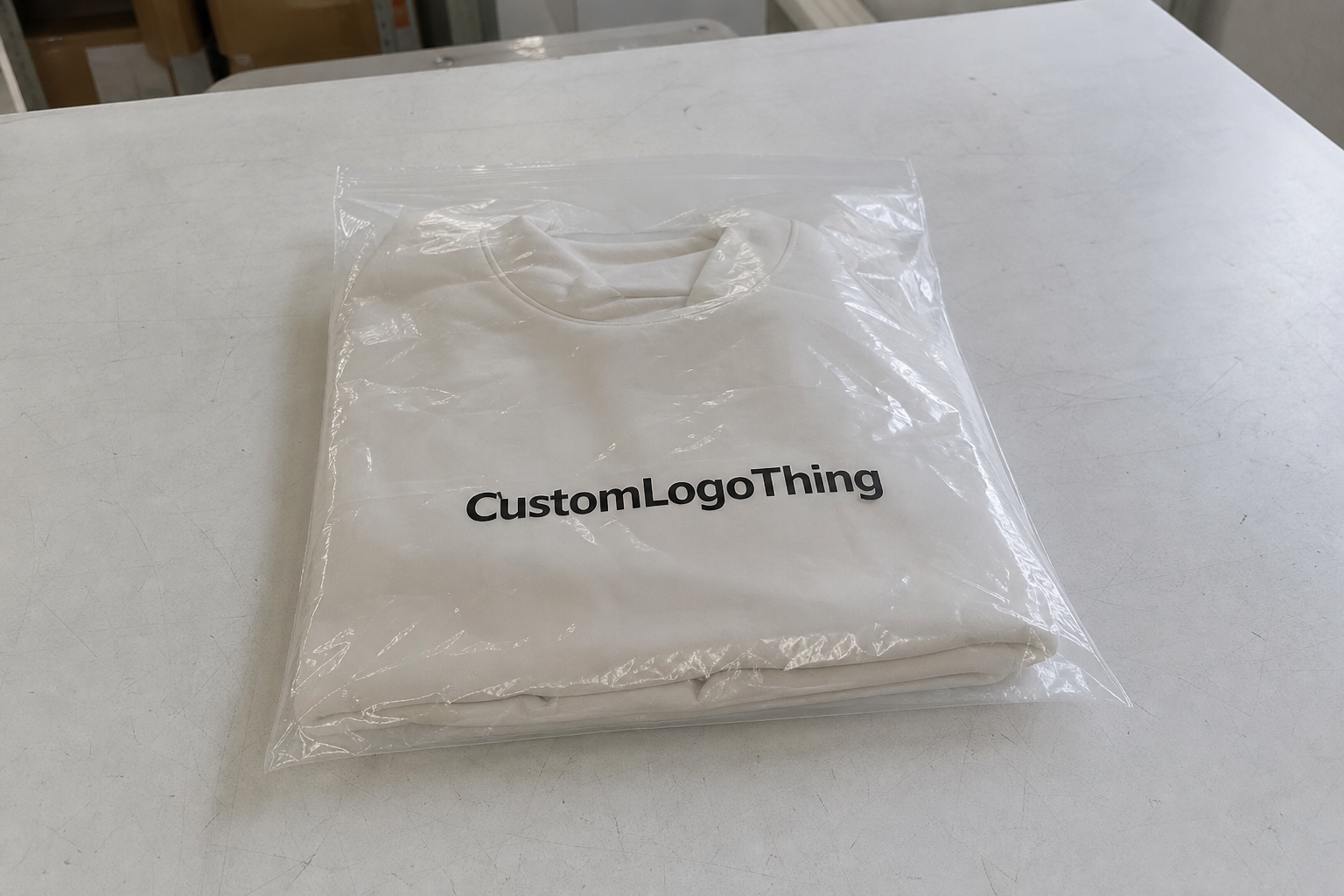
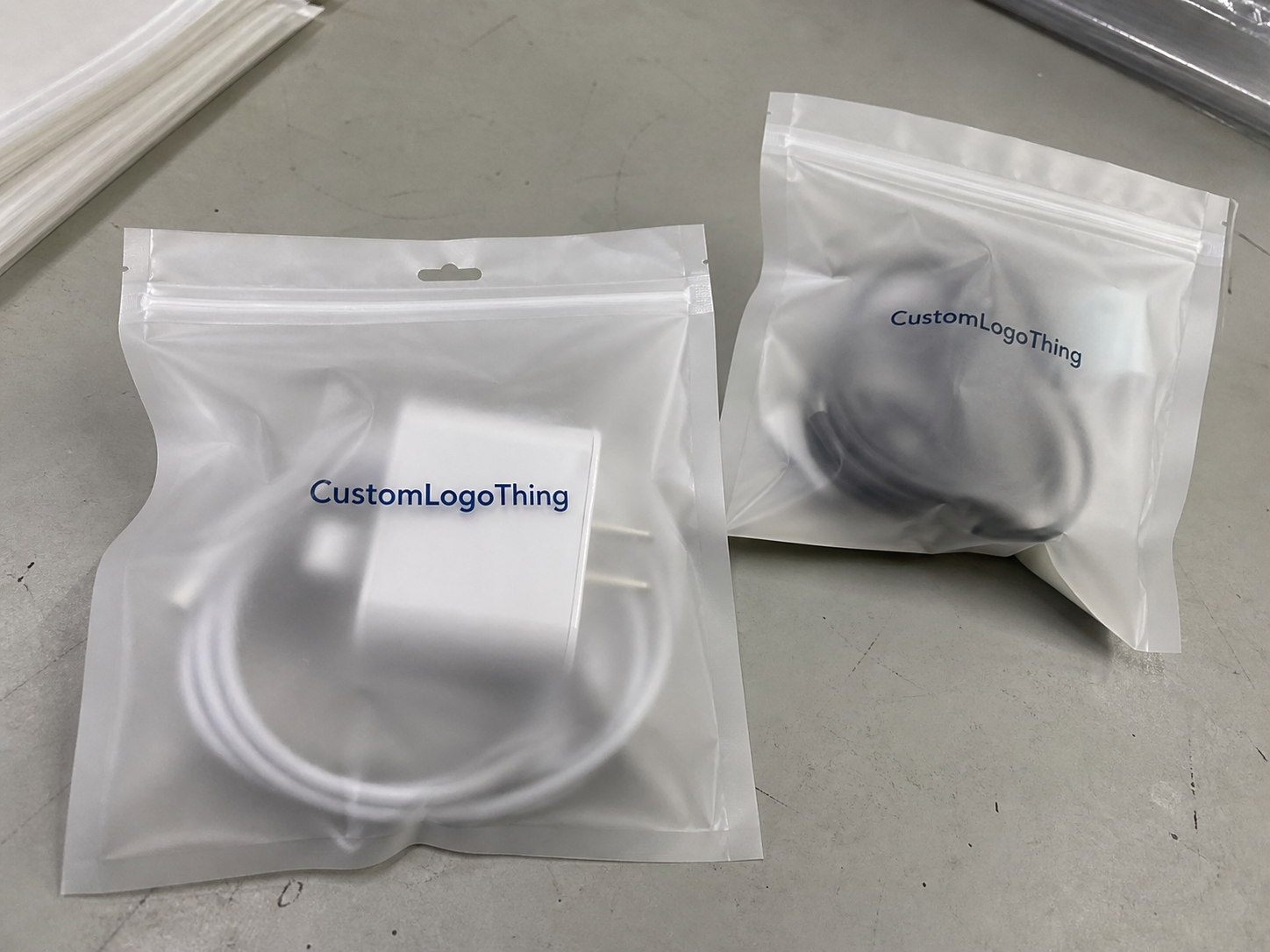
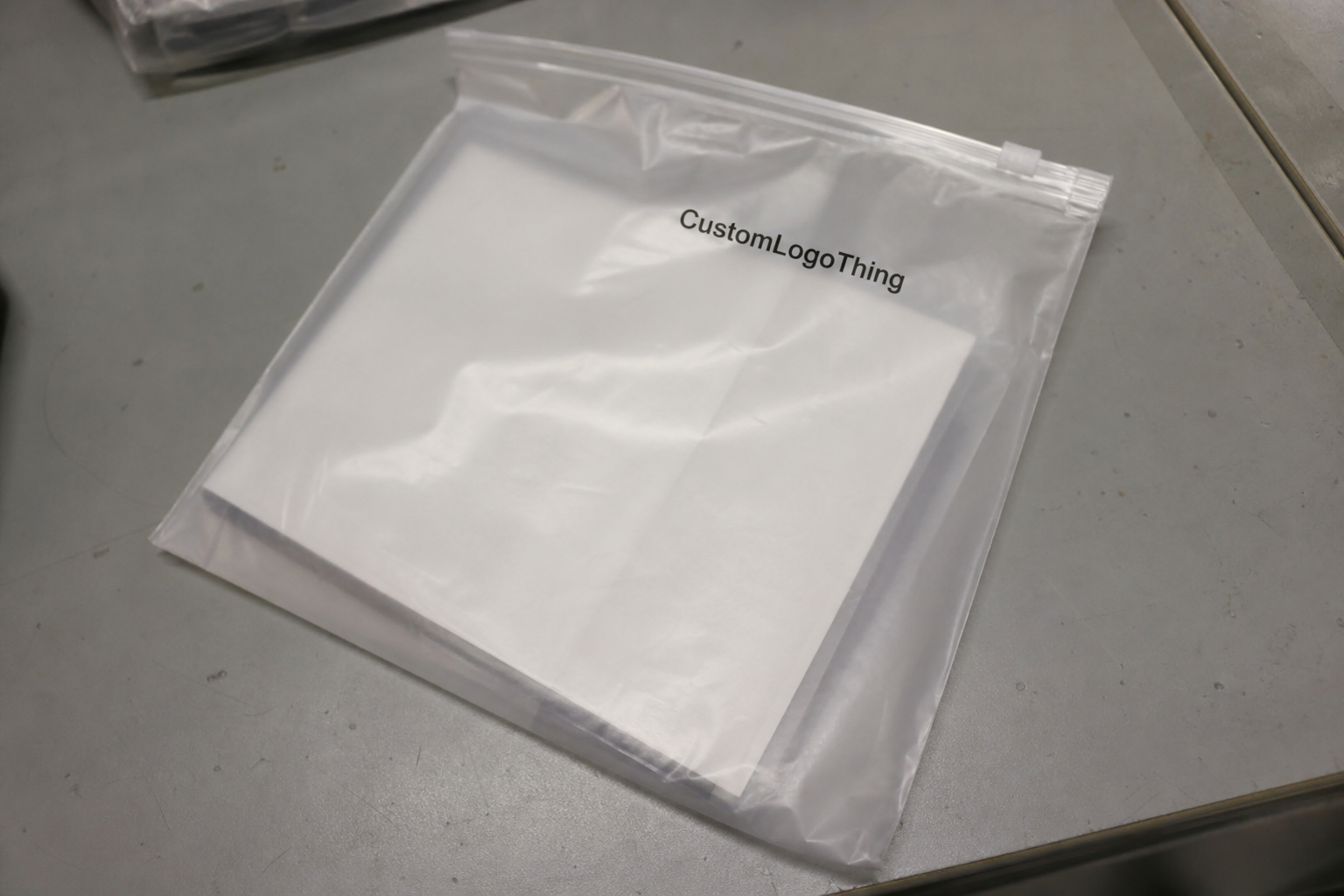
If you work in procurement, product development, or retail operations, custom OPP bag sourcing can look straightforward. It usually is not. A clear bag can still create problems if the film is too thin, the seal spec is wrong, or the artwork lands in the wrong place. Then the “cheap” package gets expensive fast.
OPP, or oriented polypropylene, is a clear, lightweight plastic film with good gloss, decent stiffness, and strong product visibility. That combination makes it useful for apparel, stationery, accessories, gifts, and ecommerce inserts. Buyers like it because it stores flat, ships light, and supports custom printing without the bulk of rigid packaging.
The catch is simple: clear packaging does not hide mistakes. It makes them easier to see.
Why OPP bags are a smarter B2B packaging buy than they look
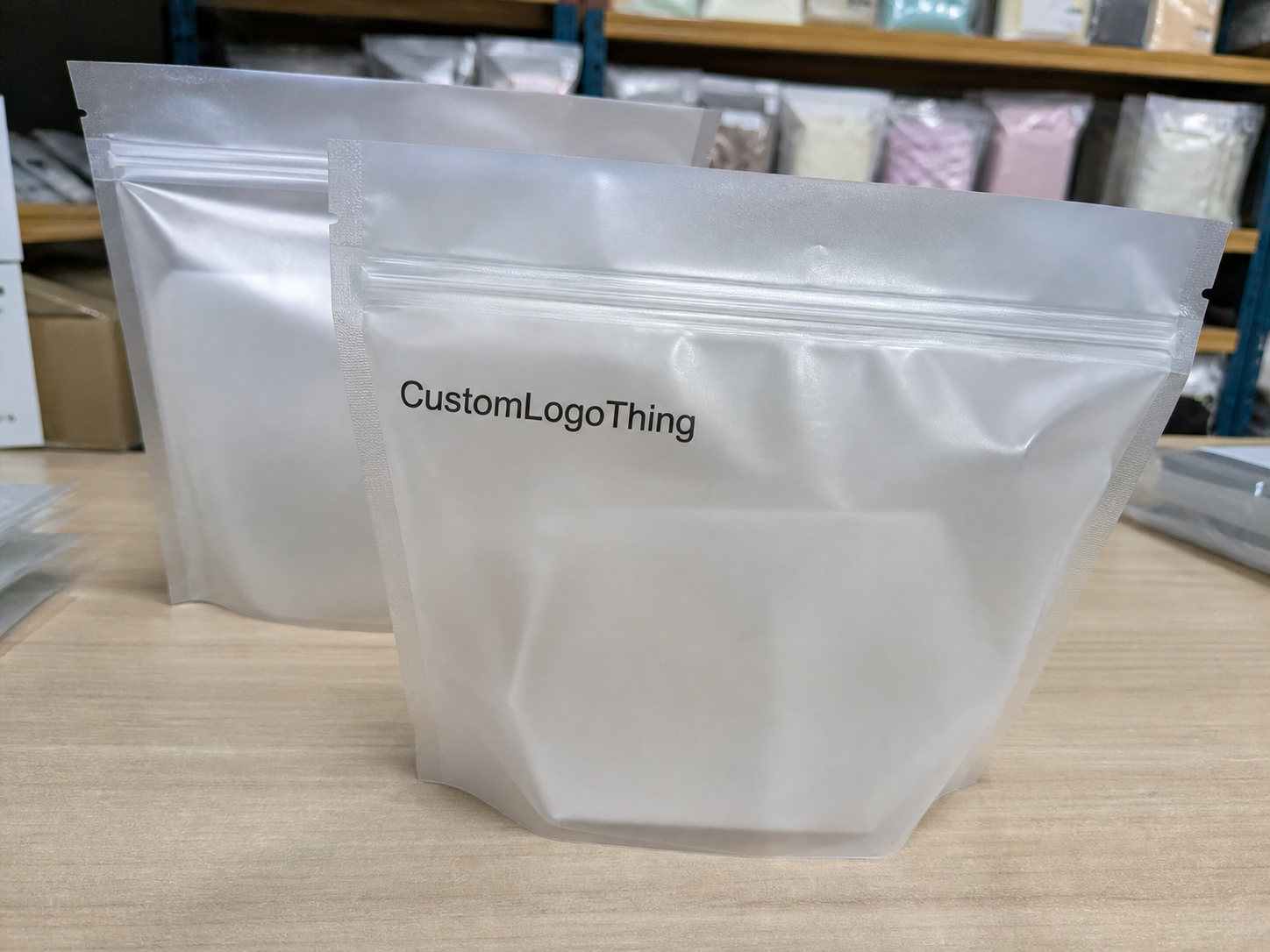
Many buyers first treat OPP bags as a commodity: clear film, standard size, low unit price. That view misses how much packaging affects display quality, handling, and returns. The material is cheap. The outcome is not always cheap-looking.
OPP bags sit in a useful middle zone. They protect against dust, fingerprints, and light scuffing while keeping the product visible. For retail packaging, visibility shortens hesitation at shelf. For ecommerce inserts, clear presentation helps the customer identify the item immediately instead of opening a wrinkled or opaque wrapper.
That is why they keep showing up in high-volume, high-SKU programs. They are not trying to do everything. They are trying to do one job well.
- Low weight keeps freight and handling costs down.
- High clarity supports product presentation.
- Compact storage saves warehouse space.
- Simple customization supports logos, sizing, warnings, or barcodes.
For apparel, stationery, cosmetics accessories, and gift items, OPP bags often make more sense than custom printed boxes when the product does not need crush protection. They are also a practical fit for filler packs and assortment kits, where consistency matters more than structure.
Practical rule: if the product needs visibility more than rigidity, OPP is often the right tool. Paying for extra packaging just because it feels “nicer” is a common way to waste budget.
For recurring packaging programs, Wholesale Programs can help structure repeat orders around stable specs and predictable replenishment. That only works if the spec sheet is kept current.
How custom OPP bag sourcing works from spec sheet to shipment
Good sourcing starts with a clean specification sheet, not a price request. Suppliers can quote quickly and accurately when they know the exact bag dimensions, thickness, style, print method, quantity, and destination. Leave out one of those details and the first quote is usually just a rough estimate.
The standard flow looks like this:
- Inquiry with size, quantity, artwork, and intended use.
- Specification review to confirm film thickness, seal type, and bag style.
- Quotation based on material usage and production setup.
- Artwork proof or digital mockup.
- Sample approval, if required.
- Mass production and in-process checks.
- Packing and freight booking.
Small changes can move price more than buyers expect. A few millimeters in width or height changes film yield across the run. A second print color adds setup time and registration risk. A thickness jump from 30 microns to 40 microns increases raw material use. None of that is mysterious. It just means the quote should change when the spec changes.
Proofing is where many projects go right or sideways. A digital mockup is helpful, but it is not the same as seeing how the logo reads on clear film, how contrast holds up, or whether the seal area cuts into the design. Physical samples take longer, but they reduce expensive surprises.
Sourcing is not the same as placing an order. A buyer is managing a chain of decisions that affect print clarity, sealing performance, transport damage, and lead time. If internal details are vague, delays usually show up later as supplier issues.
For broader packaging programs, many teams review Custom Packaging Products alongside OPP bags so artwork standards and packaging requirements stay aligned across the line.
Key material, print, and size factors that affect quality
OPP bag quality usually comes down to five things: thickness, clarity, seal strength, print accuracy, and fit. If one of those is off, the bag can feel cheap even if the logo looks fine on screen.
Thickness and feel
Film thickness is usually measured in microns. Common ranges for OPP bags sit around 20 to 40 microns, depending on the application. Lighter gauges can work for inserts or flat retail items. Thicker film gives more stiffness and a slightly more premium hand feel, but it also raises cost and can affect sealing behavior.
Buyers sometimes assume thicker is always better. Not really. If the item is a light accessory or folded paper product, extra thickness may add cost without adding useful protection. Match the gauge to the product risk, not to a vague idea of quality.
Bag style and use case
Flat bags are common for folded apparel, documents, and stationery. Self-adhesive bags work well where closure speed matters. Side-gusset options add depth for bulkier items. Header styles are useful for hanging display or pegboard merchandising. The right format depends on product geometry and how the bag moves through the packing line.
A bag can be technically correct and still slow down a line if it is awkward to load or seal. Packaging needs to fit production, not just the shelf.
Print and artwork
OPP accepts custom printing well, but clear film is unforgiving. One-color logos usually look cleaner and cost less. Multi-color branding can look excellent, but it needs tighter registration control. If the artwork sits too close to the seal area, distortion can show up after sealing. If the logo relies on light-colored text, contrast may disappear against the item inside the bag.
Those are design issues, not just print issues. The bag, the product, and the artwork all affect each other.
For reference, print alignment and artwork handling on packaging are often checked against general industry practices similar to those discussed by groups like the Institute of Packaging Professionals.
Fit and dimensional allowance
Buyers should think in three numbers: product size, insertion allowance, and sealing margin. If the item is 120 mm wide, that does not mean a 120 mm bag is correct. You still need room for loading and a clean seal zone. Under-sizing causes wrinkling, stress, and occasional returns. Over-sizing wastes material and makes the presentation look loose.
For food-adjacent or display-heavy applications, some buyers ask about anti-fog and static control. OPP itself is not a food pouch solution by default, but special treatments can help with fogging or cling. Those features add cost, so use them where they solve a real problem.
| Option | Typical use | Strengths | Trade-offs |
|---|---|---|---|
| Flat OPP bag | Apparel, paper goods, inserts | Low cost, simple packing, clean display | Limited depth for bulky items |
| Self-adhesive OPP bag | Mailers, retail kits, stationery | Fast closure, tidy finish | Adhesive performance can vary by climate |
| Side-gusset OPP bag | Thicker accessories, bundled sets | Extra capacity, better fit | Higher material use and cost |
| Header OPP bag | Hanging retail packaging | Merchandising visibility, display value | More complex converting and packing |
Cost, pricing, MOQ, and unit-cost drivers buyers should check
Pricing for custom OPP bag sourcing rarely comes down to one number. It is a mix of film, size, print, quantity, and logistics. Two quotes can look similar and still land very differently once freight, packaging, and duties are added.
The biggest pricing drivers are straightforward:
- Material thickness
- Bag dimensions
- Print colors and coverage
- Bag structure
- Finishing requirements
- Order quantity
MOQ matters because setup costs get spread across fewer units when the order is small. A run of 3,000 pieces can have a noticeably higher unit cost than 10,000 pieces, even if the raw material difference is minor. For many standard runs, OPP bag pricing may land roughly around $0.03 to $0.12 per unit at higher volumes, while smaller or more complex custom jobs can cost more. That range shifts with size, print, and freight assumptions, so treat it as a planning bracket, not a quote.
Hidden cost variables are where buyers get caught:
- Plate or setup fees for printing
- Sample charges for physical approvals
- Packaging configuration such as inner packs or carton labels
- Shipping method and freight class
- Customs duties and brokerage
If you compare only the ex-works price, you may choose the wrong supplier. A lower quote that excludes samples, packaging, or freight can end up costing more than a cleaner all-in offer. It is smarter to compare like-for-like quotes than to chase the lowest line item and hope the rest behaves.
| Driver | Cost impact | Buyer action |
|---|---|---|
| More print colors | Higher setup and more production complexity | Limit colors where possible |
| Smaller order volume | Higher unit price | Forecast demand and batch orders |
| Thicker film | More raw material cost | Match thickness to product risk |
| Non-standard size | Lower conversion efficiency | Standardize dimensions across SKUs |
Buyers can usually reduce cost without hurting performance by standardizing dimensions, keeping artwork simple, and ordering against realistic demand. That is especially helpful in branded packaging programs where several SKUs share similar sizing.
Process and timeline: from RFQ to delivery without surprises
One reason sourcing gets messy is that teams underestimate the number of handoffs. RFQ, artwork revision, sample approval, production, quality checks, packing, and transit each run on their own schedule. If one step slips, the rest usually slips with it.
A typical timeline might look like this:
- RFQ response: 1 to 3 business days if the specs are clear.
- Artwork revision and proofing: 2 to 5 business days, longer if the design is still changing.
- Sample production: often 5 to 10 business days for physical samples.
- Mass production: commonly 10 to 20 business days after approval, depending on quantity and print complexity.
- Transit: a few days by air or several weeks by sea, depending on destination.
The biggest delays are usually avoidable problems: unclear dimensions, repeated artwork changes, last-minute logo edits, or a production schedule that is already packed. Good suppliers flag those bottlenecks early. Weak suppliers promise a date and hope the calendar fixes itself.
Sample lead time is not the same as mass-production lead time. A sample can move quickly because one operator is making a small quantity. A full order needs machine time, material allocation, QA checks, and packing coordination. Different job, different clock.
Shipping choice also changes inventory planning. Air freight works for urgent launches, seasonal promotions, or first-time tests. Sea freight lowers landed cost, but it needs more buffer time and a stronger stock plan.
For sustainability-minded buyers, it can also help to review general packaging waste and material-use guidance from sources like the EPA recycling resources.
Common sourcing mistakes that create waste, delays, or weak branding
Some sourcing mistakes look minor on paper and turn expensive in practice. The first one is approving a quote without confirming film thickness, sealing method, and print specification. If any of those are fuzzy, the factory may still ship something usable, but not necessarily the version your team expected.
Artwork mistakes are next. Low-resolution files. Incorrect bleed. Weak contrast on clear film. Logo placement that looks fine in a PDF and awkward on the finished bag. These errors are common because transparent packaging makes flaws easy to see.
Another trap is ordering too small a test quantity. If you only buy enough for a few weeks, you may never learn whether the size works under real packing conditions. Then launch pressure forces a rushed reorder, and the second order starts from an untested spec.
Supplier selection errors are just as common. Price matters, but if you choose only on price, you may miss problems in production control, material consistency, or lead-time reliability. Photos of similar work help. So do plain-language answers about QC checkpoints and what happens if a run comes out of spec.
Finally, many teams forget inventory planning. Reorder time, seasonal spikes, and safety stock all matter. If your packaging supports a holiday push, trade show season, or a product launch, build buffer time into the schedule.
Buyer reality: most packaging failures are not dramatic factory disasters. They are small specification mistakes repeated at scale.
Expert tips for choosing a reliable supplier and locking in next steps
If I were building a supplier shortlist for custom OPP bag sourcing, I would use a basic scorecard.
- Responsiveness: Do they answer clearly and on time?
- Sample quality: Does the sample match the quote and artwork?
- Consistency: Can they repeat the same result on reorder?
- Transparency: Do they explain what is included and what is not?
- Delivery reliability: Are timelines realistic?
Ask for photos of similar jobs. Ask how they handle QC. Ask whether they can provide material documentation or basic compliance information where relevant. If your application touches regulated markets or retail requirements, you may also need support for broader packaging programs that include paper components. For sourcing standards and responsible forestry references, the FSC site is a sensible place to check requirements.
For repeat orders, keep an approved reference sample and lock the spec on file. That should include dimensions, thickness, print file version, seal notes, and carton packing requirements. A reorder should not depend on somebody remembering which PDF was final six months ago.
Set minimum and maximum stock levels for your fastest-moving bag sizes and review them on a fixed schedule. Monthly for fast movers. Quarterly for slower lines. That reduces the classic panic reorder, where price matters less than simply getting product in time.
Before issuing the PO, do three things: prepare the spec sheet, compare at least three like-for-like quotes, and confirm both production and freight timelines. That is the cleanest way to turn procurement into a repeatable process instead of a last-minute scramble.
FAQs
What should I ask a custom OPP bags supplier before placing a B2B order?
Ask about material thickness, print method, MOQ, sample policy, production lead time, and shipping options. Confirm bag dimensions, closure type, and whether the quote includes setup, packaging, and freight. If any of those details are missing, compare suppliers on the same basis first.
How do I compare custom OPP bags supplier quotes accurately?
Compare the same size, thickness, print colors, quantity, and delivery terms across every quote. Then check whether artwork setup, plates, samples, and freight are included or billed separately. A low ex-works price can hide a higher landed cost.
What is a typical MOQ for custom OPP bags in B2B sourcing?
MOQ depends on bag size, print complexity, and factory efficiency, so it can vary widely. Smaller MOQs usually cost more per unit because setup costs are spread across fewer bags. For many buyers, the better move is to balance MOQ against real replenishment needs.
How long does custom OPP bag production usually take?
Lead time depends on sample approval, order size, print complexity, and factory workload. Sample approval can take a few days longer if artwork is changing. Shipping method also matters: air is faster, while sea freight lowers landed cost but extends delivery time.
What file format should I send for custom OPP bag artwork?
Vector files are usually best because they scale cleanly and preserve logo sharpness on clear film. Also provide color references, placement instructions, and any required bleed or safe-zone details. That reduces proofing errors and helps keep registration accurate.