Buyer Fit Snapshot
| Best fit | Custom Packaging for Limited Edition Drops projects where brand print, material claims, artwork control, MOQ, and repeat-order consistency need to be specified before quoting. |
|---|---|
| Quote inputs | Share finished size, material target, print colors, finish, packing count, annual reorder estimate, ship-to region, and any compliance wording. |
| Proofing check | Approve dieline scale, logo placement, barcode or warning zones, color tolerance, closure strength, and carton packing before bulk production. |
| Main risk | Vague material claims, crowded artwork, missing packing details, or unclear freight terms can make a low unit price expensive after revisions. |
Fast answer: Custom Packaging for Limited Edition Drops: Strategy should be specified like a repeatable production item. The safest quote records material, print method, finish, artwork proof, packing count, and reorder notes in one written spec.
Production checks before approval
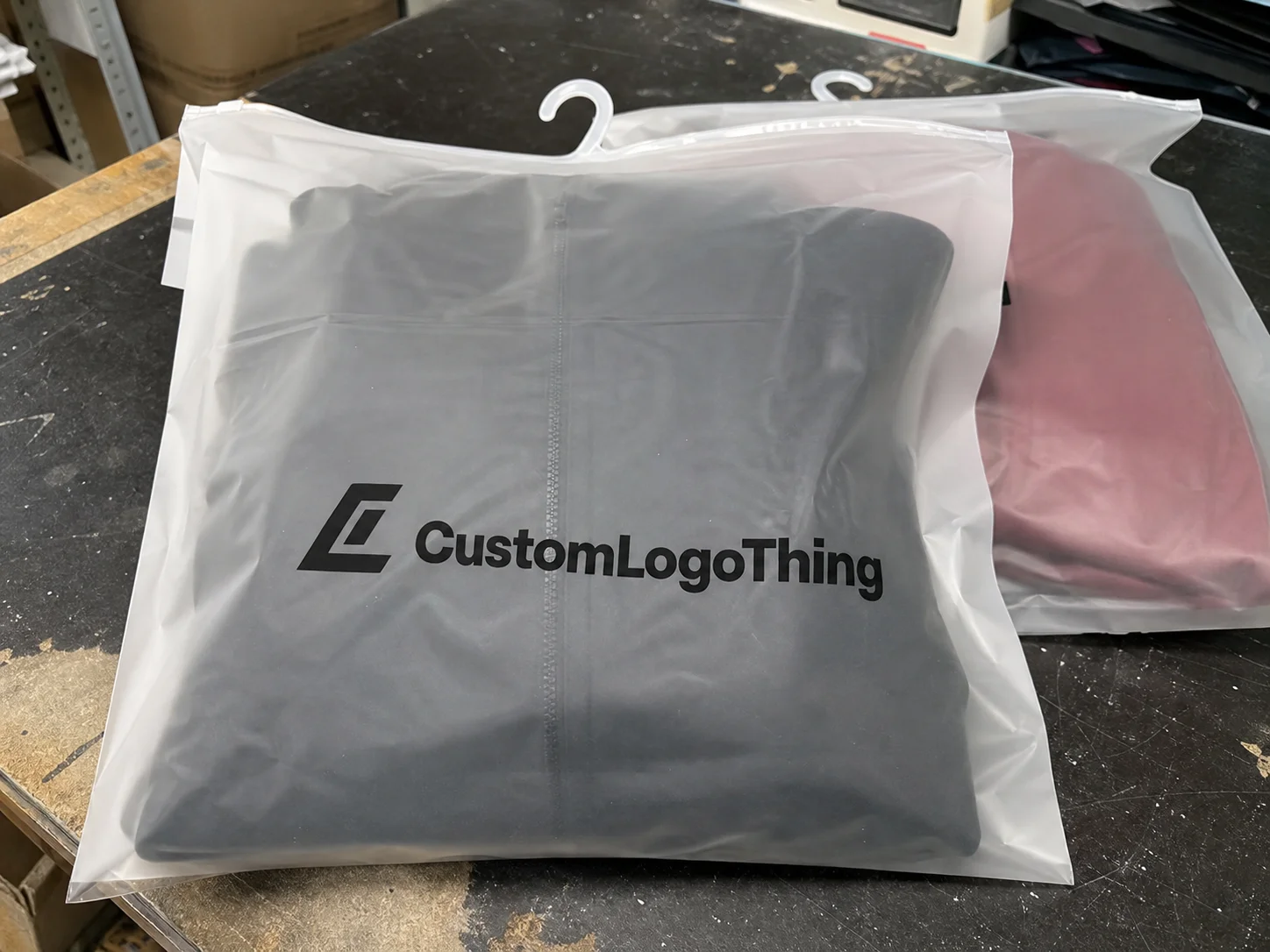
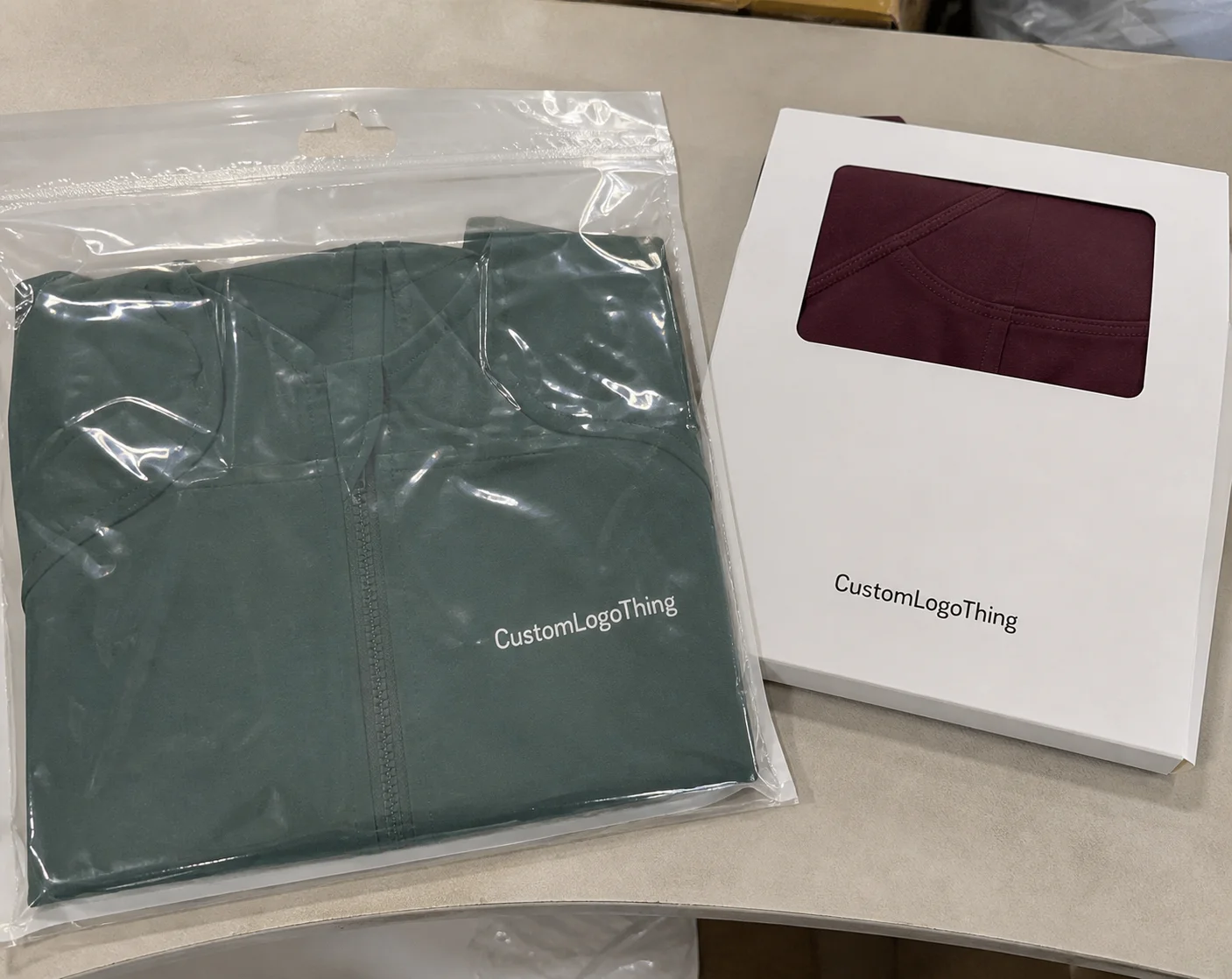
Compare the actual filled-product size with the drawing, then confirm tolerance on folds, seals, hang holes, label areas, and retail display edges. Reserve space for logos, QR codes, warning copy, and material claims before decorative graphics fill the panel.
Quote comparison points
Review material grade, print process, finish, sampling route, tooling charges, carton quantity, and freight assumptions side by side. A quote is only useful when the supplier can repeat the same color, closure quality, and packing count on the next order.
Custom Packaging for Limited Edition Drops: Strategy
I have seen Custom Packaging for Limited Edition drops do something most brands still underestimate: it becomes the first product experience, the first photograph, and sometimes the first proof that the release deserves the word rare. I remember standing on a production floor in Shenzhen beside a 300-piece run of matte-black mailers with numbered belly bands; three packing-line staff stopped to take photos before the apparel even reached the carton, which told me almost everything I needed to know about how custom packaging for limited edition drops shapes perception before the customer touches the product.
Scarcity is not only a question of inventory. It is presentation, timing, and the quiet sense that someone cared enough to make the release feel deliberate. A launch can feel $20 more valuable without adding $20 of material cost if the Custom Packaging for Limited Edition drops is sized correctly, printed cleanly, and built around the story the brand is already telling. I have seen a simple 350gsm C1S artboard sleeve in Chicago outperform a foil-heavy concept from New York because the pack looked intentional in a phone photo shot at 11:40 p.m., not just under studio lights.
Standard retail packaging tends to chase efficiency: fit every SKU, ship in bulk, keep the line moving. Custom Packaging for Limited Edition drops works from another set of rules. It still has to protect the product, but it also has to signal rarity, support social sharing, and make the customer feel like they bought something that will not linger in a warehouse for months. That emotional lift is real, and it shows up in measurable ways: higher unboxing share rates, fewer "this feels cheap" comments, and a better chance that a $24 item gets treated like a collector piece. I have seen teams treat those comments as soft data, then get surprised when the returns rate tells the same story a week later.
The distinction is practical. A folding carton or mailer for a replenishment item may be built around long-run cost control, while custom packaging for limited edition drops sits at the intersection of brand theater, protection, and compressed production timing. When that balance slips, the launch feels ordinary. When it lands, even a simple $18 product can feel like a collector piece. I have watched that happen with a plain paperboard sleeve, one excellent emboss, and a 1.5 mm snug insert cut in Dongguan, with no glitter and no drama, just restraint.
What Custom Packaging for Limited Edition Drops Actually Changes
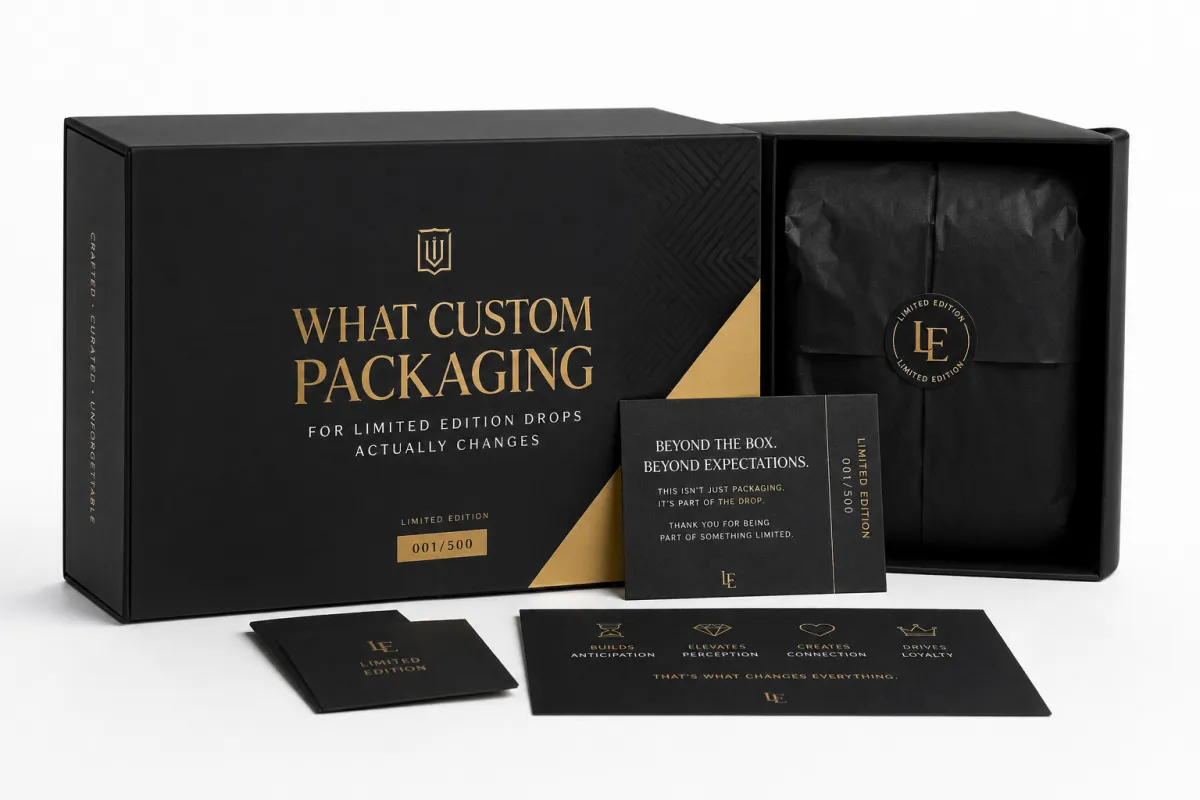
Custom packaging for limited edition drops changes the order of attention. The box, sleeve, or mailer gets the first look, not the item. I have watched buyers open a drop and immediately talk about board stock, spot UV, and insert fit before they mention the product itself. That reaction is exactly why the packaging cannot sit at the bottom of the brief. If the first thing people notice is the package, the package is part of the product whether teams admit it or not.
In plain terms, this is packaging made for a small, time-sensitive release where scarcity, speed, and presentation matter more than long-run efficiency. The format can be a folding carton for 500 skincare sets, a rigid box for 200 premium accessories, or a printed mailer for 2,000 apparel orders. The structure changes, but the logic stays steady: custom packaging for limited edition drops has to make the launch feel intentional. Otherwise the whole thing risks looking like a warehouse afterthought dressed up in a nice font.
A standard retail box is usually designed to survive a planogram and a warehouse shelf. custom packaging for limited edition drops carries a broader brief. It protects during fulfillment, yes, but it also creates a moment of discovery. A crisp logo placement, a numbered seal, or a custom insert can make the same product feel far more premium without touching the item itself. That is the strange little miracle of packaging: the container changes the value story before the customer has formed a fully rational opinion.
The economics get misread more often than people admit. Teams assume rarity requires ornate packaging. It does not. I have seen a two-color kraft mailer with a sharp one-color logo outperform a foil-heavy rigid box because it matched the brand voice and the customer base. In that case, custom packaging for limited edition drops worked because it was disciplined, not because it was expensive. If anything, the simpler option sometimes has more confidence, especially when it is produced in Guangzhou at a run of 1,000 units and arrives with tighter registration than a luxury concept that cost triple the art budget.
Another comparison helps. A retail box is often optimized for a shelf and a reset cycle, while custom packaging for limited edition drops is optimized for a launch window and a sharing cycle. The pack has to look good in a one-second phone photo, not only under warehouse lights. If print registration drifts by 1.5 mm or the dieline crowds the logo, people notice faster than most teams expect. I have seen a launch get side-eyed for a crooked seal on a $42 fragrance set, and the comment section was less forgiving than the production team.
On a client call in Chicago, a DTC beauty founder once told me she wanted the carton to feel "worth posting." We removed two finish layers, shifted to a 350gsm C1S board, and used one embossed mark instead of three. The final pack cost less than the first concept, yet it looked more premium on camera. That is the practical side of custom packaging for limited edition drops: fewer choices can make the story sharper. My opinion? Most teams try to buy confidence with too many features, and a 28-point checklist does not make the box stronger.
There is also a trust signal hiding in the structure. If the product is scarce, the packaging should not feel generic. A flimsy mailer or an oversized carton sends the opposite message. In packaging design, proportion does a surprising amount of work. A snug fit, a well-placed insert, and a quiet finish usually say "limited" more convincingly than another glossy surface ever will. That quiet finish is doing heavy lifting while everyone else is busy picking foil swatches like they are choosing a sports car color in Los Angeles.
Why Does Custom Packaging for Limited Edition Drops Matter?
Custom packaging for limited edition drops matters because it turns a short-run release into a complete brand moment. The product may be the hero, but the box, mailer, or sleeve is the proof that the release was designed, not improvised. In a market where customers photograph packaging before they even post the item, the structure is part of the marketing, the fulfillment, and the memory. That combination is rare in retail, which is exactly why custom packaging for limited edition drops deserves more attention than it usually gets.
It also changes how value is perceived. A limited edition product in generic packaging can feel unfinished, even if the product inside is excellent. A modest product in well-executed packaging can feel collectible. That is the difference between a transaction and a moment. For custom packaging for limited edition drops, the goal is not decoration for its own sake. The goal is to make scarcity visible, protect the item in transit, and give the audience a reason to share what they bought. If the pack does not help with those three jobs, it is probably pulling its weight in the wrong direction.
That is why the best packaging decisions often look simple after the fact. One strong material choice, one clean print pass, and one thoughtful insert can do more than a pile of finishes. Custom packaging for limited edition drops is not about making every surface loud. It is about making the launch feel intentional at first glance, then dependable when the box opens and the product arrives intact. Simplicity is not a lack of ambition here; it is usually proof that the team understood the brief.
How Custom Packaging for Limited Edition Drops Moves From Brief to Box
Custom packaging for limited edition drops usually starts with three facts: product dimensions, launch date, and target cost. Leave one out and the project tends to wobble later. I have seen teams arrive with polished mood boards and no finished sample in hand, and that is how a box ends up matching the concept but not the product. Pretty deck, ugly surprise. It happens more often than I would like to admit, especially when the launch team is juggling 1,500 units and a delivery date that moved by five days.
The workflow is more methodical than most marketers expect. First comes the brief: dimensions, product weight, shipping channel, unboxing goal, and brand references. Then comes the dieline. Then material selection. Then print setup. Then sampling. Then approval. Then production. Custom packaging for limited edition drops can move quickly, but only when each step is clear and the sign-offs are disciplined. If not, you get three revised art files, a missed freight window, and someone saying "we can probably still make it work" with the energy of a person about to lie to themselves. Been there, and it is never fun.
Sampling matters more than people usually admit. A CAD drawing can say a lid will close, but a physical prototype tells you whether a ribbon tail gets pinched, whether a magnetic flap is too stiff, or whether a PET tray scratches the product finish. One supplier I worked with in Dongguan caught a 2 mm insert error on a prototype for a limited fragrance release; without that sample, 1,200 units would have shipped with bottles rattling inside the carton. That is not a small miss. That is the kind of miss that sends a founder into a silent stare at a warehouse wall.
Approvals should cover more than artwork. They need color matching, barcode placement, legal copy, country-of-origin marks, and the protective structure. For custom packaging for limited edition drops, I always tell teams to confirm the insert fit with the actual product, not a guessed spec sheet. Products vary. Glass walls vary. Cap heights vary. A half-millimeter difference can shift the whole inner tray. I once had a sample fail because a cap that "should have" fit was, in fact, 1.2 mm too tall, which is the kind of tiny error that somehow becomes everyone's problem.
Lead times depend on the structure. A simple printed mailer can sometimes move in 10 to 14 business days after proof approval if the artwork is ready and the board is in stock. A rigid box with foil stamping, EVA foam, and hand assembly may need 20 to 35 business days, especially if freight and kitting are part of the plan. Custom packaging for limited edition drops is not one timeline; it is a chain of timelines. Break one link and the whole drop starts to feel like a relay race where nobody remembered the baton.
Delays usually come from familiar places. Late content changes. Missing measurements. Slow proof comments. A customer who asks for "one more finish" after tooling is already cut. I have seen all four in one project. The drop date did not move, which meant the packaging schedule had to absorb the pressure. That is why custom packaging for limited edition drops rewards the teams that lock decisions early. Everyone says they want speed; very few people actually want to make decisions before the panic starts.
Freight and assembly deserve real attention too. If the packaging arrives flat and gets kitted later, labor hours and a packing plan are required. If it arrives pre-assembled, you need space and a cleaner inbound schedule. Either way, custom packaging for limited edition drops works best when the packaging vendor, the fulfillment team, and the launch calendar are looking at the same dates. I have seen a beautiful box become an operational headache because nobody decided who was assembling it until the truck was already on the road from Ningbo.
Cost and Pricing Factors in Custom Packaging for Limited Edition Drops
Custom packaging for limited edition drops gets expensive when teams compare only the quoted unit price. That number matters, but it never tells the whole story. Board grade, print method, assembly labor, special finishes, and shipping can shift the real cost by 15% to 40% before anyone catches the drift. I wish that were an exaggeration. It is not, especially when a carton printed in Shenzhen looks cheap on paper and then gains $0.09 per unit in insert labor, $0.06 in finish work, and another $0.04 in freight handling.
The biggest cost drivers are easy to name. Structure comes first: a mailer box is usually cheaper than a rigid box. Material grade comes next: 14pt SBS, 18pt SBS, or 1.5 mm greyboard all sit at different price points. Then comes print complexity. Then finishing. Then inserts. Then labor. Custom packaging for limited edition drops is really a stack of small decisions that add up fast. That is the part people hate, because no single line item looks scary by itself.
Quantity changes everything. At 500 units, a custom box might land at $1.15 to $2.80 per unit depending on structure. At 5,000 units, the same concept might fall to $0.15 per unit for a very simple one-color mailer in a clean run, or $0.18 to $0.65 per unit for more typical printed formats. I have seen a limited-run beauty carton quoted at $0.42/unit at 3,000 pieces, then priced at $0.27/unit at 8,000 pieces once setup costs were spread across the run. That is why custom packaging for limited edition drops rewards volume planning, even when the launch is intentionally small. A little scale goes a long way, which is one of the few merciful things in packaging economics.
Hidden costs sit everywhere. Tooling for a custom insert. A first-sample revision. A metal die that needs adjustment. A rush freight charge because the drop date moved. Teams sometimes forget assembly labor too, which can add $0.08 to $0.35 per unit depending on how many components need to be packed together. With custom packaging for limited edition drops, the quote on page one is often only part of the bill. I have opened too many budget files that looked elegant until the freight and kitting lines showed up like uninvited relatives. They always arrive with the same energy: polite, expensive, and unavoidable.
| Packaging option | Typical unit cost range | Best use case | Lead time | Value signal |
|---|---|---|---|---|
| Printed mailer box | $0.15-$0.65 | Apparel, small accessories, DTC kits | 10-16 business days | Strong branding at lower cost |
| Folding carton | $0.22-$0.90 | Cosmetics, supplements, light retail packaging | 12-18 business days | Clean shelf presence |
| Rigid box | $1.10-$4.50+ | Collector items, luxury sets, gifting | 20-35 business days | Highest perceived premium |
| Printed sleeve + inner tray | $0.30-$1.20 | Limited edition product packaging with a simple core box | 14-22 business days | Good balance of cost and presentation |
What should a brand spend? I would tie the budget to margin and audience expectations. If the product margin is 65%, and the customer base is highly social, spending an extra $0.35 on custom packaging for limited edition drops can be justified if it lifts share rate or reduces damage. If the margin is thin and the item is utilitarian, a plain but accurately sized box can be the smarter move. This is one of those cases where the glamorous answer is often the wrong one, especially if the launch is in Austin and the retail price sits at $19.99. The math is not glamorous, but it is honest.
Special finishes deserve discipline. Foil stamping can be beautiful, but one foil pass may be enough. Soft-touch lamination can feel expensive, but it also shows fingerprints and may slow the line. Spot UV can pop on camera, but only if the artwork has enough contrast. The trick with custom packaging for limited edition drops is not to buy every effect available; it is to buy the one detail your audience will remember. In my experience, that usually means picking one tactile or visual cue and letting it carry the story.
For teams that need a reliable starting point, I often point them toward the range of Custom Packaging Products that can be adapted without rebuilding the whole packaging system. It is easier to control spend when the core structure is proven, then reserve the bespoke treatments for the truly important release. That approach keeps custom packaging for limited edition drops practical instead of theatrical for its own sake. I am very pro-theater, but only if the budget survives the curtain call and the supplier in Guangzhou does not charge you another $0.07 for every decorative decision.
There is also a sustainability cost lens. Using FSC-certified board, trimming oversized void space, and cutting mixed-material components can lower environmental impact and sometimes reduce freight weight as well. The FSC guidance at fsc.org is useful if the brand wants sourcing claims it can defend. For custom packaging for limited edition drops, sustainability works best when it is built into the spec, not pasted into the press release later. Nobody likes a last-minute green sticker slapped onto a box that was overbuilt from the start. And yes, customers do notice when the sustainability claim is doing more work than the structure itself.
Key Factors That Make Custom Packaging for Limited Edition Drops Work
Custom packaging for limited edition drops only works when the package matches the audience. A collector sneaker drop, a premium skincare release, and a merch capsule do not need the same visual language. One audience wants swagger. Another wants clinical cleanliness. Another wants warmth and a giftable feel. If the packaging misses that tone, the item can lose momentum before it reaches the cart. The mistake is not subtle; it is usually painfully obvious in photos and customer feedback, especially when 400 units leave a warehouse in Los Angeles and the feed goes live within 30 minutes.
Protection is not optional. A fragile ceramic, a glass bottle, or a temperature-sensitive product needs more than a pretty shell. That usually means insert engineering, crush strength, and transit testing. ISTA testing protocols are a useful benchmark here, especially for e-commerce releases that will move through multiple handoffs; I often point teams to ISTA when they want a standard to discuss with their supplier. In custom packaging for limited edition drops, the box has to survive the launch, not just the photos. A pretty box that fails in transit is not premium. It is a complaint ticket with excellent lighting.
The unboxing experience should support the story, not fight it. If the brand is minimal, the packaging should probably not shout with five foil colors and three inserts. If the release is playful, a hidden message or a reveal panel may make sense. I once sat in a supplier negotiation in Shenzhen where the client wanted embossed type, debossed type, foil, and a magnetic closure on a $28 item. We cut it down to one tactile move and a clean insert, and the finished pack felt more expensive than the original concept. That is the kind of judgment custom packaging for limited edition drops needs. I honestly think restraint is underrated because restraint does not photograph as loudly in a deck.
Sustainability should enter the decision process on day one. Right-sizing the box, avoiding unnecessary foam, choosing recyclable paper components, and reducing mixed plastics can make the pack easier to recover after use. It also tends to make the design cleaner. In my experience, the best-looking custom packaging for limited edition drops often uses fewer materials, not more. Less waste, less visual noise, fewer opportunities for something to peel, split, or arrive looking tired after 14 days in transit from Vietnam.
Exclusivity cues can help without feeling gimmicky. Numbered labels, sealed tear strips, custom inserts, signed cards, or a short note from the founder all add scarcity signals. But they must be real. A fake number stamp on a run that is not actually limited will get noticed, especially by repeat buyers who keep track of patterns. Trust is fragile in custom packaging for limited edition drops; the package should support the claim, not oversell it. Buyers can smell fake scarcity from a mile away, and the comments tend to arrive within the first hour.
"The best limited drop packaging I have seen usually has one clear idea, one clean structure, and one detail the customer remembers three days later, even if the run was only 250 units."
Brand consistency matters as well. If the product is positioned as premium but the packaging looks like a generic warehouse carton, the launch feels unfinished. That is where package branding does real work. A well-sized mailer, a strong logo lockup, and a disciplined color system can make custom packaging for limited edition drops feel deliberate even before the customer opens the box. I have always thought that consistency does more for confidence than a long list of special effects ever could, especially when the pack is traveling through a fulfillment center in New Jersey or California.
Step-by-Step Guide to Planning Custom Packaging for Limited Edition Drops
Start with the objective. Do you want to sell faster, reduce damage, raise perceived value, or make the drop more shareable? A single goal keeps custom packaging for limited edition drops from turning into a wishlist of unrelated ideas. I have seen launch teams try to optimize for every metric at once, and the result is usually a box that costs too much and does none of the jobs well. That kind of indecision has a way of showing up as extra fees, delayed proofs, and a deadline that moves by seven days.
Next, lock the basics: volume, channel mix, and deadline. Those three choices shape almost every other packaging decision. A 1,000-unit Shopify drop with direct shipping needs different durability than a 300-unit VIP release handed out at an event in Miami. Custom packaging for limited edition drops should be built around the route the product will actually travel. A gorgeous pack that is not suited to the real shipping path is basically a very expensive apology.
Then choose the format. A mailer box is often the right answer for apparel and compact kits. A folding carton is strong for cosmetics and lightweight retail packaging. A rigid box makes sense when the experience itself is part of the value. A sleeve can be a smart compromise if the base pack already exists. The right format for custom packaging for limited edition drops is usually the one that protects the product without wasting board or labor. My bias: start with the simplest structure that can still carry the idea, then use a 350gsm C1S artboard or 1.5 mm greyboard only when the product actually needs it.
Request quotes only after you have dimensions, artwork direction, and finish priorities. Otherwise, suppliers are forced to guess, and the numbers you get back will not compare cleanly. I usually ask clients to provide exact product measurements, a target count, a deadline, and a reference image or two. That is enough to get a real starting point for custom packaging for limited edition drops. If the brief is vague, the quote will be vague, and then everybody acts surprised when the production result is vague too. It is kind of funny until you are the one paying for the extra sample round.
Once you have a quote, prototype the pack before approving full production. Test the closure, the insert, the barcode scan, the tape strength, and the shipping fit. Then review print files carefully. Check line weights, bleed, trapping, and copy alignment. A small mistake can turn into a very visible one here. For custom packaging for limited edition drops, print accuracy matters because customers often photograph the box at arm's length, where alignment flaws are easier to spot. A 1 mm shift can suddenly feel like a neon sign.
After approval, plan production and fulfillment together. A beautiful box that arrives after the product ships is a missed opportunity. A box that sits in the warehouse because the kitting plan is unclear creates delay. Custom packaging for limited edition drops performs best when the packaging team and the fulfillment team are working from the same calendar and the same SKU list. That sounds obvious. It also gets missed with alarming regularity, especially when the packaging is made in Dongguan and the fulfillment center is in Dallas.
A simple launch checklist helps:
- Confirm product dimensions and weight.
- Set the target unit cost and total packaging budget.
- Choose the box style and finish priority.
- Approve the prototype and scan test barcodes.
- Lock artwork, inserts, and legal copy.
- Book production, freight, and kitting slots.
- Reserve a small overrun for damaged units and photos.
That list may look basic, but it saves money. I have watched a client lose two weeks because the barcodes were added after proof approval. I have also seen a launch recover from a delayed sample because the team had a five-day buffer built into the schedule. Custom packaging for limited edition drops rewards teams that plan for friction instead of hoping the process will behave perfectly. Hope is not a production plan, though people keep trying to make it one, and the invoice usually arrives before the lesson does.
If you want a practical rule of thumb, build backward from fulfillment, not from artwork. Artwork is only one piece. Freight, assembly, and kitting can all take longer than expected, especially if the packaging has multiple components. That is why custom packaging for limited edition drops is less about inspiration and more about disciplined sequencing. The pretty part matters, but the calendar has the final say, and the calendar often belongs to a freight booking in Shenzhen or Ningbo.
Common Mistakes with Custom Packaging for Limited Edition Drops
The first mistake is starting too late. Small-run packaging still needs sampling, revisions, and shipping time. A rigid box with custom inserts does not appear in a few days just because the drop is exclusive. I have seen brands wait until the product landed at the warehouse before ordering packaging, and the launch immediately became more expensive. Custom packaging for limited edition drops needs a calendar, not just a concept board. Otherwise you end up paying for urgency, and urgency is rarely cheap when the proof approval comes in on a Friday at 4:30 p.m.
The second mistake is over-designing the pack. Too many finishes, too many materials, and too many structural changes can turn a focused idea into a slow, costly build. A limited drop does not automatically need foil, embossing, soft-touch lamination, a magnet, a ribbon pull, and an insert all at once. Custom packaging for limited edition drops usually gets stronger when one or two details are chosen with intent. I have watched a box improve the minute a client stopped trying to make every surface "special."
The third mistake is trusting a mockup more than a physical test. A render can make a box look perfect even if the closure is awkward or the product scrapes the edge on the way in. In one supplier meeting in Guangzhou, I watched a premium supplement carton fail the shake test because the insert had no side tension. The carton looked excellent on screen. On the line, it was a problem. That is why custom packaging for limited edition drops needs real samples, not only pretty files. The prototype is where fantasy meets gravity.
Another common miss is forgetting the operational details. Barcodes need quiet spaces. Inserts need orientation marks. Tape needs adhesion that works in the warehouse temperature range. If the pack arrives with no assembly instructions, the fulfillment team may improvise. That creates inconsistent results. Custom packaging for limited edition drops has to work in production, not just in a designer's deck. I have seen perfectly nice packaging get turned into a mess by one unlabeled tray and a rushed kitting shift in a 12,000-square-foot warehouse.
The last mistake is a mismatch between the packaging and the drop strategy. If the product is truly limited, but the package looks like a generic retail carton, the story loses force. If the box feels overly luxurious for a low-priced item, the economics can break. The best custom packaging for limited edition drops aligns price point, audience, and launch ambition. Anything else feels off, even if nobody can explain why. People can sense that mismatch almost immediately, which is irritating because it means taste has an operational component.
There is a way to avoid most of these problems: ask one supplier to pressure-test the spec before you commit. A good packaging partner will catch the weak points in the dieline, the finish stack, or the assembly sequence. That is where real packaging design shows its value. It is not only about how the box looks. It is about whether the packaging can survive reality. Fancy presentations are nice, but reality does not care about your font pairing, your color palette, or the 3D render you approved at 7:12 p.m. from Brooklyn.
Expert Tips and Next Steps for Your Next Drop
My strongest advice is to create a packaging playbook after each launch. Save the finished dieline, the approved board spec, the quoted unit cost, the freight method, and the damage rate. That file becomes gold on the next project. Over time, custom packaging for limited edition drops gets faster and smarter because the brand is not starting from zero every time. I have seen companies save two weeks simply because they had one clean folder of decisions instead of a cloud of half-finished ideas.
Standardize the basics, then reserve special treatments for hero releases. A brand does not need a new structure for every drop. In fact, repeated use of a proven mailer, carton, or sleeve can lower cost and shorten lead times. Then, when a truly important launch arrives, you can spend the extra budget on a custom insert, a premium finish, or a special seal. That is how custom packaging for limited edition drops stays sustainable as a process. It also keeps internal teams from burning out on packaging debates every other week.
Track the post-launch data. I mean the practical numbers: damage rate, customer support complaints, repeat purchase rate, unboxing feedback, and social shares with the package visible. If a pack generates 300 tagged posts but also 4% breakage, the packaging may be visually strong but operationally weak. Custom packaging for limited edition drops should be judged on performance, not only on taste. The internet loves a dramatic box; your finance team will care more about returns.
Before the next release, take four concrete steps:
- Measure the product and confirm weight to the gram.
- Set a target packaging budget per unit.
- Define the ship date and count backward from fulfillment.
- Request samples from two or three vendors so you can compare structure, print, and lead time.
I also recommend keeping a small library of proven materials: a matte white SBS, a natural kraft board, a 1.5 mm rigid stock, and a couple of insert options. That gives your team a short list instead of an endless search. It makes custom packaging for limited edition drops more repeatable, which is exactly what a launch program needs if it is going to scale. Honestly, a short list beats a treasure hunt almost every time, especially when the vendor in Dongguan can quote the matte white SBS at $0.15 more accurately than the team can rewrite the brief.
And do not forget the storytelling piece. The package should echo the launch message in a direct way. If the product is rare, make the packaging feel deliberate. If the brand is playful, add one small reveal. If the audience cares about sustainability, choose recyclable components and say so clearly. In my experience, custom packaging for limited edition drops works best when it feels like a repeatable system, not a one-off creative sprint. The drop may be short-lived; the packaging logic should outlast it.
For teams building a larger packaging strategy, the smartest move is to connect the packaging plan to the broader product packaging system, not isolate it from the rest of the business. That is where Custom Packaging Products can support faster iterations and cleaner sourcing decisions. The more the team learns from each launch, the better custom packaging for limited edition drops performs on the next one. That compound effect is where the real value hides, whether the production run is 250 units in Los Angeles or 5,000 units in Shenzhen.
Custom packaging for limited edition drops is not only about making a box look special. It is about giving a small release a bigger moment, controlling cost with discipline, and building a launch that feels worth sharing without pretending every detail needs to be extravagant. That balance is what I have seen work on factory floors, in client meetings, and in supplier negotiations, and it is why custom packaging for limited edition drops remains one of the most practical tools in branded packaging today. The best results usually look easy from the outside, which is deceptive and, frankly, a little rude, because they are rarely easy to produce in Guangzhou, Dongguan, or Ningbo. If you are planning the next drop, start by prototyping the simplest structure that fits the product, then test fit, damage risk, and camera readability before you spend money on finishes.
Frequently Asked Questions
How far in advance should custom packaging for a limited edition drop be ordered?
Plan several weeks ahead for sampling, revisions, and production, and add extra buffer if you are using rigid boxes, foil stamping, or assembly-heavy kitting. For custom packaging for limited edition drops, I like to work backward from the fulfillment date rather than from the artwork deadline, because freight and packing labor often take longer than teams expect. If you wait until everything feels urgent, your budget usually pays the price, and a 12-15 business day production slot can become 22 days very quickly.
What is the most cost-effective custom packaging for limited edition drops?
Mailer boxes and folding cartons are often the strongest starting point because they balance branding, protection, and cost. The most cost-effective custom packaging for limited edition drops usually keeps the structure simple, uses one high-impact finish, and avoids unnecessary inserts or multiple material layers. Simple does not mean boring; it usually means you spent the money in the right place, like a 350gsm C1S board with one clean logo pass instead of three decorative effects.
How can custom packaging for limited edition drops feel premium without overspending?
Start with accurate sizing, a clean structure, and print alignment that stays tight within 1 to 2 mm. Then choose one memorable detail, such as a numbered seal, a custom insert, or a tactile finish. The best custom packaging for limited edition drops feels premium because the experience is controlled, not because every surface is decorated. Too many extras can make the pack feel try-hard, which is the opposite of premium, especially on a $32 launch set.
What information should go into a packaging brief for a limited edition release?
Include product dimensions, quantity, channel, target budget, deadline, shipping requirements, and any protection concerns such as fragility or temperature sensitivity. A strong brief for custom packaging for limited edition drops should also include brand assets, finish preferences, and whether the box must ship flat, arrive assembled, or support kitting. If you can, include an image of the product too, because a photo plus a ruler saves everyone a lot of guessing.
Can custom packaging for limited edition drops help products sell faster?
Yes, if the packaging makes the release feel rarer, easier to recognize, and more worth sharing. Packaging alone will not create demand, but custom packaging for limited edition drops can amplify urgency and raise perceived value when the product, launch timing, and presentation all tell the same story. I have seen the right box nudge a hesitant buyer over the line more than once, which is not magic, just very good packaging with a 300-unit proof run and a strong first impression.