Buyer Fit Snapshot
| Best fit | Custom Packaging for Online Stores Wholesale projects where brand print, material claims, artwork control, MOQ, and repeat-order consistency need to be specified before quoting. |
|---|---|
| Quote inputs | Share finished size, material target, print colors, finish, packing count, annual reorder estimate, ship-to region, and any compliance wording. |
| Proofing check | Approve dieline scale, logo placement, barcode or warning zones, color tolerance, closure strength, and carton packing before bulk production. |
| Main risk | Vague material claims, crowded artwork, missing packing details, or unclear freight terms can make a low unit price expensive after revisions. |
Fast answer: Custom Packaging for Online Stores Wholesale: Costs & Specs should be specified like a repeatable production item. The safest quote records material, print method, finish, artwork proof, packing count, and reorder notes in one written spec.
Production checks before approval
Compare the actual filled-product size with the drawing, then confirm tolerance on folds, seals, hang holes, label areas, and retail display edges. Reserve space for logos, QR codes, warning copy, and material claims before decorative graphics fill the panel.
Quote comparison points
Review material grade, print process, finish, sampling route, tooling charges, carton quantity, and freight assumptions side by side. A quote is only useful when the supplier can repeat the same color, closure quality, and packing count on the next order.
Custom Packaging for Online Stores Wholesale: Costs & Specs
Custom Packaging for Online Stores wholesale usually starts as a branding line item and ends up as a shipping-performance decision the first time a carton lands on a packing bench in Los Angeles, Shenzhen, or Tilburg. I still remember standing beside a folder-gluer in Dongguan where a skincare buyer had been losing money on split seams, crushed corners, and one too many customer refunds on a $32 serum set. The fix had nothing to do with a louder logo or a shinier coating. A 0.3 mm increase in board caliper, paired with a tighter score rule and a 1.5 mm deeper tuck, cut corner crush enough to reduce re-ships by 18% on that program. That is the part people miss first: custom packaging for online stores wholesale works best after the spec matches the SKU, the carrier lane, and the pack line rather than a catalog image and wishful thinking.
For online sellers, the math is direct and measurable. Fewer damages, less void fill, cleaner pack-out, and tighter control of dimensional weight can reshape margin on a $24 candle, a $48 supplement bundle, or a $68 skincare trio. I have seen brands save $0.11 to $0.29 per order by trimming empty space in an outer carton, which sounds minor until a warehouse in Phoenix or Manchester is moving 40,000 orders a month and every penny starts acting like rent. Custom Packaging for Online stores wholesale also shapes the buyer’s first physical encounter with the brand, because the box is often the first proof that the operation understands shipping, presentation, and product safety at the same time. That matters more than some teams want to admit, usually until the reviews start mentioning dents, rattles, and split corners by name.
The strongest programs never focus only on package branding, and they never focus only on protection. The Best Custom Packaging for online stores wholesale setups do both: they protect glass, textiles, supplements, candles, and subscription items through a courier network that can handle a 36-inch drop one day and a 42-inch conveyor impact the next, while still opening cleanly on a kitchen counter or apartment table in Chicago, Austin, or Melbourne. That balance matters for apparel bundles, beauty kits, coffee subscriptions, and retail packaging that ships direct to consumer but still needs to feel intentional enough to encourage repeat orders. I have seen a plain shipper flatten a premium feel faster than a bad product photo, and that is saying something.
Before the details, one point deserves to be plain: custom Packaging for Online stores wholesale should be judged by measured outcomes, not broad claims. Ask what the box does to cube efficiency, what it does to return rates, what it does to pack-out speed per labor hour, and what it does to unboxing quality after a 36-inch drop test and a 24-hour compression hold. That is the language that keeps packaging decisions honest, and it is the language buyers should use with suppliers too. If a supplier cannot speak in those terms or cannot provide a dieline with inside dimensions, board spec, and coating type, I start getting nervous, and usually for good reason.
Why Custom Packaging for Online Stores Wholesale Pays Off
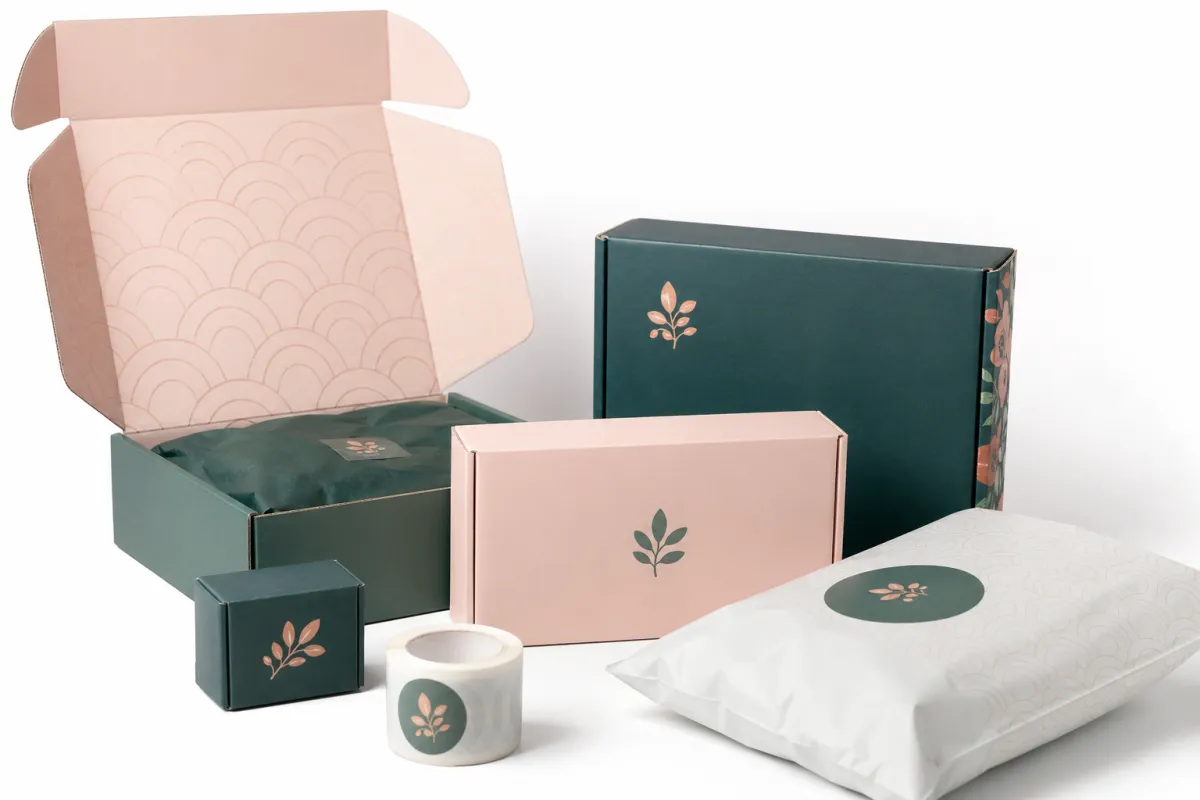
Custom Packaging for Online stores wholesale pays off first through damage reduction. On a line I visited in Guangdong, a skincare brand was shipping glass bottles in a corrugated mailer with loose kraft paper, and the breakage rate sat around 4.6% during humid season in July and August. We swapped the insert from folded paperboard to a die-cut molded pulp tray, kept the same outside footprint, and the damage rate fell below 1.5% after two pallet pulls and a 48-hour humidity soak. That was not branding theater. It was a packaging change tied directly to freight loss, replacement labor, and customer service tickets. I still remember the client looking relieved in that very specific, very practical way only operators do when the numbers finally stop misbehaving.
The second payoff is dimensional weight control, where custom Packaging for Online stores wholesale starts protecting margin every single day. A box that is 0.75 inch too tall can bump a parcel into a higher DIM bracket, and on a 5,000-unit run that becomes a real freight expense in USPS, UPS, or FedEx billing. I have seen buyers pay for empty air because a generic stock mailer looked cheaper on paper, then cost more once the parcel was rated by cubic volume at the carrier hub in Indianapolis or Memphis. A tighter fit, a shorter tuck, or a narrower corrugated shipper can move a program from wasteful to disciplined in one buying cycle. It is one of those annoyingly simple truths that keeps showing up on freight invoices like a bad habit.
There is also the customer-experience side, which matters more than some operations teams want to admit. Custom packaging for online stores wholesale becomes part of the offer itself for candles, supplements, apparel accessories, and small electronics, because the outer carton has to protect the product and still deliver a presentation that feels finished. A soft-touch mailer with a one-color logo can make a $38 item feel more considered than a plain brown shipper with three inches of fill, especially if the print is held to a 0.25 mm registration tolerance and the color is matched to a Pantone reference under D50 lighting. On the factory floor in Ningbo or Suzhou, that difference shows up in how consistently the goods arrive intact and how often the team can pack without re-taping or reworking the box. I have watched a crew lose patience with a box that kept springing open like it had personal issues; nobody enjoys that box.
“The job is not to make a pretty box. The job is to make a box that survives the courier network, fits the SKU, and still makes the customer think the brand paid attention.”
People often overbuy finish before they solve structure. If the goal is custom packaging for online stores wholesale, start with board strength, closure style, and insert logic, then decide whether the box really needs matte lamination or a foil hit. That order usually saves money because it puts protection, cube efficiency, and pack-out speed ahead of decorative extras that do not improve the shipping result. I have seen more than one brand spend on metallic accents and then ask why the product still arrived rattling around inside like a loose coin.
For brands selling through Custom Packaging Products, the business case usually gets clearer after the first sample round. You can compare the actual carton weight, inspect the seam hold, test the closure under repeated opening, and check whether the printed panels stay crisp after transit vibration on a 600-rpm shake table. If the order is going to repeat every quarter, it is also worth discussing Wholesale Programs early, because the pricing curve changes once the supplier can plan production across multiple replenishment cycles in one plant schedule. I have seen this save enough money to make the finance team unexpectedly cheerful, which feels rare enough to mention.
What Is Custom Packaging for Online Stores Wholesale?
Custom packaging for online stores wholesale is packaging engineered around a specific SKU, a specific carrier lane, and a specific pack line so the carton protects the product, controls dimensional weight, and still carries the brand well. That usually means choosing the right mailer box, corrugated shipping box, folding carton, or rigid setup, then matching the insert, coating, and print method to the way the order actually moves through the warehouse.
For online sellers, that definition matters because a custom printed box that looks strong but adds cube or slows the packing bench is not really better packaging at all. The right spec gives you branded shipping boxes, a cleaner unboxing experience, and fewer damages without creating a bottleneck in fulfillment. It also makes repeat reorders easier, because the factory can build from a stable dieline, a stable board grade, and a stable production target instead of chasing a moving brief.
There is one more angle that often gets skipped. Wholesale packaging is not just about unit price, and it is not just about the design proof either. A good program has to survive reorders, seasonal spikes, and the occasional shift in carrier rules without forcing the brand to reinvent the wheel every quarter. That is why the spec sheet matters as much as the mockup.
Box Styles, Inserts, and Unboxing Features
Custom packaging for online stores wholesale starts with choosing a box style that fits the product and the way the warehouse packs orders. Mailer boxes are popular for DTC brands because they self-lock, ship flat, and create a tidy presentation with minimal tape. Tuck-end cartons work well for lighter retail packaging like soap bars, cosmetic sleeves, or supplements. Corrugated shippers handle heavier loads, while two-piece presentation boxes and rigid setups give a more premium feel for gift sets or subscription launches. The right structure protects the item without asking the warehouse crew to slow down by 20 seconds per order, which sounds small until you multiply it across 100,000 units and somebody starts muttering near the tape gun.
Inserts matter more than many buyers expect. Custom packaging for online stores wholesale often needs die-cut paperboard, molded pulp, EVA foam, or corrugated partitions depending on the product weight and fragility. I once worked on a tea sampler project in Portland where the client wanted the lowest-cost insert possible, and the first sample let tins rattle hard enough to scuff the varnish on the lids after a 14-mile local delivery run. We moved to a simple six-cell paperboard divider, added a 2 mm shoulder, and the pack-out stayed fast while the product stopped knocking itself around in transit. For glass bottles, molded pulp usually gives better crush absorption; for cosmetics, a clean paperboard tray often looks more refined; for heavy kits, corrugated partitions keep everything squared and separated. That is the sort of detail nobody sees on the sales page but everybody notices when the box shows up.
The unboxing features should support both security and speed. Self-locking bottoms reduce tape use, tear strips help the customer open the box without a knife, dust flaps improve presentation on rigid or folded structures, and tamper evidence can be useful for supplements or high-value retail packaging. In custom packaging for online stores wholesale, I look at the box like a piece of warehouse equipment as much as a brand asset. If a feature saves three seconds on sealing and two seconds on opening, it can matter more than a glossy finish when the volume reaches thousands of units a week. I am not anti-beauty, far from it, but I am deeply suspicious of any feature that only looks good in a mockup.
- Mailer boxes: best for apparel, accessories, and subscription items that need 1-2 minutes of pack time and a clean presentation.
- Corrugated shippers: best for heavier products, stacked pallets, and shipping lanes with rough handling or mixed carriers.
- Rigid setup boxes: best for premium kits, limited editions, and product packaging where the opening experience is part of the sale.
- Tuck-end cartons: best for lightweight SKUs, shelf-ready retail packaging, and smaller print runs with fast hand assembly.
For online stores that need a repeatable system, custom packaging for online stores wholesale should also reflect the warehouse workflow. If the pack team uses a 16-inch tape gun, a 12-cavity pick cart, and a 4-foot bench in Dallas or Toronto, the box should close in a way that fits that rhythm, not fight it. In one Atlanta fulfillment meeting, I watched packers lose time because the box lid required too much finger pressure to seat, and the team had compensated by adding an extra strip of tape to every order. A simple score adjustment and a 4 mm tab extension solved it, which saved labor and improved presentation at the same time. Little fixes like that are easy to ignore on paper and impossible to ignore at scale.
After the second carton concept was approved, we photographed the insert fit, the closure edges, and the product clearance against the side walls. Those images became part of the internal quality file, and that habit has paid off more than once when a later reorder tried to alter the depth by 1/8 inch without checking the stack-up. That is a small example, but custom packaging for online stores wholesale often wins or loses on details that small. I have a soft spot for those photo records because they save arguments later and keep a 40-minute email thread from happening over a missing 2 mm.
Materials, Print Methods, and Structural Specs
Materials drive both the feel and the shipping performance of custom packaging for online stores wholesale. For corrugated options, E-flute works well for premium presentation mailers because it prints cleanly and still gives decent crush resistance at a relatively thin profile, usually around 1.2 to 1.5 mm. B-flute is better for broader shipping loads and stronger stacking, often measuring closer to 3 mm and handling more abuse in palletized freight. For folding cartons, white-lined chipboard, SBS paperboard, and 350gsm C1S all show up often, but the right pick depends on the product weight, the print coverage, and whether the box needs to stay sharp after warehouse handling. Kraft liner and recycled corrugate are practical choices when the brand wants a natural look with stronger fiber content, and specialty wraps become relevant for rigid boxes or high-end retail packaging. I have a clear bias here: if the structure is wrong, no coating in the world is going to rescue it.
Buyers should ask for specific data before any quote is finalized: inside dimensions, board grade, flute profile, compression strength, print coverage, coating type, and insert requirements. I cannot count how many times a buyer sent me only the outside size and a logo file, then wondered why the estimate had too much variance. For custom packaging for online stores wholesale, a box that is 9.75 x 6.25 x 2.10 inches inside is not the same as a nominal 10 x 6 x 2 box with no dimensional tolerance. Add 0.5 mm of board variation, a 1 mm glue flap, and a 2 mm product insert, and the numbers start moving fast. I have watched a clean estimate turn into a headache just because someone treated “close enough” like a measurement standard, which, as we both know, it is not.
Print method matters just as much. Flexographic printing is efficient for utility-driven runs and larger volumes, especially on corrugated outer shippers where bold graphics and repeatable registration matter more than photographic detail. Offset printing gives tighter image sharpness and better tonal control, which is why it is common for premium custom printed boxes, folding cartons, and gift-ready product packaging. Digital printing is ideal for short runs, sampling, seasonal launches, and SKU testing because it cuts setup time and can handle version changes without building a new plate set. Foil stamping and embossing belong at the end of the decision tree, not the beginning, because they add cost and should support the design rather than take over the structure.
Finish choices affect both appearance and performance. Aqueous coating offers good scuff resistance without heavy cost, matte lamination gives a softer retail packaging feel, gloss lamination lifts color contrast, and spot UV highlights logos or panel details. Soft-touch lamination has a very specific feel that buyers notice immediately, but it adds cost and can show fingerprints if the shipment lane is rough. For food-safe or moisture-resistant programs, I always ask for the substrate and coating to be reviewed together, because a pretty finish that fails in humidity is not a finish worth paying for. I have seen a lovely matte box come out of transit looking like it had been through a weather report in Houston, and nobody was thrilled.
If you want to sanity-check board and fiber sourcing, the EPA recycling guidance at EPA recycling guidance is a solid reference point, and FSC chain-of-custody options are explained clearly at FSC. I like to point buyers there because the conversation about custom packaging for online stores wholesale gets more useful when everyone is using the same language about recovered fiber, responsible sourcing, and end-of-life handling. Shared terminology saves a lot of backtracking, which is a mercy in any production meeting held before 9:00 a.m.
One more practical point: custom packaging for online stores wholesale should be tested the way it will actually ship. That means checking a 24-hour compression hold, a vibration pass, and a drop from the height used in your carrier spec, not just looking at a counter sample under studio lights. If the SKU is a supplement bottle or a glass candle, ask for a fit test with the actual fill level and the final closure method, because a box that fits an empty bottle can fail once the product weight changes the stress on the bottom panels. I have seen that failure mode enough times to be slightly annoyed by it on principle. For a formal method, many teams use ISTA-style drop and vibration protocols or a variant of ASTM D4169, and that kind of repeatable test language makes supplier conversations much cleaner.
Custom Packaging for Online Stores Wholesale: Pricing and MOQ
Custom packaging for online stores wholesale pricing is driven by a handful of hard variables: dimensions, board grade, print complexity, insert count, finishing, production method, and shipping volume. A buyer often assumes the logo is the expensive part, but in practice the biggest price swings come from material yield and setup labor. If a carton size wastes 8% more sheet area than a tighter standard size, the quote can jump even before embellishments are added. If you are trying to estimate cost correctly, think in landed cost, not just unit price. That shift in thinking usually saves people from a lot of false optimism.
MOQ depends on structure and print method. Digital-Printed Mailer Boxes may support lower runs because setup is lighter, while rigid boxes and custom tooling usually require higher minimums. For custom packaging for online stores wholesale, I generally advise clients to ask for MOQ by size and by finishing level, because a 1-color mailer at 500 units is a different job than a 4-color soft-touch carton with an insert at 3,000 units. One supplier meeting in Ohio taught me this the hard way: the buyer had assumed their minimum would hold steady, then added foil and an EVA tray, and the production floor had to move from a short digital schedule to a longer finishing queue. Nobody was thrilled, least of all the person who had promised the earlier number a little too confidently.
Scaling changes the price curve in a very visible way. At 1,000 units, setup cost is spread over fewer boxes, so the per-unit rate can feel high; at 5,000 or 10,000 units, the press setup, dieline tooling, and finishing labor dilute more efficiently, and palletized freight becomes cheaper per carton. I have seen a 10 x 8 x 4 mailer go from $0.92 per unit at 1,000 pieces to $0.38 per unit at 5,000 pieces, with the same paper spec and the same one-color outside print. That is why custom packaging for online stores wholesale should always be quoted at two volume tiers at minimum. Otherwise, the buyer only sees the expensive version and never learns what the same structure costs once volume starts doing its job.
| Box Style | Best For | Typical MOQ | Starting Unit Price | Notes |
|---|---|---|---|---|
| Digital mailer box, E-flute | Apparel, accessories, subscription kits | 300-500 units | $0.88/unit at 1,000 | Good for short runs and quick samples |
| Flexo corrugated shipper, B-flute | Heavier goods, multipacks, bulk fulfillment | 1,000-2,000 units | $0.79/unit at 2,000 | Strong for transport and stacking |
| Offset folding carton, 18pt SBS | Beauty, supplements, retail packaging | 3,000-5,000 units | $0.31/unit at 5,000 | Sharper graphics, lighter protection |
| Rigid two-piece box with insert | Gift sets, premium launches, branded packaging | 1,000-3,000 units | $2.40/unit at 1,000 | Higher cost, stronger presentation value |
| Custom tuck-end carton with coating | Small retail items, soaps, low-weight SKUs | 2,500-5,000 units | $0.18/unit at 5,000 | Efficient for shelf-ready product packaging |
That table is only a working guide, not a quote sheet, because custom packaging for online stores wholesale can move up or down based on ink coverage, insert complexity, and freight lane. A 2-color exterior on a standard blank is far cheaper than a full-wrap print with inside panels, and a corrugated insert adds less than an EVA foam cavity in some cases but more in others depending on die complexity and glue points. I always tell buyers to compare the quote against the actual specification, not the sample photo. The sample photo is charming; the spec is what gets built in the plant.
Here is a budgeting rule I use when a client is deciding between options. If the box must protect the product under carrier pressure, budget by landed cost. If the box must also sell the product on a shelf or in a social-media unboxing clip, budget by cost per shipped order. If the line packs 3,000 orders a week, even a $0.05 difference per unit can matter more than a cosmetic finish. That is the point where custom packaging for online stores wholesale becomes a finance decision as much as a design decision. Frankly, that is also the point where opinions get louder in the room.
To keep quotes comparable, ask every supplier whether tooling, prepress, and one-round sampling are included. Ask whether freight is ex-works, FOB, or delivered duty paid. Ask whether the quoted insert is paperboard, molded pulp, or foam, because the raw material alone can move the total by 15% to 40%. Those questions sound basic, but they are exactly the questions that keep a wholesale buyer from signing off on the wrong packaging design. A clean quote should answer them before you have to chase anyone down.
Production Process, Proofing, and Lead Times
The production sequence for custom packaging for online stores wholesale is straightforward when the project is organized well. It starts with discovery, where the supplier collects product dimensions, shipping weight, closure style, print coverage, and the desired insert or protection method. Then comes the specification review and dieline setup, followed by structural sampling, artwork proofing, production approval, printing, finishing, packing, and freight booking. A clean sequence like that can save a week or more because no one is waiting on missing measurements after the press slot is already reserved. I wish every project moved that neatly, but packaging has a talent for exposing every rushed decision someone made three meetings earlier.
Most delays come from avoidable issues. In my experience, the biggest ones are incomplete dimensions, late artwork changes, barcode errors, and approvals that arrive after the production queue has already been locked. One cosmetics client in New Jersey sent final art after a proof had already been approved, then asked to shift the logo 6 mm to the left so it aligned with the product window. That tiny change meant a new plate adjustment and a two-day slip. With custom packaging for online stores wholesale, speed depends less on rushing and more on locking the structure first. The fastest projects are usually the boring ones, and I mean that as a compliment.
Lead times vary by job type, and buyers should ask for separate timelines for sample production and final run production. Simple digital or standard corrugated programs can often move from proof approval to shipment in 12-15 business days, while rigid boxes, special coatings, and insert-heavy jobs can take 18-28 business days once the proof is final. Freight adds more time, especially if the shipment is crossing a port in Long Beach, Rotterdam, or Busan, or moving by consolidated truck through a regional hub. I prefer to give buyers the total window, not just the press time, because custom packaging for online stores wholesale is only useful if it arrives before the launch date. A perfect carton that arrives after launch is just a very expensive delay.
To keep a launch on schedule, I recommend a sequence that has worked well on the factory floor. First, finalize the structure and insert fit. Second, approve a digital proof within 24 to 48 hours. Third, confirm carton pack-out, pallet count, and shipping lane before production starts. Fourth, freeze any barcode or regulatory text so the final plates do not need to be revised. The teams that follow that sequence usually see fewer surprises, fewer reprints, and a cleaner handoff from prepress to the finishing line. I have watched this save a project from spiraling because somebody noticed a nutrition panel typo before the press started eating sheets for breakfast.
There is also a practical test that I wish more buyers would request: open one packed sample, close it again, and watch how the corners and dust flaps behave after the second closure. If the box looks great the first time but loses shape after repeated opening, the packer may need to tape it, which slows the line and hurts the whole promise of custom packaging for online stores wholesale. A box that only looks right in a photo sample is not finished enough for real use. That is the kind of detail that separates a nice prototype from a packaging system that can actually survive Monday morning.
Why Choose a Manufacturer for Online Store Packaging
A manufacturer gives you direct control over materials, die lines, print quality, and inspection checkpoints, which is exactly why many buyers prefer custom packaging for online stores wholesale from a factory rather than through a resale chain. Every extra handoff adds risk. If the reseller is relaying measurements to a plant in Guangdong, then relaying a proof back to you, and then relaying a correction to a different plant contact, small errors can spread quickly. Direct manufacturing reduces that drift and usually shortens the conversation when a spec needs to be adjusted by 1 mm or a board grade needs to change from 16 pt to 18 pt. I have sat through enough of those relay-race conversations to know they can turn a simple carton into a group project nobody asked for.
The technical support matters just as much as the price. A good manufacturer can help with structural engineering, print guidance, pallet planning, drop-test considerations, and advice on reducing cubic freight charges. I have sat in meetings where a buyer wanted a heavier box because it felt safer, and the manufacturing team showed them how a tighter internal fit plus a stronger flute profile could outperform the heavier board at a lower landed cost on a 12,000-unit order. That is the kind of advice that comes from living near the presses, the die-cutters, and the folder-gluers, not from only reading spec sheets. For custom packaging for online stores wholesale, that expertise can be the difference between a box that ships well and one that merely looks expensive. I trust the factory people who can point to a stack of samples and explain exactly why one failed and another did not.
Quality control is also easier to manage at the factory level. The real checkpoints happen where the sheets are printed, where the dielines are cut, where the adhesive is applied, and where the cartons are packed in master cases. On one run I reviewed, the color held within a Delta E of 2.0 across three pallets because the press team checked ink density every 300 sheets and rejected the first skewed set before it reached finishing. That kind of batch consistency matters for branded packaging, especially if the same SKU will be reordered six times a year from the same plant in Shenzhen or Suzhou. You do not want to discover inconsistency after 20,000 units are already on a boat.
Buyers also gain better scaling options. A pilot run of 500 units can move into a 5,000-unit replenishment order without changing the entire production relationship, which is useful when a product line is still proving itself. If you are planning long-term replenishment, ask about Wholesale Programs and whether the manufacturer can store your approved spec, dieline, and color targets for repeat runs. That makes custom packaging for online stores wholesale much easier to repeat without rethinking the project from scratch each time. It also keeps the calendar from turning into a headache every quarter.
There is a simple factory-floor truth here: the more closely the supplier manages the actual converting process, the more confidence you have in the final result. That is why I usually recommend a manufacturer for online store packaging when the order includes inserts, special coatings, or any structure that must survive courier abuse and still look polished enough to support product packaging and brand perception. If the packaging will be handled by a pack line, stacked on a pallet, and opened by a customer the same week, the people making it should understand all three stages. Otherwise, you end up paying for the packaging equivalent of crossed wires, and nobody needs that.
Next Steps to Order Custom Packaging for Online Stores Wholesale
If you are ready to move forward with custom packaging for online stores wholesale, start by gathering the basics: product dimensions, target order quantity, shipping weight, artwork files, and any special protection or unboxing requirements. A carton is easier to quote accurately when the inside size is listed in inches or millimeters, the product weight is known to the ounce or gram, and the expected carrier is identified. Add whether the item is fragile, moisture-sensitive, or likely to be sold as a premium gift set, because that will change both the material choice and the closure style. The more concrete the brief, the less time everybody wastes pretending a missing dimension was “probably close.”
The order path I recommend is simple and keeps surprises low. Choose one box style first, request a spec sheet, approve a structural sample, confirm pricing at two volume tiers, and then move into a pilot production run. That sequence lets you compare a 1,000-unit number against a 5,000-unit number without guessing how the print, insert, or coating will behave. For custom packaging for online stores wholesale, the smartest buyers are usually the ones who slow down long enough to verify the fit before they scale the print run. I know that sounds almost too reasonable, but it saves more money than dramatic speed ever does.
Comparing quotes apples-to-apples is where many teams save real money. Check board grade, flute type, insert count, print method, finish, freight terms, and whether the quote includes tooling or sampling. A low quote that excludes inserts or freight can look attractive until the landed cost is calculated, and then the spreadsheet tells a different story. I have seen buyers save $1,800 on paper and lose $3,200 in rush freight because they approved the wrong schedule. That is why custom packaging for online stores wholesale needs a disciplined comparison method, not just a price scan. The spreadsheet is usually less romantic than the sales pitch, but it is a much better place to live.
If you want to move quickly, send one clear brief rather than ten fragmented emails. A strong brief includes the exact box footprint, the product photo, the target delivery method, and the finish you want to see on the shelf or in the mailer. From there, the supplier can advise whether a mailer box, tuck-end carton, corrugated shipper, or rigid presentation box is the cleanest fit. For many brands, that single conversation is the moment custom packaging for online stores wholesale stops being a vague cost and starts becoming a measurable operating tool. I have seen that shift change how a team talks about packaging entirely, which is usually a sign things are headed in the right direction.
When the sample looks right, approve it with confidence and keep the next reorder spec on file. That discipline is what keeps custom packaging for online stores wholesale repeatable, especially when the same carton will be used for seasonal bundles, subscription boxes, or replenishment programs with tight margins. If you are comparing options today, start with one sample, one freight lane, and one clear target for pack-out speed, then build from there. Pick one SKU, one route, and one damage-rate target, then spec the box against those three numbers and hold the supplier to them. That is the boring, steady process that keeps boxes shipping cleanly and keeps the whole operation from wobbling later.
What is the minimum order for custom packaging for online stores wholesale?
MOQ depends on the structure and print method. Digital-printed mailer boxes can start around 300 to 500 units, while rigid boxes and custom inserts often need 1,000 units or more. Ask for MOQ by size, board grade, and finish, because a 2 mm change in depth or the addition of foil can move the minimum upward fast. I have seen what looked like a small tweak turn into a whole new production lane, which is a fun surprise for nobody.
Which material is best for online stores wholesale packaging that ships safely?
For heavier or fragile items, corrugated board is usually the safest starting point, especially with B-flute or a reinforced E-flute structure. For lighter products where presentation matters more than stacking strength, SBS paperboard or a rigid setup box can work well. The best answer always depends on the product weight, the carrier lane, and how much empty space the pack line can tolerate. If the product has any wobble in the box, I start looking for a tighter structure immediately.
How do I reduce cost on custom packaging for online stores wholesale?
Use standard board sizes where possible, simplify the print build, and avoid adding specialty finishes before the structure is proven. A clean one-color or two-color build often performs better in the first run than an overbuilt premium spec. Also compare landed cost, not just unit cost, because freight, inserts, and labor can change the real number more than the print itself. Honestly, the savings usually hide in the dull parts of the spec, not the flashy ones.
How long does wholesale custom packaging take from proof to delivery?
Simple digital or standard corrugated jobs can ship in roughly 12-15 business days after proof approval, while rigid or specialty-finished programs may take 18-28 business days. Final timing depends on sampling, coating, insert work, and freight booking. Once the sample is approved, the schedule should be confirmed with the exact packaging structure and the destination lane. If the launch date is fixed, I always advise building a little breathing room, because freight has a habit of getting creative.
Can I get custom packaging for online stores wholesale with inserts and branding?
Yes, inserts can be added for protection, separation, display, or premium presentation, and branding can be printed inside or outside the box. Paperboard, molded pulp, foam, and corrugated dividers all serve different product categories. The right choice depends on the product's weight, fragility, and how the customer will open the box the first time. A good insert should hold the product still without turning the pack-out into a wrestling match.
If you are planning your next reorder, keep the spec tight, keep the quote comparable, and keep the sample honest. That is how custom packaging for online stores wholesale turns into a dependable part of the operation instead of a recurring headache, and it is the route I would recommend to any brand that wants its boxes to ship cleanly, sell better, and hold up under real warehouse and carrier conditions. I have seen enough packaging projects in Hong Kong, Ohio, and southern California to know the calm ones are usually the successful ones.

