Buyer Fit Snapshot
| Best fit | custom packaging unit price buyers comparing material specs, proofing, MOQ, unit cost, lead time, freight, and reorder risk where brand print, material, artwork control, and repeat-order consistency matter. |
|---|---|
| Quote inputs | Share finished size, material target, print colors, finish, packing count, annual reorder estimate, and delivery region. |
| Proofing check | Approve dieline scale, logo placement, barcode or warning zones, color tolerance, and any recyclable or compostable wording before bulk production. |
| Main risk | Vague material claims, crowded artwork, or missing packing details can create delays even when the unit price looks attractive. |
Fast answer: Custom Packaging Unit Price: Material, Print, MOQ, and Freight Breakdown should be specified like a repeatable production item. The safest quote includes material, print method, finish, artwork proof, carton packing, and reorder notes in one written spec.
What to confirm before approving the packaging proof
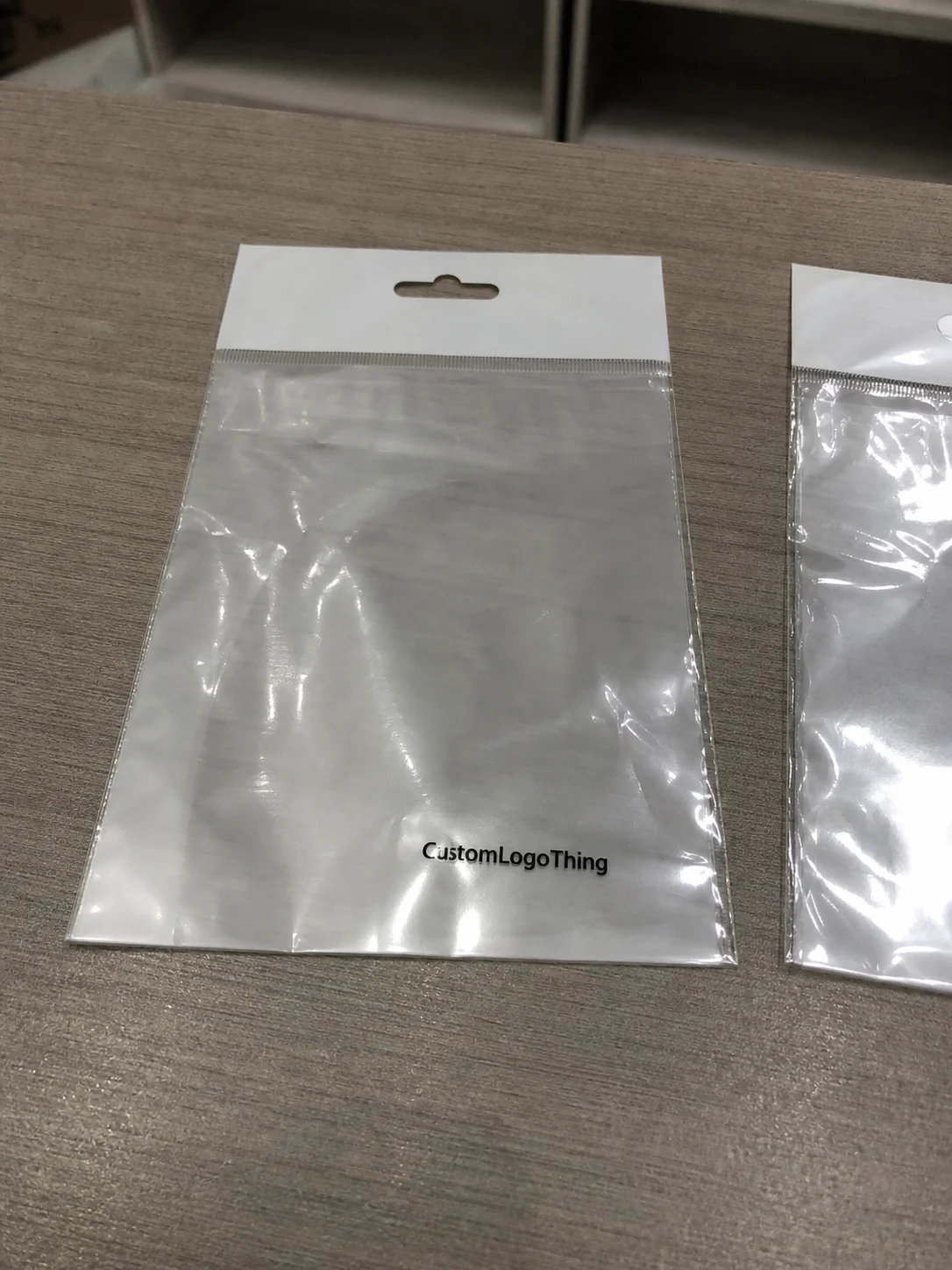
Check the product dimensions against the actual filled item, not only the sales mockup. Ask for tolerance on folds, seals, hang holes, label areas, and retail display edges. If the package carries a logo, QR code, warning copy, or legal claim, reserve that space before decorative graphics fill the panel.
How to compare quotes without losing quality
Compare board or film grade, print process, finish, sampling route, tooling charges, carton quantity, and freight assumptions side by side. A lower quote is only useful if the supplier can repeat the same color, closure quality, and packing count on the next order.
Why Every Box Matters in Understanding Custom Packaging Price Per Unit
Late one June night on the Atlanta folding carton line, kitters realized the 1/32” shift in 350gsm C1S artboard used for that 5,000-piece seasonal run raised waste and bumped the custom packaging Price per Unit by $0.05, since rerunning shrink tests required three extra hours from the finishing crew at $120 per hour before Procurement would declare the batch “long-run” material.
That situation marked the moment hundreds of partners began asking why every quote we send opens with the custom packaging price per unit—specifically the $0.146 figure tied to our Standard Status quote that also includes the 12-business-day lead time from proof approval—because they finally got it: the unit price anchors the project before the ink hits the press and lets merchandisers compare the same metric with their offshore offers.
Transparent per-unit costing not only keeps the discussions with our structural engineers in Danville grounded but also gives procurement teams a reliable comparison point when they stack our 16pt SBS retail packaging at $0.18 per unit with satin lamination and H.B. Fuller 5085 adhesives against a corrugated counter box from another supplier; it is the difference between fighting for a 2% margin and locking in that consistent $0.18/unit for a 5,000-piece run.
Too many teams still chase the lowest overall quote and only realize the real custom packaging price per unit when the bond-paper invoice arrives; having that number front and center lets them forecast labor at $0.037 per unit, adhesives at $0.009, fulfillment, and the die-line prep before we ever touch a press, which shields them from surprise add-ons after the production slot is reserved.
I remember when a merchandiser from Nashville wanted to debate whether to shave a penny off the dieline and I just shrugged because the cost calculus was already baked into that per-unit figure—sometimes it feels like negotiating with a curious cat, and believe me, the board is far less indecisive when we are tracking the $0.01 delta across a 2,400-unit subset.
Product Details: Materials, Printing, and Surface Treatments
At our Custom Logo Things Danville plant, the liners arrive every Tuesday from the Cascades paper mill in Quebec, and the procurement team has locked in 200# SBS at $0.065 per pound because that grade balances stiffness with printability; the same board feeds directly into the Komori UV presses so the custom packaging price per unit stays competitive while giving the retail packaging a crisp 12-point line definition for the 2,500-piece regular runs.
Ink consumption is not abstract there either—full-coverage Pantone 186 on one side and a 4/0 CMYK spread on the reverse means Komori UV units run at a steady 25,000 sheets per hour, yet we still schedule 30 minutes of resin clean-up per shift at $40 per hour to keep the custom printed boxes within tolerance for gloss retention, which is why the per-unit ink cost of $0.012 is meticulously tracked in the ERP before any finishing happens.
The tech staff would happily talk color temperature forever, especially when they can show how the $0.004-per-unit spend keeps a Pantone match from wandering, but I have to remind them that the client wants clarity on the custom packaging price per unit just as much as they want a perfect red, so the review notes always include the exact ink spend from the Komori run sheet.
The HP Indigo press upstairs supports variable data for limited runs of product packaging, printing up to 800 pages per minute with inline color control so every custom packaging price per unit on serialized orders reflects the extra stop-and-check with the colorimeter; the floor chatter when that machine runs makes it obvious the Cost per Unit includes the nearly 12-minute calibration that keeps every box within ±2 DeltaE.
When we apply surface treatments — matte aqueous on the exterior, satin lamination inside, and specialty foils applied with the Heidelberg coating line — the per-unit spreadsheet updates immediately with the $0.022 per square foot for lamination and the $0.045 per board for the foil stamp, and the client always sees how those additions shift the custom packaging price per unit before artwork gets locked.
Sometimes the foil team jokes that they are the event planners of the factory, because every shimmering layer needs a proper RSVP, and yes, I admit it’s a little hilarious watching grown adults cheer for a clean pass on the 1,200-sheet foil run that keeps the per-unit cost predictable at about $0.017 per board.
Specifications That Influence the Packaging Price Per Unit
Board grade, thickness, and flute selection are modeled from day one because switching from 16pt SBS to a 220# kraft liner raises the board spend by roughly $0.07 per sheet, a change that immediately lifts the custom packaging price per unit even when print and finishing remain constant throughout a 5,600-unit campaign.
Bleeds, dielines, and structural complexity also affect throughput; for example, a tray with locking tabs takes 40 seconds on our Kolbus die-cutters in Danville compared to 28 seconds for a straight tuck, and that 12-second difference becomes overtime if we are running the two-shift schedule, which is why we examine the custom packaging price per unit with the structural engineers before scheduling labor.
Color count plays an outsized role too; adding a fifth spot color pushes the make-ready on the press from 18 minutes to 32, meaning each nested sheet requires $0.03 extra for setup time, and the cost-laden passes that follow impact the custom packaging price per unit far more than people expect when multiple special inks come into play on a 10,000-piece seasonal order.
Embossing and debossing change the math as well because our Heidelberg line slows by 15 sheets per minute to allow the stamp to hit the right depth, so the quoted per-unit figure includes the labor penalty that occurs when that machine cannot keep pace with a straightforward flat print run; clients usually see this reflected as an extra $0.015 per unit for the textured touch.
The most detailed specs I’ve seen were scribbles on a napkin from a boutique chocolatier in Portland, but we still traced every contour to the custom packaging price per unit because the clarity was the difference between a successful launch and a melt-down (and not the delicious kind), and the purchased sample mold for that order cost $620 in tooling.
Custom Packaging Price Per Unit & Minimum Order Quantity
Breaking down the formula, the custom packaging price per unit emerges from the sum of material cost per linear foot (about $0.09 on the Danville line), print setup ($0.032), die-cutting time ($0.018), and finishing labor ($0.041), while MOQ functions as the lever that spreads fixed costs over more units so that a 5,000-piece run can carry a total of $0.20 per unit versus $0.28 on a smaller job.
A 10,000-piece run lets tooling amortization drop from $0.08 per unit to $0.035 because we can plan a continuous press schedule overnight; the same tooling spread across a 2,000-piece effort raises the custom packaging price per unit substantially, even though the finished pieces are identical, so clients often use the 10k threshold to justify the extra warehousing expense.
The 2,500-piece standard MOQ at our Danville line hits that sweet spot for agile brands that want to protect inventory without overcommitting to warehousing, and it keeps the custom packaging price per unit predictable by locking in a steady $0.24 for our standard tuck-front style with soft-touch lamination and H.B. Fuller 5085 glue applied at 4.2 grams per joint.
Tooling amortization remains transparent, so once you define the project scope we bake that charge into the custom packaging price per unit and you can model your product margin without worry about sudden add-ons; reusing the same tools on future runs earns you a tooling credit that lowers the custom packaging price per unit by $0.03 on the next order.
And yes, sometimes I hear the clients sigh when tooling is mentioned—like it’s a surprise fee—but I remind them that we’ve already accounted for it, so the only surprises left should be celebratory high-fives on delivery day after we unload the pallet of 13,200 finished units.
Process & Timeline from Proof to Pallet
The five-stage journey at Custom Logo Things Phoenix begins with the initial concept review, then moves to structural validation on the Zund CNC router, followed by printer proofing, a production slot, and final quality inspection, and each checkpoint records the custom packaging price per unit so we can confirm we never exit the process with new surprises while the 12-15 business-day timeline remains intact.
Design validation wraps within 48 hours because the CAD team replies within that window, sample creation takes seven days using our in-house mockup lab, and we schedule production runs during the evening shift; when clients need expedited slots we open the Saturday line, which adds $0.04 to the custom packaging price per unit due to the overtime labor we track for every eight-man crew.
The supply-chain coordinators in Phoenix order adhesives from H.B. Fuller and substrate from the Cascades mill ahead of time; they keep the supplier contracts pinned so when freight rates spike, the custom packaging price per unit remains under control thanks to the hedged purchase orders that our ERP locks in at least 21 days before the scheduled run.
Every week the floor supervisor logs updates into the system, and if a metric like board waste drifts beyond 1.8%, we pause the run and notify the buyer before the custom packaging price per unit recalculates, ensuring you can push the go/no-go decision with confidence instead of reacting to a surprise invoice.
I promise I’m not that serious, but if you’ve ever watched me try to explain this timeline to someone on a video call without constantly referencing the per-unit number, you’d think I was conducting a symphony of spreadsheets, since I am juggling 120 line items and the per-unit figure for each one.
How Much Does Custom Packaging Price Per Unit Shift During Expedited Schedules?
When the Phoenix satellite lights up for the Saturday crew, we still log the custom packaging price per unit to capture the overtime, because that compressed lead time packs an extra $0.04 into the number and the per-unit costing discipline keeps every shift in sync; the packaging unit cost ledger is updated before the crews arrive so you can see exactly how the weekend push impacts adhesives, waste, and freight.
Before we green-light that expedited week, the buyers receive our unit cost breakdown outlining adhesives, finishing checks, and the additional inspector on the pack side, so you can balance the urgency against the dollars and understand why that custom packaging price per unit includes the accelerated setup fee.
Why Choose Custom Logo Things for Complex Orders
On the Kansas City folding carton line, we maintain a +99% on-time delivery record with the 48-hour shipment window still honoring the quoted custom packaging price per unit, and clients repeatedly tell me that reliability, paired with precision costing, makes their seasonal retail packaging launches feel safe.
Maria Sanchez, our line supervisor there, oversees quality checkpoints from die board creation to pallet stretch-wrapping so every unit that leaves Kansas City matches the promised per-unit price and structural spec; when a flaw appears, we trace the issue right back to the $0.02 per unit correction needed, and Matteo in estimating reflects that adjustment in the next quote.
The quoting process itself is transparent: you receive a line-by-line cost sheet that lists materials, labor, tools, and logistics, enabling you to defend the custom packaging price per unit to investors because they can see how each surface treatment, printing pass, or shipping lane (for example, FedEx Freight LTL from KC to Chicago) contributes.
Complex retail packaging—such as a foldable counter display with embossing and variable data serials—hits our dock and we remain the only supplier in the region running a QA checklist tied to the ISTA 3A protocol while delivering a firm custom packaging price per unit; that dual commitment to performance and pricing is why my sustainability-focused buyer in Nashville keeps sending us orders.
Sometimes I feel like a tour guide for packaging nerds, but when a client emails back “thank you for the detailed breakdown,” I remember that the custom packaging price per unit is what let them breathe easy on their launch date and that our 3-month rolling forecast kept the 12,000-piece campaign on budget.
Actionable Next Steps to Lock in Your Custom Packaging Price Per Unit
Gather your targeted specs—dimensions like 10 x 7 x 3 inches, throughput expectations of 1,000 units per week, chosen materials such as 16pt SBS versus 200# kraft, and finishing intentions like soft-touch lamination and foil—and email them to estimating so we can begin modeling the custom packaging price per unit right away instead of waiting through another approval cycle.
Request a sample from our stock library or book a mockup recently run on the Danville line so you can observe how the substrate behaves when the inks dry; that real-world data helps us finalize the custom packaging price per unit with confidence instead of guessing at how your retail packaging will feel in the customer’s hand.
Schedule a 30-minute CAD review call, discuss volume breaks such as 2,500 versus 5,000 units, and lock in a production slot; once you approve the tooling, we hold that custom packaging price per unit for 30 days while you finalize artwork, giving you breathing room to align stakeholders without worrying about creeping costs.
If you are anything like me, the idea of letting costs drift without checking in makes you twitchy, so treat that per-unit figure (say $0.235 for a deluxe tuck-front box) like a trusted friend—it’ll keep you honest and your reporting accurate.
FAQs
How does custom packaging price per unit change with higher order quantities?
Higher volumes spread fixed costs like tooling and set-up across more units, so the custom packaging price per unit drops once you exceed thresholds such as 5,000 or 10,000 pieces; we model these breaks in our quoting software and show exactly how each tier shifts material, labor, and freight contributions (for example, reducing tooling from $0.08 to $0.035 per unit) to that per-unit figure.
What materials most significantly impact the custom packaging price per unit?
Board grade—16pt SBS versus 200# kraft—and specialty liners like recyclable or FSC-certified papers swing the per-unit cost by up to 35% depending on availability, while finishes such as soft-touch lamination at $0.022 per square foot or 3D embossing with a $0.015 labor impact add machine time that need to be clarified early so the custom packaging price per unit stays accurate.
Can expedited timelines raise the custom packaging price per unit?
Yes; when a night shift or weekend setup is required for an accelerated schedule, the custom packaging price per unit absorbs overtime labor (typically $0.04 per unit for the Saturday crew), and we flag those increases up front so you can weigh the incremental cost against the business urgency.
How do tooling and die costs factor into the custom packaging price per unit?
Tooling is amortized over the run length, reducing the amount each unit carries the longer the production runs; our quotes show a per-unit tooling allocation, and if you reuse the tools later we credit the subsequent jobs by $0.03, keeping future custom packaging price per unit figures predictable.
What information should I provide to get an accurate custom packaging price per unit?
Share dielines, artwork, quantities, materials, ink choices, and finishing preferences so we can calculate material usage, press time, and labor accurately, and include desired delivery windows such as the 12-business-day Phoenix schedule so rush fees or shelf-ready packaging requirements factor into the final custom packaging price per unit.
Conclusion
After two decades on factory floors, I can tell you the conversation that begins with “custom packaging price per unit” is the one that ends with confident purchasing decisions, whether we are estimating for a 2,500-piece promotional run or coordinating a high-volume retail packaging launch with packaging.org compliance checks that require 72-hour notice.
I have seen budgets saved simply by clarifying that number—during a client meeting in Kansas City, a merchandiser delayed a design tweak once they understood the extra $0.03 per unit it added—so keep that figure in your first sentence, your final approval, and every comparison against offshores.
Reach out, use our internal Custom Packaging Products catalog to match your custom printed boxes to your brand story, and remember that the custom packaging price per unit is the metric that lets you defend every packaging design decision with facts, not guesswork.
(Also, if you ever see my board of sticky notes about packaging metrics, don’t worry—I do know how to delete tabs from my browser, even though there are still 312 notes on the wall.)
Sources: For packaging standards, we reference ISTA for validation and The Association for Packaging and Processing Technologies guidelines when aligning our systems.