Buyer Fit Snapshot
| Best fit | Custom Packaging Samples Order projects where brand print, material claims, artwork control, MOQ, and repeat-order consistency need to be specified before quoting. |
|---|---|
| Quote inputs | Share finished size, material target, print colors, finish, packing count, annual reorder estimate, ship-to region, and any compliance wording. |
| Proofing check | Approve dieline scale, logo placement, barcode or warning zones, color tolerance, closure strength, and carton packing before bulk production. |
| Main risk | Vague material claims, crowded artwork, missing packing details, or unclear freight terms can make a low unit price expensive after revisions. |
Fast answer: Custom Packaging Samples Order: Material, Print, Proofing, and Reorder Risk should be specified like a repeatable production item. The safest quote records material, print method, finish, artwork proof, packing count, and reorder notes in one written spec.
Production checks before approval
Compare the actual filled-product size with the drawing, then confirm tolerance on folds, seals, hang holes, label areas, and retail display edges. Reserve space for logos, QR codes, warning copy, and material claims before decorative graphics fill the panel.
Quote comparison points
Review material grade, print process, finish, sampling route, tooling charges, carton quantity, and freight assumptions side by side. A quote is only useful when the supplier can repeat the same color, closure quality, and packing count on the next order.
Custom Packaging Samples Order: What to Expect First
A custom packaging samples order lets you check fit, finish, print quality, and material behavior before production starts. That one physical sample can save you from a pile of expensive headaches. It shows whether the box actually fits the product, whether the print lands where it should, and whether the material feels right in hand instead of just looking good on a screen.
For Custom Logo Things, I tell buyers to treat a sample like a decision tool, not a freebie. A good custom packaging samples order gives marketing something tangible to judge, gives operations a real build to test, and gives procurement a way to verify that the package can be produced again without nasty surprises.
Why a Custom Packaging Samples Order Pays Off Fast
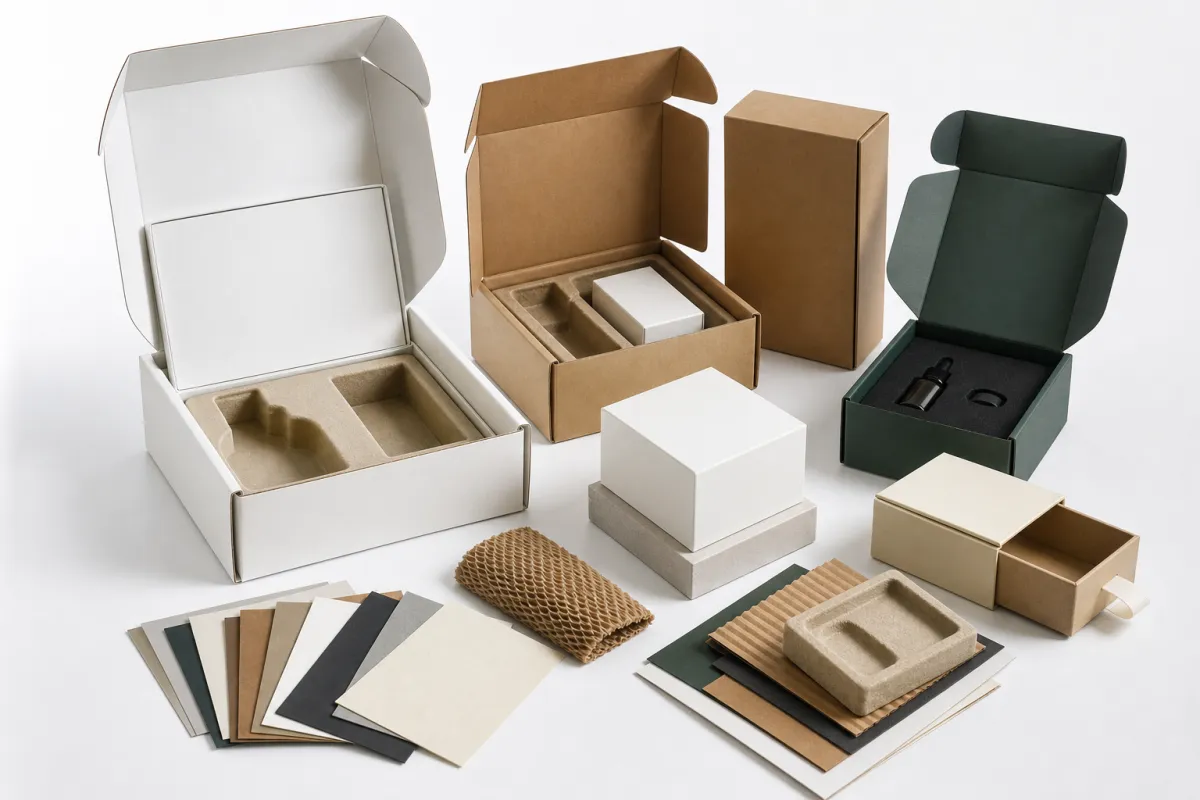
The value of a custom packaging samples order shows up fast when a pretty concept turns into a bad box. Maybe the product rattles inside the mailer. Maybe the tuck flap is too tight after lamination. Maybe the finish looks rich in the mockup and flat under real store lighting. Those are not tiny details. Those are the kinds of problems that create returns, rework, and rush orders after the launch clock is already ticking.
A custom packaging samples order usually reveals several risks at once. One sample can show whether the package protects the product in transit, whether the closure still works after repeated opening, whether the print handles large solid areas cleanly, and whether the design still feels like the brand once the actual bottle, tube, pouch, or device is inside it. That is why experienced buyers treat sampling as cost control, not extra decoration.
It also keeps people from arguing in circles. Marketing wants the brand to look sharp. Operations wants assembly to be fast and predictable. Procurement wants the numbers and lead time to hold up. A custom packaging samples order gives all three teams something real to review instead of a render and a guess. That matters a lot on branded packaging projects, where one wrong assumption can poison the whole rollout.
The projects that benefit most are the ones with little room for error: new product launches, seasonal packaging, fragile goods, premium retail packaging, and subscription mailers that have to open cleanly every single time. Honestly, a custom packaging samples order matters most when the package has more jobs than just looking pretty. If it has to protect, present, ship, stack, and sell, the sample is where those jobs get tested before real money moves.
I have seen teams skip sampling because the render looked perfect. That usually goes fine right up until the first freight cart, then it gets expensive in a hurry. The sample is the boring part that prevents the dramatic part.
"If the sample cannot survive hand assembly, shipping, and a real product load, it is not ready for production."
That is the standard I would use. A custom packaging samples order should answer one blunt question: is this structure, material, and finish ready to become a repeatable production package, or is it still a work in progress?
What the Sample Should Show You Before You Order
Not every sample proves the same thing. That is where buyers get tangled up. A custom packaging samples order may be an unprinted structural sample, a printed prototype, a production-equivalent sample, or a presentation mockup for internal approval. Each one gives you different information. The right choice depends on whether you are testing dimensions, graphics, finishes, or the full customer experience.
An unprinted structural sample is the quickest way to check whether the carton folds correctly, whether the product fits the cavity, and whether the closure makes sense. A printed sample is better when color, logo placement, and layout matter more than speed. A production-equivalent sample gives the closest preview of the final result, including board thickness, coating, and tactile feel. A presentation mockup is useful for executive review, retail buyers, or photo planning when the sample needs to tell more than one story at once.
Here are the formats buyers ask for most during a custom packaging samples order:
- Folding cartons for cosmetics, supplements, electronics, and consumer goods
- Rigid boxes for premium retail packaging and gift presentation
- Mailer boxes for subscription programs and direct-to-consumer shipping
- Inserts and trays for stabilizing fragile items or multi-piece kits
- Sleeves and wraparounds for simple branding upgrades
- Specialty cartons with windows, magnetic lids, or locking closures
The important part is how the product sits inside the package. In a custom packaging samples order, headspace, friction points, insert fit, and product orientation often matter more than the artwork itself. A gorgeous box that lets a glass bottle slide around in transit is still a weak package. A mailer that binds during insertion will slow down packing labor and create messy inconsistency on the line.
One useful habit keeps mistakes down: test the sample in the same condition it will face in real use. If the package is meant to ship, ship it. If it will sit on a shelf, stack it. If customers will open and close it repeatedly, cycle the closure a few times and look for wear. A custom packaging samples order should match the final use case as closely as possible, especially for items that are displayed, transported, or opened often.
If the sample is not close to the real environment, approval can be misleading. A package may look fantastic in a hand-held photo review and still fail under compression, vibration, or plain daily handling. Buyers who manage product packaging well usually ask for the sample that reflects the real job, not the prettiest version available.
There is also a trust issue here. If a supplier says the sample is "basically final" but cannot explain what is still provisional, I start asking harder questions. A clean answer beats a polished pitch every time.
Specifications to Verify in a Custom Packaging Samples Order
A custom packaging samples order only matters if you know what to measure and compare. Start with the basics: length, width, depth, insert size, tuck depth, and any clearance around the product. A difference of even 1/16 inch can matter on a tight carton, especially when the product has a cap, cord, closure, or odd edge that did not show up clearly in the drawing phase. Packaging design is full of those small tolerances, and samples are where they stop being invisible.
Material comes next. Make sure the sample reflects the intended substrate, not a lookalike that fools the eye for ten seconds. In a custom packaging samples order, a folding carton may be sampled on 18pt SBS, 24pt SBS, or another paperboard with a different caliper. Corrugated samples may use E-flute, B-flute, or another wall profile depending on strength and print requirements. Rigid boxes may show chipboard thickness, wrap paper quality, and magnet placement. If the final build includes soft-touch lamination, aqueous coating, foil stamping, or embossing, the sample should match as closely as practical.
Print detail deserves a hard look too. Color accuracy, registration, ink coverage, foil sharpness, and coating feel all shape the final impression. A custom packaging samples order can show whether large solid panels print evenly, whether small type stays legible, and whether matte surfaces look refined instead of just dull. If the project is headed for retail packaging, view the sample under the same light the shopper will see in store. That is where gloss, texture, and contrast tell the truth.
Physical testing beats theory every time. Assemble the pack by hand. Load the real product. Shake the box lightly. Press the corners. Open and close the closure several times. Check whether the product shifts, whether the insert supports without crushing, and whether the package still feels secure after handling. A custom packaging samples order is not only about visual approval; it is about whether the package performs like a working container.
After approval, write down the accepted version. Include dimensions, board grade, coating, print finish, insert configuration, and any notes about tolerance or assembly. The approved sample should become the reference point for production. When teams rely on memory instead of a spec sheet, details drift. The final run then wanders away from what was actually approved. That is a familiar problem in custom printed boxes projects, and it is completely avoidable.
For buyers comparing performance standards, packaging tests and material choices can be checked against recognized industry references such as ISTA transport testing for shipment durability and FSC sourcing requirements for paper-based materials. Those references do not replace your own fit test, but they give the custom packaging samples order a cleaner framework.
One more practical point: printed samples rarely reproduce color perfectly on the first pass unless the press, stock, and finish are locked down. That is not a flaw in the process; it is the reality of ink, coating, and paper grain. If a vendor promises perfect color with zero variance, that is the moment to slow down.
Custom Packaging Samples Order Pricing and MOQ Basics
Pricing is where people want straight answers. A custom packaging samples order is usually priced differently from the final run because the sample may need one-off labor, setup, proofing, and revision work that does not scale the same way as production. The main cost drivers are easy to spot: die or plate preparation, printing complexity, material choice, finishing steps, revision count, and shipping for the physical sample.
Simple structural samples may be modest, often in the range of $35-$120 depending on size and board type. Printed prototype samples usually run higher, often $120-$350, because they need extra setup and finishing. A production-equivalent sample with foil, embossing, specialty coating, or a complex insert can reach $250-$700 or more, especially if several revision rounds are involved. A custom packaging samples order is not expensive because it is a sample; it gets expensive when it asks for the same care as a tiny production run.
Minimum order quantity is a separate issue. A buyer may request one sample, while the production MOQ can still be much larger because the line needs to run efficiently. That distinction matters. A custom packaging samples order is a low-risk way to validate the package. MOQ defines how many finished units must be ordered once the design is locked. Sampling is proof. MOQ is manufacturing reality.
There are a few simple ways to keep sampling costs under control. Finalize the dimensions before asking for print revisions. Combine changes into one proof round instead of sending tiny edits one by one. Use standard materials if you do not need a specialty board for the sample. If two decoration options are under consideration, compare only the versions that actually affect the sale instead of every possible finish combination. That is how a custom packaging samples order stays useful without swallowing time and budget.
Do not compare sample cost to unit cost in isolation. That is a false shortcut. A slightly better board, a sturdier insert, or a more reliable finish may reduce damage, returns, and repacking labor later. From a packaging buyer's point of view, the right custom packaging samples order is not the cheapest one; it is the one that teaches you enough to avoid a costly miss in production.
Another quiet cost driver is shipping. A fragile prototype can cost more to move than to make, especially if it needs protection or a rushed delivery. I have seen people forget that and act surprised later, as if boxes teleport.
| Sample Type | What It Proves | Typical Sample Range | Best Use |
|---|---|---|---|
| Unprinted structural sample | Dimensions, fit, closure, assembly | $35-$120 | Early checks on cartons, mailers, and inserts |
| Printed prototype | Artwork placement, color, branding | $120-$350 | Marketing review and shelf presentation |
| Production-equivalent sample | Final materials, coating, and feel | $250-$700+ | Final approval before a larger order |
| Presentation mockup | Internal approval and buyer presentation | $180-$500 | Retail pitches and executive sign-off |
Custom Packaging Samples Order Process and Timeline
The process usually starts with the basics: dimensions, artwork, product weight, shipping requirements, finish preferences, and any structural detail that cannot be missed. The more complete the starting information, the cleaner the custom packaging samples order will be. If the product needs a locking tab, a hanging hole, a window, or an insert pocket, that needs to be stated up front, because each of those features changes the build.
Proofing comes next. The supplier confirms the dieline, checks print files, and flags any artwork issues before the sample is made. That step is easy to rush, but it is where a lot of small problems get caught. Text too close to a fold, a barcode on the wrong panel, or a logo sitting too near the cut line can all be fixed before materials are cut. A careful custom packaging samples order saves far more time here than it costs in review.
Then the prototype gets built. Depending on the complexity, the sample may go through printing, cutting, lamination, foil, embossing, assembly, and quality review before shipment. A simple structural sample can move quickly if the dieline is already approved. A highly finished sample takes longer because it follows more of the production sequence. That is normal. A custom packaging samples order that includes specialty work is not slow for no reason; it just has more steps to complete.
Delays usually come from incomplete specifications, artwork changes after proof approval, extra revision rounds, or waiting on design sign-off from multiple teams. The more people who need to approve the package, the more important it is to lock decisions in the right order. If the structure is still changing, polishing artwork makes no sense. If the artwork is settled but the insert is wrong, the sample is still not ready. A custom packaging samples order moves fastest when each decision gets made on the right layer, in the right sequence.
For many projects, a simple sample may take only a short window once files are ready. A more finished sample may need extra time because it mirrors the same material and finishing steps used in production. That is especially true for premium retail packaging, subscription packaging, and custom printed boxes that have to look clean from every angle. The timeline is not just a production issue; it is a coordination issue between design, operations, and the supplier handling the sample.
My rule is simple: if the sample request is vague, the timeline will wander. If the request is precise, the sample has a much better shot at landing on the first pass. Kinda obvious, but people still skip it.
Why Custom Logo Things Is a Practical Sampling Partner
Custom Logo Things works well for buyers who want a custom packaging samples order that feels production-minded instead of theoretical. That matters because a sample should be useful enough to guide the real purchase. The point is not to show something flashy that cannot be built at scale. The point is to show a buildable package with the right structure, material, and finish, so the customer can move forward without guessing.
Clear communication matters a lot here. A good sampling partner should explain what is being tested, what is provisional, and what still needs approval. That kind of guidance is especially useful when a buyer is choosing between board grades, protective inserts, or decorative finishes. In a custom packaging samples order, one material layer or one coating choice can change the final feel more than people expect, so it helps to talk through those tradeoffs before the run is released.
There is also a balance between appearance and manufacturing reality. A sample needs to look good, but it also has to behave like a real package. If a rigid box looks premium but opens awkwardly, the customer will feel that immediately. If a mailer prints beautifully but arrives crushed because the structure is too light for the use case, the brand loses value in transit. A custom packaging samples order should protect both the visual message and the physical performance of the pack.
Not every supplier handles that balance well. Some chase appearance and ignore repeatability. Others are so focused on the build that the brand story gets flattened. The better partner stays honest about what can be reproduced, what needs adjustment, and what might need a compromise. That honesty is boring in the best way.
If you are planning broader packaging work, compare options across product categories. Review Custom Packaging Products for the structural formats available, check the FAQ for common process questions, or explore Wholesale Programs if your buying pattern favors larger repeat volumes. Those resources make it easier to connect the sample phase with the actual buying decision, especially when a custom packaging samples order is part of a larger rollout.
From a buyer’s point of view, the best sampling partner is the one who cuts down surprises. That means cleaner specs, fewer assumptions, and a sample that represents the final product packaging as closely as practical. It also means honest guidance if a requested finish, material, or structural detail needs adjustment before production. That kind of straightforward support is what keeps a custom packaging samples order useful instead of decorative.
One thing people get wrong is treating the sample as design approval only. It is also a manufacturing check. The right sample should tell you whether the package can be assembled efficiently, whether the insert holds the product safely, and whether the final presentation supports the brand without creating avoidable waste. That is the standard buyers should expect.
Next Steps After Your Sample Is Approved
Once the sample is approved, pause for one last review. Check the dimensions, material, print quality, finish, closure, and actual product fit against a short checklist. A custom packaging samples order should function as the master reference for the production run, so every detail needs to be confirmed before the job moves forward.
It helps to gather sign-off from the people who will actually touch the packaging process. That can include design, operations, procurement, quality control, and fulfillment. Each group notices something different. Design sees visual alignment. Operations sees assembly behavior. Procurement sees cost and timing. Fulfillment sees how the carton behaves in the warehouse. A custom packaging samples order works best when those teams agree on the same physical sample before the run starts.
After that, lock the approved version into a written spec sheet and attach the final artwork files, quantities, ship-to details, and any notes about handling. If a change is still needed, make it before production begins. A small correction is easy to absorb early; it gets ugly once materials are cut and scheduled. That is why a custom packaging samples order should not sit in a drawer after approval. It should become part of the production record.
Final release should include a quick reality check. Ask whether the approved sample still matches the intended use case if the product weight changed, shipping requirements shifted, or the sales channel now expects a different shelf presentation. Packaging design rarely stays frozen for long, and the production file should reflect the most current decision. If the answer is yes, the custom packaging samples order has done its job and the full order can move ahead with fewer risks.
The smartest next move is plain: use the approved custom packaging samples order as the production reference, then place the full run only after every structural detail, finish choice, and brand requirement matches the way the package will actually be used. That is the cleanest way to avoid a reprint nobody wanted.
What does a custom packaging samples order usually include?
It usually includes a physical sample of the box, mailer, or insert, plus any requested structural or print features. Depending on the project, the sample may be unprinted, partially finished, or built to closely match production materials. The goal of a custom packaging samples order is to verify size, assembly, presentation, and product fit before a full run is approved.
How long does a custom packaging samples order take?
Simple structural samples can move quickly if the dieline and measurements are already finalized. Printed or highly finished samples take longer because they require proofing, setup, and finishing steps. Timeline also depends on revision count, file readiness, and whether the sample needs special materials or inserts, so a custom packaging samples order can range from fast to fairly involved.
Do I have to pay for a packaging sample order?
Many sample orders have a cost because they require materials, labor, and shipping outside of a standard production run. Pricing often depends on whether the sample is plain, printed, revised, or built with specialty finishes. It is best to ask how sampling fees are handled before approving the work so there are no surprises on a custom packaging samples order.
Can I change the design after reviewing the sample?
Yes, and that is one of the main reasons to request a sample before production. Common changes include dimension tweaks, insert adjustments, print corrections, and finish changes. The sooner you request revisions, the easier it is to keep the project on schedule and control cost after a custom packaging samples order has been reviewed.
What should I check before approving a custom packaging sample order?
Check product fit, board strength, print accuracy, finish quality, and how the package opens and closes. Test the sample with the actual product, not just with a drawing or placeholder item. Confirm that every approved detail is captured in writing so the production order matches the custom packaging samples order exactly.
A well-managed custom packaging samples order gives you the clearest view of what the final package will do in the hand, on the shelf, and in transit. Use that sample as the source of truth, document the approved specs, and do not let the production file drift away from what was actually signed off.

