Buyer Fit Snapshot
| Best fit | Custom Packaging with Matte Lamination projects where brand print, material claims, artwork control, MOQ, and repeat-order consistency need to be specified before quoting. |
|---|---|
| Quote inputs | Share finished size, material target, print colors, finish, packing count, annual reorder estimate, ship-to region, and any compliance wording. |
| Proofing check | Approve dieline scale, logo placement, barcode or warning zones, color tolerance, closure strength, and carton packing before bulk production. |
| Main risk | Vague material claims, crowded artwork, missing packing details, or unclear freight terms can make a low unit price expensive after revisions. |
Fast answer: Custom Packaging with Matte Lamination: Material, Print, Proofing, and Reorder Risk should be specified like a repeatable production item. The safest quote records material, print method, finish, artwork proof, packing count, and reorder notes in one written spec.
Production checks before approval
Compare the actual filled-product size with the drawing, then confirm tolerance on folds, seals, hang holes, label areas, and retail display edges. Reserve space for logos, QR codes, warning copy, and material claims before decorative graphics fill the panel.
Quote comparison points
Review material grade, print process, finish, sampling route, tooling charges, carton quantity, and freight assumptions side by side. A quote is only useful when the supplier can repeat the same color, closure quality, and packing count on the next order.
Custom Packaging With Matte Lamination: A Practical Guide starts with a simple reality: a box can look beautiful on a screen and still feel ordinary in the hand if the finish does not match the design. custom packaging with matte lamination gives printed cartons a softer, lower-glare surface that can make custom printed boxes feel more refined, yet it also changes how color appears, how scuffs show, and how the packaging performs once it leaves the warehouse.
That balance is why buyers keep asking for it. custom packaging with matte lamination can make branded packaging feel calmer and more premium, although it is never a cure-all. It will not rescue weak artwork, poor board selection, or a careless dieline. What it does is add a thin protective film after printing, smoothing the surface, lowering the shine, and giving the carton a little more resistance to everyday wear. For retail packaging, subscription boxes, cosmetics, and premium mailers, that extra layer can be the difference between a package that feels considered and one that feels rushed.
Anyone comparing finishes should keep one thing in view: custom packaging with matte lamination affects perception, durability, Price, and Lead Time at the same time. That is not a small detail. It is the sort of choice that can either support package branding or quietly work against it for the next thousand units.
Custom Packaging With Matte Lamination: Why It Stands Out
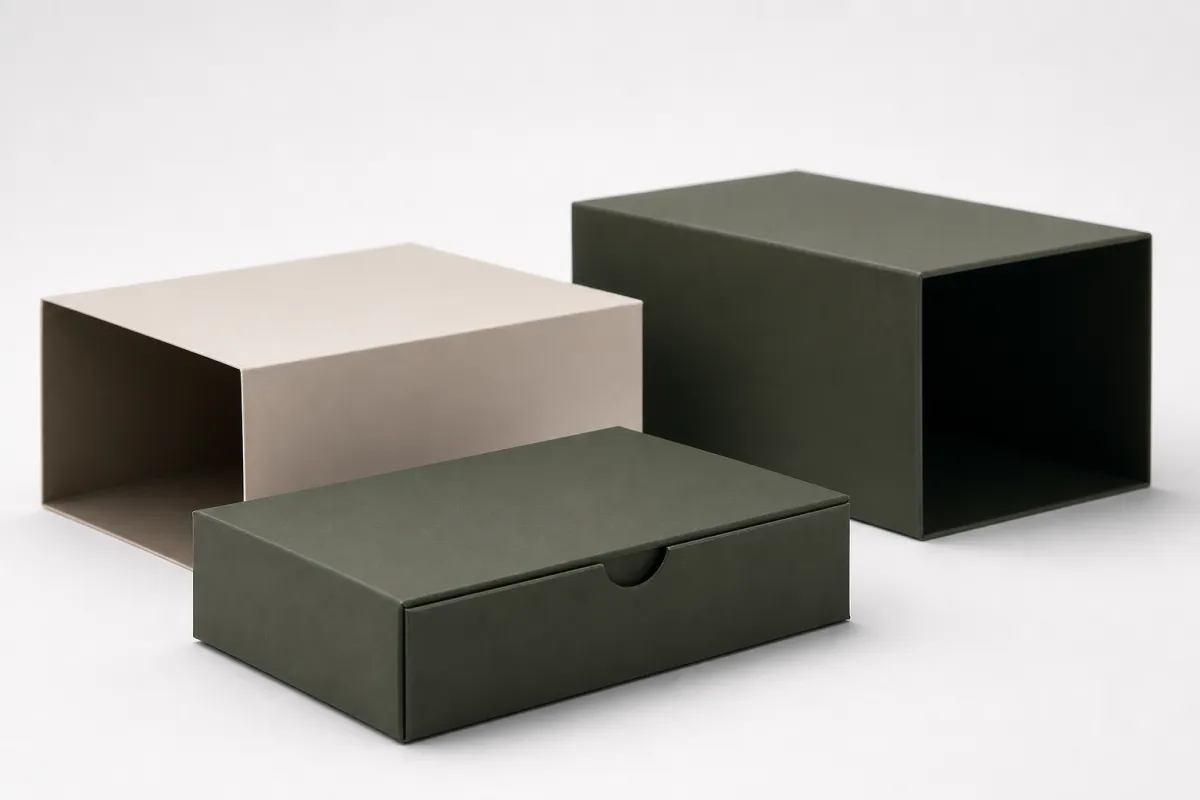
A matte finish lowers the volume without muting the song. custom packaging with matte lamination cuts glare, so the surface reads as softer and more controlled under store lights, office lights, and phone cameras. That matters more than people often expect. A glossy box can feel bright and energetic. A matte box usually feels calmer, more expensive, and more deliberate. Same structure. Different signal.
In practical terms, matte lamination is a thin protective film applied after printing. The film sits over the ink and board, creating a low-sheen finish while also adding a layer of abrasion resistance. In use, custom packaging with matte lamination is often chosen when a brand wants a restrained, premium look instead of a reflective surface that throws light around the room.
Matte has a way of revealing weak design decisions. Deep colors can lose some intensity. Fine gradients can flatten. Small type needs stronger contrast because low gloss does not help the eye the way a shiny surface sometimes does. So yes, custom packaging with matte lamination usually improves presentation, yet it also exposes lazy artwork. That is not a flaw in the finish. It is the finish doing its job.
One lesson buyers tend to learn the hard way: a box that looks rich in a digital mockup can feel visually quiet once matte lamination softens the print. The finish changes the mood. On black, navy, charcoal, and similar dark tones, fingerprints and edge wear can show more clearly than expected. On light neutrals, the result can look clean and expensive. Same material, different behavior.
"Matte is not automatically the better choice. It works best when the artwork, stock, and brand tone all point in the same direction."
That is why custom packaging with matte lamination shows up so often in premium retail packaging, wellness kits, and cosmetics. Those categories usually benefit from a quiet, controlled surface instead of a loud reflective one. The box does not need to shout. It needs to feel trustworthy.
There is a practical side too. custom packaging with matte lamination helps protect against fingerprints, light scuffing, and minor surface wear. If a carton is handled by shoppers, stacked in fulfillment, or packed with inserts, that extra layer can help the printed artwork stay presentable longer than bare paper. It is not armor. It is not built for punishment. It does improve everyday durability enough that many brands treat it as part of the presentation rather than an add-on.
For brands building package branding around a modern, restrained identity, matte is often the right finish. Brands that depend on bright color pop, sharp contrast, or flashy shelf impact may still prefer gloss. That is the central decision. custom packaging with matte lamination is not only a finish. It is a design choice that changes the emotional read of the whole box.
From years of reviewing samples, I have noticed that matte also changes the "first touch" moment in a way people underestimate. The box feels quieter before it even opens. That subtlety is exactly what some brands want, and it is kinda the reason matte keeps showing up in premium lineups.
How Custom Packaging With Matte Lamination Actually Works
The production stack is fairly simple once it is laid out. A typical carton begins with board, often SBS, C1S, or another print-friendly paperboard. Artwork is printed on that board. Adhesive and a matte film are applied after that. The sheet then moves through die cutting, folding, creasing, and gluing. custom packaging with matte lamination is added before final conversion because the film needs to sit over the printed surface before the sheet is cut into its finished shape.
That order matters. If the finish is added at the wrong stage, folds can crack or edges can lift. In a clean production line, print comes first, the film follows, and the structure is converted last. Simple sequence, serious consequences if it is ignored. custom packaging with matte lamination works best when the dieline is accurate, the artwork has proper bleed, and the folding areas are planned with the coating in mind.
Compared with gloss, matte has a softer reflection profile. Compared with soft-touch, matte is usually less velvety and easier to keep clean. Soft-touch can feel more luxurious in hand, but it often costs more and can show fingerprints or rub marks in a fussier way. custom packaging with matte lamination sits in the middle of that premium range: more polished than plain print, less tactile than soft-touch, and usually less expensive than the soft-touch upgrade.
Its protection is useful, though limited. Light abrasion? Yes, to a degree. Fingerprints? Better than bare board. Minor shelf handling? Better than no film at all. What it does not guard against is crushing, puncture, flooding, or rough parcel abuse that leaves mailers looking like they lost a fight with a forklift. If the box is shipping through a rough lane, the conversation should include structural strength, corrugation, and testing, not just the finish.
If the pack is going into e-commerce, ask whether the structure should be checked against ISTA shipping test standards. A good finish helps. A box that survives the trip helps more. Packaging always seems to remind us of that.
custom packaging with matte lamination also interacts well with other decoration methods. Foil stamping can stand out beautifully on matte because the contrast is stronger. Embossing can feel cleaner because the low-glare surface does not compete with texture. Spot UV can work too, though the contrast between matte and shine needs planning. The wrong combination can look busy instead of premium.
For brands aiming for a cleaner merchandising look, custom packaging with matte lamination can be paired with precise die cutting and disciplined packaging design so the finished box feels intentional from every angle. That is why product packaging specs should be written clearly, not guessed. The film is only one layer of the system.
Custom Packaging With Matte Lamination Cost and Pricing Factors
Cost is where taste meets math. custom packaging with matte lamination is usually a moderate upgrade, not the cheapest finish and not the most expensive either. On a straightforward folding carton, matte lamination often adds about $0.04-$0.12 per unit at 5,000 pieces, depending on board, print coverage, and finishing complexity. At 500 to 1,000 pieces, that premium can look more like $0.20-$0.60 per unit because setup costs are spread across fewer boxes. Same finish. Different volume. That is the part people forget when they ask for "just a quick quote."
The biggest cost drivers are not mysterious. Quantity matters. Board stock matters. Box size matters. Coverage area matters. Die complexity matters. Shipping matters. Special finishes matter. If a supplier is laminating a large surface with heavy ink coverage, then adding precise die cutting and multiple decoration steps, the unit price will rise. custom packaging with matte lamination usually sits in the middle when compared with plain print, gloss lamination, and soft-touch, but the exact number depends on the build.
MOQs matter too. A supplier must set up print, lamination, cutting, and converting equipment. That setup does not disappear because the order is small. So yes, custom packaging with matte lamination becomes cheaper per unit as the run gets larger. That is not a sales line. It is manufacturing.
| Finish Option | Typical Look and Feel | Usual Cost Impact | Best Use Case |
|---|---|---|---|
| Matte lamination | Soft, low-glare, premium without much shine | Moderate upgrade | Retail packaging, cosmetics, wellness, branded packaging |
| Gloss lamination | Bright, reflective, high color pop | Often similar or slightly lower | Promotional product packaging, bold graphics, shelf impact |
| Soft-touch lamination | Velvety, tactile, higher-end feel | Usually higher than matte | Luxury sets, premium gift boxes, limited editions |
| No lamination | Natural paper feel, least protection | Lowest upfront cost | Budget-sensitive runs, short-life packaging, test launches |
Ask precise questions when you request a quote. Is the matte film single-sided or double-sided? What thickness is it? Is the quote based on coated board or uncoated stock? Does the estimate include proofing? How much waste allowance is built in? Will the boxes ship flat, carton-packed, or palletized? These details affect the real landed cost of custom packaging with matte lamination far more than the phrase "premium finish" ever will.
Compare finish quotes side by side. A matte quote only makes sense when the gloss or no-lamination version is sitting next to it. Otherwise the premium feels vague. If you are sourcing from our Custom Packaging Products page, ask for the same structure with different finish options so the comparison stays honest. That is how you make a buying decision instead of a guess.
custom packaging with matte lamination can be cost-efficient when the design is simple, the board is standard, and the finish is applied cleanly in volume. It becomes expensive when the project stacks too many special requests at once: custom structural work, high ink coverage, foil, embossing, and tight deadlines. None of those are bad on their own. Put them together and the budget starts acting like a budget.
For brands planning retail packaging or subscription product packaging, the safer move is to build two or three quote scenarios: matte, gloss, and bare print. Then compare the difference against the value of the finished presentation. custom packaging with matte lamination usually earns its keep when the box sits in the customer's hands, not only in a spreadsheet.
In my experience, the pricing conversation goes smoother when the buyer separates "finish cost" from "total project cost." A matte film may only add a small amount on paper, but once you include freight, proofing, and rework risk, the real budget picture gets clearer fast.
Custom Packaging With Matte Lamination Process and Timeline
The quickest route to delay is treating the print file as something that can be fixed later. It usually cannot. A normal run for custom packaging with matte lamination begins with dieline prep and artwork review. Proofing follows, then printing, then lamination, then die cutting, folding, gluing, and final quality control. Each stage has a reason to slow down if the files are messy or the specifications keep changing.
Artwork review is where many projects start to wobble. Bleed is missing. Safe areas are too tight. Small type lands on a fold. The barcode sits in the wrong spot. Then someone asks why the sample is late. The file was not ready, that is why. custom packaging with matte lamination does not forgive a sloppy file any more than a car wash forgives a broken mirror.
The usual bottlenecks are predictable. File fixes can add several days. Proof approvals can sit for a day or three if the team cannot agree on color. Material sourcing can slow things down if the chosen board is out of stock. Finishing queues can move back if the shop is handling a larger run. Freight booking can add another delay if the shipment has to hit a specific dock or distribution center. custom packaging with matte lamination is not slow by nature, but it is very easy to make it slow.
For a clean production path, send print-ready files, use a standard structure if possible, and keep the finish spec simple. If you need a custom insert, ask for it early. If you want embossing or foil, decide before the proof stage. If the supplier has to rebuild the project three times, the calendar will pay for it. custom packaging with matte lamination rewards clarity.
Typical lead times vary, though a straightforward project often lands in the 12-15 business day range after proof approval for production alone, with shipping added on top. Larger or more complex runs can stretch past that, especially if structural development is involved. If someone promises a truly custom job with multiple finish effects in only a few days, ask exactly what they are leaving out. There is always a catch. Usually several.
That is where standards help. If the packaging is being shipped through a distribution chain, ask whether FSC-certified paper is required for the substrate, and whether transit testing such as ISTA-style validation is needed for the box format. custom packaging with matte lamination is part of the spec, but certification and shipping performance can matter just as much to the buyer and the end customer.
The biggest timeline trap is last-minute change. A new logo file. A revised Pantone target. A different closure style. A change to the board thickness after the dieline is approved. Every one of those forces a reset somewhere in the process. If you want custom packaging with matte lamination to stay on schedule, lock the spec before the press run, not after it.
That part is gonna save more time than any rush fee ever will.
Key Factors That Decide Whether Matte Lamination Is Right
Brand style is the first filter. custom packaging with matte lamination fits calm, modern, luxury, minimalist, and editorial-style packaging better than loud, high-gloss designs. If your branding depends on shiny impact and aggressive color punch, matte may soften the message too much. If your packaging design leans restrained, textural, and premium, matte can look exactly right.
Color behavior is the second filter. Dark tones can look richer, but they also show handling marks more clearly. Light neutrals often look elegant under matte. Photo-heavy artwork can lose some pop because the sheen is lower. Fine text and thin lines need strong contrast and enough size to stay crisp after the film is applied. custom packaging with matte lamination is not unfriendly to color, but it does change how color behaves in real light.
Material compatibility is the third filter. Coated stocks usually take lamination well. Thicker boards can support a more premium feel. Foil, embossing, and spot UV all interact with the finish differently, so the order and placement of those effects matter. custom packaging with matte lamination works especially well when the surface structure and graphic system are planned together instead of treated as separate decisions.
There is also the use-case question. Retail packaging often benefits from matte because customers see it under varied lighting and handle it directly. Subscription packaging uses matte because it photographs well and feels curated. Cosmetics and wellness brands like it because it signals control and softness. Premium mailers use it when the outer experience matters as much as the product inside. In each case, custom packaging with matte lamination supports the story the box is supposed to tell.
A simple rule works here: if the box needs to whisper quality, matte usually helps. If the box needs to shout from across a store aisle, gloss may do a better job. Neither option is right in every situation. A buyer who treats finish like an afterthought often ends up paying twice, first for the box and again for the redesign. custom packaging with matte lamination is worth paying for when the finish matches the brand, not when it merely sounds fancy.
Handling matters too. A box that will sit in a showroom, move through a warehouse, or get carried in a handbag has different wear patterns. On high-touch packaging, matte can keep the surface looking cleaner longer than bare print. On boxes that are mostly decorative, the tactile difference may matter more than the wear resistance. custom packaging with matte lamination is useful only when it solves the actual problem.
If you are building a line of branded packaging, test a finish next to the brand colors and the physical samples. Do not approve based on one digital render. Screen previews lie for a living. A matte prototype viewed under store lighting and on camera tells the truth faster than any spec sheet. custom packaging with matte lamination needs that kind of real-world check.
Common Mistakes With Matte Laminated Packaging
The first mistake is choosing matte because it sounds premium and stopping there. That is not a strategy. It is a mood. custom packaging with matte lamination should be chosen because the artwork, material, and brand tone all point in the same direction. If the box design was built for high sparkle and saturated shine, matte can flatten the whole thing. Then everyone acts surprised, which is always an interesting look in a packaging review.
The second mistake is ignoring fingerprints and scuffs on dark artwork. Matte hides some handling marks better than bare paper, but it does not erase them. On black or deep navy cartons, edge rub and corner wear can still show. High-touch product packaging, especially retail packaging handled by shoppers all day, needs to be tested before mass production. custom packaging with matte lamination improves durability, but it does not make the box invincible.
The third mistake is vague specs. If the supplier is not told the film type, thickness, coverage, board, or whether the lamination is inside, outside, or both, results can vary. One shop may use a different matte film than another. One may leave a slightly different texture. That is why clear specs matter. custom packaging with matte lamination should be described precisely, not as "something matte-ish."
The fourth mistake is forgetting how lamination affects folding and gluing. Heavy ink coverage, tight folds, or poor score lines can crack or resist the fold if the board and film are not matched well. Adhesion can also suffer if the finish or glue system is not specified correctly. That is especially true when die cutting, embossing, foil, and multiple coated areas all appear in one build. custom packaging with matte lamination works best when the finishing sequence is respected from the start.
Another common problem is over-decorating a small box. A simple carton with a sharp logo and a clean matte surface can look far more expensive than a crowded design with six effects competing for attention. That happens constantly. More finish does not mean more class. Usually it just means more cost. custom packaging with matte lamination gives you a controlled base. Use it well.
If the goal is better retail packaging, ask for a sample that reflects the real print coverage, not a blank white mockup. If the goal is e-commerce product packaging, ask for handling tests and transit simulation. If the goal is premium gifting, inspect the edges, folds, and closure points. These are small details, but they are the ones customers touch. custom packaging with matte lamination lives or dies there.
Another mistake is assuming the finish will fix a weak structure. It will not. A beautiful box that pops open, crushes, or misaligns at the lid looks sloppy fast. The finish is the last layer, not the structural repair. custom packaging with matte lamination should support a good box, not cover for a bad one.
Expert Tips and Next Steps for Better Packaging
The smartest move is simple: test. Ask for 2 to 3 samples with the exact artwork, board, and print method before you place the full order. One sample on bright white board, one on a slightly warmer stock, and one with the finish applied to the actual structure can reveal more than ten email threads. custom packaging with matte lamination often looks better or worse than expected once the physical sample arrives.
Build a one-page spec sheet. Keep it blunt. Size. Stock. Finish. Quantity. Delivery window. Decoration methods. Structural notes. Required effects like foil or embossing. If the box needs a particular feel in hand, write that down too. Suppliers work faster when the brief is clean. custom packaging with matte lamination becomes easier to quote, easier to produce, and easier to approve when the requirements are obvious.
Get at least two finish quotes side by side. Matte, gloss, and, if relevant, no lamination. That comparison usually makes the tradeoff obvious. Matte may cost a little more than bare print, but the difference is often small compared with the brand value it adds. custom packaging with matte lamination is worth paying for when the box is part of the selling experience, not only a container.
Inspect the sample under the same conditions your customer will use. Retail lighting. Office light. Phone camera. Natural daylight if that matters for your channel. A sample that looks fine in a studio can behave differently in the real world. That is not a flaw. That is packaging reality. custom packaging with matte lamination should be approved where it will actually be seen.
If you are building out a new packaging line, keep the structure simple on the first run. Start with the box style, lock the dimensions, choose the finish, then add effects like spot UV, foil, or embossing only if they earn their place. That keeps risk down and quality up. It also makes it easier to scale future runs without redesigning the whole thing. custom packaging with matte lamination is a strong base layer for that kind of approach.
From a practical buyer's point of view, the best packaging decisions are the ones that survive both the budget review and the unboxing. That is why I usually recommend comparing finish options while also reviewing the product packaging structure, shipping path, and brand presentation together. If you need a starting point, our Custom Packaging Products page is a good place to narrow the structure before you get too deep into decoration. Then make the finish earn its place.
One more honest note: if your box will live in high-handling environments, do not ignore material sourcing and compliance. Ask about paper origin, recycled content, and whether the supplier can support FSC-aligned options where needed. If the packaging has to travel through distribution, ask about transit testing. The pretty surface is nice. The finished system is better. custom packaging with matte lamination should sit inside a complete spec, not float on top of it.
So the real next step is this: review your artwork at full size, request a physical sample, and compare matte against the other options under real lighting. If the sample still feels right in your hand, on camera, and on shelf, you are probably close. That is the point where custom packaging with matte lamination stops being a design idea and becomes a smart production choice.
FAQ
Is custom packaging with matte lamination better than gloss for premium packaging?
Often, yes, if you want a soft, understated premium look rather than a shiny burst of color. custom packaging with matte lamination tends to suit calm, modern, and luxury-leaning brands better. Gloss can still be the better choice when the artwork needs bright contrast, strong saturation, or more shelf impact. The right finish depends on the brand feel, the lighting, and how the box is handled.
Does custom packaging with matte lamination hide fingerprints and scratches?
It usually does a better job than bare paper, and it tends to look cleaner after normal handling. That said, custom packaging with matte lamination can still show scuffs, especially on dark colors and sharp corners. If the box is high-touch, ask for a sample and handle it a few times before you approve the run. A finish should be tested, not imagined.
How much does custom packaging with matte lamination cost per box?
There is usually a moderate per-unit premium, but the exact increase depends on quantity, board choice, and box size. Short runs cost more per box because setup is spread across fewer pieces. custom packaging with matte lamination often adds around $0.04-$0.12 per unit at larger volumes on straightforward cartons, though smaller runs can be much higher. Side-by-side quotes are the only honest comparison.
What is the turnaround time for custom packaging with matte lamination?
Fast jobs usually begin with print-ready files and standard dimensions. Proof approvals, custom structural changes, and finishing queues can add time quickly. custom packaging with matte lamination production often lands in the 12-15 business day range after proof approval for simpler runs, then freight adds more time. If the artwork changes late, the schedule moves. Packaging does not care about wishful thinking.
Can custom packaging with matte lamination be used with foil, embossing, or spot UV?
Yes, though the order of operations and the substrate matter a great deal. Some effects work better before lamination, while others are applied after. custom packaging with matte lamination can pair beautifully with foil and embossing when the system is planned correctly, but mixed finishes should always be sampled first. Different coatings can change texture, sharpness, and adhesion in ways a render will not show.
custom packaging with matte lamination is a smart finish when you want a cleaner look, better handling resistance, and a more controlled brand feel. Spec it carefully, sample it honestly, and compare it against gloss before you commit. That is how you avoid the expensive version of regret.

