Buyer Fit Snapshot
| Best fit | Custom Pallet Cartons Manufacturer projects where brand print, material claims, artwork control, MOQ, and repeat-order consistency need to be specified before quoting. |
|---|---|
| Quote inputs | Share finished size, material target, print colors, finish, packing count, annual reorder estimate, ship-to region, and any compliance wording. |
| Proofing check | Approve dieline scale, logo placement, barcode or warning zones, color tolerance, closure strength, and carton packing before bulk production. |
| Main risk | Vague material claims, crowded artwork, missing packing details, or unclear freight terms can make a low unit price expensive after revisions. |
Fast answer: Custom Pallet Cartons Manufacturer: Board, Finish, Dieline, and Unit Cost should be specified like a repeatable production item. The safest quote records material, print method, finish, artwork proof, packing count, and reorder notes in one written spec.
Production checks before approval
Compare the actual filled-product size with the drawing, then confirm tolerance on folds, seals, hang holes, label areas, and retail display edges. Reserve space for logos, QR codes, warning copy, and material claims before decorative graphics fill the panel.
Quote comparison points
Review material grade, print process, finish, sampling route, tooling charges, carton quantity, and freight assumptions side by side. A quote is only useful when the supplier can repeat the same color, closure quality, and packing count on the next order.
Choosing a Custom Pallet Cartons manufacturer is not about finding a box with the right outside measurements. That part is easy. The hard part is building a load that can survive palletization, warehouse movement, long-haul transit, and the usual rough handling that happens between packing and delivery. A carton can look perfect on a spec sheet and still fail if the board grade is weak, the flute profile is wrong, or the stack pattern pushes stress into the wrong panels.
From a packaging buyer's angle, the value of a custom pallet cartons manufacturer comes down to translation. They take product weight, pallet footprint, handling method, and shipping conditions, then turn that mess into a carton that actually protects the load and keeps operations moving. That is a very different job from selling stock sizes out of a warehouse bin. The best results usually come from disciplined packaging design, not wishful thinking and a pretty sample.
If you are comparing suppliers for bulk goods, industrial parts, replenishment programs, or food ingredients, this guide walks through the practical side of the process: how a custom pallet cartons manufacturer designs the structure, what drives pricing, how ordering usually works, and where buyers most often get tripped up. For broader context on packaging choices, you can also review About Custom Logo Things and our Custom Packaging Products page.
What a Custom Pallet Cartons Manufacturer Actually Does
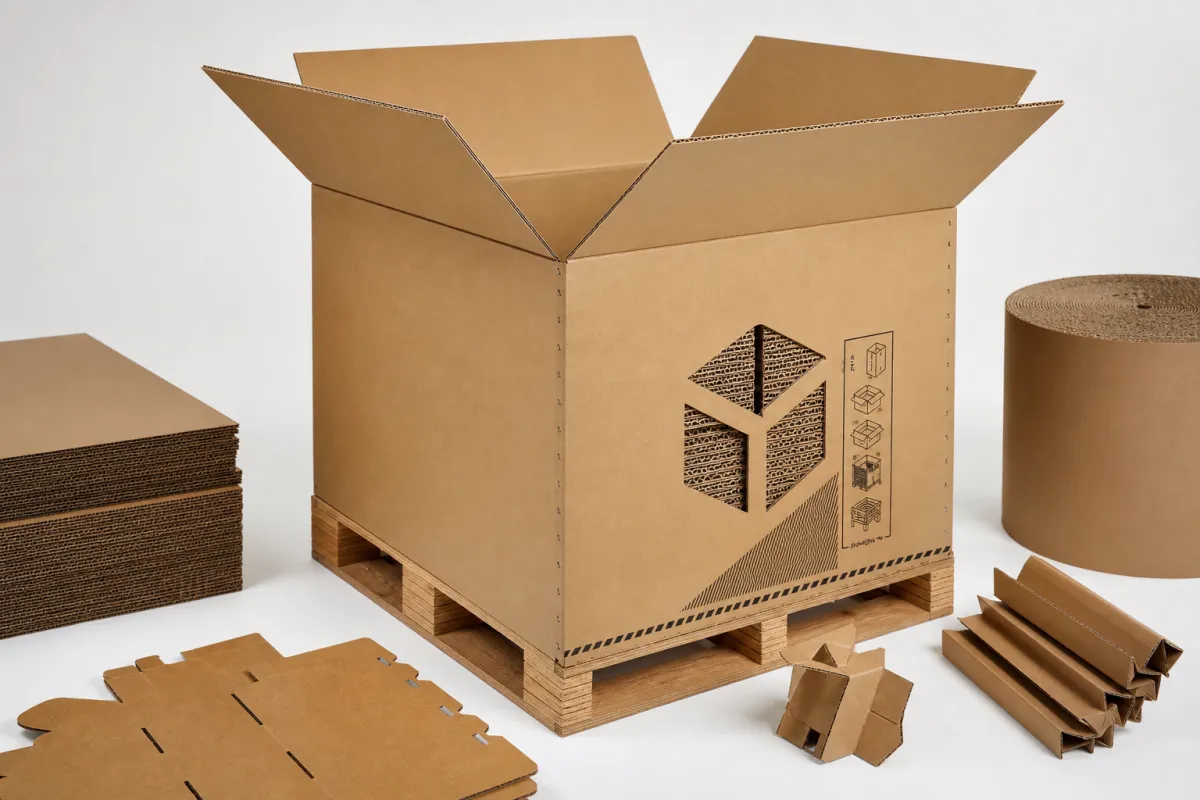
A pallet carton is not just a big box. A good custom pallet cartons manufacturer starts with the load itself and works backward. If a carton is carrying a 45-pound set of industrial components, the structure has to handle that weight under compression. It also has to work with the pallet pattern, the stretch wrap, the warehouse fork pattern, and the way your team actually closes and moves the unit. A carton that looks oversized on paper can still be wrong if the board and structure do not match the use case.
Stock cartons are built around standard dimensions and standard assumptions. Custom pallet cartons are built around your product, your pallet, and your route to market. That difference matters. Custom sizing can reduce void fill, improve cube utilization, and cut wasted headspace during palletization. In practice, that means fewer dunnage materials, cleaner stack patterns, and less chance that the load shifts during transit.
Businesses choose a custom pallet cartons manufacturer for all kinds of products, but the common thread is load stability. I see this most often with bulk replenishment, machine parts, frozen or dry ingredients, and larger e-commerce shipper programs where pallets move through several touchpoints before they reach the final destination. A well-built pallet carton can make warehouse handling simpler, reduce crush risk, and support a more consistent product packaging system across SKUs.
A pallet carton should be judged by how it behaves under stress, not by how neat it looks in a sample photo.
That is the part many buyers miss. A custom pallet cartons manufacturer is not only supplying corrugated material; they are also balancing cost, compression strength, print needs, closure method, and the practical reality of your line speed. If the carton needs to open fast, stack well, and survive a mixed distribution environment, the design has to account for all of that at once.
For buyers who also care about presentation, the same structure can support branded packaging and even limited custom printed boxes work without losing the engineering discipline that keeps the pallet load intact. Structure first. Branding second. Reverse that order and the package usually gets more expensive without getting better.
How a Custom Pallet Cartons Manufacturer Designs the Carton
The design sequence usually starts with a few plain facts: product dimensions, unit weight, pallet footprint, target stack height, handling method, and shipping distance. A custom pallet cartons manufacturer uses those inputs to decide whether the carton should be single-wall or double-wall, what flute profile is likely to hold up, where the scores should sit, and how the finished load will interact with a pallet and stretch wrap. The goal is not only containment. The goal is controlled performance across storage, movement, and transit.
Board selection matters a lot. A lighter product in a short, controlled distribution chain may be fine in a single-wall B-flute or C-flute construction, while a taller or heavier load often needs stronger edge crush resistance and better stacking performance. A thoughtful custom pallet cartons manufacturer will look at edge crush, burst strength, and top-load performance together, not in isolation, because one spec can improve while another becomes the weak point.
Structural style matters too. Full overlap cartons can add stacking strength in certain applications. Regular slotted cartons may be the most efficient choice for some pallet loads. Die-cut styles can help with repeatable closure or specific product geometry. A strong custom pallet cartons manufacturer also pays attention to score placement, hand holes if needed, and how the carton folds in the real world, because even a small shift in panel geometry can affect assembly speed and compression performance.
Testing should be part of the conversation. Many buyers only ask, “Will it fit?” The better question is, “Will it survive?” The technical side often includes compression testing, burst testing, and load simulation, using industry references such as ASTM methods and distribution expectations shaped by shipping history. For general packaging standards and education, the ISTA site is a useful reference point, and Packaging School and PACKAGING.org offer strong background on corrugated fundamentals and supply chain design.
Most projects move through a prototype stage. That can be as simple as a sample cut on digital equipment, or it can involve a more formal mockup that the buyer checks against a real product and a real pallet pattern. A careful custom pallet cartons manufacturer will want sample approval before production because fit, closure behavior, and stack stability are hard to judge from a drawing alone. If the carton is going into an active warehouse, a small revision at the sample stage is cheap insurance compared with a production rework.
Timelines vary with complexity. A straightforward job can move from brief to sample in about 5-10 business days, then into production shortly after approval. More complex programs may need engineering review, revised tooling, and a tighter scheduling window before the full run. A dependable custom pallet cartons manufacturer should be transparent about those steps instead of tossing out a timeline that ignores design work.
Custom Pallet Cartons Manufacturer Pricing Factors
Price is usually the first thing buyers compare, but it should never be the only thing. A custom pallet cartons manufacturer is pricing several separate pieces at once: board grade, caliper, size, print coverage, tooling, order quantity, and whether the carton needs special converting. A box with simple black print and standard cuts will cost less than a complex structure with heavy board and a custom die, but the lower price is useful only if the package still performs.
One of the most common mistakes is assuming the cheapest unit price means the lowest total cost. It does not. If a carton needs extra void fill, causes pallet instability, or leads to damage claims, the shipping and replacement cost can erase the savings quickly. A sensible custom pallet cartons manufacturer will usually talk about total system cost, including freight cube, storage footprint, and damage risk, because those items are part of the real budget whether they show up on the quote or not.
Order quantity also changes the picture. Setup, tooling, and engineering work are often spread over the run, so a short run may carry a much higher unit cost than a repeat order at volume. That is normal. It is also why a buyer should compare quotes only after matching specs, test assumptions, and lead time. Otherwise, two proposals can look similar while actually describing very different packages from the same custom pallet cartons manufacturer category.
| Order Profile | Typical Unit Range | Setup or Tooling | Best Fit |
|---|---|---|---|
| Short run, 500-1,500 units | $1.20-$2.50 each | Higher setup share | Prototype work, launch programs, low-volume parts |
| Mid-volume, 2,500-7,500 units | $0.70-$1.40 each | Moderate setup share | Regular replenishment, moderate print coverage |
| Higher volume, 10,000+ units | $0.35-$0.95 each | Setup spread across more units | Stable programs, repeat purchasing, warehouse standardization |
Those ranges are directional, not gospel. A heavy double-wall design costs more than a lighter single-wall structure, and large dimensions can increase board usage fast. Still, the table gives buyers a practical starting point. A custom pallet cartons manufacturer should be willing to explain why one quote sits at the top of the range and another lands lower, instead of hiding the differences behind vague language.
Freight and warehousing matter too. A carton that nests efficiently on a pallet can reduce outbound truck cube and make storage easier. A carton with poor dimensions may force awkward stacking, which means more floor space, more labor, and sometimes a higher transportation bill because the load cannot be palletized efficiently. A good custom pallet cartons manufacturer understands that packaging and logistics are tied together.
If your program includes a sustainability requirement, ask about FSC-certified board and recovery claims. The Forest Stewardship Council is a credible place to understand certified fiber sourcing. That does not automatically make a carton right for your application, but it helps buyers make better decisions about responsible material selection alongside performance. A serious custom pallet cartons manufacturer should be able to discuss both strength and sourcing without hand-waving.
Step-by-Step Process for Ordering Custom Pallet Cartons
The cleanest way to order is to treat the project like a packaging brief, not a shopping cart. A custom pallet cartons manufacturer typically starts with discovery: product dimensions, product weight, pallet size, stack height, warehouse conditions, shipping distance, and whether the load will be manually handled, machine packed, or wrapped for unitizing. That information gives the manufacturer enough context to avoid obvious design mistakes.
Next comes specification development. Here, the custom pallet cartons manufacturer proposes structure, flute profile, board grade, and closure style. For some projects, the first recommendation is surprisingly simple; for others, the safest answer is a stronger board or a different carton style entirely. The point is to match the structure to the load, not to force the load into a standard shape.
What Buyers Should Inspect on a Sample
Sample review should be practical and a little picky. Check the fit around the product. Check whether the flaps close cleanly. Check how much force is needed for assembly. Check whether the carton stack feels stable on a pallet and whether the wrap holds the corners without crushing them. A skilled custom pallet cartons manufacturer will want that feedback because small issues at sample stage often point to larger warehouse problems later.
It also helps to test the carton under realistic conditions. If the product will sit in humidity, run the sample near that condition. If the warehouse is cold, test it cold. If the carton needs to sit under load for days before shipping, simulate that. The real world is harsher than a clean sample bench, and a good custom pallet cartons manufacturer plans for that gap.
After sample approval, production usually moves through material sourcing, converting, quality checks, and shipping coordination. Artwork approval may be needed if the package includes print, even if the print is only a logo or handling mark for internal use. This is also where package branding and functional design meet. A carton can carry clear identity without becoming decorative clutter, especially in industrial or retail packaging programs where speed and visibility matter more than visual flourish.
Lead times depend on complexity, quantity, and stock availability. A well-organized custom pallet cartons manufacturer may deliver a simple repeat order in roughly 10-15 business days after approval, while a more technical structure or a printed job may take longer. If the supplier is vague about those windows, that is usually a sign to ask more questions before placing the order.
Once the cartons arrive, the work is not over. Warehouse training, receiving checks, and a first-run review matter more than many buyers expect. I usually recommend watching the first pallet build closely: speed of assembly, ease of closure, interaction with stretch wrap, and whether the pallet stack stays true after forklift movement. That first cycle tells you a lot about whether the custom pallet cartons manufacturer nailed the design or whether a revision should be scheduled before the next run.
Common Mistakes When Choosing a Custom Pallet Cartons Manufacturer
One of the biggest mistakes is specifying the carton only by outside dimensions. Outside size matters, but the inside fit, product orientation, and pallet pattern are what determine whether the load behaves properly. A custom pallet cartons manufacturer can build to almost any footprint, but the carton still has to work with the actual product, not just the numbers on a spreadsheet.
Another common issue is underestimating compression strength. Tall stacks, humid storage, long transit, and extended dwell times all increase the pressure a carton sees. If the board grade is too light, the load can start to settle, lean, or crush at the corners. A seasoned custom pallet cartons manufacturer will ask about storage and shipping conditions because strength requirements change fast when the environment changes.
Handling method gets overlooked too. Manual assembly needs a different ergonomic feel than automated packing. Forklift movement creates different stress than hand carrying. Stretch wrapping can help stabilize a pallet, but it can also introduce corner pressure if the carton edges are poorly designed. A smart custom pallet cartons manufacturer thinks through those interactions before production begins.
Comparing quotes without matching specs is another trap. Two cartons may appear similar while using different board grades, flute profiles, or test assumptions. One might be priced lower simply because it is easier to convert, not because it is a better solution. This is where buyers should ask for the rationale behind the quote, not just the number from the custom pallet cartons manufacturer.
Finally, some teams rush past prototype approval. That is a risky shortcut. A sample can reveal fit issues, weak corners, closure problems, or awkward pallet behavior long before those issues become expensive. Skipping that step often turns a modest engineering adjustment into a production delay, a rework, or a damage claim. In my view, a careful custom pallet cartons manufacturer is worth more than a fast one if the program matters.
For shipments that will be tested against real transit conditions, it is also worth asking about ISTA-based distribution testing and compression expectations tied to the carton’s load path. That does not mean every project needs formal certification, but it does mean the design should be grounded in recognized performance thinking, not only in what looks acceptable on a drawing.
Expert Tips for Working with a Custom Pallet Cartons Manufacturer
Share real product samples whenever possible. Photos help, but a physical sample tells the story better because the weight distribution, corner radii, and nesting behavior are easier to judge. A strong custom pallet cartons manufacturer will often spot problems from a sample that would be invisible in a written brief.
Ask for design rationale, not just a quote. If the supplier recommends a certain flute, board grade, or score pattern, they should be able to explain why. Maybe the product is top-heavy. Maybe the warehouse is humid. Maybe the stack height is the issue. A custom pallet cartons manufacturer that can explain the tradeoff usually understands the application better than one that only recites pricing.
Build in some margin for rough handling and weather swings. Corrugated board changes with humidity, and even a well-designed carton can lose performance if it sits in a damp dock or moves through mixed temperature zones. If the route is demanding, tell the custom pallet cartons manufacturer that up front so the design has room for real conditions rather than ideal ones.
Standardize pallet patterns where possible. Repeating the same footprint across similar SKUs can improve warehouse speed, reduce training time, and simplify inventory planning. It also makes the conversation with the custom pallet cartons manufacturer cleaner, because the structural logic stays consistent from order to order.
Use feedback loops. After launch, track damage rates, assembly speed, and freight performance. If something is off, capture it while the run is still active. That kind of feedback helps the custom pallet cartons manufacturer refine the spec with actual data instead of vague concerns, and it usually leads to a better long-term package.
The packaging program also connects to broader retail packaging or shipping strategy. If the same product family uses shelf-facing cartons or promotional packs, the pallet carton can be designed to support the same visual language without sacrificing structure. That balance matters in package branding, especially when operations and presentation need to work together.
What to Do Next After You Shortlist a Manufacturer
Once you have a short list, put together a simple brief. Include product dimensions, unit weight, pallet footprint, stack height, shipping method, storage conditions, target annual volume, and whether the carton needs to support print or internal labeling. A detailed brief helps the custom pallet cartons manufacturer respond with a real recommendation instead of a generic quote.
Then ask each supplier to explain the tradeoffs between cost, strength, and lead time. That one question usually separates a commodity quote from an engineering conversation. A good custom pallet cartons manufacturer should be willing to say, “If you want lower cost, here is what changes,” or “If you want better stacking, here is what we would upgrade.”
Set an approval timeline before you start. Sampling, pilot use, and production scheduling can all stall if purchasing, operations, and engineering are not aligned. A clean timeline keeps the program moving and gives the custom pallet cartons manufacturer time to reserve materials and capacity.
Run a small trial on the warehouse floor if the product is important or the load is large. Watch assembly time. Watch how the carton stacks. Watch whether the load stays square after wrapping and movement. A trial does not need to be complicated, but it should be real. That is the quickest way to see whether the custom pallet cartons manufacturer delivered something that fits your operation.
For buyers building a broader packaging program, it may help to connect the pallet carton project with other packaging streams, including custom printed boxes for retail or promotional use. The more the whole system is mapped out, the easier it is to standardize materials, lower waste, and keep each part of the supply chain aligned.
If you want to compare options more efficiently, talk with the supplier about their sampling process, how they handle revisions, and what test data they can provide. Even simple questions can reveal a lot about whether the custom pallet cartons manufacturer is set up for repeatable work or just one-off quoting.
FAQ
What should I ask a custom pallet cartons manufacturer before requesting a quote?
Start with the basics: product weight, pallet size, stack height, handling method, and storage environment. Then ask which board grades and structural styles they would consider and why, and whether the quote includes sampling, tooling, testing, and freight assumptions. A clear brief helps the custom pallet cartons manufacturer avoid guesswork and gives you a quote you can actually compare.
How long does it usually take to produce custom pallet cartons?
Simple projects can move quickly if the dimensions are clear and no special tooling is needed. More complex cartons usually require engineering review, prototype approval, and production scheduling. Lead time depends on material availability, quantity, print requirements, and how fast samples are approved, so the best custom pallet cartons manufacturer will give you a range instead of pretending every job is identical.
How do custom pallet cartons manufacturers decide the right strength?
They evaluate load weight, stacking pressure, pallet height, transit length, and how long the cartons will sit in storage or transit. They also compare board grade, flute profile, and carton style, then may recommend compression or handling tests before full production. A capable custom pallet cartons manufacturer is usually balancing structure, cost, and real-world risk at the same time.
Why do custom pallet cartons cost more than stock cartons?
Custom cartons usually require engineering, setup, and sometimes custom tooling or dies. They may also use heavier materials or more precise construction to support the load safely. The higher unit price can be offset by fewer damage claims, better pallet efficiency, less filler, and more predictable warehouse handling, which is why a custom pallet cartons manufacturer should always be evaluated on total value rather than unit price alone.
What is the biggest mistake when buying from a custom pallet cartons manufacturer?
Choosing by price alone without matching the material and performance specs is the biggest one I see. The second mistake is ignoring how the carton will be stacked, wrapped, and handled in real operations. Skipping prototype approval and discovering problems after production starts is another costly error, and a thoughtful custom pallet cartons manufacturer will usually try to slow that rush down before it becomes expensive.
Buying pallet cartons well is mostly about asking the right questions early. A strong custom pallet cartons manufacturer will help you think through load behavior, board selection, pallet efficiency, testing, and the way the carton fits into your broader packaging design, not just the way it looks on a drawing. That is the difference between a package that merely ships and one that actually supports the business.
If you are building a repeatable program for product packaging, branded packaging, or warehouse-ready units, start with a sample brief, a real pallet pattern, and a clear set of handling conditions. Those three things cut through most of the noise. The right custom pallet cartons manufacturer can then tune the board, structure, and testing around your actual operation instead of guessing at it, which is how you keep damage down and the supply chain from getting weird in a hurry.

