Buyer Fit Snapshot
| Best fit | Custom Paper Bags with Handles Bulk projects where brand print, material claims, artwork control, MOQ, and repeat-order consistency need to be specified before quoting. |
|---|---|
| Quote inputs | Share finished size, material target, print colors, finish, packing count, annual reorder estimate, ship-to region, and any compliance wording. |
| Proofing check | Approve dieline scale, logo placement, barcode or warning zones, color tolerance, closure strength, and carton packing before bulk production. |
| Main risk | Vague material claims, crowded artwork, missing packing details, or unclear freight terms can make a low unit price expensive after revisions. |
Fast answer: Custom Paper Bags with Handles Bulk: Specs, Pricing, MOQ should be specified like a repeatable production item. The safest quote records material, print method, finish, artwork proof, packing count, and reorder notes in one written spec.
Production checks before approval
Compare the actual filled-product size with the drawing, then confirm tolerance on folds, seals, hang holes, label areas, and retail display edges. Reserve space for logos, QR codes, warning copy, and material claims before decorative graphics fill the panel.
Quote comparison points
Review material grade, print process, finish, sampling route, tooling charges, carton quantity, and freight assumptions side by side. A quote is only useful when the supplier can repeat the same color, closure quality, and packing count on the next order.
Custom Paper Bags with Handles Bulk: Specs, Pricing, MOQ
Custom Paper Bags with handles bulk are not just carrier bags. They are a small, repeatable proof that a brand pays attention to details most customers never consciously name, but absolutely feel. The handle should sit right in the hand. The paper should hold its shape. The print should still look good after a commute, a coffee spill, or a quick crumple in the back seat. That sounds like a humble brief, but packaging is full of those quiet tests, and the bags that pass them tend to do real work for retail teams, food operators, event marketers, and hospitality buyers.
There is also a practical reason these orders keep showing up in procurement meetings. Buying custom paper bags with handles bulk usually lowers unit cost, reduces reordering friction, and gives a brand one consistent format instead of five almost-right substitutes. That consistency matters more than people think. A customer notices when the bag feels sturdy and deliberate. They notice just as quickly when it feels like an afterthought.
The financial logic is straightforward, but the operational logic is better. A handled bag can move from counter to car to office to home, continuing to show the logo without any extra media spend. That is a pretty decent return for something that starts as packaging and ends up as a walking billboard. Not bad for a paper bag.
Is custom paper bags with handles bulk right for your brand?
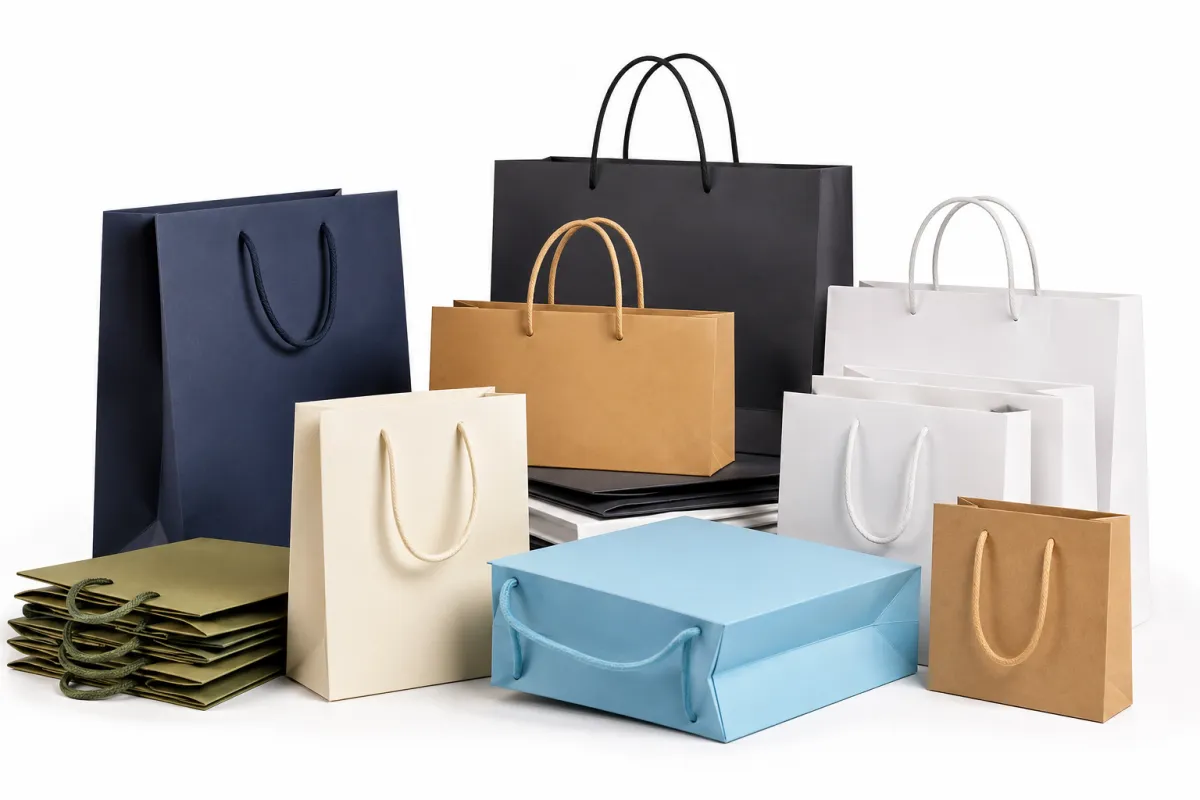
The best answer is yes, if the bag is part of a system and not a one-off rescue mission. If your retail packaging, gifting flow, and customer handoff all benefit from one standardized carry solution, custom paper bags with handles bulk can pull more weight than people expect. If your products are wet, cold, oily, or unusually heavy, the answer may be different. That is not a flaw in the bag. It is just physics being annoying.
The real question is whether the format survives actual use. I have seen beautiful sample bags fall apart once stores started loading them with boxed candles and layered apparel. I have also seen plain kraft bags become a quiet brand asset because they were well-sized, easy to carry, and printed cleanly. Experience in packaging tends to teach the same lesson over and over: the sample is not the field test.
Handled paper bags do something many formats cannot. They leave the store and keep advertising. They also create a little emotional signal at checkout: this business planned ahead, this business cares how the handoff feels, this business is not winging it. That signal is tiny, but in retail, tiny signals add up fast.
Why custom paper bags with handles bulk punch above their weight
Custom paper bags with handles bulk matter most at the moment of transfer. That is when the buyer feels the handle, checks the structure, and makes a snap judgment about whether the brand is practical or improvised. The bag is doing more than holding a product. It is carrying the tone of the transaction.
Some shoppers reuse these bags for lunch, returns, storage, or a second errand on the way home. Not every customer does that, and it would be dishonest to pretend they all will. Still, enough reuse happens to make the format unusually efficient. The logo gets a second life without a second media buy, which is kinda the dream in packaging terms.
Bulk purchasing also stabilizes operations. A team ordering 2,000 bags a month is not simply buying paper; it is protecting itself from stockouts, rush fees, and emergency substitutions. In many programs, bulk sourcing can reduce unit cost by 15% to 35% compared with short-run purchasing, depending on size, paper weight, handle style, and print coverage. Those numbers move around with the market, but the direction is consistent. Volume usually helps.
The use cases are broader than they look on paper. Boutiques want something polished but not heavy. Cafes need carry bags for boxed pastries, bottles, and takeaway items. Trade shows need a presentable format for literature, samples, and giveaways. Gift programs need speed without sacrificing appearance. Custom paper bags with handles bulk are useful because they sit between utilitarian packaging and premium presentation, and that middle ground is where a lot of real-world buying lives.
"A handled paper bag is small, but the message is large: this brand planned ahead."
That message matters most where first impressions are under pressure. A strong handle, clean print, and proper sizing can echo the same identity used on labels, inserts, receipts, and custom printed boxes. When those elements line up, the brand feels designed rather than assembled in a hurry.
Custom paper bags with handles bulk also cut down on operational noise. Staff have fewer packing decisions to make. A replenishment schedule becomes easier to predict. The chance of accepting a last-minute substitute drops. If one size works across multiple product lines, the whole system gets calmer, and calm is not glamorous, but it saves money.
Custom paper bags with handles bulk: materials and handle options
Material choice controls the final bag more than almost anything else. It affects strength, appearance, print behavior, and how the bag enters the recycling stream. Kraft paper is the common starting point because it is reliable, familiar, and usually economical. White kraft and coated paper push the look toward brighter graphics and sharper logos, which matters if your identity depends on fine type or high-contrast artwork.
Custom paper bags with handles bulk often appear in sustainability conversations, but that word can get slippery fast. Recycled-content stocks and FSC-certified paper are both useful procurement signals, yet they are not magical labels that override performance. A material can be more responsible on paper and still be wrong for the load, the finish, or the customer experience. The EPA recycling resources and FSC documentation help teams compare options, but testing the finished bag still matters more than the brochure language.
Handle selection is just as important. Twisted paper handles are usually the best value for custom paper bags with handles bulk because they balance cost, appearance, and decent carrying strength. Flat paper handles work well for lighter products and keep the profile understated. Rope, ribbon, and reinforced die-cut options move the bag closer to premium presentation, but they also increase complexity and cost. There is no free lunch there, and anyone claiming otherwise is probably skipping a step.
Size is where many bulk orders go sideways. A bag should fit the product, not merely resemble the product category. Width, gusset, and height each do a different job. If the gusset is too narrow, the load pushes into the seams. If the bag is too tall, it looks empty and awkward. If it is too wide, material waste creeps in and the unit price rises without improving the user experience.
Here is a practical comparison of common options:
| Use case | Recommended stock | Handle style | Typical print approach | Indicative bulk price range |
|---|---|---|---|---|
| Light retail or gift items | 120-150 gsm kraft | Flat paper or twisted paper | 1-2 spot colors | $0.16-$0.28 per unit at 5,000 pieces |
| General apparel and boutique goods | 150-200 gsm kraft or white paper | Twisted paper | Spot color or simple full color | $0.22-$0.42 per unit at 5,000 pieces |
| Premium retail or heavier gifting | 200-250 gsm coated or laminated stock | Rope, ribbon, or reinforced die-cut | Full color, matte or gloss finish | $0.48-$0.95 per unit at 5,000 pieces |
Those figures are directional, not a promise. They show how structure changes the economics. With custom paper bags with handles bulk, two bags can share the same footprint and still land in different cost bands because one uses reinforced attachments, heavier stock, or more complex finishing. Buyers sometimes compare only size and artwork, then wonder why the quote shifts. The answer is usually hiding in the construction.
Coatings and lamination deserve a careful look. They can improve stiffness, moisture resistance, and print clarity. They can also complicate recycling and add production steps. Uncoated or lightly coated stock often works better for dry retail goods. A boutique beauty brand or premium gift program may justify a soft-touch or gloss finish if the tactile feel supports the overall story. The right answer depends on use, not decoration for decoration's sake.
Specifications that affect strength, print quality, and reuse
Appearance is usually the first thing buyers talk about, but strength is what decides whether the bag gets praised or blamed. For custom paper bags with handles bulk orders, the most important specs are paper weight, handle attachment, gusset depth, bottom construction, and print coverage. Get those five right and the bag is usually boring in the best way. Miss one and even a lovely design can turn into a complaint at the register.
Paper weight is the easiest place to start. A 120 gsm structure can be fine for a scarf or a T-shirt. Once the contents become denser, or the bag is likely to be carried multiple blocks, heavier stock begins to matter. A 200 gsm bag often makes more sense for candles, boxed food, gift sets, or anything that does not want to fold in on itself after a few steps.
Handle attachment is where a bag reveals how serious it is. Pasted handles need consistent glue application and correct placement. Reinforced patch handles improve pull strength. Rope handles threaded through eyelets or internal supports are common in premium programs, although they add both cost and assembly complexity. For high-volume orders, a quick pull test is worth doing. A bag can look fine in a render and still fail when someone is carrying it with one hand while juggling keys, a phone, and a coffee.
Print quality depends on the paper surface. Uncoated kraft gives a natural feel, but it can soften fine lines and some color work. Smoother white stock and coated paper support sharper edges and more consistent brand color. If the logo uses thin strokes, small legal text, or a very specific brand tone, ask for a proof on the actual paper before approving the run. That extra check prevents a lot of unpleasant surprises.
For custom paper bags with handles bulk, the finish should support the message. A bakery may want warm kraft and a simple one-color print. A skincare label may need a clean white surface to match cartons and inserts. A gift business may choose restrained artwork with colored handles. Good packaging is not loud. It is coherent.
Consistency across the run matters too. The handles should sit at the same height. The bottom folds should align. One carton should not feel noticeably stiffer than the next. In larger orders, those details separate controlled production from a sample that happened to look good under ideal lighting.
Many buyers borrow quality language from packaging transit standards even when the bags are not shipping through formal distribution. ASTM-style durability checks and ISTA-inspired thinking help teams ask better questions about drop behavior, seam strength, and stress points. A paper bag that must move from store to street to car should act like packaging, not just a prop with a logo on it.
A practical quality checklist for custom paper bags with handles bulk usually includes:
- Load fit: the product sits without pushing the gusset or top edge out of shape.
- Handle pull strength: the attachment holds through repeated lifting at the planned load.
- Seam integrity: side seams and bottom folds stay aligned and secure.
- Print consistency: color, sharpness, and placement remain stable across cartons.
- Surface match: the finish supports the brand look instead of muddying the logo.
Reuse matters too. A bag strong enough to keep after purchase extends the impression at very low extra cost. Not every customer will reuse it, and pretending otherwise would be sloppy. Still, each additional use adds exposure, and in packaging economics, small recurring exposures are often the ones that make the math work.
Custom paper bags with handles bulk pricing, MOQ, and savings
Pricing gets messy because the number on the quote hides a bunch of inputs. For custom paper bags with handles bulk, the unit price depends on size, paper stock, handle type, number of colors, finishing, packing format, and freight terms. If a buyer only asks for "the price," they are usually comparing assumptions, not actual offers. That is how projects go sideways before production even starts.
MOQ works the same way. A one-color order with a single size can support a lower minimum than a premium configuration with multiple colors, specialty handles, and a laminated finish. Larger runs generally lower per-unit cost because setup and proofing are spread across more pieces. If a quote feels steep, ask what changes at the next volume tier. The answer is often more useful than haggling over one line item.
The cleanest quote review method is to compare like with like. Confirm dimensions, paper weight, handle style, coating, print coverage, printing on one side or both, and carton packing. A quote can look cheap until sample fees, freight, or packing charges are added later. A slightly higher starting price may still be better if it avoids re-runs, replacements, or hidden handling fees.
One of the better savings opportunities is standardization. If a boutique uses one size for scarves, smaller accessories, and gift sets, it can simplify inventory without sacrificing presentation. That does not solve everything, but it removes a surprising amount of reorder chaos. Procurement teams usually notice the savings in storage, forecasting, and fewer emergency top-ups.
Late ordering is another expensive habit. Rush production, compressed scheduling, and expedited freight can push a seemingly reasonable order into a much less reasonable one. It is often cheaper to plan early than to negotiate when the launch date is already breathing down your neck. That sounds obvious, but the invoices say otherwise.
Typical price drivers include:
- Bag size: larger sheets and wider gussets use more material and create more trim waste.
- Handle type: rope, ribbon, and reinforced styles usually cost more than twisted paper.
- Print coverage: full-color artwork and higher coverage increase setup and press time.
- Finish: lamination, coating, and specialty treatments raise unit cost.
- Packing and freight: carton count, palletization, and distance affect landed cost.
As a rough benchmark, custom paper bags with handles bulk can start in the mid-teens per unit for simple, high-volume, one-color runs and climb quickly as the build becomes more premium. That spread is normal. It reflects real manufacturing choices, not a pricing trick. If the quote jumps, there is usually a reason sitting in the spec sheet.
If the team is comparing these bags with paper mailers or custom printed boxes, the best question is not which option is cheapest in a vacuum. It is which option improves the customer handoff with the least friction. Bags usually win at checkout and immediate carry. Boxes usually win where protection and compression matter more. The right format depends on the product, the channel, and how much handling the package will face.
Process and timeline from proof to delivery
The production flow for custom paper bags with handles bulk is not complicated, but each step changes the outcome. It usually starts with dimensions, handle selection, paper stock, print count, and quantity target. Once those decisions are fixed, the supplier can build the dieline or apply a template. If artwork is already final, the schedule moves faster. If the files still need work, the clock starts slipping one revision at a time.
Proofing is the point where teams should slow down. This is where placement, color behavior, and handle clearance get checked against the artwork. A careful review catches spelling mistakes, spacing issues, and unexpected layout shifts before production costs multiply. For custom paper bags with handles bulk, proof approval is often the real commitment point, not the quote.
After approval, the run moves through printing, drying, cutting, folding, gluing, handle attachment, inspection, and packing. Depending on complexity and order load, many projects land in a 12 to 20 business-day window after proof approval, with freight adding more time. Simple bags can move faster. Premium finishing and special handles usually add days, not because anyone is being dramatic, but because more steps mean more places for delay.
Most delays start on the buyer side: missing dimensions, late artwork, design changes after proof, or unclear delivery instructions. If the bags support a store opening, seasonal launch, or event, work backward from the date and add a buffer that is actually believable. A two-week cushion is usually prudent. A one-day cushion is optimism pretending to be planning.
These bags often sit inside a larger packaging sequence. A handled bag may need to align with tissue, inserts, cards, or custom printed boxes. If one piece is late, the whole customer-facing system looks incomplete. Brands that think of packaging as a set tend to avoid that scramble.
A practical workflow looks like this:
- Confirm product weight, dimensions, and how the bag will be used.
- Choose stock, handle style, and print method.
- Review the dieline and place artwork on the correct template.
- Approve the proof and lock all specifications.
- Schedule production, packing, and freight against the launch date.
One useful rule: order custom paper bags with handles bulk before the seasonal rush starts. Most teams already know their pressure windows. Early ordering leaves room for sample checks, small corrections, and sane shipping decisions. That usually saves more than trying to bargain after the calendar has already turned hostile.
For brands managing multiple packaging lines, the same planning discipline applies to Custom Packaging Products and related components such as inserts, cartons, and display materials. It also helps Wholesale Programs, where predictable demand and controlled specs beat emergency substitutions almost every time.
Why choose a supplier for custom paper bags with handles bulk
The strongest reason to choose a supplier for custom paper bags with handles bulk is reliability. Not a flashy slogan. Not the cheapest number on page one. Reliability. A good partner keeps sizing consistent, maintains print registration, and flags issues before they become expensive revisions.
Commercial buyers care deeply about repeatability. If you reorder six months later, the second run should feel like the first. The handle should feel the same. The logo should sit in the same place. The cartons should be packed the same way. That sameness is not boring; it is what makes a packaging program dependable.
Service quality matters too. A serious supplier can talk about paper stocks and handle systems without burying you in jargon. They can explain when 150 gsm is enough and when 200 gsm is safer. They can recommend a handle that matches the load instead of pushing the most expensive option. They can also help align the bag with other touchpoints like labels, wrappers, and custom printed boxes.
Food service buyers often care more about moisture resistance, carry comfort, and speed at handoff. Premium retail buyers may care more about finish, color depth, and tactile quality. Custom paper bags with handles bulk can serve both ends of that spectrum, but only if the spec is intentional. Function first. Aesthetic second. That order matters more than the marketing copy usually admits.
The lowest quote is not always the best value. A cheap starting price can hide thin stock, weak handles, weak QA, or freight surprises. A better comparison looks at the whole package: specification clarity, proof support, production stability, and honest timing. That is the kind of supplier relationship that holds up when volumes rise or timelines tighten.
Good suppliers also handle documentation well. If a buyer needs recycled-content details, FSC records, or load guidance, the answer should be concrete. If the buyer is planning a broader packaging rollout, the supplier should be able to talk about fit, finish, and day-to-day use, not just print appeal. That difference is subtle on a sales call and obvious during production.
In practical terms, custom paper bags with handles bulk should be easy to request, easy to review, and easy to reorder. Clear quotes, understandable proofs, realistic lead times, and responsive communication matter more than any single glossy feature.
Next steps for ordering custom paper bags with handles bulk
The most useful quote comes from complete input, not vague enthusiasm. For custom paper bags with handles bulk, send dimensions, estimated annual volume, product weight, preferred handle style, artwork, desired finish, and delivery date. If you can share the exact contents too, the supplier can recommend the right stock more accurately and save a round or two of revision. That is usually where the time savings show up.
Before you lock specifications, compare at least two or three material options. One may be cheaper but too flimsy. Another may look premium but overshoot the budget by a mile. The best choice often sits in the middle: strong enough to carry real products, polished enough to support the brand, and priced so it still makes sense at scale.
Think through the handoff before final approval. Will the handle hold from counter to car? Does the bag communicate the brand outside the store? Does it sit logically beside the rest of the retail packaging system? If the answer is yes, the spec is probably close. If the answer is no, the design needs tuning rather than more urgency.
For teams still comparing options, this checklist helps:
- Measure the products that will go into each size.
- Pick one handle style that matches both load and brand perception.
- Request samples when appearance affects premium positioning.
- Confirm print method, number of colors, and placement limits.
- Set the final delivery date before approving the proof.
That process is not glamorous, but it protects margin and reduces risk. Custom paper bags with handles bulk perform best when buyers treat them as operational packaging rather than an accessory to be sorted out later. Choose the Right size. Match the stock to the load. Set realistic timing. Then order with enough volume discipline that the unit cost supports the rest of the program.
For brands that want the handoff to feel intentional from shelf to sidewalk, these bags remain a practical choice. They are visible, functional, and easy to standardize when the program is designed with care. Done well, they support cost control, delivery confidence, and a stronger customer experience in one move. That is why custom paper bags with handles bulk keep showing up in serious packaging plans.
FAQs
What is the usual MOQ for custom paper bags with handles bulk?
MOQ depends on size, stock, and print complexity, but larger runs usually unlock the best per-unit economics. If your project includes multiple sizes, ask whether they can be grouped in one production cycle or need separate runs. For custom paper bags with handles bulk, the minimum is often tied to setup efficiency as much as paper cost.
Which handle type is best for custom paper bags with handles bulk orders?
Twisted paper handles are usually the most balanced choice for general retail because they offer a fair mix of cost, durability, and appearance. Flat handles are fine for lighter loads, and rope-style handles are better for premium presentation or heavier goods. For custom paper bags with handles bulk, the best option is the one that matches both product weight and brand direction.
How do I choose the right paper weight for bulk paper bags with handles?
Match paper weight to the actual contents, not just the bag size. Light products can work with thinner stock, while dense items need heavier construction and stronger attachment points. Ask for a recommendation based on what the bag will carry. That keeps custom paper bags with handles bulk from becoming underbuilt or unnecessarily expensive.
Can custom paper bags with handles bulk be printed in full color?
Yes, though the paper surface and print method will affect color accuracy and cost. Spot color, full color, and one-sided printing all behave differently on kraft and coated stocks. For custom paper bags with handles bulk, the right setup starts with the substrate and works outward from there.
How long does production take for custom paper bags with handles bulk orders?
Timing depends on proof approval, production load, and freight distance. Most projects move faster when specs and artwork are final early, and slower when changes start after the proof. Many custom paper bags with handles bulk programs land in a 12 to 20 business-day production window after approval, but premium finishing can extend that.

