Buyer Fit Snapshot
| Best fit | Reduce Custom Packaging Cost Without Cutting Quality projects where brand print, material claims, artwork control, MOQ, and repeat-order consistency need to be specified before quoting. |
|---|---|
| Quote inputs | Share finished size, material target, print colors, finish, packing count, annual reorder estimate, ship-to region, and any compliance wording. |
| Proofing check | Approve dieline scale, logo placement, barcode or warning zones, color tolerance, closure strength, and carton packing before bulk production. |
| Main risk | Vague material claims, crowded artwork, missing packing details, or unclear freight terms can make a low unit price expensive after revisions. |
Fast answer: Reduce Custom Packaging Cost Without Cutting Quality: Material, Print, Proofing, and Reorder Risk should be specified like a repeatable production item. The safest quote records material, print method, finish, artwork proof, packing count, and reorder notes in one written spec.
Production checks before approval
Compare the actual filled-product size with the drawing, then confirm tolerance on folds, seals, hang holes, label areas, and retail display edges. Reserve space for logos, QR codes, warning copy, and material claims before decorative graphics fill the panel.
Quote comparison points
Review material grade, print process, finish, sampling route, tooling charges, carton quantity, and freight assumptions side by side. A quote is only useful when the supplier can repeat the same color, closure quality, and packing count on the next order.
How to Reduce Custom Packaging Cost Without Cutting Quality
Reducing custom packaging cost is rarely about finding one magical supplier or shaving a few cents off a quote. It is usually a chain of small decisions: tighter specs, smarter minimums, cleaner artwork, better freight planning, and fewer surprises between approval and production. For teams running recurring packaging programs, that is not a one-off fix. It is a cost-control system, and every part of it has to protect both margin and brand perception.
How to Reduce Custom Packaging Cost Without Losing Shelf Impact
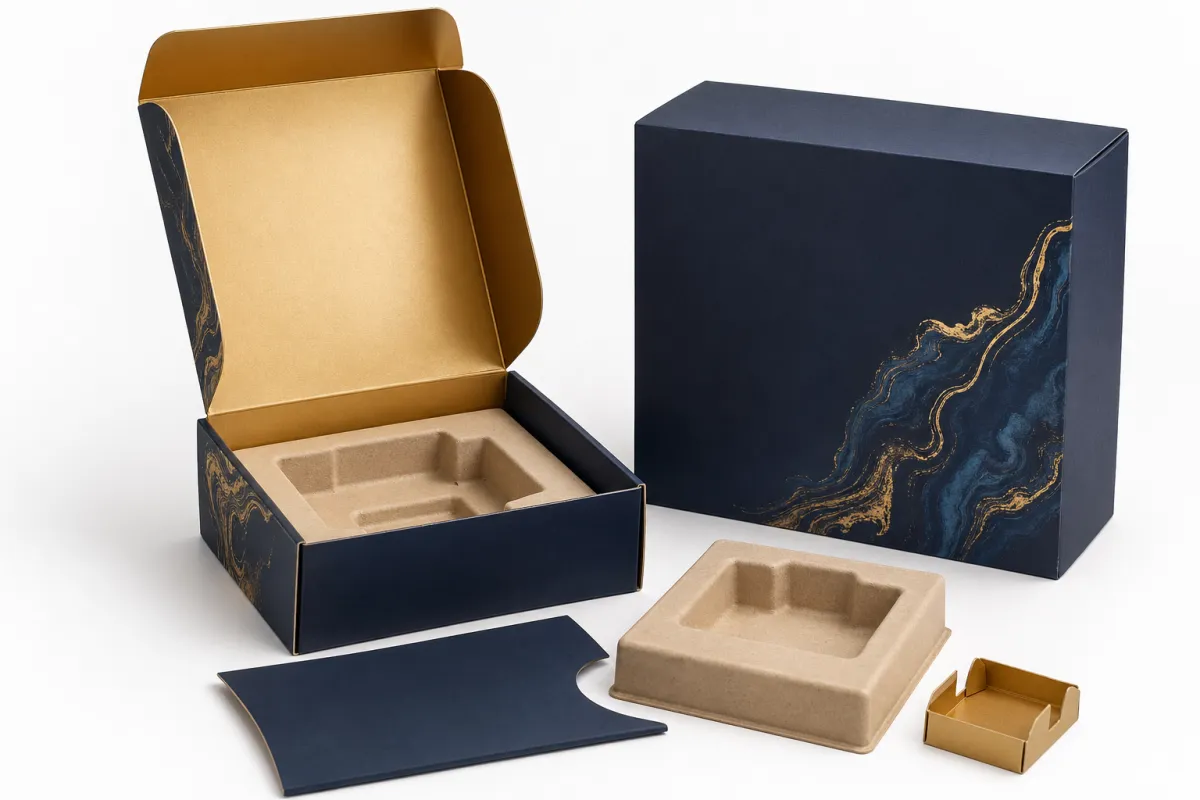
I have sat through enough sourcing reviews to know the pattern: a team sees a lower unit price, celebrates for about ten minutes, and then discovers freight, sampling, and rework quietly ate the savings. One millimeter of extra width can change board usage, pallet density, and shipping cube all at once. On a 5,000-piece corrugated run, that kind of size creep can push freight up by 8 to 12% without making the package feel any better in the hand. That is why anyone trying to understand how to reduce custom packaging cost has to start with landed cost, not sticker price.
Landed cost is the full picture: manufacturing, setup, tooling, sampling, freight, quality checks, rework, and the cash tied up in inventory that sits longer than expected. A quote that drops from $0.70 to $0.65 per unit can still be the more expensive option if it adds $0.12 in rework, $0.08 in freight, and a month of storage. The math is not glamorous, but it is usually honest.
Most packaging discussions begin with print, which is backwards. Format and structure decide more of the budget than artwork ever will. If the product only needs one strong hero panel and readable instructions, printing every surface is often wasted spend. That is the first practical answer to how to Reduce Custom Packaging Cost Without gutting the brand signal: keep the parts customers actually see, and trim the decoration that never gets noticed.
A practical landed cost model for a quick internal check:
- Base manufacturing: board, labor, and print for the quantity ordered.
- Tooling and setup: dielines, plates, and press calibration.
- Finishing and inserts: windows, foils, tapes, liners, and assembly steps.
- Freight and handling: weight, volume, and cube efficiency.
- Quality and rework: inspections, short runs, and reprints.
- Inventory impact: carrying costs, cash lock, shelf-life risk.
That model changes the conversation fast. If your package lives on a retail shelf, visual hierarchy matters more than full-wrap print coverage. If it ships through parcel networks, corner strength and stack behavior matter more than a fancy coating. I have seen brands spend on spot UV for a surface customers barely touch, then underspec the structure and pay for returns later. That is not premium. That is just expensive in the wrong place.
“A packaging choice that saves $0.05 in production but adds $0.20 in freight or returns is not a savings decision. It is a disguised loss.”
That is the basic discipline behind how to reduce custom packaging cost: define what must stay premium, what can be standardized, and what can disappear without hurting the product or the sale. Once that is clear, the rest gets easier.
If you are building a repeat packaging program, think about cost-to-serve the same way a finance team thinks about channel economics. Packaging is not just a container. It is part of the supply chain, and the supply chain has a memory.
Choosing the Right Packaging Format for Your Product
How to reduce custom packaging cost starts with format, not artwork. Folding cartons, corrugated mailers, rigid boxes, sleeves, and wraps can all do the job, but they behave very differently under pressure, in transit, and at the point of sale. Pick the structure that matches the product first, then build the visual system around it.
Folding cartons for retail positioning
Folding cartons are often the most cost-efficient option for stable SKUs that sit on shelf and move through short handling paths. For light to medium-weight items, a well-specified 250-350 gsm board carton can outperform heavier alternatives across a 5,000 to 25,000 piece run. That is especially true when the package needs branded packaging without extra assembly friction. A stock carton with custom print is often enough; a fully custom die line is not always the answer, even if it sounds impressive in a kickoff meeting.
When teams ask how to reduce custom packaging cost during a launch cycle, folding cartons usually win if the design can do more with less. A sharp front panel, one secondary side, and disciplined typography can carry more shelf presence than a crowded four-color treatment. Quietly, that is often where the savings hide.
Corrugated mailers for shipping strength
Corrugated mailers dominate shipping because compression resistance and puncture tolerance are hard to beat at scale. A 32 ECT or 44 ECT corrugated option can handle rougher transit better than thin board while staying light enough for parcel systems. If the product is fragile, irregular, or likely to ship internationally, corrugated is often the lowest-risk answer for how to reduce custom packaging cost over time, because damage and returns belong in the real cost, not the theoretical one.
One mistake I see constantly is overcompensating with foam, double inserts, and extra void fill because somebody wants to feel safe. Sometimes that helps. Often it just adds material, labor, and shipping weight. A cleaner internal fit and better fold geometry can do the same work for less. That part is kinda boring, which is exactly why it gets overlooked.
Rigid boxes for premium moments
Rigid packaging is not a default. It is a deliberate premium signal. On a 2,000-piece launch, rigid can look excellent, but the material footprint, lead time, and assembly cost can be materially higher than a lighter carton-and-sleeve system. I have seen subscription and gifting brands fall into this trap: the first drop sells well, then the repeat runs become painful because the build is too heavy for the margin.
If the economics support it, rigid works. If they do not, a hybrid approach usually makes more sense. Keep the premium feel where the customer sees it most, and simplify the hidden layers. That is one of the more practical answers to how to reduce custom packaging cost without making the product feel cheap.
Sleeves and wraps for light-branding wins
Sleeves and wraps are useful when the base package stays stable but the campaign needs a refresh. Seasonal lines especially benefit from this approach because you can change the outer message without rebuilding the whole structure. Right-sizing matters a lot here. An extra 5 mm in width can create a surprising amount of board waste at volume if the cutting layout is not optimized.
Across all formats, the sequence is the same: product weight, fragility, shelf behavior, and stacking method should be decided before finish discussions start. A matte soft-touch mailer for a heavy item can cost more in freight than the finish ever adds in brand value. A simpler carton with crisp color and strong contrast can do the job better. Not every package needs to look like a luxury launch box.
One rule holds across categories: if a format requires two or more manual assembly steps, cost risk climbs with every increase in MOQ and every minute of labor variance. That is why a package that appears cheaper on paper can become more expensive in production. How to reduce custom packaging cost is often as much about reducing touchpoints as reducing graphics.
Specifications That Quietly Drive Up or Lower Cost
The most expensive packaging choices are often the ones that look cosmetic. Board caliper, substrate grade, print coverage, coatings, inserts, windows, and assembly complexity are the real levers. If you want to know how to reduce custom packaging cost, this is where the work gets real.
Board and material: strength-to-cost balance
Heavier board is sometimes necessary, but overbuilding is the common mistake. A 300 gsm folding carton may be more than enough where 350 gsm would only add cost. On a high-volume run, that extra grammage can increase raw material spend by 6 to 14%, depending on grade and region. If the package is not moving through rough transit, that money might be better spent on tighter print control or better dieline testing.
Material grade also changes print behavior. Recycled-content boards can save money in some markets and support sustainability goals, but they can alter ink holdout and drying behavior. “Cheaper” does not automatically mean “worse-looking.” It depends on the substrate, the press profile, and whether the supplier actually tests before full production instead of guessing and hoping. That is the difference between procurement theater and real packaging cost optimization.
In practical terms, I usually start by asking what failure would be expensive: collapse, scuffing, ink rub, or poor fit. Once the failure mode is clear, the material choice gets less emotional. That is a healthier way to decide how to reduce custom packaging cost than arguing over board thickness in the abstract.
Print coverage and color strategy
Fewer colors reduce cost in two places: press preparation and inspection. Two-color plus spot varnish often costs less than full four-color coverage at smaller runs, and color drift is easier to control. A 5,000-piece job with heavy ink coverage can cost materially more to produce and inspect than a restrained design with strong contrast on one face. The same rule applies to interior flaps, base panels, and insert cards. A small artwork change can add plates, ink, and extra setup time, then show up later as hidden process cost.
There is also a perception trap here. Buyers often assume more color equals more value. Sometimes it does. Often it does not. A clean layout with one well-chosen accent can out-perform a busy package in both visual clarity and production cost. That is the kind of decision that saves money without shouting about it.
Coatings, windows, inserts, and assembly
Soft-touch lamination, foil stamping, embossing, and specialty finishes can absolutely improve shelf appeal. They also slow production, increase setup complexity, and sometimes raise rejection rates. Premium finishing belongs on the package only if the margin can absorb the effective landed cost and still stay healthy. If the unit margin is $1.20 and finish adds $0.40 to the real cost, that is a big swing. It may be justified for a hero product, but not for everything in the line.
Windows and inserts deserve the same scrutiny. Windows need cutting and trimming. Inserts need extra assembly time. A simple paper insert can sometimes replace foam, but every extra part increases labor risk. That is where how to reduce custom packaging cost requires an honest trade-off review: what does the customer actually value, and what is just decoration for the supplier spec sheet?
Overbuilt packaging creates the biggest hidden margin drag when the customer never notices it. If a premium feature does not meaningfully improve product protection or the first few touchpoints with the customer, it is probably a spend leak. That sounds blunt because it is.
Overbuilt packaging: the silent multiplier
Overbuilt packaging rarely increases cost in only one place. More material means heavier freight. Thicker board often needs stronger adhesive and slower machine settings. Complex geometry can increase die-making time and prepress work. Inconsistent shapes also create handling rejects inside the plant. A 15% to 20% jump in total process cost from one premium upgrade is not unusual when the upgrade does not move the buying decision. Keep premium where the package needs to protect the product and signal trust. Remove it where the customer never looks.
For teams working under transit standards, the same discipline helps with compliance and testing. If a package must pass ISTA or ASTM-type handling protocols, build that requirement into the structure early instead of trying to patch it later. For material and sustainability claims, a useful reference point is ISTA packaging test frameworks and FSC material guidance.
How to Reduce Custom Packaging Cost Through Pricing and MOQ
In most bids, the headline unit price is only part of the story. Sometimes it is not even the most important part. That is why how to reduce custom packaging cost has to be treated as a comparison exercise, not a single-number hunt. Spec matching, MOQ alignment, delivery terms, and fee structure all need to be normalized before anybody crowns a winner.
Price breaks versus inventory risk
MOQ is a lever, not a goal. Larger volumes often reduce unit price, but the tradeoff is real: more cartons on hand means more storage, more handling, more cash tied up, and more risk if demand shifts. A common carrying-cost assumption lands somewhere around 15% to 30% annually for inventory held in reserve, depending on storage costs and financing terms. If sell-through is uncertain, the lowest unit price can become the most expensive decision on the balance sheet.
The better frame is this: compare each MOQ break against expected weekly usage and the reorder cycle. The right MOQ is the one that reaches a practical pricing tier without creating stale stock. If you move 500 units a day, a 2,000-piece run may be fine. If you move 100 a day, that same run may sit too long unless the forecast is unusually stable. Numbers matter more than optimism.
Compare apples-to-apples, always
Do not compare a 12 x 8 x 4 carton quoted on 4-color silk with another quote on 4+1 color plus matte finish at a different size and call the prices similar. That is not a real comparison. A usable quote review needs every line item normalized: format, dimensions, substrate, print method, finish, inserts, quantity, trim allowance, and delivery terms. If freight is included on one quote and excluded on another, split it out and standardize the assumptions before choosing a supplier.
How to reduce custom packaging cost on pricing depends on that discipline. It turns vendor claims into auditable data and gives procurement something solid to defend when finance asks why one quote appears lower but moves risk into late-stage handling. The cheapest-looking option is not always the cheapest option. Anyone who has had to explain a reprint invoice knows that already.
What sits behind the quoted unit price
Setup and tooling fees are where many buyers get blindsided. A low piece price can hide $250 to $800 in setup charges, plus die correction, plus sample loops. In smaller runs, those charges can account for more than 20% of the total landed cost. Sampling and prepress behave the same way. If one supplier bundles one proof and another includes three, the effective unit cost shifts before production begins.
Another overlooked bucket is correction policy. If a supplier charges for reprint only after approval, your true unit cost can creep up later. A cost-to-serve review should capture replacement policy, correction thresholds, and how many quality checks are actually included. That may sound tedious. It is. It is also the part that keeps budgeting honest.
Practical pricing table
| Option | Typical structure | Print and finish | MOQ | Indicative unit cost (5,000 pcs) | Typical lead time |
|---|---|---|---|---|---|
| Low-cost baseline | Stock die 350 gsm folding carton, no insert | 2-color, matte laminate, no embellishments | 1,000 to 3,000 | $0.18 - $0.28 | 10-12 business days |
| Balanced launch | Custom fold with light reinforcement | 4-color on 2 faces, spot UV on title panel only | 3,000 to 7,000 | $0.35 - $0.52 | 12-15 business days |
| Premium brand option | Rigid + custom insert set | 4-color + foil + emboss, selective soft-touch | 5,000 to 10,000 | $0.82 - $1.40 | 18-25 business days |
Use this as a directional benchmark, not a promise. Final numbers move with region, substrate, freight lane, and color profile. The point of the table is not to lock a rate; it is to separate cost for style from cost for performance.
For teams serious about how to reduce custom packaging cost, it helps to ask each supplier for at least one alternate spec inside the same delivery window. The cheapest answer is rarely the best answer. The better answer is the one that still protects quality, margin, and timing when the order is under pressure.
Process and Timeline: From Quote to Production Without Delays
A rushed timeline is often the most expensive way to try to reduce custom packaging cost, because speed taxes everything at once. Rushed approvals, expedited freight, after-hours press changes, and compressed QA windows can add 10% to 25% to overall spend. In Custom Printed Boxes, even a small color shift can trigger a correction loop that wipes out the savings from moving fast.
Production map
- Inquiry and commercial fit (Day 0-2): share product dimensions, target qty, shelf constraints, and shipping destination.
- Spec review and quotation (Day 2-5): verify structure, materials, coatings, and finish intent against budget.
- Dieline/structural approval (Day 5-8): lock dimensions, flaps, glue zones, and insert behavior before prepress.
- Sampling and proofing (Day 8-12): approve color, fold, and structural performance.
- Prepress and production (Day 12-18): plates, setup, registration checks, first-off approval.
- Quality checks and shipment (Day 18-23): incoming test pulls, packaging stress checks, palletization, and dispatch.
Those windows change with complexity and supplier capacity. The real issue is sequence. If the design is still changing after tooling release, you are going to pay twice: once for the original work and again for the correction. Cost errors show up most often when a team approves visuals without validating fold reliability on the final trim size. That is one of those small mistakes that looks harmless right up until it is not.
How complexity changes lead times
Complex die cuts and multi-color coating combinations require longer sign-off windows. If the order includes foil, embossing, and selective varnish, ask for a realistic 3- to 5-day longer prepress window than a standard print build. Any request for a 24-hour turnaround on a complex job should trigger a premium assumption right away. In many markets, rush handling can increase shipping and labor by 15% to 40%.
That is why how to reduce custom packaging cost is not about removing every cushion from the schedule. It is about putting the cushion in the right place. A short prepress phase that catches fold issues can prevent a very expensive production halt later. Saving time in the wrong stage usually costs more time later. Packaging has a way of teaching that lesson twice if you let it.
Sample review as cost control
Sample review before the final run is not optional. If the order is anywhere from 1,000 to 10,000 units, skipping this step is gambling on design, not quality. Early sample review catches wrong glue bleed, opening problems, and fold collisions while the fix is still cheap. That lowers the risk of reprint, which is where a lot of hidden cost lives.
In one production review I worked through, a minor adjustment to the die notch cut the rejection rate by 11% and eliminated the need for an urgent replacement batch. The packaging itself did not become more beautiful. It just worked better. That is usually enough.
The practical rule is simple: the more complex the spec, the more time belongs in sample and prepress. It may feel slower at the start, but it almost always trims total cost by avoiding overtime, correction cycles, and emergency freight. If speed matters, build it in early. Do not pretend urgency is a strategy.
When teams ask how to reduce custom packaging cost across production cycles, this is usually the clearest answer: buy predictability at each milestone and protect the cost base before the press starts moving.
Why Choose Us for Cost-Controlled Custom Packaging
Most vendors quote. Fewer vendors diagnose. That distinction matters when the real goal is to improve how to reduce custom packaging cost while keeping the package credible on shelf and durable in transit. Cost control should start before production, when the design is still flexible and the trade-offs are still visible.
Disciplined estimating and transparent structures
A strong supplier should challenge vague requirements. If a brief says “premium finish,” the right question is not just “how much will it cost?” The better question is “which panel actually justifies the spend?” A disciplined estimate should separate base unit cost, setup, finishing, freight impact, and expected defect allowance. That makes it easier to buy the right thing instead of the loudest thing.
Design-for-manufacturing review
Design teams can move fast and still create expensive problems. A fold conflict discovered after tooling is not a creative issue. It is a budget issue. A design-for-manufacturing pass protects brand integrity and time by checking dieline readability, stack behavior, glue access, and insert tolerances before sign-off. It is not flashy work, but skipping it is one of the fastest ways to waste packaging spend.
Repeat reliability and standards-minded execution
Consistency beats one-off hero batches for brands with recurring programs. Reorders, not launches, are where cost discipline really proves itself. If packaging has to repeat across campaigns, run-to-run consistency reduces rework and keeps purchasing cleaner. For brands with regulated transit needs, alignment with recognized handling guidance matters as much as aesthetics. No one wants to discover durability only after a returns wave.
In practical terms, that is how to reduce custom packaging cost without making hidden compromises. You preserve trust, preserve brand, and avoid the late-stage cost shocks that make a “cheap” run expensive after the fact.
Breadth without hype
From corrugated shipping and folding cartons to custom packaging products built for retail and direct-to-customer demand, the objective is to Choose the Right packaging type and not over-spend on unnecessary complexity. A good partner helps you compare variants in one sitting and keeps the assumptions visible. That clarity is often worth more than a small price delta.
Packaging cost optimization across a portfolio matters most when different SKUs need different answers. One product may justify matte finish for retail. Another may be better served by a cleaner fold carton and minimal ink coverage. Treating them the same is easy. Treating them correctly is cheaper in the long run.
How do I reduce custom packaging cost before my next production run?
If your calendar says the decision is due tomorrow, start with a cost-control checklist instead of a design marathon. Confirm the usage forecast, shipping lane, and acceptance criteria first. If any one of those is vague, you are trying to reduce custom packaging cost without a baseline, and that usually ends badly.
- Demand certainty test: confirm 4-week sell-through and forecast confidence by channel.
- Packaging behavior test: define whether the unit must survive parcel stress, shelf vibration, or both.
- Spec lock test: narrow print coverage, materials, and insert options to two realistic versions.
Then request two quotes per version and ask the same question across each: what is the complete landed cost for this use case, including likely rework? The teams that do this well often improve packaging cost per unit by 8% to 18% before the first purchase order, mostly because they stop paying for unnecessary complexity.
For most portfolios, the breakthrough is not one dramatic switch from premium to basic. It is a staged rollout: baseline spec for baseline demand, performance spec for volatile SKUs, and premium spec only where the margin and the channel justify it. That structure protects cash and gives procurement something predictable to work with. If you can run that logic consistently, you are no longer asking how to reduce custom packaging cost only when inventory gets awkward; you are building lower cost into the system.
For teams that want a simple rule, use this one: treat packaging spend as a triangle of material, execution, and distribution. If each side is measured, the answer becomes repeatable instead of reactive.
Next Steps to Lower Your Packaging Spend on the Next Run
Here is the practical path I see buyers use most successfully. Start with facts, not guesses. Gather real dimensions in grams and millimeters, target quantity by channel, shipping method, and a budget that is defensible before you ask for quotes. If the goal is to lower custom packaging cost by a specific margin, define that margin in unit cost and landed cost terms.
Step 1: Prepare a clean input pack
Before you request pricing, document five fields: product dimensions (max and min), product fragility category, storage and shelf requirements, print coverage priorities, and launch deadline. Then set a primary and backup timeline. The cleaner the input, the easier it is to ask exactly how to reduce custom packaging cost without inviting expensive guesswork.
Step 2: Ask for three spec paths
Request three quote tracks from day one: a cost-first baseline, a balanced performance spec, and a premium shelf-first version. Compare all three on the same terms: same artwork, same quantity brackets, same delivery destination, same inspection level, and same freight assumptions. That avoids beautiful but incomparable quotes. Teams often find immediate savings by choosing the baseline package and upgrading only where margin supports it.
Step 3: Use one proof standard
Review one sample or digital proof against identical criteria: print fidelity, fit around the product, fold stability, and shipping damage behavior. Confirm budget and timeline alignment before approval, not after. If the sample is approved but the cost assumptions changed, stop and reset. That is usually where reprint risk begins.
Step 4: Finalize the lowest-cost package that still meets brand intent
Most teams do not need to choose between economy and identity. They need to decide where identity spend actually matters. Keep the hero panel, typography, and key claims intact. Remove secondary decorations that do not move conversion or handling outcomes. That is the core lesson of how to reduce custom packaging cost: simplify the right 20%, not everything.
For teams ready to move fast, review the available custom packaging products and structure options with your purchasing lead and operations lead together. When packaging design, freight math, and lead times are aligned in one room, decisions get easier and cheaper. No drama, no guesswork.
Before launching the order, run one last sanity check: does the package protect the product, support the branding promise, and survive transport without hidden margin damage? If yes, proceed. The better path is not stripping quality from every surface. It is removing the unnecessary parts while keeping packaging behavior intact. That is how to reduce custom packaging cost sustainably, and it is the only version that tends to hold up after the first shipment.
FAQ
How can I reduce custom packaging cost without changing my brand look?
Keep the same core structure and main color system, then trim print touchpoints that do not change shelf readability. One strong front panel and a clear brand-name area usually carry recognition better than full-coverage graphics at both retail and parcel touchpoints. In many cases, the best move is to preserve the brand elements that matter most, then reduce coating intensity, secondary illustrations, or insert complexity. That lowers manufacturing load and inspection time while keeping the package recognizable. It is one of the cleaner ways to reduce custom packaging cost without making the line feel watered down.
Does a larger MOQ always reduce custom packaging cost?
Unit price usually drops at higher tiers, which is why many teams ask how to reduce custom packaging cost by simply ordering more. MOQ still has to match turnover. If your reorder window is long and cash is tight, a larger MOQ can increase storage and capital burden. The best MOQ is the one that captures a real price break without creating aged stock or weakening cash flow. Bigger is not automatically better. Sometimes it is just bigger.
What packaging material is usually the most cost-effective?
It depends more on product behavior than on general pricing rumors. Corrugated often wins for shipping strength and cube efficiency with heavier products; folding cartons are often efficient for retail-style presentation and controlled handling. The lowest-cost option is usually the one that protects the product with the fewest add-ons and manual assembly steps, not the absolute cheapest material grade. That distinction matters a lot more than most procurement briefs admit.
How do I compare custom packaging quotes correctly?
Match every measurable spec first: dimensions, substrate, print method, finish, insert count, quantity band, and delivery terms. Then compare setup, sampling, freight, warehousing estimate, and rush charges. If one quote excludes freight or underestimates delivery risk, that quote is incomplete. This is the cleanest way to learn how to reduce custom packaging cost without getting trapped in a misleading price race.
What is the fastest way to lower custom packaging cost before ordering?
Cut two or three variable features at once: simplify the structure, reduce print surface, and remove non-essential inserts or coatings. Ask for alternate spec options early, such as standard dimensions and lighter finish levels. Within 24 to 48 hours, teams often find 10% to 25% savings by selecting a balanced option that still keeps retail intent strong and the packaging spend defensible. That kind of quick win usually beats waiting for the “perfect” design that never actually gets approved.

