Buyer Fit Snapshot
| Best fit | Custom Paper Pouches with Lamination projects where brand print, material claims, artwork control, MOQ, and repeat-order consistency need to be specified before quoting. |
|---|---|
| Quote inputs | Share finished size, material target, print colors, finish, packing count, annual reorder estimate, ship-to region, and any compliance wording. |
| Proofing check | Approve dieline scale, logo placement, barcode or warning zones, color tolerance, closure strength, and carton packing before bulk production. |
| Main risk | Vague material claims, crowded artwork, missing packing details, or unclear freight terms can make a low unit price expensive after revisions. |
Fast answer: Custom Paper Pouches with Lamination: Uses, Cost, Care should be specified like a repeatable production item. The safest quote records material, print method, finish, artwork proof, packing count, and reorder notes in one written spec.
Production checks before approval
Compare the actual filled-product size with the drawing, then confirm tolerance on folds, seals, hang holes, label areas, and retail display edges. Reserve space for logos, QR codes, warning copy, and material claims before decorative graphics fill the panel.
Quote comparison points
Review material grade, print process, finish, sampling route, tooling charges, carton quantity, and freight assumptions side by side. A quote is only useful when the supplier can repeat the same color, closure quality, and packing count on the next order.
Custom Paper Pouches with Lamination: Uses, Cost, Care
A pouch can carry the calm, natural look of kraft on the shelf and still be expected to survive warehouse rub, oily fingertips, condensation, and the kind of rough handling that happens on a receiving dock before the product ever reaches a shopper. That tension sits at the center of custom paper pouches with lamination, because the paper gives the package its warmth and visual character while the laminated layer adds the practical protection plain paper cannot offer on its own.
That tradeoff matters to packaging buyers in a very direct way. The pouch has to support the product, protect the printed surface during transit, and still feel credible as branded packaging after it has been boxed, shipped, restacked, and handled in-store. A strong spec usually reflects all of that, not just the final render. The package has to work after filling, after freight, after storage, and after a shopper has picked it up and set it back down a few times.
Custom paper pouches with lamination also live in a useful middle space between retail packaging that wants a premium look and flexible packaging that has to earn its keep mechanically. The same attention to package branding, die cutting, embossing, and custom printed boxes shows up here, though the pouch brings its own rules around barrier performance, seal integrity, and cost control.
For buyers comparing options through Custom Packaging Products, the better question is rarely “Can I make it look like paper?” The sharper question is “What does this pouch need to survive, and what level of performance belongs in the budget?” That question keeps the conversation practical, which is where good packaging specs save money, reduce spoilage risk, and prevent a launch from turning into a correction round.
What Custom Paper Pouches with Lamination Actually Do
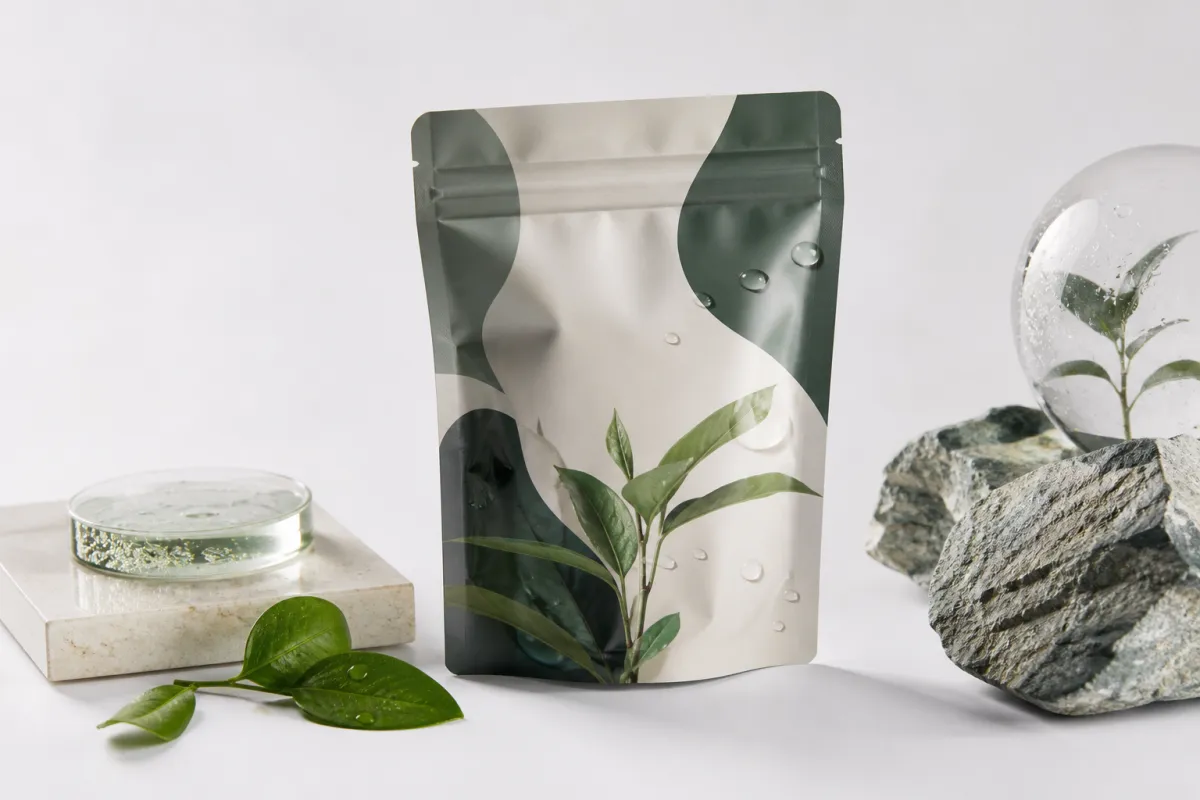
Custom paper pouches with lamination use a paper face combined with a laminated layer, usually a film or barrier layer bonded to the paper so the package holds up better in handling and storage. The paper carries the visual identity, tactile warmth, and shelf presence many brands want. The laminate helps resist moisture, grease, abrasion, and the scuffing that can make a good design look tired before the product is even sold.
That pairing works well for products that should feel less synthetic without giving up too much practical protection. Snack mixes, dry foods, coffee accessories, bath items, pet treats, powders, and small non-food products all show up in this format. From a branding perspective, the pouch can feel more artisanal or more natural than an all-plastic structure. From a performance perspective, the laminated surface helps preserve print quality and gives the package a better chance of surviving humid storage, high-touch retail conditions, and repeated movement through a supply chain.
There is a catch that deserves plain language: custom paper pouches with lamination are not automatically sustainable just because they contain paper. The laminate changes the structure, and that changes recyclability, sealing behavior, and end-of-life options. That point is easy to miss, especially for teams focused on visual presentation. Paper-like appearance and paper recovery are not the same thing, and a pouch that feels earthy in the hand may still be a layered structure that needs careful disposal guidance.
Lamination is not one single material choice either. A glossy PET layer behaves differently from a matte BOPP layer, and both behave differently from a specialty barrier film. Adhesives matter. Sealant layers matter. Surface treatment matters. If a supplier says “lamination” without naming the layer stack, there is not enough information for a meaningful quote or a reliable performance estimate.
“The best laminated paper pouch protects the product without pretending the barrier is more than it is.” That is the kind of thinking that keeps a spec honest, because it ties the package back to the product instead of the presentation alone.
For brands shaping a stronger package branding system, these pouches can be a useful visual bridge. The paper surface supports a softer and more material-driven finish than many standard films, and that can help the package feel considered without pushing the buyer into a rigid carton format. Used well, custom paper pouches with lamination can add restraint and clarity to the shelf while still doing real work in storage and transit.
How Custom Paper Pouches with Lamination Are Made
The production path for custom paper pouches with lamination is simple in outline and exacting in the details. A typical build begins with a paper face, then moves into printed graphics or a preprinted surface, then bonds that paper to a film or barrier layer. After lamination, the material is converted into pouch form, which may include a stand-up base, side gussets, a flat profile, a zipper, a tear notch, a window, or several of those elements together.
The main stages usually follow this sequence:
- Material selection - paper basis weight, laminate type, and sealant layer are chosen around the product.
- Artwork setup - the graphic file is positioned on the dieline, with bleed, fold, and seal zones checked carefully.
- Printing and coating - graphics are applied and protected as needed.
- Lamination - the film or barrier layer is bonded to the paper face.
- Converting - the web is cut, formed, sealed, and finished into pouch format.
- Quality checks - seal strength, appearance, dimensions, and closure function are verified.
Different laminate choices change both the feel and the behavior of the finished pouch. Clear PET tends to create a crisp, durable face and can improve scuff resistance. Matte BOPP softens the look and cuts glare, which is useful for premium food packaging and natural product lines. Specialty barrier films come into play when moisture, oxygen, or aroma control matters more than a basic cosmetic finish. The right choice depends on the product, the shelf-life target, and how much handling the pouch will see before it is opened.
Lamination also protects graphics in a very practical way. Printed paper can wear fast if it rubs against corrugate, other pouches, or automated packing equipment. A laminated surface helps preserve the color and keeps the package looking fresh on the shelf, which matters because retail packaging gets handled in ways that are hard to predict. Cartons get stacked, cartons get bumped, cartons get dragged, and pouches do too. If the graphics start looking worn before the product sells, the brand pays for that in perception.
Seal performance deserves just as much attention as print quality. A pouch can look polished and still fail if the laminated structure does not seal cleanly around the fin seal, side seals, zipper area, or bottom gusset. Good converters do not treat the face material and the sealing layer as separate decisions. They function as one system. Heat-sensitive products, oily contents, abrasive fills, or materials prone to migration may require adjustments in dwell time, temperature, or sealant chemistry so the pouch closes cleanly without warping the paper face.
Customization changes the workflow as well. A stand-up pouch with a zipper and die-cut window has different engineering needs than a simple flat pouch. Add embossing, rounded corners, or a matte varnish and the finishing steps become more specific. That is not a problem. It simply means custom paper pouches with lamination should be specified as a complete structure, not as a loose visual direction.
For buyers comparing practical packaging choices, that distinction matters. A pouch can borrow the brand language of custom printed boxes, but the manufacturing constraints are closer to flexible packaging, where barrier and seal carry as much weight as the graphics.
Key Performance Factors to Compare Before You Spec
Before approving custom paper pouches with lamination, compare the pouch against the actual job it has to do. That sounds basic, yet teams still begin with a polished mockup and build backward from there. A stronger approach starts with function. What is the product? How long must it stay fresh? What is the storage environment? Will the pouch live in a warm warehouse, a humid retail backroom, or a shipping carton that sees rough movement?
Barrier is the first variable most buyers should sort out. Moisture barrier matters for dry snacks, powders, and humidity-sensitive goods. Oxygen barrier matters for products that lose aroma, flavor, or color over time. Grease resistance matters for foods with oil migration. Light protection matters for items that degrade under exposure. One laminate stack may handle one of those problems well and another only moderately. That is why a material recommendation has to match the product, not just the visual brief.
Match the build to the product
Sharp, brittle, oily, or aromatic contents place very different demands on custom paper pouches with lamination. Granola clusters can puncture a weak pouch. Coffee-related products often need better aroma retention. Greasy snack items can stain or soften a weak paper face. Bath salts and powders can creep into weak seals if the sealant layer is not right. There is no universal answer, and that honesty matters when a buyer is deciding between materials. If the pouch is going to sit near oil or moisture, the sealant layer is gonna matter more than the paper face.
Paper basis weight changes both feel and durability. A lighter paper can lower cost and reduce stiffness, yet it may crease faster and show wear sooner. A heavier paper can feel more premium and print more convincingly, though it can increase price and change the way the pouch forms on filling equipment. Laminate thickness matters too. A thicker layer may improve puncture resistance and handling, but it can also make the pouch stiffer or more expensive, and that affects how the finished package stacks in a carton.
Finish is not just a visual detail. Matte versus gloss changes glare, fingerprint visibility, and perceived quality. Soft-touch effects can make custom paper pouches with lamination feel more upscale, though they usually add cost and may be less forgiving in greasy or high-touch environments. Windows can help shoppers see the product, yet every window is a place where barrier performance may weaken unless the structure is engineered with care. That is where a package design can look right in a render and still fall short on the line.
Sustainability tradeoffs should be discussed plainly. More barrier can mean better protection and less waste from spoilage, but it can also make material separation harder. If a brand is trying to align with FSC-certified paper sourcing, that helps on the fiber side, and organizations like the Forest Stewardship Council are useful references for sourcing expectations. FSC paper alone does not make a laminated pouch recyclable by default, though. Buyers should ask for the full layer stack and the end-of-life guidance before approving the build.
Shipment validation belongs in the conversation too. Packaging teams often reference ISTA test methods for vibration, drop, and compression expectations, especially if the pouch travels through mixed freight or e-commerce channels. A pouch that survives the sealing room may still fail after a few cycles through parcel handling, so distribution testing protects against a very ordinary kind of damage.
A practical way to compare the performance questions is to ask:
- Does the product need moisture protection, oxygen protection, aroma control, or all three?
- Will the pouch be handled by shoppers, warehouse crews, or both?
- Does the product include oils, powders, sharp edges, or fragile components?
- Does the brand care more about a paper-forward appearance or about maximum barrier?
- Will the pouch need a zipper, tear notch, window, or hang hole?
Those answers point toward the right version of custom paper pouches with lamination and keep the spec from drifting into guesswork.
Custom Paper Pouches with Lamination Cost: What Changes the Price
The cost of custom paper pouches with lamination depends on more variables than most first-time buyers expect. Size is obvious. Quantity is obvious. The real pricing model usually includes the paper grade, laminate type, print coverage, finishing complexity, and whether the pouch includes extras such as a zipper, window, tear notch, or special shape. A spec that looks small on paper can still move the quote in a meaningful way.
For a useful working reference, small runs often land at a higher per-unit rate because setup, plate, and converting time are spread over fewer pouches. At a quantity around 5,000 pieces, a simple laminated paper pouch might sit roughly in the $0.18-$0.35 per unit range, depending on size and print coverage. Add a zipper, a special finish, or a more demanding barrier structure, and the number can move into the $0.28-$0.60 per unit range or higher. Those are working ranges, not promises, because every pouch stack behaves differently.
One easy way to understand the pricing pressure is to break it into the main drivers:
- Size and format - stand-up, flat, gusseted, or shaped pouches consume different amounts of material.
- Paper and film selection - heavier paper and specialty laminate layers raise cost.
- Print coverage - full-bleed color, metallic effects, and dense ink coverage cost more than minimal graphics.
- Closures and add-ons - zippers, valves, windows, and hang holes add steps and materials.
- Quantity - larger orders usually lower unit cost because setup is spread out.
Custom paper pouches with lamination can also save money in less visible ways. A stronger laminate may reduce scuffed graphics, which means fewer units get rejected on receipt. A stronger seal may reduce spoilage, which matters a great deal for food packaging. A structure that holds up better in transit can lower replacement costs and cut support issues after launch. Those savings do not always appear in the quote, yet they matter in the total packaging budget.
Here is a simple comparison that buyers often find useful:
| Structure | Typical Use | Approx. Unit Cost at 5,000 pcs | Key Strength | Main Tradeoff |
|---|---|---|---|---|
| Paper face + basic clear lamination | Dry goods, accessories, low-moisture items | $0.18-$0.28 | Good look, moderate protection | Lower barrier than specialty builds |
| Paper face + matte barrier laminate | Retail packaging, premium snack items | $0.24-$0.40 | Better shelf feel and handling | Higher cost than standard film |
| Paper face + high-barrier laminate + zipper | Coffee, aromatic, humidity-sensitive products | $0.32-$0.60+ | Stronger freshness protection | More material layers, more complexity |
| Paper face + window + zipper + specialty finish | Premium branded packaging, giftable retail items | $0.38-$0.75+ | Strong shelf impact | Highest setup and finishing cost |
That table is not meant to replace a formal quote. It shows why a supplier asks for a detailed spec before giving a meaningful price. The same pouch can shift in cost if the laminate finish changes, print coverage grows, or the zipper style changes. A cleaner estimate usually comes from asking for tiered options: basic, better, and best. Side by side, those versions make the cost and function of custom paper pouches with lamination easier to compare.
For brands coordinating multiple formats, pouch cost should also be read alongside other packaging spend, including custom printed boxes, labels, and shipping cartons. The strongest packaging decisions usually come from the whole system, not a single line item.
Process and Timeline: From Artwork to Finished Pouches
Once the spec is set, custom paper pouches with lamination move through a fairly predictable production path. The exact schedule depends on tooling, material availability, and how much back-and-forth happens during artwork approval, though the core steps are consistent across most jobs.
The process starts with a requirements review. That is where dimensions, fill weight, product type, barrier needs, and finish expectations are documented. A good supplier will want to know whether the pouch is for dry food, powdered product, pet treats, or a non-food item, because the recommendation changes right away. If the pouch needs food-contact compliance in a particular market, that information belongs in the first conversation rather than the last one.
Artwork setup comes next. Dieline accuracy matters here. Seal zones, folds, gussets, zipper placement, and any window cutouts must be mapped correctly, because a design that looks clean on screen can fail at the fold if text sits too close to a seam. Brands with fine typography should check contrast, minimum type sizes, and safe zones early. That matters even more for packaging design that uses dark ink over paper texture or light type over busy graphics.
After artwork approval, the production team handles prepress and material preparation. If the structure needs a custom printed face, the print file may be adjusted for color management and substrate behavior. The paper and film are then laminated, converted, and formed into the final pouch style. Quality control checks should cover seal strength, appearance, dimensions, zipper action, and closure integrity. A pouch that opens too easily or closes unevenly can frustrate customers even if the graphics are perfect.
Sample approval remains one of the most valuable steps in the chain. A physical sample reveals what a PDF never can: how the pouch stands upright, how the matte finish catches light, how the zipper feels, how the paper creases, and whether the seal is strong enough for real use. That sample often prevents expensive mistakes because it shows the team what the final package will actually do on the shelf and in the hand.
Timeline is usually shaped by complexity. A straightforward laminated paper pouch may move in roughly 12-18 business days after proof approval, while a pouch with specialty finishes, custom windows, or more demanding compliance steps can take longer. Shipping adds its own clock. That is why launch planning should include manufacturing time, sample review, and freight together. A pouch that shows up after launch day does not help, no matter how good it looks.
For buyers balancing multiple suppliers, this is also a good time to compare paper packaging options against the rest of the branded packaging mix. If the pouch needs to coordinate with cartons or mailers, it is easier to align color, finish, and brand tone early than to force those pieces together late in the process.
The underlying lesson is straightforward: custom paper pouches with lamination are not just a print order. They are a coordinated manufacturing job where paper, film, seals, and artwork all have to work together.
Common Mistakes When Specifying Laminated Paper Pouches
The biggest mistake I see is choosing the look before the function. A pouch can photograph beautifully and still underperform if the laminate is too light, the seal zone is weak, or the paper face is too fragile for the handling environment. Custom paper pouches with lamination should never be selected as if they were only a display piece. They are a product package first.
Vague briefing causes trouble quickly. If a buyer says, “We need lamination,” that does not tell the supplier enough to make a sound recommendation. What is the product? What is the fill weight? Does it contain oil? Does it need to stay fresh for six months or twelve? Will it ship by parcel carrier or on palletized freight? A detailed spec is not paperwork for its own sake. It is the difference between a lucky guess and a repeatable result.
Overbuying barrier can waste just as much money as underbuying it. Some teams ask for the highest barrier structure available even when the product does not need it. That adds cost, can make the pouch harder to recycle, and sometimes introduces sealing challenges that never needed to exist. A better question is, “What barrier level supports the product without overbuilding the package?”
Artwork mistakes create their own problems. Small text near a fold can disappear. Dark graphics over textured paper can look muddy. High-contrast designs can show scuffs faster than expected if the laminate protection is not enough. If the brand wants a premium feel, placing important elements too close to the seals can make the pouch look crowded. Package branding is more than logo placement; it is a coordination problem across structure, print, and fold lines.
Skipping real sample testing is risky. Drawings reveal a lot, yet they cannot tell you everything. Zipper feel, opening strength, creasing, shelf lean, and the way the pouch behaves after filling all become obvious once the sample is in hand. That small investment often pays for itself. If a sample reveals a mismatch, the team can correct it before full production begins, which is far cheaper than dealing with a warehouse full of wrong bags.
Another sourcing mistake shows up often: treating sustainability claims as if they all mean the same thing. Paper can be FSC-certified, a laminate can improve product protection, and the package can still be mixed material. Those facts do not conflict. They simply mean the buyer has to be precise about which sustainability goal matters most: responsibly sourced fiber, reduced product waste, lighter material use, or clearer disposal guidance.
For many brands, the cleanest way to avoid those errors is to ask a supplier to quote several versions of custom paper pouches with lamination using the same dimensions but different barrier and finish levels. That makes the tradeoffs visible instead of hidden.
Expert Tips and Next Steps for a Smarter Spec
If you want a cleaner result, start with the product and work outward. Write down exactly what the item is, how it fills, what environment it lives in, and how long it has to stay stable. That one exercise improves the quality of the pouch spec more than almost anything else. Custom paper pouches with lamination perform best when the build is tied to product reality rather than to a mood board alone.
Ask for a material recommendation, not just a price. A useful supplier response should explain why a particular paper weight, laminate type, or sealant layer fits the use case. That is where the technical value shows up. A stronger recommendation may reduce waste, improve handling, or make the pouch line up more closely with the brand’s visual goals.
Comparison quotes help a great deal. A basic option, a mid-tier option, and a premium option make the decision much easier to hold in your hands, even before samples arrive. The basic version may cover shelf needs with simple protection. The mid-tier version may add better finish and handling. The premium version may include a zipper, a window, or a higher barrier laminate. Seeing those side by side makes it easier to judge cost against performance instead of guessing.
Use mockups or samples to verify the details that matter most in the real world. Check zipper action. Check seal strength. Check the way the paper face wrinkles or resists scuffing. Check whether the matte finish dulls the color more than expected. Check whether the pouch stands cleanly or slouches after filling. These are ordinary production realities, not edge cases, and they affect the shopper experience in a visible way.
For teams building a wider packaging system, make sure the pouch fits the rest of the line. If the brand already uses custom printed boxes, labels, or mailers, the pouch should belong visually without copying every detail exactly. Good packaging design does quiet work here: it keeps the product family recognizable without making every piece look identical.
When you are ready to brief a supplier, send the full package together: dimensions, product type, fill weight, barrier goals, artwork files, target quantity, finish preference, and timeline. If the decision involves multiple products, include them in one discussion so the supplier can keep the structures consistent. That is the simplest way to specify custom paper pouches with lamination clearly and avoid pricing surprises later.
For buyers who want the paper-forward appearance without giving up practical protection, custom paper pouches with lamination can be an excellent fit. They balance shelf appeal, scuff resistance, and product protection in a way that feels natural on the shelf and functional in the hand. Get the layer stack right, keep the spec concrete, and custom paper pouches with lamination can support both the brand story and the real demands of shipping, storage, and display. The most useful next step is simple: define the product’s barrier needs, closure requirements, and disposal expectations before asking for samples, because that is the part that keeps the whole project grounded.
Frequently Asked Questions
Are custom paper pouches with lamination recyclable?
That depends on the full structure, not just the paper face. Many versions of custom paper pouches with lamination use mixed materials that are harder to recycle through standard paper streams. Some designs recover better than others, but local recycling rules and facility capability vary widely. If recyclability matters, ask for the exact layer stack and end-of-life guidance before approving the build.
What lamination is best for food-grade custom paper pouches with lamination?
The best option depends on the product’s fat content, moisture sensitivity, aroma retention needs, and shelf-life target. A dry snack may do well with a simpler build, while coffee, greasy foods, or humidity-sensitive ingredients may need a higher barrier laminate. For food-grade custom paper pouches with lamination, confirm compliance for the intended market before locking in the material stack.
How much does lamination extend shelf life in paper pouches?
It can help a lot when the product is sensitive to moisture, oxygen, or aroma loss, but the exact gain depends on the barrier level, seal quality, fill process, and storage conditions. Shelf life is not controlled by the laminate alone. If you need a reliable answer for custom paper pouches with lamination, run product-specific testing instead of assuming every laminate performs the same way.
What details do I need for an accurate quote on custom paper pouches with lamination?
Provide pouch dimensions, product type, fill weight, quantity, print colors, and any add-ons such as zippers, windows, or tear notches. Include whether the pouch needs food-contact compliance, high barrier, or a special finish. The more complete the brief, the more accurate the pricing for custom paper pouches with lamination will be.
How long does it take to produce laminated paper pouches?
Lead time depends on artwork readiness, material availability, order volume, and complexity. Simple custom paper pouches with lamination can move faster, while custom finishes, new tooling, or extra sampling rounds add time. Build in room for proof approval and freight so production does not become the launch bottleneck.

