Buyer Fit Snapshot
| Best fit | Custom Paper Sleeves for Boxes projects where brand print, material claims, artwork control, MOQ, and repeat-order consistency need to be specified before quoting. |
|---|---|
| Quote inputs | Share finished size, material target, print colors, finish, packing count, annual reorder estimate, ship-to region, and any compliance wording. |
| Proofing check | Approve dieline scale, logo placement, barcode or warning zones, color tolerance, closure strength, and carton packing before bulk production. |
| Main risk | Vague material claims, crowded artwork, missing packing details, or unclear freight terms can make a low unit price expensive after revisions. |
Fast answer: Custom Paper Sleeves for Boxes: Sustainable Branding should be specified like a repeatable production item. The safest quote records material, print method, finish, artwork proof, packing count, and reorder notes in one written spec.
Production checks before approval
Compare the actual filled-product size with the drawing, then confirm tolerance on folds, seals, hang holes, label areas, and retail display edges. Reserve space for logos, QR codes, warning copy, and material claims before decorative graphics fill the panel.
Quote comparison points
Review material grade, print process, finish, sampling route, tooling charges, carton quantity, and freight assumptions side by side. A quote is only useful when the supplier can repeat the same color, closure quality, and packing count on the next order.
Custom paper sleeves for boxes can turn a plain stock carton into retail-ready packaging in a matter of seconds. That is not a sales line dressed up to sound clever; it is a practical packaging move that lets the box carry the structure while the sleeve carries the brand, the message, and the shelf presence.
For a buyer, custom paper sleeves for boxes often offer the quickest route from generic packaging to something that looks deliberate and well considered. For a packing operation, the format matters because it can cut down on reprint churn, support smaller runs, and keep a box program stable even when artwork shifts from one campaign to the next. That mix of speed and flexibility is a big reason the format keeps showing up in real packaging decisions.
Marcus Rivera has written about packaging long enough to know that the best solutions are rarely the flashiest ones. A sleeve can improve branded packaging, protect the budget, and still leave room for a credible sustainability story. Used with care, custom paper sleeves for boxes can also give retail packaging a more finished look without forcing a brand into heavy ink coverage or a fully custom carton structure.
Custom Paper Sleeves for Boxes: What They Are
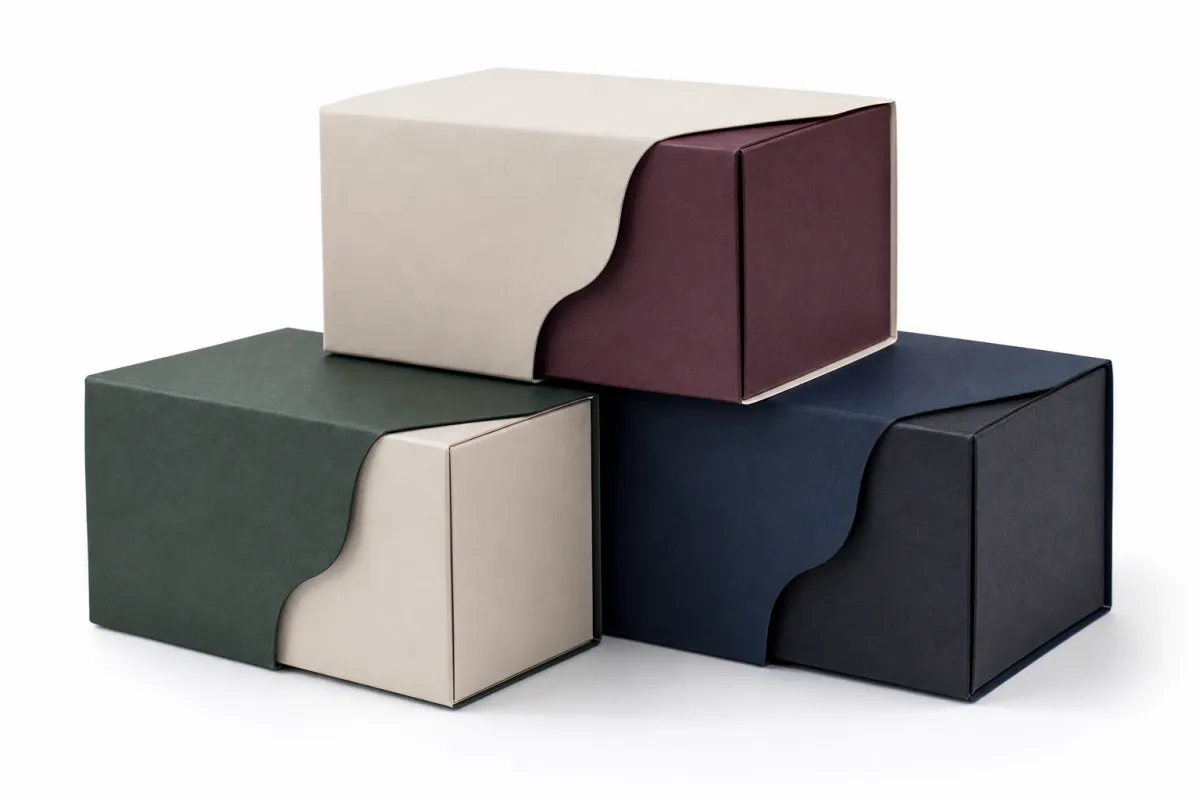
At the most basic level, custom paper sleeves for boxes are printed paper wraps or bands that fit around a carton. Some sleeves cover only the front panel, some wrap the full box, and others sit as a partial band that creates one strong brand moment without covering every surface. That flexibility is one reason custom paper sleeves for boxes show up across cosmetics, food, apparel, subscription kits, and promotional packaging.
The real value comes from separating the structure from the decoration. A brand can keep using a standard box size, then update the sleeve when the seasonal graphics, compliance language, or campaign message changes. That is a different model from fully custom printed boxes, where even a small artwork change can trigger a new print run or leave inventory stranded in storage.
In practical terms, custom paper sleeves for boxes sit between a label and a full carton print. Labels are smaller and usually more functional. Belly bands tend to be narrower and visually lighter. Full carton printing gives the largest canvas, but it also asks for more setup, more fiber, and more commitment. Sleeves land in the middle, which is exactly why they fit so many packaging programs that need room to adjust.
The sustainability side is straightforward, as long as the spec is chosen with care. A sleeve can reduce ink coverage, avoid reprinting an entire carton, and use less material than a fully decorated box. It also works well with a standard box program, which helps prevent dead inventory when a design changes. For many teams, custom paper sleeves for boxes are the packaging version of keeping the chassis and changing the body panels.
There is a commercial reason buyers like the format as well: a sleeve is easier to test. One SKU, one market, or one seasonal collection can move first, then the program can scale once the team sees how it performs. That makes custom paper sleeves for boxes a branding tool with a real operational purpose, not just an extra layer of decoration.
For packaging teams comparing options, the choice often looks like this:
- Label for small brand cues or regulatory notes.
- Paper sleeve for flexible branding, seasonal updates, and moderate coverage.
- Full carton print for high-volume programs with stable artwork.
If your team is building a broader packaging system, it helps to compare sleeves alongside other Custom Packaging Products so structure, artwork, and budget all point in the same direction.
Packaging and recycling guidance from the industry association is useful here because sleeve decisions often intersect with recoverability, print coverage, and end-of-life claims. That is where packaging gets real: the format only earns its place if it works on the line and in the market.
How Custom Paper Sleeves for Boxes Work on the Line
Once custom paper sleeves for boxes move out of concept and into production, the physical workflow matters more than the mood board. The sleeve is printed, cut, scored, and then wrapped around the box by hand or by machine. Small programs can work well with hand application. Higher-volume runs often justify an automated folder-gluer or sleeve applicator, and that shift changes the economics in a very real way.
The line behavior comes down to a few details. Does the sleeve close with a glue tab, a friction fit, or a tuck-in lock? Does it wrap a filled box, a flat box, or a preassembled carton? Does it need to hold during parcel shipping, or is it mainly there for shelf presentation? Custom paper sleeves for boxes may sound simple, but each answer changes the engineering.
For shelf-driven retail packaging, the sleeve often does three jobs at once: it highlights the logo panel, hides variation in mixed stock cartons, and creates a more premium unboxing moment with very little material. That is a strong trade if a brand is launching a new product line or trying to bring several SKUs into one visual system.
Where the sleeve enters the packout flow matters too. Added after the box is filled, it has to tolerate product bulk and natural variation in the load. Added before filling, it can keep the operation moving faster, but the design must stay clear of closing flaps, seals, and internal inserts. For custom paper sleeves for boxes, the wrong sequence can add labor instead of removing it.
Placement can change the customer read entirely. A centered logo panel can make a standard carton feel custom. A narrow wrap can carry a campaign message without painting the whole box. A sleeve that covers a worn or reused carton can extend the useful life of base inventory, which is a practical form of package branding.
Sustainable sleeve design is not only about choosing paper. It also means reducing waste at press, limiting off-spec cuts, and avoiding finishes that add complexity without improving performance. A matte varnish can help with scuff resistance. A heavy soft-touch coating can feel rich, yet it can also complicate recovery or raise cost without a clear return.
"The sleeve should earn its space. If it does not improve fit, storytelling, compliance, or line efficiency, it is decoration, not packaging engineering."
Key Factors: Materials, Fit, and Sustainability Tradeoffs
Material choice is where custom paper sleeves for boxes either feel premium or feel flimsy. Uncoated kraft gives a natural look and usually supports a cleaner sustainability story. Coated white board tends to hold color better and makes small type easier to read. Recycled content paper can reinforce eco messaging, though the print result may look a little warmer or less uniform than virgin fiber stock. Specialty textures add tactility, but they also add cost and can complicate downstream recovery.
Fit matters just as much as paper grade. A sleeve that is too loose can slide during transit, which makes the package look sloppy before it even reaches the customer. A sleeve that is too tight slows the pack line and creates wrinkles at the seam. For custom paper sleeves for boxes, the right tolerance usually sits in a narrow band, not in a guess based on a sample that was never tested under production conditions. Small changes in board caliper, coating, or humidity can matter more than people expect.
There are structural details many buyers miss the first time. Grain direction affects how the sleeve folds. Score depth changes how cleanly it wraps. Seam placement can disappear into the back panel, or it can land directly on the logo. Even the direction of the overlap matters because it can decide whether the edge catches during shipping or stays visually quiet on a retail shelf.
Sustainability tradeoffs deserve an honest conversation. Heavier paper can improve durability and cut down on tearing, but it also increases fiber use and freight weight. Lighter paper lowers material load, yet it can buckle if the sleeve gets rough handling. That is why custom paper sleeves for boxes should be designed for the real use case, not an idealized one. A display sleeve does not need the same abuse tolerance as a parcel sleeve.
If you need a reference point for recycled content, fiber sourcing, or environmental claims, the Forest Stewardship Council is a useful source: FSC certification and responsible forest management information. It does not settle every material question, but it helps anchor sourcing decisions in a recognized standard.
Branding brings another layer into the mix. Some companies want a warm, tactile feel that signals craft. Others need bright color, crisp type, and regulatory copy that reads cleanly under store lighting. Custom paper sleeves for boxes have to support both aims without becoming too busy. Too much texture can fight the artwork. Too little structure can make the box feel generic. That balance is where good packaging design pays off.
For products with barcodes, ingredient panels, or legal statements, the sleeve has to stay legible after application. That sounds obvious until a panel shifts around a fold or seam and the artwork no longer does its job. On regulated product packaging, that is not just a visual problem; it is a compliance problem.
- Kraft works well for earthy, recycled positioning.
- Coated board helps when you need sharper graphics and stronger color.
- Recycled stock can support claims, but it should be tested for print consistency.
- Textured paper adds tactility, though it may raise cost and complicate line handling.
Custom Paper Sleeves for Boxes: Cost, Pricing, and MOQ
Pricing for custom paper sleeves for boxes depends on more variables than many buyers expect, which is why a low quote can be misleading. Sheet size, print method, paper grade, finishing, die cutting, folding, and assembly all matter. If the sleeve needs to be hand-applied, labor will usually show up somewhere in the total. If the sleeve runs on a machine, tooling and setup can become more important.
As a rough planning range, simple custom paper sleeves for boxes in a digital print run of 5,000 pieces may land around $0.18 to $0.35 per unit before freight and kitting, depending on coverage and board choice. Move into specialty stocks, tighter tolerances, or premium finishes, and the range can move toward $0.40 to $0.85 or more. That is not a quote; it is a realistic planning frame.
The reason sleeves often look cheaper than fully custom cartons is structural. The base box stays standard, so there is no need to pay for a new carton structure or discard existing inventory. For brands that need branded packaging without committing to a new box mold or a large carton minimum, custom paper sleeves for boxes can be the less risky route.
Minimum order quantity is another practical lever. Digital printing can reduce make-ready costs for smaller runs, which helps seasonal or pilot programs. Offset or flexographic printing can become more efficient as quantities rise, especially when the artwork stays stable. In other words, custom paper sleeves for boxes are not always cheapest at the smallest run or the largest run; the sweet spot depends on the print method and the amount of variation in the program.
Here is a simple comparison that buyers can use during quoting:
| Option | Typical Use | Approx. MOQ | Price Signal | Best Fit |
|---|---|---|---|---|
| Digital printed sleeve | Short runs, test markets, seasonal artwork | 500-5,000 | Lower setup, higher unit cost | Fast changes and smaller launches |
| Offset printed sleeve | Mid-to-high volume retail packaging | 5,000-25,000+ | Higher setup, lower unit cost at scale | Stable artwork and repeat orders |
| Specialty finished sleeve | Premium product packaging, gift sets | 1,000-10,000+ | Premium finish adds material and labor | High-impact shelf presence |
| Hand-applied sleeve | Small batch or bespoke runs | Flexible | Lower tooling, higher labor exposure | Low-volume programs |
Good quotes separate the pieces. Ask for print, finishing, die cutting, folding, and kitting as line items. If the supplier bundles everything together, it is hard to see where the cost really sits. That matters because custom paper sleeves for boxes can look affordable on paper and become expensive once fulfillment or manual application is added.
Freight weight also deserves attention. A sleeve made from heavier board may be stronger, but multiply that across tens of thousands of units and shipping cost starts to show up. Brands that buy multiple Custom Packaging Products often find that the best economics come from a few careful choices rather than squeezing every spec down to the cheapest possible number.
For companies in food, cosmetics, or subscription packaging, the return is not only material cost. A sleeve can improve shelf appeal, create a consistent visual system across SKUs, and reduce the need for inventory of custom printed boxes. That can lower the hidden cost of excess stock, reprints, and obsolete artwork.
Process and Timeline: From Brief to Production Approval
The cleanest custom paper sleeves for boxes projects move through a predictable sequence. First comes the brief: what the sleeve must do, what the box size is, where it will be used, and what success looks like. Then comes measurement, dieline creation, artwork placement, proof review, sample approval, production, and delivery. The path sounds neat on paper. In practice, artwork revisions and structural sampling are usually what stretch the schedule.
If you want to keep the timeline under control, prepare the numbers early. Exact box dimensions matter. So do stacking and shipping conditions, Pantone or CMYK expectations, barcode requirements, and sustainability goals. A sleeve that will sit only on a retail shelf has different needs than one that will travel through parcel networks or mixed pallet loads. Custom paper sleeves for boxes should be specified for the worst realistic handling, not the best-case mockup.
Typical lead times vary with complexity. A straightforward digital program can move quickly after proof approval. Add a new dieline, a metallic finish, a textured substrate, or multiple revision rounds, and the schedule expands. For many projects, the main delay is not print capacity; it is decision-making. One approved path moves faster than three late-stage options that all look almost right.
There is a useful lesson here for packaging teams: sign off on the sleeve concept before you lock in tiny decorative choices. Function should come first. Does it fit? Does it identify the SKU? Does it support the box closure? Does it survive transit? If those answers are solid, custom paper sleeves for boxes can usually be refined without drama.
For projects that need shipping validation, ask whether the supplier can reference common distribution tests such as ISTA 3A or ASTM D4169. Those standards do not apply to every sleeve, but they are useful when the package must stay in place through drops, vibration, and compression. In that context, the sleeve is not just a marketing layer; it is part of the system.
One practical shortcut is to compare sleeve development with other packaging changes at the same time. If the box size is already under review, it may make sense to evaluate custom paper sleeves for boxes alongside the carton structure and insert system. That can keep the entire package architecture aligned and reduce duplicate rounds of sampling.
When teams plan ahead, custom paper sleeves for boxes can move from concept to launch with fewer surprises. When they do not, the sleeve often becomes the point where everyone discovers the box dimensions were never confirmed properly. That kind of miss can gum up an otherwise decent launch in a hurry.
Step-by-Step Guide to Specifying the Right Sleeve
Start with the box itself. Measure length, width, height, board thickness, and closure style. Then confirm whether the sleeve needs to cover all visible sides or only the front panel. For custom paper sleeves for boxes, this basic measurement step sounds plain, but it is where many downstream problems begin. A sleeve cannot fit a box that was measured by eye.
Next, define the job. Is the sleeve there for shelf branding, seasonal promotion, tamper indication, multipack identification, or SKU differentiation? Each answer pushes the design in a different direction. A sleeve for a gift set can afford more visual drama. A sleeve for a regulated product packaging program may need more room for legal copy and a cleaner hierarchy.
Then choose the material and print method to match the business goal. If the run is small and the design may change, digital printing keeps the program flexible. If the artwork is stable and the volume is high, offset may improve the unit economics. Custom paper sleeves for boxes should not be specified by cost alone. They should be specified by the mix of volume, appearance, handling, and recyclability target.
After that, build the dieline carefully. Seams, folds, glue tabs, and legal copy should all land where they belong once the sleeve is wrapped in three dimensions. This is where packaging design becomes a practical discipline rather than a visual exercise. The artwork may look perfect on screen and still fail on the actual box if the seam cuts through a barcode or a headline.
Then prototype. A flat art proof helps, but it is not enough. Ask for a physical mockup or a press proof that reflects the real stock, the real fold, and the real wrap behavior. This matters even more if the sleeve must align with windows, handles, or carry points. Custom paper sleeves for boxes are much easier to approve once the team can see how the paper actually behaves around the carton.
- Measure the box fully and confirm the closure style.
- Define the sleeve job so the artwork supports one clear purpose.
- Select the board and print method based on volume and handling.
- Review the dieline before locking artwork.
- Request a prototype and test it on a real box.
If a brand is launching multiple SKUs, a single master template can reduce design time. Localized copy, regulatory text, or seasonal graphics can swap in without rebuilding the whole package architecture. That is one reason custom paper sleeves for boxes appeal to brands with frequent promotions. The base stays steady while the sleeve changes.
For a closer look at sleeves, cartons, and related formats, many teams compare them against broader Custom Packaging Products before locking the final spec. That is usually smarter than optimizing the sleeve in isolation. Packaging works as a system, not as a single component.
Common Mistakes When Ordering Paper Sleeves
The first mistake is measuring only the front face and ignoring board thickness, closure bulge, and the extra millimeters needed for a comfortable wrap. Custom paper sleeves for boxes need tolerance. Tight is not elegant if it slows packing or causes wrinkling at the seam.
The second mistake is designing artwork before the dieline is final. That usually means the seam lands in the wrong place, or a barcode gets pushed into a fold, or a logo gets clipped by the overlap. Once the paper is printed, those errors are expensive. It is one of the most avoidable failures in packaging design, and it still happens constantly.
The third mistake is choosing paper for looks alone. A sleeve that feels beautiful in a sample kit may scuff badly during transit, absorb moisture in humid storage, or tear during application. That matters because custom paper sleeves for boxes are not display cards; they are working packaging. The material has to survive the real route from press to warehouse to customer.
Another common miss is overcomplicating the finish. Foil, heavy lamination, spot varnish, and textured coatings can all be useful. They can also weaken a sustainability story if they add waste, cost, or recovery challenges without improving the customer experience. A simple board with clean typography and a controlled color palette can look more premium than a sleeve loaded with effects.
Teams also forget to test the line. That is a costly habit. A sleeve that looks right on a screen may jam during application, slide on a reused box, or catch on a shipping edge. If custom paper sleeves for boxes are going into parcel channels, ask for testing that reflects the actual route. ISTA-style thinking helps because it focuses attention on drops, vibration, and compression rather than just appearance.
There is one more trap: approving a sleeve without comparing it to alternative formats. Sometimes a belly band is enough. Sometimes a label is enough. Sometimes the right answer is a different carton altogether. Honest packaging strategy means asking whether custom paper sleeves for boxes are the right tool, not just the prettiest one.
- Avoid measuring from memory.
- Avoid finalizing artwork before the dieline.
- Avoid picking a paper that cannot handle the route.
- Avoid adding finishes that do not earn their cost.
- Avoid skipping a real-world fit test.
Expert Tips for Custom Paper Sleeves for Boxes
Use a pilot run on one or two SKUs first. That gives the team a way to compare fit, labor time, shelf impact, and damage rates before rolling out custom paper sleeves for boxes across the full catalog. A small pilot often reveals more than a dozen opinions in a conference room.
Build one master structure and swap graphics where needed. That strategy is especially useful for seasonal campaigns, regional compliance copy, and localized promotions. It keeps package branding consistent while reducing redesign work. If the box format is stable, the sleeve can become a repeatable template instead of a one-off production headache.
Do not ignore white space. Some brands try to fill every millimeter with claims, icons, and text. The result is busy, not premium. Recycled board, FSC-certified stock, and restrained ink coverage can look more confident than a sleeve that shouts for attention. In custom paper sleeves for boxes, visual restraint is often a sign of control, not cost cutting.
Ask for a sample that matches production conditions, not a loose art proof on the wrong board. The way paper wraps around a live box is the real test. A flat sample can hide alignment problems, seam issues, or fit issues that only appear during folding. For custom paper sleeves for boxes, the physical prototype is the truth serum.
Compare pricing on a like-for-like basis. Ask whether the quote includes folding, kitting, freight, and proofing. Compare the sleeve against custom printed boxes only after those variables are clear. Otherwise, the cheapest quote is often the one with the most assumptions hidden inside it.
It also helps to think about recovery and disposal from the start. If the sleeve needs to support a sustainability claim, keep the build simple enough that consumers and recyclers are not left guessing. Paper on paper is easier to explain than paper mixed with plastic-heavy elements. That does not mean every sleeve has to be plain. It means every added component should justify its place.
For brands with frequent launches, custom paper sleeves for boxes can become a reusable system rather than a one-off expense. The base carton stays fixed, the sleeve rotates, and the packaging team keeps control over changeovers. That is a better operational model than rebuilding the package for every campaign.
Finally, talk to suppliers early about the end use. A sleeve that only needs to look good on shelf is a different object from one that must stay aligned through shipment. The distinction sounds obvious, but it is where many projects go off track. Custom paper sleeves for boxes do their best work when the spec matches the route.
Final Take on Custom Paper Sleeves for Boxes
Custom paper sleeves for boxes are not the flashiest packaging format in the lineup, and that is part of the appeal. They solve a practical problem: how to make standard packaging look specific, current, and on-brand without rebuilding the whole carton program. For many brands, that is exactly the right level of intervention.
The economics can be attractive, especially when box inventory already exists, artwork changes often, or a new look needs to be tested with less risk. The sustainability case can also hold up, as long as the material, finish, and application method are chosen with the full lifecycle in mind. Custom paper sleeves for boxes work best when the project is disciplined rather than decorative.
From a buyer's point of view, the real question is not whether a sleeve is possible. It is whether it solves the right problem. If the goal is shelf impact, campaign flexibility, or a cleaner bridge between standard packaging and branded packaging, custom paper sleeves for boxes are often a strong answer. If the goal is heavy protection or a fully integrated structure, another format may be the better fit.
My practical take is simple: keep the spec clear, measure carefully, test early, and compare the sleeve against other Custom Packaging Products before you commit. The strongest projects are the ones where custom paper sleeves for boxes support the box rather than fighting it. That is how they reduce waste, protect budget, and still look deliberate.
Done well, custom paper sleeves for boxes can make a standard carton look like a thoughtful piece of product packaging without pulling the brand into unnecessary complexity. The next move is straightforward: confirm the box dimensions, review the dieline on a real sample, and approve the sleeve only after it has been tested in the same conditions it will face in production.
Are custom paper sleeves for boxes cheaper than full carton printing?
Often yes, especially when you already use a stock box and only need branding or messaging on the outside. The biggest savings come from avoiding a fully custom carton structure and keeping the base packaging standard. Costs still depend on print run size, paper stock, finishing, and whether the sleeve is hand-applied or machine-applied.
What paper stock works best for custom box sleeves?
Kraft is a strong choice when you want a natural, recycled look and simple sustainability messaging. Coated or smoother boards help when you need brighter color, finer type, or higher-impact retail graphics. The best stock is the one that fits your handling conditions, print goals, and recyclability target at the same time.
How long do custom paper sleeves for boxes usually take to produce?
Simple digital runs can move quickly once the dieline and artwork are approved. Timeline usually expands when the project needs sampling, multiple revisions, specialty finishes, or larger quantities. The fastest projects are the ones with final box dimensions, clear artwork, and immediate proof approval.
Will paper sleeves stay in place on recycled or reused boxes?
They can, but the fit has to account for box wear, compression, and surface variation. A friction fit or light closure method may be enough for presentation packaging, while shipping scenarios may need stronger retention. Testing on real reused boxes is the safest way to confirm sleeve performance before launch.
Are custom paper sleeves for boxes recyclable?
They usually are when they are made from paper-based materials and avoid plastic-heavy laminations or mixed-material closures. Recyclability depends on inks, coatings, adhesives, and local recycling rules, so the full spec matters. If sustainability is a priority, ask the supplier to confirm the entire sleeve build, not just the board itself.

