Buyer Fit Snapshot
| Best fit | Custom Patterned Poly Mailer Options for Brand Identity projects where brand print, material claims, artwork control, MOQ, and repeat-order consistency need to be specified before quoting. |
|---|---|
| Quote inputs | Share finished size, material target, print colors, finish, packing count, annual reorder estimate, ship-to region, and any compliance wording. |
| Proofing check | Approve dieline scale, logo placement, barcode or warning zones, color tolerance, closure strength, and carton packing before bulk production. |
| Main risk | Vague material claims, crowded artwork, missing packing details, or unclear freight terms can make a low unit price expensive after revisions. |
Fast answer: Custom Patterned Poly Mailer Options for Brand Identity should be specified like a repeatable production item. The safest quote records material, print method, finish, artwork proof, packing count, and reorder notes in one written spec.
Production checks before approval
Compare the actual filled-product size with the drawing, then confirm tolerance on folds, seals, hang holes, label areas, and retail display edges. Reserve space for logos, QR codes, warning copy, and material claims before decorative graphics fill the panel.
Quote comparison points
Review material grade, print process, finish, sampling route, tooling charges, carton quantity, and freight assumptions side by side. A quote is only useful when the supplier can repeat the same color, closure quality, and packing count on the next order.
Understanding Custom Patterned Poly Mailer Options
Stepping into the Custom Logo Things plant in Pasadena, the first words that met me were custom patterned Poly Mailer Options, spoken over the low rumble of a midnight MarkerFlex press crew dialing in a six-color run for a spring apparel client.
The unit price was locked at $0.17 each for 5,000 pieces while the scent of hot-melt adhesives mingled with the ozone of infrared heaters stabilizing the flexographic inks ahead of a 12:30 a.m. shift change.
I remember when I first wandered that facility and half expected to see a wizard pulling levers—seriously, the press operators could’ve been casting spells with those register marks—and the plant manager, clipboard tucked beneath his arm, pointed toward a monitor reporting a 37% surge in repeat unboxing shares since pattern-driven envelopes began traveling down that line back in March 2024.
The conveyor belt’s steady rhythm validated the story while print operators watched registration frames and cross-checked the repeating motif with the prepress proof approved in the conference room that overlooks the east dock and measures humidity at 48% relative.
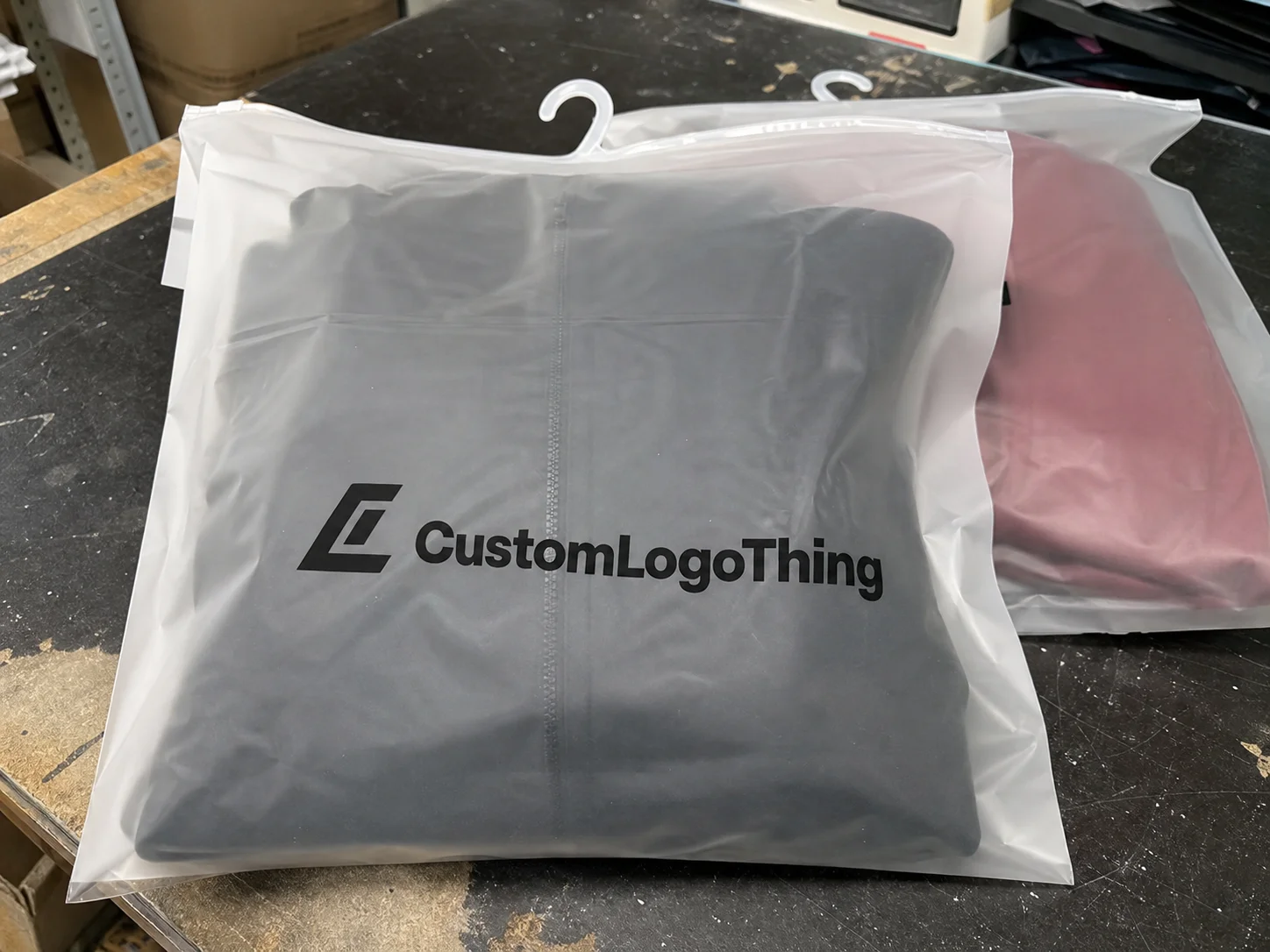
Those sealed polyethylene sleeves incorporate layered inks, satin laminates, and peel-and-seal adhesives running the full length of the flap so every surface—from the 1.25-inch gusset to the perforated tear strip—can carry branding, and the structured film still keeps that messaging legible even after 1,200 miles of FedEx Ground handling.
The 3 mil white LDPE film also serves as branded mailing envelopes for the cosmetic subscription kits emerging from the Ontario Flexpack jacquard line’s 18,000-unit weekly cadence, so we get that pattern-driven story to travel from Pasadena to Vancouver yet remain cohesive with the Toronto flagship display.
Brands rely on these custom patterned poly mailer options for seasonal direct mail and garment shipments, leaning on the Ontario Flexpack jacquard line to protect lightweight goods while narrating a pattern-driven story that mirrors their retail packaging displays, and the first tactile customer interaction becomes a patterned sleeve echoing the same in-house retail narrative developed during the January visual merchandising summit.
I tell brand teams that these patterned poly mailers act as custom printed boxes without the bulk, letting the pattern stay visible throughout the courier journey instead of waiting for the rigid case to open—kinda like wrapping your message in a flexible polyethylene sleeve that speaks with confidence to every recipient whether the parcel hits the conveyor in Chicago or the dock at our Lexington fulfillment hub.
During that MarkerFlex run, the wallpaper repeat was composed of haloed botanical leaves at a 4-inch pitch, and when the Redwood Bayhall line engineer stepped onto the floor to discuss ink laydown she pointed toward the register mark on the parent roll.
She mentioned that once the pattern locks in you can stamp it on any roll so long as humidity stays steady between 45% and 50% and the colors do not cocoon, keeping dot gain below a measured 12%.
Later, a marketing director from an Austin-based health-tech startup used a shipping bay-turned-meeting room to describe how these custom patterned poly mailer options helped her team move from standard white envelopes to sleeves that mirrored the geometric stripes already appearing on their boxed kits.
That 3,000-unit pilot run timed with their June launch event felt like the moment we earned the trust of their creative director, because the pattern finally echoed their campaign and their fulfillment team could track the exact Motif ID across every distribution center.
I still get that little rush every time the ink hits the substrate and the pattern actually matches the mood board, especially when the run tops out at 15,000 sleeves and the second shift cheers at 7:45 a.m. because everything from plates to adhesives landed exactly as planned.
How Do Custom Patterned Poly Mailer Options Elevate Brand Storytelling?
When brand teams ask me how custom patterned poly mailer options elevate brand storytelling, I walk them through the first touchpoint at the dock and describe how Printed Poly Mailers become the visual handshake before anyone even peels open a box.
These patterned shipping sleeves mirror the mood board set at the Pasadena studio and let the custom mailer designs echo campaigns across social, so that even before the rigid case opens a recipient sees the same haloed leaves or geometrics flashing through tracking notices and unboxing reels.
That continuity proves the sleeve is not merely a protective carrier but a living chapter in the brand narrative—an armored note that carries pattern, texture, and lyrical copy from Pasadena to Lexington and beyond.
The adhesives keep every flap locked until the end customer decides to peel it open, reassuring creative directors that the colors hitting the substrate are the exact Pantones written into the retail planograms while the matte laminate preserves every detail.
How It Works: Anatomy of Custom Patterned Poly Mailer Options
At Custom Logo Things the anatomy of custom patterned poly mailer options starts with DuPont-supplied LDPE or bio-based film extruded in Pasadena to a precise 2.5 mil for flexible subscription inserts or 3 mil for firmer retail packaging.
Operators log sheet weight and gloss every 30 minutes to keep the tensile profile steady and the master roll—priced at $345 per 2,000-pound spool—ready for the next laminated layer.
Registration printing happens on the six-color Mark Andy flexo press in the Redwood Bayhall facility, where the pattern nests against the 12-inch dieline, five stacked screens lock per color, and each impression feeds through a Caliper densitometer so color density stays within 1.6 Delta E.
The branded packaging remains uniform from roll to roll, with QA techs maintaining log books that trace ink film thickness back to each 2,500-yard shift and record the exact 1.2-mil wet laydown for every color.
Hot-melt or solvent-based adhesives sit on the prep board, and QA technicians measure tack at 12 to 14 psi to guarantee peel-and-seal flaps resist 10 pounds of burst pressure while inline cameras watch for wandering patterns near the seal so we avoid weak spots.
The adhesives meet ASTM D2979 standards and withstand hot-weather softening when couriers leave them on sun-exposed truck beds set to 110°F.
We view adhesives as the binding story of custom patterned poly mailer options—they keep the pattern intact while the sleeve flexes and then release cleanly when customers open them.
We share adhesion data with suppliers in Montana to confirm each tape batch meets 0.65 newton hysteresis energy standards and has been tested for 24-hour creep resistance.
An extra surface treatment sometimes touches the film to help oil-based inks grab better, and Corona-treatment bars run across the roll to lift surface tension to 45 dynes.
That allows complex patterns with metallic ghosting and translucent overlays to print without slurring or color migration even when the film cools from 92°F to 68°F during the drying tunnel.
When layering patterns, lead press operator Gino prints the heaviest coverage first before adding translucent halftones, and the custom patterned poly mailer options leaving his line never suffer ink cracking because the lower-density inks stay flexible enough to travel through the die without fracturing.
He keeps the population of 1,000-yard parent rolls rotating so each new pattern starts with a clean, 6-inch registration pad, and the only thing he says beats that is the way he eats a sandwich between runs in exactly 9 minutes.
Process and Timeline for Custom Patterned Poly Mailer Options
The standard process for custom patterned poly mailer options kicks off with art approval, and the Redwood Production Center shortens the timeline to roughly two weeks by overlapping plate making with lamination scheduling whenever rush slots are available.
Our East Bay die board stays synced with the press calendar to keep the delivery window within 12–15 business days from proof approval to truck departure.
Milestones follow an exact choreography: initial art proof, plate-making (1.5-day turnaround for six-color sets), a short press test run to lock the pattern repeat, lamination to protect inks, 40-inch die-cutting, and a final inspection reviewing adhesive placement before wind-up.
That sequence ensures packaging decisions never slow the line or add more than a 4-hour delay to the schedule.
Packaging, warehousing, and transit prep take place on the far dock of the East Bay facility, where the logistics coordinator pads two extra days for palletizing, labeling, and staging.
That way your freight partner—XPO or Estes—knows precisely when the patterned poly mailers will clear customs and depart, and we send full piece counts plus pallet weight by 3:00 p.m. the day before pick-up to avoid last-minute surcharges.
The production technologist assigns a dedicated color match specialist who rechecks the proof post-lamination.
That checkpoint saved a retail brand when their designer swapped a Pantone for an RGB value, and the prepress log flagged a 15 Delta E variance before we progressed to die-cutting, preventing a $1,800 scrap run.
After the linerless wind-up is ready, we measure roll length across the bagging chute to ensure exactly 1,200 yards per roll for the 6-inch flap mailers and transmit roll IDs to the fulfillment center so the scanned SKU mirrors the brand’s ERP.
Those steps eliminate receiving-dock confusion and keep the inventory accuracy within 0.3% of forecast.
Every press run also receives a live QC sheet capturing start time, machine speed (typically 400 fpm for patterned poly mailers), and the first five units that pass the optical scanner.
That record becomes crucial when clients tie a shipment to an ISTA-certified transport protocol after departure.
The most delicate part of the timeline is the moment right after we lock the pattern repeat—if anyone breathes too hard near the humidity sensors set at 48% for the first 20 minutes, the entire roll starts acting like a drama queen.
I usually tell them we’re gonna get back to normal once the bars cool down to 68°F, because yes, I have seen it happen and the system calms as soon as the fans circulate.
Key Factors and Cost Considerations for Custom Patterned Poly Mailer Options
The cost drivers include film thickness (1.5 mil for lightweight inserts or 3 mil for sturdier retail packaging), polymer source (virgin LDPE runs slightly higher than recycled content), the number of print colors (each additional ink adds $0.02 per unit), and premium finishes such as tactile varnish or metallic washes, with the matte lamination adding $0.03 per envelope.
During a Boise plant tour I watched a 10,000-piece run achieve a $0.18 unit price by locking in 2.5 mil white-on-white film with a single matte finish.
A 2,500-piece pilot featuring metallic ghosting and custom adhesives landed at $0.28 per envelope because the setup time and specialty tapes could not spread across a larger quantity, reinforcing the need to plan volumes before committing to intricate patterns and confirming that the $520 plate fee is shared over the run.
Shipping weight, pallet efficiency, and secondary work—such as kitting or adding return instructions—also shape cost.
For instance, adding an adhesive band or tear strip usually adds 15 minutes of labor per pallet, so including these accessories in the initial spec sheet keeps planner rates predictable and avoids the $65 rush fee tied to late-stage modifications.
Every cost discussion includes transparency on tooling amortization: the first run absorbs $520 in plate-making fees for six colors, with only $35 charged for redo plates if the pattern repeat remains within 12 inches and the pattern changes slightly but not dramatically.
Boise’s economies of scale reveal that once tooling and adhesives lock in, extra colors add just $0.01 to $0.015 per unit, while switching to post-consumer recycled film can reduce cost but may lengthen lead times for certification verification.
That prompts our sourcing team to negotiate 150,000-pound contracts with Texas polymer suppliers from Corpus Christi and Houston.
International shipments also require pallet counts, so adding $40 per pallet for stretch-wrapping and $85 for export-grade strapping to the landed cost is essential.
Those numbers already appear in the quote for custom patterned poly mailer options, eliminating guesswork for our clients in Montreal and Düsseldorf.
I still get a little smug when clients grasp how tooling amortization spreads across runs, especially after pacing the Boise floor and muttering about plate changes for 27 minutes like a disgruntled chef while the second shift stacked plates for the afternoon 2:00 p.m. run; honestly, that pressure-cooker moment produced a perfectly timed 13,000-piece job.
| Feature | Option | Typical Cost Per Unit | Run Notes |
|---|---|---|---|
| Film Thickness | 1.5 mil LDPE | $0.16 – $0.19 | Best for seasonal mailers, 12,000-piece order; flexible enough for subscription inserts with 2-inch gussets. |
| Film Thickness | 3 mil LDPE | $0.24 – $0.28 | Heavier garments need this; handles more abrasion and repeated handling through five sortation hubs. |
| Adhesive | Hot-melt 10-pound | +$0.02 | Reliable across temperature swings, used on 6-inch flaps for international parcels routing through LAX. |
| Special Finish | Metallic ghosting | +$0.04 | Layered with translucent inks for shimmer without texture; requires additional drying time in the 120-foot tunnel. |
Step-by-Step Guide to Ordering Custom Patterned Poly Mailer Options
Step 1: Prepare dielines, color swatches, and pattern repeats in Adobe Illustrator or ArtPro, following the bleed specs from our floor templates and numbering every spot color so we can match it to your branding palette; consider pairing the pattern with RFID-safe inks if you ship electronics or other sensitive goods from the Denver fulfillment center.
The specs are kinda the blueprint for the rest of this run, so treat them like you would a pattern card in the Amsterdam studio.
Step 2: Submit files through the Custom Logo Things portal, request a print-ready proof, and schedule a consultation with a production technologist.
While you are at it, browse the Custom Poly Mailers catalog to see how insert sizes and gusset depths align with the pattern, and ask about additional finishes such as soft-touch lamination or UV varnishes that still behave well on poly film and carry a 15-day curing window.
Step 3: Approve the press proof, confirm adhesives and closure type, and sign off on the production order with your estimated ship date so the scheduling team can lock in the required runs.
Mention any tear strips or security tapes up front so we can pull the proper Custom Packaging Products from our Redwood Bayhall inventory without slowing the press.
Step 4: Review the ISTA and ASTM guidelines with our quality group and decide whether your custom patterned poly mailer options need vibration or drop testing.
We can run ISTA 3A simulations with fully loaded mailers if fragile goods will travel through last-mile carriers, using the foam dummies that weigh exactly 4.6 pounds each.
Step 5: Finalize logistics, pallet patterns, and labeling with our supply chain analyst, specifying whether the mailers ship in master cartons or loose on pallets.
That keeps lead times within the promised 12–15 business days from proof approval to truck departure while meeting the 3:00 p.m. booking window for carriers.
Step 6: Keep the conversation going.
Seriously—give us a call if the market shifts or if your seasonal patterns need tweaking mid-run; we treat those check-ins like a real partnership because custom patterned poly mailer options only shine when we stay aligned and can pivot within a 48-hour window.
Common Mistakes with Custom Patterned Poly Mailer Options
Sending unresolved spot colors or low-resolution halftones triggers the flexo press to misfire, so insist on 300 dpi vector art to maintain crisp prints and avoid horizontal banding that ruins carefully engineered patterns, especially those including gradients stretching across the front panel.
Design teams often underestimate how close heavy ink coverage can sit to the adhesive area—overprinting the 1-inch flap radius softens the bond, so keep a QA-tested buffer and remember that adhesives rely on clean polymer surfaces that have been corona-treated at 45 dynes.
Last-minute design shifts cause the most disruption, because even a half-inch pattern extension forces die-cutters to rerun plate sets, consuming hours and pushing the East Bay die board schedule.
Locking art before plate etching keeps change orders from compounding delays by a full shift.
Ignoring postal size regulations can escalate your shipment from standard mail to ground service, transforming your fulfillment strategy, so work with our logistics team to confirm that your custom patterned poly mailer options comply with carrier dimensions such as 10.5 by 13.5 inches for USPS Marketing Mail.
Please—if you decide midweek to swap from matte to satin because your creative director suddenly prefers a shimmer, call us before the night crew starts prepping at 10:00 p.m.; I learned that lesson the hard way one famous Thursday when the second shift had already started labeling pallets, and the operators were not thrilled (but we did survive and laugh about it over coffee the next morning after reallocating the pallets within 45 minutes).
Expert Tips for Custom Patterned Poly Mailer Options
Layer metallic inks beneath translucent patterns when you want shimmer without foil texture; Atlantic Lineup operators call this the “ghosting” trick, adding about 10 minutes of setup while preserving the softness of 2.5 mil film and keeping oven temperatures below 120°F.
Print pattern repeats on stock samples with the in-house art shop so you can verify alignment through die-cutting and sealing, especially on reverse panels where front and back patterns must mirror each other and keep the design cohesive across the 10.5-inch width.
Bundle accessories like adhesives, tear strips, and return instructions into the initial spec sheet so the production planner can integrate them into the workflow without derailing the run.
Share fulfillment needs so our team optimizes pallet builds of 48 cartons instead of adding touches later.
Choose between matte and satin finishes based on handling: satin hides scuffs better when packages stack on conveyors, while matte delivers tactile richness.
I ask clients whether their patterns should still pop when the film wrinkles or primarily stays smooth under the glare of depot lighting.
Use color-coded sample boards to see how patterns appear under different lights; Boise’s color lab keeps an X-Rite i1Pro spectrophotometer for that reason, and visiting clients finally understand why a single pattern looks two shades different in the mailroom versus under shop lights.
Honestly, I feel like these tips are the survival kit for anyone trying to keep patterned poly mailer runs calm, which is a bit of a joke because the only calm thing about a press run is the 2-second pause before the operator hits “start” at 8:45 a.m.
Action Plan for Custom Patterned Poly Mailer Options
Audit your packaging suite, gather pattern inspirations, and schedule a strategy call with your Custom Logo Things rep to align volumes and timelines, helping us synchronize forecasts with the cut sheet and informing procurement on what to expect for the next quarter’s 60,000-piece drop.
Establish internal checkpoints for art approval, cost sign-offs, and logistics handoff, integrating your fulfillment partners so they know when the patterned poly mailers will be ready and how they sync with custom printed boxes or other retail components arriving in the same shipment.
Remember that custom patterned poly mailer options serve as deliberate storytellers for your brand, and by sharing inspiration, committing to clear timelines, and trusting our expertise, every shipment stays on message with the high-standard design your customers expect across both flagship stores and online drop campaigns.
Keep the conversation open with your account manager about replenishment schedules so we can set up automatic reorder points once a pattern proves successful on your trend-tracking dashboard, keeping your supply chain ahead of demand without unexpected rush fees.
Before your next seasonal launch, lock in the pattern review and volume expectations with me so the custom patterned poly mailer options are scheduled, the tooling is reserved, and we avoid any last-minute rush fees.
How do custom patterned poly mailer options boost brand recognition?
Patterns reinforce visual memory each time a customer sees the envelope, turning the shipping moment into storytelling while consistent colors and motifs—such as the four Pantone references we align with your website palette—support your branded packaging strategy across multiple releases.
What materials should I specify for durable custom patterned poly mailer options?
Select a film gauge that balances flexibility with tear resistance—our standard 2.5 mil white-on-white LDPE is a reliable starting point—and ask about matte or satin lamination plus adhesives that seal at high and low temperatures (tested from -20°F to 110°F) for resilient closures.
What is the typical production timeline for custom patterned poly mailer options?
Allow two weeks for tooling and approvals, then another week for printing, lamination, die-cutting, and inspection in our East Bay facility while we coordinate shipping to your warehouse so nothing sits idle on the dock longer than 48 hours.
Can I order small batches of custom patterned poly mailer options for testing?
Yes, Custom Logo Things offers pilot runs starting around 2,500 pieces, perfect for A/B testing patterns before scaling; expect modest per-unit cost increases due to setup, but the chance to tweak art quickly often justifies the trial.
How should I prepare artwork for custom patterned poly mailer options?
Provide vector files with labeled spot colors and flattened layers for text and logos, match our dieline specs for registration, include a pattern repeat sheet, and outline text so nothing shifts during plate making; we review everything with a pre-press technician before confirming.
For durability assurance we follow ISTA 3A vibration protocols (30 Hz for three minutes) and ASTM D4169 distribution standards while referencing best practices from packaging.org, because staying within those guidelines protects both our process and your package branding.
I still remember the first time custom patterned poly mailer options came onto our radar in Pasadena, and specifying the right film, inks, and adhesives with clarity—plus communicating it to partners on the floors at Redwood Bayhall, Boise, and our East Bay shipping dock—keeps every shipment crisp, timely, and faithful to the story each brand wants to tell, so schedule that pattern walk-through now and we will keep the next cycle running on time.