Custom Plastic Garment Bags for Fitness Brands That Hold Up in Retail and Fulfillment
Custom Custom Plastic Garment Bags for fitness brands do a quiet but important job. They protect apparel, sharpen the shelf presentation, and keep folded pieces looking intentional before a customer ever opens the package. In activewear, that matters more than most teams expect. The product is already judged on fit, finish, and fabric hand-feel, so the packaging should not introduce doubt before the garment even comes out of the bag.
A decent bag prevents dust, scuffing, lint, and transit marks. A poor one adds wrinkles, split seams, cloudy film, and a cheap impression that can drag down an otherwise premium line. That is why packaging buyers keep coming back to the same fundamentals: material choice, thickness, closure style, print quality, and fit. If those pieces are right, the bag supports the brand instead of competing with it.
For fitness brands, there is also a workflow question. Activewear often moves through warehouse picking, retail folding tables, store fixtures, and direct-to-consumer cartons. The bag has to survive all of that without making the pack-out slower or the product look careless. The best result is not flashy. It is clean, repeatable, and easy to live with across the catalog.
Why garment bags change the retail feel of activewear
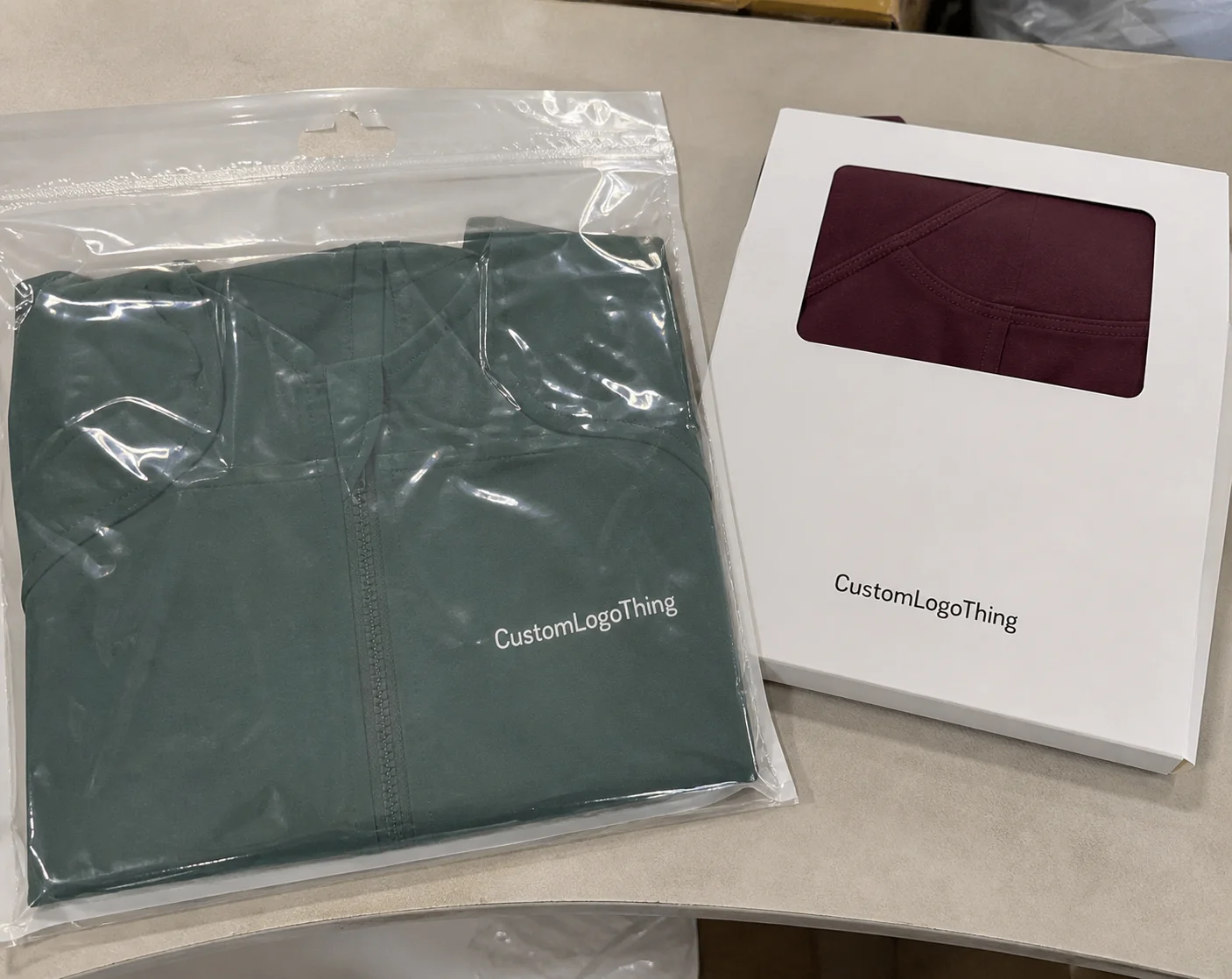
Activewear sells on precision. Customers notice straight seams, rich color, smooth fabric, and packaging that feels deliberate. A garment bag is often the first physical sign of that discipline. If the film is clear, the print is crisp, and the fold sits properly inside the bag, the line looks more controlled. If the bag is wrinkled or oversized, the product starts off at a disadvantage.
That first impression carries into the store and into the warehouse. A clean bag keeps items together, reduces handling marks, and makes assortment tables easier to maintain. It also helps sets stay paired, which matters for leggings and bra combinations, matching tops and bottoms, or bundle packs that need to look like a single offering rather than loose inventory. For brands building custom Custom Plastic Garment Bags for fitness brands, that practical role is just as valuable as the visual one.
The bag also influences how premium the product feels at receiving. Buyers, store staff, and fulfillment teams all touch it. One bad seam or a torn corner can make the line feel lower grade than it is. That is the quiet risk with packaging: a small defect can change how the whole garment is perceived.
“If the bag wrinkles badly or splits at the seam, the product reads as cheaper before anyone has touched the fabric.”
That is why the packaging spec deserves the same attention as the garment spec. A brand can spend heavily on fabric and fit, then lose the effect with cloudy film or loose sizing. The packaging has to support the product story, not dilute it.
Film, thickness, and bag style choices that survive shipping
Material choice starts with the film. LDPE is flexible and forgiving, which makes it a practical option for folded apparel that needs a little give. HDPE is thinner and crisper, often useful when the goal is basic protection with lower material use. CPP is clearer and stiffer, so it can read more polished on shelf, though it is not always the lowest-cost route. None of these is universally best. The right choice depends on the garment weight, how the bag will be displayed, and how much handling it will see before the customer opens it.
Thickness is where a lot of spec sheets go wrong. Too thin and the corners split, especially on folded edges and heavier pieces. Too thick and the bag starts to feel wasteful, bulky, and harder to pack. For lightweight tees, sports bras, and leggings, a range around 1.5 to 2 mil often works. For hoodies, joggers, and layered sets, 2 to 3 mil is usually safer. Those numbers are not rules carved in stone, but they are practical starting points based on what tends to survive real warehouse handling.
Bag style should follow the garment and the channel. Flat poly bags are straightforward and efficient for most folded items. Gusseted bags give extra room for bulkier pieces and reduce stress on the film. Resealable bags make sense for premium presentation, returns, gifting, or multi-piece sets that may be reopened and closed more than once. Hanger-hole bags belong in retail display programs and hanging inventory. The wrong format can make pack-out harder than it needs to be.
Here is a simple comparison:
| Bag Style | Best Use | Typical Thickness | Typical Unit Price at 5,000 Pieces |
|---|---|---|---|
| Flat poly bag | Tees, leggings, simple sets | 1.5-2 mil | $0.12-$0.22 |
| Gusseted bag | Hoodies, joggers, bulkier packs | 2-3 mil | $0.18-$0.32 |
| Resealable bag | Returns, premium presentation, bundles | 2-3 mil | $0.28-$0.55 |
| Hanger-hole bag | Retail display and hanging inventory | 1.5-2.5 mil | $0.16-$0.30 |
Other material details matter too. Clarity level changes how the garment reads under store lighting. Frosted film can hide fingerprints and soften the look without hiding the product. Anti-fog treatment helps in cooler storage or transit conditions where condensation can cloud the film. Seal strength is worth checking because weak seals split at the corners, and those failures show up quickly in fulfillment. Fingerprint resistance also matters more than teams expect, especially on glossy film that is touched repeatedly during pack-out.
For brands that care about consistency across the whole package system, the garment bag should match the visual discipline of the carton, tissue, label, and fold board. That is the difference between a package system that feels controlled and one that looks assembled from separate purchases. If your outer box and apparel bag are both part of the customer experience, they should belong to the same design language.
Sizing, print coverage, and brand consistency across SKUs
Sizing is more than a fit decision. It affects material use, pack-out speed, carton efficiency, and shelf appearance. One bag size that works for sports bras will not look right on oversized hoodies. A single oversized bag used for everything creates excess film, wrinkles, and wasted space in transit cartons. For fitness brands with several product categories, a real size matrix usually performs better than one universal bag.
A practical starting point looks like this: 11 x 14 inches for compact tops, 12 x 16 inches for leggings or fitted sets, 14 x 18 inches for hoodies, and 16 x 20 inches or larger for outerwear or bundled pieces. Those dimensions still need to be checked against the fold method. If the team uses folding boards, the board thickness has to be part of the calculation. Otherwise the fit looks correct on paper and wrong on the line.
Print placement deserves the same attention. A logo near the top edge is easy to spot in bins and on shelves. Full-panel printing creates a stronger visual impression, but it can also make the bag feel heavier if the ink load is too dense. For most activewear programs, one-color or two-color printing is enough. The bag should support recognition, not turn into a billboard.
Consistency across collections is where many brands either look polished or scattered. Same logo scale. Same print zone. Same clarity level. Same close enough to signal a system. If each collection uses a different bag style without a reason, the line stops feeling like a brand and starts feeling like a sourcing problem. Buyers notice that. Customers do too, even if they cannot explain why the packaging feels off.
- Tees and bras: smaller flat bags, high clarity, clean logo placement.
- Leggings and fitted sets: medium bags, minimal print clutter, consistent fold width.
- Hoodies and joggers: larger gusseted bags, stronger seam spec, more headroom.
- Bundles and gift sets: resealable or hanger-hole options, depending on channel and display method.
If the same brand sells both wholesale and direct-to-consumer, consistency becomes even more important. A buyer sees the line in a store, then compares that memory with the shipping experience at home. A clean packaging system supports both. A fragmented one makes the brand feel less settled than it really is.
Cost, pricing, and MOQ: what drives the quote
Pricing on custom Custom Plastic Garment Bags for fitness brands usually comes down to size, thickness, print colors, closure type, and any extra features such as vent holes, hang holes, zipper strips, or recycled content requests. Special shapes and specialty finishes add more setup time, so they add cost. That is not hidden markup. It is the reality of how film, labor, press setup, and inspection work.
MOQ changes the math quickly. Small runs tend to cost more per unit because setup is spread across fewer pieces. Larger runs lower the unit cost, but they also tie up cash and storage space. For a growing fitness label, that tradeoff matters. A cheap unit price can become expensive if the bag is the wrong size or if inventory sits too long in a back room.
There are sensible ways to control cost without weakening the packaging. Standardize sizes across related SKUs. Reduce print colors where possible. Keep the finish clean instead of adding effects that do not improve protection or presentation. Those decisions usually improve consistency too. Cutting film gauge or seal quality is the wrong place to save money because failures show up in fulfillment, not on the quotation sheet.
| Spec Choice | Cost Impact | Brand Impact | Best Use Case |
|---|---|---|---|
| One-color print | Lower | Clean and efficient | Most activewear basics |
| Two- to three-color print | Moderate | More visible, more setup | Retail-focused lines |
| Resealable closure | Higher | Premium feel, better recloseability | Returns, bundles, gifting |
| Standardized bag sizes | Lower | More consistent across SKUs | Multi-style apparel catalogs |
| Custom die-cut or special format | Higher | Distinctive, but more complex | Signature retail presentation |
Buyers who need a more technical review should ask for material data. ASTM D882 covers tensile properties. ASTM D1709 covers dart impact resistance. Not every supplier will volunteer test documentation without being asked, but those references are useful if the bags need to survive heavier handling or longer transit. For shipping validation, ISTA test methods are a reasonable benchmark. For broader material efficiency context, the EPA’s sustainable materials resources at EPA sustainable materials management are a good reference point.
If surrounding parts of the system use paper, inserts, or folding boards, FSC-certified paper can fit into the package plan. That does not make the plastic bag itself sustainable by default. It simply means the paper components can be sourced with more care. For that side of the stack, the FSC site at fsc.org is the right place to verify certification guidance.
Production steps and turnaround: what happens after approval
The production workflow is usually simple on paper and messy in practice if the brief is weak. First comes the spec: garment dimensions, quantity, bag style, thickness, closure type, and print layout. Then comes artwork review and proof approval. After that, the supplier runs the film, prints the design, seals the bags, packs cartons, and books freight. The biggest delays usually come from missing decisions, not from the machinery.
Turnaround depends on the spec. Simple printed bags can move quickly once the proof is approved. Custom shapes, resealable structures, thicker film, and larger quantities need more time for setup and quality checks. The useful way to talk about timing is to separate proofing time, production time, and freight time. If those are bundled into one vague estimate, the schedule can look faster than it really is.
Artwork changes are one of the most common delays. Vague dimensions are another. So is the request to “finalize print count later.” That sort of uncertainty slows the line because packaging is built around specific measurements and repeatable setup. Clean packaging design saves time because it removes ambiguity before production begins.
Typical ranges look like this:
- Proof approval to production start: 1-3 business days if artwork is clean.
- Production for simple runs: often 12-15 business days.
- More complex runs or larger volumes: 15-25 business days or more.
- Freight: depends on mode, destination, and whether cartons move by air or sea.
Ask for those dates separately. A fast press schedule does not mean a fast delivery date, and freight can be the part that changes the calendar most. That distinction matters when a seasonal launch, retail reset, or replenishment window is already locked.
Common mistakes that make gym apparel look cheap
The first mistake is choosing the wrong size. Too much empty film creates wrinkles and makes the product look like surplus stock. Too little room stresses seams and corners. In both cases, the bag stops helping and starts distracting. The fit should protect the fold and still look neat inside a carton or on a shelf.
The second mistake is weak artwork. Low-resolution logos, poor contrast, and cluttered copy all make the bag look rushed. On thin film, overly dense ink can also cloud the surface and reduce the crisp look buyers want. Strong package branding usually depends on restraint. A clean logo, clear placement, and enough open space tend to age better than busy graphics.
The third mistake is ignoring how the pack-out actually works. If bags are hard to open, seal poorly, trap static, or slow down folding, the warehouse pays for it immediately. That creates backlogs, scuffed garments, bent hangers, and avoidable labor. Packaging has to function in the real packing area, not just look good on the sample table.
The fourth mistake is using too many bag formats across the line. Some variation is normal. Too many one-off choices are not. A disciplined system usually looks more premium than a catalog built from separate decisions made by different departments. The customer sees the result even if they never inspect the packaging closely.
The fifth mistake is treating the bag as separate from the rest of the product presentation. For fitness brands, the garment bag, carton, label, and insert should feel like they belong to one system. If each piece pulls in a different direction, the brand feels less confident than the clothing itself.
In practice, custom Custom Plastic Garment Bags for fitness brands should feel boring in the right way. They should fit, protect, present, and get out of the way. That is the standard that keeps the product looking disciplined from warehouse to shelf to customer home.
Next steps: build a cleaner brief before you request quotes
If you are preparing a quote request, the most useful thing you can do is remove ambiguity. Measure the folded garment, not just the unfolded size. Decide whether the bag is for retail display, e-commerce fulfillment, or both. Confirm the print count, seal style, and whether the team needs a hanger hole, zipper strip, or resealable closure. The clearer the brief, the more useful the quote.
A useful spec sheet usually includes the garment category, folded dimensions, quantity by SKU, film preference, thickness target, print colors, artwork placement, and desired lead time. It also helps to include a sample photo or a benchmark package if the goal is to match an existing presentation. That gives the supplier something real to compare against instead of guessing from a name alone.
Fitness brands that build the bag spec around actual warehouse handling tend to get better outcomes than brands that start with visuals only. Practical fit, clean seal quality, and predictable pack-out usually matter more than extra decoration. That is especially true for lines with many colorways or recurring restocks. The packaging should be easy to repeat.
FAQ
What thickness works best for plastic garment bags for fitness brands?
A mid-range film usually balances protection and cost without making the bag feel bulky. For lighter tees and leggings, 1.5 to 2 mil is often enough. For hoodies, joggers, and heavier sets, 2 to 3 mil is safer because the seams and fold lines take more abuse.
Should fitness apparel bags be clear, frosted, or opaque?
Clear bags show the product and work well for retail presentation and warehouse sorting. Frosted film hides fingerprints and can read a little more premium without blocking visibility. Opaque bags make sense if the brand wants privacy, a stronger gift-like feel, or a more controlled visual reveal.
How does MOQ affect pricing on custom garment bags for activewear?
Lower MOQs usually carry a higher unit cost because setup is spread across fewer bags. Higher MOQs reduce unit price but require more upfront cash and storage space. If demand is uncertain, it is smarter to cover a SKU group first instead of trying to launch every style with the same order size.
How long does production usually take for plastic garment bags for fitness brands?
Timeline depends on proof approval, order size, and how customized the bag is. Simple printed bags can move fairly quickly once artwork is approved. Revisions, spec changes, and special closures are the fastest ways to slow the schedule, so lock the details before the run starts.
What should I send for an accurate quote on fitness apparel bags?
Send garment dimensions, quantity, bag style, film preference, print colors, and closure type. Add whether the bags are for retail display, e-commerce fulfillment, or both. If you can, include photos or a sample pack so the supplier can match the fit and presentation faster.


