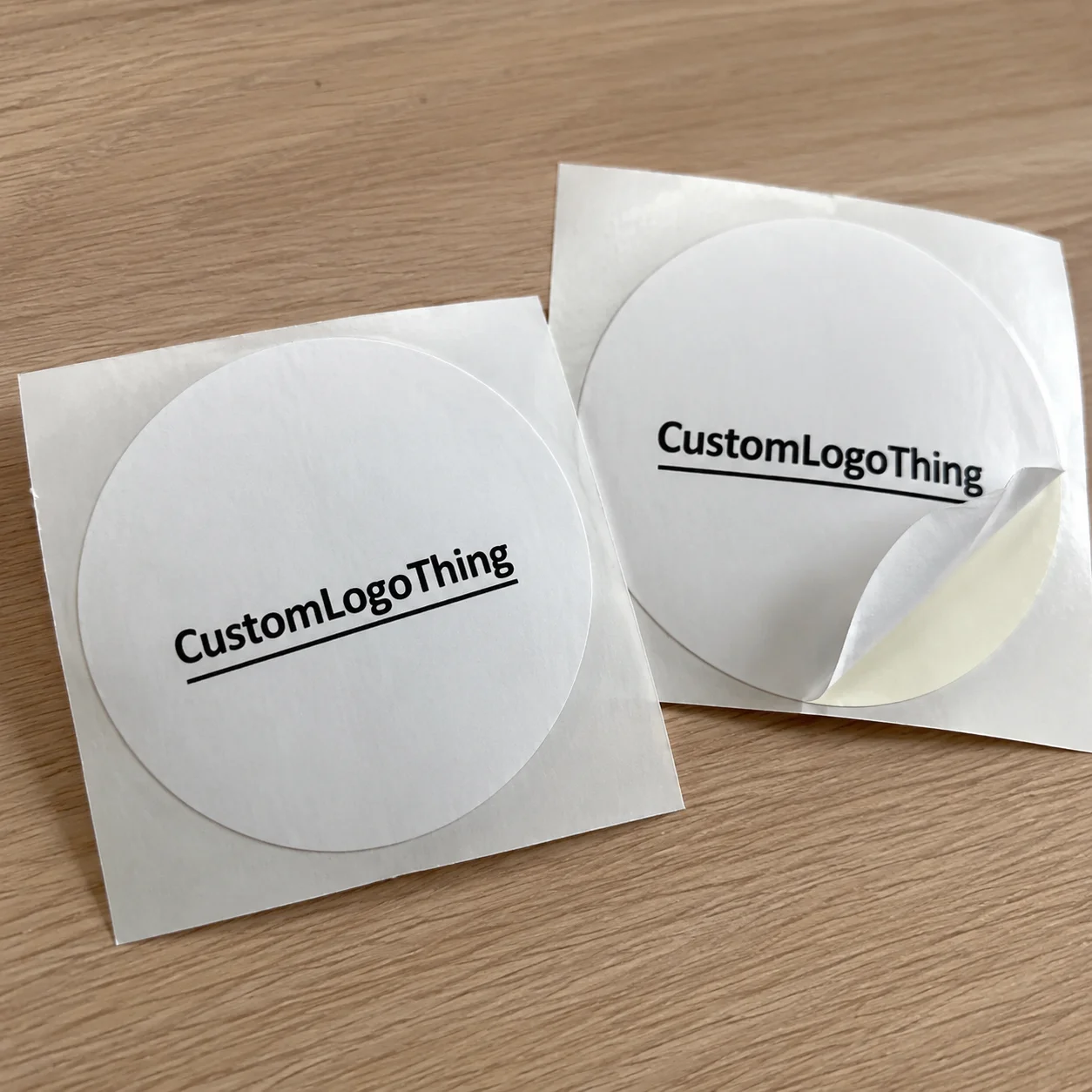
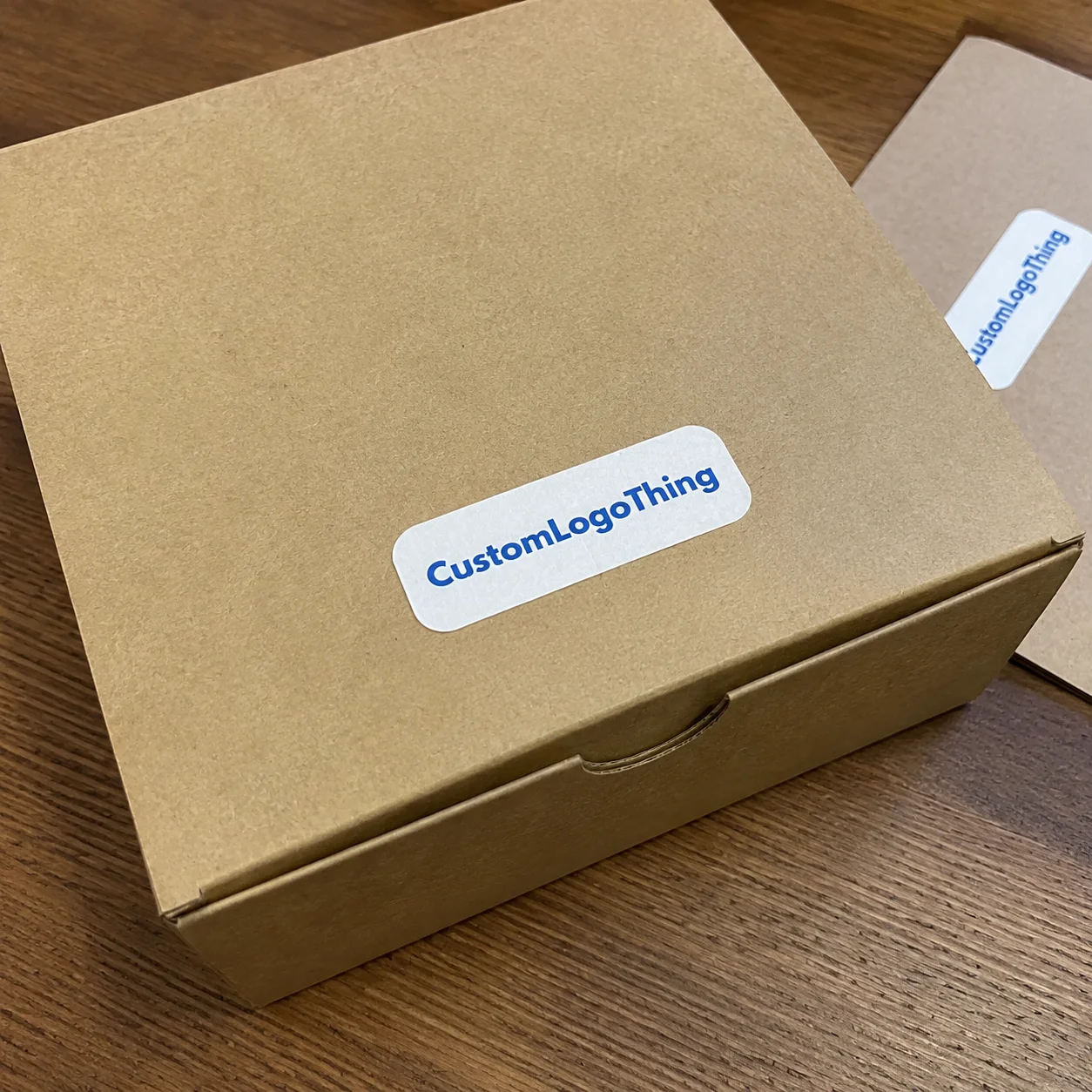
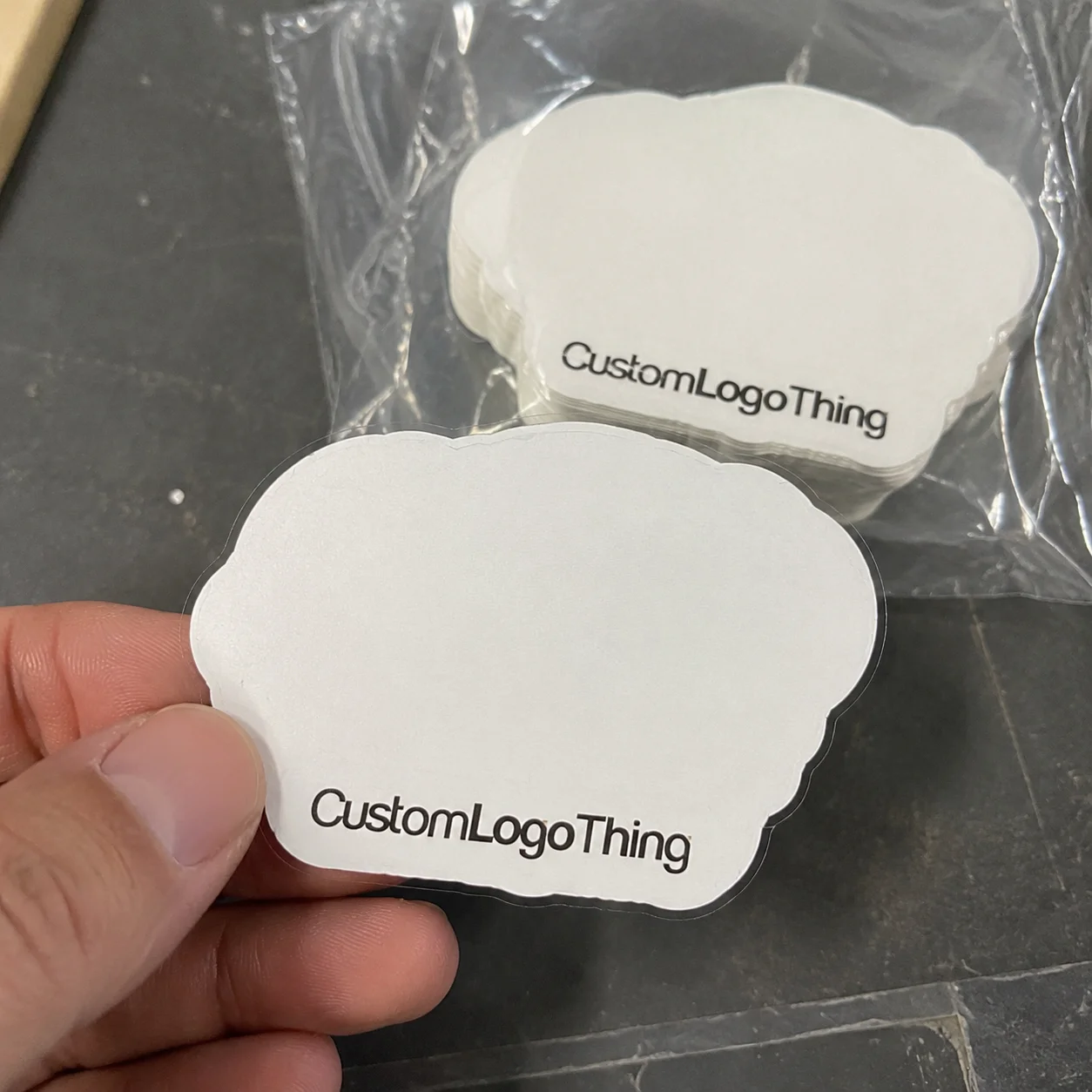
A folded tee in a poly bag has to communicate a surprising amount before anyone even touches the garment. Size, brand, barcode, care notes, and sometimes a lot number or fulfillment code all need a place to live, and that is where custom peel and stick labels fit naturally. They are not trying to replace every other label in the system. They are the fast, pressure-sensitive piece that helps packaging do its job without adding sewing, heat, or extra handling steps.
For apparel buyers, that practical advantage matters more than the marketing language around it. A label that can go onto a bag, insert card, shipping carton, tissue wrap, or retail bundle with minimal setup gives the production team more flexibility than a sewn-in component ever will. It is useful for new launches, seasonal refreshes, short-run private label programs, and those awkward in-between orders where the art is final enough to print but still likely to change after the first sell-through.
That is also why these labels show up across product packaging, branded packaging, and retail packaging. They help separate garment identity from package presentation. In the real world, that can mean fewer handoffs, fewer delays on the packing table, and a cleaner finished look without making the apparel itself carry every message.
What Custom Peel and Stick Labels Do Better Than Sewn-In Tags
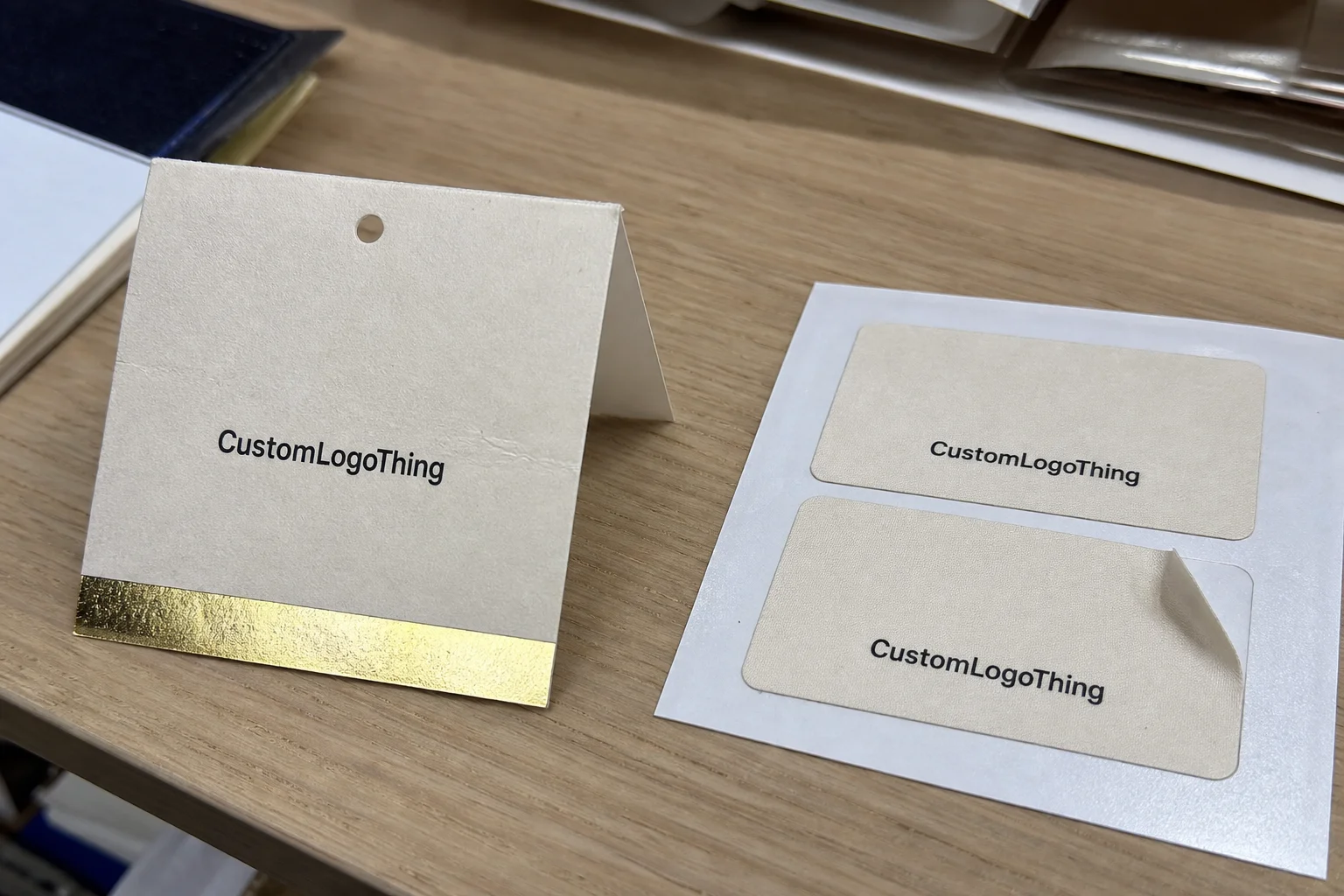
Picture the common packing setup: a folded shirt, a clear or frosted poly bag, and a label that has to tell the buyer what the item is before it reaches the shelf or lands on a doorstep. Custom peel and stick labels handle that task without needles, stitching, or a heat press, which is why they are so common in apparel packaging workflows.
They are especially useful on temporary surfaces. Retail bundles, insert cards, shipping cartons, tissue wraps, and poly mailers all benefit from a label that can be applied quickly and consistently. If the label needs to be removed later, a removable adhesive can keep the packaging clean. If the label must stay through transit and storage, a permanent adhesive is the safer choice.
The speed advantage is obvious on the line, but the design advantage is just as important. Artwork can be revised without reworking the garment itself. A collection name changes, a barcode format changes, or a promo line gets added late in the schedule and the label art can usually absorb it. That kind of flexibility is difficult to get from sewn-in tags, which are slower to adjust and more tied to garment production.
Custom Labels & Tags often bridge the gap between garment identity and package branding. They are not a substitute for permanent care labels on the garment. They do a different job: confirming the SKU, reinforcing the brand, and making the package look finished before the item is handled by retail staff or fulfillment teams.
If the label has to survive shipping, spec it for the actual surface, the actual handling, and the actual dwell time. A good-looking proof is not enough.
That is why many buyers use both sewn-in labels and peel-and-stick labels. The sewn-in version handles permanent garment identification. The pressure-sensitive version handles the package-facing information and temporary branding that needs to move faster.
How the Adhesive Backing Performs on Packaging and Inserts
Every pressure-sensitive label has three working layers: the face stock, the adhesive, and the liner. The face stock controls the look and print quality. The adhesive determines how well the label bonds. The liner protects the adhesive until application and affects how cleanly the label releases during use.
On apparel packaging, surface compatibility matters more than many buyers expect. Paper insert cards are usually straightforward. Coated cartons are often fine. Poly bags, glossy films, tissue wraps, and low-energy plastics are more demanding because the adhesive has less texture to grip. That is where custom peel and stick labels either perform as intended or start to lift at the edges after a day or two.
Several things can interfere with bond strength: dust, static, hand oils, humidity, textured stock, and surface coatings that resist adhesion. A label can look perfect the moment it is applied and still fail later if the packaging carries release agents or if the room conditions are not stable. The real test is not the mockup. It is how the label behaves on the actual packaging line and during the actual shipping cycle.
Adhesives usually fall into three practical categories. Permanent adhesive is meant to stay down. Removable adhesive is designed to lift cleanly after use. Repositionable adhesive gives a small window for alignment, which is helpful on hand-applied runs or when the artwork has to land in a precise spot every time. The right choice depends on whether the label is part of a retail display, a shipping workflow, or a temporary promotion.
For buyers who want a standards-minded reference point, the Institute of Packaging Professionals is a useful source for packaging education, and the International Safe Transit Association provides a practical framework for distribution and transit testing. If a label needs to survive compression, handling, vibration, or temperature swings, those checks matter more than a polished proof on a bright monitor.
One detail that gets overlooked often: a label that works beautifully on paper may behave very differently on film. That is not a defect in the product. It is how pressure-sensitive systems work. The smarter approach is to match the adhesive to the packaging surface first, then choose the face stock and finish that support the visual result.
Material, Finish, and Adhesive Choices That Change the Result
Material choice affects both the appearance and the performance of the label. Paper stocks are common for short-run apparel packaging because they print cleanly, feel familiar, and stay cost-effective. BOPP and polyester are better when moisture resistance, tear resistance, or longer shelf life matter. Specialty stocks make sense when the brand wants a textured, recycled, or premium feel that matches the rest of the package system.
Finish is not just decoration. Matte usually reads clearly, photographs well, and fits a restrained retail style. Gloss creates stronger color pop and can make logos feel more assertive under store lighting. Soft-touch adds a tactile premium feel, though it can show scuffs if the packaging is handled roughly in transit. Clear labels work well when the background artwork should remain visible and the brand wants a quieter, more modern effect.
Adhesive strength should follow the use case rather than personal preference. A stronger adhesive is usually the safer choice for shipping, cold storage, or long dwell times. A lighter adhesive is better when the label must come off without residue, such as on temporary event packaging or some internal fulfillment workflows. Too many buyers choose by instinct and only find out the result after the pack line starts reporting lift, curl, or residue.
| Option | Best Use | Typical Unit Range | Notes |
|---|---|---|---|
| Paper, matte finish | Short-run apparel packaging, inserts, low-cost branding | $0.12-$0.22 at 5,000 pcs | Good readability and efficient print cost |
| BOPP, gloss finish | Retail packaging, poly bags, brighter brand presentation | $0.16-$0.28 at 5,000 pcs | Better moisture resistance and visual pop |
| Polyester, specialty adhesive | Longer wear, tougher handling, higher-performance packaging | $0.20-$0.35 at 5,000 pcs | Higher material and conversion cost, stronger durability |
Shape and size change how the label feels in the hand and how fast it moves through the packing process. A round label can feel softer and more approachable. A rectangular label usually gives more room for barcodes, SKU data, and compliance text. Kiss-cut layout matters too, because an operator can peel and place faster when the sheet or roll is organized around the way the line actually works. That is the sort of detail that looks minor in a proof review and becomes obvious at production speed.
For brands that use custom printed boxes alongside label work, the label finish should sit comfortably with the box finish. A matte carton with a high-gloss label can work, but it needs to feel deliberate. Good packaging systems usually look coordinated across the carton, insert, closure points, and the label itself.
Production Process and Timeline for Apparel Label Orders
The production path is simple on paper, but small gaps in the spec can add days. It usually starts with a review of size, shape, material, adhesive, quantity, and application surface. Then comes proofing, where artwork and panel layout are checked for bleed, type size, barcode clear space, and cut accuracy. After approval, the job moves into print setup, conversion or die-cutting, inspection, packing, and shipment.
A clean artwork file speeds up almost everything. Vector logos, outlined fonts, and clearly placed barcodes help avoid questions during proofing. If the label needs variable data, like sequential numbering or SKU-specific versions, that needs to be stated before production starts. The same is true for color expectations. If the brief is vague, the schedule usually slips in small increments that are hard to recover later.
For typical apparel runs, the biggest timeline drivers are quantity, the number of SKUs, finishing complexity, and whether the label needs any testing before release. A single-SKU order with standard material often moves faster than a multi-version campaign with several finishes and multiple application surfaces. If the order also includes custom kitting or special packing, expect more handling time.
Most delays happen in approval, not in the press room. Buyers often assume the press run is the long part, but the real bottleneck is waiting for a final file, a sample review, or internal sign-off from marketing and operations. A short review window can save several business days, especially when the launch date is fixed.
If the order is tied to branded packaging for a product launch, one person should own the spec sheet. That prevents the common situation where marketing wants a premium finish, operations wants fast application, and purchasing wants the lowest quote. Those goals can coexist, but only if the job is defined before it is priced.
Cost, MOQ, and Unit Pricing for Smaller and Larger Runs
Price is driven by material grade, print method, die-cut shape, adhesive type, finish, and whether the label includes variable data or special packing. Quantity matters as much as anything else because setup costs are spread over the run. A 500-piece order often looks expensive per unit, while a 10,000-piece order feels much more efficient even though the total spend is higher.
MOQ depends on the supplier, but apparel buyers usually hit it when testing a new collection or rolling out a seasonal update. A low MOQ reduces launch risk, yet it usually raises the per-piece price because press setup, cutting, and inspection do not change much from a larger job. If the design is still being tuned, a smaller run can be the right move. If the art is locked and the packaging format is stable, larger quantities usually improve economics.
The cleanest quote request includes the application surface, label size, artwork count, quantity, adhesive requirement, finish preference, and delivery date. A good vendor can price from that list without guessing. A vague request usually returns a vague number, and then the comparison process gets noisy.
| Run Size | Typical Use | Approx. Price Behavior | Buyer Takeaway |
|---|---|---|---|
| 250-1,000 pcs | Samples, pilot launches, small boutique drops | Highest unit cost | Good for testing surface performance and artwork |
| 1,000-5,000 pcs | Seasonal apparel packaging, regional retail rollouts | Moderate unit cost | Often the best balance of flexibility and price |
| 5,000+ pcs | Stable programs, repeat SKUs, nationwide distribution | Lower unit cost | Best when artwork and packaging format are locked |
Chasing the lowest line item without checking the full packaging result usually costs more later. A cheap label that lifts on the bag or prints with weak contrast can create rework, delays, and a poor retail impression. In a store setting, label failure reads like a brand issue, not just a production miss.
FSC-certified papers can matter if sustainability is part of the sourcing brief. That does not make every label better by default, but it can help align the label with a broader packaging standard when recycled content or responsible sourcing is part of the program.
Common Ordering Mistakes That Cause Reorders or Waste
The most common mistake is choosing adhesive without testing the real surface. Paper behaves one way, coated film another, and textured carton another again. Custom peel and stick labels can look identical on a proof sheet and still perform very differently on glossy poly bags, low-energy plastics, or dusty packaging stock.
Artwork mistakes follow close behind. Tiny type, low-contrast color combinations, and barcodes or QR codes placed too close to the trim can become unreadable after cutting. Buyers also underestimate handling size. If the label is too small, workers slow down or misplace it. If it is too large, the panel looks crowded and the package feels overdesigned. That is not only a design issue. It affects line speed and consistency.
Skipping a physical sample is another frequent miss. A digital proof tells you almost nothing about peel force, edge lift, curl, or residue. A sample on the actual packaging substrate tells you far more. That is the difference between guessing and knowing.
- Test the label on the exact surface, not a similar one.
- Check barcode scan quality after trimming and packing.
- Confirm the label size works with gloves, speed, and human hands.
- Decide whether the label should stay removable or become permanent.
There is also a procurement problem that shows up late. Some teams specify the label before the packaging is locked. That can create issues if the carton, bag, or tissue changes after the label is already quoted. It is better to align the label spec with the final package surface, especially if the label is part of a broader Custom Labels & Tags program or a coordinated packaging rollout.
From an operations standpoint, the best label is the one that disappears into the workflow: it applies quickly, stays put when it should, lifts cleanly when it should, and preserves the look of the garment package. Anything else adds avoidable waste.
Expert Setup Checklist and Next Steps Before You Request a Quote
Before pricing is requested, gather the basics: surface type, label size, artwork files, quantity, use case, and whether the label must be removable or permanent. That seems obvious, but it prevents the back-and-forth that often stretches a quote into several days of email.
Then decide what matters most. Is the priority cost, speed, premium appearance, or durability? A launch kit may care most about visual consistency across every package component. A replenishment program may care more about application speed and adhesive reliability. Custom peel and stick labels can be tuned in different directions, but they cannot do every job equally well at the same time.
It helps to divide the internal review before the quote goes out. Brand should confirm the visual standard. Operations should confirm the surface and handling method. Purchasing should confirm budget and lead time. Once those three points line up, the order becomes much easier to place correctly.
- Request one economical option that meets the basic spec.
- Request one premium option if the package needs more visual presence.
- Ask for one sample or short test run on the real surface.
That comparison gives you a practical read on price, appearance, and performance instead of forcing a yes-or-no decision on a single speculative quote. It also helps when labels need to coordinate with custom printed boxes, tissue, or other retail packaging pieces because you can compare the label against the full package set before committing to a larger run.
For sourcing teams that care about standards and repeatability, explicit specs and documented testing make material consistency much easier to judge. That discipline applies across product packaging, not just labels.
In the end, custom peel and stick labels work best when they solve a real packaging problem: faster application, cleaner information flow, and a better-looking finished pack without changing the garment itself.
How are custom peel and stick labels different from sewn-in clothing labels?
They apply without stitching or heat, so they are faster for packaging, inserts, and temporary branding. Sewn-in labels are still the standard for permanent garment identification, while custom peel and stick labels are better for surfaces that cannot be sewn.
Will peel and stick labels stay on poly mailers and tissue wrap?
Yes, if the adhesive is matched to the surface and the material is clean and dry. Testing matters because glossy film, texture, dust, and humidity can reduce bond strength or cause edge lift.
What finish works best for custom peel and stick labels on apparel packaging?
Matte is usually the most reliable choice for readability and a restrained premium look. Gloss or clear finishes can work well when the brand wants stronger visual pop or a more modern packaging style.
How do I estimate MOQ and unit cost for a label order?
Unit cost usually drops as quantity rises, but MOQ depends on the material, print method, and die-cut setup. The fastest way to get accurate pricing is to share size, quantity, adhesive type, and the exact packaging surface.
What is the usual turnaround for custom peel and stick labels?
Turnaround depends on proof approval, quantity, finishing, and whether testing is needed before production. A clean artwork file and a simple spec sheet usually shorten the schedule because they reduce revision time, which is why custom peel and stick labels are easiest to quote once the surface, finish, and run size are settled.