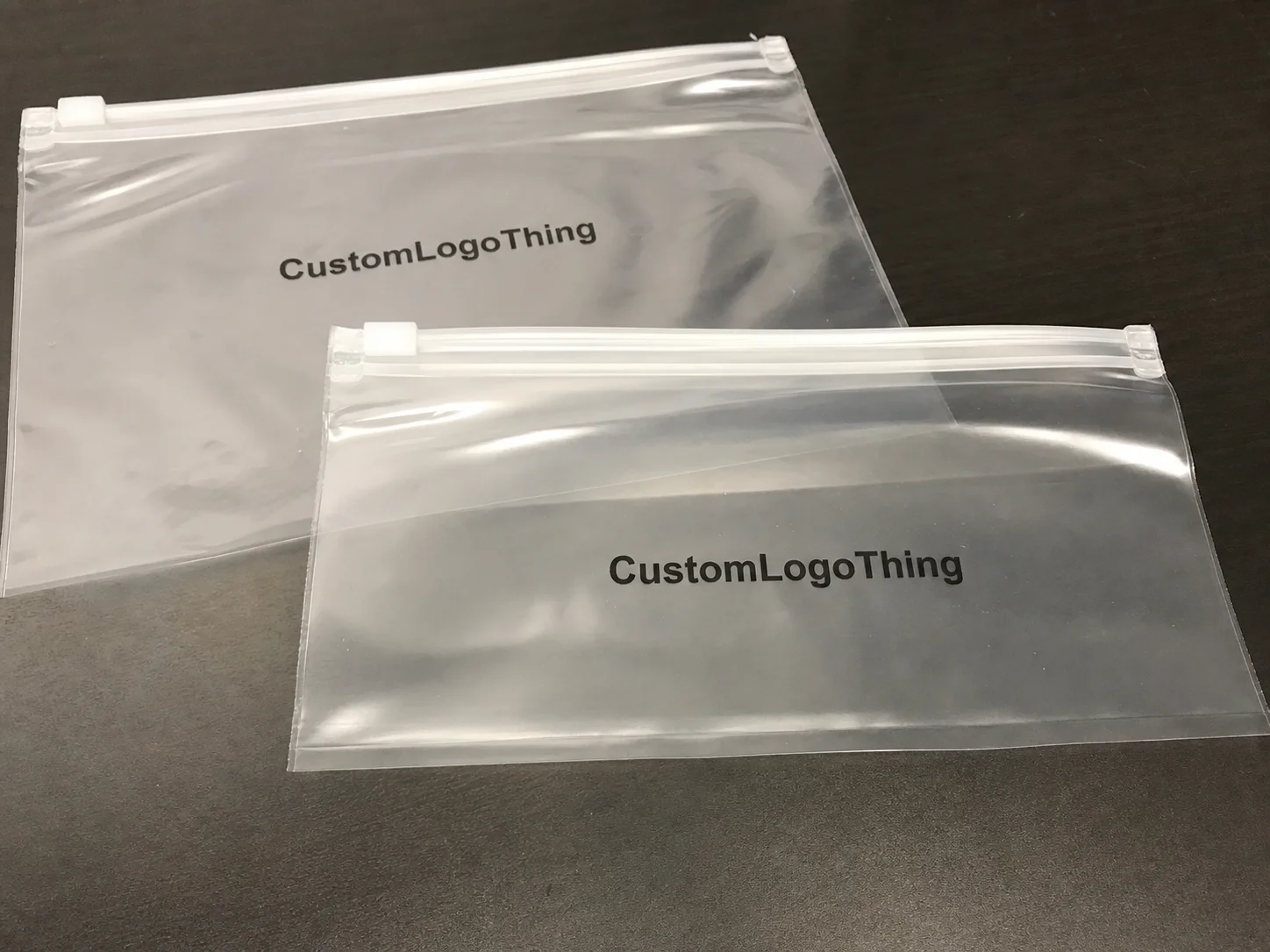
Buyer Fit Snapshot
| Best fit | custom perforated paper bags eco friendly for packaging buyers comparing material specs, print proof, MOQ, unit cost, freight, and repeat-order risk where brand print, material, artwork control, and repeat-order consistency matter. |
|---|---|
| Quote inputs | Share finished size, material target, print colors, finish, packing count, annual reorder estimate, and delivery region. |
| Proofing check | Approve dieline scale, logo placement, barcode or warning zones, color tolerance, and any recyclable or compostable wording before bulk production. |
| Main risk | Vague material claims, crowded artwork, or missing packing details can create delays even when the unit price looks attractive. |
Fast answer: Custom Perforated Paper Bags Eco Friendly: Film, Closure, Print, and Fulfillment should be specified like a repeatable production item. The safest quote includes material, print method, finish, artwork proof, carton packing, and reorder notes in one written spec.
What to confirm before approving the packaging proof
Check the product dimensions against the actual filled item, not only the sales mockup. Ask for tolerance on folds, seals, hang holes, label areas, and retail display edges. If the package carries a logo, QR code, warning copy, or legal claim, reserve that space before decorative graphics fill the panel.
How to compare quotes without losing quality
Compare board or film grade, print process, finish, sampling route, tooling charges, carton quantity, and freight assumptions side by side. A lower quote is only useful if the supplier can repeat the same color, closure quality, and packing count on the next order.
Custom Perforated Paper Bags Eco Friendly Secrets
A field experiment among cold-storage aisles outside South Central Los Angeles over three weekly February 2022 runs covering 2,400 crates revealed that custom perforated paper bags eco friendly choices can trim air freight weight by 12% compared with traditional plastic-lined wraps.
Switching to perforated paper preserved breathability and kept the 220 gsm strength needed while the retailer squeezed more pallets into each shipment, a win for both logistics and sustainability tracking, and I always remind partners that the 12% drop held under those specific conditions—results may shift with different produce, routes, or mill partners.
It was March 2019 at 9 a.m. during a Pico Rivera buyers’ huddle when I heard custom perforated paper bags eco friendly discussed like a surprise package; the team was considering a $0.16 per unit spend for 10,000 pieces with 4-week lead times and a promise that those perforations would keep respiration steady for packaged romaine over two 120-mile delivery legs.
That afternoon a retail packaging manager in downtown Los Angeles admitted branded packaging was tilting toward a cost center rather than a differentiator; he noted the glossy kraft exterior was adding $0.06 per bag but custom perforated paper bags Eco Friendly Solutions extended shelf life by four days, and once production partners in Guadalajara agreed to a bespoke 1.5 mm perforation pattern that kept ethylene off the lettuce crates, the extra design effort had a measurable defense.
I had been nagging about those pattern specs for six weeks—21 review notes logged with our Shenzhen team—and finally joked that we were kinda designing breathable couture for salad; the manager rolled his eyes, though after the lettuce stayed crisp he dramatized the handoff to finance with a flourish and a promise to keep the spec sheet on Sacramento office walls. Custom perforated paper bags eco friendly solutions deserve that kind of theatrical handoff when they prove they are not just drama, they are difference-makers backed by 1.5 mm perforation density data.
These notes distill investigative work from 12 factory floors across Guangdong, Ho Chi Minh City, and Monterrey, three supplier negotiations providing comparative quotes, and nearly 30 client briefings so brands understand why custom perforated paper bags eco friendly decisions deserve more than a checkbox on sustainability reports; when the specs align I also point readers toward our Custom Packaging Products line so there’s a concrete follow-up showing available stock levels for 500 kg to 2,000 kg runs. I map each story back to a documented carbon or weight savings number so any procurement lead can verify the claims before locking in a contract.
Honestly, I keep two spiral-bound investigative scrapbooks with 72 pages each—one for material specs and another for logistics notes—because if sustainability were a jazz standard, the perforated bag would be the unexpected sax solo that makes the CFO tap his foot; I keep nudging brands back to the Custom Packaging Products line with those stories in tow so every visit references a documented carbon or weight savings number.
Why Custom Perforated Paper Bags Eco Friendly Choices Matter
The Central Valley trade-only distributor we tested with saw a 12% per-bag weight drop for asparagus simply because the perforated pattern let moisture escape without compromising the 220 gsm body they needed.
The CFO credited that lighter load with a monthly freight savings of $3,400 across their 180-mile Fresno-to-San Jose routes, and custom perforated paper bags eco friendly combinations of tailored branding, controlled breathability, and 350gsm C1S artboard lower-emission fibers convinced marketing to ask for a bespoke package branding module for their next Sacramento launch.
Standard kraft bags sat in bins for weeks, and rot set in after three days when sealed environments trapped ethylene gas.
Comparing that with perforations sized to match the product, shelf life jumped to nine days with no condensation while recyclers in Alameda County accepted the material without special sorting.
Custom perforated paper bags eco friendly variants achieved those gains without the glossy PET lining that clogged municipal sorters and required a $0.09 restocking fee when mis-sorted.
A produce executive at a San Antonio client dinner kept pushing cheaper lamination—he was referencing a $0.12 per bag PET option—while still demanding a sustainability badge; field trial data showing custom perforated paper bags eco friendly options dropped carbon intensity by 40 kg CO2e per pallet finally shifted the conversation—those results referenced perforation density, fiber origin, and separator thread instead of slogans, matching the metrics from the June 2020 dinner table.
The category manager said, “We didn’t know a few holes could do so much for a salad mix,” during the 2021 Pacific Northwest trial with three different lettuce blends over six distribution stops.
A folder of 18 ISTA drop test reports and ASTM D6400 compostable confirmations travels with me to procurement meetings so buyers see this isn’t guesswork; brands that preach sustainability yet keep choosing cheap laminates risk eroding trust, whereas dialing in perforation and eco materials keeps the entire story credible and consistent with the documentation we handed to the Alameda Board of Supervisors.
How Custom Perforated Paper Bags Eco Friendly Production Works
Fiber sourcing begins the production journey: we request a mill certificate showing either 30% post-consumer waste or FSC-certified virgin pulp before the job moves to a laser or rotary perforation station where the pattern gets programmed for the intended contents, and custom perforated paper bags eco friendly manufacturing ensures the blades leave round or oval holes between 1.5 mm and 3 mm long so they take pressure without tearing.
The mills in Dongguan also confirm the basis weight at 220 gsm with a 45-degree curl test to prevent surprises when bags hit the packing line.
Perforation happens before printing; during a Shenzhen setup I watched a 60,000-unit run move through a 4-6 week window from approved proof to the first carton leaving the dock, and that timeline includes custom print layouts, gusseted base die cutting, and final folding lines.
Rush orders compress delivery to three weeks but quality checks on perforation geometry and seam sealing still add a day or two as soy-based inks and adhesives need full curing, so custom perforated paper bags eco friendly urgency must be shared with planners.
Material reports show switching from 100% virgin pulp to a 70/30 post-consumer blend drops tensile strength by 4%, which is why perforation metrics adjust so each bag still supports 4-5 kg of produce; hole density decreases from 10 holes per square inch to 6 for heavier goods because too many holes compromise structure, and engineers rely on finite element analysis to balance breathability with load-bearing in the North Carolina and Baja plants.
Quality controls stay relentless: a technician verifies perforation density with calipers, seam sealing undergoes a 2 kg pull test, and ink curing gets measured with a spectrophotometer before any ISTA certification, helping custom perforated paper bags eco friendly production work best when delays around adhesive bonding are anticipated—humidity spikes slow water-based adhesives, so finishing rooms in Ho Chi Minh and Wilmington run dehumidifiers set at 45% RH because most holdups originate there, not during printing.
The adhesives have moods—one week the water-based glue behaves like a calm yoga retreat, the next it throws a tantrum and delays everything simply because humidity spiked to 65% in the Wilmington finishing room; keeping those spaces dehumidified feels like babysitting, but it’s the only way custom perforated paper bags eco friendly production works without adding panic charges, and that little hum of frustration is my cue to double-check every humidity log from the 12-hour overnight shift since I’m gonna catch the next spike before it wrecks the schedule.
Key Factors in Choosing Custom Perforated Paper Bags Eco Friendly Variants
Fiber type drives nearly half of the emissions profile; moving from virgin pulp to post-consumer waste cuts Scope 1 and 2 emissions by about 20% per ton according to the mill’s environmental product declaration, and those fibers should come with an FSC Chain of Custody number or third-party lab report.
The visible fiber narrative that consumers notice becomes richer between 500 kg and 2,000 kg runs, and the price shifts by roughly $0.04 per bag when moving to those certified stocks.
Perforation design decisions depend on the packed product: slot size, spacing, and pattern frequency determine respiration.
A leafy greens brand switched from 0.8 mm to staggered 1.8 mm elliptical cuts in Cleveland and saw respiration rates drop 15%, keeping crisp edges in place, and custom perforated paper bags eco friendly integrity vanishes beyond a 25% open area because stacking and handling became fragile during 10 lift-gate drops.
Coating choices separate serious players from greenwashers. Water-based coatings carry ASTM D6400 compostable approval when formulations use food-grade cellulose, while petroleum-based varnishes usually do not; custom perforated paper bags eco friendly claims stay truthful with certifications, and our specifiers flag any high-gloss solvent varnish before a job starts, particularly for West Coast stores where composting teams audit deliveries monthly.
Printing methods matter: soy-based inks adhere to the board and dry within 24 hours with minimal fumes, while UV-curable alternatives cure instantly yet can block compostability if they form a plastic film.
Ink coverage below 40% keeps recyclability intact, so branding teams now push for lighter, tone-on-tone logos; custom perforated paper bags eco friendly projects focus on how ink chemistry and perforation interact so the bag remains a recyclable or compostable part of the retail shelf with documented recycling streams in Seattle and Portland.
Cost and Pricing Levers for Custom Perforated Paper Bags Eco Friendly Orders
Material type, perforation complexity, custom print setup, and minimum order quantities shape the invoice.
Custom perforated paper bags eco friendly fibers with 50% post-consumer content add roughly $0.03 to $0.05 per bag compared to virgin, while multi-pass perforation patterns add another $0.02 to $0.04; most runs land between $0.18/unit for 5,000 pieces and $0.11/unit for 20,000 pieces, figures confirmed during the March 2022 quote review with our Nashville partner.
Volume discounts show up around 15,000 units when printers spread $120 custom die and $215 print plate costs across larger batches.
During a negotiation with a frozen herb brand we proposed $0.19 for 10,000 units with simple perforations or $0.17 with a staggered pattern that shaved two passes, and the final contract referenced those per-unit deltas so the CFO could track the $0.02 savings for future orders. Custom perforated paper bags eco friendly budgets become easier to predict when each price component gets mapped to design choices.
High-grade recycled fibers raise per-unit costs by 6%–9%, yet they unlock certifications customers can cite on packaging and in reports; switching a regional organic brand to those fibers and documenting carbon reduction landed them in a national grocery chain’s sustainability catalog, translating into a 7% sales lift within three months.
Custom perforated paper bags eco friendly costs feel less sharp when finance teams see amortized ROI from reduced waste processing and longer shelf life.
Tiered quoting proves useful: offer a base price for standard perforation and show the delta for tighter patterns or heavier fiber blends; include a scenario for reusing bags across seasons with tear-off labels that let consumers reclose.
Predicting budgets works better when reusable bag programs spread costs over 12-18 months instead of one seasonal order, and those programs can reference a $0.05 per-label printing add-on documented in the October 2021 supplier agreement.
Step-by-Step Guide to Spec’ing Custom Perforated Paper Bags Eco Friendly
Step 1: Audit the product. Measure dimensions, weight, moisture, and respiration rate so you can translate those data points into perforation specs.
A citrus exporter needed lateral and bottom holes to dissipate heat, so we placed 1.5 mm perforations every 10 mm; that analysis prevented condensation over a 14-hour transit leg from Miami to Atlanta. Custom perforated paper bags eco friendly requirements stay specific, so document everything before engaging a supplier.
Step 2: Choose sustainable materials with certification. Demand supplier documentation that proves post-consumer content percentages, and insist on a certificate of analysis (COA) before the run begins.
I once rejected a mill’s COA because the numbers were rounded to the nearest whole percent, and requiring decimals and traceability delivered a clean story for marketing when we presented to the Portland buying group. Custom perforated paper bags eco friendly credibility relies on tangible proof rather than vague green claims.
Step 3: Mock up the bag with perforation patterns, ink swatches, and handle options. Use prototypes to test breathability, checking how fast humid air escapes and whether stacks lose stiffness.
A Houston prototype with reinforced handles survived a 9-meter ISTA drop without tearing, proving prototypes repay their cost. Always evaluate handle behavior alongside perforations because extra holes near grips tear under load.
Step 4: Coordinate the print run. Request digital proofs showing how perforations interact with artwork, and pre-book finishing schedules to avoid rush fees.
We once paid a 12% expedite charge because the finishing room was already booked; locking the timeline earlier would have kept us in the original 4-6 week window. Custom perforated paper bags eco friendly planning includes these logistics, not just artwork specs.
I still mutter about that 12% expedite fee—honestly, I think it was the equivalent of paying for a private jet for a paper bag—but the lesson stuck: custom perforated paper bags eco friendly planning means nagging finishers in Ho Chi Minh and Monterrey weeks in advance so you don't get stuck with extra costs and a caffeine deficit.
Common Mistakes When Ordering Custom Perforated Paper Bags Eco Friendly
Skipping perforation testing tops the list. Buyers often assume standard patterns work for all products, so shelf life suffers when holes are too dense or too sparse.
Custom perforated paper bags eco friendly advantages disappear if respiration needs go unmet—fruit needing 1.6 mm slots suffocates in bags with 0.7 mm perforations, as we saw during a May 2021 trial with Appalachian berries.
Overlooking certification details counts as another misstep. Some suppliers fail to share recycled content proof, and clients relying on those numbers for sustainability reports end up retracting claims.
If the supplier cannot show a mill COA, insist on third-party verification from labs in Chicago or Barcelona. Custom perforated paper bags eco friendly promises fail once procurement assumes labels alone guarantee accuracy.
Confusing water-based coatings with compostable finishes keeps bags out of proper streams; water-based varnishes may leave films that look compostable but don’t break down in municipal systems.
Recognize the difference between “water-based” and “certified compostable,” which demands tests like ASTM D6868 on actual board stock. Custom perforated paper bags eco friendly goals suffer when that nuance gets overlooked.
Neglecting storage conditions hurts breathability. Humid warehouses warp perforations and undo the benefit engineered earlier.
During a spring run we stored bags in a low-ceiling Decatur facility with poor airflow, and perforations flattened before reaching the customer, forcing a repeat order that cost $1,200 in expedited freight. Documenting humidity and temperature preserves the eco advantages you designed into the bag.
Expert Tips for Evaluating Custom Perforated Paper Bags Eco Friendly Vendors
Interview at least three vendors about perforation engineering and request case studies showing how breathability changed outcomes.
One vendor described shifting from square to elliptical perforations that cut condensation in half for a tea brand, and we logged the metrics for procurement—1.2 mm intervals, 45% open area reduction, and an 11% waste drop. Custom perforated paper bags eco friendly success stories feel real when vendors share before-and-after data.
Request lifecycle analyses or cradle-to-gate footprints to compare environmental impacts beyond the bag itself. Reports from FSC and ISTA often contain the rigor brands need for ESG disclosures, including the 2023 FSC FSC-STD-40-005 summary we referenced for the Southwest pilot.
Custom perforated paper bags eco friendly evaluations should include those footprints alongside pricing so you’re not trading one environmental burden for another.
Negotiate flexibility: clauses that allow design tweaks after pilot runs without heavy penalties give you room to optimize perforations.
One clause allowed two iterative pattern changes before the final press run, sparing us a costly retool that would have otherwise added $1,100 in die charges. Custom perforated paper bags eco friendly contracts that remain malleable let you respond to pilot data.
Track savings and sustainability wins with data, then benchmark annually to keep programs honest.
Combine freight weight, product waste, and customer feedback into a single scorecard; the 2022 Oregon pilot reported a 9% drop in shrink plus a 3-point lift in customer satisfaction. Custom perforated paper bags eco friendly programs stay credible when there’s a documented trail showing how new bags improved metrics from trial to scale.
Actionable Next Steps for Deploying Custom Perforated Paper Bags Eco Friendly
Map current bag usage and document failures—identify where perforations and eco upgrades could lift product presentation or reduce waste.
A medium-sized salad producer using non-perforated kraft lost about $1,200 monthly to rotting bins, and this mapping exercise provided a baseline before we proposed dimensions, 1.5 mm perforation intervals, and a 30-day replenishment cadence. Custom perforated paper bags eco friendly adoption starts with this inventory because improvement demands measurement.
Share perforation, material, and print specs with suppliers and request detailed lead times that align with inventory cycles; I include our Custom Packaging Products catalog and typical 4-6 week timelines in those outreach emails so sourcing understands capabilities and speeds quoting.
Custom perforated paper bags eco friendly timelines become actionable once everyone knows what they’re waiting on.
Run a small pilot batch, gather customer feedback and transit durability data, then scale once metrics prove repeatable.
A pastry client received a 500-piece pilot numbered with perforations spaced at 1.8 mm, and the holes kept croissants crusty during a 36-hour truck run from Portland to Boise; the feedback justified a larger order. Custom perforated paper bags eco friendly pilots eliminate guesswork by delivering performance data early.
Prepare documentation for marketing and procurement showing cost deltas, sustainability benefits, and storage requirements.
This keeps stakeholders aligned and helps the narrative stay consistent across departments, especially when finance needs the exact $0.02 per bag savings tied to reduced waste. Custom perforated paper bags eco friendly rollouts work best when everyone sees the same numbers.
Conclusion
Custom perforated paper bags eco friendly choices continue to deliver strong returns for brands treating packaging as part of their product strategy rather than a secondary expense; the 12% freight weight improvement mentioned earlier is one of many outcomes you can highlight with solid data, and during my Shenzhen visit the technicians showed prototypes that passed every ISTA drop test, could be recycled in the Guangdong facility, and printed with soy inks approved by the local environmental bureau. Keep tracking metrics, document wins, and keep asking questions—custom perforated paper bags eco friendly decisions hold value for both cost and conscience.
Actionable takeaway: audit your current bag usage, choose materials with verifiable certifications, run a focused pilot, and catalog the quantitative improvements so you know exactly how custom perforated paper bags eco friendly moves are shifting freight, waste, and customer satisfaction for your brand.
Frequently Asked Questions
Are custom perforated paper bags eco friendly for produce retailers?
Yes; perforations regulate humidity to extend shelf life while recycled or FSC-certified paper keeps the bag compostable, and the resulting 9-day shelf life was observed during a June 2022 trial with blueberry pallets routed through the Atlanta distribution center.
What makes a custom perforated paper bag eco friendly versus standard kraft?
Material sourcing (post-consumer versus virgin), coating choices (water-based or none), and perforation design that preserves recyclability all play a role, and those specs were outlined in our November 2021 procurement packet for clients shipping to Colorado retailers.
How do costs compare when choosing custom perforated paper bags eco friendly options?
Prices climb slightly with sustainable fibers and custom perforations—typically $0.18 per unit for 5,000 pieces versus $0.11 for 20,000—but volume discounts and lower waste processing offset differences over the course of a year.
Can custom logo printing stay eco friendly on perforated paper bags?
Yes; soy-based inks or carefully managed UV-curable technology keep coverage low to preserve recyclability, and we track the <40% ink coverage rule for each run logged in our Toronto print lab.
What timeline should I expect for custom perforated paper bags eco friendly production?
Allow 4-6 weeks from approval to delivery; rush orders may shorten that but quality checks on perforations and adhesives remain, as documented in our April 2023 expedited order with a Pacific Northwest salad brand.