Buyer Fit Snapshot
| Best fit | custom perforated tear strip boxes for packaging buyers comparing material specs, print proof, MOQ, unit cost, freight, and repeat-order risk where brand print, material, artwork control, and repeat-order consistency matter. |
|---|---|
| Quote inputs | Share finished size, material target, print colors, finish, packing count, annual reorder estimate, and delivery region. |
| Proofing check | Approve dieline scale, logo placement, barcode or warning zones, color tolerance, and any recyclable or compostable wording before bulk production. |
| Main risk | Vague material claims, crowded artwork, or missing packing details can create delays even when the unit price looks attractive. |
Fast answer: Custom Perforated Tear Strip Boxes: Dieline, Finish, Proof, and Buyer Review should be specified like a repeatable production item. The safest quote includes material, print method, finish, artwork proof, carton packing, and reorder notes in one written spec.
What to confirm before approving the packaging proof
Check the product dimensions against the actual filled item, not only the sales mockup. Ask for tolerance on folds, seals, hang holes, label areas, and retail display edges. If the package carries a logo, QR code, warning copy, or legal claim, reserve that space before decorative graphics fill the panel.
How to compare quotes without losing quality
Compare board or film grade, print process, finish, sampling route, tooling charges, carton quantity, and freight assumptions side by side. A lower quote is only useful if the supplier can repeat the same color, closure quality, and packing count on the next order.
Custom Perforated Tear Strip Boxes: Buyer Guide Essentials
Custom perforated tear strip boxes look ordinary on a spec sheet. Then someone has to open one under pressure, maybe with gloves on, maybe while a conveyor keeps moving, and the whole thing gets real fast. Up close, these cartons are doing several jobs at once: protecting the product, guiding the first pull, preserving print, and reducing the temptation to reach for a knife. A box that handles all four without fuss earns its keep. One that misses even one of them can create damage, delay, or a frustrated customer.
Buyers often judge packaging by print quality first. Operations teams judge it by speed. Finance notices the cost. The opening moment sits across all three, and that is where custom perforated tear strip boxes start to matter in a way people do not always expect. An opening process that takes just 8 extra seconds per carton adds up to about 4.4 labor hours per 2,000 units. Over a five-day week, that is more than 22 hours. That is not a rounding error; it is a shift pattern.
The opening experience also shapes perception. A clean tear makes the carton feel deliberate. A ragged tear makes the whole package look improvised. Customers may not know board caliper from bridge spacing, but they can spot the difference between a box that opens with one controlled pull and one that fights back. Custom perforated tear strip boxes reduce that friction by giving the user a planned path instead of forcing them to invent one.
There is a hidden cost in bad openings. People reach for utility knives, pry under tape, or yank at the wrong seam. That habit does not just slow the process. It causes crushed corners, split lids, sliced inserts, and the occasional cut hand. I have seen a perfectly serviceable carton get written off simply because someone opened it badly three times in a row and the receiving team had had enough. For fulfillment centers and retail packaging programs, those failures are expensive in ways that do not always show up on a simple invoice. Custom perforated tear strip boxes help move that risk out of the way by building the opening line into the carton itself.
Think about the formats where clean access matters most. Subscription boxes need a tidy reveal. Replacement parts need quick access. High-volume e-commerce orders need predictable handling. Sample kits need to feel polished the moment the tab is found. Returnable packaging may be opened twice, which makes a stable opening path even more useful. In each case, custom perforated tear strip boxes act like small process design, not decoration.
The better way to evaluate them is to ask a practical question: does the box make opening easier without compromising shipping strength? If the answer is yes, the format is earning its place. If the answer is no, the carton may look good on a render and still fail in the real lane. Custom perforated tear strip boxes sit at that intersection of design and function, and the best ones respect both.
Custom Perforated Tear Strip Boxes: Why Openability Matters
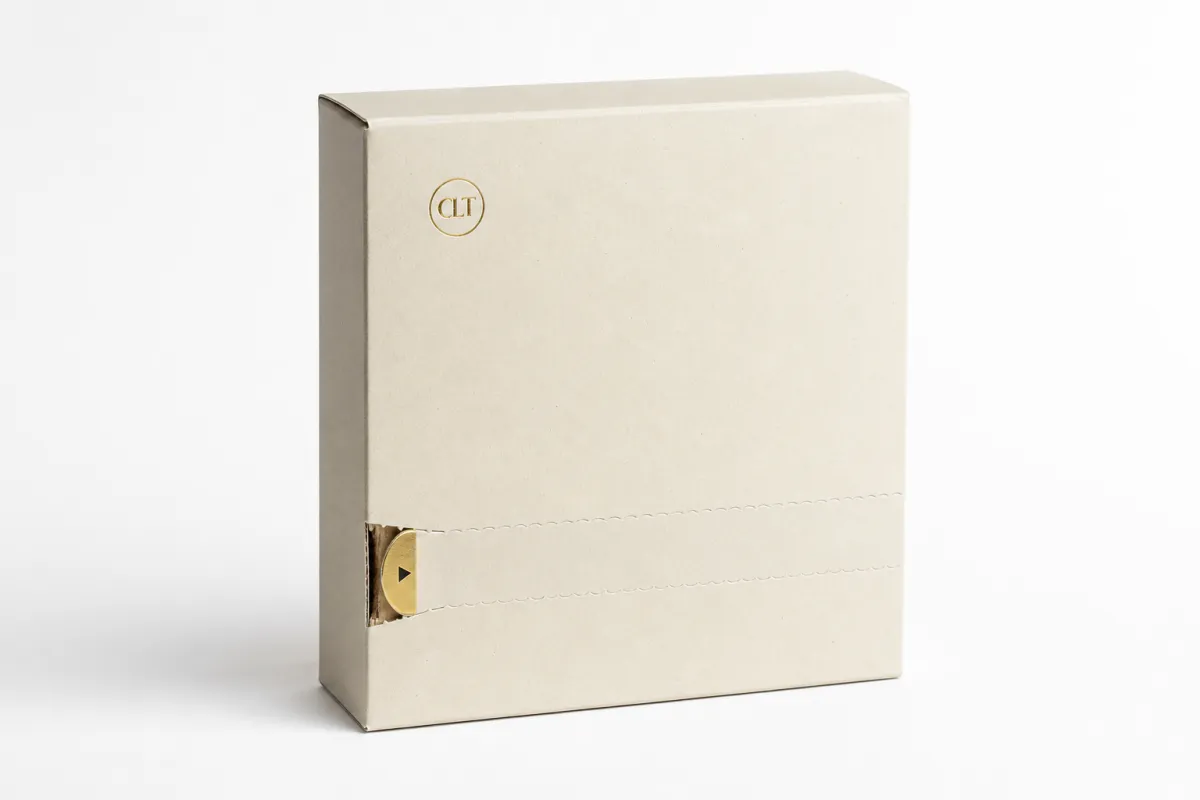
Openability sounds like a minor feature until a warehouse team handles 600 cartons before lunch. It also sounds minor until a customer opens a premium product and the box tears crookedly across the logo. The opening step decides whether a package feels efficient, careful, or sloppy. Custom perforated tear strip boxes turn that first step into a controlled action instead of an improvised one.
The mechanics are simple to describe. The carton includes a perforated line or tear strip that establishes a weak point on purpose. The user starts at a tab, notch, or starter cut, then pulls along a guided path. The perforation breaks in sequence, and the panel opens where the designer intended. That sounds ordinary. The effect is not. A package that opens with one steady motion removes the guesswork that usually slows down standard cartons.
Knife use is still common in warehouses, and EHS teams keep flagging the same problem: blades are efficient until they are not. A small cut can trigger claims, lost time, or rework. A cleaner opening path lowers the odds of that happening. Custom perforated tear strip boxes cannot eliminate every risk, but they can remove one of the most common sources of it. That is a decent trade if the carton still ships well.
Presentation matters too. A box that opens in a straight, intentional line preserves the printed face better than a carton ripped open at the side seam. That matters for branded packaging, retail packaging, and product packaging that carries instructions or compliance copy. If the opening line destroys the graphics, the box loses some of its value the moment it is touched. Custom perforated tear strip boxes protect more than contents; they protect the way the package is perceived.
There is a useful comparison here. Standard taped cartons are cheap and familiar, but they ask the user to solve the opening problem every time. Custom perforated tear strip boxes solve it in advance. That difference is small in a sample room and large in a real fulfillment workflow. A box that opens in one pull can shave seconds per carton. Multiply that by thousands of units, and the math starts to matter.
Not every opening feature needs to be dramatic. The best custom perforated tear strip boxes usually disappear into the experience. The user sees the tab, pulls once, and the panel opens cleanly. No fight. No torn liner. No jagged edge hanging off the flap. That kind of predictability often tells you more about packaging quality than the print finish does.
A carton only feels premium when the opening path is as considered as the printing.
One more reason buyers keep returning to this format: it works for more than one audience. The end customer gets a cleaner reveal. The warehouse worker gets faster access. The reverse-logistics team gets an easier inspection. Custom perforated tear strip boxes fit all three without asking each group to learn a different handling method.
That is why openability should be measured like a performance metric, not a design preference. The better the opening path, the less time spent improvising. The less improvisation, the fewer damaged cartons and frustrated users. Custom perforated tear strip boxes make that improvement visible in the first second.
How Custom Perforated Tear Strip Boxes Work
The engineering behind custom perforated tear strip boxes is easy to underestimate because the mechanism looks modest. A perforation is a row of small cuts that weakens the board along a planned route. The carton stays strong enough for shipping, stacking, and handling, then yields when the user applies a directed pull. That controlled break is the difference between a package that opens cleanly and one that tears wherever the paperboard decides to give up.
Most designs begin with a starter tab, thumb notch, or pull point. The user grips that edge and follows the tear line. The bridges between the cuts break in sequence, and the strip separates the panel. Cut length, bridge spacing, and strip width have to work together. If the spacing is too tight, the tear becomes difficult and may split unevenly. If the cuts are too aggressive, the carton may open too early in transit. Custom perforated tear strip boxes live inside that narrow middle zone where control and strength both matter.
Compared with a standard RSC sealed with tape, the difference in handling is immediate. A taped box often requires a blade, two hands, and a bit of patience. A well-designed tear-strip carton often opens with one pull and a clean edge. That difference may not sound large until it is repeated hundreds of times per shift. Then the time savings, safety benefit, and reduced cleanup become visible.
Placement changes the experience more than many buyers expect. A top-panel strip opens like a lid. A side-panel strip opens more like a sleeve. Dual-direction openings can help on larger cartons or kits with nested components. Some designs use the opening line to create a flap that becomes part of the display surface after opening, which works well for retail packaging and sampling programs. Custom perforated tear strip boxes can be practical and presentable at the same time, but only if the layout is planned from the beginning.
The structure must still survive the trip. That is the tradeoff. A carton that opens effortlessly at the desk but splits in a truck is not a success. Board grade, flute profile, liner quality, and carton geometry all influence whether the box can hold together until the moment it is supposed to open. Custom perforated tear strip boxes need enough structural reserve to tolerate compression, vibration, humidity swings, and the contents pushing outward from inside.
The contents themselves can change the opening behavior. Heavy items create more internal pressure. Sharp corners can press against the tear path. Rigid inserts can create stress points. A light cosmetic kit and a dense hardware assortment do not place the same demands on the board. That is why custom perforated tear strip boxes should be designed around the product, not just around the outer dimensions.
Prototype testing is not optional here. A tear strip that behaves well on a design file may behave differently once it is packed, dropped, stacked, and shipped. Coatings, ink coverage, temperature, and humidity can change how the board tears. A sample that looks good and opens well in a clean room can still fail after transit simulation. Custom perforated tear strip boxes deserve handling tests, not just visual approval.
Most serious buyers build the design in layers: dieline first, tear path second, sample third, then a round of adjustment if needed. That sequence saves time later because it catches a weak strip before the full run is produced. It also gives the team a chance to compare opening feel across multiple users, which matters more than many people realize. A strip that works for one experienced tester may feel stubborn to a warehouse associate wearing gloves.
If you are comparing structures, review the broader Custom Packaging Products catalog before locking in the opening style. Sometimes the best result is a tear-strip carton. Sometimes another structure gives the product better support. The right answer usually appears once you look at the whole packaging system instead of the outer shell alone.
Key Factors That Affect Box Performance
Board selection is the first place to look. Corrugated grade, caliper, liner quality, and flute profile all affect how custom perforated tear strip boxes behave. A lighter board opens more easily, but it can weaken faster under stacking load. A heavier board protects better, but the tear line has to work harder to break cleanly. That tradeoff is ordinary in packaging and decisive here.
Perforation design is the real hinge point. Cut length, bridge spacing, notch style, and tear-strip width decide whether the user gets a smooth pull or a ragged failure. Too much cutting and the carton may split too early. Too little, and the user must yank harder than intended. The best settings usually come from sample adjustments, not theory alone. Custom perforated tear strip boxes are often won or lost in that tuning stage.
Product weight deserves its own conversation. A lightweight accessory box does not strain the tear line the same way a dense electronics kit or stack of books does. Internal pressure changes how the board flexes. Void fill can help, but sloppy packing can create uneven force that works against the strip. For custom perforated tear strip boxes, the product should be part of the spec from the first draft.
Environmental conditions are the sort of detail that can ruin a good design quietly. Humidity softens board. Cold storage can make some cartons feel brittle. Long transit time adds edge wear and compression. A box that tests well in a dry sample room may behave differently after a week in a route with temperature swings. That is why custom perforated tear strip boxes should be evaluated in conditions that resemble the actual shipping lane.
Printing and finishing change the story more than buyers expect. Heavy ink, soft-touch coatings, varnish, and metallic effects all alter how the board behaves near the opening line. If the perforation runs through a coated area, the tear may feel slightly different. If the artwork sits too close to the strip, the opened box can look messy even when it performs correctly. Packaging design needs to protect both mechanics and appearance.
Material sourcing can matter for procurement teams with sustainability targets. Recycled-content board, certification paperwork, and chain-of-custody claims often sit alongside the structural spec. If your program requires documentation, ask the supplier to explain the material trail in plain language. Suppliers that work regularly with FSC-certified materials should be able to discuss the claim without hesitation.
Distribution testing is another signal worth checking. Ask whether the carton has been evaluated against ISTA testing standards or similar route tests. That does not guarantee success, but it shows the carton was considered for drop, compression, and vibration, not just for graphics. ASTM D4169 is another useful reference if your internal team needs a common benchmark for packaging performance.
One practical trap keeps showing up in audits: the opening line runs straight through a barcode, regulatory block, or compliance note. The box may look fine on the dieline and become a problem as soon as it is opened. A cut through a scan code can create a processing issue that did not exist before the carton was torn. Custom perforated tear strip boxes need enough white space around the opening zone to avoid that kind of self-inflicted failure.
The basic rule is simple. A good box is not just one that looks sharp. It is one that opens cleanly, survives shipping, and preserves the information printed on it. Custom perforated tear strip boxes earn their value only when all three hold together.
The more complex the contents, the more useful the tear-strip layout becomes. High-value products, mixed-SKU kits, and heavy items all increase the stakes. Custom perforated tear strip boxes should be designed with route, product, and opening user in mind. Change any one of those variables and the design may need to change too.
Production Process, Timeline, and Lead Time
The production path for custom perforated tear strip boxes starts with a brief, and the quality of that brief shapes everything that follows. A supplier needs dimensions, product weight, board preference, print coverage, opening direction, and any tamper-evidence requirement. Leave those out and the first sample can miss the mark. Include them and the process gets faster almost immediately.
After the brief comes the dieline. That is where the structure, perforation path, and print panels are mapped. For custom perforated tear strip boxes, the opening line is not a decorative extra added at the end. It is part of the architecture. A good dieline shows where the strip begins, where it ends, and how the tear affects neighboring panels. The better the drawing, the fewer surprises later.
Sampling usually sits at the center of the schedule. A simple structure with standard board may move from proof to sample in 3-7 business days. A more intricate layout can take longer. If the first sample needs refinement, budget another round. That is normal, and in many cases it saves money by revealing a weak tear path before the full run is in motion. Custom perforated tear strip boxes respond well to iteration because the opening feel is hard to judge from paper alone.
Lead time expands when new tooling, unusual board stock, or tight registration enters the picture. Complex tear paths, multiple opening zones, and premium finishes can add days or weeks. Straightforward production may land around 12-18 business days after final approval. More demanding work often stretches into the 18-25 business day range. Freight timing is separate, and it should be discussed early rather than treated as an afterthought.
There are ways to compress the schedule without lowering the quality bar. Send exact product dimensions rather than estimates. Provide the target ship method and pallet count. Share print-ready files. State whether the strip should open from the top, side, or front. Every missing detail creates a round of clarification, and clarification is what usually drags timelines out on custom perforated tear strip boxes.
Defining the test standard before sampling also helps. If the carton must be opened with gloves, say so. If the box needs to survive a compression threshold after being packed with a specific load, say that too. If the product has a fragile insert or a label that must stay readable after opening, include it in the brief. Suppliers can only design against the criteria they know.
Multiple SKUs introduce another layer. Ask whether the tear pattern can be standardized across sizes. Standardization can reduce line complexity, simplify reorder planning, and make future changes less painful. It also helps teams keep the opening experience consistent across a product family. Custom perforated tear strip boxes benefit when the spec is designed for the line, not just for one carton.
Quality control should be more than a visual check. The review should include tear consistency, carton strength, print registration, and how the box behaves after packing and transport simulation. If the carton is meant for branded packaging, the reveal should still look intentional after the first opening. A torn logo or shredded panel can undo the value of a well-printed box in a second.
If the structure still feels undecided, browsing Custom Packaging Products can help compare alternate carton styles before committing to a full spec. That is especially useful when a team is torn between a presentation-style reveal and a more utilitarian shipping format.
A useful habit is to treat custom perforated tear strip boxes like a small engineering project. Define the function. Test the function. Approve the function. That sequence sounds basic, and it gets skipped often because the box looks simple. The opening path, board behavior, and shipping environment are interacting variables. Ignore one of them and the schedule usually pays for it.
Planning early reduces the worst delays. Planning late usually forces a compromise on board stock, finish, or test scope. With custom perforated tear strip boxes, the safest path is the one that includes a sample stage from the start.
Custom Perforated Tear Strip Boxes Pricing, MOQ, and Quote Drivers
Pricing for custom perforated tear strip boxes depends on more than board grade, though board grade matters a great deal. Print coverage, coating, die complexity, strip placement, and order volume all change the final number. A kraft carton with one simple opening path is not priced like a fully printed box with specialty finish and a more intricate tear route. Buyers who compare those as if they were the same usually end up with misleading quotes.
For a run of about 5,000 units, a simple configuration may land near $0.28-$0.85 per unit depending on board choice and print coverage. Heavier ink coverage, tighter tolerances, or premium finishing can move that into the $0.65-$1.40 range. Setup fees often sit around $150-$500, though tooling, plate needs, and prepress work can shift that number. These are not universal figures, but they are realistic enough to frame the conversation.
MOQ changes the unit price in a way that surprises first-time buyers. The lower the quantity, the more setup expense gets folded into each carton. That is why prototypes and short runs often look expensive on a per-unit basis. The supplier is not always charging more because the box is special. Sometimes the math is simply less forgiving at lower volume. Custom perforated tear strip boxes behave like most custom packaging products in that respect.
Sampling belongs in a separate cost bucket. A prototype may cost more per unit than the final run, but it can prevent a far larger mistake by exposing a weak tear path before production begins. That matters. Rework after a poor opening test almost always costs more than a sample that felt pricey upfront. For custom perforated tear strip boxes, prototype cost is really risk control.
There are hidden costs that often get missed in the first round of comparison. Freight can rise if the cartons are oversized. Revisions can add artwork charges and extra days. Warehousing can become more expensive if the new carton is larger than the previous format. Rush fees appear when the production window is compressed. A weak perforation can create rework that dwarfs the original quote. Those are the numbers that tend to move a project from acceptable to painful.
Below is a simple comparison that many teams use when weighing shipping and retail packaging options.
| Format | Typical Use | Approx. Unit Cost | Opening Experience | Best Fit |
|---|---|---|---|---|
| Standard taped carton | General shipping | $0.18-$0.55 | Requires blade or scissors | Low-touch freight and basic fulfillment |
| Basic perforated carton | Simple access panel | $0.25-$0.75 | Cleaner opening, less control over finish | Moderate-volume product packaging |
| Custom perforated tear strip boxes | Controlled opening and branded reveal | $0.28-$1.40 | Predictable pull-tab opening | E-commerce, kits, subscriptions, and premium branded packaging |
The table does not tell the entire story, but it shows why custom perforated tear strip boxes often win when opening control matters. The unit cost may be slightly higher than a basic carton. The reduction in damage, user frustration, and handling time can make that difference disappear quickly.
When requesting quotes, ask suppliers to separate unit cost, setup cost, and freight. That makes direct comparison possible. A blended number hides whether the price reflects the carton, the print process, or logistics. Custom perforated tear strip boxes deserve a more exact comparison because the design itself affects both manufacturing and handling.
Check whether the quote includes a sample using final board stock and the final perforation layout. A cheaper quote that omits meaningful testing may not be cheaper at all. The real comparison is landed cost plus risk, not box price alone. That distinction matters to buyers who have already had to pay for rework once.
Ask how reorders will be handled too. If artwork and die are already approved, repeat runs should be easier. If the tear path changes or the board changes, the supplier may need to re-quote. Good custom perforated tear strip boxes programs document the final spec tightly so the next order does not become a new project.
Price is not only about the carton. It is about the discipline behind the carton. When the spec is clear, custom perforated tear strip boxes become easier to quote, easier to reorder, and easier to scale.
Common Mistakes to Avoid With Tear Strip Designs
Over-perforating is the mistake that appears most often. Buyers assume more cuts will make the strip easier to open. Sometimes the opposite happens. Excessive weakening can cause the carton to split in stacking, compression, or vibration before it ever reaches the user. Custom perforated tear strip boxes need enough resistance to survive the trip, and restraint matters more than many people expect.
Under-perforating causes a different kind of failure. The user has to pull too hard, the panel feels stubborn, and the carton becomes frustrating. I have seen tear lines that looked elegant on a dieline and behaved like a welded seam in production. That gap between drawing and handling is exactly why custom perforated tear strip boxes need physical testing, not just approval on screen.
Routing the tear line through a barcode, legal note, or important brand panel is another common error. A carton should not destroy its own information when it is opened. If the strip cuts through a scan code, the carton may become difficult to process or impossible to reship. This mistake shows up most often when the design is driven too much by layout symmetry and not enough by handling reality.
Skipping real-world testing is another problem. A sample opened in a quiet room tells you something. A box opened with gloves, cold hands, hurried attention, or different operator skill tells you much more. Custom perforated tear strip boxes should be tested under the conditions they will actually see. Otherwise the first failure arrives after launch, which is the most expensive time to learn anything.
Different products need different tear resistance. A carton for a sample kit should not be engineered like a carton for dense hardware. A returnable package may need to survive a second opening or a more careful closure. One-size-fits-all thinking makes the strip too strong for some jobs and too weak for others. Custom perforated tear strip boxes work best when the product profile is part of the design brief.
Finish placement causes problems too. A coating or dense print area directly across the tear path can change the opening feel. Sometimes the effect is subtle. Sometimes it is enough to send the tear off course. A narrow clean zone around the strip protects both mechanics and appearance. That small design choice often prevents a large production headache.
Sampling with the wrong load is another trap. A box tested with a light dummy product may pass, then fail once the real contents are added. Custom perforated tear strip boxes respond to internal pressure, so the sample should reflect the actual shipment weight. If it does not, the test tells a comforting story that may not be true.
Communication matters more than many teams think. If the opening tab is hidden, hard to spot, or visually confused with another seam, the box may feel broken even when it is not. A tiny cue can prevent a lot of frustration. Good packaging design often depends on making the pull point obvious without making the graphics noisy.
The mistakes are usually ordinary rather than exotic: too many cuts, too few cuts, bad placement, weak testing, and assumptions about how people actually open cartons. Custom perforated tear strip boxes reward careful planning and punish shortcuts. The difference shows up fast.
Expert Tips and Next Steps for Custom Perforated Tear Strip Boxes
Start by testing the design with the people who will actually open it. That means warehouse staff, fulfillment teams, internal logistics, customer service samples, or end users if the carton is consumer-facing. A packaging team can approve a sample that still slows down the floor. Custom perforated tear strip boxes only succeed when they work for the operator, not just the spec sheet.
Ask for a sample made with the final board stock and final perforation pattern. Substitute materials can hide real behavior. If the supplier can only provide a close match, treat the result as directional rather than final. Custom perforated tear strip boxes change their tear feel when the board changes, and that change is often larger than expected.
Build a short specification sheet before requesting quotes. Include product weight, target open method, tear direction, print zones, and any tamper-evidence requirement. If the carton needs to support branded packaging or premium retail packaging, note that too. A complete brief saves time and reduces revision cycles.
Compare suppliers on more than price. Sample quality, response time, production consistency, and the ability to explain tradeoffs all matter. The cheapest quote is not always the best option if the tear path is unreliable or the supplier cannot explain how the carton will behave in transit. Custom perforated tear strip boxes are function-first products, so the vendor conversation should stay function-first as well.
Here is a useful checklist for the final review:
- Confirm the strip opens with one steady pull.
- Check that the tear stays on the intended line.
- Inspect the graphics around the opening path.
- Test with the actual product weight inside.
- Review stacking, vibration, and drop performance.
- Ask whether reorder pricing is locked to the same spec.
If you want the decision to move faster, keep the pilot simple. Approve the structure, test the opening, review the print, then place a small run before committing to the full quantity. That sequence lowers risk without dragging the project. For most teams, it is the cleanest way to learn whether custom perforated tear strip boxes are a fit for the lane.
The best results come from treating the opening strip as part of the product experience rather than an add-on. Once that mindset is in place, custom perforated tear strip boxes can reduce damage, improve speed, and make the package feel more intentional from first pull to final reveal.
The bigger takeaway is even simpler: custom perforated tear strip boxes are not just a carton style. They are a controlled opening system, a branding surface, and a process tool all at once. If a workflow depends on fast, clean access, custom perforated tear strip boxes deserve the extra planning, the sample test, and the quote comparison.
So the practical next step is not to pick a fancy finish or chase the lowest quote. It is to lock the product weight, opening direction, and test method before anything else. That one move will tell you whether the design is gonna work in the warehouse, not just on the mockup.
What are custom perforated tear strip boxes used for?
They are used to make cartons easier and faster to open without a knife or scissors. In practice, custom perforated tear strip boxes reduce damage risk in warehouses, fulfillment centers, and customer unboxing. They are common for e-commerce shipments, parts kits, subscription boxes, and returns.
How do custom perforated tear strip boxes open cleanly?
A starter tab or notch begins the tear at a controlled point. The perforation pattern is designed so the strip rips along the intended line instead of wandering. The board grade and bridge spacing must be matched so the tear is smooth but the box still ships safely.
What affects the price of custom perforated tear strip boxes?
The biggest drivers are board stock, print coverage, coating, die complexity, and strip design. MOQ changes the unit cost because setup expense is spread across the order size. Freight, sampling, and rush timing can also change the final landed cost.
What is the typical lead time for custom perforated tear strip boxes?
Lead time depends on artwork approval, dieline work, sampling, material availability, and the production queue. Simple runs can move quickly, while complex tear paths or specialty finishes add time. Providing full specs early is the best way to reduce turnaround delays.
How do I test custom perforated tear strip boxes before ordering?
Ask for a sample with the final board and perforation layout. Test it with real handlers, real contents, and real shipping conditions. Check for clean opening, carton strength, graphic damage, and consistency across multiple samples.

