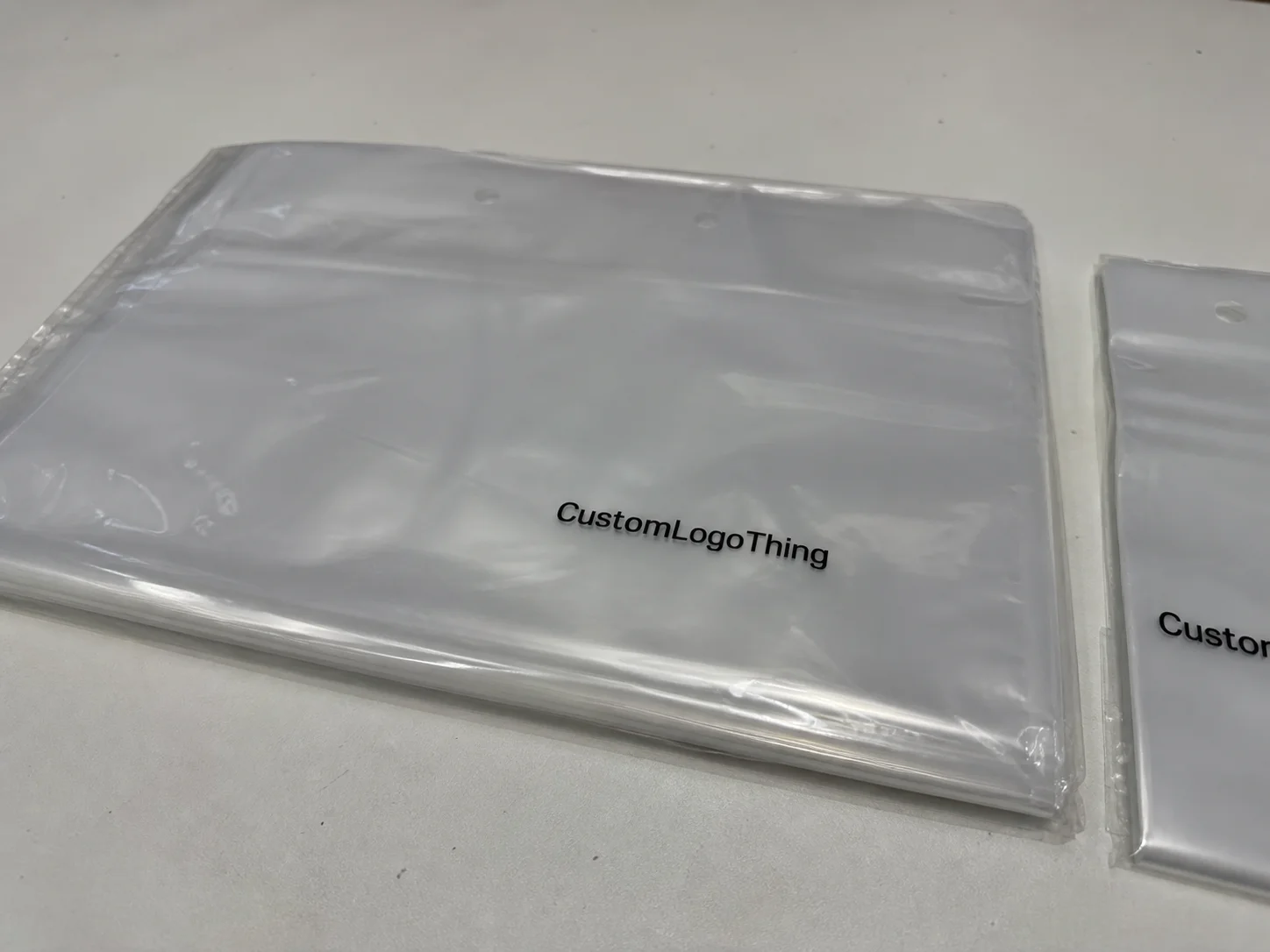
A printed bag shapes how customers judge the product and the business behind it. Unlike many packaging components, it stays visible after checkout in parking lots, offices, elevators, and homes. That makes Custom Plastic Bag printing more than a branding detail. It affects presentation, carrying performance, required warnings, and how often your logo is seen.
It also exposes problems quickly. Weak seals, unclear print, poor ink adhesion, wrong sizing, or low film strength become obvious in normal use. For most buyers, the real question is not whether to print a bag, but how to Choose the Right material, thickness, handle, print method, and order size without overspending.
Custom printed plastic bags are bags made to a defined specification rather than bought as blank stock. That specification can include dimensions, film type, gauge, handle style, artwork, warning text, recycle language, barcode space, or features such as vent holes and tamper elements. Common uses include retail carryout, pharmacy bags, takeout, trade show kits, mailers, and insert pouches tied to broader product packaging programs.
Why custom plastic bag printing changes how customers judge your product

A plain bag usually signals a basic transaction. A clean, well-sized printed bag suggests control and intention. That difference matters in boutiques, pharmacies, events, food service, and routine retail because the bag is often the most visible part of the package system after purchase.
Customers may not describe bag quality in technical terms, but they notice the outcome. Clear print and dependable seals feel more professional. A bag that stretches too easily, looks cloudy, or has sloppy registration can lower perceived product value even if the item itself is fine. Poor execution damages package branding faster than a plain bag does.
There is also a simple cost argument. A custom bag may add only a few cents per unit over an unprinted version, yet it can generate repeated impressions after checkout. That only works if graphics, strength, compliance, and sizing are treated as one specification instead of separate decisions.
How custom plastic bag printing works: materials, print methods, and bag styles
The first decision is usually material. Material affects strength, feel, print quality, and cost, so it sets the range for the rest of the spec.
Common materials
HDPE has the crisp feel most buyers associate with grocery and carryout bags. It carries weight efficiently and often works at lower thicknesses than softer films. Typical gauges are around 0.5 mil to 1.25 mil depending on use and local rules.
LDPE is softer and more flexible. It is common for die-cut and patch-handle retail bags because it presents graphics well and offers a more polished hand feel. Typical thickness is often 1.5 mil to 4 mil, depending on size, handle construction, and load.
PP variants are used in more specialized formats where clarity or surface finish matters. They are less common for everyday carryout but can fit niche branded packaging applications.
Bag constructions
- Die-cut handle bags: common for boutiques, events, and light retail
- Patch handle bags: reinforced handles for heavier loads and a more premium look
- T-shirt bags: efficient and economical for grocery, convenience, and takeout
- Drawstring bags: useful for promotions or kits
- Wicketed bags: supplied on wickets for fast packing line use
- Zip-top bags: practical for accessories and repeated opening
- Mailer-style poly bags: common in e-commerce fulfillment
Printing methods
Flexographic printing is the standard for most volume orders. It handles large runs efficiently and suits simple logos through multi-color jobs, depending on the press setup. Screen printing still appears in some simpler applications. Digital printing can work for prototypes or shorter runs when available.
Artwork complexity changes cost fast. A one-color logo on white HDPE is usually economical and clean. Multi-color retail graphics can create stronger shelf and carryout impact, but setup cost, ink coverage, and registration demands all increase. Spot colors generally give better brand matching than process builds, especially when Pantone accuracy matters.
Artwork quality matters as much as the press method. Vector files such as AI, EPS, or print-ready PDF are usually the safest choice. Low-resolution screenshots and web images cause delays and limit print quality before production begins. That same rule applies across packaging design work, not just bags.
Material and style should follow actual use. A boutique may choose an LDPE patch-handle bag for presentation. A takeout operator may prioritize strength, stiffness, and grease resistance. Both need printed bags, but they are solving different problems.
Specs that matter most before you request a quote
Suppliers can only quote accurately when the specification is complete. Vague requests often lead to misleading pricing, revisions, or a bag that is not fit for use.
The core quoting details are:
- Width, gusset, and height
- Material type such as HDPE or LDPE
- Thickness in mil or micron
- Handle style
- Print area and whether printing is one side or two
- Color count and Pantone references if needed
- Estimated quantity
- End use and approximate load weight
Load weight should drive thickness, but buyers often overbuild or underbuild. A heavier gauge adds resin cost quickly and may not add value for a light retail purchase. The opposite mistake can lead to punctures, stretched handles, or split seals. Testing with the actual filled product is more reliable than guessing.
Print planning also matters. Printing both sides improves visibility. Step-and-repeat layouts often hide minor registration variation better than one isolated logo. Full-coverage graphics can look strong, but they raise cost and tighten production tolerances.
Do not ignore practical details such as gloss or matte finish, vent holes, suffocation warnings, recycle messaging, barcodes, lot coding, and tamper-related features where needed. For general environmental guidance, the EPA is a useful reference, but local bag rules usually matter more than federal guidance.
Regional regulations should be checked before ordering. Some markets restrict specific bag styles, checkout uses, or thickness ranges. A bag can be technically well made and still be the wrong commercial choice if it does not fit local requirements.
Custom bag pricing: what drives cost, MOQ, and unit cost
The main cost drivers in Custom Plastic Bag printing are resin type, dimensions, thickness, handle construction, print colors, ink coverage, order size, and freight. A simple one-color T-shirt bag is much less complex to produce than a reinforced patch-handle retail bag with broad print coverage.
MOQ, or minimum order quantity, is usually driven by setup efficiency. Plates must be made, presses prepared, and film run in commercially practical volumes. That is why many custom orders start around 5,000, 10,000, or more depending on style and supplier.
These are broad market-style ranges, not fixed quotes, but they show how pricing typically moves.
| Bag Type | Typical Specs | Approx. MOQ | Indicative Unit Cost | Main Cost Drivers |
|---|---|---|---|---|
| HDPE T-shirt bag | 1 color, standard size, 0.6-0.9 mil | 10,000-25,000 | $0.03-$0.08 | Volume, resin, freight |
| LDPE die-cut handle bag | 1-2 colors, 1.75-2.5 mil | 5,000-10,000 | $0.12-$0.28 | Thickness, print area, dimensions |
| LDPE patch-handle retail bag | 2-4 colors, 2.0-3.0 mil | 5,000-10,000 | $0.18-$0.45 | Reinforcement, color count, finish |
| Mailer-style poly bag | 1-4 colors, adhesive strip | 5,000-20,000 | $0.09-$0.30 | Film structure, closure, print coverage |
Higher volume usually lowers unit cost, but the cheapest piece price is not always the best buy. If a larger order creates storage pressure, ties up cash, or risks obsolete artwork, the savings may disappear.
Ask what is included in the quote. Common extras include artwork cleanup, plate charges, sampling, freight, rush fees, and revisions after approval. Compare landed cost, not just the first unit price. It also helps to review tolerances, count variance, defect policy, and whether the supplier has the right converting capability. A broader Manufacturing Capabilities check is useful here, just as it is for other printed packaging.
Production steps and lead time: from artwork approval to delivery
Most orders follow a standard path:
- Inquiry and use-case review
- Specification confirmation
- Quotation
- Artwork review
- Proof approval
- Plate or setup preparation
- Production scheduling
- Printing
- Conversion and sealing
- Packing and shipping
Straightforward domestic work often runs about 12 to 15 business days after proof approval. Complex jobs or imported orders may take several weeks or longer. Factory capacity, resin availability, print complexity, and transit method all affect the schedule.
Most delays come from ordinary issues: incomplete specs, screenshots instead of production files, missing Pantone references, slow internal proof approvals, and artwork changes after setup has started.
Keep sample review, proof approval, and final production separate in your mind. A physical sample may confirm size and feel without final graphics. A digital proof confirms layout but not exact press behavior. A preproduction proof can reduce risk, but normal manufacturing tolerances still apply.
For store launches, events, or promotions, build in buffer time and work backward from the date the bags must arrive at your facility. If other packaging components are involved, schedule them together. Teams often manage Custom Packaging Products separately and discover too late that bags and cartons are arriving on different timelines.
How do you choose the right custom plastic bag printing specification?
Start with the actual use case, not the artwork. The right specification should carry the product safely, fit the packing routine, and support the brand image without adding unnecessary cost.
A practical order is: use case, bag format, material, thickness, print plan, then quantity. Test the actual filled product first. Lightweight apparel can often use thinner film and a presentation-focused retail format. Mixed takeout orders, boxed goods with corners, or items exposed to moisture usually need more puncture resistance or stronger handle construction.
Then consider viewing distance and brand expectations. If the logo needs to read from across a counter, contrast and print area matter more than intricate detail. If the bag supports a premium purchase, reinforced handles or surface finish may matter more than adding extra colors.
Finally, match the spec to your reorder rhythm. The best bag is not just the one that looks right in a mockup. It is the one that stores efficiently, reorders predictably, and holds print consistency over repeat runs.
Common mistakes buyers make with printed plastic bags
The most common mistake is choosing by appearance alone. A bag can look good in a rendering and still fail under carrying weight, moisture, or sharp product corners.
Thickness mistakes are next. Some buyers overspend on resin by defaulting to a heavier gauge. Others cut too far and end up with punctures, handle stretch, or split seals. Product testing is the only reliable way to settle that tradeoff.
Artwork quality still causes avoidable delays. Suppliers regularly receive logos pulled from websites or social media. Crisp print starts with vector artwork and Pantone references where color accuracy matters.
Proofing gets rushed too often. Check not just the logo, but warning text, barcode readability, final dimensions, contrast, and double-sided alignment. A proof is the cheapest place to catch errors.
The lowest quote can also mislead if freight, compliance markings, defect policy, or count tolerance are not comparable. Regulatory oversight is another risk. Some regions restrict bag styles, thicknesses, recycled content claims, or checkout use. For broader industry context, buyers sometimes reference the Association for Packaging and Processing Technologies, and ISTA can be useful when bagged products move through larger distribution systems.
Late reordering rounds out the list. Rush fees can erase early savings quickly.
Next steps before you order: test, compare, and lock the right specification
Before requesting final quotes, confirm a short checklist:
- Product type and average load weight
- Expected monthly or quarterly usage
- Dimensions and fit range
- Material preference
- Thickness target
- Handle type
- Color count and print sides
- Warnings, barcode, or recycling language
- Deadline and delivery location
Ask for comparable samples if you are changing material, thickness, or handle style. It also helps to approve a one-page spec sheet internally so sales, operations, and marketing are aligned before production starts.
Compare two or three order scenarios rather than one. One option may have a lower MOQ and higher unit cost. Another may balance storage and spend better. The best answer depends on usage rate, cash flow, available space, and reorder timing.
For reorders, set buffer stock based on actual consumption and realistic lead time rather than waiting until inventory is nearly gone. The practical next step is simple: confirm size with a filled product test, prepare clean artwork, request sample-backed quotes, and place the order only after the specification is locked.
FAQ
How much does custom plastic bag printing usually cost per unit?
Unit cost depends mostly on size, thickness, material, print colors, and quantity. Simple one-color, high-volume bags can fall into the low single-digit cent range, while multi-color retail handle bags often run from about $0.18 to $0.45 each or more depending on the specification. Compare landed cost rather than unit price alone, especially if setup, plates, freight, or samples are billed separately.
What is the typical lead time for printed plastic bags?
Lead time depends on artwork readiness, order size, print complexity, and current production capacity. A straightforward order may move in roughly 12 to 15 business days after proof approval, while more involved or imported work can take several weeks. Proof delays are one of the biggest schedule problems, so milestone dates for proofing, production, and ship-out are worth requesting.
What file format is best for custom printed plastic bags?
Vector artwork such as AI, EPS, or print-ready PDF is usually preferred because it keeps logos sharp and scales cleanly. If color accuracy matters, include Pantone references. Low-resolution screenshots, social media images, and compressed web graphics are poor choices for production.
What MOQ should I expect for custom plastic bag printing orders?
MOQ usually reflects setup efficiency, plate creation, and converting requirements. Many custom jobs begin around 5,000 to 10,000 pieces, though some simpler or larger-scale formats may start higher. If volume is uncertain, ask whether a standard size, fewer print colors, or a simpler construction can reduce the minimum.
How do I choose the right material for custom plastic bag printing?
Match the material to the actual use case. HDPE is often chosen for strength and economy in carryout applications, while LDPE offers a softer feel and is common for retail presentation bags. Product weight, puncture risk, moisture exposure, and carrying distance should all be considered, and sample testing with the real product is the safest way to confirm the choice.