Ordering Custom Plastic Bags no minimum order makes sense when the packaging need is real, but the volume is still uncertain. A new shop may only need enough bags for the first few weeks. A seasonal promotion may run for a short window. A pilot product line may still be changing. In each case, a small run keeps the packaging aligned with the business instead of forcing the business to absorb a warehouse of unused stock.
That is the practical appeal. A smaller order gives you room to test artwork, size, and material feel before you commit to a larger print run. If the logo sits too close to a handle cutout, if the film feels lighter than expected, or if the bag does not carry the product cleanly, you can correct it early. With packaging, those details matter because the bag is doing two jobs at once: protecting the product and presenting the brand.
For many buyers, the best reason to start small is cash flow. Packaging is part of the cost of doing business, but it should not tie up money that needs to support inventory, staffing, or the product itself. A modest quantity makes it easier to compare print quality, gauge, and handle strength before scaling. It also keeps the buying decision grounded in real usage rather than estimates on a spreadsheet.
Custom Plastic Bags are especially useful when the bag is part of the customer experience. Retail packaging, event handouts, and product presentation all benefit from a clean print surface and a format that matches the load. If you are comparing broader packaging options, the Custom Packaging Products page is a useful starting point, and the general FAQ can help narrow material and ordering questions.
Why Small Orders Make Sense for Testing Designs and Launches
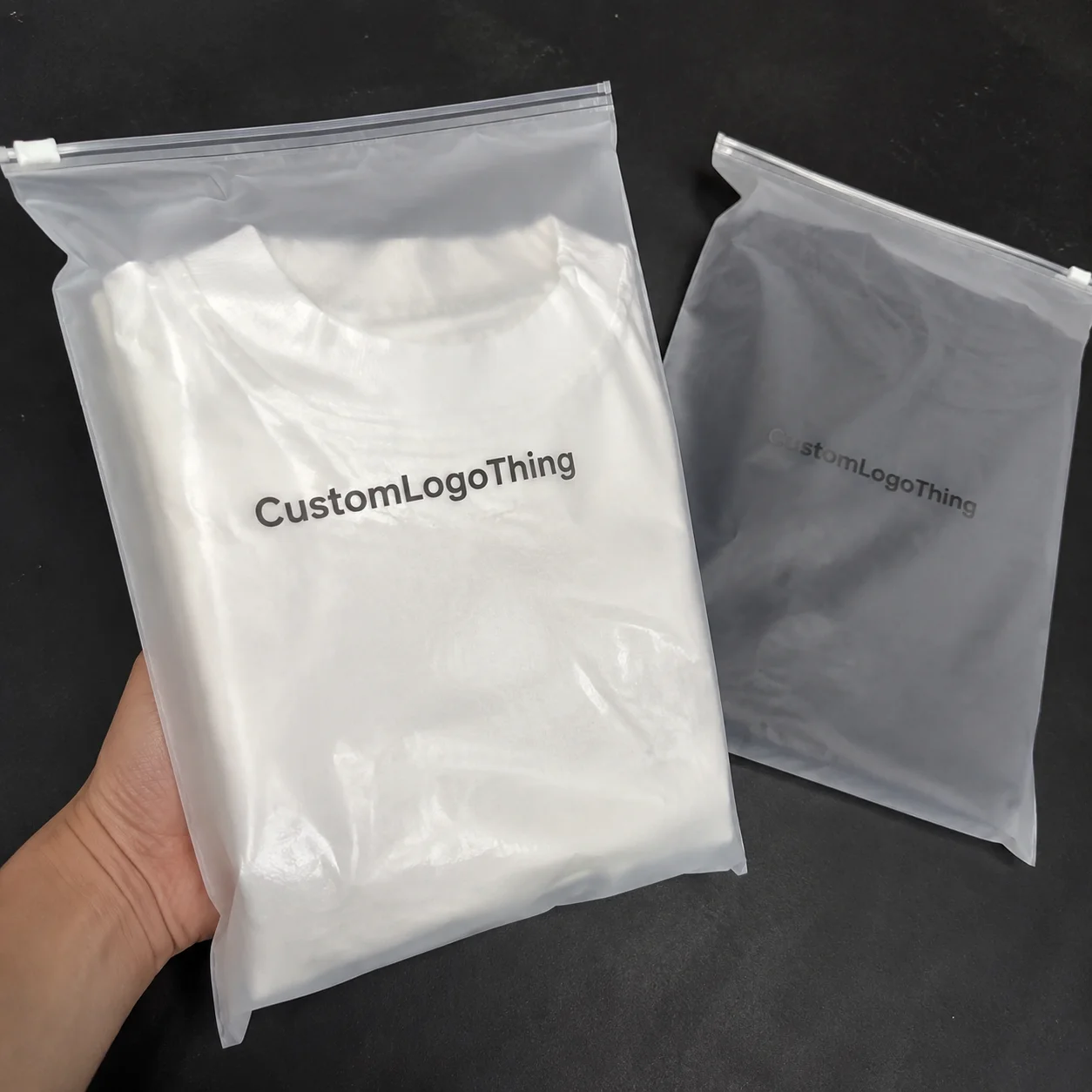
Small orders are often the most sensible starting point when a bag is tied to a launch, a short promotion, or a product line that may still evolve. A retailer opening a new location might only need a few hundred bags to cover initial sales. A pop-up event may need branded carry bags for a weekend, not a year’s supply. That is exactly the kind of situation where custom plastic bags no minimum order are useful.
The biggest advantage is risk control. If artwork is still being refined, it is much easier to test a modest quantity than to commit to thousands of bags with a logo that needs revision. The same applies to size selection. A bag that works for folded apparel may not work for boxed accessories, and a small run gives you real feedback on fit, load comfort, and presentation.
There is also a supply-chain benefit that is easy to overlook. Packaging that sits around too long becomes dead inventory. It ties up shelf space and budget, and it often gets used simply because it was ordered, not because it was the right choice. A smaller run keeps the packaging closer to actual demand, which is useful when sales are seasonal or product lines change quickly.
In practice, buyers usually turn to no-minimum ordering for three reasons: they are launching something new, they need packaging for a short campaign, or they want to test a design before scaling up. That pattern is common because it reduces the penalty for getting one detail wrong.
“A small bag run is often the cleanest way to confirm the print, the feel, and the load capacity before you buy in volume.”
That approach also helps packaging teams compare formats without overcommitting. A bag can be a lower-risk trial before moving into custom printed boxes or a more elaborate package branding program. If the bag performs well, the next order becomes easier to justify. If it does not, the correction is manageable.
Bag Types, Materials, and Print Options That Fit Low-Quantity Orders
Not every bag style is equally friendly to short runs. The most practical options are usually the formats with familiar construction and straightforward print setups. Common choices include T-shirt bags, die-cut handle bags, patch handle bags, and flat poly bags. Each serves a different purpose, and each affects cost, appearance, and handling.
T-shirt bags are a workhorse for carry-out use, especially in retail and food-adjacent settings where speed matters. Die-cut handle bags give a cleaner presentation and are often preferred for apparel, promotions, and events. Patch handle bags reinforce the handle area, which improves comfort and can make the bag feel more substantial. Flat poly bags are better suited to lightweight products, inserts, or internal packaging than to carry-out use.
Material selection matters as much as bag style. LDPE is softer and more flexible, with a smoother hand feel and a slightly more premium drape. HDPE is crisper, lighter, and often more economical for simple carry applications. A thicker film can improve strength and reduce stretch, although it may also change how the bag folds and how the print looks against the surface.
Print complexity should match the order size. On smaller runs, a one-color logo is often the cleanest and most cost-effective choice. Two-color artwork can work well, but each added color increases setup and proofing complexity. Full-coverage graphics are possible in some cases, but they usually make the order less efficient. For most buyers, the best low-quantity result is a simple, sharp logo placed where it reads clearly in hand.
| Bag Type | Best Use | Typical Strength | Cost Fit for Small Orders |
|---|---|---|---|
| T-shirt bag | Carry-out, retail, events | Good for light to medium loads | Usually the most economical |
| Die-cut handle bag | Apparel, giveaways, promotions | Moderate, depending on gauge | Strong value for branded packaging |
| Patch handle bag | Premium retail packaging | Higher handle comfort and support | Often higher, but cleaner presentation |
| Flat poly bag | Internal product packaging | Light-duty | Good when simple protection is enough |
For buyers comparing options, the most cost-effective short-run bag is often the one with the simplest structure, the fewest print colors, and a standard material spec. If the job is mainly about function, a standard LDPE or HDPE bag may be enough. If the job is about presentation, a slightly thicker film and a cleaner handle style can improve the result without forcing the project into unnecessary complexity.
Size, Gauge, Handle Style, and Artwork Specs to Lock In
Before requesting a quote, buyers should lock down the core specifications. The four that matter most are width, height, gusset, and gauge, followed by print area and handle style. If those details are vague, quotes tend to come back with assumptions, and assumptions slow the process down.
Gauge is one of the most misunderstood details. It is a practical measure of film thickness, and it has a direct effect on durability and the perceived quality of the bag. A lighter gauge may be fine for apparel, paperwork, or accessories. A heavier gauge is better for products with edges, weight, or sharper corners. More thickness often means a better feel, but not always a better price, so the right choice depends on what the bag actually carries.
Handle style changes both comfort and branding space. Die-cut handles create a simple, modern look and usually leave good room for graphics. T-shirt handles are familiar to retail staff and easy to dispense. Reinforced or patch handles support a more premium presentation, especially when the bag is part of the customer experience rather than just a container.
Artwork should be prepared with the print process in mind. Vector files are preferred because they scale cleanly and keep logo edges sharp. Ink limits matter too; a two-color logo with tiny type may look fine on a screen and still be inefficient on press. Safe margins are also important so the logo does not drift too close to a handle, seam, or cutout.
- Width and height: confirm the product size and any folding or display needs.
- Gusset: allow for product thickness and bag expansion.
- Gauge: match the load, handling style, and feel you want.
- Handle style: choose for comfort, strength, and presentation.
- Artwork format: supply vector files when possible, with clear color references.
If the bags are being used for regulated products, resale, or a specialized retail channel, ask about labeling or compliance requirements before printing. Depending on the product and destination market, the bag may need specific language, warnings, or recycling marks. For broader packaging and material guidance, industry resources from the ISTA and the EPA are useful references.
Pricing, Quote Factors, and MOQ Expectations
Pricing for custom plastic bags no minimum order depends on a handful of concrete variables, and the biggest ones are easy to identify once the specs are clear. Size, material thickness, print colors, bag style, and total quantity all affect the unit cost. Even when there is no hard minimum order requirement, larger quantities usually lower the per-bag price because setup costs are spread across more pieces.
Setup charges matter more in small orders than in large ones. A plate charge, screen fee, or press setup can be a modest line item on a bigger run and a significant part of a tiny run. That is why simplified artwork and standard sizes often produce better pricing. A clean one-color logo on a common bag size usually quotes more efficiently than a complex design on a custom dimension.
Buyers can help themselves by narrowing the brief before asking for numbers. A useful quote request should include dimensions, quantity estimate, print colors, intended use, and any finish requirements. If those details are missing, the supplier has to assume, revise, and reconfirm, which usually means slower response times and less accurate pricing.
Here is the practical way to think about it:
- Standard size + simple print: usually the lowest-cost path for small orders.
- Custom size + one color: moderate cost if the film spec stays common.
- Custom size + multiple colors: higher setup and tighter proof control.
- Premium handle + thicker gauge: better presentation, but higher unit cost.
For context, small-run pricing can land anywhere from a few tenths of a dollar per bag at higher short-run quantities to noticeably more at very low quantities, depending on setup and complexity. That range is normal. It is also why complete specs are more useful than rough estimates. If the numbers are clear, the buyer can compare options honestly and avoid surprises later.
For repeat packaging programs, our Wholesale Programs page can help once volume planning becomes more predictable. A first-time small-batch bag order should still be quoted as its own project so the economics stay visible.
Production Steps, Lead Time, and Proof Approval
The production path is straightforward, but each step affects timing. A normal workflow starts with the quote request, moves to artwork review, then proof approval, production, packing, and shipping. If any one of those steps stalls, the schedule moves with it. Proof approval is usually the most important checkpoint because it is the last chance to catch spelling, layout, size, or color issues before the press starts running.
Lead time varies with order complexity. Clean artwork and standard dimensions usually move faster. Revised art, custom colors, unusual bag sizes, or special film sourcing can extend the schedule. Raw material availability can also affect timing, especially when a job requires a specific film gauge or resin structure that is not already in inventory.
Rush requests are possible in some cases, but they depend on press schedule, order complexity, and shipping destination. A simple short-run order may move faster than a fully custom multi-color job, but there is no safe way to promise speed without checking the actual workload and materials. The best quote process pairs a realistic lead time with a complete specification.
A good buyer rule is simple: the faster the specs and artwork are approved, the faster the order can move. That sounds obvious, but in production it is often the difference between a clean schedule and an avoidable delay. If a team needs the bags for a launch date or event, prompt proof approval is one of the most effective ways to protect the timeline.
Well-run packaging programs treat the proof as a control document, not a formality. That habit saves money, and it keeps the final bag aligned with the packaging strategy instead of forcing the rest of the program to work around a mistake.
How Custom Logo Things Supports Small-Batch Bag Orders
Custom Logo Things is a practical fit for buyers who want clear answers on specs, pricing, and feasibility without a lot of back-and-forth. Small-batch buyers usually need two things more than anything else: accurate guidance and a supplier who understands how the details affect the finished bag. That includes material selection, print layout, handle strength, and how the package will actually be used once it leaves the press.
For smaller programs, responsiveness matters. A quick file check, a sensible recommendation on bag construction, and a realistic statement of what can be produced efficiently are all part of a good quoting process. That kind of support is especially useful when the order is tied to retail packaging, event use, or a product launch where the margin for error is limited.
Small orders still deserve the same attention as larger runs. The film has to hold up, the print has to be readable, and the bag has to match the brand image you are trying to build. Whether the order is for branded packaging, a launch kit, or a short promotion, the goal is the same: a finished bag that looks right, carries well, and arrives on schedule.
If you are comparing suppliers, pay attention to how they answer the practical questions. Do they ask for dimensions, quantity, artwork format, and intended use? Do they explain the tradeoff between gauge and cost? Do they tell you when a design choice will make the job more expensive than it needs to be? Honest answers matter more than hype, especially on custom plastic bags no minimum order where every detail affects the final number.
That is also why buyers often pair bag orders with broader packaging design work. A bag can be one part of a coordinated package branding effort that includes labels, inserts, or even custom printed boxes for product presentation. The supplier should understand that context and help the bag fit into the larger program instead of treating it as a one-off print file.
Next Steps to Order the Right Custom Bag Quantity
Before asking for a quote, gather the basics: bag dimensions, estimated quantity, artwork file, intended use, and any preference for handle style or material. That small amount of preparation makes the quote more accurate and shortens the back-and-forth. It also helps the supplier tell you whether a standard construction will work or whether the job needs a more specific film or print approach.
If the bag will be used for retail, promotions, or sampling, it is smart to compare two or three constructions. Sometimes a simpler bag performs just as well and leaves room in the budget for better print quality or a stronger gauge. If the product is heavy or has sharp edges, start with a pilot quantity so you can test load performance before scaling up.
Ask for a proof, a lead time estimate, and any setup charges up front. Those details keep the budget honest. They also help you compare options if you are deciding between a lighter retail bag, a stronger carry bag, or a more premium format that will be part of the customer experience.
If you are not sure which bag is best, start with the format that matches the product and the order volume, then refine from there. That is usually the safest route for new launches and short-run retail packaging. And if you need a fact-based quote for custom plastic bags no minimum order, send your specs, your artwork, and your target quantity so the response reflects the real job instead of a guess.
FAQs
Can I order custom plastic bags with no minimum order for a small retail launch?
Yes. Small launch orders are a common use case because they reduce inventory risk and let you confirm the fit, print, and handling before committing to larger quantities. To get a useful quote quickly, provide size, material, print details, and artwork. A proof is still recommended before production.
What affects the price of custom plastic bags no minimum order?
Size, gauge, bag style, print colors, and setup charges are the main drivers. Smaller quantities usually cost more per bag because fixed setup is spread across fewer units. Simpler artwork and standard specs usually bring the cost down.
How long does production usually take for no-minimum custom bag orders?
Lead time depends on proof approval, print complexity, and the current production schedule. Clean artwork and standard specifications typically move faster than custom sizes or multi-color jobs. Shipping time should be added after production is complete.
What artwork file is best for custom plastic bag printing?
Vector artwork is preferred because it scales cleanly and prints more consistently. Simple logos with clear shapes and limited colors usually produce the best results on plastic film. The proof will show placement and spacing before printing starts.
Are no-minimum orders good for testing bag size and durability?
Yes. They are useful for testing fit, handling comfort, and load performance before scaling up. Start with a smaller quantity if you are unsure about gauge or handle style, then use the results to refine the next order.