Buyer Fit Snapshot
| Best fit | Custom Poly Bags Affordable projects where brand print, material claims, artwork control, MOQ, and repeat-order consistency need to be specified before quoting. |
|---|---|
| Quote inputs | Share finished size, material target, print colors, finish, packing count, annual reorder estimate, ship-to region, and any compliance wording. |
| Proofing check | Approve dieline scale, logo placement, barcode or warning zones, color tolerance, closure strength, and carton packing before bulk production. |
| Main risk | Vague material claims, crowded artwork, missing packing details, or unclear freight terms can make a low unit price expensive after revisions. |
Fast answer: Custom Poly Bags Affordable: Pricing, Specs, MOQ should be specified like a repeatable production item. The safest quote records material, print method, finish, artwork proof, packing count, and reorder notes in one written spec.
Production checks before approval
Compare the actual filled-product size with the drawing, then confirm tolerance on folds, seals, hang holes, label areas, and retail display edges. Reserve space for logos, QR codes, warning copy, and material claims before decorative graphics fill the panel.
Quote comparison points
Review material grade, print process, finish, sampling route, tooling charges, carton quantity, and freight assumptions side by side. A quote is only useful when the supplier can repeat the same color, closure quality, and packing count on the next order.
“Custom Poly Bags affordable” sounds simple until the purchase order lands on my desk and the freight, setup, and scrap rate tell a very different story. I remember one buyer who proudly saved $0.01 per unit, then watched $240 disappear in avoidable oversizing on a 20,000-piece run. That sort of thing makes me a little twitchy, honestly. If you want custom poly bags affordable in the real sense, you have to buy the right spec, not just the lowest quote. In practical terms, that means comparing a 12 x 15 inch 1.5 mil LDPE bag against a 14 x 18 inch 2.0 mil version and asking which one actually fits the SKU, the carton, and the freight lane.
I’ve spent enough time on factory floors in Shenzhen, Dongguan, and Ningbo, on calls with converters in Illinois and Texas, and in packaging reviews with procurement teams to know exactly where the money vanishes. Most of the time it’s not the resin alone. It’s a bag that is 1 inch too wide, a print job with four colors when one spot color would do, or a minimum order that looked friendly until the last mile freight bill showed up and ruined everybody’s afternoon. I’ve seen those bills add $180 to a pallet move from Los Angeles to Dallas, and the room goes quiet in a very specific way.
Custom poly bags affordable: what buyers miss first
The lowest quoted bag price is often not the lowest landed cost. I saw this at a Midwest fulfillment operation in Indianapolis where the buyer sourced a 12 x 15 inch printed bag at a great unit price, then paid for 14 x 18 inch bags because the product “felt safer” in the larger size. The extra film added roughly 18% to the material weight, and the pallets took up more cube. That is how Custom Poly Bags affordable turns into a budget leak with a straight face and a very unhelpful invoice. On a 10,000-piece run, the difference between $0.19 and $0.24 per unit becomes real money fast.
Buyers also overpay by defaulting to heavier gauges than the application needs. A 2.5 mil LDPE bag is not automatically better than a 1.5 mil bag if you are packing soft apparel or lightweight accessories. Honestly, I think “thicker equals better” is one of packaging’s most persistent myths. In my experience, the right thickness depends on puncture risk, handling frequency, and whether the bag is a primary retail package or a transit sleeve. If you are filling a mailer carton later, you usually do not need a tank. For folded tees or socks, a 1.25 mil to 1.5 mil clear LDPE bag is often enough; for small hardware, 2.0 mil may be a smarter floor.
Here’s the core promise of Custom Poly Bags affordable: right-size the structure so the product is protected, the brand looks intentional, and the purchase order stays under control. That means fewer unnecessary ink colors, fewer oversized gussets, and fewer “just in case” upgrades that never pay back. I’ve watched people spend $600 more per run to feel safe than they would have spent to be smart. Those are not the same thing, and the difference usually shows up in the freight bill before it shows up anywhere else.
Many buyers start with the wrong question. They ask, “What’s your cheapest bag?” The better question is, “What is the smallest, lightest, simplest bag that still protects my item and presents it properly?” That one change often saves more than negotiating the quote down by a few cents. It also makes the supplier stop and think, which is usually a good sign. A supplier in Ho Chi Minh City once reworked a quote from a 13 x 16 inch 2.0 mil bag to a 12 x 14 inch 1.5 mil bag and cut the film weight by nearly a quarter; the client shaved almost $1,100 off a 25,000-piece order.
At a supplier negotiation in Shenzhen, I watched a customer bring three artwork versions for the same bag. One had a full-bleed print on both sides, one had a single-color logo, and one had no print at all. The full-bleed version was not just more expensive because of ink; it also increased setup complexity and scrap risk. The simplest version came out meaningfully better for custom poly bags affordable, and the client could still keep the brand clean. That is the kind of tradeoff most teams miss in the first round, especially when they are trying to hit a Q3 launch date in 14 business days.
My buyer mindset for the rest of this discussion is straightforward:
- Cost control through accurate sizing and material selection.
- Product fit so the bag protects without waste.
- Predictable replenishment so reorders do not become emergencies.
That is the practical path to custom poly bags affordable. Not flashy. Just measurable. A clean 5,000-piece reorder at $0.17 per unit is more useful than a vague promise and a glossy mockup.
Product details: what custom poly bags actually include
When buyers say they want custom poly bags affordable, they usually mean they want a bag that is easy to use, easy to reorder, and not over-engineered. The actual product choice matters more than most teams realize. A flat bag, a resealable pouch, and a gusseted bag can all seem similar in a spreadsheet. On the line, they behave very differently, and that difference has a nasty habit of showing up as labor cost. A simple change from a loose-packed flat bag to a roll-packed wicketed bag can save 8 to 12 seconds per pack in high-volume fulfillment.
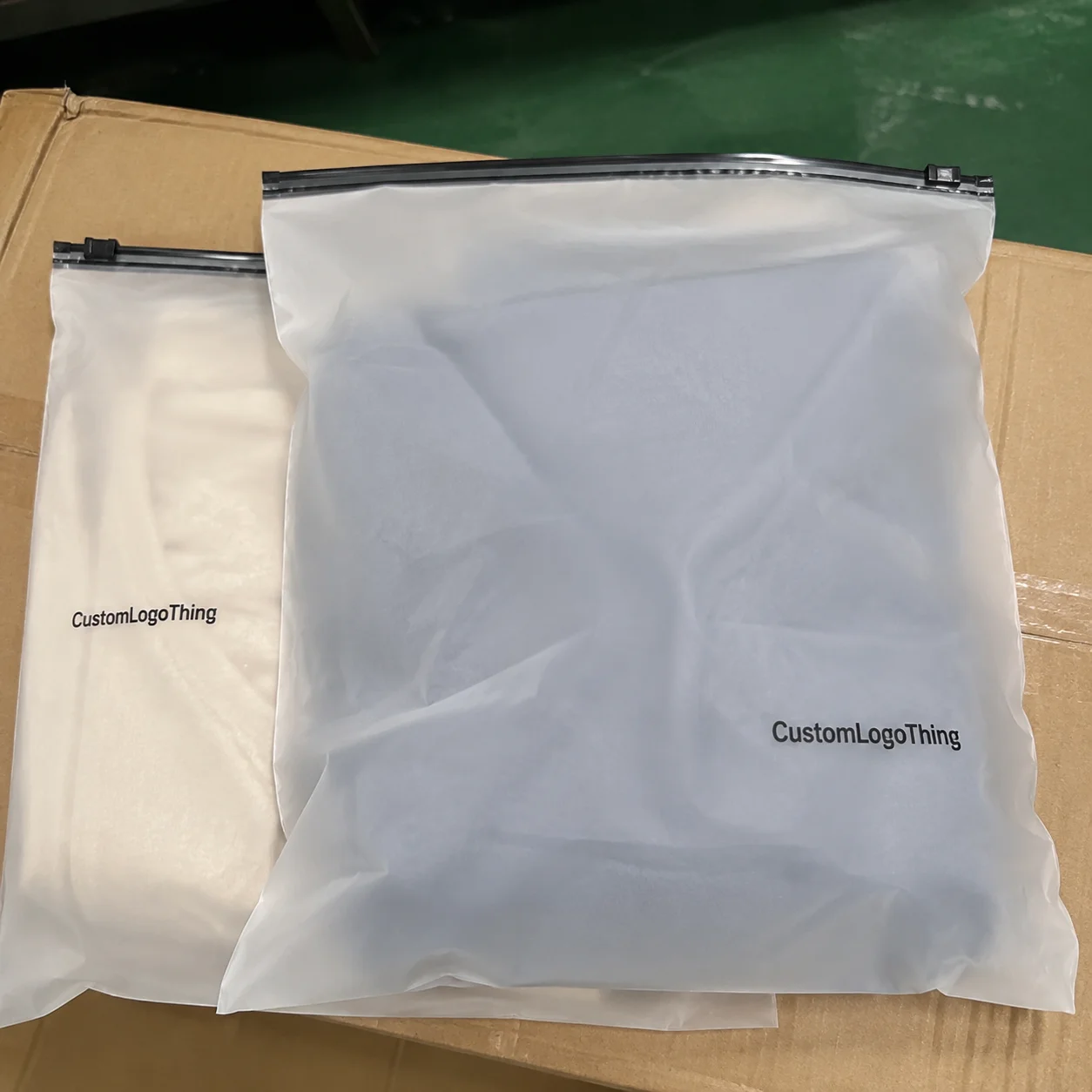
Flat poly bags are the simplest format. They are used for apparel, inserts, and small parts. They cost less because they use less film and fewer forming steps. Resealable bags add a zipper or press-to-close strip, which helps for returns, sample kits, and repeat-use retail packaging. Gusseted bags expand for bulkier items, and that extra capacity is useful, but it also changes the footprint and often the freight math. Wicketed bags are common in high-speed packing environments, and header-style bags are used where hanging display matters. In a warehouse outside Atlanta, I watched wicketed bags move cartons from 220 packs per hour to 280 packs per hour simply because loading got easier.
Material choice is the next cost lever. LDPE is flexible, clear, and widely used for branded packaging and retail packaging. HDPE is lighter, stiffer, and often more economical for some protective applications. Blends can balance clarity and toughness. If you need product visibility, LDPE often wins. If you need stiffness and a crisp feel, HDPE may fit better. The wrong material selection can make custom printed packaging feel cheap or, just as often, overbuilt. Neither is flattering, by the way. A 350gsm C1S artboard is a great spec for cartons, but it would be wildly wrong for a film bag; that mismatch is exactly how budgets wander off course.
I’ve seen apparel brands insist on thick film because they associate weight with quality. Then they discover that a thinner, cleaner bag actually presents better on shelf and reduces package branding costs. The bag feels less bulky. The carton ships lighter. The whole program looks more considered. You can almost hear the budget sigh with relief. One retailer in Manchester moved from 2.0 mil to 1.5 mil on a clear shirt bag and cut outbound parcel weight by 0.3 pounds per case, which mattered across 30,000 cases.
Printing is where the economics can move fast. Flexographic printing is common for poly film because it handles repeat jobs efficiently. It uses plates, so setup matters. Spot colors usually keep costs more predictable than complex photographic artwork. A one-color logo on a clear bag is usually easier to produce than a four-color process design with gradients and fine type. That is true whether you are buying custom poly bags affordable for apparel, hardware, or promotional kits. A one-color plate set may cost $120 to $180, while a multi-color setup can climb past $400 before the first bag is run.
Customization features sound small, but they change performance and price:
- Hang holes for retail display.
- Vent holes for items that trap air during packing.
- Tear notches for easier opening.
- Tamper-evident seals for security-sensitive products.
- Resealable closures for repeat access and returns.
When I visited a contract packer in Columbus, Ohio, they were using a bag with no vent holes for folded textiles. The air trapped inside was enough to slow sealing by 12 to 15 seconds per pack. That sounds minor until you multiply it by 50,000 units. A tiny spec change turned into labor savings, cleaner packs, and a better shot at custom poly bags affordable. It was one of those moments where everyone looks at the bag and then looks at each other like, “Wait, that was the problem?”
One more point most buyers overlook: the bag should match the use case, not the logo. Apparel usually wants clarity and lightness. Small parts may need higher puncture resistance. Fulfillment packaging often prioritizes speed and consistency. Promotional packaging may care more about display impact. A good supplier will help you Choose the Right structure for the job, not just the prettiest mockup. For broader sourcing needs, I often point teams to Custom Packaging Products because bag decisions rarely happen in isolation. They sit beside labels, cartons, and shipping formats, especially in regional programs out of Chicago, Dallas, and Charlotte.
Specifications that control quality and price
Specs are where custom poly bags affordable either becomes disciplined or drifts into guesswork. If you do not control the spec sheet, the quote will control you. I’ve reviewed hundreds of RFQs, and the same missing details keep causing price variation: exact dimensions, thickness, print count, closure type, and pack format. A supplier in Guangzhou once quoted a 9 x 12 inch bag when the buyer needed 8.5 x 11.5 inches; that half-inch mistake added nearly $0.02 per unit on a 7,500-piece order.
Start with size. Measure the finished product, not the box it might one day sit in. A bag that is 0.5 inch too wide on each side can create excess material, ugly bunching, and higher freight cube. Measure length and width after folding if the product is folded. If the item has bulk, note the thickest point. The point is to avoid paying for unused air, which is apparently very expensive air. In a Chicago warehouse, an extra inch of width increased carton count by 14% for the same monthly volume.
Gauge and mil are often used loosely in conversations, but buyers need practical meaning. In poly film, a mil is one-thousandth of an inch. Heavier film usually means better puncture resistance and more stiffness, but it also means more resin, which pushes price upward. A 1.5 mil bag and a 3 mil bag are not small variations. They are two different purchasing outcomes. If your product is soft and lightweight, the heavier spec may be a luxury, not a necessity. For reference, a 3 mil LDPE bag can use roughly twice the resin of a 1.5 mil version at the same size.
Printing cost also depends on the number of colors and the artwork layout. A single-color logo on one side is simpler than a front/back design with multiple spot colors and fine registration. Coverage matters too. A large ink flood uses more material and can increase drying or curing complexity. I have seen buyers ask for “simple branding” and then submit art with six colors, a gradient, and a full background pattern. That is not simple. That is expensive, and the bag is usually the first place the budget gets blamed. If your artwork needs a 0.125-inch clear zone around the logo, say that upfront and save a round of revisions.
Here is a practical decision framework I use with buyers who want custom poly bags affordable without under-specifying the product:
- Define the product’s actual risk: puncture, moisture, dust, visibility, or tamper evidence.
- Choose the smallest usable bag size that allows easy loading and sealing.
- Select the lightest film thickness that still passes handling and transit requirements.
- Reduce print complexity to the minimum branding needed for the channel.
- Verify whether add-ons like tear notches or hang holes are truly needed.
That framework sounds basic, but it saves money because it cuts waste before the quote even arrives. It also supports more consistent product packaging, especially for recurring retail packaging programs that ship 2,000 units a week from facilities in Savannah, Phoenix, or Newark.
For buyers who care about standards, it helps to reference recognized test and material bodies. The ISTA test methods are useful when packaging needs to survive distribution, and ASTM material references help when you need a clearer language for film performance. If recycled content or responsible sourcing matters, the FSC framework becomes relevant in adjacent packaging categories like paper carriers, printed inserts, and custom printed boxes. The point is not to burden a bag purchase with bureaucracy. It is to use industry language that keeps expectations aligned. For paperboard components, 350gsm C1S artboard is a common retail benchmark; for poly film, you need a different language entirely.
One last detail: packaging format matters. Poly bags can be packed loose, on rolls, or in bundles, and that affects labor at receiving and in the packing line. The lowest bag price can lose if the packing format slows your team by 20 seconds per unit. I know that sounds dramatic, but 20 seconds is how a “cheap” bag turns into a very expensive afternoon. That is another reason custom poly bags affordable should be judged across the whole workflow, not just the per-piece quote. A roll-packed order might cost $0.01 more per bag but save 30 minutes per shift.
Custom poly bags affordable: pricing, MOQ, and what affects quotes
Let’s get into the numbers, because this is where most buyers need clarity. Custom poly bags affordable is driven by a handful of inputs: resin cost, bag dimensions, thickness, print colors, order volume, and finishing. If any one of those changes, the quote moves. Sometimes a little. Sometimes a lot. Packaging pricing has a delightful talent for pretending it’s simple right until it is not. A bag made in Dongguan and a bag converted in Monterrey will not price the same once labor, press time, and freight are added.
Material resin is the base. Bag size determines how much film is consumed. Thickness changes film weight immediately. Print colors affect setup and plate charges. Finishing options, such as reseal strips, venting, or specialty seals, add conversion steps. When a buyer asks for a price without these specs, the estimate is usually too vague to trust. If you want a clean number, give the supplier a finished width, finished length, thickness in mils, color count, and pack format. That is the difference between a guess and a quote.
MOQ, or minimum order quantity, matters because setup is spread across the run. Low minimums can be useful for test programs, seasonal launches, or narrow SKUs. But the unit price will usually be higher. A 1,000-piece order and a 10,000-piece order may use the same plates, but the setup cost is allocated over fewer units in the smaller run. That is why custom poly bags affordable often improves as quantity rises. On a 5,000-piece order, a plate and setup burden of $220 might add $0.044 per unit; on 20,000 pieces, that same burden drops to just over a penny per bag.
Here’s a simple comparison I use with clients who are deciding between small-run and higher-volume purchasing:
| Order tier | Typical unit cost behavior | Best use case | Tradeoff |
|---|---|---|---|
| 1,000 to 2,500 pieces | Higher unit cost because setup is spread over fewer units | Launches, trials, sample programs | Less inventory risk, more cost per bag |
| 5,000 to 10,000 pieces | Usually better balance between unit cost and inventory | Recurring SKUs, moderate demand | Needs more storage and forecasting discipline |
| 25,000 pieces and up | Lowest unit cost in many cases | Stable, repeatable packaging programs | More cash tied up, more room needed |
To make this concrete, I’ll use a working example from a recent buyer conversation. A 10 x 12 inch clear LDPE bag, 1.5 mil, one-color print, at 5,000 pieces might land around $0.18 to $0.24 per unit depending on resin, pack format, and freight. The same bag at 1,000 pieces could climb into the $0.32 to $0.45 range. Add a second color or a resealable zipper, and the economics shift again. Those are not promises. They are directional realities that help buyers plan for custom poly bags affordable without getting surprised later. If the order ships from a plant in Qingdao to a West Coast port, ocean freight can add another $0.03 to $0.07 per bag depending on cube and season.
I keep hearing the same hidden costs get missed:
- Plate charges for flexo artwork.
- Setup fees for press and conversion.
- Color matching when brand standards are tight.
- Shipping, especially if freight is treated as an afterthought.
- Rush production when the artwork lands late.
At one client meeting in Dallas, the purchasing team compared two offers that looked nearly identical on paper. One supplier quoted a slightly lower bag price, but the plate fee was higher and freight was excluded. The other quote showed a better all-in number because the supplier had already folded in plate amortization and offered a cleaner shipping assumption. The cheaper-looking option was not custom poly bags affordable once the landed cost was calculated. That meeting ended with three people flipping through spreadsheets like they were looking for a secret passage.
Here’s the practical rule: ask for quotes at two or three quantity tiers. For example, ask for 2,500, 5,000, and 10,000 pieces. Then compare unit price, freight, and storage impact. That gives you a real view of where savings begin. If the 10,000-piece tier only lowers the unit cost by $0.01 but adds six months of inventory risk, the math may not work. A 5,000-piece order at $0.16 per unit can be smarter than a 25,000-piece order at $0.14 if your warehouse space in Newark is already full.
If your packaging program also includes Custom Poly Mailers, it is smart to compare the bag and mailer economics together. I’ve seen buyers save more by aligning formats than by squeezing one supplier for a tiny unit discount. Packaging decisions rarely live alone. They sit beside fulfillment, product packaging, and the broader brand system. The same logic applies whether the line is in Miami, Vancouver, or Ho Chi Minh City.
Custom poly bags affordable is not a slogan. It is a purchasing model. Get the spec right, and the quote becomes easier to defend. Get the wrong spec, and even a $0.12 bag can become costly once rework and freight are added.
How to make custom poly bags affordable
There is a reason some buyers consistently get better pricing on custom printed packaging: they remove ambiguity before the supplier ever touches the quote. A bag maker can price certainty. They can also price uncertainty, but they will charge for it. If your goal is custom poly bags affordable, the fastest route is to simplify the variables that do not add value.
Start with the carton math. A bag that fits the product well but also nests efficiently inside a shipper lowers cube. Cube drives freight. Freight drives landed cost. I once watched a team in Charlotte switch from a bag that was oversized by 1.25 inches to a right-sized version and reduce carton count by 9% on monthly shipments. That is not dramatic in a meeting. It is dramatic on a freight invoice.
Next, decide which features actually improve performance. A resealable zipper is useful for returns and repeat access. A hang hole matters for retail display. Vent holes help with air release. But if none of those features affect how the product is sold or used, they are just extra conversion steps. That is where custom poly bags affordable gets easier: less feature creep, fewer surprises, cleaner pricing.
I also advise buyers to standardize where they can. If three SKUs can use the same width and only vary slightly in length, the supplier can usually control waste more effectively. That can improve unit economics on a recurring basis. Standardization also helps with inventory, because one approved spec file can support multiple product lines. In my experience, consistent specs do more for cost than heroic negotiation ever does.
Artwork is another place to save. Keep logo placement clean. Limit colors. Use vector files. Avoid tiny reverse type unless it is truly necessary. Every added detail increases the chance of proofing corrections, plate changes, or registration concerns. A one-color flexo layout on a clear LDPE bag often looks sharper than an overworked design trying too hard. That matters because the eye reads clean packaging as intentional, while clutter reads as expensive and uncertain at the same time.
Then there is ordering behavior. If your demand is stable, larger purchase tiers usually make sense. If demand is seasonal or unpredictable, smaller runs may be smarter even if the unit cost is higher. That is a simple decision with a surprisingly large financial impact. One apparel brand in Manchester moved from monthly 2,500-piece orders to quarterly 10,000-piece orders and reduced unit cost enough to offset the extra storage. Another brand with volatile demand tried the same approach and ended up carrying old inventory for 11 months. Same theory. Different reality. That is why custom poly bags affordable is not just a price question; it is a planning question.
Finally, ask for a clear landed-cost view. Include production, packaging, freight, duties if relevant, and receiving overhead if your internal operations charge that way. A quote that ignores half the bill is not a good quote. It is a teaser. The cheapest-looking bag on a spreadsheet is often the one that causes the most follow-up emails later.
Process and timeline: from quote to delivery
The order path is usually straightforward, but only if the buyer is organized. For custom poly bags affordable, timeline control matters because any delay in artwork approval or spec confirmation can create a rush fee later. I’ve seen a clean 15-business-day production window turn into a 28-day headache because the approved art file came back with a missing bleed line. One little omission. Endless irritation. In another case, a client lost four business days because the bag width was revised after proofing.
The typical process starts with inquiry. The supplier needs finished dimensions, film thickness, print count, closure type, quantity, and use case. If you can provide the intended contents and whether the bag is for retail packaging, shipping, or internal fulfillment, the supplier can recommend a better construction. That is usually faster than sending a vague “need a quote” note and waiting for a long clarification chain. A good brief can cut the quote cycle from 3 days to 1 day.
Next comes specification review. This is the point where a good supplier should challenge overspecification. I value that. If a vendor tells me a 2.0 mil bag will do the job instead of the requested 3.0 mil bag, they are helping the buyer keep custom poly bags affordable. That is not upselling; that is responsible quoting. I’d much rather hear “you don’t need that” than “sure, we can make it more expensive.” When the factory is in Guangdong and the customer is in Toronto, that honesty saves more than time; it saves freight, storage, and cash flow.
Artwork proofing follows. Expect revision time if the logo needs resizing, if the barcode is too close to the edge, or if type is too fine for the chosen print method. Proofs should be checked against final dimensions, not a generic template. On one factory review, I saw a barcode shift 0.125 inch after a size change. That tiny adjustment would have caused scan problems at receiving. Catching it during proofing saved a lot more than the quote ever could. Small text below 4 pt can vanish on film if registration is off by even a fraction.
Production time varies by complexity. A simple unprinted bag can move faster than a multi-color printed bag with a zipper closure and special venting. Order size also matters. Larger runs may take longer to schedule, but they often run more efficiently once on press. When buyers ask for custom poly bags affordable, I remind them that a lower unit price sometimes comes with a slightly longer lead time, because the factory is optimizing the run for cost. A standard printed bag typically ships in 12 to 15 business days from proof approval; complex zipper or specialty builds may need 18 to 22 business days.
Freight deserves separate attention. Manufacturing time is not delivery time. A bag can finish on schedule and still arrive late if the transit method, destination, or customs clearance is not planned. If you are importing, add buffer for ocean freight and port variability. If you are shipping domestically, factor in carrier pickup schedules and pallet handling. The best quote in the world means little if it misses a launch by five days. From Shenzhen to Long Beach, ocean transit alone can take 18 to 24 days, and customs can add another 2 to 5 business days.
Here is a simple planning checklist:
- Confirm final dimensions and thickness before quoting.
- Approve artwork only after checking print placement against the actual bag size.
- Build in revision time for proofs, usually 1 to 3 business days if the art is ready.
- Ask for production lead time separately from freight time.
- Keep one reorder spec sheet on file for the next run.
That level of discipline is what keeps custom poly bags affordable over multiple purchase cycles. It reduces surprises, and surprises are expensive. A buyer in Seattle once saved nearly $900 on a reprint simply because the approved spec file listed the correct seal style and artwork revision.
Why choose us for custom poly bags affordable
At Custom Logo Things, the selling point is not a puffed-up promise. It is fact-based purchasing support. If you want custom poly bags affordable, you need transparent specs, clear quotes, and practical guidance that helps you avoid paying for material you do not need. We work with buyers sourcing from factories in Shenzhen, Dongguan, and Ho Chi Minh City, and that regional visibility helps us compare cost structures instead of guessing at them.
In my experience, the best packaging suppliers do three things well. First, they ask the right questions before quoting. Second, they explain the cost drivers in plain language. Third, they help buyers choose the minimum construction that still performs. That is the kind of partnership that keeps a packaging program healthy over time. It also saves everyone from the awkward “why is this more expensive now?” meeting, which nobody enjoys. The good ones will tell you when a 2.0 mil film is enough and when a 3.0 mil bag is justified by puncture risk or transit handling.
We also know that repeatability matters. A lot of buyers are not purchasing bags once; they are building a recurring system for branded packaging, product packaging, or fulfillment. If the spec is on file, the artwork is clean, and the reorder history is documented, you can scale with fewer surprises. That matters more than a flashy landing page. A clean file can cut a reorder from 4 days of back-and-forth to a same-day approval cycle.
I’ve sat in meetings where packaging design was driving cost because nobody wanted to simplify the artwork. I’ve also seen the opposite: a clean one-color logo on a well-sized bag performed better than a busy, expensive print job. The lesson is constant. Good package branding is not about adding more. It is about adding only what pulls its weight. A minimalist logo on a 12 x 15 inch clear bag often outperforms a crowded five-color graphic on a bag that is too large for the product.
That is why a supplier should be willing to recommend alternatives. Maybe a lighter gauge is enough. Maybe a different closure saves time. Maybe moving from a full-coverage print to a logo lockup makes the bag look cleaner and reduces manufacturing cost. Those recommendations are what make custom poly bags affordable in practical terms. I trust the supplier who says, “You’ll save $0.03 per unit if we drop the back print,” more than the one who says yes to everything.
“The best bag choice is usually the one that disappears into the workflow. It protects the product, carries the brand, and does not create extra labor.” — a packaging manager I worked with after a 40,000-unit apparel launch in Los Angeles
There is also a broader category advantage. If you are sourcing other formats like custom printed boxes or display-ready retail packaging, a supplier who understands the relationship between cartons, mailers, and bags can help you avoid mismatched specs. One wrong assumption in packaging design can ripple through the whole program. A bag that fits poorly inside a shipper can make the shipper more expensive too. I have seen a 10 x 14 inch bag force a larger outer carton and add $0.08 per order before anyone realized what happened.
We focus on communication because communication saves money. A supplier who confirms dimensions, print expectations, and delivery windows in writing is helping the buyer stay in control. That is especially important for procurement teams managing several SKUs at once. A clean proof, a clear reorder file, and realistic lead times are not perks. They are the backbone of custom poly bags affordable. If your plant is in Phoenix and your customer is in New York, a written schedule is not optional; it is the difference between calm and chaos.
And yes, consistency matters. If your second order looks like the first, your line runs better. Your team knows what to expect. Your receiving department knows how the product arrives. That predictability is often the hidden value behind an affordable program. A stable spec at 8,000 pieces per quarter is easier to manage than a “creative” new version every six weeks.
Next steps for ordering custom poly bags affordably
If you want custom poly bags affordable, start with a tighter brief. The better your inputs, the better your quote. I tell buyers to think like a converter for five minutes before they send the RFQ. That small effort usually pays off fast, and it beats sending a vague email and hoping for magic. Packaging is not magic. It is math, material, and timing.
Use this checklist before requesting pricing:
- Measure the finished product length, width, and thickness.
- Choose the bag style: flat, resealable, gusseted, wicketed, or header-style.
- Select the lightest film thickness that still protects the item.
- Estimate the quantity for the first run and the reorder run.
- Prepare artwork files, including logo placement and color count.
- State the use case: apparel, small parts, fulfillment, retail packaging, or promotion.
- Provide the delivery date and destination.
If you can, ask for two or three spec options. I like to see a baseline version, a slightly upgraded version, and a premium version. That comparison makes it easier to identify the lowest-cost bag that still performs. It also exposes where the cost jumps are hiding. Sometimes a half-mil increase is cheap. Sometimes a second ink color is the line that changes the budget. You do not know until you compare. A 1.5 mil baseline, a 2.0 mil mid-tier, and a 2.5 mil premium spec can tell you more than a single quote ever will.
Request a sample or proof before full production, especially if the product has tight dimensions or the artwork includes small type. A sample is not a delay. It is insurance. I have seen more budget waste come from approving the wrong spec than from spending a little time on validation. For custom poly bags affordable, that proof step usually protects margin rather than hurting it. A one-day proof review is cheaper than reprinting 8,000 bags.
One more point: keep a copy of the exact approved spec. Finished size, thickness, material, print colors, seal type, pack format, and approved art version should all be saved together. Reorders become much faster when nothing has to be reconstructed from memory. That is especially true for teams that manage multiple product packaging programs across different channels. If your next purchase is due in 90 days, having the file ready can shave a full week off the order cycle.
Here’s the practical truth. The best value does not come from asking for custom poly bags affordable in general terms. It comes from specifying the job precisely enough that the supplier can price only what you actually need. That is how you protect quality, reduce waste, and keep the order repeatable. In real terms, that may mean a 5,000-piece order at $0.19 per unit instead of a “cheap” quote that balloons after freight, setup, and revisions.
When buyers do that well, the bag is no longer the problem. It becomes the easy part.
FAQ
How do I get custom poly bags affordable without lowering quality?
Start with the smallest bag size that fits the product, then choose the lightest thickness that still protects the contents. Reduce print colors and skip unnecessary extras like vent holes or special closures unless the product truly needs them. That approach is usually the fastest path to custom poly bags affordable. For many apparel runs, a 1.5 mil clear LDPE bag with one-color printing is enough, especially when the order is 5,000 pieces or more.
What is the typical MOQ for custom poly bags?
MOQ depends on bag style, size, and print complexity. Printed bags usually need a higher minimum than unprinted bags because plates, setup, and press time have to be spread across the order. Ask for quantity tiers such as 1,000, 2,500, 5,000, and 10,000 pieces so you can compare unit cost clearly. A 5,000-piece tier often gives the best balance of inventory and price, especially when the bag ships from a factory in Shenzhen or Dongguan.
What details do I need to request a quote for custom poly bags affordable?
Provide finished dimensions, material preference, thickness, quantity, and print count. Include artwork files or a clear description of the logo placement and any color requirements. You should also explain what the bag will hold so the supplier can recommend the right construction for custom poly bags affordable. If you know the pack format, like loose-packed or roll-packed, include that too because it affects labor and freight.
How long does production usually take for custom poly bags?
Lead time depends on artwork approval, order size, and how much customization the bag needs. Proof revisions can add time before production starts, and shipping time should always be counted separately from manufacturing time. If your launch date is fixed, build in buffer for both proofing and freight. A typical timeline is 12 to 15 business days from proof approval for standard printed bags, with specialty builds taking longer.
Can I reorder the same custom poly bags later at the same spec?
Yes, if the specs, artwork, and materials are kept on file. Reorders are usually faster when no design changes are needed, and they are easier to price when quantity stays within the same tier. It is still smart to confirm whether resin market changes or quantity shifts will affect the quote on the next run. If you keep the approved spec sheet, reorders can move from quote to approval in as little as 1 business day.
custom poly bags affordable is not about chasing the cheapest number on a quote sheet. It is about buying the right bag, at the right thickness, in the right quantity, with the right print detail, so the whole program works. That is how the cost stays controlled, the packaging looks professional, and the reorder process stays calm. In plain numbers, it is the difference between a bag that costs $0.16 on paper and a landed program that still makes sense after freight, setup, and storage are counted. The clearest next step is simple: lock the spec, verify the proof, and compare landed cost across at least two quantity tiers before you place the order.