Choosing a custom Poly Bag Supplier is usually framed as a price exercise. That is the wrong starting point. A bag can be cheap and still fail the job: the seal splits, the print muddies, the film scuffs under retail lighting, or the dimensions force line workers to slow down. The right supplier is the one who can turn a product spec into packaging that holds up in packing, transport, and display.
Two bags can look identical on a quote sheet and behave very differently in production. Film gauge, seal style, print coverage, closure method, and even the finish of the film all change how the bag performs. A clear bag for a lightweight garment is a different animal from a bag for a sharp-edged accessory, a heavy refill pack, or a retail item that has to hang cleanly on a peg.
Buyers often compare unit price before they compare requirements. That works until the quote leaves out details that matter later. If a bag tears during packing, hazes under store lighting, or arrives with poor registration, the cheapest option was never actually cheap.
Why the right specs matter before you compare quotes
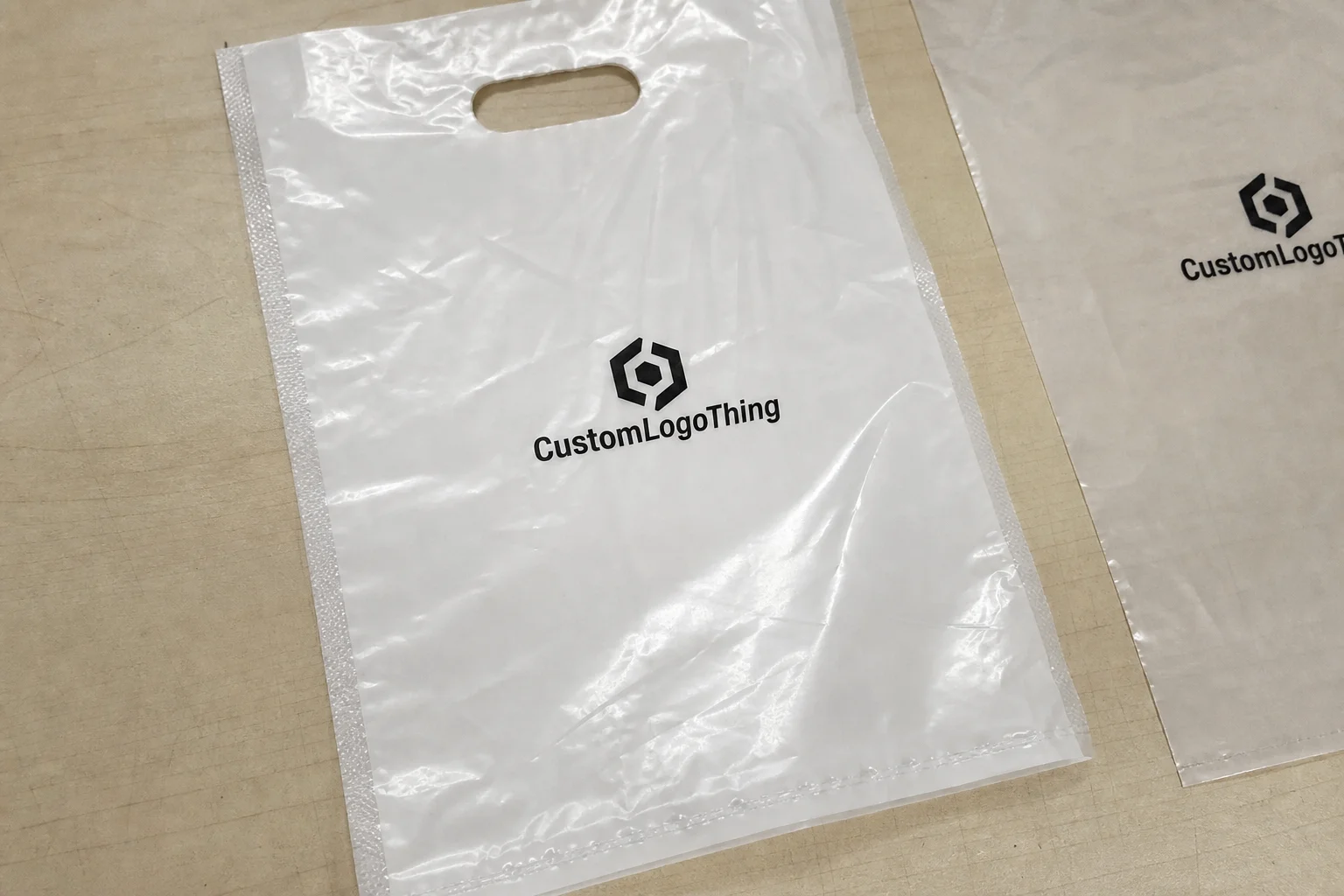
A poly bag is not just a sleeve. It is part of the package design, and it has to fit the product, the packing method, and the channel. A soft textile can run in a lighter film. A metal accessory, a boxed kit with corners, or a heavy refill usually needs thicker material, stronger seals, or a different bag construction altogether.
The most common spec error is using the box dimensions instead of the finished packed item. That creates avoidable gaps in the quote process. The packed product needs room for insertion, sealing, and any closure fold or hang feature. A bag that is technically the right width and length can still be too tight to load efficiently.
Display requirements matter too. A bag that will hang in retail needs a cleaner face, more consistent print placement, and a finish that stays readable under store lighting. A bag that will go straight into a shipper can be optimized differently. If moisture is part of the environment, film thickness and seal quality become more important. If the product has sharp edges, puncture resistance matters more than decoration.
There is also a practical tradeoff between bags and cartons. Paperboard gives structure and shelf presence. Poly bags give speed, lower cube, and simpler packing. Neither is inherently better. The right choice depends on how the product moves through the supply chain and how much presentation the pack actually needs.
“The cheapest quote is often the one that assumes the fewest things.”
A serious buyer asks about film thickness, seal type, print method, and closure style before making a decision. A competent custom poly bag supplier should answer those questions without turning them into jargon.
What a custom poly bag supplier does from brief to sample
The process starts with a usable brief. At minimum, the supplier needs the finished product dimensions, weight, handling conditions, storage environment, shipping destination, and branding needs. If the item is slippery, brittle, oily, cold, or unusually shaped, say that plainly. Those details change material choice and bag construction.
From there, the supplier translates the brief into a physical specification. That means selecting film type, confirming gauge, choosing a seal style, matching the bag format to the load, and deciding which print method fits the artwork. Some orders are simple: a clear bag with a one-color logo and a standard side seal. Others need a gusset, a header, venting, or a closure feature that changes how the line runs.
Artwork review is where many hidden problems surface. Files that look sharp on a screen can fail in print if the lines are too thin, the type is too small, or the color contrast is weak on clear film. A good packaging file does more than look polished. It has to print cleanly, register correctly, and remain legible on the chosen substrate.
Samples and proofs are the protection against expensive mistakes. A proof shows the layout and copy placement. A sample shows how the bag actually behaves in hand. That matters more than people expect. If the product is heavy, has corners, or needs to be inserted quickly on a line, the sample can expose fit and handling problems that a spec sheet never reveals. Buyers planning retail packaging or a launch with a fixed delivery date should treat sample approval as a normal step, not an optional extra.
Quality checks should be part of that process, not something hidden at the end. In a well-run job, the supplier should be able to describe how they check seal integrity, film consistency, print alignment, and carton counts. Those checks are not decorative. They are what keeps the order from turning into rework after arrival.
Industry references can help buyers ask better questions. The Institute of Packaging Professionals is useful for packaging basics, and ISTA standards are relevant when the bag has to survive distribution testing or rough handling in transit. Neither replaces a supplier conversation, but both help separate real expertise from vague assurance.
What drives cost, MOQ, and unit pricing
Poly bag pricing is driven by a few predictable variables. Resin cost sets a baseline, then the quote moves with bag size, film gauge, print coverage, number of colors, finish, closure type, and whether the job needs special packaging such as folded stacks, retail bundling, or custom cartoning.
MOQ exists because setup costs have to be absorbed somewhere. A small run with multiple colors or a custom closure will usually carry a higher unit cost than a larger run with a simpler spec. Lower minimums help when a product is being tested, but they are not a shortcut around setup economics.
Freight changes landed cost more than many buyers expect. A low unit price can be offset by a bulky shipment, split deliveries, or rush transportation. Extra proof rounds also matter if the artwork is not production-ready or if the dimensions keep changing. The quote is only useful if the comparison includes the full landed picture.
| Option | Typical Setup | Approx. Unit Cost at 5,000 pcs | Best For |
|---|---|---|---|
| Clear unprinted poly bag | Standard size, no print | $0.04-$0.09 | Basic protection and internal packing |
| Printed poly bag | 1-3 colors, standard film | $0.10-$0.22 | Branding and retail presentation |
| Heavier-gauge or specialty bag | Thicker film, custom features | $0.18-$0.35+ | Heavier products, sharp edges, tighter performance needs |
Those numbers are directional, not universal. A plain clear bag can be inexpensive, but a tighter tolerance, better finish, or more demanding print setup can move the price quickly. The right comparison is spec-for-spec, not a stripped-down quote against a fully built one.
Material choices affect cost as well. Recycled content, specialty additives, or a different blend can change the price even before printing starts. If the broader package includes paper components or mailers with sustainability requirements, those choices may shift the whole packaging system. The EPA recycling resource is useful for general context, but the final call still depends on local recovery realities and the supplier’s actual material options.
Gauge deserves careful attention. Thicker film is not always better. A bag that is too heavy can be harder to seal, harder to fold, and more expensive than needed. In many jobs, the better answer is the lightest film that passes the real handling test.
How the process, timeline, and lead time usually work
The normal sequence is quote, brief review, artwork check, proof approval, production, inspection, packing, and shipping. Repeat orders tend to move faster because the supplier already has the spec, the tooling, and the approved artwork. New custom jobs take longer because more variables have to be checked before production starts.
Lead time depends on the actual job, not just the calendar. A straightforward printed bag using existing tooling may move faster than a new format that needs fresh plates, die changes, or a revised seal pattern. Production load matters too. Even a capable supplier has line constraints, and those constraints are real.
Buyers can protect the schedule by locking the dimensions early. Once the bag size is approved, artwork can be adjusted to the actual panel space rather than an assumed one. That reduces rework and keeps the proof cycle tight. Changing dimensions after artwork has been built usually costs time and sometimes money.
A practical timeline often looks like this:
- 1-2 business days for initial quote review if the brief is complete
- 2-4 business days for artwork and proofing on a straightforward bag
- 12-15 business days from proof approval for standard production, depending on complexity and supplier capacity
- Additional time if the order needs new tooling, specialty print, or imported materials
The start point matters. Some suppliers count lead time from deposit receipt. Others count from final proof approval. Those are not the same, and the difference can affect a launch, a seasonal display, or a replenishment schedule. A dependable custom poly bag supplier will state the start point clearly before the order is placed.
Common mistakes that cause delays or rework
The first mistake is guessing bag size from the box. That shortcut looks efficient and usually creates problems. Finished packed dimensions matter more than the carton spec alone. The bag needs room for insertion, sealing, and any movement caused by the packing method.
The second mistake is sending incomplete artwork. Low-resolution files, unconverted fonts, missing dielines, or vague color expectations force back-and-forth that slows production. Each revision is small on its own. Together, they can push the schedule enough to matter.
A third issue is assuming the same film will behave the same way in every environment. It will not. Heat, humidity, cold storage, and rough handling all affect appearance and seal performance. If the product is going through distribution rather than sitting on a shelf, it is worth asking how the bag performs under transit conditions that resemble the actual route.
Seal strength is another place where assumptions fail. A bag can look clean and still split if the seal is too weak for the load or if the product’s weight sits unevenly at the bottom. That is one reason basic load testing is worth doing, even on a seemingly simple order. It is easy to skip and expensive to ignore.
Late ordering is the most avoidable mistake of all. Rush jobs narrow the material options, reduce room for proof corrections, and often trigger extra cost. If the bag supports a launch, a seasonal change, or a retail reset, the process should start early enough to absorb one correction without creating panic.
There is a pattern here. Most delays are not caused by the supplier alone. They come from vague requirements, changing specs, and approvals that happen too late.
Expert tips for a cleaner, cheaper, more reliable bag
Standardizing on a few proven sizes is one of the fastest ways to improve packaging efficiency. If a single bag can cover multiple SKUs with a label variation or insert, replenishment becomes simpler and pricing often steadies over time. That matters in retail packaging, where too many one-off specs create waste and make forecasting harder.
Simplify the artwork where possible. Fewer print elements usually mean fewer production variables, better ink control, and less chance of a visual mismatch between runs. Clean graphics also read better on clear film because the product still shows through the bag instead of fighting the design.
Use the right gauge for the load, not the instinct to overbuild. Thicker film is not automatically safer. If the bag can pass handling, sealing, and transport checks with a lighter gauge, that is often the better commercial choice. Extra thickness only helps if the product actually needs it.
Ask for a sample and test it the way the warehouse will use it. Pack it the same way. Stack it the same way. Ship it the same way. Problems that stay invisible on a desk show up fast in a packing area. That is especially true for products with awkward shapes or lines that run at speed.
Ask how the finished goods are packed, too. Flat-packed bags, folded bundles, and carton counts affect receiving speed and damage risk. Those details do not change the printed design, but they can change how efficiently the bags move from receiving to production.
If your packaging mix includes other formats, compare the role of the bag against broader Custom Packaging Products and, for e-commerce workflows, Custom Poly Mailers. That comparison often clarifies whether the bag is carrying a retail job, a transit job, or both. The answer affects the film, the closure, and the print strategy.
One last practical point: if the product has sharp edges, oily surfaces, or temperature swings in transit, say so in the brief. Those details tend to be left out because they seem minor. They are not minor. They are exactly the details that change the spec.
What to prepare before you request quotes and place the order
Before requesting pricing, gather the inputs the supplier actually needs. Finished product dimensions, weight, closure preference, artwork files, quantity, target delivery date, shipping location, and any storage or handling concerns should all be on the table. If the product is fragile, sharp, cold, moisture-sensitive, or oily, that belongs in the brief too.
It helps to compare suppliers against the same spec sheet. Put dimensions, film gauge, artwork assumptions, packaging format, and destination in one place. Without that, quote comparisons are misleading because each supplier may be pricing a slightly different job.
For branded packaging across several formats, consistency matters. A bag, a mailer, and a box should feel like part of the same system even when they serve different purposes. Good packaging design keeps that visual relationship intact while the production methods vary behind the scenes.
If there is uncertainty, ask for a proof or sample before committing. That matters most when the bag supports a retail launch, a fragile item, or a shipment where rework would be costly. A strong supplier will expect that step because it reduces avoidable mistakes on both sides.
Send the complete brief, confirm the proof path, and make sure the supplier can meet the spec and the timeline. That is the cleanest way to work with a custom poly bag supplier without paying for preventable surprises later.
How do I choose the right custom poly bag supplier for my product?
Look for a supplier that asks about product weight, dimensions, handling conditions, and print needs before quoting. A capable supplier should explain film gauge, seal strength, and lead time in practical terms. Ask whether they provide proofs or samples before production.
What information should I send to get an accurate quote?
Send finished product dimensions, weight, quantity, artwork files, closure requirements, target delivery date, and shipping location. If the product has sharp edges, moisture concerns, or unusual storage conditions, include that too. More detail up front usually means fewer revisions later.
How much does a custom poly bag usually cost?
Price depends on size, thickness, print complexity, quantity, and any special features such as closures or venting. Larger runs usually lower the unit price because setup is spread across more bags. Freight, rush timing, and extra proof cycles can change the final landed cost.
What is a typical turnaround time for printed poly bags?
Turnaround depends on artwork approval, production queue, material availability, and print complexity. Simple repeat orders can move quickly, while new setups or custom formats usually take longer. Confirm whether the lead time starts after proof approval or after deposit receipt.
Can a custom poly bag supplier help if I only know my product size, not the bag spec?
Yes. A good supplier should help translate product size into bag dimensions, gauge, and closure style. Share how the product will be packed, stored, and shipped so the recommendation fits real use. Request a sample or proof if the product is fragile, heavy, or unusually shaped.