If you are ordering Frosted Zipper Bags and inserts at the same time, that is the right instinct. The bag gets the product noticed; the insert tells the buyer what they are holding, how to keep it fresh, and whether it belongs in a pantry, refrigerator, or hands-off gift box. A bakery package can look polished from the outside and still fail on the shelf because the insert was treated as an afterthought.
The mistakes usually start there. Wrong flavor copy. Missing allergens. A QR code that points to nowhere. Type so small it vanishes once the card sits behind frosted plastic. Then someone asks for a “quick fix,” which is packaging code for a second print run nobody budgeted for.
That is why a bakery Frosted Zipper Bags Packaging Insert checklist matters. It turns a vague “we need a card” request into a workable production brief: what the insert must say, what it must survive, how much it will cost, and how long it will take. If you package cookies, pastries, snack cakes, or seasonal baked goods, the insert is part of the product, not decoration.
Why bakery inserts go wrong faster than the bag order
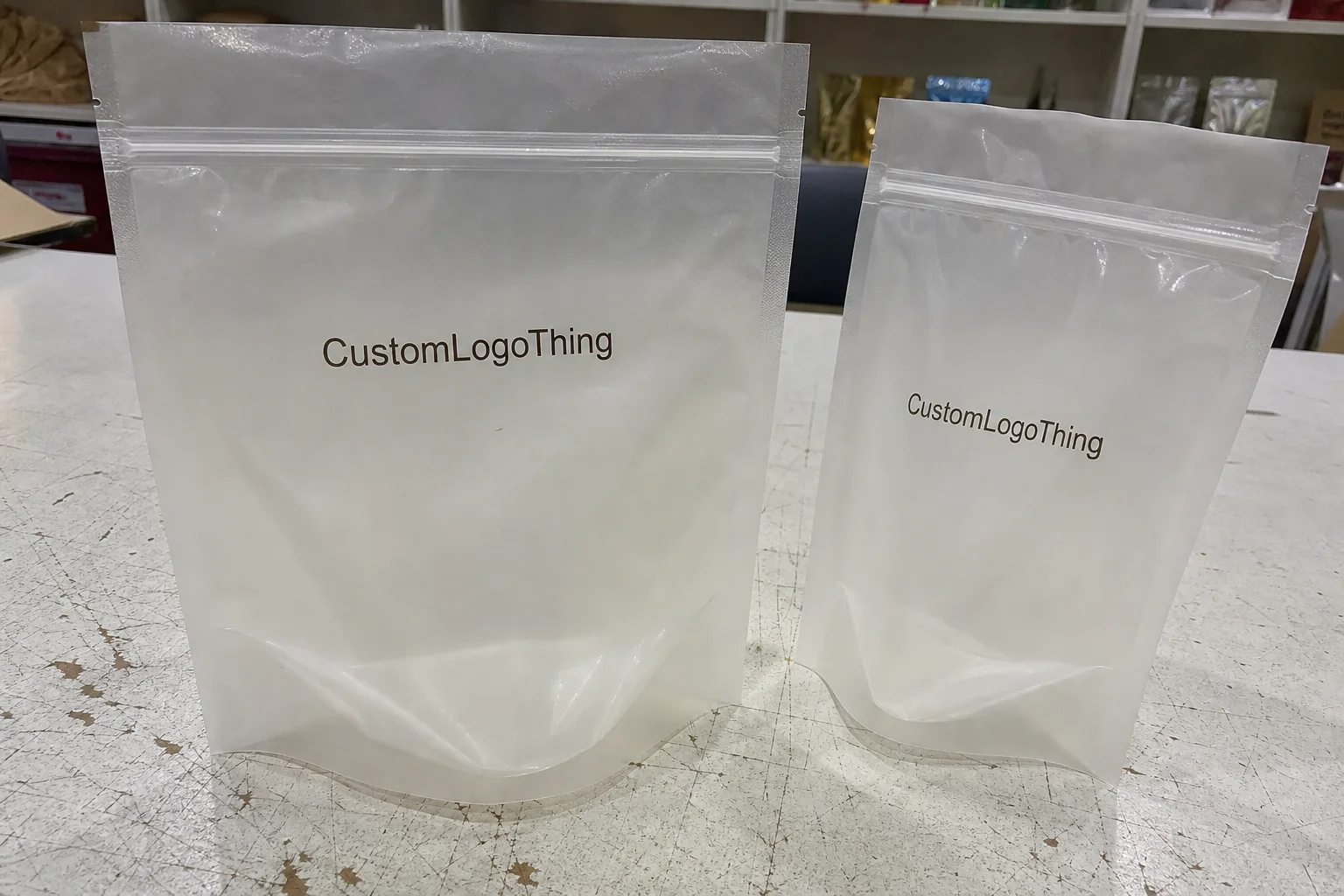
The bag usually gets the design attention because it is visible from across a table or display case. The insert is quieter, so people assume it is simpler. It is not. The frosted zipper bag protects the food and softens the presentation, but the insert carries the facts. It is the miniature compliance sheet, product explainer, and brand voice all in one piece of print.
Bakery inserts commonly include care cards, ingredient labels, flavor notes, promo cards, storage instructions, and QR codes that lead to more detailed information. For premium retail packaging, they can also add a short origin note or seasonal message. That part helps. Still, if the allergen statement is incomplete or the best-by guidance is vague, the customer notices the failure before they notice the branding.
A good checklist prevents the usual problems: a single SKU carrying the wrong flavor copy, the logo crowding out the ingredient line, or a last-minute reprint because the legal text was approved too late. Frosted plastic hides some visual flaws in the bag itself. It hides almost none of the mistakes on the insert. Contrast, hierarchy, and spacing become more important, not less, once the card sits behind translucent material.
Practical rule: if the insert has to explain the product, it also has to survive handling. Grease transfer, condensation, stacking, and repeated opening matter. A beautiful insert that curls or smears is just expensive waste.
“The bag gets them to pick it up. The insert gets them to trust it.”
That is the job. The checklist keeps that job from turning into a back-and-forth proof cycle with avoidable corrections.
How packaging inserts work inside frosted zipper bags
Insert placement sounds minor until the package looks crowded or hard to read. Inside a frosted zipper bag, the card usually sits behind the product, beside it, or near the zipper line. The goal is visibility without clutter. If the insert blocks the bakery item or makes the bag feel overloaded, it has failed before a customer has read a single line.
These inserts do not live in ideal conditions. Bakery packaging can face cold cases, light condensation, oil from pastries, and repeated handling by customers and retail staff. For that reason, heavier card stock usually performs better than thin paper. A 14pt to 16pt card is common for sturdy inserts; lighter paper can work for simple promo notes, but it bends more easily and usually feels less premium.
Common formats include:
- Flat cards for short product details, QR codes, or brand notes.
- Folded cards when the copy is too long for one side.
- Mini booklets for ingredient details, serving suggestions, or multilingual content.
- Adhesive labels for batch codes or direct application to pouches and trays.
- Swing tags for premium retail or gift-style bakery items.
Frosted plastic changes how color reads. A layout that looks clean on a monitor can feel washed out once it sits behind a translucent bag. High-contrast designs usually perform best. Dark type on a light background remains the safest choice, especially if the insert includes a QR code, storage line, or small legal copy. Decorative scripts often become a liability because they reduce legibility right where legibility matters most.
Finish matters too. Matte stock reduces glare and is easier to read through the bag. Gloss can sharpen branding, but it also reflects light and can make smaller text harder to scan. If the insert needs a writable area for batch marks, date codes, or a handwritten note, ask for a surface that takes ink well instead of a slick coating that resists it.
If you are coordinating inserts with the rest of your packaging system, keep the design language aligned with your broader branded packaging and Custom Packaging Products plan. The insert should feel like part of the same set, not a separate project that wandered in from another job.
Key specs to lock before you request a quote
Before requesting pricing, gather the specs. Vague requests slow everything down. Printers can quote a vague job, but they cannot quote it well. And if the quote is too loose, the revision round will expose the missing details anyway.
Start with the basics: dimensions, stock, thickness, print sides, finish, fold style, and quantity per SKU. For bakery Frosted Zipper Bags Packaging Insert checklist planning, the insert size should fit the internal space of the bag and the footprint of the product. Too large, and it crowds the item. Too small, and it looks accidental. A common practical target is to leave roughly 1/4 inch to 1/2 inch of visual breathing room around the product once the insert is placed inside.
Then define the content. Bakery inserts usually need some combination of:
- Product name
- Ingredients list
- Allergen statement
- Storage instructions
- Best-by guidance
- Brand message or logo
- QR code or promo offer
The exact mix depends on the product and the sales channel. A farmers market insert can carry more personality and fewer formal requirements than retail packaging sold through a grocery freezer or a café counter. If the item may be treated as packaged food under labeling rules, keep the information structure conservative and complete. For general packaging materials and industry references, the Association for Packaging and Processing Technologies is a useful source, and the EPA is relevant when evaluating material choices and waste reduction.
Artwork readiness affects cost and timing more than many buyers expect. Vector logos are better than screenshots. CMYK files are standard for print. Include bleed, usually 0.125 inch. Keep safe margins at least 0.125 inch to 0.25 inch from the trim. If the printer has to rebuild the file because the logo was pulled from a social post, that is not a tiny cleanup job. It is prepress work, and prepress work can add both time and cost.
| Insert option | Typical stock | Best use | Tradeoff |
|---|---|---|---|
| Flat card | 14pt-16pt matte coated | Short product info, QR, simple branding | Limited space for copy |
| Folded card | 14pt cover or 100lb text | Ingredients, storage, story, promos | Higher print and fold cost |
| Mini booklet | 80lb-100lb text | Multiple flavors, multilingual content | More assembly, more time |
| Label insert | Paper or film label stock | Batch codes, direct application | Less premium feel inside the bag |
If the insert will travel with chilled goods or be stacked during shipping, ask about handling tests. ASTM and ISTA standards exist because packages get dropped, compressed, and handled badly. ISTA is a sensible starting point if you are evaluating packaging performance under actual shipping conditions.
Step-by-step production process and turnaround
The cleanest projects follow a predictable sequence. Skip steps and the errors usually show up later, when they are costlier to correct.
- Confirm bag dimensions and insert purpose. One SKU may need a premium story card; another may only need allergen and storage text.
- Finalize copy blocks. Ingredients, allergen line, storage instructions, brand language, QR destination, and any date code or batch fields should be settled before layout starts.
- Approve the layout proof. Check line breaks, barcode spacing, logo placement, and whether the text remains readable through frosted plastic.
- Review a sample or digital proof. Catching an error at this stage is far cheaper than correcting it after printing.
- Plan lead time realistically. Proofing, printing, finishing, packing, and shipping each take time. Rush fees usually appear when launch dates were optimistic from the start.
For a standard custom printed insert, production often takes 12 to 15 business days after proof approval. More complex jobs with folding, special finishes, or several SKUs can take longer. If the bag and insert need to launch together, their timelines should be matched early. Beautiful packaging is not useful if the compliance card arrives after the product does.
One practical way to reduce friction is to treat the insert as a system instead of a one-off piece. If you are launching multiple bakery flavors, standardize the layout and swap only the variable elements. That may mean a flavor name, color band, photo, or seasonal note. It reduces setup work, makes reorders easier, and keeps the packaging line visually consistent.
Cost, pricing, and MOQ realities for bakery inserts
Pricing depends on size, stock, print coverage, finish, quantity, and the number of versions. That is not mysterious; it is the structure of print production. What catches buyers off guard is how quickly the price changes when they split an order across several flavors or add a special stock to a small run.
For budgeting, a simple single-card insert on standard stock at around 5,000 pieces often lands in the $0.06 to $0.15 per unit range, depending on size and print coverage. A folded insert or a premium stock with special finishing can run $0.12 to $0.30 per unit or more at that same quantity. Smaller runs push unit cost up. They almost always do.
Minimum order quantities usually rise with complexity. The smaller the run, the fewer stock choices you may have, and the more setup cost is concentrated into each piece. If you want a custom shape, heavy card, foil, embossing, or multiple insert versions, the MOQ can move upward. That is not a sales tactic. It is how spoilage, setup, and changeover cost get spread across the job.
| Run type | Typical unit cost | Best for | Main tradeoff |
|---|---|---|---|
| Budget single-card insert | $0.06-$0.15 | Simple messaging, high volume | Less room for storytelling |
| Standard folded insert | $0.12-$0.22 | Ingredients + brand story + QR | More setup and finishing |
| Premium insert with special finish | $0.18-$0.30+ | Gift bakery, retail launch, seasonal line | Higher cost, slower turnaround |
The hidden costs are usually the boring ones. Last-minute copy edits. Artwork rebuilt after approval. Split shipments. Rush production. Replacing one SKU because the flavor changed after printing started. The lowest quote can become the most expensive order if internal approval is messy.
A modular insert often saves money when multiple bakery flavors are involved. Build one master template with editable fields instead of designing separate inserts for every item. That approach lowers design time, reduces mistakes, and makes future reorders simpler. For many bakery brands, it is the difference between controlled variation and constant rework.
Common insert mistakes that wreck bakery packaging
Most weak inserts do not fail because they look unattractive. They fail because they do not perform the job. The usual problems are easy to spot once you have handled enough packaging jobs.
- Allergen statements are missing or buried. Buyers should not have to search for food safety information.
- The type is decorative but unreadable. A charming font is not useful if it blurs at the size required.
- The insert is too large. It crowds the product and breaks the clean line of the frosted bag.
- Too much copy is forced onto one card. A product insert is not a brochure.
- Moisture is ignored. Grease, condensation, and handling can smear ink or bend thin stock.
Another frequent issue is channel mismatch. A farmers market insert can be more conversational and informal. Retail packaging usually needs tighter labeling, clearer hierarchy, and fewer decorative distractions. If the same bakery item is sold through several channels, do not assume one insert will work everywhere without adjustment.
QR codes cause avoidable trouble too. If the insert sends people to a landing page, the page should load quickly on mobile and contain the exact information promised on the card. Broken links and mismatched content damage trust faster than poor kerning ever will.
Expert tips for cleaner inserts and fewer reprints
Keep the information hierarchy simple. Product name first. Key benefits second. Compliance details third. That order helps the customer understand the product quickly and keeps the insert from feeling overloaded. Strong packaging does not need to shout. It needs to be readable, accurate, and easy to handle.
Use QR codes for long-form content. Storage instructions, nutrition context, rotating offers, and detailed brand stories fit better online than they do on a small card. The physical insert stays compact, and the digital page can carry the rest. That also makes updates easier because not every change requires a reprint.
Standardize one master template across flavors or seasonal variations. Then swap only the fields that change: flavor name, image, date code, or short promo line. That keeps your bakery packaging visually consistent and cuts reorder time. Consistency is not just a branding preference; it reduces production mistakes.
If color accuracy matters, ask for a sample. Frosted packaging alters how colors appear, and some inks look flatter or darker than expected once they are behind translucent plastic. A sample catches those issues before a full run is locked in. Skipping proofing rarely saves time.
For seasonal launches, build a reusable insert structure and update only the headline or offer. Rebuilding the entire piece every quarter costs more than most teams expect. A stable structure also makes the brand feel organized, which matters more than many packaging teams admit.
If you want fewer reprints, make approvals boring. One master template, one clean proof, one final sign-off.
Next steps: build your insert checklist before ordering
Before placing an order, create one page that covers the essentials. Bag size. Insert purpose. Required copy. Artwork files. Quantity. Target ship date. That is the real bakery Frosted Zipper Bags packaging insert checklist, not a long email thread with twelve replies and no decisions.
Separate must-have compliance text from optional promo content. The clearer that split is, the easier it is for your printer and internal team to approve the final version. Food safety information should never be pushed aside by a marketing idea that sounded better late in the afternoon than it does on press.
Get one final review from operations, marketing, and whoever handles food safety. If those groups agree, you are usually in good shape. If they do not, resolve the disagreement before printing, not after the cartons are packed.
Request pricing in three scenarios: budget stock, standard stock, and premium finish. Then compare the total landed cost, not just the headline unit price. Sometimes the slightly higher quote is the better buy because it cuts proof cycles or avoids a second run.
One last check usually saves the most money: compare the final insert against the bag plan, the product specs, and the channel requirements before you approve the order. Typos are cheap to make and expensive to fix twice. Packaging has a way of teaching that lesson fast.
What should be on a bakery frosted zipper bag packaging insert checklist?
Include the product name, ingredients, allergen statement, storage instructions, brand details, and any QR code or promo message. Also confirm insert size, paper stock, finish, quantity, and whether one design can work across several flavors.
How do I choose the right insert size for frosted zipper bags?
Match the insert to the bag’s internal space and the product’s footprint so it does not fold awkwardly or block visibility. The best size is one that stays readable, sits flat, and does not make the package feel crowded.
What affects the cost of custom bakery inserts the most?
Size, stock, print complexity, finish, quantity, and the number of versions are the main drivers. Rush orders, extra proof rounds, and split SKUs usually raise the cost faster than buyers expect.
How long does production usually take for bakery inserts?
Timeline depends on proofing, printing, finishing, and shipping, but the proof stage is where most delays begin. If you have a launch date, build extra time for artwork approval and sample review before the run starts.
Can I use one insert design for multiple bakery products?
Yes, if the core information stays the same and only small details change by SKU or flavor. A modular template with editable fields is usually cheaper and faster than building a separate insert for every item.


