Buyer Fit Snapshot
| Best fit | Custom Poly Mailers for Marketplace Sellers projects where brand print, material claims, artwork control, MOQ, and repeat-order consistency need to be specified before quoting. |
|---|---|
| Quote inputs | Share finished size, material target, print colors, finish, packing count, annual reorder estimate, ship-to region, and any compliance wording. |
| Proofing check | Approve dieline scale, logo placement, barcode or warning zones, color tolerance, closure strength, and carton packing before bulk production. |
| Main risk | Vague material claims, crowded artwork, missing packing details, or unclear freight terms can make a low unit price expensive after revisions. |
Fast answer: Custom Poly Mailers for Marketplace Sellers: Film, Print, MOQ, and Carton Packing should be specified like a repeatable production item. The safest quote records material, print method, finish, artwork proof, packing count, and reorder notes in one written spec.
Production checks before approval
Compare the actual filled-product size with the drawing, then confirm tolerance on folds, seals, hang holes, label areas, and retail display edges. Reserve space for logos, QR codes, warning copy, and material claims before decorative graphics fill the panel.
Quote comparison points
Review material grade, print process, finish, sampling route, tooling charges, carton quantity, and freight assumptions side by side. A quote is only useful when the supplier can repeat the same color, closure quality, and packing count on the next order.
Marketplace buyers form opinions before they ever touch the product, and Custom Poly Mailers for marketplace sellers shape that first read of the brand. A package can lift perceived value, reduce handling damage, and make a small storefront feel more established than its headcount suggests. A shirt in a plain white bag feels ordinary. The same shirt in a printed mailer feels like it came from a seller who has the process dialed in.
Soft goods, lightweight accessories, and other non-fragile products usually fit better in Custom Poly Mailers for marketplace sellers than in cartons. Speed improves. Weight stays down. Packing stations get simpler. The choice also changes postage, moisture resistance, and the memory a customer carries when the parcel lands on the porch. Packaging is not decoration. It is part of the shipping math, and a pretty important one.
If you are comparing materials, start by browsing Custom Poly Mailers alongside other Custom Packaging Products so you can compare size, print coverage, and closure style in one pass. Sellers who treat packaging as both a cost center and a brand surface usually make cleaner decisions, because they see the item and the operation at the same time.
Why Custom Poly Mailers for Marketplace Sellers Stand Out
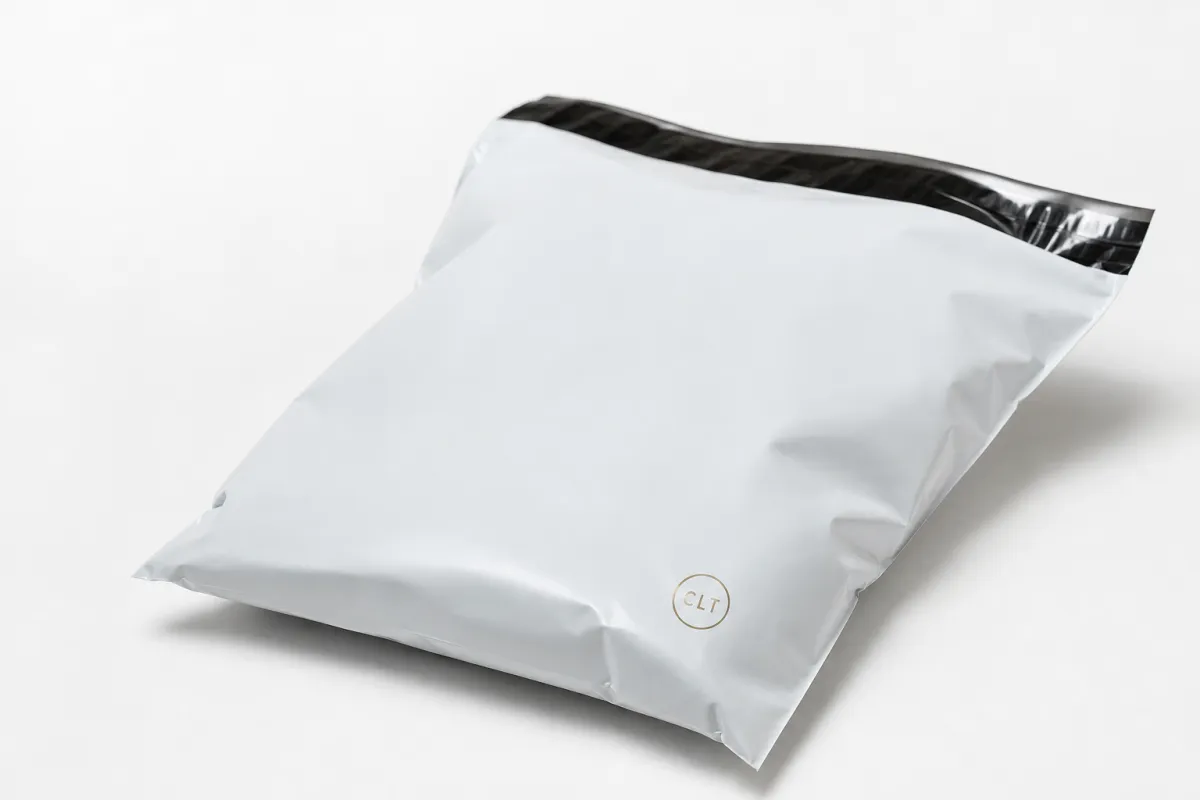
Custom Poly Mailers for marketplace sellers stand out because they solve three problems in one move: they protect the shipment, reduce pack-out labor, and put the brand in front of the buyer without a heavy material penalty. That combination is hard to beat for apparel, socks, scarves, small home goods, and accessories. Boxes can do some of the same work, but they add cube, weight, and assembly time. Those extra steps make sense for fragile or premium goods. For flexible products, they often just make shipping more expensive.
Trust matters too. A printed mailer signals that the seller has a process, not just inventory. That signal lands hard on marketplaces where the buyer cannot touch the item before paying. The package becomes the first proof that the order was handled with care. It is a small thing with a large effect. Buyers rarely remember the exact shade of a logo, yet they remember whether the shipment felt organized or improvised.
For many stores, Custom Poly Mailers for marketplace sellers make more sense than custom printed boxes whenever the product ships flat. A 2.5 mil or 3.0 mil film handles everyday e-commerce use well, and a self-seal strip turns closure into a quick peel-and-fold step. Heavy items, sharp edges, and products that need rigid protection still belong in boxes or padded packaging. The real decision is not which format looks best in a mockup. It is which format fits the way the item actually travels.
The unit economics are often better than sellers expect. Less weight can mean lower postage. Fewer inserts can mean less material spend. Faster packing can free up labor in a way that shows up on the payroll line. If a store ships 2,000 orders a month and trims 15 to 20 seconds from each pack, that equals roughly 8 to 11 hours of labor saved every month. That is not a branding story. That is a business story. Custom poly mailers for marketplace sellers can also carry repeated logo placement, so each bag becomes a small moving billboard every time it passes through a scanner, tote, or sort bin.
"The package is often the first physical proof that the seller is serious." For custom poly mailers for marketplace sellers, that proof arrives before the customer sees the shirt, the accessory, or the product itself.
Experienced sellers treat packaging as part of conversion because it influences the way the purchase feels after payment. In a crowded category, a buyer may never remember the exact graphic on the mailer, but they will remember whether the order looked handled with intent. Custom poly mailers for marketplace sellers help create that memory without the cost structure of a rigid carton on every shipment.
I have seen small apparel brands make a sharp turn in customer perception after switching from generic bags to a printed mailer with one clean logo repeat. Nothing else changed that week, which made the packaging effect easier to spot. It did not magically fix product-market fit, of course, but it did make the brand feel less like a side hustle and more like a shop with a system.
A practical rule follows from that. If your storefront is still testing products, choose a package format that helps you move quickly and learn quickly. Review the standard shapes, finishes, and closure options in Custom Poly Mailers before deciding whether your assortment needs one size or a small range. That decision often matters more than the artwork itself.
How Custom Poly Mailers for Marketplace Sellers Work
At a basic level, custom poly mailers for marketplace sellers are lightweight shipping envelopes made from layered polyethylene film with a pressure-sensitive self-seal strip. Most versions use two or more layers so the outside can carry the print while the inside resists scuffing and helps protect the contents. The film blocks light better than paper envelopes, and it performs better against splashes, damp loading docks, and the rough handling that happens when parcels change hands multiple times.
The structure sounds simple, but the small details carry a lot of weight. Film thickness usually falls somewhere between 1.5 mil and 4.0 mil, and many apparel shipments sit in the 2.0 mil to 3.0 mil range. The adhesive strip should close firmly without tape, and the lip should be wide enough for a packer to seal it in one motion. For custom poly mailers for marketplace sellers, that one-motion seal is part of the value. Fewer fiddly steps at the packing table mean fewer errors and less fatigue on busy days.
The branding layer is where the package earns its keep. A logo repeat, a short message, or a bold full-bleed pattern can turn a plain envelope into package branding that customers notice immediately. Some sellers add QR codes, social handles, or a thank-you line, but the print still needs to read at arm's length. Too much copy turns the surface into visual clutter. A strong logo, one accent color, and a clean background usually do more than a crowded layout ever could.
Product fit matters just as much. Custom poly mailers for marketplace sellers work best with items that compress well and do not need rigid corners. T-shirts, leggings, scarves, notebooks, socks, small candles in protective inner packaging, and lightweight accessories fit the category well. If the item bends but does not need a hard shell, a mailer is often the right call. If the product has sharp corners, fragile hardware, or presentation rules that depend on structure, a box or reinforced mailer makes more sense. That is not a downgrade. That is correct packaging selection.
- Best fit: soft goods, flat accessories, and other compressible items.
- Good branding use: logo repeats, simple taglines, and bold patterning.
- Operational advantage: fast pack-out, low storage volume, and easy sealing.
- Protection benefit: better moisture resistance than paper envelopes.
One useful way to think about custom poly mailers for marketplace sellers is as a production tool that also happens to carry a brand. The right mailer can reduce repacking, protect against damp conditions, and keep shipment presentation consistent across hundreds or thousands of orders. That consistency matters because marketplace buyers see a lot of inconsistency elsewhere. A seller that looks organized often feels safer to buy from again.
Custom Poly Mailers for Marketplace Sellers: Cost, Pricing, and MOQ
Pricing for custom poly mailers for marketplace sellers usually comes down to size, film thickness, print coverage, color count, quantity, and freight. A small run with one color costs less than a full-coverage design with multiple ink stations. A larger order lowers the unit price because setup costs spread across more pieces. That is why the same mailer can look expensive at 5,000 units and noticeably cheaper at 25,000 units, even though the total invoice climbs.
MOQ shapes risk, which makes it more than a procurement footnote. A newer store may not want cash tied up in packaging that sits on a shelf for months, especially if the brand is still testing size mix and sell-through. Larger sellers often take the opposite view: buy more, bring down the unit cost, and reduce reorder friction. For custom poly mailers for marketplace sellers, the best quantity is usually the smallest order that still earns a meaningful price break and covers a normal sales cycle with a cushion. That cushion matters. Running out of mailers during a promotion can disrupt shipping faster than a brief product shortage.
Stock mailers versus printed mailers is the usual tradeoff. Stock bags source quickly and cost less up front, but they do nothing for package branding. Printed bags cost more, yet they turn every shipment into a repeat brand impression. For sellers with tight margins, the right move may be a single-color logo with a clean layout. That keeps costs under control while still making custom poly mailers for marketplace sellers feel deliberate rather than generic. For stores already investing in custom printed boxes or premium inserts, the mailer can carry a lighter version of the same visual identity.
| Option | Typical MOQ | Typical Unit Cost | Best For | Tradeoffs |
|---|---|---|---|---|
| Plain stock poly mailers | 500-1,000 | $0.08-$0.18 | Testing volume, low branding needs | No custom branding, limited differentiation |
| One-color custom mailers | 2,000-5,000 | $0.16-$0.28 | Apparel, accessories, small DTC brands | Higher setup cost than stock, basic visual treatment |
| Full-coverage printed mailers | 5,000-10,000+ | $0.22-$0.40 | Strong retail packaging presence, established sellers | Higher MOQ, more proofing, longer lead time |
| Eco-oriented recycled-content mailers | 2,000-10,000 | $0.20-$0.38 | Brand stories centered on sustainability | Material claims need verification and clear sourcing |
Those numbers are directional rather than fixed. A mailer with heavy ink coverage, a custom gusset, or special finishes will price differently than a simple logo repeat. Freight can move the total quite a bit too, especially if the manufacturer ships across long distances. Ask for a quote that spells out unit price, setup, packaging, and delivery so nothing gets hidden in the footer.
A useful quote checklist looks like this:
- Finished size based on the packed item, not the flat product.
- Film thickness and opacity target.
- Quantity and reorder plan.
- Artwork format, color count, and print placement.
- Delivery window, freight method, and any special features like hang holes or recycled content.
Cost should never be read alone. A mailer that trims labor, reduces damage claims, and makes custom poly mailers for marketplace sellers easier to stack and store can beat a cheaper option with hidden operational drag. Serious buyers look at the full package cost, not just the line item price. That difference shows up in the margin, even if it is not obvious on the first quote.
For sellers comparing packaging across categories, it helps to review other Custom Packaging Products so the mailer choice sits inside the larger brand system. If the printed outer bag matches the visual language of labels, inserts, and any custom printed boxes used for premium SKUs, the storefront feels more deliberate and less patched together.
Order Process and Timeline: Artwork to Delivery
The production path for custom poly mailers for marketplace sellers is straightforward, but each step affects the final schedule. It usually begins with a quote request, followed by size confirmation, artwork review, proofing, and then production after approval. Some orders move from proof approval to completion in about 10 to 15 business days, while more complex runs with multiple print versions or special material requests can take 15 to 25 business days or longer. Freight time sits on top of that. Sellers who plan around sell-through dates instead of order dates usually avoid the harshest stockout pressure.
Artwork causes many of the delays. Missing vector files, low-resolution logos, color changes, and last-minute layout revisions all slow things down. If the mailer needs a precise Pantone target, settle that early. If the brand wants a full pattern, confirm the repeat size before proofing. Custom poly mailers for marketplace sellers are more forgiving than rigid cartons in some ways, yet flexible substrates can make tiny text and fine lines harder to judge on-screen. A physical sample is often worth the time if the brand is printing more than a basic one-color logo.
Backward planning helps more than guesswork. Start with the date the mailers need to be in the packing area, then subtract freight time, production time, proofing time, and a buffer for revision. That buffer should be larger during launches, promotions, and seasonal surges because approvals slow down when the team is juggling several priorities. The same logic applies to sellers ordering custom poly mailers for marketplace sellers and custom printed boxes at the same time. If both packaging types share the same launch window, one late proof can hold the whole shipment plan hostage.
Here is a practical sequence that keeps projects moving:
- Confirm packed dimensions and target film thickness.
- Send vector artwork or a print-ready file.
- Review proof placement, color, and barcode or QR visibility if used.
- Approve a sample if the design or size is new.
- Lock the production date and freight method.
- Set a reorder trigger before the first run ships.
One useful benchmark: once a seller is packing 300 to 500 orders a week, the package choice has to support rhythm, not just appearance. A mailer that adds extra steps for labels, folds, or inserts slows the line. Custom poly mailers for marketplace sellers should save time at the table, not eat it. That is the real test of a good packaging design.
I've watched an order line go from calm to messy because the mailer size was off by half an inch. The team was having to bunch the adhesive edge, then rework the fold every few shipments. It sounds minor until you are doing it 400 times a day. Then it is gonna show up in both labor cost and morale.
Key Factors That Decide Fit, Strength, and Brand Impact
Size should begin with the packed product, not the flat product. That sounds obvious, yet it is one of the most common mistakes in packaging procurement. A folded hoodie, a polybagged T-shirt bundle, and a pair of shoes wrapped in tissue each occupy a different finished footprint. The right custom poly mailers for marketplace sellers should allow easy loading, a proper seal, and enough room for labels without turning into a bloated outer shape that wastes postage. Measure the final packed unit, then add a practical margin for sealing and handling.
Strength is the second decision. A 2.0 mil film can be enough for light apparel, but sharper edges, heavier contents, or long transit routes may justify 2.5 mil, 3.0 mil, or more. Seal quality matters as much as thickness. A weak closure can turn an otherwise fine mailer into a claim. Opacity matters too. If the contents should not be visible, the film should be opaque enough that the product does not silhouette through the material. Custom poly mailers for marketplace sellers are a small detail with large consequences, which is why spec discipline matters.
Brand impact depends more on contrast and scale than on complexity. A bold logo on a clean field tends to read better than a busy collage. In package branding, the customer sees the bag from a distance and often in motion, so the design has to work fast. That is one reason simple iconography, repeat patterns, and short taglines perform well. The design should match the price point and the story. Premium does not automatically mean ornate. Sometimes it means restraint, crisp type, and a surface that looks considered rather than crowded.
Marketplace-specific details deserve attention too. If the seller uses platform labels, leave enough white space for the shipping sticker to sit flat. If the order includes inserts or return instructions, keep room so inner pieces do not wrinkle the seal. If barcode visibility matters, keep critical artwork away from those zones. Custom poly mailers for marketplace sellers also need to work in the back room. A glossy surface may look attractive, but if it makes labels slide or stacks shift, the visual win turns into an operational loss.
Sustainability deserves a sober look. Recycled content, lighter film gauges, and right-sized packaging can all reduce material use, but the claims should be supportable. If a supplier references recycled-content sourcing, ask for documentation. If the packaging mix includes paper inserts or cartons, check guidance from ISTA for transit expectations and FSC for responsible fiber sourcing where relevant. The point is not to make the bag eco-themed by default. The point is to make sure the packaging choice actually matches the operational and brand claims behind it.
For many sellers, the best result is simple: a mailer that fits tightly, closes cleanly, and presents the brand with enough confidence to feel established. That is why custom poly mailers for marketplace sellers often become a repeat order rather than a one-time experiment. Once the dimensions, film spec, and artwork are dialed in, the packaging becomes a stable part of the shipping system.
Common Mistakes Marketplace Sellers Make with Poly Mailers
The most expensive mistake is sizing by product dimensions alone. A folded item, an inserted thank-you card, a barcode label, and a seal lip all take room. Order too small, and the packer either forces the product in or reaches for a different bag. Both outcomes waste time. Custom poly mailers for marketplace sellers need to be judged by the finished packed shape, not the catalog listing for the item inside.
Another mistake is overdesigning the print. Tiny type, multiple colors, and cluttered graphics can make a mailer feel busier without making it look more premium. In flexible packaging, detail disappears faster than many brands expect. A cleaner layout usually prints better, photographs better, and reads better on a doorstep. If the design is trying too hard, it often makes the brand feel smaller, not larger. That is especially true in retail packaging, where the customer sees the surface for only a moment before opening the parcel.
Skipping samples is a third problem. A screen proof does not tell you how the adhesive closes, whether the film scratches easily, or how the color sits on the substrate. Physical samples expose those issues before a full run is committed. That saves money and embarrassment. It is also the easiest way to test whether custom poly mailers for marketplace sellers move well through the actual packing workflow. The fastest-looking order on paper can become the slowest package on the table.
Under-ordering hurts in a different way. New sellers often buy just enough mailers for the launch, then discover the product performs better than expected. Great news for the store, but now the packaging runs out during a sales spike. The result is a mix of old bags, plain backups, and inconsistent branded packaging. That breaks the visual thread. Reorder planning should be as disciplined as inventory planning for product. A mailer shortage can slow shipping just as quickly as a product shortage.
Most buyers do not notice perfect packaging. They notice broken packaging, awkward sizing, or a bag that makes the brand look improvised.
Compliance also gets missed. Some sellers forget to check platform rules, destination-market requirements, or the labeling needs of a warehouse or fulfillment partner before approving art. That can create last-minute changes, especially if a return label area or barcode zone is required. The safest approach is to verify the destination, the carrier, and the handling path before locking the artwork. Custom poly mailers for marketplace sellers should fit the operational chain as well as the brand image.
The biggest avoidable losses come from bad sizing, cluttered design, no sampling, weak replenishment planning, and forgetting the rules that govern the shipment path. None of those errors are glamorous. All of them are expensive.
Expert Tips and Next Steps for Your First Order
Start with one hero SKU and one backup size. That approach gives you useful data without tying up money across too many versions. If your store sells one top volume item, make custom poly mailers for marketplace sellers around that item first, then use the reorder cycle to refine the next size up or down. New sellers often try to cover every product at once. That creates more artwork work, more samples, and more room for mistakes than a first run really needs.
Test the mailer with the people who pack orders every day. They will spot friction that a spreadsheet will never show. Is the seal easy to grab? Does the label sit flat? Do the bags stack well? Can the product slide in without catching the adhesive? Those questions decide whether custom poly mailers for marketplace sellers improve throughput or quietly slow it down. Good packaging should feel almost boring in the best way. It should work without drama.
Ask suppliers for a side-by-side quote. A proper comparison should show how price changes with quantity, thickness, print setup, and freight. If a one-color print is only slightly more than plain stock, the branding value may be worth it. If a thicker film adds only a small amount per unit, that may be cheap insurance against tears and claims. This is where sellers can see the tradeoff between functional product packaging and visible branding instead of guessing.
A simple action list makes the project easier:
- Measure the packed item and confirm the finished mailer size.
- Collect the artwork in vector format if possible.
- Request samples at two thickness levels if the use case is unclear.
- Set a reorder point before the first shipment goes out.
- Build the production schedule backward from launch or promo dates.
If sustainability is part of the brand promise, do not treat it as a finish applied at the end. Ask for the material spec, the sourcing claim, and any verification tied to the film or print. Some sellers care most about lower material use. Others care about recycled content. Either way, the package should support the business story without creating weak seals or inflated shipping costs. For custom poly mailers for marketplace sellers, the best sustainability move is often the simplest one: right-size the bag and avoid excess material.
Finally, judge the first order by data. Look at packing time, rework rate, damage claims, and repeat order response after the packaging switch. If the mailers are doing their job, the numbers will show it. That is the right way to treat custom poly mailers for marketplace sellers: not as decoration, but as a measurable part of the selling system. If you want to widen the packaging mix later, compare those results with other Custom Packaging Products and decide where branded packaging does the most work for the least friction.
FAQ
How many custom poly mailers for marketplace sellers should I order first?
Start with enough for 30 to 60 days of normal sales, plus a cushion for mispacks, returns, and replacement packaging. If you are testing a new design, one size and one print version is usually enough to prove whether the format fits your workflow. Ask the supplier what quantity improves the unit price, then compare that saving against storage space and cash flow before you commit. The safest first buy is the one that lets you learn without tying up too much inventory.
What thickness works best for custom poly mailers for marketplace sellers?
For light apparel and soft goods, a mid-range film is often enough if the seal quality is consistent. For heavier or sharper-edged products, move up in thickness so the bag resists punctures, tearing, and stretching during transit. If you are unsure, request samples at two thickness levels and test them with real packed orders before you choose. A supplier can give you a number, but your own pack-out tells the truth.
Do custom poly mailers for marketplace sellers really save on shipping?
Often yes, because poly mailers usually weigh less than boxes and can reduce dimensional weight for soft, compressible products. Savings depend on carrier rules, package size, and the item itself, so it is smart to compare a few shipped examples before scaling. In many stores, the biggest gain is not postage alone; it is faster pack-out and fewer handling steps. That labor savings is easy to miss until you run the math.
How long does the process take for custom poly mailers for marketplace sellers?
A simple order may move from proof approval to production fairly quickly, while complex artwork or special finishes usually add time. Sampling, revisions, and shipping all affect the schedule, so build extra time before a launch or seasonal sales push. Ask for the supplier timeline in writing and confirm when each step starts, especially if inventory is tied to a campaign date. A clean schedule beats a hurried one, even if the hurried one sounds fine on a sales call.
What artwork should I use on custom poly mailers for marketplace sellers?
Use a bold logo, strong contrast, and a simple layout so the design reads quickly on a doorstep or in a fulfillment bay. Avoid tiny text and crowded graphics, which can look muddy on flexible packaging and be hard to recognize in motion. If you want to add a QR code or social handle, keep it secondary to the main brand mark and test readability at actual print size. For many brands, custom poly mailers for marketplace sellers work best when the artwork feels confident, not crowded.
Are recycled-content custom poly mailers for marketplace sellers worth it?
They can be, if the claims are documented and the film still performs well in transit. Recycled content may support a brand story and reduce virgin material use, but it should not create weak seals, awkward opacity, or a bigger carbon footprint from excess freight. Ask for proof of the material claim, then compare the packaging to your current mailer on strength, print quality, and cost. A greener label is only useful if the bag still does the job.
Can I use custom poly mailers for marketplace sellers for returns too?
Yes, but only if the closure system and return workflow make sense. Some sellers print a second seal strip or include a return instruction card so the customer can reuse the bag without a mess. Others keep the outbound mailer simple and handle returns with a separate process. If returns are common in your category, test the bag from both directions before locking the artwork. That small check can save a lot of customer-service friction later.
The cleanest first-order plan is simple: measure the packed item, choose the film thickness that matches the product, request one physical sample, and set your reorder point before the launch box leaves the dock. If those four steps are done well, custom poly mailers for marketplace sellers stop being a guess and start acting like a controlled part of the shipping system. That is the piece most brands miss, and the one that pays back fastest.

