Buyer Fit Snapshot
| Best fit | Custom Poly Mailers With Stickers projects where brand print, material claims, artwork control, MOQ, and repeat-order consistency need to be specified before quoting. |
|---|---|
| Quote inputs | Share finished size, material target, print colors, finish, packing count, annual reorder estimate, ship-to region, and any compliance wording. |
| Proofing check | Approve dieline scale, logo placement, barcode or warning zones, color tolerance, closure strength, and carton packing before bulk production. |
| Main risk | Vague material claims, crowded artwork, missing packing details, or unclear freight terms can make a low unit price expensive after revisions. |
Fast answer: Custom Poly Mailers With Stickers: Design, Cost, Timing should be specified like a repeatable production item. The safest quote records material, print method, finish, artwork proof, packing count, and reorder notes in one written spec.
Production checks before approval
Compare the actual filled-product size with the drawing, then confirm tolerance on folds, seals, hang holes, label areas, and retail display edges. Reserve space for logos, QR codes, warning copy, and material claims before decorative graphics fill the panel.
Quote comparison points
Review material grade, print process, finish, sampling route, tooling charges, carton quantity, and freight assumptions side by side. A quote is only useful when the supplier can repeat the same color, closure quality, and packing count on the next order.
Custom Poly Mailers with stickers can punch above their weight. A plain mailer with one sharply placed sticker can look more deliberate, ship faster, and cost less upfront than a fully printed bag, especially if your order is small or your artwork may change next month. That is the appeal of custom poly mailers with stickers: branded packaging without locking yourself into a giant print run that you may regret later.
From a packaging buyer’s angle, the logic is practical. Stock poly mailers give you flexibility. Custom stickers give you a visual signature. Put them together and you get a packaging system that can absorb changes in colors, SKUs, campaigns, or even a last-minute product rename. Custom Poly Mailers with stickers are not a bargain-bin substitute for printed packaging. They are a different format with a different workflow, a different cost curve, and a different brand payoff. Miss that distinction and the whole order can go sideways, usually through the smallest details: sticker size, adhesive strength, or placement.
“A sticker is not decoration. It is part of the packaging system, and if it is doing its job, it should make the mailer look intentional, not patched together.”
If you are comparing broader branded packaging options, the useful question is what the package must actually do. It may need to protect a soft-goods order, display a QR code, close the bag, and still feel retail-ready. That is where Custom Poly Mailers with stickers often beat prettier-looking options that are harder to stock or slower to produce. If you are mapping out a wider packaging lineup, our Custom Packaging Products, Custom Poly Mailers, and Custom Labels & Tags pages make a sensible comparison set before you lock anything in.
Custom poly mailers with stickers: what they are and when to use them
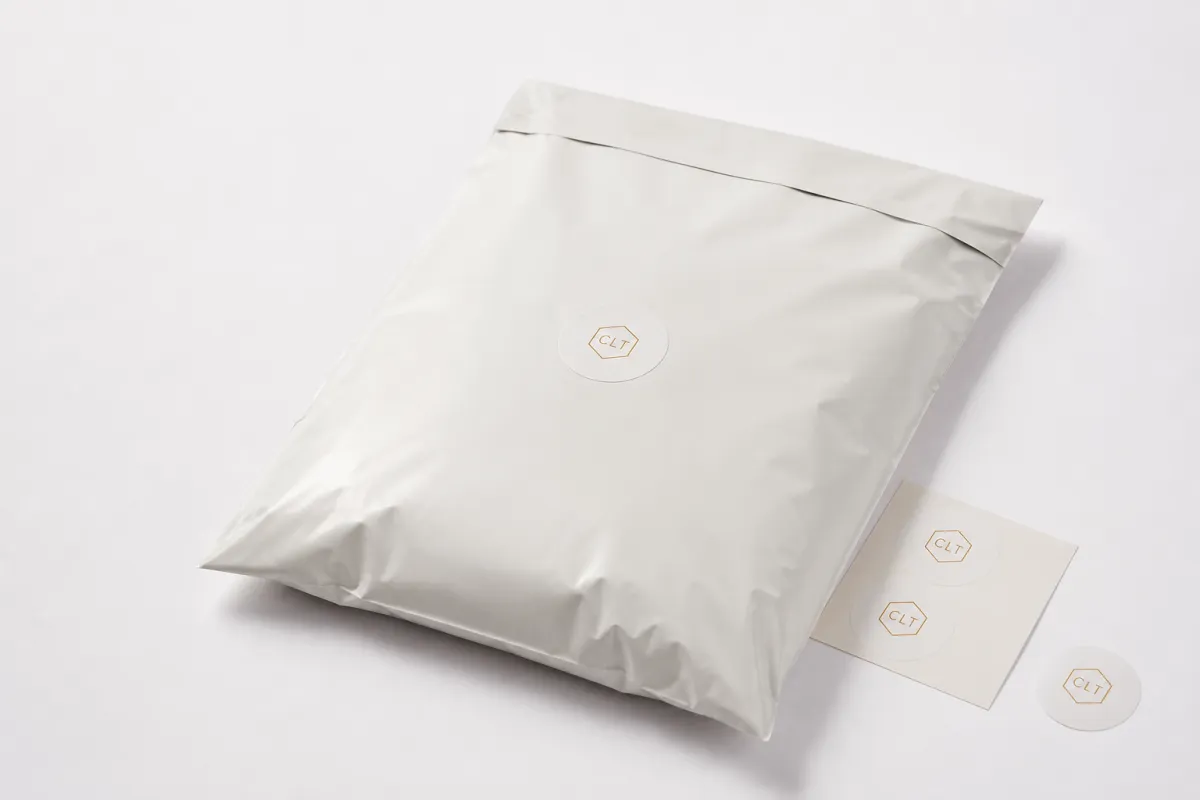
The setup is simple enough. You start with a stock or lightly branded poly mailer, then add one or more custom stickers for sealing, messaging, branding, or personalization. In real operations, Custom Poly Mailers with stickers work best when you want the package to look finished but still need freedom to change artwork, promotions, or product details without reprinting the entire bag. That flexibility is the whole point.
This format is especially useful for launch runs, seasonal drops, subscription shipments, and test SKUs. If you are unsure whether a design will stay, changing a sticker is easier than scrapping a printed mailer order. It also helps brands that need different messages for different product lines. One mailer color can carry six variations if the sticker handles the customization. That sounds small, but in packaging, small choices add up fast.
- Launches: one mailer, one sticker, quick artwork changes.
- Seasonal drops: swap graphics without touching base inventory.
- Test products: keep risk low while still looking polished.
- Low-volume orders: avoid the burden of high minimums on printed bags.
There is a visual advantage here that gets missed often. A matte white or black mailer with a clean sticker can look more controlled than a budget print job with muddy ink, weak registration, or colors that fight the bag. Cheap packaging has a way of looking cheap. The trick is not to imitate a fully printed premium bag. The trick is to build a repeatable branded packaging system that looks deliberate and stays easy to run.
Still, custom poly mailers with stickers are not the answer for every packaging problem. If you need a high-end retail presentation, a rigid structure, or serious crush protection, a custom printed box may fit better. Fragile products may also need inserts or cushioning inside the outer package. For apparel, accessories, lightweight soft goods, and many ecommerce orders, though, this setup often lands in the sweet spot between cost and presentation.
I have seen brands use this format to bridge a transition period too. They are rebranding, testing a new logo, or waiting on final product photography, and they do not want a warehouse full of outdated packaging. A sticker lets them move now instead of sitting still for six weeks. That kind of flexibility matters more than people admit.
Custom poly mailers with stickers: how the process works
The process starts with the mailer. Choose the size based on the folded product, not the version of the product you hope to have later. A mailer that is too large wastes material and makes the package look loose. A mailer that is too small creates bulging seams and makes sticker placement harder. Most brands do better with one or two standard sizes instead of a rotating stack of dimensions that turns packing into guesswork. That is where custom poly mailers with stickers earn their keep.
Then comes the sticker specification. Shape matters. A rectangle can hold more copy. A circle can feel like a seal. A custom die-cut logo can make a plain bag feel much more intentional. Finish matters too. Matte gives easier readability and a softer look, while gloss adds contrast and more visual punch. Adhesive matters even more. Poly film is slick, so you want a permanent adhesive designed for plastic surfaces, not a generic paper label that curls after a short trip through a sorting bin.
Placement is where many brands either solve the package or undermine it. Common locations include the flap seal, the front center, the corner near the fold, or a secondary message label near the shipping panel. One sticker can brand the bag while another closes the flap or carries a QR code. Some teams use a layered approach: a seal sticker, then a smaller logo sticker or seasonal label. Done well, custom poly mailers with stickers can look more premium than their material cost suggests.
Application method changes the result too. Hand-applied stickers are fine for small runs, but consistency matters. If one label sits three millimeters high and the next one sits crooked, the package starts to look rushed. Semi-automated placement helps when volume rises, especially for packing lines that need the same sticker position every time. A clean process matters more than fancy art. Packaging design is not just the print file; it is also how the package moves across the table, through packing, and into the customer’s hands.
Here is the practical version of the workflow:
- Select the mailer size, color, and film thickness.
- Decide what the sticker must do: seal, brand, inform, or all three.
- Choose the sticker shape, finish, adhesive, and quantity.
- Set the placement rules so the packing team is not guessing.
- Review the proof on a mockup, not just on a white screen.
- Test one or two samples on the actual mailer surface.
If the package also needs scanning, compliance, or customer service information, the sticker can carry much more than a logo. That is one reason custom poly mailers with stickers are so useful: they can hold a brand mark, an order note, a QR code, a return message, or even a campaign-specific URL without requiring a new bag every time. For many ecommerce brands, that is a cleaner path between product packaging and package branding.
Custom poly mailers with stickers: cost, pricing, MOQ, and quote basics
Price is where the conversation stops being theoretical. Plenty of buyers assume the sticker route is automatically cheaper, which is only partly true. The material cost may be lower than a fully printed mailer, but hand application adds labor. If every bag takes an extra 10 to 20 seconds to label and align, that time becomes part of the real packaging cost. For small runs, custom poly mailers with stickers often win. For larger, repeatable volumes, the math can tilt the other way.
The main drivers are the usual suspects: mailer size, film thickness, print coverage, sticker size, sticker material, finish, number of print colors, and quantity. A 6 x 9 inch mailer in plain white film will not price the same way as a 19 x 24 inch mailer in a thicker gauge. A small logo seal is cheaper than a large message label with multiple colors and matte laminate. Special adhesive for cold environments, added durability, or rough shipping conditions can also push cost upward.
| Option | Best For | Typical Per-Unit Range | Turnaround | Tradeoff |
|---|---|---|---|---|
| Stock poly mailer + one custom sticker | Small runs, launches, test SKUs | $0.18-$0.55 total branding cost | Often 5-15 business days after proof approval | Flexible, but adds hand labor |
| Stock poly mailer + multiple stickers | Variant messaging, QR campaigns, seasonal drops | $0.22-$0.70 total branding cost | Usually similar to above, depending on sticker complexity | More visual control, more packing steps |
| Lightly printed poly mailer + sticker seal | Brands that want some base branding | $0.20-$0.60 total branding cost | Often 10-18 business days | Better consistency, less flexibility than stock |
| Fully printed poly mailer | Higher-volume repeat orders | $0.16-$0.45 total packaging cost at volume | Commonly 12-20 business days | Lower labor, higher commitment |
| Custom printed boxes | Retail packaging, fragile goods, premium presentation | $0.65-$2.50+ depending on board and print | Often 15-25 business days | Best presentation, highest material spend |
Those ranges are directional, not some fixed law of packaging. Real pricing changes with quantity breaks and how much ink or film coverage you need. A 1,000-piece order is not priced like a 5,000-piece order, and a 10,000-piece order can reshape the whole estimate again. In many cases, custom poly mailers with stickers are cheapest when the mailer stays stock and the sticker carries the branding. The more the bag itself is personalized, the closer you drift toward printed-mailer economics.
Minimums create another trap. Mailers and stickers often have different MOQ requirements, so the lowest sticker price on paper may not be the best total choice if you cannot match the mailer quantity. If your mailer minimum is 2,000 and your sticker minimum is 500, the leftover inventory can sit around and quietly become a storage problem. That is not savings; that is deferred annoyance with a nicer invoice.
To get a quote you can actually compare, come prepared with the basics:
- Mailer dimensions and color.
- Film thickness or gauge preference.
- Sticker size, shape, finish, and adhesive type.
- Print colors or artwork file format.
- Quantity for both the mailer and sticker.
- Shipping destination and target ship date.
That information makes the quote accurate enough to compare options honestly. Skip the details and you end up comparing a random low number against a real number, which is how bad purchasing decisions start. I see this pattern constantly in branded packaging projects: the cheap quote wins until labor or replacement costs show up. Custom poly mailers with stickers follow the same rule.
One more practical detail: ask whether the price includes proofing, setup, or split shipments. Those charges do not always show up in the first quote, and they can change the math enough to matter. A quote that looks tidy on screen can get messy once freight and extras show up in the cart.
Custom poly mailers with stickers: process and timeline from artwork to shipment
A clean timeline keeps the project from drifting. Start with a brief, then pick the mailer size, then build the sticker artwork around that size instead of forcing the reverse. Once the layout is set, the supplier prepares a proof or digital mockup, and you check the obvious pieces first: spelling, logo placement, QR code legibility, and the relationship between the sticker and the mailer color. Better prep means faster movement for custom poly mailers with stickers.
Lead time usually depends on five things: proof revisions, stock availability, print queue position, sticker finish, and shipping method. Standard sizes move faster than custom sizes. Simple artwork moves faster than complex artwork. Gloss stickers with standard cuts are usually easier than specialty shapes with unusual corners or layered finishes. Rush orders can be done, but they rarely stay cheap. The more you compress the timeline, the less room you have for course correction.
A realistic planning window looks something like this:
- Day 1-2: brief, dimensions, artwork collection, quote confirmation.
- Day 3-5: proof review and one round of edits, if needed.
- Day 6-10: production for standard items, depending on queue length.
- Day 11-15: finishing, packing, and outbound freight for normal runs.
- Day 16+: specialty cuts, custom colors, or larger freight orders.
For tighter schedules, standard sizing is the easiest way to save time. Use one mailer format, one sticker format, and one print method. Keep copy short. Avoid gradients, tiny text, or overworked artwork that keeps bouncing back for proof corrections. Every extra decision creates a little delay. Three small delays become a late order. Packaging has a talent for behaving that way.
If your shipment will take a beating, test the package against a parcel profile instead of guessing. The ISTA test standards are a sensible reference for transit abuse, and they are more useful than casual optimism. If your packaging plan includes paper inserts, labels, or outer cartons, the EPA recycling guidance is also worth checking so the system makes sense from a waste standpoint. Custom poly mailers with stickers can be efficient, but they still need to survive the real shipping chain.
In one recent packaging review I sat through, the artwork looked flawless until someone held the sample under warehouse LEDs. The logo sticker picked up glare, the QR code lost contrast, and the brand mark looked washed out on the darker mailer. Nobody had broken a rule. They had just skipped the ugly light test. It happens a lot, honestly.
Key factors that decide whether the setup works
Fit and form come first. If the mailer is the wrong size, the sticker cannot save the package. A bag that is too loose looks careless. A bag stretched too tight can split at the fold or distort the branding. The best version of custom poly mailers with stickers starts with the right envelope dimensions and a product that sits naturally inside it.
Adhesion and durability come next. Poly film is slick, which means the sticker needs strong initial tack and a stable long-term hold. It should not curl at the corners after a short trip through a warehouse cart or delivery van. If the package may encounter humidity, cold storage, or abrasion from nearby parcels, choose a sticker stock that can handle that abuse. Water-resistant film labels are usually safer than standard paper labels in those conditions.
Visual balance matters more than many teams expect. A huge sticker on a tiny bag looks clumsy. A tiny logo on a dark mailer disappears. A glossy sticker on a matte bag can look sharp if the contrast is controlled, but random if the colors fight each other. Good packaging design is not about adding more elements. It is about getting the proportion right so the eye lands where you want it.
Functionality matters just as much as appearance. Some stickers seal the flap. Some carry a return message. Some hold a QR code or care instructions. Some are pure brand marks. If the sticker is supposed to do two jobs, make sure it is sized for both. A small logo sticker cannot also hold legible copy, and a giant copy-heavy sticker can overwhelm the bag. That sounds obvious, yet people keep ordering the wrong size.
Sustainability and customer perception matter too. A cleaner system with fewer packaging components can feel better than a stack of extra inserts, especially if the shipper wants a less wasteful presentation. Still, fewer materials does not automatically mean better. The setup has to feel deliberate. If the mailer looks like a temporary fix, customers notice. If it looks like a thoughtful branded packaging choice, they usually do not question the mechanics behind it.
For brands focused on retail packaging or ecommerce product packaging, the standard is simple: the package should open cleanly, hold up in transit, and make the brand look organized. Not flashy. Not bloated. Just well made. Custom poly mailers with stickers can reach that standard if the design decisions are grounded in how the package will actually be used.
There is also a real-world operations angle here. A packing team that knows exactly where the sticker goes can move faster and make fewer mistakes. A team that has to improvise every box or mailer becomes slower by the hour. The packaging spec should be boring in the best way: one size, one placement rule, one quality check, and very little drama.
Common mistakes with custom poly mailers with stickers
The most common mistake is choosing a sticker that is too small or too low-contrast to read once the package enters real shipping conditions. A thin logo on a reflective film surface may look fine on a proof and disappear in daylight or warehouse lighting. If the label carries copy, keep it large enough to read at arm’s length. For most mailers, a 2 to 3 inch seal sticker works for simple logos, while message labels usually need more room. With custom poly mailers with stickers, readability beats cleverness.
Sloppy placement creates another problem. If the seal sticker sits too close to the edge, it can fail to hold. If it crosses the fold in the wrong spot, the bag may not close correctly. If it shifts from package to package, the whole run starts looking improvised. That is a bad look for branded packaging, and it slows packing because workers begin re-checking every unit. One crooked label is a mistake. Fifty crooked labels point to a process problem.
Labor is the hidden cost people ignore until the invoice lands. A cheap sticker is not cheap if it takes too long to apply. If your packing line has to stop, reposition, and inspect every bag, the true cost per shipment climbs fast. In practical terms, sticker application should add only a small amount of time per unit. If it starts eating a minute or more per package, the workflow needs work. That is especially true for custom poly mailers with stickers used at scale.
Skipping real-world testing is another easy-to-miss error. A proof on a screen is not a shipping test. A label that looks excellent in a PDF can fail on a glossy mailer, lift in cold conditions, or smear if the ink or laminate is wrong for the environment. Always test on the actual surface. Press the sticker down firmly. Let it sit. Then handle the package a bit. If it fails in your hands, it will probably fail in transit too. Packaging usually tells the truth quickly.
Here are a few mistakes worth avoiding:
- Choosing a sticker finish that hides text on the mailer color.
- Ordering different mailer and sticker quantities without a plan for leftovers.
- Using paper labels with weak adhesive on slick poly film.
- Ignoring how long hand application adds to each shipment.
- Treating a mockup as proof that the package will ship well.
The last mistake is assuming this setup is automatically better than every other option. It is not. Sometimes custom printed boxes are the stronger answer. Sometimes a heavier mailer is smarter. Sometimes the best move is to simplify the brand mark and make the whole order easier to pack. Packaging only looks premium if it functions properly. Custom poly mailers with stickers are useful because they adapt, not because they perform magic.
Expert tips and next steps for a better order
If you want a cleaner result, build one standard mailer size and one standard sticker format first. Then swap graphics as needed. That gives you repeatability, easier quoting, and fewer surprises in production. Too many brands chase too many variations too early. The result is design noise, more inventory bins, and more chances for the wrong package to ship. A tighter system usually works better. Custom poly mailers with stickers perform best when the base structure stays stable.
Order samples. Not just one. Get at least two mailer colors and two sticker finishes so you can see how contrast, sheen, and adhesive feel in real light. A white mailer with a matte label may feel crisp and modern. A black mailer with a gloss seal may feel bolder but less readable. Hold the samples under warehouse lighting, daylight, and indoor office light. Packaging changes depending on where it is viewed, and that is not abstract. It is basic visual behavior.
Use a simple ordering checklist before you request quotes:
- Mailer size and color.
- Sticker size, shape, and finish.
- Adhesive strength and surface compatibility.
- Quantity for both items.
- Target ship date and freight destination.
- Artwork file type and proof approval contact.
That checklist saves time because it removes guesswork. It also makes it easier to compare options across branded packaging, retail packaging, and product packaging projects without getting distracted by polished mockups that do not match production reality. If you need help narrowing the system down, our product pages are a straightforward place to start: Custom Poly Mailers for the base format and Custom Labels & Tags for the sticker side of the job.
The practical action plan is simple: lock the mailer dimensions first, choose the sticker function second, then test the combination on a small run before scaling up. That sequence keeps costs visible and makes the workflow easier to manage. It also helps you decide whether custom poly mailers with stickers are the right system for the next launch, or whether you should move to another packaging format before the order grows too large to correct comfortably. That is the part people usually skip, and it is the part that saves the most headaches.
If you only remember one thing, make it this: start with the bag size, then the sticker job, then the test. Get those three pieces right and the rest gets a lot less fussy.
Are custom poly mailers with stickers cheaper than fully printed mailers?
Usually yes for small runs, because you avoid the setup commitment of full printing and can work from stock mailers. The catch is labor: hand-applying stickers adds time, so the lowest material price is not always the lowest total cost. For short runs, launches, and test products, custom poly mailers with stickers often win on flexibility even when the per-piece cost is a little higher.
What sticker material works best on custom poly mailers with stickers?
Use a material with strong permanent adhesive that grips slick plastic, not a generic paper label that can curl. A water-resistant or film-based sticker is usually safer than plain paper if the package may see moisture or abrasion. Matte is easier to read, while gloss gives stronger visual pop and can make custom poly mailers with stickers feel more polished.
Will custom poly mailers with stickers hold up during shipping?
Yes, if the adhesive matches the mailer surface and the sticker is applied to a clean, dry area. Pressure matters too: press the sticker down firmly so the adhesive fully bonds before the package enters the shipping stream. If the order will face rough handling, heat, or humidity, test a sample first instead of assuming custom poly mailers with stickers will stay perfect by default.
How many stickers should I order for custom poly mailers with stickers?
Order one sticker per mailer plus overage for spoilage, test pieces, and packing mistakes. A 5 to 10 percent buffer is a practical starting point for most small and mid-size runs. If you have multiple sticker versions for variants or seasons, separate the counts so you do not run short on the wrong design when assembling custom poly mailers with stickers.
What size should a sticker be on custom poly mailers with stickers?
Small logo seals often work well in the 2 to 3 inch range, while messaging labels usually need more room. The right size depends on the mailer size, the viewing distance, and how much copy you want customers to read at a glance. Avoid oversized stickers that fight the packaging layout or block necessary shipping information, because custom poly mailers with stickers should support the bag, not bully it.

