Buyer Fit Snapshot
| Best fit | Custom Poly Mailers for Influencer Kits That Feel Premium projects where brand print, material claims, artwork control, MOQ, and repeat-order consistency need to be specified before quoting. |
|---|---|
| Quote inputs | Share finished size, material target, print colors, finish, packing count, annual reorder estimate, ship-to region, and any compliance wording. |
| Proofing check | Approve dieline scale, logo placement, barcode or warning zones, color tolerance, closure strength, and carton packing before bulk production. |
| Main risk | Vague material claims, crowded artwork, missing packing details, or unclear freight terms can make a low unit price expensive after revisions. |
Fast answer: Custom Poly Mailers for Influencer Kits That Feel Premium should be specified like a repeatable production item. The safest quote records material, print method, finish, artwork proof, packing count, and reorder notes in one written spec.
Production checks before approval
Compare the actual filled-product size with the drawing, then confirm tolerance on folds, seals, hang holes, label areas, and retail display edges. Reserve space for logos, QR codes, warning copy, and material claims before decorative graphics fill the panel.
Quote comparison points
Review material grade, print process, finish, sampling route, tooling charges, carton quantity, and freight assumptions side by side. A quote is only useful when the supplier can repeat the same color, closure quality, and packing count on the next order.
Custom Poly Mailers for Influencer Kits That Feel Premium
Custom Poly Mailers for influencer kits are often the first branded object a creator handles, and that first touch does a surprising amount of work. Before the tape is cut or the tissue is lifted, the outer package has already made a case for the campaign. Polished mailer, polished impression. Cheap-looking mailer, cheap-looking campaign. The contents may be excellent, but the package frames the story before anyone sees them.
Custom poly mailers for influencer kits: what they are
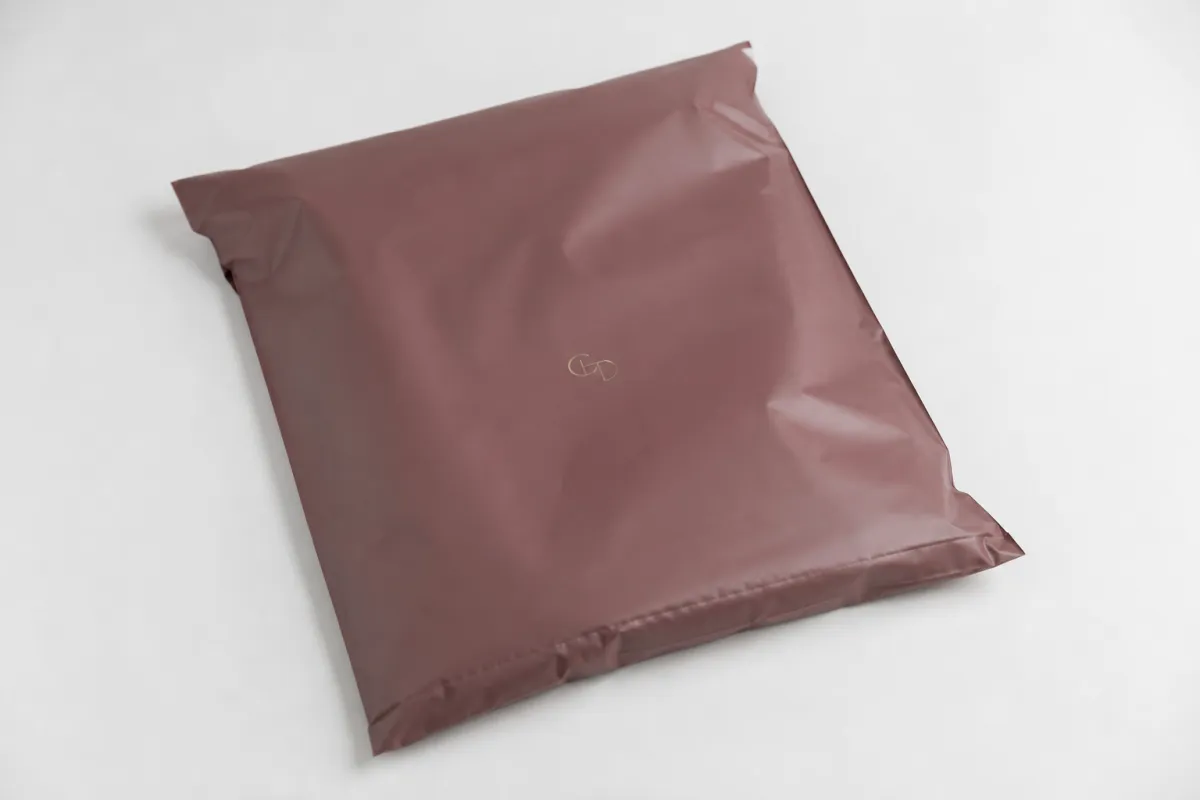
Custom Poly Mailers for influencer kits are lightweight, flexible shipping bags used for apparel, flat promo items, sample packs, inserts, and creator seeding kits. They are usually made from polyethylene film, often self-sealing, and built to do a job that boxes sometimes do too expensively. A mailer does not have to be glamorous to be effective. It has to be right for the contents, the budget, and the shipping path.
Brands choose Custom Poly Mailers for influencer kits because they reduce shipping weight, speed up pack-out, and make the whole send feel intentional instead of improvised. A plain mailer completes the shipment. A custom-printed one also communicates. That distinction matters more than most teams admit. Creator packages are photographed, filmed, stacked on desks, and passed around in group chats before they are opened. The outer layer is part of the campaign, not a wrapper around it.
There is a practical reason these mailers keep showing up in fulfillment plans. Soft goods, folded apparel, sticker sets, printed cards, sample sachets, and other non-fragile items fit neatly inside a flexible bag. Dead space drops. Cartons load better. Carrier charges stay saner. A box can make sense for structure-heavy kits, but for many creator sends it is a more expensive answer to a simpler packing problem.
That does not mean every kit belongs in a mailer. If the package needs rigid protection, a layered reveal, or strong crush resistance, the format may be wrong from the start. In those cases, Custom Poly Mailers may not be the best fit, and custom printed boxes can carry the load better. The real decision is not packaging style for its own sake. It is whether the packaging matches the contents, the budget, and the story the brand wants to tell.
One point gets missed in meetings: custom poly mailers for influencer kits have to survive handling, not just look good in a mockup. Sorting belts, label application, compression, and courier movement all leave marks. Thin film splits. Weak adhesive peels. A size mismatch creates bulges that look careless on camera. Creators notice that sort of thing immediately because they see far more packages than most brand teams ever do.
I still remember a beauty launch where the team chose a sleek white mailer with a beautiful print, then packed a rigid acrylic insert inside without testing it first. The first batch looked fine on the table and terrible after the carrier sweep. A corner punched through on the way to New York, and the return photos were not kind. That was a painful reminder that packaging is not just design. It is engineering, even if nobody wants to call it that.
How custom poly mailers for influencer kits work in the fulfillment flow
The smartest way to think about custom poly mailers for influencer kits is as part of the fulfillment system, not as a print order. Artwork gets approved first, then material and thickness are chosen, then the mailers are produced, packed, and shipped to the warehouse or kit builder. After that comes assembly, sealing, label application, and final delivery. Skip any one of those steps and the whole process gets messy fast.
Mailer size affects pack-out in a very literal way. Too much extra space and the kit rattles around, which makes the package feel loose and underplanned. Too little space and the packer has to force the contents in, which can wrinkle inserts, stress the seal, or bend product packaging in ways that show up in the unboxing video. The right fit keeps everything flat, clean, and easier to assemble at scale.
The outer bag is also the first visual signal on the creator side. That is why custom poly mailers for influencer kits should match the campaign mood before the contents are revealed. A sharp logo, a simple campaign line, or a strong pattern can do far more than a crowded front panel stuffed with slogans, icons, and a QR code no one needed. Quiet confidence usually photographs better than noisy design.
Self-seal adhesive is another reason these mailers work so well in fulfillment. It saves seconds on every pack, which adds up quickly when a team is building dozens or hundreds of kits. The film adds tear resistance. Opacity keeps the contents from showing through. That matters when the kit includes apparel, inserts, or sample items that should stay hidden until the reveal.
If the outer mailer looks flimsy, the campaign feels flimsy. Creators will forgive a late arrival. They will forgive a color shift. They rarely forgive packaging that looks cheap before it is even opened.
From an operations angle, custom poly mailers for influencer kits also make repeated sends easier to standardize. The team can pair one mailer size with one packing method, then repeat it across launches. That consistency matters when the calendar shifts and a single campaign turns into three waves: the first 50 kits, the next 300, then a smaller rerun for late additions. Predictability saves money because people spend less time improvising.
The cleanest packaging systems usually work in layers. The mailer handles shipping. The insert handles messaging. The interior presentation handles the reveal. It is the same logic that makes strong package branding effective in retail packaging. Each layer has one job, and the jobs do not compete with each other.
Key factors that decide the right mailer specs
Choosing custom poly mailers for influencer kits starts with size, not artwork. Measure the packed kit, not the item list. A folded sweatshirt, a card, tissue, and a sample pouch take more room together than they appear to on paper. Leave enough space for the contents to sit flat and enough extra length for a clean seal. A few millimeters can change the whole feel of the package.
Size and film thickness
Film thickness is where the first tradeoff appears. Thinner film keeps cost and weight down, which can work well for short routes and soft contents. Thicker film resists punctures better and feels more substantial in the hand. For many creator kits, a mid-range film is the sensible choice because it balances protection, price, and presentation. If the contents have sharp corners or a heavy insert stack, a thin film will not suddenly become brave.
Teams often compare mailers the way they compare custom printed boxes, which leads to the wrong conclusion. Boxes and mailers behave differently in transit. Boxes get their strength from structure. Mailers depend on film, adhesive, fit, and packing discipline. That distinction changes the spec. A package that would be fine in a box may fail in a mailer if the film or seal is underbuilt.
For most influencer kits, I usually see the sweet spot somewhere between 2.5 and 3.5 mil, though the exact range depends on the vendor and the film blend. A lighter apparel send can get by with less. A kit with sharp-edged inserts, samples in trays, or a heavier stack needs more body. The goal is not to spec the thickest film available. It is to choose the film that keeps the package intact without making it feel like overkill.
Print coverage and visual style
Print choices affect cost, timing, and appearance. Full-color artwork can create a stronger visual system, but it adds setup complexity and usually increases production friction. A one-color logo on a clean background often does the job if the brand already has recognizable typography or a simple pattern. Heavy ink coverage, metallic effects, and full-bleed graphics can elevate the look. They can also tip the package into loud territory if the design is trying too hard.
The most effective custom poly mailers for influencer kits usually keep the front panel simple. Bold logo. Clear campaign mark. Strong contrast. That is enough to read well in a photo or story without turning the mailer into a billboard. A package should frame the kit, not fight it.
There is a reason plain black, white, or kraft-inspired looks keep showing up in premium creator sends. They give the content room to breathe. If the mailer is supposed to whisper quality, the design should not be yelling from across the room. A restrained outer layer often makes the reveal feel more expensive than a busy one, kinda like a good jacket over a simple outfit.
Finish, closure, and handling
Finish changes perception quickly. Matte tends to photograph better and hides scuffs more effectively. Gloss can look brighter and more promotional, which may suit some launches and clash with others. Closure matters just as much. A strong self-seal adhesive should hold through transit without making pack-out a wrestling match. Tear strips improve the opening moment, and opacity protects privacy.
If the kit needs return handling, tamper resistance, or a reseal option, the spec needs to say so before production starts. A standard mailer does not solve every shipping scenario. The more specific the use case, the more specific the construction should be. That is basic product packaging discipline, not a special trick.
Sustainability conversations should be specific too. Recyclable film options, post-consumer content where available, and sourcing claims that can be backed up are the starting point. The FSC framework is useful when the kit includes paper inserts or cards, and the ISTA test methods are worth reviewing if transit performance matters to the campaign. Not every order needs a lab report. Every order does need some actual testing, which is a very different thing.
One caution here: “recyclable” does not mean “widely recycled,” and those two phrases get blurred together all the time. If a vendor cannot explain the resin mix, regional recycling path, or certification behind the claim, treat the claim as marketing until proven otherwise. That is not cynicism. It is just due diligence.
| Mailer option | Typical use case | Approx. unit price at 5,000 pcs | Notes |
|---|---|---|---|
| Stock plain poly mailer | Internal shipments, low-visibility fulfillment | $0.10-$0.18 | Lowest cost, no brand impact, fastest to source |
| 1-color custom poly mailer | Simple creator kits, logo-led branding | $0.16-$0.28 | Good balance of cost and visual polish |
| Full-color custom poly mailer | High-visibility influencer drops, seasonal campaigns | $0.24-$0.45 | Stronger visual presence, usually higher setup and print cost |
| Premium film with specialty print | Flagship launches, limited editions | $0.35-$0.70+ | Better feel and presentation, but only worth it if the campaign justifies it |
If the campaign includes multiple packaging layers, compare the mailer spec against the rest of the system. The right answer is not always a fancier outer bag. Sometimes it is a cleaner mailer paired with sharper inserts and better assembly. Custom Packaging Products should work together instead of competing for attention. That is how budgets stay useful.
Production process, timeline, and turnaround planning
The production path for custom poly mailers for influencer kits is easy to describe and much easier to delay if nobody owns the calendar. Artwork setup comes first. The vendor prepares a proof. Sample approval may follow if the design is more complex or if the team wants to test fit and color. Then production starts, followed by finishing, packing, and freight booking.
That sequence sounds tidy. Real projects are rarely tidy. Delays usually come from artwork changes, late approvals, and color-matching questions that appear after the campaign is already on the clock. A logo that needs to move, a slogan that suddenly needs to be larger, a background that is now supposed to feel “a little more premium” — those requests can push the schedule by days or weeks. The mailer does not care about mood board language.
Build backward from the creator post date, not from the day you hope to submit the order. Custom poly mailers for influencer kits need room for sample review, bulk production, transit, and at least one issue that no one predicted. If the timeline feels tight, it probably is. A rushed reprint costs more than a well-timed order, and the rushed version is often the one with the mistake.
A practical rule helps here: ask for a dated production schedule, not a vague promise. Get checkpoints for artwork approval, sample approval, production start, and freight departure. That gives the team something measurable instead of the usual “should be fine” optimism that evaporates the moment a proof comes back with a correction.
Turnaround varies by spec, quantity, and print complexity, but many projects need several weeks from approval to delivery once transit is included. Rush jobs are possible in some cases, yet rushing is where budgets get strange and small errors become expensive. If the campaign is tied to a launch window, turnaround is not a guess. It is a dependency.
In practice, the safest calendar is usually the boring one: one week for artwork and internal approvals, one week for sampling and sign-off if the order is custom, then enough production and freight time to absorb one hiccup. Nobody loves that answer. It is still the one that keeps the launch from getting weird.
Custom poly mailers for influencer kits: cost, pricing, MOQ, and quote math
Pricing for custom poly mailers for influencer kits depends on size, thickness, print coverage, color count, finish, and order quantity. Each factor changes material use, setup effort, or production complexity. A larger mailer uses more film. Thicker film costs more. More colors require more print work. Specialty finishes add both time and money. The quote moves because the job changes.
MOQ matters because print economics are not sentimental. Small runs carry higher unit costs since setup and prep are spread across fewer pieces. Larger runs reduce the cost per piece, but only if the volume actually gets used. Ordering 20,000 mailers for a campaign that will ship 600 kits is not a savings story. It is inventory with no obvious place to go.
Ask for the full quote breakdown. Unit price, setup fees, sample charges, freight, and rush costs should all be visible. A low unit price can become a dull surprise once shipping and handling are added. Landed cost matters more than sticker price. Buyers who compare only the piece price are often comparing the wrong number.
For custom poly mailers for influencer kits, I like to look at three quantity tiers side by side: 1,000, 5,000, and 10,000 pieces. The curve between them tells you whether a higher quantity actually earns its keep. Sometimes the jump to the next tier drops unit cost enough to justify the extra inventory. Sometimes it barely moves. The only way to know is to look at the spread before the order is locked.
Cost control usually comes down to a few decisions:
- Smaller order - better for test campaigns, higher unit cost, lower risk.
- Mid-size order - often the best balance for recurring creator drops.
- Large order - best unit economics, but only if the design and campaign volume are stable.
Mailer cost is one line in the campaign budget, not the whole story. Packing labor, inserts, storage, and freight can matter just as much. That becomes obvious when teams compare mailers against retail packaging or more structured custom printed boxes. The right format depends on the contents, the shipping class, and the creator experience the brand is trying to build.
Premium mailers can earn their place in a campaign, but only in the right setting. High-visibility kits, tight creator lists, and outer packages that will appear in social content can justify better film, cleaner print, and a more refined packaging design. If the kit is mainly functional, the better move may be to spend the difference on stronger inserts or more thoughtful product presentation.
One thing that gets missed all the time: the cheapest quote is rarely the cheapest project. If one vendor is quoting a lower price but assumes a longer lead time, different freight method, or fewer print details, the comparison is basically fiction. You want apples to apples, not apples to “maybe this will work.”
Common mistakes with influencer kit mailers
The most common mistake with custom poly mailers for influencer kits is sizing the mailer by guesswork and trying to make the contents fit later. That leads to bulging seams, stressed closures, wrinkles, and packages that look overstuffed on camera. If the mailer is fighting the contents, the contents lose the argument.
Overdesign is the next trap. Too much text. Too many colors. Tiny graphics that disappear at arm’s length. The result is not premium. It is cluttered. Creator mailers usually read better when the design is clear, restrained, and easy to scan in a photo. A bold logo and a simple campaign mark will often outperform a panel packed with decorative noise.
The shipping environment is another blind spot. A mailer can look beautiful on a desk and still get marked up by labels, conveyor belts, and warehouse handling. If the surface scuffs easily, or the printed area is hidden once the label goes on, the package stops doing its job. Good packaging survives the trip instead of just surviving the mockup.
Budget mistakes show up almost every time a team reviews a campaign after the fact. The mailer price got attention. Insert labor, kit assembly, freight, and overage did not. The final number lands higher than expected and everyone acts surprised, as if shipping were an optional side plot. It is not.
Using the same mailer spec for every creator package is another easy way to waste money or damage presentation. A lightweight apparel send does not need the same construction as a kit with multiple inserts and rigid sample packaging. Different contents deserve different specs. That is how the packaging stays efficient without looking improvised.
A quick check before approval helps catch the obvious failures:
- Pack one sample kit with the actual contents.
- Seal it and shake it gently.
- Check for shifting, stress marks, or weak adhesive.
- Apply a label and confirm the printed area still reads cleanly.
- Compare the filled mailer to the unboxed reveal on camera if possible.
That test takes maybe ten minutes. It can save an entire launch from looking underbaked, which is a very expensive way to find out the fit was off by half an inch.
Expert tips and next steps for a better launch
The smartest move with custom poly mailers for influencer kits is to test a packed sample before placing the full order. Not a flat proof. A filled sample. Put the real contents inside, seal it, shake it, stack it, and see what breaks. If the adhesive fails, the contents shift, or the package looks strained, the sample just saved the campaign from an expensive correction.
Build a spec sheet before requesting quotes. Include size, thickness, number of print colors, finish, closure type, target ship date, and any special handling notes. That keeps vendors quoting the same thing. Without that document, one quote assumes a basic stock-style mailer, another assumes a premium film, and the comparison turns into a mess of mismatched assumptions.
Design restraint helps more than most teams expect. A bold logo and a short campaign line often do more than a crowded layout. If the package should feel premium, give the design room to breathe. The same rule applies across branded packaging generally. Good package branding is not about filling every inch. It is about making the right elements visible at the right moment.
For campaigns with room to test, run a small pilot first. Send a limited batch to a few creators, review the photos and unboxing clips, and adjust before the main drop. That is a cheap way to catch issues with color, size, label placement, and presentation. It also shows whether the package reads as premium or just custom in the most literal sense.
If the team is still deciding between mailers, boxes, or a mixed system, compare the full shipping and assembly picture instead of only the print cost. A split approach often makes sense: mailers for most kits, boxes for higher-tier recipients or fragile contents. That kind of mix gives better budget control and keeps the presentation aligned with the audience.
For teams ready to move, the order of operations should stay simple: confirm the size, lock the cost, verify the timeline, and approve a packed sample. Only then should the full run of custom poly mailers for influencer kits get placed. That sequence is not flashy. It avoids expensive problems later.
If you want to compare options across the broader packaging mix, start with Custom Packaging Products and then narrow the spec that fits the campaign. The best custom poly mailers for influencer kits do not need to be loud to work. They need to fit, protect, photograph well, and arrive on time. Decoration comes after that.
The practical takeaway is simple: choose the mailer like you would choose any production component that has to survive a real shipping lane. Test a fully packed sample, confirm the landed cost, and build enough lead time for proofing and freight. If those three pieces line up, the outer package stops being a gamble and starts doing its job.
FAQ
What size custom poly mailers for influencer kits should I choose?
Measure the packed kit, not just the product list, and leave room for inserts, tissue, and a clean seal. If the contents are bulky or rigid, size up rather than forcing the mailer to stretch. A sample-packed test is the fastest way to confirm fit before you place the full order.
Are custom poly mailers for influencer kits better than boxes?
Mailers usually work better for flat, soft, or lightweight kits because they cost less to ship and pack faster. Boxes make more sense for fragile, premium, or heavily layered kits that need structure. The better choice depends on the contents, not just the branding goal.
How much do custom poly mailers for influencer kits cost?
Price depends on size, thickness, print coverage, quantity, and finishing details. Lower MOQ usually means a higher unit price, while larger runs reduce cost per piece. Ask for landed cost so freight and setup fees do not distort the budget later.
How long does production take for custom poly mailers for influencer kits?
Timeline depends on proof approval, sample needs, print complexity, and freight method. Standard production often needs a buffer of several weeks, especially if artwork changes midstream. Build the schedule backward from the creator drop date and leave time for reprints.
What should I print on custom poly mailers for influencer kits?
A clean logo, campaign name, or short brand message usually works better than crowded artwork. Keep the design readable in photos and videos, because creators will post the package as it arrives. If you need extra info, put it on the insert or label instead of cluttering the outer mailer.

